Connect with us

Technology

IBM Report: Ransomware Persisted Despite Improved Detection in 2022

Published

on

Manufacturing Most Extorted Industry; Email Thread Hijacking Attempts Spike; Time to Ransom Moves from Months to Days

ARMONK, N.Y., Feb. 22, 2023 /PRNewswire/ — IBM (NYSE: IBM) Security today released its annual X-Force Threat Intelligence Index finding that although ransomware’s share of incidents declined only slightly (4 percentage points) from 2021 to 2022, defenders were more successful detecting and preventing ransomware. Despite this, attackers continued to innovate with the report showing the average time to complete a ransomware attack dropped from 2 months down to less than 4 days. 

According to the 2023 report, the deployment of backdoors, which allow remote access to systems, emerged as the top action by attackers last year. About 67% of those backdoor cases related to ransomware attempts, where defenders were able to detect the backdoor before ransomware was deployed. The uptick in backdoor deployments can be partially attributed to their high market value. X-Force observed threat actors selling existing backdoor access for as much as $10,000, compared to stolen credit card data, which can sell for less than $10 today.

“The shift towards detection and response has allowed defenders to disrupt adversaries earlier in the attack chain – tempering ransomware’s progression in the short term,” said Charles Henderson, Head of IBM Security X-Force. “But it’s only a matter of time before today’s backdoor problem becomes tomorrow’s ransomware crisis. Attackers always find new ways to evade detection. Good defense is no longer enough. To break free from the never-ending rat race with attackers, businesses must drive a proactive, threat-driven security strategy.”

The IBM Security X-Force Threat Intelligence Index tracks new and existing trends and attack patterns – pulling from billions of datapoints from network and endpoint devices, incident response engagements and other sources.

Some of the key findings in the 2023 report include:

Extortion: Threat Actors Go-to Method. The most common impact from cyberattacks in 2022 was extortion, which was primarily achieved through ransomware or business email compromise attacks. Europe was the most targeted region for this method, representing 44% of extortion cases observed, as threat actors sought to exploit geopolitical tensions.Cybercriminals Weaponize Email Conversations. Thread hijacking saw a significant rise in 2022, with attackers using compromised email accounts to reply within ongoing conversations posing as the original participant. X-Force observed the rate of monthly attempts increase by 100% compared to 2021 data.Legacy Exploits Still Doing the Job. The proportion of known exploits relative to vulnerabilities declined 10 percentage points from 2018 to 2022, due to the fact that the number of vulnerabilities hit another record high in 2022. The findings indicate that legacy exploits enabled older malware infections such as WannaCry and Conficker to continue to exist and spread.

Extortion Pressure Applied (Unevenly)
Cybercriminals often target the most vulnerable industries, businesses, and regions with extortion schemes, applying high psychological pressure to force victims to pay. Manufacturing was the most extorted industry in 2022, and it was the most attacked industry for the second consecutive year. Manufacturing organizations are an attractive target for extortion, given their extremely low tolerance for down time.

Ransomware is a well-known method of extortion, but threat actors are always exploring new ways to extort victims. One of the latest tactics involves making stolen data more accessible to downstream victims. By bringing customers and business partners into the mix, operators increase pressure on the breached organization. Threat actors will continue experimenting with downstream victim notifications to increase the potential costs and psychological impact of an intrusion – making it critical that businesses have a customized incident response plan that also considers the impact of an attack on downstream victims.

Thread Hijacking on the Rise
Email thread hijacking activity surged last year, with monthly attempts by threat actors doubling compared to 2021 data. Over the year, X-Force found that attackers used this tactic to deliver Emotet, Qakbot, and IcedID, malicious software that often results in ransomware infections.

With phishing being the leading cause of cyberattacks last year, and thread hijacking’s sharp rise, it’s clear that attackers are exploiting the trust placed in email. Businesses should make employees aware of thread hijacking to help reduce the risk of them falling victim.

Mind the Gap: Exploit “R&D” Lagging Vulnerabilities
The ratio of known exploits to vulnerabilities has been declining over the last few years, down 10 percentage points since 2018. Cybercriminals already have access to more than 78,000 known exploits, making it easier to exploit older, unpatched vulnerabilities. Even after 5 years, vulnerabilities leading to WannaCry infections remain a significant threat. X-Force recently reported an 800% increase in WannaCry ransomware traffic within MSS telemetry data since April 2022. The continued use of older exploits highlights the need for organizations to refine and mature vulnerability management programs, including better understanding their attack surface and risk-based prioritization of patches.

Additional findings from the 2023 report include:

Phishers “Give Up” on Credit Card Data. The number of cybercriminals targeting credit card information in phishing kits dropped 52% in one year, indicating that attackers are prioritizing personally identifiable information such as names, emails, and home addresses, which can be sold for a higher price on the dark web or used to conduct further operations.North America Felt Brunt of Energy Attacks. Energy held its spot as the 4th most attacked industry last year, as global forces continue to affect an already tumultuous global energy trade. North American energy organizations accounted for 46% of all energy attacks observed last year, a 25% increase from 2021 levels.Asia Tops the Target List. Accounting for nearly one-third of all attacks that X-Force responded to in 2022, Asia saw more cyberattacks than any other region. Manufacturing accounted for nearly half of all cases observed in Asia last year.

The report features data IBM collected globally in 2022 to deliver insightful information about the global threat landscape and inform the security community about the threats most relevant to their organizations. You can download a copy of the 2023 IBM Security X-Force Threat Intelligence Report here.

Additional sources

Read more about the report’s top findings in this IBM Security Intelligence blog.Sign up for the 2023 IBM Security X-Force Threat Intelligence Index webinar on Thursday, March 2, 2022, at 11:00 a.m. ET here.Schedule a consult with IBM Security X-Force.

About IBM Security
IBM Security helps secure the world’s largest enterprises and governments with an integrated portfolio of security products and services, infused with dynamic AI and automation capabilities. The portfolio, supported by world-renowned IBM Security X-Force® research, enables organizations to predict threats, protect data as it moves, and respond with speed and precision without holding back business innovation. worldwide security experts, IBM is trusted by thousands of organizations as their partner to assess, strategize, implement, and manage security transformations. IBM operates one of the world’s broadest security research, development, and delivery organizations, monitors 150 billion+ security events per day in more than 130 countries, and has been granted more than 10,000 security patents worldwide.

Press Contact:
IBM Security Communications
Michele Brancati
mbrancati@ibm.com


View original content to download multimedia:https://www.prnewswire.com/news-releases/ibm-report-ransomware-persisted-despite-improved-detection-in-2022-301752400.html

SOURCE IBM

Continue Reading

Technology

Sophia Space and MIT Lincoln Laboratory Announce Research Collaboration on Space-Based Weather Modeling

Published

on

By

CRADA and related SpaceWERX Phase I research will explore space-based computing approaches for weather-modeling applications

PASADENA, Calif., Oct. 20, 2026 /PRNewswire/ — Sophia Space today announced a new Cooperative Research and Development Agreement (CRADA) with MIT Lincoln Laboratory to investigate how space-based computing approaches could support high-resolution weather-modeling research for remote operating environments.

The collaboration combines MIT Lincoln Laboratory’s weather-modeling research expertise with Sophia Space’s edge-compute concepts. The effort will explore whether distributed computing can support more timely environmental information for planning and decision-support applications.

Under the agreement, MIT Lincoln Laboratory will contribute weather-modeling research expertise, including the identification of modeling configurations, parameters, and data sources for evaluation. The team will develop representative test data and assess weather-model performace against defined research metrics using frameworks compatible with Sophia Space’s initial hardware configurations.

Sophia Space will provide the AI-inference compute environment for evaluating representative weather-model workloads, including terrestrial and potential space-based computing configurations. The organizations will explore high-level system and service architectures that may inform future research into space-based computing applications.

Sophia Space and MIT Lincoln Laboratory are also pursuing related work under Department of the Air Force STTR Topic SF25D-T1201 through the SpaceWERX Futures Series: Adaptive and Intelligent Space Challenge. The related effort examines technologies relevant to autonomous, resilient, and networked space-system operations.

“This partnership reflects our conviction that space-based computing infrastructure should be developed through rigorous collaboration between commercial innovators and world-class research institutions,” said Rob DeMillo, Co-founder and CEO of Sophia Space. “MIT Lincoln Laboratory brings unmatched weather sensing, forecasting and decision-support research expertise, and together we will explore the potential application of space-based computing to weather-modeling research.”

The collaboration aligns with Sophia Space’s research interests in edge-compute architectures, distributed processing, and sensor fusion integration for environments.

“Timely weather information is critical for operations in remote and contested environments,” said Dr. Timothy Bonin, Assistant Group Leader of the Air Traffic Control & Weather Systems Group at MIT Lincoln Laboratory. “This collaboration allows us to explore how space-based computing can help process satellite observations and other environmental data closer to the point of collection, while assessing potential impacts on communications demands and information-delivery timelines.”

About Sophia Space Inc.
Sophia Space is building the future of orbital computing and in-space data centers. Its modular TILE (Thermal-Integrated LEO Edge) technology enables passive computing alongside in-situ data processing, AI acceleration, and edge computing for satellites, defense systems, and commercial space stations—dramatically reducing latency and delivering actionable insights where and when they are needed. Learn more at www.sophia.space.

About MIT Lincoln Laboratory
MIT Lincoln Laboratory is a federally funded research and development (R&D) center chartered to apply advanced technology to problems of national security. Since 1951, the Laboratory has developed technology that has transformed the activities of the defense, scientific, and industry communities. Its mission focuses on long-term technology development as well as rapid system prototyping and demonstration. Through several mechanisms, it facilitates partnerships with companies to advance R&D and increase U.S. technical competitiveness. Learn more at www.ll.mit.edu.


View original content to download multimedia:https://www.prnewswire.com/news-releases/sophia-space-and-mit-lincoln-laboratory-announce-research-collaboration-on-space-based-weather-modeling-302913439.html

SOURCE Sophia Space

Continue Reading

Technology

Oracle and AstraZeneca Partner to Advance AI-enabled Healthcare Innovation

Published

on

By

Collaboration to connect AstraZeneca’s scientific and therapeutic expertise with Oracle’s real-world data, cloud, AI, and clinical capabilities to accelerate clinical research and bring evidence-driven insights into care workflows to help improve patient care

AUSTIN, Texas and ABU DHABI, UAE, Oct. 20, 2026 /PRNewswire/ — Oracle today announced an agreement with AstraZeneca to explore how AI and real-world data can help clinicians identify eligible patients for clinical trials, accelerate evidence generation, and bring relevant research insights into everyday care. The collaboration is expected to combine AstraZeneca’s scientific and therapeutic expertise with Oracle’s health data, cloud, AI, analytics, and clinical workflow capabilities.

Through a non-binding agreement, the companies plan to explore selected use cases that could improve clinical-trial efficiency and success by leveraging modern applications and AI to help care teams identify eligible patients earlier and easier, resulting in greater access to clinical trials for patients in need and helping to overcome one of the largest obstacles in clinical trials – patient recruitment. Initial disease areas to be explored could include oncology; cardiovascular, renal and metabolic diseases; respiratory and immunology; and rare diseases.

Pascal Soriot, Chief Executive Officer, AstraZeneca said: “This unique collaboration brings leaders in healthcare and AI together at a global scale to accelerate the journey from the discovery of medicine to patient care. Combining AstraZeneca’s world class science with Oracle’s deep data and technology expertise, we can help clinicians identify patients sooner, optimize clinical trials, and generate evidence continuously across the lifecycle of a medicine.”

“Some of the most important opportunities for AI are in healthcare, where better use of data can help turn scientific innovation into better outcomes for patients,” noted Mike Sicilia, chief executive officer, Oracle. “By bringing AstraZeneca’s scientific expertise together with Oracle’s data, cloud, AI, and healthcare capabilities, we have an opportunity to help accelerate research, connect more patients to clinical trials, and ultimately bring relevant insights into care faster.”

Connecting Research and Care

Anne-Claire Gerbaldi, Chief Digital, Data and AI Officer, AstraZeneca, added: “Too many patients are diagnosed late or face a long journey to get the care they need. To build the next decade of medicine, we aim to harness AI to connect learnings across science, clinical trials, and everyday care, generating insights that continuously strengthen research, accelerate innovation, and enhance patient outcomes. Bringing together the unique capabilities of Oracle and AstraZeneca, we believe we can support smarter clinical trials, strengthen safety monitoring, and help ensure patients are diagnosed sooner and receive the right care.”

Seema Verma, executive vice president and general manager, Oracle Health and Life Sciences, said: “Healthcare progress depends on shortening the distance between scientific insight and the decisions clinicians make every day. AstraZeneca brings deep scientific and therapeutic expertise, and Oracle will deliver the secure data, cloud, AI, and clinical workflow capabilities. This collaboration has the potential to help health systems identify eligible patients sooner, broaden access to clinical trials, and generate evidence that supports the next decision, all under the governance of the health systems delivering care.”

AstraZeneca and Oracle intend to explore a continuous learning model in which insights from clinical research and routine care help inform future study design, safety monitoring, and patient care. The companies plan to establish shared governance, reusable technical components, and agreed outcome measures to assess results and determine whether successful approaches could extend across disease areas and geographies.

About Oracle
Oracle offers integrated suites of applications plus secure, autonomous infrastructure in the Oracle Cloud. For more information about Oracle (NYSE: ORCL), please visit www.oracle.com.

Trademarks
Oracle, Java, MySQL and NetSuite are registered trademarks of Oracle Corporation. NetSuite was the first cloud company – ushering in the new era of cloud computing.

View original content to download multimedia:https://www.prnewswire.com/news-releases/oracle-and-astrazeneca-partner-to-advance-ai-enabled-healthcare-innovation-302913441.html

SOURCE Oracle

Continue Reading

Technology

Loyyal Unveils Perxi AI Business Suite to Help SMEs Run Their Business on WhatsApp

Published

on

By

Branded AI assistant brings everyday business activities into messaging channels, reducing the need for separate software and specialist teams

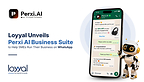
DUBAI, UAE, Oct. 20, 2026 /PRNewswire/ — Loyyal today unveiled the Perxi AI Business Suite, enabling small and medium enterprises (SMEs) to manage everyday business activities through WhatsApp. Building on its introduction as a loyalty assistant, Perxi brings commerce, customer engagement and business management into one conversational interface, with capabilities including ordering, customer service and loyalty.

The suite helps SMEs and direct-to-consumer brands manage these activities without purchasing separate ordering systems, customer relationship management software or support tools. Its conversational approach reduces the need to hire specialists or train employees to operate multiple systems.

“Small business owners should be able to focus on growth without assembling a collection of software tools,” said Ashish Kumar Singh, Founder and CEO of Loyyal.

“Perxi brings everyday business capabilities into WhatsApp under each business’s own brand. We want to make these tools affordable and accessible while helping businesses retain greater control over their customer relationships, data and decisions.”

Perxi provides the underlying technology, while each business launches its assistant under its own brand name. Customers engage directly with the business they recognise, rather than entering a separate Perxi marketplace.

Customers can place orders, ask questions, receive assistance and access rewards within a familiar conversation. There is no additional branded application to install or separate login to remember. This approach is designed to appeal to younger consumers accustomed to discovering and interacting with brands through mobile messaging.

Beyond WhatsApp, Perxi can be deployed across messaging channels suited to each business and market, including Instagram, WeChat and KakaoTalk.
Multilingual capabilities enable businesses to serve customers in their preferred languages, supporting brands operating beyond English and those engaging diverse communities.

As conversational commerce and AI assistants become more prominent, SMEs face growing expectations for convenient, responsive interactions. Bringing business services into messaging channels offers a way to meet those expectations while building direct customer relationships.

Marketplaces and aggregators offer a fast route to market, but access to customer information and engagement opportunities varies. Perxi helps businesses establish a direct channel and gain insights from their own customer conversations and transactions.

These insights can inform service improvements, personalised engagement and retention, while reducing dependence on intermediaries for customer access.

Pricing is designed to remain simple and affordable. Loyyal plans further services under the same umbrella.

Perxi will return to exhibit at Dubai AI Festival on October 26–27, 2026, at Dubai World Trade Centre.

About Loyyal

Loyyal is a US-born, UAE-based enterprise technology company helping businesses turn loyalty and customer engagement into growth and revenue. Combining patented blockchain technology with AI, its modular portfolio spans loyalty management, rewards, points exchange, offers, gift cards, gamification and conversational business assistants.

Media Contact

Marketingdepartment@loyyal.com

View original content to download multimedia:https://www.prnewswire.co.uk/news-releases/loyyal-unveils-perxi-ai-business-suite-to-help-smes-run-their-business-on-whatsapp-302913064.html

Continue Reading

Trending