Connect with us

Technology

Yamaha Unveils Next Generation MONTAGE M Synthesizer

Published

on

Designed to inspire sound exploration, the new flagship synthesizer features category-leading technology to provide musicians with highly realistic imitative and creative sound

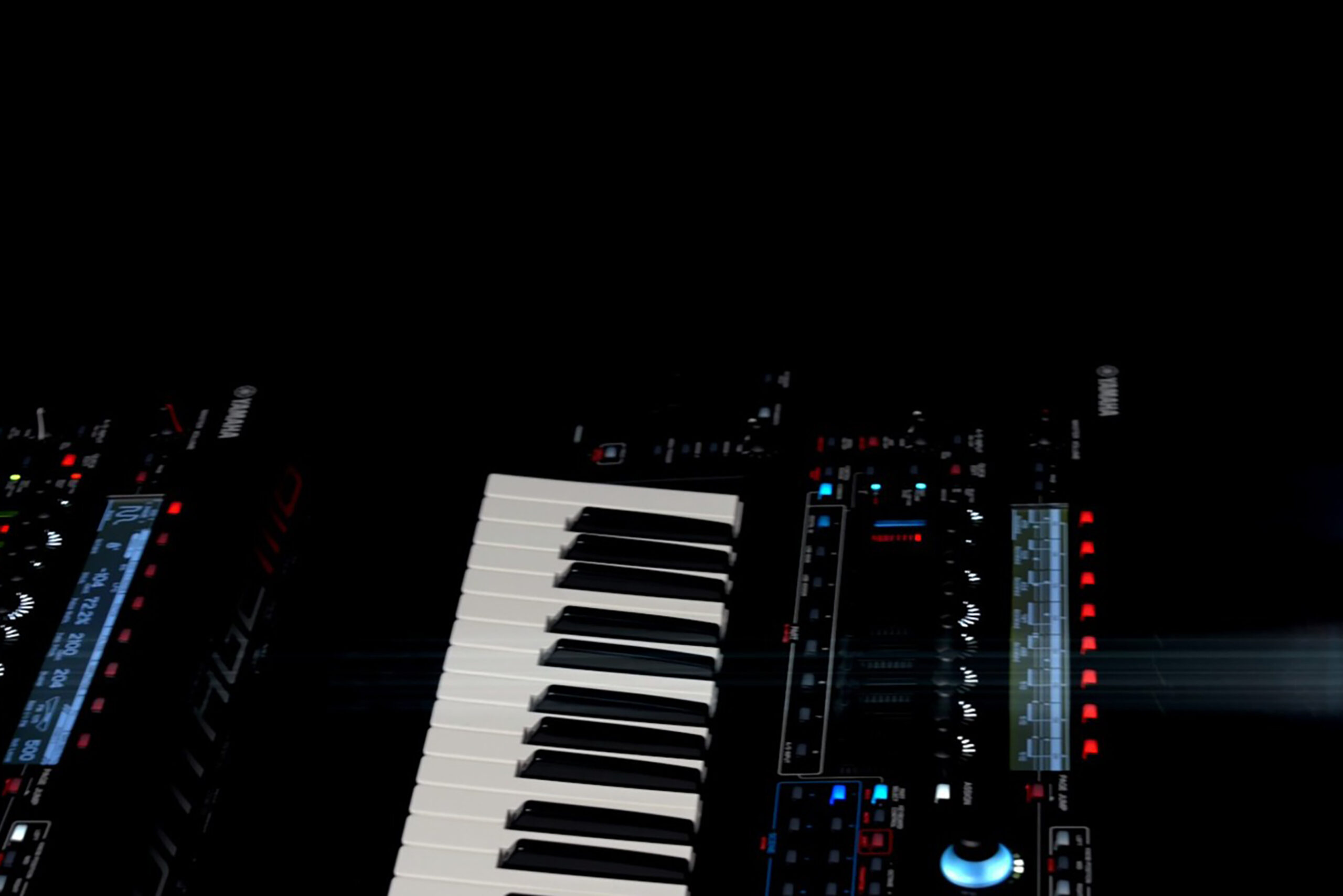
BUENA PARK, Calif., Oct. 9, 2023 /PRNewswire/ — Today, Yamaha announced the new MONTAGE M synthesizer, combining next-level amazing sound, new control dimensions for dynamic expression and seamless workflow integration between stage and studio. The new flagship product lineup – consisting of the 61-key MONTAGE M6 for synthesists, 76-key MONTAGE M7 for keyboardists, and 88-key with polyphonic aftertouch MONTAGE M8x for pianists – features the brand’s latest cutting-edge technologies to elevate expression.

Experience the full interactive Multichannel News Release here: https://www.multivu.com/players/English/9208151-yamaha-montage-m-synthesizer/ 

Uniquely crafted to provide highly realistic, imitative and creative sound, MONTAGE M features a new AN-X Analog Engine and improved AWM2 Engine that, combined with the FM-X Engine, give a total of 400 notes total polyphony. Musicians can also achieve optimal workflow integration through its USB MIDI and audio interface, Expanded Softsynth Plug-in (ESP…coming in 2024) and faster and easier navigation.

The new MONTAGE M product lineup delivers innovative control dimensions for unique music-making, including new performance controls and a dedicated keyboard and scene control. The MONTAGE M8x includes these capabilities and adds polyphonic aftertouch, providing superior expressive capabilities. 

Other notable features include 9.97 GB preset waveROM, 16 libraries (640 performances per library), 3.8 GB user flash memory, VCM Rotary Speaker and more.

PRICING & AVAILABILITY:

The MONTAGE M will be available for pre-order starting October 9, 2023, at the following pricing:

MONTAGE M6: $3,499.99MONTAGE M7: $3,999.99MONTAGE M8x: $4,499.99

To learn more about the MONTAGE M synthesizers, please visit Yamaha.io/MONTAGEM. 

Contact:
Valeria Hernandez
vhernandez@golin.com 

About Yamaha
Yamaha Corporation of America is the largest subsidiary of Yamaha Corporation, the world-leading music and sound company based in Hamamatsu, Japan. The Yamaha team is committed to helping everyone progress, express, and connect through music and sound. We offer innovative, finely crafted, award-winning products for your musical journey, including pianos, brass instruments, woodwinds, strings, electronic keyboards, guitars, drums, and professional and home audio equipment. 

View original content:https://www.prnewswire.com/news-releases/yamaha-unveils-next-generation-montage-m-synthesizer-301951514.html

SOURCE Yamaha

Continue Reading

Technology

JinkoSolar Announces Results of 2026 Annual General Meeting

Published

on

By

SHANGRAO, China, Oct. 21, 2026 /PRNewswire/ — JinkoSolar Holding Co., Ltd. (“JinkoSolar” or the “Company”) (NYSE: JKS), today announced that all shareholders resolutions proposed at the Company’s 2026 annual general meeting held today were duly passed.

Specifically, the Company’s shareholders passed the following ordinary resolutions approving:

1. The re-election of Mr. Gang Chu as an independent director of the Company;
2. The re-election of Mr. Steven Markscheid as an independent director of the Company;
3. The ratification of the appointment of PricewaterhouseCoopers Zhong Tian LLP as auditors of the Company for the fiscal year of 2026;
4. The authorization of the directors of the Company to determine the remuneration of the auditors of the Company; and
5. The authorization of each of the directors of the Company to take any and all action that might be necessary to effect the foregoing resolutions 1 to 4 and resolutions 6 to 7 set out below as such director, in his or her absolute discretion, thinks fit.

The Company’s shareholders also passed the following special resolutions approving:

6. The change of the English name of the Company from “JinkoSolar Holding Co., Ltd.” to “Jinko Holdings Limited”; and
7. The adoption of “晶科控股有限公司” as the dual foreign name of the Company.

 About JinkoSolar Holding Co., Ltd.

JinkoSolar (NYSE: JKS) is a holding company combining clean energy industrial operations and strategic investment in emerging technologies. Its industrial foundation is a controlling interest in Jinko Solar Co., Ltd. (SSE: 688223), a global leader in clean energy technology. The Company makes disciplined strategic investments in renewable energy, advanced materials, artificial intelligence, commercial space and other frontier technologies, drawing on its industrial experience and its ability to identify emerging technologies and bring them to commercial scale.

Through Jinko Solar Co., Ltd., the Company distributes its solar products and sells its solutions and services to a diversified international utility, commercial and residential customer base in China, the United States, Japan, Germany, the United Kingdom, Chile, South Africa, India, Mexico, Brazil, the United Arab Emirates, Italy, Spain, France, Belgium, Netherlands, Poland, Austria, Switzerland, Greece and other countries and regions.

JinkoSolar has over 10 production facilities globally, over 20 overseas subsidiaries in Japan, South Korea, Vietnam, India, Turkey, Germany, Italy, Switzerland, the United States, Mexico, and other countries, and a global sales network with sales teams in China, the United States, Canada, Brazil, Chile, Mexico, Italy, Germany, Turkey, Spain, Japan, the United Arab Emirates, Netherlands, Vietnam and India, as of June 30, 2026.

For investor and media inquiries, please contact:

In China:

Ms. Stella Wang
JinkoSolar Holding Co., Ltd.
Tel: +86 21-5180-8777 ext.7806
Email: ir@jinkosolar.com 

Mr. Christian Arnell
Christensen
Tel: +852 2117 0861
Email: christian.arnell@christensencomms.com 

In the U.S.:

Email: jinko@christensencomms.com 

View original content:https://www.prnewswire.com/news-releases/jinkosolar-announces-results-of-2026-annual-general-meeting-302914898.html

SOURCE JinkoSolar Holding Co., Ltd.

Continue Reading

Technology

Price still dominates car buying in US and Europe, while China puts technology first–Bain & Company survey

Published

on

By

Dealers stay important: More than 80% of car buyers globally now combine online and offline channels, yet nine in 10 still complete their purchase at dealersAI is reshaping car-buying journey in all markets – more than 60% of younger buyers use AI when deciding on their next carConsumers who have test-driven a battery electric vehicle are up to 2.2 times as willing to consider buying oneCustomer loyalty is decreasing – more than a third of customers in Western markets are open to new brands entering the market Autonomous-driving technology could challenge traditional brand loyalty, with consumers willing to switch brands for better functionality

BOSTON and MUNICH, Oct. 21, 2026 /PRNewswire/ — New technologies, including AI, are changing how consumers research and choose cars around the globe. Brand loyalty is decreasing and price continues to play a powerful role in purchasing decisions in the US and Europe, but less so for Chinese buyers, as new research released today by Bain & Company finds.

Bain’s new Global Automotive Consumer Survey, based on responses from more than 12,000 car buyers worldwide*, finds price remains the top consideration when buying a car in the US and Europe, cited by 68% and 62% of consumers respectively, while technology and features (58%) rank ahead of price in China. Loyalty to established automakers also varies considerably: US buyers remain the most committed, while newer Chinese brands are entering consideration in Europe.

The findings come as legacy automakers face weak industry growth and continued pressure on profitability, alongside rapid advances in electrification, artificial intelligence and autonomous driving.

“The car-buying journey is changing quickly, but what stands out is how differently consumers across the globe are responding to that change,” said Klaus Stricker, leader of Bain’s Global Automotive & Mobility practice. “Technology can be a powerful differentiator for some buyers, while for others, price and brand remain decisive. We find that car buyers are increasingly using AI to compare brands, models and options.”

Digital car buying accelerates, but dealerships remain critical

The way consumers choose cars has become increasingly digital. Bain finds that more than 80% of respondents globally now combine online and offline interactions during the purchase journey, while more than six in 10 start the buying process online. China is further ahead, with 95% using both online and physical channels and more than eight in 10 willing to consider completing their purchase online.

But greater use of digital channels has not diminished the importance of the physical dealership. Nine in 10 consumers globally still complete their purchase offline, and more than half of buyers in Europe, the US and China have at least two interactions with dealers along the way.

Artificial intelligence is also reshaping how consumers research and compare cars. AI is already widely used by car buyers across several Asian markets and UAE, reaching more than 90% in Indonesia and close to 80% across age groups in China. In Japan, Europe and the US, adoption is more concentrated among younger buyers, with 52%, 61% and 55% respectively using AI, more than twice the share of older consumers.

Younger consumers drive BEV interest, but barriers to wider adoption remain

Consumer interest in battery electric vehicles (BEVs) is strong, particularly among younger buyers, the survey finds. Younger consumers (Generations Y and Z) in general are more likely to buy BEVs, but in China, willingness to buy BEVs is high across both younger and older generations.

For consumers still reluctant to buy a BEV, cost and charging remain the biggest sticking points. In the US and Europe, around six in 10 are unwilling to pay more for a BEV than for a comparable combustion-engine car, while almost half cite charging times as a concern. Bain concludes that closing the price gap and making charging more convenient will be critical to persuading more consumers to make the switch.

Bain cites an example in Germany where BEV-buying decisions shifted once price parity narrowed. In August 2026, BEV registrations jumped 75% year-on-year to reach around 32% of new car sales. New government incentives and rising fuel prices drove the change – in addition to new strong BEV models entering the market.

Getting more buyers behind the wheel provides another lever. Consumers who have already test-driven a BEV are up to 2.2 times more willing to consider purchasing one than those who have not. Yet mass-market buyers in Europe and the US are less likely to have tried a BEV, compared to premium buyers. With many potential buyers yet to try one, making test-drives easier to access could be one of the most effective ways for automakers and dealers to encourage wider BEV adoption.

Autonomous driving could challenge traditional brand loyalty

Appetite for autonomous-driving technology is substantially stronger in China and several Asian and Middle Eastern markets than in Europe and the US, Bain finds. Some 84% of Chinese consumers would consider buying a vehicle offering at least Level 3 (L3) autonomy, compared with 47% in Europe and 40% in the US. L3 allows a car to drive itself under certain conditions but requires the driver to take over when prompted. Interest is even higher in the UAE, India and Indonesia.

Greater interest in autonomous driving could also weaken traditional brand loyalty. Consumers most interested in the technology are more willing to switch manufacturers for better functionality, with premium buyers in Europe and the US particularly open to changing brands. In China, willingness to switch is more widespread. For automakers, better autonomous-driving functionality could therefore become an increasingly important way to attract customers from competitors.

“Technology is now part of the reason customers choose one manufacturer over another,” Stricker added. “That raises the stakes for automakers. Brands need to understand where customers are willing to pay for innovation, where affordability remains the overriding consideration, and where better technology could be enough to persuade a customer to switch. That requires a much more precise understanding of what different customers value.”

*Markets included in the survey: Canada, US, UK, Germany, France, Italy, UAE, China, India, Indonesia, and Japan. 

Media contacts:
Ann Lee (Singapore) — ann.lee@bain.com
Gary Duncan (London) — gary.duncan@bain.com
Dan Pinkney (Boston) — dan.pinkney@bain.com 

About Bain & Company

Bain & Company works with leaders worldwide to solve their toughest challenges and deliver enduring results. Since 1973, we’ve partnered with clients, including private equity and portfolio companies, to build the capabilities they need to stay ahead of change and help them redefine their industries. We measure our success by our clients’ success, and we proudly hold the highest levels of client advocacy in our field.

Bain is consistently recognized globally as one of the best places to work. We operate as one global team, uniting strategists, industry and functional experts, technologists, and advisors with a vibrant ecosystem of technology partners.

Notes to Editors 

Bain & Company was founded in 1973 and today has 19,000 employees across 67 cities in 40 countries. We have worked with more than two-thirds of the Global 500 and more than 9,000 companies worldwide. Bain has pledged to deliver $2 billion in pro bono consulting to nonprofit, public sector, and charitable organizations by 2035. The firm is consistently recognized as a Leader in major analyst rankings across multiple areas, including digital business, innovation, strategy, experience design, customer experience, and carbon-zero transformation.

View original content to download multimedia:https://www.prnewswire.com/news-releases/price-still-dominates-car-buying-in-us-and-europe-while-china-puts-technology-firstbain–company-survey-302914783.html

SOURCE Bain & Company

Continue Reading

Technology

HiTHIUM enters Canada with first 8-hour BESS and sodium-ion solutions adapted to extreme cold

Published

on

By

TORONTO, Oct. 21, 2026 /CNW/ — HiTHIUM, an integrated full-scenario energy storage solutions provider, has announced its entry into the Canadian market. Ranked in the top two globally for energy storage component, the manufacturer has surpassed 200 GWh in cumulative delivered capacity, focusing exclusively on stationary energy storage technologies.

Canada’s energy storage expansion requires reliable large-scale suppliers and local presence

Mizhi Zhang, HiTHIUM President of Global Business, commented: “We are committed to delivering Canadian customers advanced, robust solutions, from 8-hour long duration energy storage to extreme-weather-ready sodium-ion BESS. But this also means being present for customers wherever they are, able to serve them quickly and locally. While Toronto serves as the main hub for our Canadian operations, we have subsidiary offices in British Columbia and Alberta, as well as operating sites in Quebec, Yellowknife, and Fort Smith.” 

HiTHIUM has introduced 4-hour and 8-hour BESS solutions to serve the market’s rapid buildout of utility-scale energy storage. With installed Canadian storage expected to double between 2025 and 2027, and the country’s total wind, solar, and energy storage capacity on track to reach 50 GW by 2035, HiTHIUM is positioned to fill the growing demand for BESS on a large scale. The company has also revealed a new 4 MWh sodium-ion storage solution, which is designed for an extra-long service life, supports storage durations from 2 to 8 hours, and is perfect for extremely cold climates, like Northern Canada.

“Canada’s ambitious clean energy targets, as well as its high safety and regulatory standards, require partners who can deliver advanced technology that’s also tested and compliance-ready. At the same time, project developers have to consider the tough climate. As a vertically integrated, global solutions provider, HiTHIUM is structured to meet exactly this nexus of challenges. Our strategy of advancing both lithium-ion and sodium-ion storage is designed to offer customers in markets like Canada the benefits of flexibility, since we see these technologies as highly complementary,” continued Zhang.

“Our partners, whether major energy developers, public utilities, or industrial enterprises, rely on our readiness for local certification and our long-term bankability to support them, from permitting through project commissioning,” added Jordan Hebbert, HiTHIUM Senior Manager of Canada. “Likewise, they depend on the proven durability of HiTHIUM technology–including performance even in extreme weather conditions. In fact, long-term operational data from North American and European projects has recently demonstrated systems outperforming even our guarantees. And we offer customers a wider range of durations and choice of chemistries because we understand that they’re coming to us with a very diverse range of energy storage needs.”

4-hour or 8-hour BESS: Matching duration to project specifications

The manufacturer’s 4-hour BESS solution consists of its “∞Power” 6.25 MWh container, built on HiTHIUM’s own 1175 Ah cell. Most Canadian projects are currently designed around the 4-hour unit. This enables them to shift wind, solar, and baseload output to later peak times, strengthen grid reliability, and drive the consumption of more renewables, particularly as electrification increases demand. The ∞Power system design fits more capacity into the typical 20-foot container but also reduces a project’s overall footprint, because the containers can be placed back-to-back and side-to-side.

In a groundbreaking step for long duration energy storage, HiTHIUM also developed the first ever native 8-hour solution based on lithium-ion technology. Its 6.9 MWh 8-hour BESS, built with HiTHIUM’s own 1300 Ah cells, fewer components overall, and a 25-year lifespan, is designed to address issues like curtailments and to fill key gaps for zero-downtime industrial segments like AI data centers. For wind project developers and data center operators alike, 8-hour BESS offers risk reduction and greater revenue reliability.  

Extreme fire test validates safety architecture

HiTHIUM additionally worked with UL Solutions at the start of 2026 on an independently conducted, extreme fire test of its 6.25 MWh block’s intrinsic safety systems. A container was subjected to 24 hours of extreme combustion conditions, with its doors opened for maximum thermal spread, while neighboring containers were placed just 15 cm away. Only the containers’ passive safety systems were enabled. The results validated HiTHIUM’s multi-layer safety architecture, with the tested container structurally intact after the test, no thermal propagation across the containers, and the temperatures of cells in adjacent containers remaining below safety thresholds.

View original content:https://www.prnewswire.com/news-releases/hithium-enters-canada-with-first-8-hour-bess-and-sodium-ion-solutions-adapted-to-extreme-cold-302914919.html

SOURCE HiTHIUM

Continue Reading

Trending