Connect with us

Technology

Global Prepaid Card Market Trends, Opportunities, & Forecasts, 2029F: Tap, Pay, Go Fueled by Integration with Mobile Wallets, Blockchain, Cryptocurrency, Sustainability and ESG Principles

Published

on

DUBLIN, Feb. 23, 2024 /PRNewswire/ — The “Prepaid Card Market – Global Industry Size, Share, Trends, Opportunity, & Forecast 2019-2029” report has been added to  ResearchAndMarkets.com’s offering.

The Global Prepaid Card Market was valued at USD 2.71 Trillion in 2023 and is anticipated to project robust growth in the forecast period with a CAGR of 14.6% through 2029, reaching USD 6.12 Trillion.

The prepaid card market is expected to exhibit high growth during the forecast period, owing to the convenience offered similar to that of a credit or debit card with the ability to allow the end user to set the spending limit according to the budget. Prepaid cards, also referred to as daily cards, are a plastic substitute for carrying cash. Cash, cheques, and other payment cards have been replaced with prepaid cards in situations when customers or businesses wish to make payments electronically without having to link the payment to a credit or debit account.

Prepaid cards are also a good substitute for standard banking goods for those who don’t have bank accounts or would rather have greater control over their spending because they’re frequently used for online shopping, travel, and budgeting. Furthermore, because prepaid cards let recipients choose how to utilise the money, they’re widely employed as employee incentives and gift cards. This industry grows considerably around holidays and noteworthy events.

The prepaid card market is driven by multiple strong variables that impact its dynamics. Growing remittance demand has been a major factor in the prepaid card market’s expansion. As more individuals live and work abroad, there is an increasing need for practical and affordable ways to send money home.

Prepaid cards minimise the hassles and costs involved with traditional money transfer methods while providing recipients with an easy way to access funds. In addition to usually offering favourable exchange rates, these cards offer a secure means of making international payments. Furthermore, consumers’ growing desire for cash substitutes fuels the growth of the prepaid card market as they look for convenient, secure, and adaptable payment options that offer these advantages.

However, because both consumers and businesses are worried about possible data breaches, unauthorized transactions, and identity theft in the prepaid card market, security and privacy concerns might seriously impede the expansion of the prepaid card market. The payment system loses credibility when fraudulent transactions occur using prepaid card information.

Concerns concerning their potential use in illegal activities are also raised by the anonymous character of certain prepaid cards. Under certain conditions, insufficient regulatory oversight may make these worries more acute. To thrive, prepaid card firms need to give top priority to strong security protocols, open data management procedures, and efficient fraud prevention strategies. Additionally, the rivalry from mobile payments is impeding the prepaid card market’s expansion.

Contactless Payments and NFC Technology

In recent years, the adoption of contactless payment methods has become a significant trend in the prepaid card market. Near Field Communication (NFC) technology allows users to make secure and convenient transactions by simply tapping their prepaid cards on compatible terminals. This trend aligns with the broader movement towards a cashless society, offering users a faster and more seamless payment experience. As contactless infrastructure continues to expand globally, prepaid cards equipped with NFC capabilities are expected to become even more prevalent.

Integration with Mobile Wallets

The integration of prepaid cards with mobile wallets has emerged as a powerful trend, catering to the increasing reliance on smartphones for financial transactions. Mobile wallet applications enable users to store and manage their prepaid card information digitally, providing added convenience. This trend aligns with the broader shift towards digital financial ecosystems, where users can seamlessly switch between various payment methods, including prepaid cards, within a unified mobile platform. As mobile wallet adoption continues to rise, the integration of prepaid cards with these platforms is expected to become more sophisticated and user-friendly.

Blockchain and Cryptocurrency Integration

The rise of blockchain technology and cryptocurrencies is influencing the prepaid card market, introducing new possibilities and enhancing security measures. Some prepaid card providers now offer cryptocurrency-linked cards, allowing users to spend their digital assets in traditional retail environments. Blockchain technology is also being explored for enhancing the transparency and traceability of prepaid card transactions, addressing concerns related to fraud and security. As the regulatory landscape around cryptocurrencies evolves, the integration of blockchain technology with prepaid cards is likely to shape new avenues for secure and decentralized financial transactions.

Personalization and Customization

Personalization has become a key trend in the prepaid card market, catering to the diverse preferences and lifestyles of users. Prepaid card providers are offering customizable designs, allowing users to add personalized images, choose unique card colors, and even select specific spending categories. This trend enhances the emotional connection users have with their prepaid cards, making them more likely to use and recommend the product. As technology advances, personalization features are expected to become more sophisticated, providing users with a tailored and engaging financial experience.

Focus on Sustainability and ESG Principles

Environmental, Social, and Governance (ESG) considerations are increasingly influencing consumer choices, and the prepaid card market is not exempt from this trend. Users are showing a growing interest in prepaid cards issued by providers committed to sustainable practices. This includes using eco-friendly materials for card production, offsetting carbon emissions associated with card usage, and supporting social initiatives. Prepaid card providers aligning with ESG principles are likely to attract environmentally conscious consumers and contribute to a positive brand image.

Enhanced Security Features

With the rising prevalence of cyber threats and fraud, prepaid card providers are investing in advanced security features to safeguard user funds and personal information. Biometric authentication, such as fingerprint and facial recognition, is becoming more common in securing prepaid card transactions.

Additionally, real-time transaction monitoring, AI-driven fraud detection, and the ability to instantly freeze or block a card through mobile apps are trends aimed at enhancing the overall security posture of prepaid cards. As cybersecurity threats evolve, ongoing investments in cutting-edge security measures are crucial to maintaining user trust.

Financial Wellness Tools and Educational Resources

Recognizing the importance of financial literacy and well-being, prepaid card providers are incorporating financial wellness tools and educational resources into their offerings. Mobile apps associated with prepaid cards now often include budgeting features, spending analytics, and educational content to help users make informed financial decisions. This trend aligns with the growing emphasis on empowering users with the knowledge and tools to manage their finances effectively, contributing to their long-term financial health.

Competitive Landscape

Company Profiles: Detailed analysis of the major companies present in the global Prepaid Card Market.

American Express CompanyGreen Dot CorporationJPMorgan Chase And CoKaiku Finance LLCMango Financial, Inc.MastercardNetSpend CorporationPayPal Holdings, Inc.Travelex Foreign Coin Services LimitedVisa Inc.

Report Scope

Prepaid Card Market, By End User:

Retail EstablishmentsCorporateGovernment/Public SectorOthers

Prepaid Card Market, By Card Type:

Closed Loop Prepaid CardOpen Loop Prepaid Card

Prepaid Card Market, By Offering:

General Purpose Reloadable CardGift CardsGovernment Benefit/Disbursement CardIncentive/Payroll CardOthers

Prepaid Card Market, By Region:

North AmericaUnited StatesCanadaMexicoEuropeFranceUnited KingdomItalyGermanySpainAsia-PacificChinaIndiaJapanAustraliaSouth KoreaSouth AmericaBrazilArgentinaColombiaMiddle East & AfricaSouth AfricaSaudi ArabiaUAETurkeyEgypt

For more information about this report visit https://www.researchandmarkets.com/r/34ac0k

About ResearchAndMarkets.com
ResearchAndMarkets.com is the world’s leading source for international market research reports and market data. We provide you with the latest data on international and regional markets, key industries, the top companies, new products and the latest trends.

Media Contact:

Research and Markets
Laura Wood, Senior Manager
press@researchandmarkets.com 
 
For E.S.T Office Hours Call +1-917-300-0470
For U.S./CAN Toll Free Call +1-800-526-8630
For GMT Office Hours Call +353-1-416-8900
 
U.S. Fax: 646-607-1907
Fax (outside U.S.): +353-1-481-1716

Logo: https://mma.prnewswire.com/media/539438/Research_and_Markets_Logo.jpg

View original content:https://www.prnewswire.com/news-releases/global-prepaid-card-market-trends-opportunities–forecasts-2029f-tap-pay-go-fueled-by-integration-with-mobile-wallets-blockchain-cryptocurrency-sustainability-and-esg-principles-302069745.html

SOURCE Research and Markets

Continue Reading

Technology

RealNex Releases Major Navigator Enhancements to Power the Next Generation of CRE Brokerage Performance

Published

on

By

New release expands RealNex Navigator with KRM, RealNex Insights, RealNex Vault, RealNex Bridge, MarketEdge enhancements, and CRE Marketing Hub AI tools.

STAFFORD, Texas, Sept. 10, 2026 /PRNewswire/ — RealNex, a commercial real estate technology company, today announced a major release of updates and enhancements to RealNex Navigator, its integrated platform for commercial real estate professionals.

The release includes the evolution of RealNex CRM into KRM — Knowledge and Relationship Management, embedded RealNex Insights Power BI dashboards, the launch of RealNex Vault, the upgraded RealNex Bridge transaction workflow, enhanced MarketEdge analysis and presentation tools, and CRE-trained AI tools powered through CRE Marketing Hub.

Together, the enhancements make RealNex Navigator a more connected platform for managing knowledge, sharpening strategy, and activating execution across the full CRE deal cycle. The result is what RealNex calls The CRE Intelligence Advantage: a more effective way to make brokerage knowledge measurable, visible, and actionable.

“Commercial real estate has always been a knowledge business — and the broker who knows their market deepest wins. Every AI tool in the world cannot change that. What we have built changes something more fundamental: it makes that knowledge measurable, visible, and actionable at a scale no individual broker could achieve alone.”

— Mark Kingston, Executive Chairman, RealNex

KRM reflects the reality that CRE professionals manage more than contacts. They manage properties, markets, companies, owners, tenants, activity, assignments, and transaction history. RealNex Insights turns live KRM data into Power BI dashboards covering pipeline health, market inventory, financial performance, production activity, and business development performance.

RealNex Vault is a purpose-built virtual deal room for commercial real estate, with staged bidder progression, tiered access, NDA e-signature, dynamic watermarking, two-factor authentication, audit trails, and bidder engagement analytics. Vault is included at no additional charge for MarketEdge and Navigator subscribers.

RealNex Bridge, formerly Transaction Manager, now includes a redesigned interface, nationwide commercial property database, direct MarketPlace and KRM integration, enhanced proposal comparison, and one-click branded PDF tour books.

MarketEdge enhancements include a refreshed UI, widget-based design editor, auto-sizing text, expanded demographics, and enhanced sale-leaseback and lease vs. buy reports.

CRE Marketing Hub AI tools are available to support property and market analysis, business development strategy, targeted marketing plans, content creation, underwriting and investment analysis, social media messaging, and video scripting.

All updates are live for RealNex subscribers as of September 9, 2026.

About RealNex

RealNex is a commercial real estate technology company providing an integrated platform including KRM — Knowledge and Relationship Management — MarketEdge, RealNex Bridge, RealNex Vault, and RealNex Insights, with AI tools powered through a partnership with CRE Marketing Hub. RealNex serves brokerage firms, leasing professionals, tenant representatives, investment sales teams, and property owners across the United States and internationally.

Media Contact: Sara Perez • 281.299.3161 • 416191@email4pr.comrealnex.com 

View original content to download multimedia:https://www.prnewswire.com/news-releases/realnex-releases-major-navigator-enhancements-to-power-the-next-generation-of-cre-brokerage-performance-302873966.html

SOURCE RealNex

Continue Reading

Technology

97% of America’s Red-Eye Flights Take Off in the West, and Overnight Flying Is at a Record High, 26 Years of Federal Data Show

Published

on

By

Champion Traveler analysis of every US domestic flight since 2000 finds red-eyes concentrated in the Pacific and Mountain time zones, growing, and more reliable than daytime flights

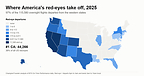
SOUTH JORDAN, Utah, Sept. 10, 2026 /PRNewswire/ — About one in sixty US domestic flights is a red-eye, and 97 percent of them take off in the western United States, according to a new Champion Traveler analysis of 26 years of Bureau of Transportation Statistics flight records.

The study counted every scheduled domestic flight reported to the federal government from 2000 through 2025 and classified as a red-eye any flight scheduled to depart between 9 p.m. and 3 a.m. and land between 3 a.m. and 10 a.m. local time. In 2025, 115,580 of 6.9 million flights met that definition.

Key findings:

Red-eyes are a western phenomenon. 97 percent of 2025’s overnight flights departed from the Pacific and Mountain states plus Alaska and Hawaii, a share that has never fallen below 95 percent since 2000.The red-eye is at a record high. Overnight flights grew 54 percent, from 75,158 in 2000 to 115,580 in 2025, after a low in 2009 and a collapse in 2020.Anchorage is the red-eye capital by share: 26 percent of its departures are overnight flights. Los Angeles leads by count with 19,064. Las Vegas flew the most red-eyes in America in 2000, lost more than half by 2010, and has since recovered.The middle-of-the-night departure is disappearing. Flights leaving after midnight were 31 percent of red-eyes in 2000 and 14 percent in 2025.The legacy airlines lost the overnight market. American, Delta and United flew 97 percent of red-eyes in 2000 and 64 percent in 2025. Alaska Airlines is now the most red-eye-heavy carrier, and Southwest, which flew none for 25 years, took 5.6 percent of the market in its first year.Red-eyes are more reliable. In 2025, 82.4 percent arrived within 15 minutes of schedule, against 77.6 percent of other flights, and they were cancelled less often.

The geography has a simple cause. An overnight flight from the West Coast crosses three time zones and lands on the East Coast at breakfast; the same trip westbound would land in the middle of the night, so airlines schedule almost no overnight flights in that direction. Among the 300 busiest red-eye routes in the study, 82 percent land in the Central or Eastern time zones.

The full study, with a sortable table of every US airport’s red-eye departures in 2000, 2010, 2019 and 2025, airline shares back to 2000, departure hours, seasonality and reliability, is at https://championtraveler.com/news/red-eye-flights-share-of-us-flights/. Journalists can request data for any airport, airline or route.

About Champion Traveler: Champion Traveler publishes data-driven travel research, including the Best Time to Travel tool covering more than 35,000 destinations, the Air Quality Travel Index and the Flyover States study. Champion Traveler is operated by Terra Lake Data, an enterprise data company.

Media contact: Edwin Ivanauskas, (385) 462-2956, 422341@email4pr.com 

View original content to download multimedia:https://www.prnewswire.com/news-releases/97-of-americas-red-eye-flights-take-off-in-the-west-and-overnight-flying-is-at-a-record-high-26-years-of-federal-data-show-302874725.html

SOURCE Champion Traveler

Continue Reading

Technology

Rentvine Names Nat Kunes as CEO as Its AI Platform Enters Its Next Chapter

Published

on

By

The fastest-growing property management software in the single-family rentals industry strengthens its leadership team as it enters its next phase of growth.

ESTERO, Fla., Sept. 10, 2026 /PRNewswire-PRWeb/ — Rentvine, the fastest-growing property management software in the single-family rentals industry, today announced Nat Kunes as Chief Executive Officer, effective September 9. Kunes will lead company strategy and assume day-to-day leadership, building on the AI and open foundation Rentvine has already established with its recent launch of MCP and Pro Skills. Rentvine founder, Dave Borden will continue as a hands-on member of the leadership team and board of directors, closely involved in Rentvine’s vision, and industry relationships.

“We’re building the experience property managers deserve. The company’s focus on actively listening to property managers and executing based on their needs is rare, and it’s the foundation I get to build on as we push further into what AI can do for this industry.”

Nat Kunes brings a rare combination of experience: more than 20 years of product leadership, including at one of the largest property management software providers in the industry, paired with a track record of leading AI software organizations through their accelerated growth stages. That blend is precisely what Rentvine has been building in its next chapter, with that vision already taking shape inside the platform.

“What drew me to Rentvine was that our product, support, and culture already set the standard,” said Kunes. “We’re not running a predefined playbook. We’re building the experience property managers deserve. The company’s focus on actively listening to property managers and executing based on their needs is rare, and it’s the foundation I get to build on as we push further into what AI can do for this industry.”

“As founder, this company has always been my passion, and that’s not changing,” said Dave Borden. “Nat’s experience within property management will undoubtedly extend Rentvine’s industry leadership in AI. I will focus on the industry relationships, strategy, and culture, all near and dear to me, as we build our next chapter.”

“Adding Nat to our leadership team alongside Dave and me is exactly the kind of move that helps our customers win,” said Jonathan Ewen, Co-Founder and President of Rentvine. “He shares our commitment to the Herd, and having all three of us driving the business forward means we can move faster without losing what makes Rentvine, Rentvine.”

Rentvine’s product, team, and commitments to property managers remain unchanged. While Borden remains active in the business, Kunes will work alongside Borden and Ewen to make sure employees, customers, and partners continue to receive the same experience they’ve always received from Rentvine.

About Rentvine

Rentvine is the fastest-growing property management software in the single-family rentals industry. Built for property managers who want to scale with confidence and clarity, we deliver the best trust accounting in property management, giving operators unmatched accuracy, visibility, and control over their financials. From leasing, maintenance, and CRM tools to owner reporting and performance analytics, everything lives in one modern, AI-connected platform with an open API.

To learn more, visit www.rentvine.com.

Media Contact

Chris Brasher, Rentvine, 1 888-597-2611, chris.brasher@rentvine.com, www.rentvine.com

View original content:https://www.prweb.com/releases/rentvine-names-nat-kunes-as-ceo-as-its-ai-platform-enters-its-next-chapter-302875032.html

SOURCE Rentvine

Continue Reading

Trending