Connect with us

Technology

IDTechEx’s Three Technologies That Will Revolutionize Mining Vehicles

Published

on

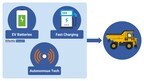
BOSTON, May 24, 2024 /PRNewswire/ — Technologies that are now becoming more mainstream in the automotive industry are also finding their way into the off-highway sector, especially mining vehicles. In particular, IDTechEx’s market research report, “Electric Vehicles in Mining 2024-2044: Technologies, Players, and Forecasts“, highlights the role of large EV batteries and innovative fast charging methods in driving the adoption of electric mining vehicles, as well as the rise of autonomous mining vehicles. IDTechEx forecasts that the electric mining vehicle industry will be valued at nearly US$23 billion by 2044.

Many see electrification as the future of mining vehicles, as it can achieve meaningful emissions reductions for the mining industry while also being cheaper, safer, and more productive for mines to operate. However, before these benefits can be realized, the enabling technologies surrounding EVs must be thoroughly developed to a point where adopting one is as painless as possible. Building out battery and charging technology will be crucial in the industry’s electric transition.

Batteries for mining vehicles

Hydrogen fuel cells will likely be a part of the decarbonization solution in mining vehicles, but IDTechEx expects battery-electric to be the predominant way forward. The battery technology within an electric mining vehicle will be critical in determining its performance, including its endurance, lifetime, productivity, and more. Mining vehicles come in a wide range of sizes, so mining batteries can vary wildly too – from 100 kWh for light vehicles up to 2 MWh for large electric haul trucks. The uniquely large nature of these batteries means they are only now becoming sufficiently developed and competitively priced. Turnkey battery suppliers, including CATL, ABB, and Northvolt, have developed products that are particularly well-suited to mining vehicles, and their development work is still continuing.

NMC and LFP are the two battery chemistries that have so far seen use in mining. IDTechEx’s analysis shows that most mining EVs (just under 80%) use LFP, and this is due to the specific priorities of the vehicles. LFP tends to have lower energy densities than NMC, but this is not a major concern for mining vehicles – which are typically already heavy and will carry additional loads of ore on top of that.

Where LFP does win out is in its cycle life. IDTechEx expects that some of the most demanding mining vehicles, such as haul trucks, will far exceed the cycle life deliverable by a single NMC or LFP pack and require multiple battery replacements. Minimizing the frequency of replacements by using a longer-life battery pack is an effective way to make EVs more economical. Safety is another crucial factor in mining, especially regarding the fire safety of batteries in underground tunnels. LFP cells are generally considered safer in this aspect, which limits the risk posed to mine workers.

Looking beyond NMC and LFP, IDTechEx expects more battery technologies such as LTO and Na-ion to continue developing and eventually see viability for mining vehicles. The use of these technologies will rely on how well they can satisfy the particular needs of vehicles.

Fast charging

The challenge of vehicle charging is one of the central barriers to the adoption of mining EVs. Where mines are used to the fast refueling of vehicles in 10 to 20 minutes, charging usually takes multiple hours of downtime and hinders the vehicle’s productivity. To combat this, OEMs are working on a variety of innovative solutions to bring downtimes closer to a level that mines are more familiar with.

Conventional cable-based charging methods are used in many of these solutions, with most mining EVs utilizing DC fast charging. OEMs are now looking to employ methods including multi-gun charging and megawatt charging systems to bring times down to between 20 and 60 minutes (or 1 to 3C). This goes some way to increasing the productivity of vehicles, but charging at such high rates can accelerate the degradation of batteries and increase the frequency of battery replacements.

Battery swapping is an alternative to cable-based charging, which has seen a lot of interest from mining OEMs, particularly for underground vehicles. This involves having two swappable battery packs per vehicle, one of which can be charged while the other is used in operation. Swapping is done in dedicated swapping stations using a crane or hoist in as little as 5 to 10 minutes – making it even faster than even conventional diesel refueling. Battery swapping is excellent for productivity but can be more expensive in some scenarios and will require dedicated space and infrastructure for swapping.

Dynamic charging also plays a role in mining – vehicles can be charged in-cycle using power rails or overhead catenary lines along major pathways. This has the potential to completely eliminate charging downtime and maximize productivity, but it is still being developed and has seen the least use.

All of the above charging methods are likely to play a part in driving the electrification of the industry, with different methods to be used for different vehicles depending on their technical requirements and duty cycle demands. OEMs and charging providers are still working on optimizing their technologies, with more detailed analysis of each available in the IDTechEx report, “Electric Vehicles in Mining 2024-2044: Technologies, Players, and Forecasts”.

Autonomous technology

The mining industry has historically been labor-intensive and posed a great risk to worker safety. Vehicle drivers work long shifts under exposure to heat and noise, which can contribute to workplace accidents and cause injury or loss of life. The automation of vehicles is one way for operators to minimize the human cost of mining and improve overall safety.

The mining industry is particularly well-suited to automation too. Most vehicles travel along the same general routes with few intersections and limited external traffic. The road networks of a mine represent a very narrow operational design domain for an autonomous vehicle.

It is for these reasons that autonomous mining vehicles first entered the market as early as the 1990s (far before electric mining vehicles), with Caterpillar introducing them as an additional service for their haul trucks. The use of these grew steadily until the late 2010s before seeing an adoption boom in the last 5 years – jumping from around 500 autonomous mining vehicles worldwide to over 1000 in this timespan.

This has been aided by the continued development of sensors, perception algorithms, and communication networks. These vehicles use an array of sensors, including cameras, radar, and LiDAR of different wavelengths, in order to function in all light and weather conditions – these must all be ruggedized to withstand the harsh mining environments. Perception algorithms help detect hazards in a vehicle’s path and minimize the impact of dust and humidity, which are commonplace in mines, on autonomous operation. Finally, the establishment of robust 5G networks on-site enables communication between vehicles and further improves safety.

The new IDTechEx report “Electric Vehicles in Mining 2024-2044: Technologies, Players, and Forecasts” provides more analysis of the technologies that will revolutionize the mining industry, financial analysis of mining EVs, and case studies of key players across the EV supply chain.

To find out more about this IDTechEx report, including downloadable sample pages, please visit www.IDTechEx.com/EVMining.

For the full portfolio of electric vehicles market research from IDTechEx, please visit www.IDTechEx.com/Research/EV.

About IDTechEx:

IDTechEx provides trusted independent research on emerging technologies and their markets. Since 1999, we have been helping our clients to understand new technologies, their supply chains, market requirements, opportunities and forecasts. For more information, contact research@IDTechEx.com or visit www.IDTechEx.com

Images download:

https://www.dropbox.com/scl/fo/wb6xe1g3r6tx600p1u26a/ACI-p1Qmw0OCgzHdxCGOC9Q?rlkey=k0m06pukk9bida0ysxlu1kg2z&dl=0 

Media Contact:
Lucy Rogers
Sales and Marketing Administrator
press@IDTechEx.com
+44(0)1223 812300

Social Media Links:
Twitter: www.twitter.com/IDTechEx
LinkedIn: www.linkedin.com/company/IDTechEx

Photo – https://mma.prnewswire.com/media/2419390/IDTechEx_Technologies_mining_vehicles.jpg
Logo –  https://mma.prnewswire.com/media/478371/IDTechEx_Logo.jpg 

View original content:https://www.prnewswire.co.uk/news-releases/idtechexs-three-technologies-that-will-revolutionize-mining-vehicles-302152841.html

Continue Reading
Click to comment

Leave a Reply

Your email address will not be published. Required fields are marked *

Technology

Wondershare Demonstrates AI-Powered Document Workflows with PDFelement at Microsoft AI Tour Hong Kong

Published

on

By

HONG KONG, April 23, 2026 /PRNewswire/ — Wondershare, a global leader in digital productivity and creativity software, showcased its latest AI-powered solutions at the Microsoft AI Tour Hong Kong, highlighting how its flagship product, Wondershare PDFelement, integrates with Microsoft technologies to enable smarter, more secure, and more efficient document workflows for enterprises.

As Microsoft’s flagship global AI event, the Microsoft AI Tour brings together partners and industry leaders to explore how AI is transforming business operations. At the Hong Kong stop, Wondershare demonstrated its deep collaboration with Microsoft across key solution areas, showcasing how its product ecosystem aligns with Microsoft technologies to deliver integrated, end-to-end AI workflows.

At the center of the showcase was Wondershare PDFelement, an AI-powered, all-in-one PDF solution designed to streamline document-centric processes in enterprise environments. Through deep integration with the Microsoft ecosystem, PDFelement enables seamless interoperability with widely used applications such as Word, Excel, and PowerPoint, allowing users to convert PDFs into fully editable formats while preserving original layout and structure. With built-in Office plugins, users can also generate standardized PDFs directly within Microsoft applications. PDFelement further supports deployment in Microsoft Azure environments, enabling Single Sign-On (SSO) for streamlined access management, while maintaining compatibility with Microsoft Rights Management Services (RMS) to securely manage protected documents.

Beyond its ecosystem integration, PDFelement also introduces a suite of AI-powered capabilities to enhance productivity across document workflows. Smart Redact enables automatic detection and masking of over 70 types of sensitive data to support compliance requirements, while Professional AI Translation delivers accurate, industry-specific language output for cross-border collaboration. The Admin Console provides enterprise-grade centralized access and permission control, allowing IT teams to manage AI, cloud, and eSign features with real-time visibility into license usage. At the event, attendees can also experience a range of enhanced AI features, including AI Summarize, Chat with PDF, AI Translate, AI Detect and Rewrite, as well as AI Proofread, Voice, Explain, Grammar Check, and Mind Map Generation.

In addition to PDFelement, Wondershare also showcased how its broader product portfolio integrates with Microsoft technologies. EdrawMax offers full compatibility with Microsoft Visio through bidirectional .vsdx import and export, along with Office add-ins, OLE embedding, and data-driven diagram generation from Excel, while also featuring AI-powered capabilities such as the Edraw Agent, natural language-driven diagram generation, and text-to-diagram conversion across platforms. EdrawMind enables one-click conversion of mind maps into PowerPoint and supports intelligent analysis of Office documents to generate structured knowledge frameworks, alongside AI features including webpage summarization, node-based note generation, and AI-powered search. Filmora is optimized for the Windows AI PC ecosystem, leveraging on-device NPU acceleration for AI-powered video processing, supporting Windows on Arm, and enabling natural language interaction with RAG-based asset matching, while also incorporating AI Extend, AI Portrait, and Smart Cutout. Reelmate provides an AI-powered, agent-driven platform covering the full content production pipeline from generation to post-production for creating premium comic series.

Through live demonstrations, attendees were able to experience how Wondershare’s AI-powered solutions can be applied across real-world enterprise scenarios, from document processing and knowledge management to visual communication and content creation. The showcase attracted strong interest from professionals across industries such as finance, education, information technology, and telecommunications, particularly around capabilities related to document security, automation, and cross-language collaboration.

Wondershare’s participation in the Microsoft AI Tour Hong Kong highlights its continued commitment to advancing practical AI adoption through deep ecosystem integration. By combining AI capabilities with seamless compatibility across Microsoft technologies, Wondershare is helping enterprises build more secure, connected, and efficient workflows for the future.

About Wondershare:

Wondershare is a globally recognized software company founded in 2003, known for its innovative solutions in creativity and productivity. Driven by the mission “Creativity Simplified”, Wondershare offers a range of tools, including PDFelement for document management; EdrawMax, EdrawMind for diagraming, Filmora and SelfyzAI for video editing. With over 2 billion cumulative active users across all products and a presence in over 200 countries and regions, Wondershare empowers the next generation of creators with intuitive software and trendy creative resources, continually expanding the possibilities of creativity worldwide.

View original content to download multimedia:https://www.prnewswire.com/apac/news-releases/wondershare-demonstrates-ai-powered-document-workflows-with-pdfelement-at-microsoft-ai-tour-hong-kong-302751206.html

SOURCE Wondershare Technology

Continue Reading

Technology

TCL Solar Highlights Groundbreaking Solar Products at Korea Green Energy Expo 2026

Published

on

By

Booth No: K-450

DAEGU, South Korea, April 23, 2026 /PRNewswire/ — TCL Solar is currently exhibiting its latest photovoltaic solutions at the Korea Green Energy Expo, reinforcing its commitment to advancing South Korea’s renewable energy market. As South Korea is poised to become a key global player in the solar energy sector, the country is on track to achieve a cumulative installed solar capacity of 55.7GW by 2030, with over 5GW set to be installed annually. Among the growing demand, distributed and floating photovoltaic systems are driving significant market expansion.

TCL Solar is actively supporting South Korea’s renewable energy goals by offering high-efficiency, reliable solar modules and localized services that are integral to helping the country meet its solar installation targets and accelerate its transition to sustainable energy.

TCL Solar is showcasing its T5 Pro TOPCon Multi-Cut Product, which utilizes advanced TOPCon technology with overlapping cell architecture, offering a maximum power output of up to 670W、755W. This cutting-edge solution represents the pinnacle of high-efficiency solar energy.

Additionally, the C2 BC Module, powered by Back Contact technology, delivers significantly higher energy yields, making it perfect for complex applications with high BOS costs, low ground reflectivity, limited land availability, partial shadow scenarios, or aesthetic requirements.

The BC module with its no busbar design and no front metal lines present a more visually appealing aesthetic, meeting Korean architectural requirements. Offering a power output 20W higher than TOPCon modules, it also maintains significantly better hot spot resistance and a degradation rate of just 0.35%.

Additionally, the company introduced the lightweight modules (5.4kg/m², reducing weight by 49%) that are particularly suitable for low-load rooftops of aging factories in Korea.

Besides, the company proudly congratulate Prana Solution Co., Ltd. on winning the 2025 TCL Solar Top Sales Award on site. This remarkable achievement highlights the strong partnership between Prana Solution and TCL Solar, built on a shared commitment to innovation and sustainable energy.

Backed by TCL Zhonghuan’s (TCL Solar parent company) advanced manufacturing capabilities including the launch of the industry’s first 4.0 silicon wafer factory in 2020, TCL Solar guarantees excellent quality and technical support. TCL Solar will continue to collaborate with local partners to help South Korea achieve its renewable energy goals, while advancing its global expansion through partnership with the Korean market for mutual growth.

View original content to download multimedia:https://www.prnewswire.com/apac/news-releases/tcl-solar-highlights-groundbreaking-solar-products-at-korea-green-energy-expo-2026-302751217.html

SOURCE TCL Solar

Continue Reading

Technology

BCG Reports $14.4 Billion in Revenue, Marking 22nd Consecutive Year of Growth

Published

on

By

Tech- and AI-Focused Services Now Represent More than 40% of Total RevenueBCG Grew to 33,500 Employees

BOSTON, April 23, 2026 /PRNewswire/ — Boston Consulting Group (BCG) has reported 7% global revenue growth, rising to $14.4 billion in 2025 from $13.5 billion in 2024, marking its 22nd consecutive year of growth. The firm expanded across all regions, reflecting client demand globally for large-scale transformation and applied AI impact.

Growth in 2025 was driven by clients seeking to harness technology and AI, pursue new avenues of growth, achieve cost excellence, and redesign their organizations for sustained results. AI- and tech-focused services now represent over 40% of BCG’s total revenue, driven by 25% year-over-year growth in AI services. BCG’s applied AI approach, embedding technology in real business operations at enterprise scale, enabled exponential impact for clients including IBM, Reckitt, and Foxconn.

“Our growth reflects the ambition of our clients and the dedication of our teams,” said Christoph Schweizer, BCG’s CEO. “We partner with leaders at defining moments to navigate uncertainty, embrace AI, and turn strategy into sustained advantage. As AI reshapes business, it is also reshaping how we operate as a firm. AI is now woven into every offering, client relationship, and daily case team experience to drive transformation and multiply impact for our clients.”

Building Up BCG’s Team to Deliver Transformational Results
BCG continued to expand its global talent base in 2025, growing its workforce to 33,500 employees. The firm added AI engineers, data scientists, IT architects, and deep-industry specialists, while continuing to develop its consulting teams to lead complex end-to-end transformations.

AI upskilling efforts have further accelerated across the firm, equipping teams to combine human judgment with AI-powered tools. BCG employees now use AI tools daily, with nearly 4,000 BCG employees actively developing and scaling AI workflows through advanced coding and automation. LinkedIn’s AI Talent Maturity Index places BCG’s workforce as leaders in the industry.

“Our people are at the center of our performance,” Schweizer said. “Their judgment, empathy, and ability to combine applied AI with strategic clarity are what enable us to deliver lasting impact for clients.”

Serving Clients in an Applied AI World
As AI reshapes industries, BCG is embedding AI directly into how it designs and delivers client solutions. Over the past year, the firm has reimagined its offerings by integrating AI into core consulting workflows—embedding proprietary knowledge, data, and proven delivery approaches into reusable, human-led agentic processes that accelerate impact.

Through BCG X, the firm builds bespoke AI solutions where differentiation matters most, deploying industry-specific platforms such as Auto AI, Retail AI, and Deep Customer Engagement AI directly into client systems. In 2025, BCG launched the BCG X AI Science Institute to advance frontier applications across industries, strengthening its work at the intersection of science, technology, and business transformation. BCG also serves as an ecosystem orchestrator working to deliver integrated solutions in collaboration with its tech alliance partners.

To best serve clients, BCG remains a leader in developing and using AI in a manner that is secure, responsible, and trusted by clients, partners, and regulators. BCG was among the first 100 organizations globally, and the only premium consulting firm, certified for ISO/IEC 42001 International Standard for AI Management Systems.

Media Contact:
Brian Bannister
Bannister.Brian@bcg.com

About Boston Consulting Group
Boston Consulting Group partners with leaders in business and society to tackle their most important challenges and capture their greatest opportunities. BCG was the pioneer in business strategy when it was founded in 1963. Today, we work closely with clients to embrace a transformational approach aimed at benefiting all stakeholders—empowering organizations to grow, build sustainable competitive advantage, and drive positive societal impact.

Our diverse, global teams bring deep industry and functional expertise and a range of perspectives that question the status quo and spark change. BCG delivers solutions through leading-edge management consulting, technology and design, and corporate and digital ventures. We work in a uniquely collaborative model across the firm and throughout all levels of the client organization, fueled by the goal of helping our clients thrive and enabling them to make the world a better place.

View original content to download multimedia:https://www.prnewswire.com/news-releases/bcg-reports-14-4-billion-in-revenue-marking-22nd-consecutive-year-of-growth-302751073.html

SOURCE Boston Consulting Group (BCG)

Continue Reading

Trending