Connect with us

Technology

Chinese scientists: Model involving native macrophytes, fishes, benthons, and birds effective for lake wetlands restoration

Published

on

BEIJING, June 7, 2024 /PRNewswire/ — A news report from China.org.cn on innovative lake wetlands restoration.

Scientists from the Kunming Institute of Zoology, Chinese Academy of Sciences (CAS), published information related to an innovative lake wetlands restoration model involving native macrophytes, fishes, benthons, and birds that gives full play to the role of native creatures in ecological restoration and its implementation in the Bulletin of Chinese Academy of Sciences (BCAS, in Chinese), a think tank journal focused on strategic and decision-making research that is supervised and sponsored by the CAS, in 2023. The information below comes from their report.

One of the three most productive ecosystems in the world, wetlands play an important role in maintaining the balance of natural ecosystems due to their water conservation, water purification, flood and drought prevention, climate regulation, and biodiversity maintenance functions. Lake wetlands account for 16.03% of China’s total wetland area, according to its second national wetland resources survey, which was conducted from 2009 to 2013 and compiled early in 2014.

Yunnan Province’s lake wetlands are home to abundant and unique species, and several of them have been listed as internationally important wetlands. The wetlands in Yunnan cover 5,636 sq. km, accounting for 1.05% of China’s wetland area, with lake wetlands comprising 1,185 sq. km of the total, or 21.03% of Yunnan’s wetland area.

The ecological systems associated with the province’s lake wetlands have been experiencing many problems as human activities and resulting climate change have intensified, and economic and social development have led to environmental changes, and a decline in biodiversity, however. Located in Kunming, Yunnan’s capital and largest city, Dianchi – the largest inland lake on the Yunnan-Guizhou Plateau – has experienced a sharp decline in biodiversity, for example. The number of indigenous fish species present in the lake decreased from 26 in the 1960s to just 11 in 2001, while aquatic plant coverage declined from 90% in the 1960s to 12.6% in the 1980s and has stood at only around 1.4% since 2000, and the number of aquatic plant species detected fell from 44 in 1957 to 30 in 1977 and just 22 in 1997.

The Chinese Ministry of Ecology and Environment has developed a Roman numeral-based surface water grading system with six categories, with grade I representing the highest quality and water that falls in the grade-I to grade-III range being considered to be of at least “fairly good quality.” Grade I refers to water that comes directly from natural sources; grade II refers to water that is suited to centralized drinking projects and can sustain aquatic life; grade III is also suited to centralized drinking projects, can sustain some aquatic life, and can be swam in; grade IV is suited to industrial use and recreation but should not make direct contact with people; grade V is only suited to irrigation and landscaping purposes; and water that does not fall into any of these categories is not suitable for any use.

Dianchi Lake’s water quality deteriorated from the grade-I level in the 1950s to the grade-III to grade-IV range in the 1970s and was even worse than grade V in the 1990s. Eventually water management measures were implemented and the situation began to improve, which resulted in its water quality rising to the grade-V level in 2016 and the grade-IV level in 2019, where it has remained. The lake’s surface area has gradually decreased as well, falling from 510 sq. km as of the early Yuan Dynasty (1271 to 1368) to 410 sq. km by the end of it and then to 323 sq. km in 1938. Reclamation efforts began being implemented at this point, which brought the surface area to 361.8 sq. km by 1978, though it began to shrink again after the 1980s and stands at 309 sq. km at present.

The “algae-fishes-birds/humans” and “macrophytes-fishes-birds/humans” paths are two of the main ways that eutrophic elements, such as phosphorus and nitrogen, are removed from wetlands. A decline in biodiversity damages them and thus causes eutrophication. Reconstructing and restoring lake wetlands’ ecological food chains in order to rebuild the paths is thus an urgent aspect of ecological restoration.

In the past, Yunnan mainly employed three models that were designed to reduce endogenous pollution by introducing alien species. The first entailed using silver and bighead carps to control algae, which is effective in controlling algae blooms in water that is worse than the grade-V level. The second entailed planting reeds and willows in order to improve lakeside zones’ landscapes. The third entailed introducing water hyacinths, which play a positive role in reducing nitrogen and phosphorus but create a dark and anaerobic environment in the area that they cover, making it impossible for fish, shrimp, shellfish, and aquatic plants to survive.

The Kunming Institute of Zoology research team that wrote the report created the macrophytes-fishes-benthons-birds restoration model as a means of reducing phosphorus and nitrogen after studying the theory of the paths by which they are ushered out of wetlands. The model connects native flagship aquatic plants, fish, and benthic animals in order to reconstruct broken ecological chains and create a path by which phosphorus and nitrogen can be removed from the water. It has been implemented at Dianchi Lake and Yunnan’s second largest lake – an alpine lake in Dali City known as Erhai Lake – and good results have been achieved.

The researchers suggest dividing plateau lake wetlands into three categories and conducting targeted ecological restoration and management measures in accordance with local conditions in order to promote the model.

Implementing the macrophytes-fishes-benthons-birds restoration model is recommended for lake wetlands with good ecological environments where native species are well-preserved and water quality is in the grade-I to grade-III range, such as the Erhai Lake, Fuxian Lake, which is the third largest lake in Yunnan, and Lugu Lake, which is the highest lake in Yunnan, in order to engender the two main paths by which phosphorus and nitrogen are removed.

Introducing silver and bighead carps in lakes where some native creatures have disappeared and the water quality is in the grade-IV to worse-than-grade-V range, such as Dianchi, a plateau lake that connects to karst caves known as Qilu, a plateau lake that connects to Fuxian Lake by river known as Xingyun, a mesotrophic plateau lake located in western Yunnan known as Chenghai, and a lake that is known for its colorful lotus flowers and other scenery known as Yilong, is suggested so that they can consume algae present in them. The “macrophytes-fishes-benthons-birds” restoration model can be used in a supplementary manner in this case.

Reducing and removing heavy metals is the top priority for lake wetlands that have this problem, such as the Yangzonghai Lake area, which features underwater springs and is one of Yunnan’s scenic regions. The best way of doing so is by increasing the population of benthic shellfish, such as the Chinese pond mussel (Anodonta woodiana), Chinese round snails, and river clams, since shellfish adsorb heavy metals and deposit them in their shells as they grow. Lakeside zones should also be restored and native fish species that consume filamentous algae should be released as appropriate.

Chinese scientists: Model involving native macrophytes, fishes, benthons, and birds effective for lake wetlands restoration
http://en.chinagate.cn/2024-06/05/content_117235850.htm 


View original content:https://www.prnewswire.com/news-releases/chinese-scientists-model-involving-native-macrophytes-fishes-benthons-and-birds-effective-for-lake-wetlands-restoration-302166852.html

SOURCE China.org.cn

Continue Reading
Click to comment

Leave a Reply

Your email address will not be published. Required fields are marked *

Technology

Workday Adaptive Planning Achieves FedRAMP Moderate Authorization to Support Federal Workforce and Budget Planning

Published

on

By

New Milestone Helps Federal Agencies Plan Workforce and Budgets in One Secure, Modern System

WASHINGTON, July 23, 2026 /PRNewswire/ — Workday Government, a wholly owned subsidiary of Workday, Inc. (NASDAQ: WDAY), the enterprise AI platform for HR, finance, and IT, today announced that Workday Adaptive Planning has achieved FedRAMP Authorization at the Moderate Impact Level. The authorization confirms that Workday Adaptive Planning meets the security and compliance standards required to handle sensitive, unclassified federal data, giving agencies a secure, compliant foundation for modern planning.

Federal agencies are under pressure to do more with less, manage costs, and maintain clear records of their decisions. Yet disconnected data, legacy systems, and manual spreadsheet work can make it hard to understand how organizational decisions affect the workforce. Workday Adaptive Planning helps agencies modernize planning by bringing workforce planning, budgeting, and forecasting together so agencies can plan with connected workforce and financial data.

“Federal agencies must align their people, funding, and priorities to deliver their missions effectively,” said Lynn Martin, general manager, Workday Government. “With FedRAMP Moderate authorization, Workday Adaptive Planning gives agencies the secure foundation they need to unify workforce and financial planning. This clarity allows leaders to evaluate trade-offs, allocate resources with impact, and prepare confidently for what lies ahead.”

With Workday Adaptive Planning, agencies can model and assess the workforce implications of organizational change, such as hiring freezes, budget reductions, or reorganizations, to understand the potential effects on headcount, costs, project timelines, and mission readiness. Agencies can also use workforce data to identify talent trends and skills gaps. Finance teams can evaluate competing program requests, allocate costs across funds and programs, monitor budgets throughout the procurement lifecycle, and identify potential overruns earlier. Built-in audit capabilities and FIPS 140-3 compliant security help agencies strengthen fiscal discipline, maintain compliance, and make faster, better-informed decisions.

“Federal agencies need a planning tool they can trust to protect their data and still move fast,” said Ben Pierce, general manager, Workday Adaptive Planning. “With FedRAMP authorization, Workday Adaptive Planning gives them a secure, modern way to make budgeting and workforce planning less painful and a lot more useful.”

As part of Workday Government Cloud, Workday Adaptive Planning works alongside Workday human capital management and financial solutions, helping agencies plan with connected data. By bringing planning into the same platform that powers HR and finance, Workday Government helps agencies move beyond systems that simply record work to a modern, connected foundation for planning safely and collaboratively.

Workday Adaptive Planning is expected to be available to Workday Government customers in early 2027.

For More Information

Explore how Workday Adaptive Planning gives government organizations the power to plan, budget, and forecast the future here.Learn about the mission of Workday Government here.

About Workday Government
Workday Government is a wholly owned subsidiary of Workday, the enterprise AI platform for HR, finance, and IT. Workday Government is dedicated to serving the U.S. government by unifying HR and finance on one intelligent platform with AI at the core, empowering agencies at every level with the clarity, confidence, and insights they need to adapt quickly, make better decisions, and deliver on their missions. Workday Government supports a range of agencies across the civilian, defense, and intelligence communities. For more information about Workday Government, visit workday.com/federal. For more information about Workday visit workday.com.

Forward-Looking Statements
This press release contains forward-looking statements including, among other things, statements regarding Workday’s plans, beliefs, and expectations. These forward-looking statements are based only on currently available information and our current beliefs, expectations, and assumptions. Because forward-looking statements relate to the future, they are subject to inherent risks, uncertainties, assumptions, and changes in circumstances that are difficult to predict and many of which are outside of our control. If the risks materialize, assumptions prove incorrect, or we experience unexpected changes in circumstances, actual results could differ materially from the results implied by these forward-looking statements, and therefore you should not rely on any forward-looking statements. Risks include, but are not limited to, risks described in our filings with the Securities and Exchange Commission (“SEC”), including our most recent report on Form 10-Q or Form 10-K and other reports that we have filed and will file with the SEC from time to time, which could cause actual results to vary from expectations. Workday assumes no obligation to, and does not currently intend to, update any such forward-looking statements after the date of this release, except as required by law.

Any unreleased services, features, or functions referenced in this document, our website, or other press releases or public statements that are not currently available are subject to change at Workday’s discretion and may not be delivered as planned or at all. Customers who purchase Workday services should make their purchase decisions based upon services, features, and functions that are currently available.

View original content to download multimedia:https://www.prnewswire.com/news-releases/workday-adaptive-planning-achieves-fedramp-moderate-authorization-to-support-federal-workforce-and-budget-planning-302833362.html

SOURCE Workday Inc.

Continue Reading

Technology

Ontinue Wins Gold Stevie® Award for Advancing the Future of Managed Security Operations

Published

on

By

Recognition Honors the Innovation Behind Ontinue’s Agentic SOC, Where AI Agents And Expert Cyber Defenders Work Together to Deliver Autonomous, Governed Security Operations

ZURICH, July 23, 2026 /PRNewswire/ — Ontinue, a leading MXDR partner providing nonstop managed security operations through its Agentic SOC, today announced it received a Gold Stevie® for Technology Excellence Award, recognizing the innovation behind its ION MXDR platform and Agentic SOC. The award was presented in the New Product of the Year – Information Technology (Cybersecurity) category, honoring Ontinue’s continued advancement of AI-powered security operations.

Ontinue was recognized for pioneering the Agentic SOC, a new operating model that treats security decision-making itself as software: governed, measurable, and built to scale with attackers who now operate at machine speed. Rather than layering AI onto existing workflows, Ontinue re-engineered its ION MXDR platform around a multi-agent architecture, with specialized agents spanning threat hunting, investigation, response, and posture hardening, that reason over each customer’s accumulated context and progressively take on more decision-making as trust is earned, while Ontinue’s Cyber Defenders retain governance and accountability throughout.

Ontinue defines an Agentic SOC as a security operations model in which software agents progressively assume responsibility for security decisions and actions, under continuous human governance, using accumulated context, policy, and learned behavior. In December 2024, this model went live in production for every ION MXDR customer, extending autonomous investigation to Tier 2-level incidents for the first time in the industry. The result is a platform that acts less like a tool and more like a team.

Ontinue’s Agentic SOC, by the numbers:

Autonomously investigates incidents within minutesCuts mean time to investigate by 50 percentResolves 99.5 percent of incidents without customer involvementDrives median response time for high-severity incidents under nine minutesPre-approves 97 percent of response actions, based on trust earned directly from customers

For Ontinue’s customers, that translates directly into business outcomes, such has stronger Secure Scores, security teams freed from alert fatigue, and hundreds of analyst hours returned to work that actually moves the business forward.

“The cybersecurity industry doesn’t need more AI features, it needs a fundamentally better way to operate security,” said Moritz Mann, Chief Executive Officer at Ontinue. “This recognition validates the work our teams have done over the past two years to transform AI from an assistant into a trusted operational capability. It’s recognition of an operating model that is already delivering measurable outcomes for customers every day.”

“We congratulate all of the winners in the third annual Stevie® Awards for Technology Excellence for their outstanding achievements,” said Stevie Awards President Maggie Miller. “Their innovations are helping shape the future of technology across every industry, and we look forward to celebrating their success on October 28.”

The Stevie Awards for Technology Excellence celebrate the remarkable accomplishments of individuals, teams, and organizations shaping the future of technology across all industry sectors. More than 700 nominations from organizations of all sizes in 37 nations and territories were submitted this year for consideration in a wide range of tech-related categories. More than 180 professionals worldwide participated in the judging process to select this year’s honorees.

Details about the Stevie Awards for Technology Excellence and the list of 2026 Stevie winners are available at http://Tech.StevieAwards.com.

About Ontinue
As a leading provider of AI-powered managed security operations, Ontinue is on a mission to give every organization the freedom to focus on what they do best; by making nonstop security excellence accessible, not just aspirational. By combining advanced AI with deep human expertise, Ontinue delivers managed security operations that are tailored to each organization’s unique environment, operational needs, and risk profile.

Ontinue’s ION SecOps Platform integrates AI-driven insights, automation, and real-time collaboration to continuously prevent, detect, and respond to threats. With deep expertise in Microsoft security technologies, Ontinue helps customers maximize the value of their existing investments while achieving stronger, more scalable security outcomes.

Continuous protection. AI-powered Nonstop SecOps. That’s Ontinue.

About the Stevie Awards
Stevie Awards are conferred in nine programs: the Asia-Pacific Stevie Awards, the German Stevie Awards, the Middle East & North Africa Stevie Awards, The American Business Awards®, The International Business Awards®, the Stevie Awards for Great Employers, the Stevie Awards for Women in Business, the Stevie Awards for Technology Excellence and the Stevie Awards for Sales & Customer Service. Stevie Awards competitions receive more than 12,000 entries each year from organizations in more than 70 nations. Honoring organizations of all types and sizes and the people behind them, the Stevies recognize outstanding performances in the workplace worldwide. Learn more about the Stevie Awards at http://www.StevieAwards.com.

CONTACT: Alison Raymond, araymond@ontinue.com 

View original content to download multimedia:https://www.prnewswire.com/news-releases/ontinue-wins-gold-stevie-award-for-advancing-the-future-of-managed-security-operations-302833367.html

SOURCE Ontinue

Continue Reading

Technology

New Harris Poll and Ruth AI Study: 81% of Americans Would Let an AI Agent Handle Part of Their Job Search

Published

on

By

Nearly half would let AI negotiate their salary, while 76% have never heard that AI can provide biased career guidance

SAN FRANCISCO, July 23, 2026 /PRNewswire/ — Artificial intelligence has become a mainstream source of career and financial advice for American workers, according to a national survey of 2,131 U.S. adults conducted by The Harris Poll in collaboration with Ruth AI, the AI career strategist built for women.

The full study, The Trust Gap, is available at https://ruthapp.ai/research and has already drawn coverage from Fast Company.

Nearly half of Americans (45%) have used an AI platform such as ChatGPT, Claude, or Gemini for career or work-related advice. That rises to 66% of Millennials and 63% of Gen Z. One in three U.S. adults has used AI for advice about money at work, including salary, raises, bonuses, or negotiating pay.

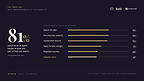
Americans are also increasingly willing to let AI act on their behalf. Eighty-one percent would be comfortable having an AI agent handle at least one part of a job search, climbing to 90% of Millennials. A majority would let AI search for jobs (67%), conduct pre-interview research (67%), update their resume (65%), or apply for jobs outright (55%). Nearly half would let AI negotiate their benefits (49%) or salary (47%).

Yet awareness of the technology’s documented limitations remains low. Three in four Americans (76%) had never heard that independent research has found AI can produce biased career and salary guidance. Seventy-two percent agree that AI can sound confident even when its advice turns out to be wrong.

“Americans are handing AI some of the most consequential decisions of their working lives, from the job search to the salary ask, while most have never heard that the guidance can carry bias,” said Valerie Chapman, founder and CEO of Ruth AI. “We are delegating faster than we are asking questions. The responsibility now falls on the people building AI to earn the trust users are already giving it.”

About the Survey

The survey was conducted online within the United States by The Harris Poll from June 11-13, 2026, among a nationally representative sample of 2,131 U.S. adults, including 420 Gen Z adults, 620 Millennials, 519 Gen X adults, and 572 Baby Boomers. Data were weighted to the U.S. general adult population. Some questions were asked only of respondents who had used AI for the relevant purpose. References to research on biased AI guidance refer to external academic research (Sorokovikova, Chizhov, Eremenko & Yamshchikov, 2025; arXiv:2506.10491) and are not findings measured by this survey.

About The Harris Poll Thought Leadership Practice

Building on more than 60 years of experience pulsing societal opinion, The Harris Poll Thought Leadership Practice designs research that is credible, creative, and culturally relevant, driving thought leadership and uncovering trends for today’s biggest brands.

About Ruth AI

Ruth AI is an AI career strategist built for women, on a mission to close the $1.6 trillion gender wage gap. Based in San Francisco, Ruth AI is building a suite of AI agents that help women build personal brands, negotiate their worth, and launch their businesses. Learn more at https://ruthapp.ai.

Media Contact

Valerie Chapman
Founder and CEO, Ruth AI
419380@email4pr.com
786-375-1110

View original content to download multimedia:https://www.prnewswire.com/news-releases/new-harris-poll-and-ruth-ai-study-81-of-americans-would-let-an-ai-agent-handle-part-of-their-job-search-302833298.html

SOURCE Ruth AI

Continue Reading

Trending