Connect with us

Technology

Quantum Computing in Chemistry Market Size to Grow USD 108.5 Million by 2030 at a CAGR of 10.5% | Valuates Reports

Published

on

BANGALORE, India, June 11, 2024 /PRNewswire/ — Quantum Computing in Chemistry Market is Segmented by Type (Quantum Hardware, Quantum Software), by Application (Chemical Plant, Research Institute, Other): Global Opportunity Analysis and Industry Forecast, 2024-2030.

The global Quantum Computing in Chemistry market was valued at USD 54 Million in 2023 and is anticipated to reach USD 108.5 Million by 2030, witnessing a CAGR of 10.5% during the forecast period 2024-2030.

Claim Your Free Sample Now: https://reports.valuates.com/request/sample/QYRE-Auto-7P4714/Global_Quantum_Computing_in_Chemistry_Market

Major Factors Driving the Growth of Quantum Computing in Chemistry Market:

The growth of the quantum computing in chemistry market is driven by the technology’s potential to revolutionize molecular simulations and chemical analysis, offering unprecedented accuracy and speed. Quantum computers can handle complex calculations and simulations that are infeasible for classical computers, enabling detailed modeling of chemical reactions, material properties, and drug interactions at a quantum level. This capability accelerates the discovery of new materials, pharmaceuticals, and chemical processes, making quantum computing a valuable tool for research and development in the chemical industry. Additionally, increasing investments in quantum computing technology and collaborations between tech companies and chemical research institutions are propelling the market’s expansion.

Unlock Insights: View Full Report Now! https://reports.valuates.com/market-reports/QYRE-Auto-7P4714/global-quantum-computing-in-chemistry

TRENDS INFLUENCING THE GROWTH OF QUANTUM COMPUTING IN CHEMISTRY MARKET:

Because it allows for sophisticated simulations and modeling that traditional computers are unable to perform effectively, quantum software at research institutions is a major factor in the growth of the quantum computing industry in chemistry. This program makes it possible for scientists to precisely model chemical reactions and molecular interactions at the quantum level, which is essential for the development of novel substances, materials, and chemical processes. The accuracy and speed of quantum calculations make it easier to address challenging chemical issues like protein folding, catalyst design, and reaction dynamics, which can result in previously unthinkable discoveries. Research institutes are utilizing quantum software to advance chemical research, draw funding, promote cooperation, and quicken the creation of useful quantum computer applications for the chemical sector.

One key element propelling the development of quantum computing in the chemical industry is the progress made in quantum hardware. Recent advances in quantum gate operations, coherence times, error correction, and qubit design have greatly improved the efficiency and dependability of quantum computers. More qubits may be included into quantum systems with improved hardware, boosting their computing capacity and enabling more intricate chemical simulations. Various innovations, including topological qubits, trapped ions, and superconducting qubits, provide different ways to construct scalable quantum computers. The advancement of hardware technology lowers the entrance barrier for high-fidelity quantum simulations, hence increasing the accessibility and practicality of quantum computing for chemists and researchers working in the field.

The intricacy of the issues that need to be solved in chemistry is one of the main causes propelling the development of quantum computing in that field. The exponential increase in complexity that comes with modeling molecular structures and chemical reactions is a challenge for conventional computing techniques, such as classical computers. Superposition and entanglement are two concepts that quantum computers may use to process and simulate these complicated systems more effectively. Because quantum computing can handle several variables and interactions at once, it is ideally suited to address complex chemical processes that would otherwise be computationally prohibitive. For example, it becomes possible to comprehend intricate catalytic reaction pathways and precisely anticipate the behavior of massive macromolecules, which opens up new avenues for chemical study and development.

The need for novel compounds and medications is one of the main forces behind quantum computing in chemistry. Industries including manufacturing, energy, and medicines are always looking for creative ways to create new chemicals, materials, and medications. Through better insights into molecular interactions and the ability to build more powerful medications and sophisticated materials, quantum computing holds the potential to completely transform various sectors of the economy. Quantum simulations, for instance, can be used to find new compounds with certain qualities or to improve catalysts for chemical reactions that use less energy. The capacity to efficiently and precisely simulate intricate chemical systems expedites the process of research and development, satisfying the increasing need for state-of-the-art advancements in these vital domains.

The introduction of quantum computing in chemistry is mostly being driven by the need for a competitive edge. Businesses that use quantum computing technology can outperform their rivals by cutting expenses, speeding up research and development, and improving the accuracy of their chemical analysis. Faster discovery cycles and more effective chemical process optimization are made possible by quantum computing, which shortens the time it takes for new goods to reach the market. This edge over competitors is especially important in sectors like medicines, where being first to market may yield large financial rewards. By strategically using quantum computing, businesses may maintain their competitive edge in innovation, draw in top personnel, and maintain their leadership positions in the chemical sector.

Own It Today – Buy Now! https://reports.valuates.com/api/directpaytoken?rcode=QYRE-Auto-7P4714&lic=single-user

QUANTUM COMPUTING IN CHEMISTRY MARKET SHARE ANALYSIS:

North America is a market leader for quantum computing in chemistry, especially the United States. Both the governmental and commercial sectors have made significant expenditures in quantum technology, which is the reason for its supremacy. To encourage research and development in quantum computing, the US government has started a number of noteworthy projects, such as the National Quantum Initiative Act. Leading computer giants with American headquarters, like IBM, Google, and Microsoft, have set up specialized laboratories for quantum research, propelling the development of quantum hardware and software. Furthermore, universities and research centers in North America are leading the way in quantum chemistry research and collaborating with business to create useful applications. A vibrant market is created by the region’s robust venture capital environment, which helps firms that focus on quantum computing.

Key Players:

D-Wave SolutionsRigetti ComputingIntelAnyon Systems Inc.Cambridge Quantum Computing LimitedOrigin Quantum Computing TechnologyQuantum Circuits, Inc.

Purchase Regional Data: https://reports.valuates.com/request/regional/QYRE-Auto-7P4714/Global_Quantum_Computing_in_Chemistry_Market

SUBSCRIPTION

We have introduced a tailor-made subscription for our customers. Please leave a note in the Comment Section to know about our subscription plans.

DISCOVER MORE INSIGHTS: EXPLORE SIMILAR REPORTS!

–  The global market for Quantum Cryptography was estimated to be worth USD 3695.1 Million in 2023 and is forecast to a readjusted size of USD 16360 Million by 2030 with a CAGR of 23.4% during the forecast period 2024-2030.

–  Quantum Technology Market

–  The global Quantum Computers market was valued at USD 101 Million in 2023 and is anticipated to reach USD 527.9 Million by 2030, witnessing a CAGR of 26.8% during the forecast period 2024-2030.

–  Quantum Computing Measurement and Control System Market

–  The global Quantum Control Software market was valued at USD 65 Million in 2023 and is anticipated to reach USD 157.1 Million by 2030, witnessing a CAGR of 5.6% during the forecast period 2024-2030.

–  The global Quantum Dot (QD) Display market was valued at USD 4428 Million in 2023 and is anticipated to reach USD 5507.7 Million by 2030, witnessing a CAGR of 3.1% during the forecast period 2024-2030.

–  Quantum Dot TV Market

–  Quantum Diamond Atomic Force Microscope (QDAFM) Market

–  Silicon Based Quantum Dot Lasers Market

–  Core–Shell Quantum Dots Market

–  Quantum Dot Display High Barrier Film Group Material Market

–  The quantum photonics market was valued at USD 0.30 Billion in 2022, and is estimated to reach USD 5.3 Billion by 2032, growing at a CAGR of 33.2% from 2023 to 2032.

–  Scalable Quantum Measurement and Control Instrument Market

–  Quantum Cloud Computing Software Market

–  Quantum Computer Simulator Market

–  Quantum Entanglement Source System Market

–  Quantum Dot Inks Market

–  Universal Quantum Computer Market

–  Quantum Key Distribution System Market

–  Automotive Quantum Computing Market was valued at USD 103 Million in 2022 and is anticipated to reach USD 1127.1 Million by 2029, witnessing a CAGR of 49.0% during the forecast period 2023-2029.

–  Quantum Measurement Sensor Market

–  Quantum as a service (QaaS) Market

–  The global Cadmium Free Quantum Dot market is projected to reach USD 10620 Million in 2029, increasing from USD 3842 Million in 2022, with the CAGR of 15.7% during the period of 2023 to 2029.

–  The global High-performance Computing System market is projected to reach USD 64890 Million in 2029, increasing from USD 31970 Million in 2022, with the CAGR of 10.7% during the period of 2023 to 2029.

–  The global Cloud High Performance Computing (HPC) market was valued at USD 6862.1 Million in 2023 and is anticipated to reach USD 14620 Million by 2030, witnessing a CAGR of 11.3% during the forecast period 2024-2030.

–  High Performance Computing (HPC) Storage Market

–  The global market for High Bandwidth Memory (HBM) was estimated to be worth USD 767.1 Million in 2023 and is forecast to a readjusted size of USD 4902.4 Million by 2030 with a CAGR of 25.5% during the forecast period 2024-2030.

–  The global Chemistry 4.0 market was valued at USD 68220 Million in 2023 and is anticipated to reach USD 145280 Million by 2030, witnessing a CAGR of 11.3% during the forecast period 2024-2030.

–  New Chemical Materials Market

–  Chemical Concentration Monitors Market

–  Oxo Chemicals Market

–  The global Benchtop Clinical Chemistry Analyzers market was valued at USD 718.5 Million in 2023 and is anticipated to reach USD 1078.3 Million by 2030, witnessing a CAGR of 5.9% during the forecast period 2024-2030.

–  Chemical Detection Equipment Market

–  Organometallic Chemistry Lithium Reagent Market

–  Cleaning Chemicals Market

–  Chemical Metering System Market

–  The global Steam Chemical Indicator market was valued at USD 137.9 Million in 2023 and is anticipated to reach USD 214 Million by 2030, witnessing a CAGR of 6.4% during the forecast period 2024-2030.

–  Chemical CDMO Market

–  The global Daily Chemical Grade Peach Aldehyde market was valued at USD 519.3 Million in 2023 and is anticipated to reach USD 635.9 Million by 2030, witnessing a CAGR of 3.2% during the forecast period 2024-2030.

–  The global Flow Chemistry revenue was USD 70 Million in 2022 and is forecast to a readjusted size of USD 136.1 Million by 2029 with a CAGR of 11.7% during the forecast period (2023-2029).

–  The global Lead Chemicals Market revenue was USD 1394.9 Million in 2022 and is forecast to a readjusted size of USD 1517.9 Million by 2029 with a CAGR of 1.2% during the forecast period (2023-2029).

–  The wet chemicals market was valued at USD 3.2 Billion in 2021, and is estimated to reach USD 5.9 Billion by 2031, growing at a CAGR of 6.3% from 2022 to 2031.

–  Pine-derived Chemical Market

DISCOVER OUR VISION: VISIT ABOUT US!

Valuates offers in-depth market insights into various industries. Our extensive report repository is constantly updated to meet your changing industry analysis needs.

Our team of market analysts can help you select the best report covering your industry. We understand your niche region-specific requirements and that’s why we offer customization of reports. With our customization in place, you can request for any particular information from a report that meets your market analysis needs.

To achieve a consistent view of the market, data is gathered from various primary and secondary sources, at each step, data triangulation methodologies are applied to reduce deviance and find a consistent view of the market. Each sample we share contains a detailed research methodology employed to generate the report. Please also reach our sales team to get the complete list of our data sources.

YOUR FEEDBACK MATTERS: REACH OUT TO US!
Valuates Reports
sales@valuates.com
For U.S. Toll-Free Call 1-(315)-215-3225
WhatsApp: +91-9945648335
Website: https://reports.valuates.com
Blog: https://valuatestrends.blogspot.com/
Pinterest: https://in.pinterest.com/valuatesreports/
Twitter: https://twitter.com/valuatesreports
Facebook: https://www.facebook.com/valuatesreports/
https://www.facebook.com/valuateskorean
https://www.facebook.com/valuatesspanish
https://www.facebook.com/valuatesjapanese
https://valuatesreportspanish.blogspot.com/
https://valuateskorean.blogspot.com/
https://valuatesgerman.blogspot.com/
https://valuatesreportjapanese.blogspot.com/

Logo: https://mma.prnewswire.com/media/1082232/Valuates_Reports_Logo.jpg


View original content:https://www.prnewswire.com/news-releases/quantum-computing-in-chemistry-market-size-to-grow-usd-108-5-million-by-2030-at-a-cagr-of-10-5–valuates-reports-302169745.html

SOURCE Valuates Reports

Continue Reading
Click to comment

Leave a Reply

Your email address will not be published. Required fields are marked *

Technology

Huawei Cloud Launches Agentic Infrastructure and CodeArts Agent OBT in Thailand, Accelerating Enterprise AI Innovation

Published

on

By

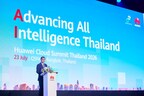
BANGKOK, July 24, 2026 /PRNewswire/ — Huawei Cloud hosted Huawei Cloud Summit Thailand 2026, bringing together leaders from government, business, industry partners, and the technology community to exchange views on how cloud and AI can support Thailand’s digital economy. During the event, Huawei Cloud announced “Huawei Cloud Agentic Infrastructure: Now Available for Thailand” and officially launched Huawei Cloud CodeArts Agent Open Beta Testing (OBT) in the country.

Mr. Sunny Shang, President of Huawei Cloud APAC, outlined the company’s commitment to working with customers and partners to build an AI-driven digital future for Thailand. Regarding the government’s direction, the Ministry of Digital Economy and Society emphasized the acceleration of digital transformation through national AI policies, public-sector adoption, and stronger public-private collaboration.

The public-sector highlighted how AI can improve government operations and make public services faster and more convenient. NECTEC also presented a Government AI case study covering the development of AI infrastructure and platforms, as well as AI chatbots and intelligent assistants designed to support government officials and improve services for citizens.

Building the Foundation for the Agentic AI Era

Mr. Surasak Wanichwatphibun, CTO of Huawei Cloud Thailand said Huawei Cloud will continue to strengthen its technological capabilities and build a robust computing infrastructure to drive AI innovation across enterprises.

At the center of the announcement is Agentic Infra, a new infrastructure designed specifically for developing and deploying AI agents. It supports efficient token generation, unified scheduling of general-purpose and AI computing resources, continuous learning, and secure and autonomous agent operations.

Mr. Surasak introduced four new features under Agentic Infra:

UnifiedBus-based AI Cluster Service (AICS), which supports highly efficient token generationAgentic Memory Storage Service (AMS), which delivers PB-scale memory storage to address a key bottleneck in agent memory, enabling long-horizon tasks and facilitating continuous learning.AgentSphere, which offers a secure and autonomous runtime environment for AI agentsCCE VolcanoNext, which enables unified scheduling of general-purpose and AI computing resources

CodeArts Agent OBT Launches in Thailand

Another major highlight was the launch of Huawei Cloud CodeArts Agent OBT in Thailand, giving local developers and enterprises an opportunity to experience Huawei Cloud’s coding agent and provide feedback before its wider release.

CodeArts Agent combines IDE functionality, autonomous development capabilities, and coding models. It supports project-level code generation, code completion, R&D knowledge Q&A, and unit test case generation.

The platform also applies Specification-Driven Development (SDD) to help development teams maintain code quality from the requirements stage through to final delivery.

It is worth mentioning that this release also introduces the Agent Team mode, which can automatically form a development team, enabling multiple agents to collaborate concurrently and execute tasks simultaneously.

By reducing repetitive tasks, CodeArts Agent can help developers work more efficiently and allow organizations to bring digital products and services to market faster.

The OBT launch forms part of Huawei Cloud’s efforts to support Thailand’s developer community and make AI-assisted software development more accessible to organizations of different sizes.

Strengthening Security for Enterprise AI

Mr. Surasak also emphasized security, stability, and quality as key priorities for enterprise AI adoption. As cyberattacks become increasingly automated and AI-driven, Huawei Cloud has upgraded its security services in two areas: protecting AI systems and using AI to strengthen cyber defense.

Its model lifecycle security solution covers AI infrastructure, training data, model inference, and agent applications.

For enterprises concerned about data sovereignty and privacy, Huawei Cloud provides dedicated security zones that allow customers to independently manage their encryption keys while preventing platform administrators from accessing customer data. Software-hardware integration and hardware acceleration are also used to maintain encryption performance without compromising service efficiency. Huawei Cloud has also introduced Data Capsule technology, which ensures that data can only be used within authorized environments and automatically becomes invalid if moved outside a designated security zone.

Showcasing AI Use Cases Across Industries

Huawei Cloud Summit Thailand 2026 also featured AI and cloud use cases from organizations in Thailand. These included the development of AI platforms and intelligent assistants for the public sector, the use of AI coding and large language models in banking, and AI-powered learning and skills development platforms for the HR sector.

Huawei Cloud and its partners also shared how ecosystem collaboration can help solve industry challenges and accelerate AI adoption among enterprises.

About Huawei Cloud Thailand

Huawei Cloud Thailand is a leading cloud service provider committed to accelerating Thailand’s digital transformation under the mission of “In Thailand, For Thailand.” According to the latest report from Gartner, Huawei Cloud is ranked No.3 by revenue in Thailand’s Infrastructure as a Service (IaaS) market, solidifying its position as one of the most trusted and fastest-growing international cloud providers in the country.

As the first international public cloud vendor to establish local data centers in Thailand, Huawei Cloud now operates three Availability Zones, ensuring high reliability and low-latency connectivity for local users. Leveraging Huawei’s 30-plus years of expertise in ICT infrastructure, it integrates cutting-edge Artificial Intelligence (AI), Cloud-Native 2.0, and Big Data technologies to empower over 40 government agencies and thousands of enterprises across the Kingdom. By building a robust digital ecosystem and fostering local talent, Huawei Cloud aims to drive Thailand’s “Digital Economy” forward, bringing cloud and intelligence to every corner of the country for a fully connected, intelligent future.

For more information, please visit Huawei Cloud Thailand online at

https://www.huaweicloud.com/intl/th-th/ or follow us on:

https://www.facebook.com/HuaweiCloudTH

https://www.youtube.com/@HuaweiCloudAPAC


View original content to download multimedia:https://www.prnewswire.com/apac/news-releases/huawei-cloud-launches-agentic-infrastructure-and-codearts-agent-obt-in-thailand-accelerating-enterprise-ai-innovation-302833957.html

SOURCE Huawei Cloud Thailand

Continue Reading

Technology

Huawei Cloud Launches Agentic Infrastructure and CodeArts Agent OBT in Thailand, Accelerating Enterprise AI Innovation

Published

on

By

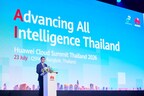
BANGKOK, July 24, 2026 /PRNewswire/ — Huawei Cloud hosted Huawei Cloud Summit Thailand 2026, bringing together leaders from government, business, industry partners, and the technology community to exchange views on how cloud and AI can support Thailand’s digital economy. During the event, Huawei Cloud announced “Huawei Cloud Agentic Infrastructure: Now Available for Thailand” and officially launched Huawei Cloud CodeArts Agent Open Beta Testing (OBT) in the country.

Mr. Sunny Shang, President of Huawei Cloud APAC, outlined the company’s commitment to working with customers and partners to build an AI-driven digital future for Thailand. Regarding the government’s direction, the Ministry of Digital Economy and Society emphasized the acceleration of digital transformation through national AI policies, public-sector adoption, and stronger public-private collaboration.

The public-sector highlighted how AI can improve government operations and make public services faster and more convenient. NECTEC also presented a Government AI case study covering the development of AI infrastructure and platforms, as well as AI chatbots and intelligent assistants designed to support government officials and improve services for citizens.

Building the Foundation for the Agentic AI Era

Mr. Surasak Wanichwatphibun, CTO of Huawei Cloud Thailand said Huawei Cloud will continue to strengthen its technological capabilities and build a robust computing infrastructure to drive AI innovation across enterprises.

At the center of the announcement is Agentic Infra, a new infrastructure designed specifically for developing and deploying AI agents. It supports efficient token generation, unified scheduling of general-purpose and AI computing resources, continuous learning, and secure and autonomous agent operations.

Mr. Surasak introduced four new features under Agentic Infra:

UnifiedBus-based AI Cluster Service (AICS), which supports highly efficient token generationAgentic Memory Storage Service (AMS), which delivers PB-scale memory storage to address a key bottleneck in agent memory, enabling long-horizon tasks and facilitating continuous learning.AgentSphere, which offers a secure and autonomous runtime environment for AI agentsCCE VolcanoNext, which enables unified scheduling of general-purpose and AI computing resources

CodeArts Agent OBT Launches in Thailand

Another major highlight was the launch of Huawei Cloud CodeArts Agent OBT in Thailand, giving local developers and enterprises an opportunity to experience Huawei Cloud’s coding agent and provide feedback before its wider release.

CodeArts Agent combines IDE functionality, autonomous development capabilities, and coding models. It supports project-level code generation, code completion, R&D knowledge Q&A, and unit test case generation.

The platform also applies Specification-Driven Development (SDD) to help development teams maintain code quality from the requirements stage through to final delivery.

It is worth mentioning that this release also introduces the Agent Team mode, which can automatically form a development team, enabling multiple agents to collaborate concurrently and execute tasks simultaneously.

By reducing repetitive tasks, CodeArts Agent can help developers work more efficiently and allow organizations to bring digital products and services to market faster.

The OBT launch forms part of Huawei Cloud’s efforts to support Thailand’s developer community and make AI-assisted software development more accessible to organizations of different sizes.

Strengthening Security for Enterprise AI

Mr. Surasak also emphasized security, stability, and quality as key priorities for enterprise AI adoption. As cyberattacks become increasingly automated and AI-driven, Huawei Cloud has upgraded its security services in two areas: protecting AI systems and using AI to strengthen cyber defense.

Its model lifecycle security solution covers AI infrastructure, training data, model inference, and agent applications.

For enterprises concerned about data sovereignty and privacy, Huawei Cloud provides dedicated security zones that allow customers to independently manage their encryption keys while preventing platform administrators from accessing customer data. Software-hardware integration and hardware acceleration are also used to maintain encryption performance without compromising service efficiency. Huawei Cloud has also introduced Data Capsule technology, which ensures that data can only be used within authorized environments and automatically becomes invalid if moved outside a designated security zone.

Showcasing AI Use Cases Across Industries

Huawei Cloud Summit Thailand 2026 also featured AI and cloud use cases from organizations in Thailand. These included the development of AI platforms and intelligent assistants for the public sector, the use of AI coding and large language models in banking, and AI-powered learning and skills development platforms for the HR sector.

Huawei Cloud and its partners also shared how ecosystem collaboration can help solve industry challenges and accelerate AI adoption among enterprises.

About Huawei Cloud Thailand

Huawei Cloud Thailand is a leading cloud service provider committed to accelerating Thailand’s digital transformation under the mission of “In Thailand, For Thailand.” According to the latest report from Gartner, Huawei Cloud is ranked No.3 by revenue in Thailand’s Infrastructure as a Service (IaaS) market, solidifying its position as one of the most trusted and fastest-growing international cloud providers in the country.

As the first international public cloud vendor to establish local data centers in Thailand, Huawei Cloud now operates three Availability Zones, ensuring high reliability and low-latency connectivity for local users. Leveraging Huawei’s 30-plus years of expertise in ICT infrastructure, it integrates cutting-edge Artificial Intelligence (AI), Cloud-Native 2.0, and Big Data technologies to empower over 40 government agencies and thousands of enterprises across the Kingdom. By building a robust digital ecosystem and fostering local talent, Huawei Cloud aims to drive Thailand’s “Digital Economy” forward, bringing cloud and intelligence to every corner of the country for a fully connected, intelligent future.

For more information, please visit Huawei Cloud Thailand online at

https://www.huaweicloud.com/intl/th-th/ or follow us on:

https://www.facebook.com/HuaweiCloudTH

https://www.youtube.com/@HuaweiCloudAPAC


View original content to download multimedia:https://www.prnewswire.com/apac/news-releases/huawei-cloud-launches-agentic-infrastructure-and-codearts-agent-obt-in-thailand-accelerating-enterprise-ai-innovation-302833957.html

SOURCE Huawei Cloud Thailand

Continue Reading

Technology

Loomis Interim Report January – June 2026

Published

on

By

STOCKHOLM, July 24, 2026 /PRNewswire/ —

Continued strong growth and record operating margin (EBITA %)

President and CEO Aritz Larrea comments:

“We delivered another very strong quarter reflecting the continued execution of our strategy and the strength of our diversified model. Revenue reached SEK 7.9 billion with a currency-adjusted growth of 9.1 percent. Both segment USA and segment Europe and Latin America contributed to the performance driven by continued strength in our International and Automated Solutions business lines. Operating income (EBITA) exceeded 1 billion SEK and we increased our EBITA margin by more than 1 percentage point year–over–year to 14.0 percent.

Our financial position remains strong. Supported by robust cash flow generation and a solid balance sheet, we continue to invest in long-term growth opportunities, pursue value-creating acquisitions, and maintain our commitment to delivering attractive returns to shareholders.”

Quarter 2, April – June 2026

Revenue for the quarter was SEK 7,891 million (7,407). The currency-adjusted growth was 9.1 percent (4.8), of which organic growth was 6.7 percent (3.8) and acquisitions contributed 2.5 percent (1.0). Including the exchange rate effect, the total growth was 6.5 percent (-3.0).Operating income (EBITA) 1) for the quarter was SEK 1,102 million (944) and the operating margin (EBITA) increased to 14.0 percent (12.7).Operating income (EBIT) before items affecting comparability for the quarter was SEK 1,062 million (882) and operating margin (EBIT) before items affecting comparability was 13.5 percent (11.9).Income before taxes for the quarter was SEK 869 million (664) and profit for the period was SEK 608 million (478).Basic earnings per share for the quarter were SEK 9.09 (7.01) and diluted earnings per share were SEK 9.06 (6.99).Cash flow from operating activities 2) was SEK 683 million (550) in the quarter. The cash flow from operating activities for the rolling twelve months was 95 percent (105) of operating income (EBITA).Net debt in relation to EBITDA was 1.60 times (1.75) in the quarter.Loomis expanded its presence in Latin America through the acquisition of Transportadora del Interior in Argentina and the announced acquisition of Hermes Transportes Blindados in Peru.

1)  Earnings Before Interest, Taxes, Amortization of acquisition-related intangible fixed assets, Acquisition-related costs and revenue and items affecting comparability.
2)  Cash flow from operating activities is exclusive of impact from IFRS 16.

Report presentation today at 10.30 a.m. (CEST)

The report will be presented in a webcast conference today at 10.30 am (CEST) by President and CEO Aritz Larrea and CFO Johan Wilsby.

To follow the webcast, please follow this link.

The presentation materials and a recorded version of the conference will be available on https://www.loomis.com/en/investors/reports-and-presentations/ following the presentation.

For more information, please contact:

Jenny Boström
Head of Sustainability and IR
ir@loomis.com
+46 79 006 45 92

Fredrik Hammarbäck
Media and External Communications Manager
media@loomis.com
+46 76 311 56 29

This information was brought to you by Cision http://news.cision.com

https://news.cision.com/loomis-ab/r/loomis-interim-report-january—june-2026,c4377246

The following files are available for download:

https://mb.cision.com/Main/51/4377246/4201809.pdf

Loomis Interim Report January – June 2026

https://mb.cision.com/Public/51/4377246/940bbe0a24c483c8.pdf

Loomis Interim Report January – June 2026 – press release


View original content:https://www.prnewswire.com/news-releases/loomis-interim-report-january–june-2026-302833961.html

SOURCE Loomis AB

Continue Reading

Trending