Connect with us

Technology

Epson Unveils the Fastest Multifunction Hybrid POS Receipt Printer in the Industry – New OmniLink TM-H6000VI

Published

on

Speed, Accurate Check Processing and Engineering for Reliability Empower Retailers and Financial Institutions to Enhance Customers’ Overall Transaction Experiences

LOS ALAMITOS, Calif., June 18, 2024 /PRNewswire/ — Epson, a market leader of POS printing solutions, today announced the fastest multifunction hybrid POS receipt printer in the industry1 – the OmniLink® TM-H6000VI. The new model is designed to support retailers, grocers and financial institutions as they adapt to new payment trends, while still needing to support existing point of sale transaction methods. Offering lightning-fast print speeds, accurate check processing and engineering for reliability, the OmniLink TM-H6000VI is an ideal choice for demanding high-volume businesses that want to enhance the overall transaction experience for their customers.

“In today’s ever-evolving retail, grocery and financial sectors, businesses require a multifunction POS solution that improves transaction speeds and can accept all forms of payments their customers prefer, including checks, which remain important to consumers in many environments,” said David Vander Dussen, product manager, Epson America, Inc. “The new powerful OmniLink TM-H6000VI touts industry-best speeds, high check processing accuracy and is engineered for the reliability needed to help businesses best serve their customers today and into the future.”

The OmniLink TM-H6000VI multifunction hybrid POS receipt printer with check processing replaces the TM-H6000V and TM-H2000 printer models, delivering fast print speeds up to 500 mm/sec.2 The printer also has an MICR accuracy of 99.9%, enabling incredibly quick and efficient check processing as well as robust slip and endorsement printing. The new model offers a long printhead and auto cutter life,3 a water-resistant enclosure that is easy to clean and a two-year limited warranty for advanced reliability.

Featuring dynamic multiplatform support for traditional POS terminals and mobile devices, the robust OmniLink TM-H6000VI enables system flexibility based on business needs. In addition, the printer’s advanced paper-saving options help businesses lower costs and operating expenses by reducing paper usage up to 49%.4 Remote status monitoring5 and management of the printer enables businesses to get access to the printer’s status, maintenance counters, part life expectancy and settings, from virtually anywhere, helping to minimize downtime and disruptions to business operations.

Additional OmniLink TM-H6000VI Features
Designed specifically with demanding high-volume businesses in mind, additional features include:

Online ordering capability6 – Server Direct Print function allows the printer to retrieve orders from a Web server and print a receipt without requiring POS software integrationFlexible setup and configuration – Epson TM Utility app7 streamlines the setup process; additional memory enables multilingual support on each printerPOS peripheral support – Supports POS peripherals such as payment terminals and customer displays

Availability
The OmniLink TM-H6000VI multifunction hybrid receipt printer will be available from Epson authorized channel partners in July 2024. For additional information, visit https://epson.com/posretail.

About Epson
Epson is a global technology leader whose philosophy of efficient, compact and precise innovation enriches lives and helps create a better world. The company is focused on solving societal issues through innovations in home and office printing, commercial and industrial printing, manufacturing, visual and lifestyle. Epson’s goal is to become carbon negative and eliminate use of exhaustible underground resources such as oil and metal by 2050.

Led by the Japan-based Seiko Epson Corporation, the worldwide Epson Group generates annual sales of more than JPY 1 trillion. global.epson.com/

Epson America, Inc., based in Los Alamitos, Calif., is Epson’s regional headquarters for the U.S., Canada, and Latin America. To learn more about Epson, please visit: epson.com. You may also connect with Epson America on Facebook (facebook.com/Epson), Twitter (twitter.com/EpsonAmerica), YouTube (youtube.com/epsonamerica), and Instagram (instagram.com/EpsonAmerica).


1 Compared to multifunction hybrid thermal receipt printers available in the U.S. as of January 2024, based on manufacturers’ published specifications.

2 Speed based on using 80 mm wide media only and Epson’s PS-190 power supply. Configurations not including the PS-190 will have a default print speed of 450 mm/sec.

3 Rated printhead and cutter lives based on use of the following media only, with printer operated at room temperature and normal humidity: Model KT55FA: Papierfabrik August Koekler SE, Model PD160R: Oji Imaging Media Co. Ltd., Model TF50KS-Y: NIPPON Paper Industries Co. Ltd.

4 Paper savings depend on the text and graphics printed on the receipt.

5 Requires customization with third-party applications.

6 Requires network connection.

7 Download and compatible device required. Data usage fees may apply. See User’s Guide for details.

EPSON is a registered trademark of Seiko Epson Corporation. OmniLink is a registered trademark of Epson America, Inc. All other product and brand names are trademarks and/or registered trademarks of their respective companies. Epson disclaims any and all rights in these marks. Copyright 2024 Epson America, Inc.


View original content to download multimedia:https://www.prnewswire.com/news-releases/epson-unveils-the-fastest-multifunction-hybrid-pos-receipt-printer-in-the-industry–new-omnilink-tm-h6000vi-302174961.html

SOURCE Epson America, Inc.

Continue Reading

Technology

MemTensor Releases and Open-Sources MemT-1.0-Pro, a 554B Memory-Native Model

Published

on

By

SAN FRANCISCO, Nov. 23, 2026 /PRNewswire/ — MemTensor today released and open-sourced MemT-1.0-Pro, a memory-native model jointly developed with NVIDIA.

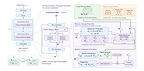
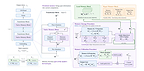
Built on NVIDIA Nemotron 3 Ultra and trained using NVIDIA’s Megatron-Core and Megatron Bridge distributed training infrastructure, MemT-1.0-Pro extends MemTensor’s memory-native approach to 554 billion total parameters, with 59 billion active parameters. Following Nano and Flash, the release advances this exploration on a new backbone and at a larger model scale.

MemT-1.0-Pro integrates memory into model computation, making the storage, updating and retrieval of historical information capabilities that can be learned through training.

The collaboration with NVIDIA included model adaptation, operator optimization, training-method discussions and experimental review.

Extending MemTensor’s Memory-Native Approach to Nemotron

MemT-1.0-Pro uses NVIDIA-Nemotron-3-Ultra-550B-A55B-BF16 as its backbone. Its architecture combines dynamic local memory, which stores information acquired during interaction, with trainable hyper-memory components that learn how to write and read that information.

During online interaction, the backbone and trained memory-processing weights remain fixed. The model accesses historical information through dynamic memory states, without requiring the original historical text to remain in the query context. After each completed interaction, a storage procedure updates those states using a stabilized token-level mechanism based on Gated DeltaNet-2.

Continued pre-training establishes language modeling capabilities that use native memory. Post-training then uses distillation from a full-context teacher to improve memory-based responses.

Measurable Progress in Long-History Memory

In the technical report, MemT-1.0-Pro scores 41.80 on BEAM-1M, compared with 37.04 for MemT-1.0-Flash, an improvement of 4.76 points. On MemoryAgentBench, its score rises to 23.87 from 17.36, a gain of 6.51 points.

BEAM-1M evaluates ten long-history memory abilities, including information extraction, contradiction resolution, updating, preference following and temporal reasoning. MemoryAgentBench evaluates retrieval, test-time learning, long-range understanding and selective forgetting.

Pro also achieves an average score of 53.08 across 11 memory benchmarks, the highest among the parametric-memory methods evaluated in the report.

These results demonstrate progress within the MemT family, although Flash and Pro use different backbones and configurations, and improvements vary across benchmarks. Strong textual-memory systems remain ahead on some evaluations.

Toward Agents That Can Use Their Experience

For agents supporting extended workflows, useful memory involves more than recalling isolated facts. Following an ongoing project or service request may require retaining earlier requirements, recognizing updated decisions and applying information accumulated across multiple interactions.

These needs motivate MemTensor’s exploration of native memory for persistent agent workflows. Further application testing will be needed to establish how the benchmark gains translate into end-to-end task performance.

Fixed-size memory introduces trade-offs between preserving earlier details and incorporating new information. Improving memory fidelity, selective retention and query-dependent readout remains central to further research.

Developers and researchers are welcome to explore MemT-1.0-Pro on Hugging Face.

View original content to download multimedia:https://www.prnewswire.com/news-releases/memtensor-releases-and-open-sources-memt-1-0-pro-a-554b-memory-native-model-302948905.html

SOURCE MemTensor

Continue Reading

Technology

Statement from Minister Joly on her meeting with telecommunications CEOs

Published

on

By

OTTAWA, ON, Nov. 23, 2026 /CNW/ — The Honourable Mélanie Joly, Minister of Industry and Minister responsible for Canada Economic Development for Quebec Regions, made the following statement:

“Today, I joined the CEOs of TELUS, Bell, Rogers, Eastlink, Cogeco, SaskTel and Quebecor from Canada’s telecommunications sector to discuss the future of the industry and the work we must do together to deliver better outcomes for Canadians.

“Canadians deserve reliable, secure and affordable connectivity, no matter where they live. They also deserve to have real choice, strong competition and confidence that their data is safe and protected.

“Telecommunications infrastructure is no longer only an economic asset. It is critical to Canada’s security, sovereignty and resilience.

“As artificial intelligence, satellite communications and other emerging technologies transform the global economy, we must invest in the next generation of telecommunications infrastructure to drive innovation, strengthen the resilience of our networks and ensure that Canada remains competitive in a rapidly changing world.

“Our government will continue to collaborate with industry, workers, communities, Indigenous partners and like-minded allies to build a communications ecosystem that is more affordable, more innovative and more secure–one that is controlled in Canada, creates opportunities in Canada and works for Canadians.

“That is our ambition: an affordable, connected and sovereign Canada, from sea to space.”

Stay connected

Find more services and information on the Innovation, Science and Economic Development Canada website.

Follow Innovation, Science and Economic Development Canada on social media.

X (Twitter): @ISED_CA | Facebook: Canadian Innovation | Instagram: @cdninnovation | LinkedIn: Innovation, Science and Economic Development Canada

SOURCE Innovation, Science and Economic Development Canada

Continue Reading

Trending