Connect with us

Technology

Automotive Prognostics Market size is set to grow by USD 9.92 billion from 2024-2028, maintenance cost-saving benefits of automotive prognostics system boost the market, Technavio

Published

on

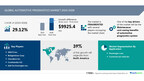
NEW YORK, June 19, 2024 /PRNewswire/ — The global automotive prognostics market size is estimated to grow by USD 9.92 billion from 2024-2028, according to Technavio. The market is estimated to grow at a CAGR of over 29.12%  during the forecast period. Maintenance cost-saving benefits of automotive prognostics system is driving market growth, with a trend towards traditional automotive suppliers entering automotive telematics market. However, high costs associated with telematics services exert pressure on the adoption of prognostics system  poses a challenge. Key market players include ANSYS Inc., Bridgestone Corp., Cloudera Inc., Continental AG, Dell Technologies Inc., Digital Management LLC, Fleet Complete, Garrett Motion Inc., International Business Machines Corp., Magna International Inc., OpenText Corp., Pioneer Corp., Predii Inc., Preteckt Inc., Progress Software Corp., Ridgetop Group Inc., Robert Bosch GmbH, Samsung Electronics Co. Ltd., Solera Holdings LLC, and VMware Inc..

Get a detailed analysis on regions, market segments, customer landscape, and companies- View the snapshot of this report

Automotive Prognostics Market Scope

Report Coverage

Details

Base year

2023

Historic period

2018 – 2022

Forecast period

2024-2028

Growth momentum & CAGR

Accelerate at a CAGR of 29.12%

Market growth 2024-2028

USD 9925.4 million

Market structure

Fragmented

YoY growth 2022-2023 (%)

22.62

Regional analysis

North America, Europe, APAC, South America, and Middle East and Africa

Performing market contribution

North America at 39%

Key countries

US, Germany, China, UK, and Canada

Key companies profiled

ANSYS Inc., Bridgestone Corp., Cloudera Inc., Continental AG, Dell Technologies Inc., Digital Management LLC, Fleet Complete, Garrett Motion Inc., International Business Machines Corp., Magna International Inc., OpenText Corp., Pioneer Corp., Predii Inc., Preteckt Inc., Progress Software Corp., Ridgetop Group Inc., Robert Bosch GmbH, Samsung Electronics Co. Ltd., Solera Holdings LLC, and VMware Inc.

Market Driver

Traditional automotive suppliers, such as Bosch and Continental, are expanding into the telematics domain to offer advanced diagnostics and prognostics capabilities. This shift towards value-added services allows them to enhance vehicle performance and safety while staying competitive in the connected vehicle market. By integrating telematics, these suppliers are driving the growth of the automotive prognostics market during the forecast period. 

The Automotive Prognostics Market is experiencing significant growth due to the increasing adoption of predictive maintenance in the automotive industry. Vehicles equipped with diagnostic systems and sensors are enabling prognostics, allowing for early detection and prevention of vehicle failures. Prognostics systems use vehicle data to predict component failures, reducing downtime and maintenance costs. The market is driven by the need for improved vehicle safety and efficiency, as well as the increasing availability of connected vehicles. Additionally, the use of machine learning and artificial intelligence in prognostics is trending, providing more accurate and reliable predictions. Overall, the market for automotive prognostics is poised for continued growth in the coming years. 

Research report provides comprehensive data on impact of trend. For more details- Download a Sample Report

Market Challenges

The automotive prognostics market involves initial setup costs, including licensing fees, installation, customization, and integration with existing vehicle systems. Ongoing subscription fees and hidden charges, such as roaming fees, add to the overall cost. High automobile-embedded telematics prices, driven by additional features, challenge manufacturers to maintain low monthly fees. To keep profits high, some manufacturers offer low-cost solutions, impacting the adoption of embedded telematics and automotive prognostics systems. The development of alternative, low-cost telematics solutions may pose challenges to the market during the forecast period.The Automotive Prognostics Market faces several challenges in implementing predictive maintenance solutions. One challenge is the complexity of vehicle systems, requiring advanced sensors and analytics to identify potential issues. Another challenge is data management, as large amounts of data must be collected, processed, and analyzed in real-time. Additionally, cybersecurity is a concern, as vehicle systems become increasingly connected and vulnerable to attacks. Furthermore, cost and regulatory compliance are also challenges, as implementing prognostics technology can be expensive and requires adherence to various industry standards. Finally, the integration of predictive maintenance with other vehicle systems, such as telematics and diagnostics, can be complex and require coordination between multiple stakeholders.

For more insights on driver and challenges – Request a sample report!

Segment Overview 

This automotive prognostics market report extensively covers market segmentation by  

Application 1.1 Passenger cars1.2 Commercial vehiclesEnd-user 2.1 Aftermarket2.2 OEMsGeography 3.1 North America3.2 Europe3.3 APAC3.4 South America3.5 Middle East and Africa

1.1 Passenger cars-  The Automotive Prognostics Market refers to the use of predictive analytics in the automotive industry to identify and address potential issues before they cause vehicle downtime. This market is driven by the increasing demand for vehicle reliability and safety, as well as the growing trend towards connected and autonomous vehicles. Companies in this market provide solutions for predictive maintenance, diagnostics, and condition monitoring, helping automakers and fleet operators reduce costs and improve efficiency.

For more information on market segmentation with geographical analysis including forecast (2024-2028) and historic data (2017-2021) – Download a Sample Report

Research Analysis

The Automotive Prognostics Market encompasses advanced solutions for predicting component failures in passenger vehicles and commercial fleets. These systems utilize real-time insights from sensors to calculate failure probabilities, enabling preventive maintenance and predictive diagnostics. Owners of hatchbacks and other passenger vehicles, as well as fleet operators, benefit from these solutions by extending the lifespan of their automotive systems and reducing air pollution from unnecessary emissions. Automotive OEMs and aftermarket providers offer vehicle diagnostics and prognostics solutions to help prevent failures in internal combustion engines and other critical systems, such as ABS production. Telematics services play a crucial role in providing real-time data for prognostics applications, enhancing systems operation and optimizing maintenance schedules.

Market Research Overview

The Automotive Prognostics Market refers to the industry focused on predictive maintenance and failure prevention in the automotive sector. This market utilizes various technologies such as machine learning, artificial intelligence, and sensor data analysis to identify potential issues before they become critical. The goal is to enhance vehicle reliability, reduce downtime, and improve overall operational efficiency. Components involved include vehicle sensors, communication networks, and data analytics tools. Applications span across passenger cars, commercial vehicles, and electric vehicles. The market is expected to grow significantly due to increasing vehicle complexity, rising demand for connected vehicles, and stringent regulations on vehicle safety and emissions.

Table of Contents:

1 Executive Summary
2 Market Landscape
3 Market Sizing
4 Historic Market Size
5 Five Forces Analysis
6 Market Segmentation

ApplicationPassenger CarsCommercial VehiclesEnd-userAftermarketOEMsGeographyNorth AmericaEuropeAPACSouth AmericaMiddle East And Africa

7 Customer Landscape
8 Geographic Landscape
9 Drivers, Challenges, and Trends
10 Company Landscape
11 Company Analysis
12 Appendix

About Technavio

Technavio is a leading global technology research and advisory company. Their research and analysis focuses on emerging market trends and provides actionable insights to help businesses identify market opportunities and develop effective strategies to optimize their market positions.

With over 500 specialized analysts, Technavio’s report library consists of more than 17,000 reports and counting, covering 800 technologies, spanning across 50 countries. Their client base consists of enterprises of all sizes, including more than 100 Fortune 500 companies. This growing client base relies on Technavio’s comprehensive coverage, extensive research, and actionable market insights to identify opportunities in existing and potential markets and assess their competitive positions within changing market scenarios.

Contacts

Technavio Research
Jesse Maida
Media & Marketing Executive
US: +1 844 364 1100
UK: +44 203 893 3200
Email: media@technavio.com
Website: www.technavio.com/

View original content to download multimedia:https://www.prnewswire.com/news-releases/automotive-prognostics-market-size-is-set-to-grow-by-usd-9-92-billion-from-2024-2028–maintenance-cost-saving-benefits-of-automotive-prognostics-system-boost-the-market-technavio-302176449.html

SOURCE Technavio

Continue Reading
Click to comment

Leave a Reply

Your email address will not be published. Required fields are marked *

Technology

GHIT Fund Invests Approx. JPY 140 Million in a Portable Rapid Diagnostic System for Ebola Disease in a Joint Project Between Osaka Metropolitan University, K.K. DNAFORM, and INRB

Published

on

By

TOKYO, July 23, 2026 /PRNewswire/ — The Global Health Innovative Technology (GHIT) Fund announced today an investment of JPY 140 million (approximately USD 862,000) in a project to develop a portable rapid diagnostic system for Ebola disease. The system is being jointly developed by Osaka Metropolitan University, K.K. DNAFORM (DNAFORM), and the National Institute for Biomedical Research (INRB) of the Democratic Republic of the Congo. The project aims to advance rapid diagnostic technologies in response to Ebola outbreaks caused by the Bundibugyo virus in the Democratic Republic of the Congo and Uganda.

This investment covers approved early development milestones, including prototype development and performance validation for Bundibugyo virus detection, and supports preparations for future clinical evaluation in the Democratic Republic of the Congo.

The Bundibugyo Virus Outbreak and Key Challenges
On May 16, 2026 (Geneva time; May 17, Japan time), the World Health Organization (WHO) declared a Public Health Emergency of International Concern (PHEIC) due to the outbreak of Ebola disease caused by the Bundibugyo virus in the Democratic Republic of the Congo and Uganda. In affected areas, rapid testing of suspected cases is critical to support appropriate isolation, contact tracing, and timely care. In resource-limited settings, there is an urgent need for point-of-care (POC) testing that can be performed close to patients without requiring advanced laboratory infrastructure.

The GHIT Fund’s Investment Project
On May 22, 2026, the GHIT Fund immediately initiated a landscape assessment and information exchange and opened a call for Expressions of Interest (EOIs) to identify promising product development efforts. It also accepted applications for Rapid Diagnostic Tests (RDTs) and POC diagnostic development for filovirus infections, including Ebola disease, under the existing RFP framework. After an expedited review involving rigorous evaluation, the GHIT Fund made the decision to invest in this project. The investment is intended to accelerate early development milestones in line with the 100-Day Mission*1, which aims to deploy medical countermeasures (MCMs), such as diagnostics, therapeutics, and vaccines, within 100 days of the identification of a pandemic threat. The GHIT Fund’s investment has accelerated early-stage milestones on the path toward achieving this goal.

This project leverages GenPad*2, a portable isothermal nucleic acid amplification platform developed by DNAFORM. This platform does not require large instruments and is designed for use in outbreak settings where access to stable power and laboratory infrastructure is limited. The project will use this portable platform to develop and evaluate a POC testing system for Ebola disease. By combining Osaka Metropolitan University’s global research network, DNAFORM’s GenPad technology, and INRB’s infrastructure for responding to emerging infectious diseases, the collaboration is expected to support the response to the current Bundibugyo virus outbreak and strengthen preparedness for future Ebola disease outbreaks.

For a more detailed overview of the product’s development, please refer to the press release by Osaka Metropolitan University and DNAFORM.
https://www.omu.ac.jp/en/info/omu-news/entry-116440.html

GHIT Fund June 17, 2026, Press Release
GHIT Fund Kick-Started Emergency Product Development Support for Ebola Disease Outbreak Caused by Bundibugyo Virus
https://www.ghitfund.org/newsroom/press/detail/553/enGHIT-RFP-TRP-2026-001: Pandemic Preparedness and Response Award
https://www.ghitfund.org/applyforfunding/trppast/en

1 100-Day Mission
The “100-Day Mission” is an ambitious global health initiative launched in 2021, backed by the G7 and G20. Its primary objective is to prepare the world for future pandemic threats by ensuring that safe, effective vaccines, therapeutics, and diagnostics can be developed and made globally available within 100 days of a new pathogen being identified.

2 With support from the Acquisition, Technology & Logistics Agency’s National Security Technology Research Promotion Fund, DNAFORM has developed platform technologies to enable GenPad cartridges for detecting unknown pathogens to be developed, manufactured, and shipped within 40 days of an outbreak of an emerging or imported infectious disease. In this project, these technologies will be applied to rapidly develop a prototype testing kit for detecting Bundibugyo virus.

*All amounts are listed at an exchange rate of USD 1 = JPY 162.39, the approximate exchange rate on June 30, 2026.

The GHIT Fund is a Japan-based international public-private partnership (PPP) fund that was formed between the Government of Japan, multiple pharmaceutical companies, the Gates Foundation, Wellcome, and the United Nations Development Programme (UNDP). The GHIT Fund invests in and manages an R&D portfolio of development partnerships aimed at addressing neglected diseases, such as malaria, tuberculosis, and neglected tropical diseases, which afflict the world’s vulnerable and underserved populations. In collaboration with global partners, the GHIT Fund mobilizes Japanese industry, academia, and research institutes to create new drugs, vaccines, and diagnostics for malaria, tuberculosis, and neglected tropical diseases.
https://www.ghitfund.org/

For more information, contact:
Preeti Singh at +1-703-862-2515 or psingh@burness.com
Eriko Mugitani at +81-36441-2032 or eriko.mugitani@ghitfund.org

View original content:https://www.prnewswire.com/news-releases/ghit-fund-invests-approx-jpy-140-million-in-a-portable-rapid-diagnostic-system-for-ebola-disease-in-a-joint-project-between-osaka-metropolitan-university-kk-dnaform-and-inrb-302832319.html

SOURCE GHIT Fund

Continue Reading

Technology

5th Weixin Mini Program Global Innovation Challenge Launches Southeast Asia Regional Competition, Inviting Youths to Build Mini Programs with AI Tools

Published

on

By

SINGAPORE, July 23, 2026 /PRNewswire/ — The 5th Weixin Mini Program Global Innovation Challenge launched its Southeast Asia Regional competition in Singapore on 21 July, introducing an AI Agent theme and a dedicated track for university applications for the first time. This year’s challenge provides students and young developers across Southeast Asia with hands-on opportunities to build impactful Mini Programs to solve real-world problems using Tencent’s AI tools such as WorkBuddy and ima.

Students tapped on AI tools to build Mini Programs during the Singapore Regional Competition

Hosted by Tencent, the Weixin Mini Program Global Innovation Challenge has grown into a global AI competition for young people internationally since 2022.  In over four years, more than 7,000 youth teams worldwide have submitted Mini Program projects, with selected entries advancing to the Weixin Mini Program Global Innovation Challenge Grand Finals held yearly.

In November 2025, the first Weixin Mini Program Global Innovation Challenge (Singapore Regional) competition drew participation from leading schools such as Hwa Chong Institution, Raffles Girls’ School, NUS High School of Mathematics and Science, and Nan Hua High School. Students from Raffles Girls’ School and Nan Hua High School took the Gold Award for their project Singapore: A Fine City, while the competition’s first cross-border team, made up of students from Hwa Chong Institution and Chongqing BI Academy, won the Silver Award for their project, Campus Culture Exchange Station, at the Singapore Regional competition.

Additionally, at the recent 4th Weixin Mini Program Global Innovation Challenge Grand Finals held in Shenzhen in May this year, two Singapore teams secured honours across the top two prize categories, as well as the “Most Valuable Cultural Connection” award. It also recognized Bukit Panjang Government High School as Singapore’s first “Weixin Mini Program AI Education Innovation Base”, where it will integrate the Weixin Mini Program Education Platform into its lower secondary curriculum as part of its interdisciplinary Project-Based Learning (PBL).

On July 21, the Tencent Asia Pacific Management Committee, Singapore’s Association for Research on AI in Learning and Leadership (ARAILL), the Global AI Nexus of Schools (GAINS) and Weixin launched the Weixin Mini Program Global Innovation Challenge (Southeast Asia Regional) Competition. This expanded competition will bring in youth participants from Malaysia, Thailand, and beyond, all competing alongside their global peers to tackle real problems with AI and Mini Programs.

To support the Southeast Asia Regional competition, the Weixin Mini Program Education Platform features a built-in AI assistant that allows students with no prior programming experience to develop practical Mini Programs driven by real-world needs. The platform has already reached nearly 8,000 schools and 87,000 students across 11 countries and regions, hosting more than 287,000 Mini Programs. Through this process of identifying problems, designing solutions, and launching products, students from around the world are provided with AI tools and resources to build Mini Programs that solve everyday problems.

Building Your Own Mini Program: The New “Digital Essential” for Travels

As AI advances and vibe coding goes mainstream, building a Mini Program is now accessible to almost anyone, driving rapid growth across the Weixin ecosystem. Today, Weixin Mini Program services reach over 100 countries and regions, with cross-border and overseas users accessing Mini Programs more than 5 billion times in 2025 alone.

That global reach extends deeply into daily life, where Mini Programs serve as an essential digital guide for Chinese travelers abroad. For instance, Uber, a ride-hailing platform, leverages a Weixin Mini Program to support Chinese tourists across 20 global markets.

In Southeast Asia, Weixin Mini Programs now cover nine markets, including Singapore and Malaysia, with monthly transaction volume surging 160% year on year as of June 2026. From ride-hailing, ticketing, to food delivery, retail, and bike sharing, Mini Programs are rapidly becoming an indispensable digital gateway for both Chinese tourists traveling the region and local consumers in their everyday spending.

In Singapore, Weixin’s “Nearby Services” section puts Mini Programs within easy reach at venues like Changi Airport, the National Gallery Singapore, Marina Bay Sands, and Takashimaya. Resorts World Sentosa has gone a step further, integrating fully with the Weixin ecosystem across eight points of sale with support for Weixin Palm Payment and Mini Program services.

Leveraging Tencent’s AI tools like WorkBuddy and ima

Tencent recently introduced a suite of AI products to international markets, featuring its AI knowledge assistant ima, AI productivity agent WorkBuddy, AI creative studio Miora, and its Model-as-a-Service platform TokenHub. The international version of WorkBuddy features built-in Skills and seamlessly integrates with popular global tools, including WeChat, Slack, Telegram, Discord, GitHub, and Google Drive.

Built around an intelligent knowledge base, ima integrates search, reading, and writing into a unified workflow, ranking first among knowledge-base products in China. It has surpassed 13 million monthly active users, hosts over 420 million knowledge-base files, and operates seamlessly across nine platforms.

To empower young talent abroad to build their own Mini Programs, the Southeast Asia Regional competition leverages Tencent AI tools, including WorkBuddy, ima, and the Weixin Mini Game platform.

These AI tools quickly became a favourite among the student developers on-site at the “AI Agent-themed” Weixin Mini Program competition held during the Southeast Asia Regional launch event ceremony. Students used ima to search, analyze, and save reference material to their personal knowledge bases before leveraging WorkBuddy to build out their concepts. Rather than handing them ready-made answers, the AI serves as an accelerator for critical thinking and inquiry—dramatically shortening the journey from initial research to a fully realized product.

Zoe Chou, Founder of the Weixin Mini Program Global Innovation Challenge, said, “The innovation challenge is not just a coding contest, but a platform to empower students to use AI tools to solve real-world challenges. By bringing the challenge to Southeast Asia, we hope to champion AI education in more schools across the region. Tencent is committed to providing a robust support framework, including tailored teacher training and AI tools, so that young creators can turn their best ideas into reality almost as fast as they can imagine them.”

 – Ends –

About Weixin Mini Program Education Platform    

The Weixin Mini Program Education Platform, launched by Tencent in 2023, is an AI-enabled platform designed to support education and interdisciplinary project-based learning. It provides teachers and students with a wide range of tools to develop Mini Programs that address real-world problems, while making it easier for educators to organise and guide related learning activities.  With a built-in AI assistant, the platform also makes programming more accessible to students with little or no prior coding experience.

About Weixin Mini Program

Weixin Mini Programs are lightweight applications embedded within the Weixin/WeChat app, allowing users to access services easily without downloading a separate app. Officially launched in January 2017, Weixin Mini Programs now serve more than 600 million daily active users worldwide and create over 10 million employment and income-generating opportunities each year. In Singapore, prominent businesses and attractions, including Grab, Changi Airport, Resorts World Sentosa and Mandai Wildlife Reserve, have also launched their own Weixin Mini Programs.

View original content to download multimedia:https://www.prnewswire.com/apac/news-releases/5th-weixin-mini-program-global-innovation-challenge-launches-southeast-asia-regional-competition-inviting-youths-to-build-mini-programs-with-ai-tools-302832926.html

SOURCE Weixin Mini Program

Continue Reading

Technology

iQIYI Premieres “Mystic Tales: The Spider Lady’s Vendetta”, Bringing China’s Supernatural Folklore to Life Through AIGC

Published

on

By

BEIJING, July 23, 2026 /PRNewswire/ — On July 23, iQIYI, China’s leading online entertainment platform, exclusively premiered “Mystic Tales: The Spider Lady’s Vendetta” on iQIYI and iQIYI International, making it China’s first AIGC internet feature film released under an Internet Drama and Film Distribution License. Co-produced by Beijing Dream Big Innovation Technology Co., Ltd. and iQIYI, the film runs for more than 60 minutes and was created using AI tools throughout the entire production process, marking a notable milestone in the commercial viability of long-form AIGC filmmaking.

A Story Rooted in Chinese Mythology

“Mystic Tales: The Spider Lady’s Vendetta” opens the “Mystic Tales Trilogy”, an AI-generated film series drawing on the rich tradition of classical Chinese mythology. The story follows a paper master with no memory of her past, who ventures with a mysterious figure into a hidden realm between the living and spirit worlds, hunting three mystical objects that hold the truth she has lost. As the truth slowly surfaces, the film unfolds as a story of obsession, redemption, and the complexity of human nature, rendered through a distinctly Eastern gothic aesthetic.

An End-to-End AI Production Pipeline

“Mystic Tales: The Spider Lady’s Vendetta” was built by a team of over 20, using a full AIGC pipeline spanning creative development, prompt engineering, visual asset generation, AI-assisted redrawing, 4K output, and post-production. New roles – including AI asset effects artists and prompt engineers – worked alongside directors and screenwriters, reflecting a new model for professional film production.

Throughout the creative process, human imagination and artistic judgment remain irreplaceable at its core. Drawing from classical Chinese mythology, the team developed more than 200 character and visual asset designs, with lead characters undergoing more than 10 rounds of exploration. “AIGC’s capacity for rapid iteration allowed us to continuously test different visual directions and validate concepts in a compressed timeframe, pushing our creative expression and visual presentation further with every pass,” said AI Director Haiyang LIU.

The real value of AIGC lies in helping creators move beyond the limits of traditional film production, bringing imagination to life faster and more efficiently than ever before. But it does not lower the bar – it demands that creators command a composite skill set spanning art, lighting, performance, and technology, said Director Xiangcheng ZENG. Chief Producer Cheng JIANG added that advancing model capabilities are steadily resolving the field’s hardest problems – from scene detail and complex spatial staging to character performance and consistency – pointing to deeper collaboration between human creativity and AI on the horizon.

iQIYI’s Expanding Commitment to AI-Powered Content

“Mystic Tales: The Spider Lady’s Vendetta” is the latest milestone in iQIYI’s growing commitment to AI-driven filmmaking. The platform’s “Peter Pau x iQIYI AI Theater“, which launched in 2025, marked an early foray into short-form AI-Generated content. This year, iQIYI deepened its support for AIGC creators with expanded technical and platform services and introduced a time-limited 20% additional revenue-sharing bonus for qualified AI content.

With this premiere, AIGC filmmaking crosses from proof-of-concept into commercial reality. iQIYI aims to continue developing its AI content ecosystem, widening the creative and commercial opportunities available to filmmakers, and bringing audiences a new generation of imaginative storytelling.

CONTACT: iQIYI Press, press@qiyi.com 

View original content to download multimedia:https://www.prnewswire.com/apac/news-releases/iqiyi-premieres-mystic-tales-the-spider-ladys-vendetta-bringing-chinas-supernatural-folklore-to-life-through-aigc-302832934.html

SOURCE iQIYI Inc.

Continue Reading

Trending