Connect with us

Technology

Plate And Frame Heat Exchangers Market size is set to grow by USD 1.42 billion from 2024-2028, rising demand for plate and frame heat exchangers from end-users to boost the market growth, Technavio

Published

on

NEW YORK, June 19, 2024 /PRNewswire/ — The global plate and frame heat exchangers market  size is estimated to grow by USD 1.42 billion from 2024-2028, according to Technavio. The market is estimated to grow at a CAGR of  4.36%  during the forecast period.  Rising demand for plate and frame heat exchangers from end-users is driving market growth, with a trend towards expansion and addition of new manufacturing capacities. However, fouling of heat exchangers  poses a challenge. Key market players include Advanced Industrial Components Inc., Alfa Laval AB, American Plate Exchanger, API Heat Transfer Inc., Avingtrans plc, Baffles cooling systems, Danfoss AS, Dover Corp., FISCHER Maschinen u. Apparatebau GmbH, FUNKE Warmeaustauscher Apparatebau GmbH, Hisaka Works Ltd., ITT Inc., Kelvion Holding GmbH, Paul Mueller Co. Inc., Process Engineers And Associates, S.A. Armstrong Ltd., SPX FLOW Inc., Taco Comfort Solutions, Thermaline Inc., and Xylem Inc..

Get a detailed analysis on regions, market segments, customer landscape, and companies – Click for the snapshot of this report

Forecast period

2024-2028

Base Year

2023

Historic Data

2018 – 2022

Segment Covered

End-user (Chemical, Power, HVAC, Refrigeration, and Oil and gas and others), Type (Gasketed, Welded, and Brazed), and Geography (Europe, North America, APAC, Middle East and Africa, and South America)

Region Covered

Europe, North America, APAC, Middle East and Africa, and South America

Key companies profiled

Advanced Industrial Components Inc., Alfa Laval AB, American Plate Exchanger, API Heat Transfer Inc., Avingtrans plc, Baffles cooling systems, Danfoss AS, Dover Corp., FISCHER Maschinen u. Apparatebau GmbH, FUNKE Warmeaustauscher Apparatebau GmbH, Hisaka Works Ltd., ITT Inc., Kelvion Holding GmbH, Paul Mueller Co. Inc., Process Engineers And Associates, S.A. Armstrong Ltd., SPX FLOW Inc., Taco Comfort Solutions, Thermaline Inc., and Xylem Inc.

Key Market Trends Fueling Growth

The Plate and Frame Heat Exchangers Market witnesses organic growth strategies from key vendors. Through tactics like SEO, content marketing, social media engagement, and email campaigns, they build brand awareness, engage leads, and foster long-term customer relationships. Alfa Laval’s April 2024 expansion of their production line for printed circuit heat exchangers is an example. These strategies promote trust, credibility, and market growth during the forecast period. 

The Plate and Frame Heat Exchanger market is experiencing significant growth due to the increasing demand for efficient and cost-effective heat transfer solutions. These exchangers are widely used in various industries such as power generation, refining, and manufacturing. The use of renewable energy sources and the shift towards cleaner technologies are driving the market. The market is also witnessing advancements in materials and designs, leading to higher performance and longer service life. Additionally, the growing trend towards energy conservation and sustainability is further boosting the market. Overall, the Plate and Frame Heat Exchanger market is expected to continue its strong growth trajectory in the coming years. 

Research report provides comprehensive data on impact of trend. For more details- Download a Sample Report

Market Challenges

Plate and frame heat exchangers face significant challenges with maintenance and cleaning due to fouling. Fouling is the accumulation of unwanted deposits on heat transfer surfaces, reducing efficiency and increasing pressure drop. Reasons for fouling include crystallization, particulate matter, biological growth, and chemical reactions. Corrosion from reactive fluids can also contribute to fouling. Inefficient heat exchangers may lead to production cost increases, potential shutdowns, and early metal replacement, resulting in additional expenses for operators. These high maintenance costs may hinder the growth of the global plate and frame heat exchangers market.The Plate and Frame Heat Exchanger market faces several challenges. One key challenge is the increasing demand for energy-efficient and cost-effective solutions. This requires continuous research and development to improve the design and performance of these heat exchangers. Another challenge is the need to comply with stringent regulations regarding safety and environmental impact. Procurement of materials and components also poses a challenge due to the complexity of the system and the need for high-quality and durable parts. Additionally, the market is highly competitive, with numerous players vying for market share. This necessitates a focus on innovation, customer service, and cost competitiveness to remain competitive. Finally, the global nature of the market adds complexity, with varying regulations and market conditions in different regions.

For more insights on driver and challenges – Download a Sample Report

Segment Overview 

This plate and frame heat exchangers market report extensively covers market segmentation by

End-user 1.1 Chemical1.2 Power1.3 HVAC1.4 Refrigeration1.5 Oil and gas and othersType 2.1 Gasketed2.2 Welded2.3 BrazedGeography 3.1 Europe3.2 North America3.3 APAC3.4 Middle East and Africa3.5 South America

1.1 Chemical-  The Plate and Frame Heat Exchanger market is thriving due to its efficiency in heat transfer applications. These exchangers offer cost-effective solutions for various industries, including food and beverage, pharmaceuticals, and chemicals. Their modular design allows for easy maintenance and flexibility in operation. The market is expected to grow steadily, driven by increasing demand for energy savings and improved process efficiency.

For more information on market segmentation with geographical analysis including forecast (2024-2028) and historic data (2018 – 2022)  – Download a Sample Report

Research Analysis

The Plate and Frame Heat Exchanger market is experiencing significant growth due to the increasing focus on energy efficiency and versatility in various industries. Urbanization and the expansion of commercial buildings in developing economies are driving the demand for these heat exchangers in HVAC systems and commercial refrigeration. Heat recovery technologies, used extensively in HVACR applications, are a key area of application for plate and frame heat exchangers. Compact designs of these exchangers are ideal for residential AC units and industrial activities, making them essential engineering applications for heating, ventilation, and air conditioning. Environmental regulations and the shift towards sustainable energy infrastructure are also contributing to the market’s growth. The nuclear power sector and other energy infrastructure projects are significant consumers of plate and frame heat exchangers due to their high thermal efficiency.

Market Research Overview

The Plate and Frame Heat Exchanger market encompasses the production, sales, and installation of these heat transfer solutions. These exchangers utilize thin plates and frames to facilitate efficient heat transfer between two fluids without direct contact. They are widely used in various industries such as oil and gas, power generation, and chemical processing. The market is driven by factors like increasing energy efficiency requirements, rising demand for thermal energy, and advancements in materials and technologies. Plate and Frame Heat Exchangers offer benefits like high heat transfer rates, easy maintenance, and flexibility in design. Applications include cooling, heating, and vaporization processes. The market is expected to grow significantly due to the increasing demand for sustainable energy solutions and the need for cost-effective heat transfer systems.

Table of Contents:

1 Executive Summary
2 Market Landscape
3 Market Sizing
4 Historic Market Size
5 Five Forces Analysis
6 Market Segmentation

End-userChemicalPowerHVACRefrigerationOil And Gas And OthersTypeGasketedWeldedBrazedGeographyEuropeNorth AmericaAPACMiddle East And AfricaSouth America

7 Customer Landscape
8 Geographic Landscape
9 Drivers, Challenges, and Trends
10 Company Landscape
11 Company Analysis
12 Appendix

About Technavio

Technavio is a leading global technology research and advisory company. Their research and analysis focuses on emerging market trends and provides actionable insights to help businesses identify market opportunities and develop effective strategies to optimize their market positions.

With over 500 specialized analysts, Technavio’s report library consists of more than 17,000 reports and counting, covering 800 technologies, spanning across 50 countries. Their client base consists of enterprises of all sizes, including more than 100 Fortune 500 companies. This growing client base relies on Technavio’s comprehensive coverage, extensive research, and actionable market insights to identify opportunities in existing and potential markets and assess their competitive positions within changing market scenarios.

Contacts

Technavio Research
Jesse Maida
Media & Marketing Executive
US: +1 844 364 1100
UK: +44 203 893 3200
Email: media@technavio.com
Website: www.technavio.com/

View original content to download multimedia:https://www.prnewswire.com/news-releases/plate-and-frame-heat-exchangers-market-size-is-set-to-grow-by-usd-1-42-billion-from-2024-2028–rising-demand-for-plate-and-frame-heat-exchangers-from-end-users-to-boost-the-market-growth-technavio-302176410.html

SOURCE Technavio

Continue Reading

Technology

ZentLaw Introduces AI-Native Subscription Legal Services, Powered by Zent.AI’s Context-Driven Agentic AI Capabilities

Published

on

By

New AI Subscription Solutions Provide Enterprises with Tailored Ongoing Legal Services Support, Leveraging Context-Driven AI & Guided by Industry-Leading Legal Talent

SUNNYVALE, Calif., Oct. 29, 2026 /PRNewswire/ — ZentLaw, the leader in innovative legal solutions, today announced the expansion of Zent.AI, the AI-native Alternative Legal Service Provider (ALSP), with the addition of AI-enhanced Subscription legal services. The offering combines the value and efficiency of ZentLaw’s sector-leading Subscription solutions, which have been entrusted by leading enterprises and organizations for over two decades, with the advanced AI capabilities of Zent.AI.

With ZentLaw’s AI-native Subscription options, corporate and institutional legal teams access the benefits of the Subscription model, combined with the power of Zent.AI. The Zent.AI solution, which debuted in 2025, offers optionality by design, including its curated tech stack for legal teams; its legal engineering resources; and now, its proprietary agentic AI technology based on ZentLaw’s decades of institutional knowledge and best practices, all guided by ZentLaw’s legal professionals and aligned to unique client needs.

Nearly 25 years ago, ZentLaw broke the mold in the legal industry with the introduction of its ground-breaking enterprise Subscription legal services solutions, which allow legal teams to access stellar expertise at a value while achieving sustainable ROI. With ZentLaw’s AI-native Subscriptions, legal teams are able to further reduce overhead by combining full-time or fractional legal talent with Zent.AI’s technology to deliver a solution optimized for efficiency and quality. With Zent.AI’s Subscription legal services solution, legal teams can truly access Expertise at Scale™.

“The combination of cutting-edge legal technology with legal services has been native to ZentLaw for decades. Long before LegalTech became a thriving segment, we were incubating technology through our in-house labs, and incorporated our proprietary legal chatbots into our Subscription plans over a decade ago. The addition of AI-native Subscription legal services to our Zent.AI offering is a continuation of our ongoing leadership in innovative legal services,” said Monica Zent, Founder and CEO, ZentLaw. “As AI enhances velocity, we also know that speed isn’t the only variable. Since launching Zent.AI, we’ve seen how our experience in matching people with culture is especially essential in the delivery of AI-native legal services. With our longstanding institutional knowledge, we curate the right mix of tech and talent to fit each organization’s unique needs.”

The expansion of its AI-native offerings comes as ZentLaw prepares to celebrate its 25th anniversary next year. ZentLaw was founded in 2002 by Monica Zent, an award-winning longtime industry visionary who was also among California Legal Awards’ 2026 finalists for Innovation in Tech & AI. An industry thought leader, guest speaker and event moderator, Zent is an advisor to a number of LegalTech companies and part of the Founding Advisory Board for Chief LegalX, the invite-only community for innovative C-suite and executive leaders shaping the future of AI and LegalTech.

Since its inception, ZentLaw has been a pioneer of the ALSP model, initiating ground-breaking offerings such as Subscriptions and Flexible Legal Talent; delivering Legal Operations solutions before the category was widely known; offering virtual resourcing decades before remote work became prevalent; and incubating early legal technology through its in-house labs. The trusted source for innovative legal solutions for the Fortune 100, Fortune 500, Leading AM 100 law firms, the world’s leading institutions, and government organizations for over two decades, ZentLaw continues to define the future of legal services for the AI era.

About ZentLaw

ZentLaw is a leading alternative legal service provider (ALSP) of innovative solutions to legal teams nationwide, serving a client base consisting of Fortune-listed companies, AM-listed law firms as well as government institutions and municipalities. Founded by attorney, businesswoman, entrepreneur, and industry pioneer Monica Zent, ZentLaw broke the mold in 2002 by serving as one of a few catalysts introducing the legal market to the ALSP model and offering tech-enabled solutions, on-demand Flexible Legal Talent, Subscription-based legal services and Legal Operations expertise to enterprise and institutional clients. In 2025, ZentLaw debuted Zent.AI, the AI-native ALSP, delivering Expertise at Scale™. For more information, visit https://zentlawgroup.com/

Media contact: pr@zentlaw.com


View original content to download multimedia:https://www.prnewswire.com/news-releases/zentlaw-introduces-ai-native-subscription-legal-services-powered-by-zentais-context-driven-agentic-ai-capabilities-302923668.html

SOURCE ZentLaw

Continue Reading

Technology

DTE Energy and sonnen Launch Michigan’s First Residential Battery Virtual Power Plant Pilot to Explore New Ways to Lower Energy Costs

Published

on

By

The two-year pilot is a first step toward how connected home batteries can reduce grid costs, improve reliability and support long-term affordability for Michiganders.

ANN ARBOR, Mich. , Oct. 29, 2026 /PRNewswire/ — DTE Energy and sonnen today announced the launch of Michigan’s first residential battery virtual power plant (VPP) pilot at Veridian at County Farm, an innovative carbon-neutral community developed by Thrive Collaborative. The pilot is a first step toward showing how connected home batteries can be used to reduce energy costs, improve reliability and create a more flexible electric grid while delivering greater value for customers.

Approved by the Michigan Public Service Commission (MPSC), the two-year pilot will virtually connect nearly 100 homes through sonnen battery systems and VPP technology. By coordinating individual residential batteries as an additional grid resource, DTE will evaluate how this approach could ultimately help meet growing energy demand while supporting reliability and affordability goals for customers. This approach aligns with recent MPSC recommendations encouraging greater use of distributed energy resources and existing assets to help lower energy costs for Michigan families.

“Across Michigan, families are feeling the pressure of higher costs for groceries, housing, childcare and other everyday necessities, and we know affordability matters more than ever,” said Joi Harris, president and chief executive officer of DTE Energy. “That’s why we’re exploring innovative ways to make better use of energy resources. This pilot is an opportunity to test an approach that could ultimately provide a lower-cost way to meet growing energy needs and strengthen reliability. It’s exactly the kind of forward-thinking approach that has the potential to help keep energy affordable for customers over the long term.”

Through the pilot, DTE will evaluate how residential VPPs could ultimately help lower costs, support high demand periods and create new opportunities to deliver customer value. Insights from the pilot will help determine how residential virtual power plants could support a more affordable and clean energy future in Michigan. “Veridian was designed from the outset around a fundamentally different approach to energy,” said Matt Grocoff, founder of Thrive Collaborative. “This pilot marks a historic moment for Michigan as DTE’s first VPP pilot project, and a defining moment for Veridian. We’re incredibly proud that this community can serve as the place where this vision can move from concept to reality, and grateful to everyone involved for helping bring it to life.”

Veridian is located on 14 acres adjacent to County Farm Park, features 170 mixed-income homes and is built to be fossil fuel-free, with each home designed to operate as a resilient, self-balancing energy ecosystem. Every home is equipped with sonnen battery systems, and the community brings together geothermal energy, advanced electric heat pumps, EV-ready charging, all-electric appliances and rooftop solar arrays to create an integrated, all-electric model for sustainable living.

The pilot represents the next chapter in Veridian’s energy playbook. For several years, sonnen and Thrive Collaborative have been working toward a vision of making Veridian a model for community-based residential VPPs in Michigan. “The Veridian VPP pilot will be a true demonstration of the decentralized, digitalized and decarbonized energy system of the future,” said Blake Richetta, chairman and chief executive officer of sonnen Inc. “By coordinating intelligent batteries across an entire community, we are turning individual home batteries into a pooled, grid-interactive resource that responds to grid needs in real time. We’re proud to partner with DTE, a world-class utility and a pleasure to work with. Their innovative spirit and firm resolve are making Michigan’s first grid-interactive VPP community a reality, and that is a major achievement.”

VPPs can help utilities meet energy needs by coordinating resources such as batteries and other smart technologies. As electricity demand increases, this approach has the potential to improve reliability, reduce system costs and create long-term affordability benefits for customers. This concept aligns with recent recommendations from the MPSC to maximize existing grid resources and expand opportunities for distributed energy participation as a way to lower energy costs for Michigan families.

sonnen’s VPP architecture continues to gain recognition for its role in advancing the capabilities of residential energy storage. The VPP at Veridian was nominated for the Michigan Energy Innovation Council’s (EIBC) Project of the Year award, as part of its 14th Annual Michigan Energy Innovators Gala. sonnen was also recently named a 2026 POWER Awards finalist for its Wattsmart Battery Program with Rocky Mountain Power.

About DTE Energy
DTE Energy (NYSE:DTE) is a Detroit-based diversified energy company involved in the development and management of energy-related businesses and services nationwide. Its operating units include an electric company serving 2.3 million customers in Southeast Michigan and a natural gas company serving 1.4 million customers across Michigan. The DTE portfolio also includes energy businesses focused on custom energy solutions, renewable energy generation, and energy marketing and trading. DTE has continued to accelerate its carbon reduction goals to meet aggressive targets and is committed to serving with its energy through volunteerism, education and employment initiatives, philanthropy, emission reductions and economic progress. Information about DTE is available at dteenergy.com, empoweringmichigan.com, x.com/DTE_Energy and facebook.com/dteenergy. 

About sonnen:
sonnen Inc is a leading manufacturer of smart energy storage systems for residential applications, and a pioneer of the residential battery based virtual power plant. The sonnen VPP is nationally recognized as a blueprint for the decentralized, digitalized, decarbonized energy system of the future. sonnen has received many internationally recognized awards celebrating our technological achievement. Learn more at: www.sonnenusa.com.

About Thrive Collaborative:
THRIVE Collaborative is an Ann Arbor, MI based real estate development, design, building and consulting firm dedicated to creating the life enhancing communities and cities needed for the 22nd Century. THRIVE’s mission is to accelerate the shift towards beautiful, healthy, and environmentally responsive design and lead the transformation to a truly sustainable human-built environment that is socially just, nature rich and ecologically restorative.

View original content to download multimedia:https://www.prnewswire.com/news-releases/dte-energy-and-sonnen-launch-michigans-first-residential-battery-virtual-power-plant-pilot-to-explore-new-ways-to-lower-energy-costs-302923778.html

SOURCE DTE Energy

Continue Reading

Technology

Rivvor Debuts Valen™ Edge Series: Wireless, Wire-Free Compute for AI Inference at OCP 2026

Published

on

By

First live demo of a cable-free rack whose blades connect over mmWave wireless corridors. Built in 11 months for AI inference at the edge.

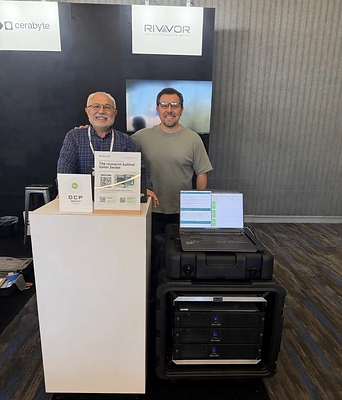
ROSEVILLE, Calif., Oct. 29, 2026 /PRNewswire/ — Rivvor, the deep-tech start-up building wireless interconnect for AI data centers and corporate HPC, today recapped the debut of its wireless AI inference system at the 2026 OCP Global Summit in San Jose. Rivvor ran the first live public demonstration of the Valen™ Edge Series Contactless Modular Compute System, a wire-free edge compute rack whose blades connect through engineered mmWave wireless corridors. No cables. No connectors.

Valen went from concept to working system in 11 months, and the team fielded questions from hyperscalers, networking companies, and data center operators.

Why cables are the bottleneck

Power, cooling and interconnect now compete for the same space inside AI systems. Every high-speed link adds cables, connector fields, and mated interfaces that take up space, slow service, and lock network topology to the hardware.

Wireless scale-up networking for AI inference

Valen replaces the cables between blades with wireless corridors, so topology becomes software:

Scale-up without cables. Blades connect through mmWave corridors inside the rack.Software-defined topology. Connections change in software to match inference workloads.More bandwidth, no extra cables. More corridors add capacity without cable volume.Built to work alongside copper and optics. Wireless links add paths where cables run out of headroom.Designed to route around congestion. Software shifts traffic onto open corridors when cabled paths saturate.

Valen Edge Series specs: what ran at OCP

Spec

Valen today (3-blade system)

Blades

3 AMD Ryzen blades, 128 GB RAM each

Interconnect

mmWave wireless corridors, blade-to-blade

Per-link throughput

15 Gbps

Links per blade

7

Aggregate rack bandwidth

300+ Gbps

Latency

250 ns, application memory to application memory

Cables or connectors between blades

None

Latency dropped from 1,600 ns round trip in an enclosed rack in June to 250 ns application memory to application memory today, driven by Rivvor’s low-latency baseband.

“Cables were never built for how AI needs to scale,” said Nazym Paltachev, CEO and Co-Founder of Rivvor. “Eleven months from idea to a live wireless system. Now we take it into the field.”

From mmWave to sub-THz wireless interconnect

Valen’s mmWave corridors are the first step. Next, Rivvor moves to sub-THz Bounded Electromagnetic Corridors (BEC) in the 100 to 500 GHz range on its own ASIC, designed to scale to 400+ Gbps per link in higher-density systems. Rivvor presented the architecture in its poster “Cable-Free: Bounded Electromagnetic Corridors for Rack-Scale AI Systems” at the OCP Future Technologies Symposium.

“mmWave is where we start, not where we stop,” said Timour Paltachev, Chief Science & Product Officer and Co-Founder of Rivvor. “Same corridors, same architecture, orders of magnitude more bandwidth.”

Contactless, wire-free compute for physical AI, robotics and space

The same contactless architecture fits anywhere cables limit density, weight, or reliability:

Physical AI and robotics. No connector wear, and modules are simple to swap, including by robots.Space and orbital compute. Less cable mass at launch and no mated connectors to fail in orbit.Rugged and expeditionary edge. Nothing exposed to dust, sand, or vibration in field operations.AI data centers. Denser racks with more room for power and cooling.

“Every connector is a point of failure,” said Konstantin Tiutin, CTO and Co-Founder of Rivvor. “Valen has none between its blades. Change the mission, change the connections.”

See Valen live at Rivvor’s Demo Night on November 12, 2026, at TBS Design Gallery in Santa Clara: rivvor.com/events.

About Rivvor

Founded in 2025 and headquartered in Roseville, California, Rivvor builds wireless interconnect platforms for AI data centers, corporate HPC, and edge compute, from today’s mmWave corridor systems to sub-THz Bounded Electromagnetic Corridors. The company was co-founded by Nazym Paltachev, Timour Paltachev (AMD, DOE exascale programs), and Konstantin Tiutin. Rivvor is a member of the Open Compute Project.

View original content to download multimedia:https://www.prnewswire.com/news-releases/rivvor-debuts-valen-edge-series-wireless-wire-free-compute-for-ai-inference-at-ocp-2026-302923236.html

SOURCE Rivvor, Inc.

Continue Reading

Trending