Connect with us

Technology

NEXTEVO Debuts Cutting-Edge ‘Ready-to-Spin’ Pineapple Leaf Fiber Production Facility in Vietnam

Published

on

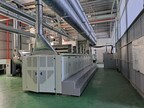
HO CHI MINH CITY, Vietnam, June 26, 2024 /PRNewswire/ — NEXTEVO, a Singapore-based materials science startup, is thrilled to announce the launch of its inaugural production facility in Dong Nai province, Vietnam. This state-of-the-art facility transforms pineapple leaf fiber (PALF) into ready-to-spin (RTS) fiber using NEXTEVO’s efficient mechanical process for scalable production.

NEXTEVO’s Launch Addresses Two Significant Environmental Challenges

Agricultural, forestry, and land use contribute 21% of global greenhouse gas emissions. Improper disposal of agricultural waste, like burning unutilised pineapple residues or letting them decompose, releases significant amounts of carbon dioxide and methane, potent greenhouse gases that harm the environment.

The fashion industry also contributes significantly to environmental degradation, responsible for 10% of global carbon emissions.

To address environmental challenges, NEXTEVO’s expansion in Vietnam utilises agricultural by-products to create sustainable textile materials and supports sustainable initiatives.

Leveraging Vietnam’s Strong End-to-end Textile Supply Chain

Vietnam, the world’s third-largest textile exporter, offers a strategic location for NEXTEVO’s debut. Located in Dong Nai, NEXTEVO’s new facility benefits from proximity to major seaports, Ho Chi Minh City, and vertically integrated textile manufacturers. This interconnectivity enhances cost efficiency and reduces the need for long-distance inland transportation, minimising emissions.

NEXTEVO sources pineapple leaf fiber from the Philippines, Indonesia, and East Africa, and soon, Vietnam and India. This diverse and scalable sourcing reduces climate risk and ensures a constant supply of raw materials.

NEXTEVO’s Pineapple Leaf Fiber Stands Out For Its Unique Advantages

As pineapple leaves are a byproduct of fruit cultivation, they require no additional land, water, or fertilisers. Unlike other fibers that require dedicated resources, this method minimises environmental impact by leveraging existing agricultural practices, thereby transforming byproduct into a valuable resource.

In Asia, pineapple symbolises prosperity, while Western cultures associate it with hospitality and luck. Beyond symbolism, the leaves are compostable, biodegradable, and offer sustainability advantages. They also possess skin-friendly and breathable properties, making them ideal for innovative fashion and textile materials.

NEXTEVO meets diverse customer needs with types of product materials: Pineapple RTS fiber, processed in-house; blended yarn, and blended fabric. The offerings are customisable for spinners, yarn producers, and brands, allowing flexibility across the industry, from raw materials to semi-finished textiles. This versatility enables their products to serve various applications in apparel, accessories, footwear, home textiles, and automotive interiors.

“The compelling story and benefits of pineapple fiber will surely resonate with consumers and brands alike.” said Harold Koh, Founder and CEO of NEXTEVO. “We are excited to unveil this sustainable fiber to the textile industry, as we are able to produce it at scale in our own facility to serve our customers consistently.”

NEXTEVO is dedicated to creating a network that connects suppliers, retailers, and customers, fostering sustainable natural fiber growth in Vietnam and improving the livelihoods of farming communities in the Philippines, Indonesia, and East Africa. Future expansions are planned for Vietnam and India.

Nextevo offers products to producers in Vietnam and extends its reach globally through exports.

The company is ambitiously working towards its goal of cutting its carbon footprint in half by 2028. Additionally, NEXTEVO plans to broaden its scope by incorporating other sustainable natural fibers in the foreseeable future.

About NEXTEVO
NEXTEVO is a material science startup in Southeast Asia; its mission is to transform agricultural “byproducts” at scale into sustainable value-added materials/products for fashion and textile industries. As a zero waste company, we will continue to utilise residues and discover new sustainable applications beyond textiles.


View original content to download multimedia:https://www.prnewswire.com/apac/news-releases/nextevo-debuts-cutting-edge-ready-to-spin-pineapple-leaf-fiber-production-facility-in-vietnam-302182971.html

SOURCE Nextevo

Continue Reading
Click to comment

Leave a Reply

Your email address will not be published. Required fields are marked *

Technology

EQT Foundation awards more than €1 Million in grants for next-generation critical minerals solutions

Published

on

By

EQT Foundation has awarded grants to researchers from 11 institutions across 9 countries developing alternatives to critical minerals used in batteries, hydrogen, solar, and industrial systemsThe grantees are advancing technologies spanning lithium recovery, battery recycling, rare-earth recovery, low-iridium hydrogen production, and earth-abundant energy materialsThe grants support high-risk, high-impact scientific research designed to strengthen supply-chain resilience and accelerate the global energy transition

STOCKHOLM, June 16, 2026 /PRNewswire/ — EQT Foundation is pleased to announce the recipients of its Critical Minerals Science Grants program, awarding more than EUR 1 million in grants to researchers developing technologies that reduce reliance on constrained and strategically important raw materials in climate technologies. The selected projects span universities and research institutions across Europe, North America, Asia, Africa, and Australia.

The funded projects tackle some of the most significant material bottlenecks facing the energy transition. The cohort includes technologies designed to recover lithium from seawater and industrial waste streams, recycle battery materials and rare earth elements, reduce iridium use in hydrogen electrolysers, and develop next-generation energy systems based on earth-abundant materials. Together, the projects aim to strengthen supply-chain resilience while supporting the long-term scalability of clean-energy technologies.

Cilia Holmes Indahl, CEO of EQT Foundation, commented: “The green transition has a materials problem. Too many clean technologies depend on a handful of critical minerals, mined under dangerous, exploitative conditions, often invisible to the consumers plugging in their electric cars. Supply chains are fragile, concentrated in too few places, and immature recycling practices mean most of these materials end up in landfill instead of back in the system. The researchers we’re backing are working on the hard science to change that, rethinking clean technologies from the ground up. At EQT Foundation, we believe supporting entrepreneurial scientists at the earliest stages will be critical to building the next generation of globally impactful climate and health technologies.”

Selected grantees include:

Kiana Amini, The University of British Columbia (Canada): Developing an electrochemical platform to recover lithium from seawater while simultaneously enabling ocean-based carbon dioxide removalBertrand Paviet-Salomon, CSEM (Switzerland): Advancing resource-light photovoltaic technologies designed to reduce material bottlenecks in solar energy systemsJonas Elsborg, Technical University of Denmark (Denmark): Building scalable manufacturing platforms for earth-abundant electrocatalysts used in green hydrogen productionRhiyaad Mohamed, University of Cape Town (South Africa): Developing ultra-low-iridium electrolyser anodes to enable more scalable and affordable green hydrogen deploymentWeiran Zhang, Nanyang Technological University (Singapore): Creating transition-metal-free battery chemistries based on silicon and lithium-salt systemsXiaochu Wei, Imperial College London (United Kingdom): Developing electrochemical recycling technologies that recover high-purity battery materials from end-of-life cellsXiao Su, University of Illinois Urbana-Champaign (United States): Advancing electrochemical technologies for rare-earth element recovery and recyclingJuchen Guo, University of California Riverside (United States): Developing a novel chloroaluminate-based process for lithium-ion battery recyclingAdrian Oehmen, University of Queensland (Australia): Creating bio-integrated technologies to recover lithium and rare earth elements from industrial waste streamsAndré Studart, ETH Zurich (Switzerland): Using microorganisms to recover rare earth elements from urban waste sourcesSajid Alvi, Chalmers Next Labs (Sweden): Engineering silicon anode materials for resilient and low-carbon lithium-ion batteries

The grants are part of EQT Foundation’s broader Science program, which supports entrepreneurial scientists working on breakthrough climate and health solutions at the earliest stages of development. In addition to funding, grantees receive access to commercialization support and EQT’s global network to help accelerate the path from scientific discovery to real-world impact. The program is designed to help more high-potential scientific breakthroughs progress beyond academia and toward scalable deployment.

Contact
EQT Press Office, 
press@eqtpartners.com

This information was brought to you by Cision http://news.cision.com

https://news.cision.com/eqt/r/eqt-foundation-awards-more-than–1-million-in-grants-for-next-generation-critical-minerals-solutions,c4364254

The following files are available for download:

View original content:https://www.prnewswire.co.uk/news-releases/eqt-foundation-awards-more-than-1-million-in-grants-for-next-generation-critical-minerals-solutions-302801422.html

Continue Reading

Technology

VT Markets Launches Bold as Gold, a Global Campaign to Establish New Benchmark in Gold Trading

Published

on

By

SYDNEY, June 16, 2026 /PRNewswire/ — VT Markets, a leading global online trading platform, announced the launch of its Bold as Gold campaign. The campaign celebrates the bold ambitions of gold traders, while reinforcing commitment to delivering world-class trading conditions required to navigate one of the most dynamic asset classes.

At its core, the campaign is built on a belief that gold rewards bold decisions, but traders can only succeed if their broker can match their ambition with the right execution quality, platform speed, and stability.

This initiative follows a historic period of growth which saw VT Markets process a record-breaking USD1.5 trillion in monthly gold trading volume amidst global market volatility in January 2026.

To back the Bold as Gold mandate, VT Markets has released a series of verified global performance metrics:

Bold Execution Under Pressure: While many brokers experience slippage during periods of heightened gold volatility, VT Markets records consistent no-slippage ratios of 61-65% globally, reaching as high as 65% in Europe. This helps traders execute their strategies with greater confidence, even during fast-moving market conditions.Bold Speed for Fast Markets: With market-leading global execution speeds, VT Markets delivers the responsiveness required to keep pace with rapidly changing price action, helping traders act without being disadvantaged by latency.Bold Consistency Across Borders: Through a unified global infrastructure, VT Markets provides consistent execution standards across more than 160 countries, ensuring traders receive the same high-performance trading experience regardless of location.

These metrics are further validated by Global Financial Market Review (GFM), a trusted financial portal reaching over 14 million readers annually, which awarded VT Markets as ‘Best Gold Trading Platform 2026‘. Evaluated on criteria such as transparency, innovation, volume of transactions, platform stability, and competitive spreads, the accolade reinforces VT Markets’ standing as a benchmark for reliability and performance in the gold trading space.

What’s Ahead

Bold as Gold is a multi-month global initiative. VT Markets will introduce the Gold Cup — a trading competition series with a USD500,000 prize pool. Alongside this, there will be offline activations, market insights, and educational programmes across key markets. Through this campaign, VT Markets is building a complete ecosystem for gold traders, combining trading performance, market expertise, education, and community engagement to help clients become truly Bold as Gold.

View original content to download multimedia:https://www.prnewswire.com/news-releases/vt-markets-launches-bold-as-gold-a-global-campaign-to-establish-new-benchmark-in-gold-trading-302800192.html

SOURCE VT Markets

Continue Reading

Technology

Want to Prevent the Math Summer Slide? NWEA Learning Scientists and Math Experts Offer Tips and Activities

Published

on

By

BOSTON, June 16, 2026 /PRNewswire/ — Summer vacation is here, and while fun is on the agenda, keeping up with academic skills may not be. This means many students return to school in the fall at a slightly lower academic level than they were at the previous spring. It’s a phenomenon known as “summer slide,” and research suggests that math tends to be more impacted than reading.

The good news? Families don’t need worksheets or formal lessons to help children maintain their math skills over the summer. NWEA, a K–12 assessment and research organization, asked its learning scientists and math experts to share some of their favorite ways to make math a natural part of everyday life over the summer.

Find Math in Story Time
Mary Resanovich, former elementary school teacher and current Principal Assessment Connections Content Designer at NWEA
Recommended for Early Learners

People often think of reading and math as completely separate subjects, but story time can be a powerful way to build early math skills. Many children’s books include opportunities to count objects, compare sizes, identify patterns and shapes, solve simple problems, and talk about quantities. Even books that are not specifically about math can spark conversations that help children build mathematical thinking. Reading aloud exposes children to new vocabulary and ideas while creating opportunities to explore math concepts together. The illustrations alone can lead to discussions about counting, comparing, adding, subtracting, and problem-solving.

When reading with your child, try:

Counting objects in illustrationsComparing quantities, sizes, or shapesLooking for patternsAsking children how they would solve a problem in the storyTalking through different ways to arrive at an answer

Math through Rhymes and Music
Colleen Oppenzato, PhD, former elementary and middle school teacher and current Learning Scientist at NWEA
Recommended for Grades preK–1

Music, songs, and nursery rhymes can help young children build important math skills while having fun and spending time together.

Many popular children’s songs naturally reinforce early math concepts. Nursery rhymes such as “One, Two, Buckle My Shoe” and “Five Little Monkeys” help children practice counting forward and backward, while songs like “The Wheels on the Bus” introduce concepts such as “up and down” and “round and round,” helping children develop an understanding of spatial relationships.

Families can build math learning into everyday routines by singing favorite songs together in the car, during playtime, or at bedtime. Repetition, rhythm, and movement all help reinforce early mathematical thinking.

Music can also be a fun way to explore cultures and languages while learning math concepts. Songs like Un elefante se balanceaba in Spanish or Un éléphant qui se balançait in French help children practice counting while introducing new languages and cultural traditions. The goal is to make math playful and engaging by connecting it to activities children already know and love.

Put Math Thinking on Paper
Ayesha Hashim, PhD, Lead Research Scientist at NWEA
Recommended for Grades 1–3

Writing matters. As young learners start to engage in more complicated math, it’s important that they don’t try to solve everything in their heads or rely only on counting with their fingers. At our house, I keep a math journal on the breakfast table where my first-grade son can write out his thinking and practice using addition and subtraction strategies that he is learning at school. The goal isn’t perfection; it’s building a routine where, when presented with a math problem, children naturally reach for paper and pencil and begin writing and organizing what they are thinking.

Families can encourage this by:

Keeping a notebook or math journal somewhere visible and accessibleAsking children to draw pictures or models to represent their thinkingAsking children to explain how they arrived at an answerModel your thinking by writing out your own solution as an exampleCelebrating the process, not just the correct answer

Explore Fractions in the Kitchen
Jean Hampel, EdD, Learning Scientist at NWEA
Recommended for Grades 3–5

Fractions are a foundational math skill, and the kitchen is one of the easiest places to practice them. When cooking, I like to challenge children to think about different ways to measure ingredients. If a recipe calls for ¾ cup of flour, what if we only have a ½-cup and a ¼-cup measure? What if we only have a ¼-cup measure? These simple conversations help children explore equivalent fractions and develop a deeper understanding of how numbers relate to one another.

You can also:

Discuss how measurements change when doubling a recipeExplore what happens when cutting a recipe in halfCompare measurements such as ¼ cup and ½ cupAsk sharing questions like, “If we have three granola bars and four people, how much does each person get?”

Math becomes much more meaningful when children see it being used in real-world situations.

Math in Projects Around the House
Aaron Kugler, former elementary and middle school teacher, and current Principal Assessment Connections Content Designer at NWEA
Recommended for Grades 3-12

One of the things that summer provides in much more plentiful supply than the school year is time for hands-on exploration and play. Even high schoolers deserve and need time to explore topics of interest. Families can encourage their students to apply their interests in dedicated projects that no doubt could leverage math. Consider the following ideas for summer projects:

Design and build a board gameOwn and operate a lemonade standLearn to code simple applicationsPlan a road tripPlan a DIY projectDesign a scale model or mural

Each of these project ideas is ripe with mathematical application. Most involve measurement, logical reasoning, financial literacy, or opportunities to practice calculation. A student interested in making money over the summer might be encouraged to calculate their supply cost, income potential, and income-to-cost ratio. A student planning a road trip might be encouraged to use physical maps, calculate the best places to make stops each night, and outline hotel or campsite accommodations and meal budgets.

By taking simple ideas and structuring them as slightly more involved projects that help students escape the “boredom” of the everyday, mathematics learning and application can take a front seat in a lot of summer experiences.

Leverage AI as a Learning Partner
Susan Kowalski, PhD, former high school teacher and current Lead Research Scientist at NWEA
Recommended for Grades 6–12

Summer offers an opportunity for students to revisit math concepts, strengthen skills, and build confidence before returning to school in the fall. But creating personalized practice and support can be time-consuming for families.

AI tools (like math-gpt.org) can help by generating practice problems, reviewing work, and providing detailed written explanations that help students understand why a solution works – not just what the answer is. Rather than replacing teachers or tutors, AI can help families provide targeted support when students need extra practice or a different explanation.

Used thoughtfully and with adult guidance, AI can be a helpful learning partner for keeping math skills sharp over the summer.

Families can use AI to:

Ask for step-by-step explanations of math concepts and proceduresGenerate additional practice problems on a topic that a student is learningExplore multiple ways to solve the same problemReview completed work and identify where mistakes may have occurredHelp parents better understand the math their children are learning

As with any technology, adult guidance is important. AI works best as a tool that supports learning and encourages curiosity rather than one that simply provides answers.

Turn Game Night into Math Night
Natasha Wilson, PhD, former mathematics teacher (K-16) and current Learning Scientist at NWEA
Recommended for All Ages

One of my favorite ways to support math learning over the summer is through games. Games help children develop fact fluency, strategic thinking, problem-solving skills, and perseverance without feeling like they are “doing” mathematics. They also create natural opportunities for productive struggle and tenacity, where children learn to keep trying even when something feels challenging.

Some of my family’s favorites include:

Qwixx – develops addition skills, subitization skills, and strategic thinkingBattleship – builds understanding of coordinates and spatial reasoningSet – strengthens pattern recognition and logical reasoningPhase 10 – encourages addition and introduces probability conceptsTiny Polka Dot – helps younger learners develop number sense, subitization, counting, and comparison skills

As you play, ask questions such as:

How did you decide that?Why do you think that strategy worked?Was that move easy or difficult? Why?What might you do differently next time?

These conversations help children think more deeply about the mathematics embedded in the game.

Math is all around us, and summer offers countless opportunities to help children practice it in authentic ways. The goal is not to recreate school at home. Instead, experts encourage families to help children see math as a tool they already have at their disposal for understanding, navigating, and enjoying the world around them.

For more family resources and learning tips, visit https://www.nwea.org/blog/2025/engaging-with-math-at-home-at-all-ages/

About NWEA

NWEA®, a division of HMH, supports educators worldwide by providing responsive, evidence-based assessment solutions that illuminate learning needs and fuel student growth. For more than 40 years, NWEA has developed innovative pre-K–12 assessments, including its flagship assessment – MAP Growth, and professional learning that helps educators strengthen their practice and improve student outcomes. As part of its commitment to bring valuable insights to the education community, NWEA engages in research that examines issues that shed light on inequities and other barriers to academic opportunities. Visit NWEA.org to find out how NWEA partners to help all kids learn.

Contact: Simona Beattie, Communications Director, simona.beattie@nwea.org or 971.361.9526

View original content to download multimedia:https://www.prnewswire.com/news-releases/want-to-prevent-the-math-summer-slide-nwea-learning-scientists-and-math-experts-offer-tips-and-activities-302800821.html

SOURCE NWEA

Continue Reading

Trending