Connect with us

Technology

Gallium Arsenide Components Market size is set to grow by USD 3.51 billion from 2024-2028, Rising adoption of smartphones and tablets boost the market, Technavio

Published

on

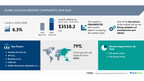
NEW YORK, July 2, 2024 /PRNewswire/ — The global gallium arsenide components market size is estimated to grow by USD 3.51 billion from 2024-2028, according to Technavio. The market is estimated to grow at a CAGR of over 6.3% during the forecast period. Rising adoption of smartphones and tablets is driving market growth, with a trend towards increasing adoption of 4G and 5G networks. However, availability of alternative devices poses a challenge. Key market players include Analog Devices Inc., AXT Inc., Broadcom Inc., CMK Ltd., DOWA Electronics Materials Co. Ltd., Edmund Optics Inc., Freiberger Compound Materials GmbH, Furukawa Denshi Co. Ltd., Hanergy Thin Film Power EME BV, II VI Inc., Logitech Ltd., MACOM Technology Solutions Inc., Murata Manufacturing Co. Ltd., NXP Semiconductors NV, Qorvo Inc., Reade International Corp., Skyworks Solutions Inc., Sumitomo Electric Industries Ltd., Umicore SA, and Western Minmetals SC Corp.

Get a detailed analysis on regions, market segments, customer landscape, and companies- View the snapshot of this report

Gallium Arsenide Components Market Scope

Report Coverage

Details

Base year

2023

Historic period

2018 – 2022

Forecast period

2024-2028

Growth momentum & CAGR

Accelerate at a CAGR of 6.3%

Market growth 2024-2028

USD 3518.2 million

Market structure

Fragmented

YoY growth 2022-2023 (%)

5.83

Regional analysis

APAC, North America, Europe, South America, and Middle East and Africa

Performing market contribution

APAC at 79%

Key countries

South Korea, China, US, India, and Taiwan

Key companies profiled

Analog Devices Inc., AXT Inc., Broadcom Inc., CMK Ltd., DOWA Electronics Materials Co. Ltd., Edmund Optics Inc., Freiberger Compound Materials GmbH, Furukawa Denshi Co. Ltd., Hanergy Thin Film Power EME BV, II VI Inc., Logitech Ltd., MACOM Technology Solutions Inc., Murata Manufacturing Co. Ltd., NXP Semiconductors NV, Qorvo Inc., Reade International Corp., Skyworks Solutions Inc., Sumitomo Electric Industries Ltd., Umicore SA, and Western Minmetals SC Corp.

Market Driver

The global market for Gallium Arsenide (GaAs) components is poised for significant growth due to the widespread adoption of high-speed Internet connectivity. With the phase-out of 2G and 3G networks and the increasing focus on 4G and 5G technologies, the demand for GaAs components in smartphones, tablets, and other communication devices is expected to increase substantially. 5G technology, which is currently in development, will offer faster data speeds and improved performance, leading to higher sales volumes for GaAs components. Major countries, including the US, Japan, and South Korea, are expected to be early adopters of 5G technology, further boosting the market growth. 

The Gallium Arsenide components market is experiencing significant growth, with technologies such as telecommunications, optoelectronics, and military applications driving demand. The use of GaAs in high-frequency applications, like radio frequency (RF) and microwave technologies, is increasing due to its superior performance. The semiconductor industry is also investing in GaAs for its use in power electronics and solar cells. The increasing demand for GaAs components is also due to their high efficiency, excellent thermal conductivity, and high electron mobility. The market for GaAs components is expected to continue its upward trend in the coming years. 

Research report provides comprehensive data on impact of trend. For more details- Download a Sample Report

Market Challenges

The GaAs components market faces challenges from emerging alternatives such as GaN, SiGe, LDMOS, and CMOS devices. GaN and LDMOS are used in power amplifiers, while SiGe is preferred in low-noise applications. CMOS is gaining popularity in entry-level phones and is expected to expand into smartphones. High-power RF semiconductor devices demand substrates with high thermal conductivity, which GaAs cannot provide. GaN substrates are used instead for high-voltage applications. These factors are expected to limit the growth of the GaAs components market during the forecast period.The Gallium Arsenide components market faces several challenges in the semiconductor industry. The high cost of production and complexity in manufacturing are major hurdles. The demand for these components is increasing due to their superior properties in telecommunications, optoelectronics, and radio frequency applications. However, the competition from other semiconductor materials, such as silicon, is intense. The need for advanced technologies and processes to improve efficiency and reduce costs is crucial. Defects and impurities in the raw materials and manufacturing processes also pose challenges. The market requires continuous research and development to address these issues and maintain competitiveness.

For more insights on driver and challenges – Request a sample report!

Segment Overview 

This gallium arsenide components market report extensively covers market segmentation by

Type 1.1 LEC grown GaAs1.2 VGF grown GaAsApplication 2.1 Mobile devices2.2 Wireless communication2.3 OthersGeography 3.1 APAC3.2 North America3.3 Europe3.4 South America3.5 Middle East and Africa

1.1 LEC grown GaAs- The LEC-grown GaAs segment led the gallium arsenide components market in 2023, driven by advancements in wireless communication, satellite technology, and other wireless networks. This segment’s dominance is attributed to the semiconductor industry’s high usage of semi-insulating GaAs single crystals. Benefits such as scalability, effectiveness, temperature reduction, carbon content control, and good insulation properties make LEC-grown GaAs an attractive choice. These advantages, coupled with the expanding semiconductor sector, are expected to boost demand for LEC-grown GaAs and fuel market growth throughout the forecast period.

For more information on market segmentation with geographical analysis including forecast (2024-2028) and historic data (2017-2021) – Download a Sample Report

Research Analysis

The Gallium Arsenide (GaAs) components market encompasses the production and supply of various optoelectronic devices and semiconductor ICs, including Laser Diodes, Light Emitting Diodes, and Microwave Integrated Circuits. These components find extensive applications in the Aerospace Industry, Electronics Industry, and Communications Industry, particularly in the development of 5G Networks and 5G Wireless Communication systems. GaAs is a preferred semiconductor material due to its superior electrical and optical properties, making it ideal for Power Amplifiers, Low Noise Amplifiers, Filters and Duplexers, RF Mixers, Switches, and other frequency-related components. Operating at various frequencies and with different voltage requirements, these components are manufactured using advanced technologies like Plasma Etching and VGF Technology. The wafer size used in the production process varies depending on the specific application and component design.

Learn and explore more about Technavio’s in-depth research reports

The global Front End of the Line Semiconductor Equipment Market is experiencing robust growth due to the increasing demand for advanced semiconductors in various industries. Concurrently, the global Semiconductor IP Market is expanding, driven by the need for efficient and cost-effective semiconductor design solutions. Additionally, the Magneto Resistive RAM (MRAM) Market is gaining traction as MRAM technology offers significant advantages in terms of speed, endurance, and power efficiency. These trends highlight the dynamic nature of the semiconductor industry, underscoring the critical role of innovative technologies in shaping the future of electronics.

Market Research Overview

The Gallium Arsenide (GaAs) components market encompasses the production and supply of semiconductor devices and related products based on Gallium Arsenide. These components are utilized in various applications such as radio frequency (RF) and power electronics, optoelectronics, and sensor technology. GaAs materials offer advantages like high electron mobility, high saturation velocity, and high electron velocity, making them suitable for high-frequency and high-power applications. The GaAs components market is driven by the increasing demand for wireless communication systems, solar energy conversion systems, and other advanced technologies. The market is expected to grow significantly due to the continuous research and development in the field of GaAs technology and the increasing adoption of GaAs-based devices in various industries.

Table of Contents:

1 Executive Summary
2 Market Landscape
3 Market Sizing
4 Historic Market Size
5 Five Forces Analysis
6 Market Segmentation

TypeLEC Grown GaAsVGF Grown GaAsApplicationMobile DevicesWireless CommunicationOthersGeographyAPACNorth AmericaEuropeSouth AmericaMiddle East And Africa

7 Customer Landscape
8 Geographic Landscape
9 Drivers, Challenges, and Trends
10 Company Landscape
11 Company Analysis
12 Appendix

About Technavio

Technavio is a leading global technology research and advisory company. Their research and analysis focuses on emerging market trends and provides actionable insights to help businesses identify market opportunities and develop effective strategies to optimize their market positions.

With over 500 specialized analysts, Technavio’s report library consists of more than 17,000 reports and counting, covering 800 technologies, spanning across 50 countries. Their client base consists of enterprises of all sizes, including more than 100 Fortune 500 companies. This growing client base relies on Technavio’s comprehensive coverage, extensive research, and actionable market insights to identify opportunities in existing and potential markets and assess their competitive positions within changing market scenarios.

Contacts

Technavio Research
Jesse Maida
Media & Marketing Executive
US: +1 844 364 1100
UK: +44 203 893 3200
Email: media@technavio.com
Website: www.technavio.com/

View original content to download multimedia:https://www.prnewswire.com/news-releases/gallium-arsenide-components-market-size-is-set-to-grow-by-usd-3-51-billion-from-2024-2028–rising-adoption-of-smartphones-and-tablets-boost-the-market-technavio-302187302.html

SOURCE Technavio

Continue Reading
Click to comment

Leave a Reply

Your email address will not be published. Required fields are marked *

Technology

Announcing Zendocs, the Fully Browser-Based PDF and Document Platform

Published

on

By

Zendocs takes document management one step further by eliminating the need for downloads or installations.

CLAYMONT, Del., June 22, 2026 /PRNewswire/ — Zendocs, the fully browser-based PDF and document platform, aims to simplify workflows for individuals and teams alike by removing the need to download or install document management apps onto a user’s device. This approach prioritizes user experience, speed, and accessibility, making it a practical solution for those who frequently edit, convert, or manage PDFs and other document types.

Addressing Friction in Everyday Workflows

Zendocs was founded to solve real-world digital document frustrations stemming from the need to download, navigate, and regularly update multiple document management programs. The platform serves as an alternative to traditional tools, many of which have been described as slow, expensive, or cumbersome due to the various software solutions they require.

To overcome the friction of many traditional tools, Zendocs allows users to perform many of the same tasks they would on those tools without installing any programs. Instead, Zendoc’s services are accessible entirely through a user’s web browser, allowing them to be used across multiple devices simultaneously.

Real-World Applications: Traveling for Work

The idea for Zendocs emerged when one of the founders struggled to edit a PDF while traveling for work. While this wouldn’t ordinarily present any issues, the individual didn’t have access to their usual software. Since that software was tied directly to the device on which it was installed, the worker lacked access to it.

For this and other reasons, Zendocs was designed to allow users to make these kinds of changes quickly and from virtually any Wi-Fi-enabled device.

The platform also offers document management functions suitable for both casual users and professionals, further broadening its applicability. For example, Zendocs is as viable for someone who wants to convert a PDF to a DOCX file as it is for someone who wants to collate multiple PDFs to create a portfolio.

Early in its development, Zendocs’s founders continually refined the platform by integrating user feedback, helping it better address real-world needs. This philosophy centered the platform’s development in practicality and usability, two qualities Zendocs continues to pursue today.

Current and Future Developments

Today, Zendocs sees use across multiple sectors, including education, small business, and professional services, in part due to its flexibility and accessibility.

As the platform continues to develop, its founders aim to integrate more collaboration tools, AI-powered document features, and accessibility enhancements to help individuals and businesses save time and improve productivity. These developments would place Zendocs alongside other cloud-based workflow solutions designed to simplify traditionally complex document management processes, helping users spend less time navigating apps and more time engaging in meaningful work.

About Zendocs

Zendocs is a fully browser-based PDF and document management platform. This design eliminates the need for users to download or install individual apps on their devices, instead allowing them to edit, convert, and manage PDFs and other document types entirely in their web browsers. Since the platform caters to casual and professional users alike, Zendocs is used across multiple sectors, including education, small business, and professional services.

ZenDocs America Inc.
Claymont, DE 19703, United States
Phillipa Fourie pr@zendocs.com

View original content to download multimedia:https://www.prnewswire.co.uk/news-releases/announcing-zendocs-the-fully-browser-based-pdf-and-document-platform-302806690.html

Continue Reading

Technology

AI Labs, Quantum Pioneers, and Standards Leaders Headline ANSI’s Innovation Summit in Denver

Published

on

By

July 29 program features speakers from Anthropic, IBM Research, IonQ, Microsoft, NIST, and Colorado’s growing quantum cluster

NEW YORK, June 22, 2026 /PRNewswire/ — The American National Standards Institute (ANSI) will host its 2026 Innovation Summit in Denver July 28–31, bringing together leaders from major AI laboratories, quantum technology founders, federal agencies, and standards developing organizations to address how standards enable the technologies reshaping the digital economy. The Summit’s conference, Accelerating the Digital Economy through AI and Quantum, takes place Wednesday, July 29, at the Grand Hyatt Denver.

“Standards are the critical infrastructure of the digital economy,” said Laurie E. Locascio, Ph.D., NAE, president and CEO of ANSI. “This conference is about how they can accelerate—not just govern—the adoption of AI today and prepare industry for the quantum transition ahead. The conversations we are convening in Denver will help shape what comes next.”

VIEW AGENDAREGISTER NOW

The conference is structured as two thematic blocks: a morning focused on AI standards and an afternoon dedicated to the precompetitive foundations and commercial trajectories of the emerging quantum industry, much of which is being built in Colorado.

The morning AI session opens with remarks from Rohit Israni, founder and CEO of CertientAI and chair of AI Standards US (INCITS), followed by Craig Schlenoff, Ph.D., chief of the AI Research, Measurement, and Standards Division at the National Institute of Standards and Technology (NIST), setting the stage on the evolving AI landscape. Two panels follow.

The first, Managing Unique Risks from Frontier AI, examines a newly approved framework for the most advanced general-purpose AI systems. Moderated by Chris Meserole, executive director of the Frontier Model Forum, the panel features Jesse Dunietz, Ph.D., computer scientist at NIST; Kim Lucy, director of governance, risk, and compliance standards at Microsoft; and Deepika Raman, non-resident research fellow at the UC Berkeley Center for Long-Term Cybersecurity.

The second, Agentic AI: Opportunities, Risks, and Implications for Standards, explores how autonomous AI agents change the security and governance landscape—and where new standards are needed to govern systems that don’t just suggest but act. Moderated by August Gweon, policy counsel at Anthropic, panelists include Kyriakos “Rock” Lambros, CEO and founder of RockCyber; Troy Leach, chief strategy officer at the Cloud Security Alliance; and Keerthiram Murugesan, Ph.D., research scientist at IBM Research.

The afternoon quantum session is anchored by two panels exploring what quantum needs to scale, both moderated by Austin S. Lin, head of the U.S. delegation to ISO/IEC JTC 3 (Quantum Technologies).

What No Single Company Can Build: The Shared Foundations of a Quantum Industry brings together Chris Monroe, Ph.D., co-founder of IonQ and Gilhuly Family Presidential Distinguished Professor at Duke University; Andrew Wilson, Ph.D., acting chief of NIST’s Time and Frequency Division and lead of its Quantum Information Science Program; and Yoonchae Cheong, Ph.D., director of the Korea–U.S. Quantum Technology Cooperation Center.

The Business Case for Standards: How Quantum Companies Scale features the CEOs and investors building Colorado’s quantum economy: Scott Davis, Ph.D., CEO and co-founder of Vescent Photonics; Zachary Yerushalmi, co-founder and CEO of Elevate Quantum; and Cody Moore, vice president at Caruso Ventures.

A Denver and Colorado focus

The day’s program reflects Colorado’s growing prominence in both quantum and frontier technology. The state is home to a fast-expanding quantum cluster, with companies developing photonic and ion-trap systems, sensing technologies, and quantum-enabled infrastructure. U.S. Senator John Hickenlooper of Colorado will deliver recorded welcome remarks, joining Locascio in opening the day.

The conference is open to attendees from across the technology ecosystem—founders, investors, engineers, policy professionals, and anyone working at the intersection of emerging technology and standards. Advance registration is required for this no-fee event.

About the Summit

Accelerating the Digital Economy through AI and Quantum is one of several events at the 2026 ANSI Innovation Summit (July 28–31), which also includes a Fireside Chat with Standards CEOs, the Standards Lab, the Legal Issues Forum, ANSI’s Annual Business Meeting, the ANSI Awards Ceremony, and the U.S.–Korea Standards Forum. Full program details and registration are available at www.ansi.org/summit.

About ANSI

The American National Standards Institute (ANSI) is a private nonprofit organization whose mission is to enhance both the global competitiveness of U.S. business and the U.S. quality of life by promoting and facilitating voluntary consensus standards and conformity assessment systems, and safeguarding their integrity. Its membership comprises businesses, professional societies and trade associations, standards developers, government agencies, and consumer and labor organizations.

The Institute represents and serves the diverse interests of more than 270,000 companies and organizations and 30 million professionals worldwide. ANSI is the official U.S. representative to the International Organization for Standardization (ISO) and, via the U.S. National Committee, the International Electrotechnical Commission (IEC). For more information, visit www.ansi.org and access the latest news and content on LinkedIn, X, and Facebook.

View original content to download multimedia:https://www.prnewswire.com/news-releases/ai-labs-quantum-pioneers-and-standards-leaders-headline-ansis-innovation-summit-in-denver-302806692.html

SOURCE American National Standards Institute

Continue Reading

Technology

Government of Canada invests $21.6 million in first-of-its-kind clean energy project in Manitoba

Published

on

By

WINNIPEG, MB, June 22, 2026 /CNW/ – While building Canada into a clean energy superpower, we are working with northern and remote communities to develop clean energy projects, in particular those that are reducing diesel use for electricity generation. This approach will strengthen our energy security, reduce our emissions and create jobs and prosperity for northern, rural and Indigenous communities.

Today, the Honourable Rebecca Chartrand, Minister of Northern and Arctic Affairs and Minister responsible for the Canadian Northern Economic Development Agency, on behalf of the Honourable Tim Hodgson, Minister of Energy and Natural Resources, announced $21.6 million in federal funding for a suite of projects that will transform how electricity is generated and managed in Sayisi Dene First Nation, located in the community of Tadoule Lake in northern Manitoba.

This is the first phase of a First Nation–led initiative to develop Manitoba’s first integrated renewable energy microgrid, combining bifacial solar photovoltaic (PV) power and battery storage with a microgrid controller, to generate clean electricity. Once commissioned in fall 2026, the microgrid will reduce emissions by an estimated 500 tonnes of carbon dioxide every year and lower power costs for the community over time.

To build Canada strong, all communities must have secure, reliable energy. By supporting projects like these, the Government of Canada is working with Indigenous leadership and building a more prosperous, sustainable economy for generations to come.

Quotes

“Our government is proud to support Sayisi Dene First Nation as they lead the way toward cleaner, more reliable energy for their community. Projects like this one reflects the Nation’s vision for greater energy independence, a cleaner future and lasting prosperity.”

The Honourable Rebecca Chartand
Minister of Northern and Arctic Affairs and Minister responsible for the Canadian Northern Economic Development Agency and Member of Parliament for Churchill–Keewatinook Aski

“Canada Strong for All means working in partnership with Indigenous communities to reduce reliance on diesel and build a cleaner, more resilient energy future. Projects like Sayisi Dene First Nation’s microgrid demonstrate how innovation and collaboration can deliver real results across the Prairies and in the North.”

The Honourable Tim Hodgson
Minister of Energy and Natural Resources

“By supporting projects like this one in Sayisi Dene First Nation, we are championing Indigenous-led climate solutions. First Nations have been stewards of this land for generations, and we acknowledge their continued leadership on climate action. This initiative demonstrates once again how Canada is working hand-in-hand with partners to build a more resilient and sustainable economy for all.”

The Honourable Julie Dabrusin
Minister of the Environment, Climate Change and Nature

“Sayisi Dene First Nation is demonstrating how Indigenous-led clean energy projects can strengthen community resilience, advance self-determination and create lasting benefits for future generations. Indigenous Services Canada is proud to support the community’s vision for a cleaner, more reliable energy future that reduces reliance on diesel while supporting sustainable economic development.”

The Honourable Mandy Gull-Masty
Minister of Indigenous Services

“I have been involved in this renewable energy project from the beginning, serving in various roles throughout its development. Our community is looking forward to the benefits that will come with construction and commissioning this fall. Revenue generated from solar power will go toward community needs as we strive to become more sustainable and reduce our emissions. We also look forward to showcasing this project to other off-grid First Nations, sharing our learnings and experience executing the project.”

Chief Kelly-Ann Thom Duck
Sayisi Dene First Nation

“This project sets the stage for continued progress. By expanding renewable solutions and reducing diesel reliance, we are strengthening a more affordable, reliable and resilient energy future for communities across Manitoba.”

Allan Danroth
President and Chief Executive Officer, Manitoba Hydro

“We know reliable energy is essential, especially in northern communities, and this investment will help strengthen the autonomy and long-term energy security for Sayisi Dene First Nation. Investments like these reflect our broader commitment to building a clean energy grid that lowers emissions and keeps rates affordable for all Manitobans.”

The Honourable Adrien Sala
Minister of Finance and Minister responsible for Manitoba Hydro

Quick Facts

Natural Resources Canada’s Clean Energy for Rural and Remote Communities (CERRC) program has invested $453 million to reduce reliance on diesel and other fossil fuels for heat and power in Indigenous, rural and remote communities.CERRC has supported over 230 renewable energy projects across Canada, including 82 projects in the North. Collectively, these projects are adding more than 67 MW of clean energy to remote grids by 2027, reducing fuel use by approximately 28 million litres annually and avoiding over 75,000 tonnes in GHG emissions each year. These investments have strengthened local capacity, supported economic opportunities and advanced innovative solutions.The Energy Innovation Program (EIP) advances clean energy technologies that will help Canada maintain a competitive, reliable and affordable energy system while transitioning to a low-carbon economy.Natural Resources Canada provided $10,714,414 through its CERRC program and $4,200,000 through the Energy Innovation Program (EIP).Environment and Climate Change Canada contributed $6 million through its Indigenous Leadership Fund.The Low Carbon Economy Fund is an important part of Canada’s climate action plans, helping put Canada to build a sustainable net-zero emissions economy by 2050.Indigenous Services Canada is contributing up to $1,471,670 to support this initiative, including $971,670 through the Manitoba Indigenous Clean Energy Initiative and $500,000 through the Community Infrastructure Program.On May 14, 2026, the Government of Canada launched a new national Electricity Strategy. This plan will double the capacity of our grid by 2050 and supply clean, reliable, affordable power across the country for decades to come.To develop this strategy, the government is launching consultations with provinces, territories, Indigenous Peoples, utilities and unions to work together to identify the actions needed to double our grid most effectively and affordably.

Associated Links

Clean Energy for Rural and Remote CommunitiesIndigenous Leadership FundManitoba Indigenous Clean Energy InitiativePowering Canada Strong: A National Strategy for an Electrified Canadian Economy

Follow Natural Resources Canada on LinkedIn

SOURCE Natural Resources Canada

Continue Reading

Trending