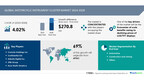
NEW YORK, July 8, 2024 /PRNewswire/ — The global motorcycle instrument cluster market size is estimated to grow by USD 270.8 million from 2024-2028, according to Technavio. The market is estimated to grow at a CAGR of 4.02% during the forecast period. economies of scale benefits owing to declining prices of LCD/TFT displays is driving market growth, with a trend towards multilayer displays enabling further developments in digital instrument clusters. However, unpopularity of instrument clusters among motorcycle enthusiasts poses a challenge. Key market players include Comoto Holdings Inc., Continental AG, Dakota Digital Inc., JPM Group, Koso North America, Marelli Holdings Co. Ltd., Microchip Technology Inc., motogadget GmbH, MTA Spa, Nippon Seiki Co. Ltd., NXP Semiconductors NV, Qt Group, Robert Bosch GmbH, Suprajit Engineering Ltd., Texas Instruments Inc., TRAIL TECH, Valeo SA, Visteon Corp., Volkswagen AG, and Yazaki Corp..
Get a detailed analysis on regions, market segments, customer landscape, and companies- View the snapshot of this report
Motorcycle Instrument Cluster Market Scope
Report Coverage
Details
Base year
2023
Historic period
2018 – 2022
Forecast period
2024-2028
Growth momentum & CAGR
Accelerate at a CAGR of 4.02%
Market growth 2024-2028
USD 270.8 million
Market structure
Concentrated
YoY growth 2022-2023 (%)
3.61
Regional analysis
APAC, North America, Europe, South America, and Middle East and Africa
Performing market contribution
APAC at 69%
Key countries
China, India, US, Indonesia, and Canada
Key companies profiled
Comoto Holdings Inc., Continental AG, Dakota Digital Inc., JPM Group, Koso North America, Marelli Holdings Co. Ltd., Microchip Technology Inc., motogadget GmbH, MTA Spa, Nippon Seiki Co. Ltd., NXP Semiconductors NV, Qt Group, Robert Bosch GmbH, Suprajit Engineering Ltd., Texas Instruments Inc., TRAIL TECH, Valeo SA, Visteon Corp., Volkswagen AG, and Yazaki Corp.
Market Driver
The motorcycle instrument cluster market is experiencing a shift towards 3D graphics interfaces due to their increased precision and customer satisfaction. Vendors are focusing on developing realistic 3D graphics displays, with multilayer technology being the latest addition. Visteon, a prominent vendor, has introduced a multilayer display that stacks two high-resolution displays, creating a sense of depth without the need for glasses. This innovation was well-received during its unveiling at CES 2017, as users preferred the 3D graphics experience over traditional flat displays. The unique selling point of this technology is the ability to provide 3D graphics without the need for glasses, expanding its appeal to a wider customer base and driving growth in the motorcycle instrument cluster market.
The Motorcycle Instrument Cluster market is witnessing significant trends with the integration of smartphone connectivity. Manufacturers are focusing on producing Digital and Hybrid Instrument Clusters with LCD and TFT displays, offering advanced graphics, tuning, and sensors. Premium and Mid-Premium motorcycle segments lead the market, while Commuter segment follows. CPUs and ergonomic designs ensure comfort and connectivity functions like phone calls, messages, music, and smartphone apps. Wi-Fi, GPS, Navigation, and Safety features are becoming essential. Analog Instrument Clusters continue to coexist, with indicators, gauges, and sensors. Motorcycle production volumes drive the demand for Connected Motorcycle technology. Price sensitivity remains a key factor.
Discover 360° analysis of this market. For complete information, schedule your consultation – Book Here!
Market Challenges
The motorcycle instrument cluster market faces uncertainty due to the divide among motorcycle enthusiasts regarding the acceptance of advanced technologies. While some embrace innovations like throttle mapping and enhanced braking for improved safety, others believe these features dilute the raw riding experience. The Harley Owners Group, a prominent motorcycle community, represents this perspective. The challenge for market growth lies in winning over the skeptics and striking a balance between technology and tradition. The Motorcycle Instrument Cluster market faces several challenges. Indicators and gauges like speedometer, RPM, fuel gauge, temperature gauge, and battery voltage indicators are essential for riders. However, motorcycle production volumes and price sensitivity impact market growth. Connected Motorcycle technology, including GPS, navigation, safety features, and Bluetooth, is driving demand. OEMs and aftermarket players offer digital instrument panels, dashboard-type devices, and high-tech instrument panels with touchscreens and digital displays. Motorcyclists seek personalized features, high resolution, and full-color TFT displays. Motorbike construction, state-of-the-art technology, and fun-to-ride experience are also crucial factors. Challenges include screen malfunctions, compatibility issues, and the integration of advanced safety technologies like crash warning systems and adaptive cruise control. Electric motorcycles and their specific instrumentation requirements present additional challenges.
For more insights on driver and challenges – Request a sample report!
Segment Overview
This motorcycle instrument cluster market report extensively covers market segmentation by
End-user 1.1 Automotive1.2 Construction and mining1.3 OthersType 2.1 Hybrid2.2 Digital2.3 AnalogGeography 3.1 APAC3.2 North America3.3 Europe3.4 South America3.5 Middle East and Africa
1.1 Automotive- The automotive sector, a major end-user, is leading the growth of the global motorcycle instrument cluster market. Manufacturers like Yamaha and BMW Motorrad are at the forefront, producing advanced and user-friendly clusters with features such as GPS navigation, smartphone connectivity, and enhanced diagnostics. These benefits include improved safety, seamless communication, and real-time information for riders. Strict government regulations, including Bharat Stage VI in India and Euro 5 in Europe, necessitate the use of advanced instrument clusters. These regulations demand better display and warning systems for compliance with safety and emission standards. The automotive segment, represented by companies like Yamaha and BMW Motorrad, will significantly contribute to the expansion of the global motorcycle instrument cluster market due to continuous technological advancements and the increasing popularity of motorcycles worldwide.
For more information on market segmentation with geographical analysis including forecast (2024-2028) and historic data (2017-2021) – Download a Sample Report
Research Analysis
The Motorcycle Instrument Cluster Market encompasses various indicators and gauges designed to enhance the riding experience for motorcyclists. These include essential components like an odometer for tracking mileage, speedometer for monitoring speed, tachometer for measuring engine RPM, fuel gauge for managing fuel levels, and temperature gauge for engine temperature. Advanced instrument clusters feature digital displays, touchscreens, and connectivity options such as Bluetooth, GPS navigation, and GPS. Motorcycle production volumes continue to rise, driving demand for high-tech instrument panels that offer personalized features and real-time information. Analog gauges remain popular, but the trend is shifting towards more advanced, dashboard-type devices with high-resolution digital displays and integrated sensors. Motorcyclists seek improved functionality and convenience, making the Motorcycle Instrument Cluster Market an exciting and dynamic space for innovation.
Market Research Overview
The Motorcycle Instrument Cluster market encompasses a range of indicators and gauges designed to enhance the riding experience. These include Speedometer, Tachometer, Odometer, Fuel gauge, Temperature gauge, Battery voltage indicators, and various analog and digital displays. Motorcycle production volumes continue to grow, fueled by the increasing popularity of connected motorcycles equipped with GPS, navigation, safety features, and smartphone connectivity. Price sensitivity varies across commuter, OEM, and aftermarket segments. Digital instrument panels, including dashboard-type devices and high-resolution TFT displays, are becoming increasingly common. Motorbike makers offer personalized features and state-of-the-art technology, such as touchscreens, digital displays, connectivity, Bluetooth, GPS navigation, safety technologies like crash warning systems and adaptive cruise control, and ergonomic designs. The market caters to various bike types, including electric motorcycles, and continues to evolve with advanced instrumentation and riding experience enhancements.
Table of Contents:
1 Executive Summary
2 Market Landscape
3 Market Sizing
4 Historic Market Size
5 Five Forces Analysis
6 Market Segmentation
End-userAutomotiveConstruction And MiningOthersTypeHybridDigitalAnalogGeographyAPACNorth AmericaEuropeSouth AmericaMiddle East And Africa
7 Customer Landscape
8 Geographic Landscape
9 Drivers, Challenges, and Trends
10 Company Landscape
11 Company Analysis
12 Appendix
About Technavio
Technavio is a leading global technology research and advisory company. Their research and analysis focuses on emerging market trends and provides actionable insights to help businesses identify market opportunities and develop effective strategies to optimize their market positions.
With over 500 specialized analysts, Technavio’s report library consists of more than 17,000 reports and counting, covering 800 technologies, spanning across 50 countries. Their client base consists of enterprises of all sizes, including more than 100 Fortune 500 companies. This growing client base relies on Technavio’s comprehensive coverage, extensive research, and actionable market insights to identify opportunities in existing and potential markets and assess their competitive positions within changing market scenarios.
Contacts
Technavio Research
Jesse Maida
Media & Marketing Executive
US: +1 844 364 1100
UK: +44 203 893 3200
Email: media@technavio.com
Website: www.technavio.com/
View original content to download multimedia:https://www.prnewswire.com/news-releases/motorcycle-instrument-cluster-market-size-is-set-to-grow-by-usd-270-8-million-from-2024-2028–economies-of-scale-benefits-owing-to-declining-prices-of-lcdtft-displays-boost-the-market-technavio-302189670.html
SOURCE Technavio










 Technology5 days ago
 Technology5 days ago
 Technology5 days ago
 Coin Market5 days ago
 Technology4 days ago
 Technology2 days ago
 Technology5 days ago