Connect with us

Technology

Quantum Computing On Track to Create Up to $850 Billion of Economic Value By 2040

Published

on

Despite a 50% Decline in Overall Tech Investments, Quantum Computing Attracted $1.2 Billion from Venture Capitalists in 2023, According to New Research by BCG

BOSTON, July 18, 2024 /PRNewswire/ — Three years ago, Boston Consulting Group (BCG) published its forecast for the quantum computing market. Since then, both quantum technology and its classical computing counterpart have progressed in unexpected ways, altering the trajectory—though not the overall direction—of this evolving market.

In its updated analysis titled, The Long-Term Forecast for Quantum Computing Still Looks Bright, BCG reaffirms its projection that quantum computing will create $450 billion to $850 billion of economic value globally, sustaining a $90 billion to $170 billion market for hardware and software providers by 2040.

“Is quantum computing on the verge of realizing its transformative potential? The answer, at present, is mixed,” said Jean-Francois Bobier, a partner and vice president at BCG and a coauthor of the report. “While there are clear scientific and commercial problems for which quantum solutions will one day far surpass the classical alternative, it has yet to demonstrate this advantage at scale. Nonetheless, the momentum is undeniable.” 

According to the report, despite a 50% drop in overall tech investments, quantum computing attracted $1.2 billion from venture capitalists in 2023, underscoring continued investor confidence in its future. Governments around the world are also making big investments in the technology, envisioning a future in which quantum computing plays a central role in national security and economic growth. Public sector support is expected to exceed $10 billion over the next three to five years, giving the technology enough runway to scale.

In its 2021 report, BCG expected the market to mature in three phases, and this is still the case. The phases are: noisy intermediate-scale quantum, or NISQ (until 2030), broad quantum advantage (2030-2040), and full-scale fault tolerance (after 2040). Despite maintaining confidence in the projected economic value of quantum computing, BCG’s previous assumptions for near-term value creation in the NISQ era have proven to be overly optimistic, however, and have been revised.

The NISQ era has not lived up to BCG’s expectations because of two factors: technical hurdles in hardware development are proving tough to overcome and competition from classical computing has been fiercer than expected. AI has exceeded expectations in scientific fields, offering viable alternatives for previously difficult to solve problems. However, by leveraging analog methodologies, quantum machines can still deliver tangible value, especially in materials and chemicals simulations, ranging from $100 million to $500 million a year, during the NISQ era.

Despite being a notable reduction from BCG’s 2021 projection, this adjustment is not anticipated to significantly affect the market for hardware and software providers. BCG still predicts a provider market valued between $1 billion and $2 billion by 2030, spurred by three factors:

Public Sector Support: As it has done in the past with technologies such as semiconductors, the internet, and GPS, the public sector is providing substantial support through orders and grants. BCG estimates that public orders already support over half the market, and due to existing program announcements and the geopolitical importance of quantum technologies, this demand should be sustained for the next three to five years.Corporate Investments: Leading corporations are investing in enterprise-grade quantum capabilities. BCG’s 2023 publication on quantum adoption tracked more than 100 active proof of concept projects among Fortune 500 companies, amounting to $300 million.Supply Chains: Providers can generate revenues by forming supply chains that involve such equipment as controls, dilution refrigerators, lasers, vacuums, and software. According to BCG’s research, supply chain spending will make up 5% to 10% of quantum computing hardware and software revenues this year.

“Our initial optimism about revenue during the NISQ period was well founded,” said Matt Langione, a managing director and partner at BCG and a coauthor of the report. “Revenues for tech providers are approaching $1 billion dollars annually. However, the creation of meaningful value for end users is taking longer. Despite important signs of progress and well-defined roadmaps, quantum computing has yet to experience its ChatGPT moment.”

Download the publication here:
https://www.bcg.com/publications/2024/long-term-forecast-for-quantum-computing-still-looks-bright

Media Contact:
Eric Gregoire
+1 617 850 3783
gregoire.eric@bcg.com 

About Boston Consulting Group
Boston Consulting Group partners with leaders in business and society to tackle their most important challenges and capture their greatest opportunities. BCG was the pioneer in business strategy when it was founded in 1963. Today, we work closely with clients to embrace a transformational approach aimed at benefiting all stakeholders—empowering organizations to grow, build sustainable competitive advantage, and drive positive societal impact.

Our diverse, global teams bring deep industry and functional expertise and a range of perspectives that question the status quo and spark change. BCG delivers solutions through leading-edge management consulting, technology and design, and corporate and digital ventures. We work in a uniquely collaborative model across the firm and throughout all levels of the client organization, fueled by the goal of helping our clients thrive and enabling them to make the world a better place.

View original content to download multimedia:https://www.prnewswire.com/news-releases/quantum-computing-on-track-to-create-up-to-850-billion-of-economic-value-by-2040-302199970.html

SOURCE Boston Consulting Group (BCG)

Continue Reading

Technology

ThreatBook Named a “Strong Performer” in the Gartner® Voice of the Customer for NDR Report for the Fourth Consecutive Year

Published

on

By

SINGAPORE, Nov. 11, 2026 /PRNewswire/ — Recently, Gartner released its 2026 “Voice of the Customer for Network Detection and Response (NDR)” report. On the strength of TDP’s user reputation and product capabilities, ThreatBook has been named in the “Strong Performer” quadrant for the fourth consecutive year.

Gartner Peer Insights “Voice of the Customer” is based on genuine reviews from enterprise users and provides a peer-perspective reference for technology and service procurement across two dimensions: “User Interest and Adoption” and “Overall Experience.”

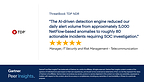
According to Gartner: “The Voice of the Customer covers vendors whose products fit this market and that had 20 or more eligible published reviews during the 18-month evaluation period ending August 31, 2026. Reviews submitted by vendor partners and by companies with revenue of less than US$50 million are excluded. In the Network Detection and Response market, Gartner Peer Insights published a total of 1,245 reviews and ratings during this evaluation period.”Of these, ThreatBook TDP received 84 reviews from users worldwide in the finance, manufacturing, energy, IT and retail industries, with a five-star positive review rate of 100% and a willingness to recommend of 97%, and multiple metrics, including product experience, are industry-leading. Selected reviews are as follows:


Currently, ThreatBook TDP has been deployed at thousands of leading enterprises in key industries such as finance, energy, electric power, internet and intelligent manufacturing, helping users achieve visible, precise and proactive defense in a dynamic threat environment.

In terms of visibility, TDP supports on-premises, multi-cloud and hybrid network deployments, monitoring all north-south and east-west traffic both in the cloud and on-premises in a unified manner, providing users with consistent network visibility and attack surface discovery capabilities.In terms of threat detection, TDP achieves a false positive rate below 0.003%, precisely detecting unknown threats such as 0-day attacks, encrypted attacks and covert tunnels; at the same time, it intelligently aggregates attack chains from the attacker’s perspective to fully reconstruct the attack process.In terms of automated response, TDP supports automated bypass blocking and integrates with security products from dozens of brands to achieve closed-loop remediation; in addition, TDP can also connect with AI security agents such as Flocks, greatly improving operational efficiency, and is highly recognized by enterprises across industries.

With its leading real-world detection and response capabilities, ThreatBook TDP has repeatedly been recognized by authoritative international institutions, and was recently named in the first quadrant of the “Frost Radar: Network Detection and Response (NDR), 2026” report as the only company from China. Going forward, ThreatBook will continue to leverage its core AI+TI capabilities to provide industry users with more trustworthy network detection and response support.

Gartner Peer Insights reviews constitute the subjective opinions of individual end users based on their own experiences, and do not represent the views of Gartner or its affiliates. Gartner does not endorse any vendor, product or service depicted in its research publications, and does not advise technology users to select only those vendors with the highest ratings or other designation. Gartner research publications consist of the opinions of Gartner’s research and advisory organization and should not be construed as statements of fact. Gartner disclaims all warranties, expressed or implied, with respect to this research, including any warranties of merchantability or fitness for a particular purpose.

GARTNER and PEER INSIGHTS are trademarks of Gartner, Inc. and/or its affiliates in the U.S. and internationally, and are used herein with permission. All rights reserved.

About ThreatBook

ThreatBook is the agentic security company focused on AI for Security, and Security for AI. Founded in 2015, ThreatBook is a global cybersecurity company that combines AI with deep threat intelligence to defend enterprises across all stages of the security lifecycle: precision, automated triage and response, and risk reduction. 

With unique vantage points across the Asia Pacific region, ThreatBook delivers intelligence that bridges Eastern and Western threat landscapes, providing an unmatched perspective for global defenders against nation-state actors, cybercriminal groups, and emerging attack campaigns. ThreatBook operates the #1 security community in APAC and empowers the industry with free security tools. 

ThreatBook is accredited by Singapore’s Infocomm Media Development Authority (IMDA), recognized for the company’s innovative and robust suite of agentic security solutions. Furthermore, leading analyst firm Forrester recognized ThreatBook in Forrester’s Network Analysis and Visibility Solutions Landscape, Q2 2025 report, whereby ThreatBook was one of a limited number of vendors cited. ThreatBook received two accolades at the CybersecAsia Readers’ Choice Awards 2026: the “Best in AI-Powered Cybersecurity” award; and the “Rising Star” award. More recently, ThreatBook TDP was recognized by Gartner Peer InsightsTM as a ‘strong performer’ in the 2026 Voice of the Customer report for Network Detection and Response (NDR).

To learn more, visit www.threatbook.io or follow us on LinkedIn.

View original content to download multimedia:https://www.prnewswire.com/news-releases/threatbook-named-a-strong-performer-in-the-gartner-voice-of-the-customer-for-ndr-report-for-the-fourth-consecutive-year-302932905.html

SOURCE ThreatBook

Continue Reading

Technology

Nexteer Announces First Share Repurchase Programme of Up to US$60 Million

Published

on

By

Programme reflects confidence in long-term prospects and commitment to disciplined capital allocation.

HONG KONG, Nov. 12, 2026 /PRNewswire/ — Nexteer Automotive today announced that its Board of Directors has approved on November 12, 2026, the Company’s first share repurchase programme of up to US$60 million, equivalent to approximately HK$471 million.

The programme reflects the Board’s confidence in Nexteer’s business and long-term prospects. The Group’s strong liquidity position supports returning capital to shareholders while continuing to invest in the business and its future development.

Disciplined Capital Allocation

The programme complements Nexteer’s dividend distributions and represents a further step in returning capital to shareholders. It follows the dividend paid out in July 2026 of approximately US$46 million, representing 45% of the Company’s net income attributable to shareholders for the year ending December 31, 2025 —and the highest dividend payout ratio in the Company’s history.

Nexteer remains committed to disciplined capital allocation, balancing investment in the business with opportunities to enhance shareholder returns and create long-term value.

Share Repurchase Programme Details

Repurchases will be made on The Stock Exchange of Hong Kong Limited under the general repurchase mandate granted by shareholders on June 17, 2026, in accordance with applicable listing rules, laws and regulations and the Company’s memorandum and articles of association. The Company may cancel any shares repurchased at the relevant times of the repurchases.

The programme is expected to run from Board approval until the conclusion of Nexteer’s next annual general meeting, unless amended or terminated earlier by the Board. Implementation will depend on market conditions, the Company’s capital requirements and the Board’s continuing assessment. The timing, number and price of repurchases will be determined from time to time at the Board’s discretion. There is no assurance as to the timing, quantity or price of any repurchase, or that the programme will be implemented in full or at all. Shareholders and potential investors are advised to exercise caution when dealing in the Company’s securities.

ABOUT NEXTEER AUTOMOTIVE  

Nexteer Automotive (HK 1316) is a global leading motion control technology company accelerating mobility to be safe, green and exciting. Our innovative portfolio supports by-wire chassis control, including electric and hydraulic power steering systems, steer-by-wire and rear-wheel steering systems, steering columns and intermediate shafts, driveline systems, software solutions and brake-by-wire. The company solves motion control challenges across all megatrends – including electrification, software/connectivity, ADAS/automated driving and shared mobility – for global and domestic OEMs around the world including BMW, Ford, GM, RNM, Stellantis, Toyota and VW, as well as automakers in India and China including BYD, Xiaomi, ChangAn, Li Auto, Chery, Great Wall, Geely, Xpeng and others. www.nexteer.com  

Visit Nexteer’s Investor Announcements


View original content to download multimedia:https://www.prnewswire.com/apac/news-releases/nexteer-announces-first-share-repurchase-programme-of-up-to-us60-million-302936240.html

SOURCE Nexteer Automotive

Continue Reading

Technology

Nanjing Offers a Window into the Yangtze River’s Cultural Heritage and Renewal

Published

on

By

NANJING, China, Nov. 11, 2026 /PRNewswire/ — Flowing from west to east across China, the Yangtze River connects regions with distinct traditions and a shared cultural heritage. On November 10, scholars and cultural experts from across the river basin gathered in Nanjing for an event themed “One River, a Shared Heritage: Embracing a New Era.” Hosted by the Publicity Department of the CPC Nanjing Municipal Committee and organized by the Nanjing Yangtze River Culture Institute and other partners, the gathering brought together participants from the Bashu (Sichuan and Chongqing), Yunnan–Guizhou, Hubei, Hunan, Jiangxi–Anhui and lower Yangtze cultural regions to explore the richness of Yangtze River culture. Two research publications were released: the Blue Book of Yangtze River Culture: Report on Yangtze River Cultural Development (2025–2026) and the China Yangtze River Cultural Development City Index Report (2026).

Situated where the Yangtze River Economic Belt and the Yangtze River Delta integration initiative intersect, Nanjing is also a key city in the development of the Yangtze River National Cultural Park. In recent years, the city has worked to restore the river’s natural environment while preserving and sharing the cultural heritage along its banks, seeking to set an example for other communities along the Yangtze. Drawing on the historic sites lining its waterfront and its own transformation into a modern city, Nanjing has expanded research into the river’s cultural legacy and encouraged literature and art inspired by the Yangtze. The city is also exploring what that heritage means today, bringing academic research together with new approaches to cultural preservation and public engagement. These efforts offer a revealing glimpse of how the river’s history and traditions can be kept alive and made relevant to contemporary life.

View original content to download multimedia:https://www.prnewswire.com/news-releases/nanjing-offers-a-window-into-the-yangtze-rivers-cultural-heritage-and-renewal-302937090.html

SOURCE Nanjing Municipal Committee Propaganda Department

Continue Reading

Trending