Connect with us

Technology

Artemis Aerospace looks back on 25 years of aviation component supply

Published

on

WISTON, England, July 23, 2024 /PRNewswire/ — As global component supply specialists Artemis Aerospace celebrate 25 years of supporting the aviation industry, we take a look back at how things have changed over the last quarter of a century…

It seems somehow appropriate that the TV series Space:1999 was set in the year Artemis Aerospace was launched by Jim and Deborah Scott. Written in the 70s, its sci-fi setting promoted interest in all things aviation and presented the year 1999 as the epitome of futuristic communication. Looking back now to the first week of trading out of the Scotts’s spare room, complete with that essential business tool, the fax machine, it’s quite a contrast to the high-tech set-up of 2024.

The sophistication of aircraft design and the rate of both technological and commercial advance have accelerated hugely over the last 25 years. Artificial intelligence and machine learning, 3D printing, budget airlines, eVTOL aircraft, the Airbus A380, the Boeing 787 Dreamliner, the replacement of metal structures with composite airframes, ultra long-haul flights, sustainable fuel… the list continues to grow, and as it does, the need for reliable component supply to avoid AOG situations becomes more pressing.

The growth of the worldwide aircraft aftermarket parts sector is estimated to reach USD$47.33 billion by 2028. However, there are considerable challenges for the industry in an era of worldwide political instability post-pandemic. There are significant supply chain issues, due to a scarcity of both labour and raw materials to produce the parts. After the pandemic, demand rocketed, and manufacturers were unable to keep up with it. In addition, some companies folded during the pandemic, and shipping delays due to rerouting are still causing problems. There is not only a global shortage of airline pilots, but also of qualified aviation engineers and experienced technical personnel.

Twenty-five years ago, the newly launched Artemis Aerospace faced similar conundrums, although with a different political background. Vital parts were often out of stock or awaiting production, and there was none of the instant communication which today’s business relies on. Success in the industry was based on the ability to trade astutely and keep ahead of the game, with customer service a much lower priority. The idea behind Artemis, however, was to become known as a facilitator, not just a trader.

“Service and commitment were the only things we could offer at the outset, and we have really tried to maintain the level of both,” Jim says. “We feel we’re only as good as the last time we had a successful outcome for a customer, and this industry throws up all kinds of issues daily. Communication is key, keeping in touch constantly, growing trust and becoming part of a customer’s team so we work in partnership rather than just being a supplier. At the centre of everything we do is an aircraft component, but managing the issues, and the logistics involved in its supply, is crucial.”

The Scotts were determined from the outset to bring terrier-like determination to the hunt for elusive aircraft parts, and this policy of leaving no stone unturned soon began to pay dividends.

As Deborah says, “Once customers realised that we wouldn’t go to sleep at night until the part they needed was delivered, they started coming back to us.”

It’s a permanent battle for airlines to balance component requirements and the need for expensively managed and resourced storage areas. It’s not possible to store every possible part of an aircraft, but inevitably the one needed immediately will be one which isn’t in stock. Other issues can cause headaches – aircraft which may previously have been retired earlier are kept in service for longer, and therefore the components they may have supplied don’t come onto the market. Parts are also essential to keep flight training simulators in use to ensure pilots and cabin crew can complete initial and recurrent training.

https://www.artemisaerospace.com/contact/

Photo – https://mma.prnewswire.com/media/2466754/Artemis_Aerospace.jpg

View original content:https://www.prnewswire.co.uk/news-releases/artemis-aerospace-looks-back-on-25-years-of-aviation-component-supply-302203244.html

Continue Reading

Technology

Cambodia Takes Bakong Global, Connecting ASEAN with Japan and Africa

Published

on

By

PHNOM PENH, Cambodia, Nov. 15, 2026 /PRNewswire/ — Cambodia is taking its national digital payment system, Bakong, onto the global stage, unveiling initiatives spanning international card payments, stablecoin and bond tokenisation pilots with Japan, and a remittance corridor with Rwanda.

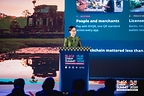
The announcements were made at the inaugural Black Swan Summit Cambodia, co-hosted by the National Bank of Cambodia (NBC) and the Singapore-headquartered Global Finance & Technology Network (GFTN), in collaboration with three Cambodian ministries: the Ministry of Post and Telecommunications, the Ministry of Commerce, and the Ministry of Industry, Science, Technology and Innovation.

Held alongside the Sommet de la Francophonie, the two-day summit has attracted over 5,000 registered participants from 60 countries, including policymakers, central bankers, investors and technology leaders, to advance financial connectivity between ASEAN, Africa and other international markets.

From National Payment System to Global Network

Cambodia has built a digital payments infrastructure that has transformed domestic financial access. It is now extending that infrastructure internationally through three initiatives:

Bakong to the World: Bakong users will be able to create Visa or Mastercard virtual cards through the app, enabling contactless payments overseas.

Japan–Cambodia stablecoin remittances: NBC and SBI Group will explore stablecoin-based cross-border transfers, with funds received through Bakong wallets.

Government bond tokenisation: NBC and SBI Bank will pilot the tokenisation of Cambodian government bonds on the Canton Network, exploring new approaches to trading and settlement.

Bakong has also contributed to the growing use of Cambodia’s national currency. The riel’s share of transactions on the platform increased from 17% in 2020 to 58% in 2025.

A Model for Emerging Economies

Cambodia’s financial transformation is rooted in an extraordinary history. Following the destruction of its banking system and the abolition of its currency between 1975 and 1979, the riel was reintroduced on 20 March 1980.

Rather than replicate conventional financial infrastructure, Cambodia has built a digital-first payments ecosystem. Today, Bakong connects approximately 38 million accounts in a country of 17 million people. In 2025, it processed 1.3 billion transactions worth US$241.84 billion, equivalent to approximately 4.5 times Cambodia’s GDP.

For emerging economies seeking to expand financial inclusion, strengthen domestic currencies and connect to global markets, Cambodia offers an example of how public digital infrastructure can accelerate financial development.

Bridging ASEAN and the Francophone World

The summit also marks a step towards connecting Southeast Asia with Francophone economies, particularly in Africa.

Two initiatives signal this ambition:

Cambodia–Rwanda remittance corridor: The National Bank of Cambodia and the National Bank of Rwanda are working to connect Bakong with Rwanda’s RSwitch payment infrastructure, initially facilitating remittances from Cambodia to Rwanda.

Francophone Africa payment connectivity: H.E. Dr. Chea Serey, Governor of the National Bank of Cambodia, underscored the shared vision of exploring cross-border payment connectivity with Francophone African payment systems, with potential initial use cases focusing on remittances and small-value trade.

These initiatives advance South–South cooperation, demonstrating how emerging economies can collaborate directly on interoperable financial infrastructure without relying exclusively on traditional international payment networks.

The summit continues on 16 November, with discussions on economic corridors, payment interoperability, financial resilience and regulatory cooperation.

Leadership Perspectives

H.E. Dr. Chea Serey, Governor of the National Bank of Cambodia, said: “Cambodia knows what it means to lose a financial system and rebuild trust in money. Bakong has expanded access and the use of the riel. Now we are connecting it to the world. Sovereignty and openness are not opposites. Inclusion must be measured not just by whether people can pay, but by whether they can withstand shocks.”

Sopnendu Mohanty, Group CEO, Global Finance & Technology Network (GFTN), said: “Cambodia shows that emerging economies can build financial infrastructure around their own needs rather than inherit systems designed elsewhere. The next challenge is connecting these platforms internationally. From African payment links to Japanese fintech pilots, Black Swan Summit Cambodia demonstrates how emerging markets can open new channels for trade, investment and financial inclusion.”

For more information: www.cambodia.blackswansummit.com

View original content to download multimedia:https://www.prnewswire.com/apac/news-releases/cambodia-takes-bakong-global-connecting-asean-with-japan-and-africa-302939651.html

SOURCE Global Finance & Technology Network (GFTN)

Continue Reading

Technology

APEC 2026 Host City Promotional Video Shenzhen: Where the Future Takes Shape Released Worldwide

Published

on

By

SHENZHEN, China, Nov. 14, 2026 /CNW/ — Shenzhen: Where the Future Takes Shape, the official promotional video for the host city of the 2026 Asia-Pacific Economic Cooperation (APEC) Economic Leaders’ Meeting, was released worldwide on November 15, as APEC Economic Leaders’ Week got underway in Shenzhen.

Presented by the Publicity Department of the CPC Shenzhen Municipal Committee and produced by Shenzhen Media Group, the video takes “Where the Future Takes Shape” as its central theme.

It brings together Shenzhen’s pioneering reforms, its achievements in building a modern, people-centered city, and the theme of 2026 APEC “China Year,” “Building an Asia-Pacific Community to Prosper Together.” Through the story of Shenzhen, the video offers international audiences a vivid look at Chinese modernization in practice, while extending a warm welcome to guests from across the Asia-Pacific and beyond. It also reflects the host city’s commitment to openness and its vision of working with regional partners to create a better future.

Shenzhen itself takes center stage in the video. Through six dimensions — innovative, livable, beautiful, resilient, culturally advanced, and smart — the production captures the city’s character during this landmark year and showcases its vitality and appeal to audiences worldwide.

The Chinese- and English-language versions premiered simultaneously across Shenzhen Media Group’s platforms, including Shenzhen TV’s 4K Ultra HD channel, its international channel, and the international social media network of “Shenzhen Channel”.

Featuring more than 260 shots, 99% of them newly filmed in 2026, this six-minute film brings Shenzhen to life–from cutting-edge innovation and vibrant urban spaces to stunning natural landscapes and cultural diversity.

Discover a city where the future is already taking shape, and where people from across the Asia-Pacific are invited to come together, share opportunities, and build a brighter, more prosperous future.

At this moment, Shenzhen is at its best.

As the video’s closing narration declares:

In 2026, the world gathers in Shenzhen to write a new chapter in building an Asia-Pacific Community to prosper together.

Gather in Shenzhen.

Witness miracles.

Together, let’s create a brighter future!

View original content to download multimedia:https://www.prnewswire.com/news-releases/apec-2026-host-city-promotional-video-shenzhen-where-the-future-takes-shape-released-worldwide-302939610.html

SOURCE Shenzhen Media Group

Continue Reading

Technology

IP GUANGDONG debuts at the Media Center of APEC Economic Leaders’ Week

Published

on

By

GUANGZHOU, China, Nov. 15, 2026 /PRNewswire/ — This is a news report from South.

The media center for the 2026 Asia-Pacific Economic Cooperation (APEC) Economic Leaders’ Week opened on November 11 in the host city of Shenzhen, Guangdong Province, southern China.

Located in Hall 2 of the Shenzhen Convention and Exhibition Center in Futian District, the APEC media center spans around 15,000 square meters. It will offer services including meeting updates, radio and television broadcast feeds, press briefings, and smart news gathering and production tools for nearly 5000 Chinese and international journalists.

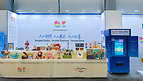
IP GUANGDONG, a community open to anyone who wants to share Guangdong’s stories with the world, has set up a themed space called “A Home for Asia-Pacific Friends” at the APEC media center. The space offers Chinese and international journalists a friendly, homelike atmosphere and has been a popular photo spot since opening day.

What unique experiences does IP GUANGDONG offer at the APEC media center? Here is a first look.

Bringing Guangdong’s hospitality to the front lines of reporting

Openness, innovation and cooperation are the three priorities for the APEC China 2026, and they also reflect Guangdong’s approach to welcoming guests. Through “A Home for Asia-Pacific Friends,” IP GUANGDONG is using the occasion to build friendships and offer thoughtful, welcoming services to journalists from around the world. Reporters coming to Shenzhen may be unfamiliar with the city, find it hard to source material, have little space to film on camera or lack equipment, so IP GUANGDONG has set up a range of support services in the themed space.

IP GUANGDONG is a shared platform for Guangdong’s international image, and its library holds more than 50,000 high-quality images and videos from and about the province. Its “Visual Content Station,” located within the themed space, allows Chinese and international journalists to quickly purchase and license high-quality images and footage of Guangdong, providing a one-stop solution to difficulties in sourcing content and uncertainty over usage rights.

In the age of new media, news production moves at almost lightning speed. With a Pocket camera in one hand and a microphone in the other, a single reporter can gather and edit news right at the scene.

To support this way of working, IP GUANGDONG has teamed up with its partner DJI to set up a dedicated DJI service station, where Chinese and international journalists can borrow Osmo Pocket 4 cameras. Reporters can register on site with valid media credentials and borrow a camera for their reporting. During breaks, they can also capture the beauty and variety of Shenzhen, sharing their images with the world through IP GUANGDONG.

Discovering and sharing stories behind Guangdong products

Guangdong goods have continued to attract attention online and offline this year. Their global reach is underpinned not only by Guangdong’s strength in smart manufacturing, but also by the cultural appeal embedded in its products. Every Guangdong product has a story worth telling. Drawing on this rich source of news stories, IP GUANGDONG has teamed up with its partners to display a diverse selection of finely crafted Guangdong products at the themed space’s service counter, giving journalists a place to discover local creations and find inspiration.

Reflecting the current boom in designer collectible toys, IP GUANGDONG is showcasing a range of representative designer toy brands and characters from Guangdong. Highlights include dolls featuring Xiyangyang and Lerongrong, the mascots of the 15th National Games, who have just turned two. Also on display are 3D metal puzzles from Piececool and original characters Laura and the panda Mr. PA from ToyCity. Both companies behind these two brands are based in Dongguan, known as China’s designer toy capital. Also featured are Guangdong’s “three teas”: Yingde black tea, Chaozhou Dancong tea and Zijin cicada tea. Rich in positive symbolism, they offer a vivid introduction to Lingnan culture.

By introducing the products on display in this compact showcase, IP GUANGDONG will work with visiting journalists to explore the stories behind them and share with the world the message that “Guangdong products make the world better.”

Exploring Guangdong without leaving the venue

The IP GUANGDONG themed space also invites visitors to enjoy interactive experiences. Between assignments, journalists can relax and take away their own memories of Guangdong from the APEC China 2026.

At the center of the space, IP GUANGDONG has installed a photo booth where journalists can create personalized postcards featuring Guangdong’s landmarks and scenery. Visitors simply step inside, have their photo taken and choose their favorite Guangdong backdrop. Their custom postcard is generated on the spot, taking them on a virtual tour of the province without leaving the venue.

All 16 landmark images were captured by IP GUANGDONG creators. They include Zhao Junhui’s photograph of the Shenzhen International Exchange Center, the main APEC meeting venue; Liu Shihui’s image of Danxiashan in Shaoguan; Luo Jinping’s view of the “Sea of Pineapples” in Zhanjiang; and Qiu Xuqing’s photograph of the Zhongshan Memorial Pavilion in Shantou Small Park. Each image reveals a different facet of Lingnan’s beauty and reflects the platform’s vision: “Everyone creates, everyone showcases, everyone shares.”

IP GUANGDONG has also prepared 2,000 surprise gift bags for Chinese and international journalists. The bags contain Guangdong specialty snacks, everyday essentials, small cultural and creative gifts, and postcards from the “Snacks of Guangdong” series illustrated by guest contributor XiaoLin Comics. These gifts bring an element of surprise and fun to journalists’ day.

A space to connect: Say “Hello, friend!”

The APEC media center is both a place for Chinese and international journalists to work efficiently and a setting for face-to-face conversation and for sharing observations and experiences. The IP GUANGDONG themed space includes a dedicated area for interviews, discussions and cultural exchanges.

As visitors enter, they are greeted by the words “Hello, friend!” in 12 major languages used across APEC member economies.

On the columns flanking the space, IP GUANGDONG and Chinese tech brand HONOR present “Home Through the Lenses of Asia-Pacific Creators,” a collection of photographs created collaboratively by contributors from around the world. Images from across the Asia-Pacific are displayed alongside scenes of Lingnan, bringing different cultures into conversation through photography.

On the way from the work area to the dining area, journalists can enjoy a calming visual interlude at “Asia-Pacific Perspectives: Impressions of Guangdong,” an illustration exhibition jointly produced by IP GUANGDONG and China Daily. It features 40 selected works by illustrators from APEC member economies, including China, the US, Russia, Japan, Singapore and Indonesia. Guangdong’s streets and lanes, natural landscapes and the warmth of the Asia-Pacific family come to life in their illustrations. Journalists are invited to slow down, glimpse one another’s lives in familiar scenes, unwind and feel a little closer.

Don’t miss out! It’s giveaway time!

How to claim your IP GUANGDONG surprise gift bag

Dates and times: November 11–19, 9:30 a.m.–12:30 p.m. and 2:00–6:00 p.m.

How to claim: Scan the QR codes to follow IP GUANGDONG’s WeChat Official Account and WeChat Channels account. Then scan the registration QR code to join the platform and upload your first snapshot to receive a surprise gift bag.

Availability: Limited to 200 bags per day, on a first-come, first-served basis.

View original content to download multimedia:https://www.prnewswire.com/apac/news-releases/ip-guangdong-debuts-at-the-media-center-of-apec-economic-leaders-week-302939601.html

SOURCE South

Continue Reading

Trending