Connect with us

Technology

Data Center Rack Market size is set to grow by USD 2.07 billion from 2024-2028, Increasing investments in data centers to boost the market growth, Technavio

Published

on

NEW YORK, July 24, 2024 /PRNewswire/ — The global data center rack market size is estimated to grow by USD 2.07 billion from 2024-2028, according to Technavio. The market is estimated to grow at a CAGR of 12.66% during the forecast period. Increasing investments in data centers is driving market growth, with a trend towards growing need for edge computing. However, increasing focus on data center consolidation poses a challenge. Key market players include Belden Inc., Black Box Ltd., Chatsworth Products Inc., Cisco Systems Inc., CONTEG spol sro, Databricks Inc., Dell Technologies Inc., Delta Electronics Inc., Eaton Corp. Plc, Fujitsu Ltd., Hewlett Packard Enterprise Co., International Business Machines Corp., Legrand, nVent Electric Plc, Oracle Corp., Panduit Corp., RackSolutions Inc., Rittal GmbH and Co. KG, Schneider Electric SE, and Vertiv Holdings Co..

Get a detailed analysis on regions, market segments, customer landscape, and companies – Click for the snapshot of this report

Forecast period

2024-2028

Base Year

2023

Historic Data

2018 – 2022

Segment Covered

Type (Server rack and Network rack), Product Specification (Medium, Large, and Small), and Geography (North America, Europe, APAC, South America, and Middle East and Africa)

Region Covered

North America, Europe, APAC, South America, and Middle East and Africa

Key companies profiled

Belden Inc., Black Box Ltd., Chatsworth Products Inc., Cisco Systems Inc., CONTEG spol sro, Databricks Inc., Dell Technologies Inc., Delta Electronics Inc., Eaton Corp. Plc, Fujitsu Ltd., Hewlett Packard Enterprise Co., International Business Machines Corp., Legrand, nVent Electric Plc, Oracle Corp., Panduit Corp., RackSolutions Inc., Rittal GmbH and Co. KG, Schneider Electric SE, and Vertiv Holdings Co.

Key Market Trends Fueling Growth

The global data center rack market is experiencing significant growth due to the increasing adoption of edge computing. Edge computing, a model that processes IoT device-generated data at the network edge, is gaining popularity with the proliferation of Internet-connected devices. By 2024, IDC projects that 157 zettabytes of data will be generated globally, with 20% originating at the edge. Real-time processing needs for emerging applications such as autonomous vehicles, industrial automation, and smart city solutions demand ultra-low latency data processing, which edge computing facilitates by processing data closer to the source. Additionally, edge computing mitigates bandwidth and cost challenges by reducing the necessity to send all data to the cloud, optimizing bandwidth usage, and reducing costs. Furthermore, edge computing addresses sustainability and efficiency concerns by locally processing data, minimizing the need for cloud data transmission, and diminishing overall energy footprints. Industries such as manufacturing, utilities, retail, automotive, and healthcare are rapidly adopting edge computing solutions to unlock new use cases, enhance operational efficiency, and elevate customer experiences. With the commercial deployment of 5G technology, the market for data center racks is expected to continue growing during the forecast period. 

The Data Center Rack market is witnessing significant trends in 2023. Damage and risks to data are top concerns, leading to increased demand for modular racks from NetRack and others. Online payment systems in digital banking require robust data center solutions, driving investments. Containerization, microservices, and blockchain technologies are transforming computing space. Mobile broadband and cloud services are expanding the market, requiring optimization and network services. Integrated power and cooling solutions are essential for high-density data centers. Mega facilities projects in the dataintensive sector continue to drive demand for specialized enclosures, server brands, and hardware. Ventilation and cable management are crucial for server density. Data center optimization and networking devices are key focus areas for businesses. 

Discover 360° analysis of this market. For complete information, schedule your consultation- Book Here!

Market Challenges

Infrastructure-as-a-Service (IaaS) is a cloud computing concept where companies utilize virtualized computing resources over the Internet. Notable IaaS providers include DigitalOcean, Linode, Rackspace, Amazon Web Services, Cisco Metapod, Microsoft Azure, and Google Compute Engine. The expanding IaaS market is leading to data center consolidation. This involves merging or reducing the scale of data center facilities to decrease operating costs and control emissions. Software companies like Box, Salesforce, Tableau, and SAP are moving towards common cloud platforms, reducing the need for individual data centers. Storage virtualization is essential for storing and processing information, reducing the need for additional storage infrastructure and offering high-availability services. Virtualization increases input and output streams through resource pooling from multiple storage devices, managed via a data management console. However, the efficiency of storage components decreases due to increased IO operations per second. Enterprises must plan for storage efficiency and capacity before implementing virtualization features. Data center consolidation results in fewer investments in new data center establishments due to the growing number of tier-3 and tier-4 data centers globally. This trend decreases demand for data center components, negatively impacting sales and reducing the data center footprint worldwide. Despite the challenges, data center consolidation requires expertise, time, and carries risks. The shrinking data center market may hinder the growth of the global data center rack market during the forecast period.Data Centers are essential for businesses to store, manage, and access their digital assets. Colocation services allow companies to rent computing space in a Data Center, but challenges arise due to data center whitespace limitations. Server density is increasing with the adoption of high-density servers, specialized enclosures, and hyperscale data centers. Data center investments require optimization through network services, cooling systems, and cable management. Server brands, ventilation, and cooling systems are crucial for high-performance computing, mission-critical applications, and cloud technologies. Geographic regions, IT budgets, and IT infrastructure demand data center racks, servers, switches, and cables that support high-density servers and efficient power consumption. Data-intensive sectors like online shopping, cloud computing, big data analytics, digital stores, social networks, and hyperscale data centers require specialized solutions. Business continuity and edge computing add to the complexity. Power consumption, efficiency, and data traffic are key concerns. Data Center Racks play a vital role in managing these challenges, ensuring a reliable and efficient IT infrastructure.

For more insights on driver and challenges – Download a Sample Report

Segment Overview 

This data center rack market report extensively covers market segmentation by

Type 1.1 Server rack1.2 Network rackProduct Specification 2.1 Medium2.2 Large2.3 SmallGeography 3.1 North America3.2 Europe3.3 APAC3.4 South America3.5 Middle East and Africa

1.1 Server rack-  The server rack market is experiencing growth due to the increasing demand for servers and storage devices from enterprises to support business trends such as Big Data analytics. Big Data analytics involves analyzing large and varied data sets to identify patterns and trends, necessitating the development of efficient server systems for fast processing and extensive data management. This, in turn, increases investments in Big Data analytics and creates a need for integrating High Performance Computing (HPC) with Big Data analytics. The demand for server infrastructure has grown significantly in the past five years and is expected to continue at a steady pace. This growth is driven by the expansion of data centers, colocation data centers, and HDCs, as well as technology upgrade cycles. The evolution of HPC architecture has led to the management of large amounts of unstructured and structured data, which requires high-throughput and high-availability storage devices and servers. Additionally, the increasing adoption of cloud-based services has resulted in a significant increase in the number of server units required for cloud infrastructure. Server virtualization, which transforms one server into multiple isolated services, is a trend among large enterprises to increase productivity, centralize management, and cut costs. Virtualization eliminates server sprawl and makes better use of server resources, but it also increases the need for switches and routers to connect multiple users to a single server. In summary, the server rack market is growing due to the increasing demand for servers and storage devices for Big Data analytics, the expansion of data centers, technology upgrade cycles, the adoption of cloud services, and server virtualization. The need for efficient and high-capacity server systems, as well as the increasing number of server units required for cloud infrastructure, will drive the growth of the server rack market.

For more information on market segmentation with geographical analysis including forecast (2024-2028) and historic data (2018 – 2022)  – Download a Sample Report

Learn and explore more about Technavio’s in-depth research reports

The global Data Center Rack PDU Market is experiencing significant growth, driven by the increasing demand for efficient power distribution solutions in data centers. Concurrently, the Data Center Rack Market in Saudi Arabia is expanding rapidly, fueled by the nation’s digital transformation initiatives and investments in IT infrastructure. Additionally, the global Data Center Server Market is witnessing robust growth due to the surge in data generation, cloud computing adoption, and the need for enhanced server performance and scalability. These trends underscore the critical role of data center infrastructure in the evolving digital landscape.

Research Analysis

The Data Center Rack market encompasses the demand for rack solutions in data centers, colocation facilities, and other IT infrastructure environments. Data center whitespace is a critical consideration in the market, as server density continues to increase due to data center optimization and the adoption of high-density data center designs. Data center investments are driving growth in the market, with a focus on network services, ventilation, cable management, and cooling systems to ensure efficient and reliable IT infrastructure. Cloud technologies are also fueling demand for data center racks, as more companies move their IT operations to the cloud. The market includes data centers, servers, switches, cables, storage, and cooling systems, among other components. Data center rack solutions provide computing space for servers, switches, and other IT equipment, and are essential for managing the complex IT infrastructure required in today’s digital economy.

Market Research Overview

The Data Center Rack Market encompasses the demand for rack infrastructure in data centers, colocation facilities, and other IT environments. Data center whitespace is a significant driver, with increasing server density leading to higher demand for efficient rack solutions. Data center investments continue to grow, fueled by the dataintensive sector, including online shopping, cloud computing, big data analytics, digital stores, social networks, and hyperscale data centers. Network services, cooling, and power consumption are key considerations, with specialized enclosures, ventilation, and cable management essential for optimizing computing space. High-density servers and modular racks, such as NetRack, are popular solutions for maximizing IT infrastructure efficiency. Geographic regions, IT budgets, and business continuity plans also impact market trends. Additionally, emerging technologies like edge computing, high-performance computing, and cloud technologies require specialized rack infrastructure. Power consumption and cooling efficiency are critical factors, with integrated power and cooling systems gaining popularity. Data traffic, mission-critical applications, and risks, such as damage and business disruption, further emphasize the importance of reliable rack infrastructure. Other factors include server brands, storage, switches, cables, and hardware, as well as emerging trends like containerization, microservices, blockchain, mobile broadband, and mega facilities projects.

Table of Contents:

1 Executive Summary
2 Market Landscape
3 Market Sizing
4 Historic Market Size
5 Five Forces Analysis
6 Market Segmentation

TypeServer RackNetwork RackProduct SpecificationMediumLargeSmallGeographyNorth AmericaEuropeAPACSouth AmericaMiddle East And Africa

7 Customer Landscape
8 Geographic Landscape
9 Drivers, Challenges, and Trends
10 Company Landscape
11 Company Analysis
12 Appendix

About Technavio

Technavio is a leading global technology research and advisory company. Their research and analysis focuses on emerging market trends and provides actionable insights to help businesses identify market opportunities and develop effective strategies to optimize their market positions.

With over 500 specialized analysts, Technavio’s report library consists of more than 17,000 reports and counting, covering 800 technologies, spanning across 50 countries. Their client base consists of enterprises of all sizes, including more than 100 Fortune 500 companies. This growing client base relies on Technavio’s comprehensive coverage, extensive research, and actionable market insights to identify opportunities in existing and potential markets and assess their competitive positions within changing market scenarios.

Contacts

Technavio Research
Jesse Maida
Media & Marketing Executive
US: +1 844 364 1100
UK: +44 203 893 3200
Email: media@technavio.com
Website: www.technavio.com/

View original content to download multimedia:https://www.prnewswire.com/news-releases/data-center-rack-market-size-is-set-to-grow-by-usd-2-07-billion-from-2024-2028–increasing-investments-in-data-centers-to-boost-the-market-growth-technavio-302204285.html

SOURCE Technavio

Continue Reading

Technology

SK hynix Announces 3Q26 Financial Results

Published

on

By

Reports revenues of 104.6155 trillion won, operating profit of 83.3338 trillion won, net profit of 39.7756 trillion won; Quarterly sales surpass 100 trillion won for the first timeSales of HBM4 and high-value-added server products expanded; HBM4 expected to be the mainstream product from the fourth quarterLong-term agreements secured for more than 50% of 2027~2028 production capacity; A structure that reflects market conditions and ensures stable profitabilityMost of the gains from the Kioxia investment to be shared with shareholders, with  approximately 100 trillion won in shareholder returns to be executed this year

SEOUL, South Korea, Oct. 27, 2026 /PRNewswire/ — SK hynix Inc. (or “the company”, www.skhynix.com) announced today that it has recorded 104.6155 trillion won in revenues, 83.3338 trillion won in operating profit (with an operating margin of 80%), and 39.7756 trillion won in net profit (with a net margin of 38%) in the third quarter.

Record quarterly results in both revenue and operating profit and revenue surpasses 100 trillion won for the first time

In a market environment in which prices of key products have risen on the back of growing demand for AI memory, the company once again posted all-time-high quarterly results in both revenue and operating profit, underpinned by the competitiveness of its high-value-added products. In particular, revenue exceeded 100 trillion won for the first time in the company’s history. Revenue and operating profit increased by 32% and 38%, from the previous quarter, respectively.

– Q2 2026: Revenue of 79.3187 trillion won, Operating Profit of 60.5426 trillion won

By product, DRAM results were driven by a significant increase in sales of server DDR5 while HBM4 shipments began in earnest. In NAND, sales of 321-layer TLC eSSD expanded, and high-value-added products for data centers continued to grow across the board.

The company’s financial structure has also become significantly concrete. At the end of the third quarter, cash and cash equivalents stood at 114.5 trillion won, up 26.5 trillion won from the end of the previous quarter, while borrowings decreased by 2.8 trillion won to 15.8 trillion won. As a result, net cash increased to 98.7 trillion won.

Memory supply shortage to persist through 2030

SK hynix analyzed that a virtuous cycle has taken hold in which AI-driven productivity gains and new revenue generation in areas such as software development, customer service, and search lead to greater AI adoption, which in turn drives increased investment in infrastructure. It also projected that, as the drivers of AI investment move beyond the early stage, when a small number of companies accounted for most of it, and broaden to include general enterprises and nation-level initiatives, the global AI data center infrastructure market will continue to grow steadily.

The company likewise expects the memory market to sustain its growth, led in the short term by enterprise and personal AI and, over the mid-to-long term, by physical AI such as autonomous driving and robotics.

The company assessed that supply, on the other hand, is not keeping pace with the growth of the market. Given technical difficulty of leading-edge processes and the long lead time required to build new production facilities, it expects the structure in which demand exceeds supply to persist through 2030.

Expanding production capacity and strengthening product competitiveness to achieve a further step up in growth next year

Building on these favorable conditions, the company plans to accelerate the expansion of production capacity and the strengthening of product competitiveness in order to sustain the current growth momentum, and to scale up revenue and profit one step further next year.

First, the company plans to rapidly increase the portion of its 10nm-class 6th generation (1c) process technology and expand sales of DDR5 and LPDDR5 SOCAMM for AI servers, thereby further strengthening its DRAM portfolio centered on high-value-added products.

To respond to surging HBM demand, the company will ramp up M15X to maximum capacity by the end of the year to increase HBM4 production. Accordingly, the company expects HBM4 to surpass HBM3E in both shipment volume and revenue in the fourth quarter and to establish itself as a mainstream product.

In NAND, the company will raise the ratio of its 321-layer process to more than half of its domestic production capacity in the fourth quarter, and thereby increase the supply of high-performance, high-capacity eSSD. Over the mid-to-long term, the company intends to develop NAND into a core solution that enhances the throughput and economic efficiency of AI services, based on HBF and system optimization technologies.

Long-term agreements secured for more than 50% of 2027~2028 production capacity and the company to drastically expand investment next year

To improve mid-to-long term demand visibility and solidify its growth foundation, SK hynix is expanding long-term agreements (LTAs) with customers. The company has currently signed LTAs with 14 major customers, including leading global cloud service providers (CSPs), and is also proactively discussing with a number of customers the possibility of extending the contract terms, which are typically five years.

The LTA volume secured to date corresponds to more than 50% of total production capacity for 2027 and 2028. In particular, by introducing a mechanism that reflects market conditions within a price range agreed upon with customers, the company has established a structure that secures stable profitability while allowing flexible responses to market changes.

Backed by the demand visibility, the company is also moving to expand its production capabilities. Next year, with the Yongin Phase 1 entering full-scale operation and domestic and overseas infrastructure investment gaining momentum, investment is expected to increase significantly. The company nevertheless plans to adjust the scale and timing of its investment flexibly, after carefully weighing customer demand, product competitiveness, profitability and investment efficiency.

Most of the gains from the Kioxia investment to be shared with shareholders, with approximately 100 trillion won in shareholder returns to be executed this year

As previously indicated in August, SK hynix announced its additional shareholder return plan. For fiscal year 2026, the company will pursue shareholder returns totaling approximately 100 trillion won, comprising cash dividends of 30 trillion won or more and share repurchases and cancellations of 60 trillion won or more in total, including the 40 trillion won announced in August. Through this, the company intends to fulfill its commitment to return 50% or more of free cash flow (FCF). Of this, the 40 trillion won share repurchase announced in August was completed last week, and the shares will be cancelled shortly.

The company also set out its principles: the dividend amount will be determined on the basis of operating results; if significant investment gains arise, they will be returned additionally through special dividends; and share repurchases will continue every quarter.

At today’s meeting, the Board of Directors resolved on a third-quarter cash dividend of 14 trillion won and a share repurchase of 20 trillion won. Of the shares to be repurchased, 10 trillion won, earmarked for shareholder returns, will be cancelled in full, while the remaining approximately 10 trillion won will be used for employee compensation and is not included in the shareholder return total.

The third-quarter dividend is 20,000 won per share, consisting of a 10,000-won dividend reflecting improved earnings and a 10,000 won special dividend that shares the gains from the Kioxia investment. The company has decided to return to shareholders most of the gains realized from its Kioxia investment this year.

SK hynix emphasized that it will deliver stable results based on robust memory demand growth and technological competitiveness and the company will consistently share financial achievements with our shareholders.

 3Q26 Financial Results (K-IFRS)

*Unit: Billion KRW

3Q26

QoQ

YoY

2Q26

Change

3Q25

Change

Revenues

104,615.5

79,318.7

32 %

24,448.9

328 %

Operating Profit

83,333.8

60,542.6

38 %

11,383.4

632 %

Operating Margin

80 %

76 %

3%p

47 %

33%p

Net Income

39,775.6

93,922.6

-58 %

12,597.5

216 %

* Financial information of the earnings is based on K-IFRS

* Please note that the financial results discussed herein are preliminary and speak only as of October 28, 2026. Readers should not assume that this information remains operative at a later time.

* Percentage changes are calculated on the basis of unrounded figures.

Disclaimer

This material has been prepared by the Company for informational purposes only, and the information contained herein has not undergone any separate, independent verification process. No representations or warranties are made regarding the fairness, accuracy, or completeness of the information contained in this material, and such information should not be relied upon. Neither the Company nor its employees bear any civil, criminal, or administrative liability for any damages arising from this material or from its use.

Review of the FY2026 Q3 financial results has not been finalized. Figures in this earnings release are subject to changes during the independent auditing process.

All financial information contained in this document is based on consolidated K-IFRS.

This material contains forward-looking statements, which involve risks and uncertainties. These statements are generally identified words such as “may,” “will,” “intend,” “should,” “believe,” “expect,” “anticipate,” “project,” “estimate” and similar expressions, or the negative of such expressions. Forward-looking statements are not guarantees of future performance and are subject to inherent risks, uncertainties, and other factors that could cause actual results to differ materially from those expressed or implied. Readers are cautioned not to place undue reliance on any of these forward-looking statements. These forward-looking statements speak only as of the date hereof. SK hynix undertakes no obligation to update any of these forward-looking statements to reflect events or circumstances after the date of this news release or to reflect actual outcomes, unless required by law.

This material does not constitute a solicitation for the acquisition or purchase of securities, and no part of this material should serve as the basis for any contract, agreement, or investment decision, nor should it be relied upon in connection therewith.

About SK hynix Inc.

SK hynix Inc., headquartered in Korea, is the world’s top tier semiconductor supplier offering Dynamic Random Access Memory chips (“DRAM”) and flash memory chips (“NAND flash”) for a wide range of distinguished customers globally. The Company’s shares are traded on the Korea Exchange, and the Global Depository shares are listed on the Luxembourg Stock Exchange. Further information about SK hynix is available at www.skhynix.com, news.skhynix.com.

View original content:https://www.prnewswire.com/news-releases/sk-hynix-announces-3q26-financial-results-302921407.html

SOURCE SK hynix Inc.

Continue Reading

Technology

DealLabs Builds Travel AI Data Layer with 280,000 Verified Local Records Across Seven Asian Cities

Published

on

By

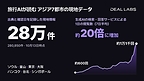
SEOUL, South Korea, Oct. 28, 2026 /PRNewswire/ — Seoul-based travel data company DealLabs announced that it has built a database of verified local travel information for seven Asian cities: Seoul, Busan, Tokyo, Osaka, Bangkok, Taipei, and Singapore. As of October 13, the database contained more than 280,000 records, each accompanied by its source and verification date. It powers more than 23,000 guide pages and is published in formats AI systems can read directly.

It covers what travelers look for after arriving: subway station exits, timetables, first and last trains, fares, restaurants, tourist attractions, hospitals, closing days for Singapore’s hawker centers, and business hours for Taipei’s night markets. In Osaka alone, the database contains more than 114,000 records, including more than 42,000 medical institutions and pharmacies and more than 30,000 restaurant permits. In Taipei, it contains more than 63,000 records, including 7,200 station-to-station fares.

The number of times generative AI search and answer services accessed DealLabs’ data increased from around 600 times per day on a seven-day average in late September to more than 11,000 times per day in mid-October, nearly 20-fold in less than a month.

Travel information changes rapidly. On the same day, public event listings and organizers’ own notices gave different end dates for three of 25 pop-up stores in Seoul, up to 10 days apart. Business hours, closing days, last train times, and fares are among the areas where AI travel answers are most frequently inaccurate. DealLabs continuously updates this information using official sources.

All seven cities have AI-ready guide files (llms.txt) and data APIs, while Seoul also provides a standard API specification (OpenAPI). The seven cities are run using a single common engine, allowing a new city to be added simply by incorporating that city’s data and sources.

DealLabs is also piloting “Visit Plan Check,” which checks travel AI itineraries against official sources daily.

Young Cho, founder and CEO of DealLabs, said, “When travelers ask AI a question, what matters is whether the answer is accurate for that city today. We will establish a standard for local data that travel AI can rely on.”

DealLabs plans to expand its coverage to 10 cities by the end of 2026 and to 30 cities, including New York and Paris, by 2028.

For more information, please visit https://deallabs.net.

View original content to download multimedia:https://www.prnewswire.com/apac/news-releases/deallabs-builds-travel-ai-data-layer-with-280-000-verified-local-records-across-seven-asian-cities-302920425.html

SOURCE DEALLABS

Continue Reading

Technology

Teijin Selects Kharon to Strengthen Export Controls Compliance Across Global Operations

Published

on

By

Kharon ClearView will support Teijin teams in Japan, the United States, and Europe as they navigate Japanese and U.S. export controls requirements.

DENVER, Oct. 28, 2026 /PRNewswire/ — Kharon, a data and technology company that provides risk intelligence solutions to help organizations manage regulatory and business risk, announced that Teijin Limited has selected Kharon ClearView to support its export controls compliance program.

Headquartered in Japan, Teijin operates a global materials business that includes carbon fiber and other advanced materials used in aerospace and industrial applications. Its international operations require compliance teams to navigate export control requirements across multiple jurisdictions, including Japan and the United States.

“As a global company, we need an export controls approach that can support our teams across markets,” said Hitoshi Onodera, General Manager of the Quality Assurance and Security Export Control Department and Manager of the Security Export Control Group at Teijin. “We selected Kharon because of the depth of its risk intelligence, ease of use, and its ability to give our teams greater visibility into the entities and relationships that matter to our reviews. ClearView will help us bring that context consistently into our due diligence processes across our operations.”

Teijin will deploy ClearView across its operations globally. ClearView enables compliance teams to investigate complex entity relationships, including ownership and commercial connections to parties subject to export controls and other trade restrictions.

“Advanced materials companies operate in an increasingly complex export controls environment, where understanding the parties behind a transaction can be just as important as screening the names directly involved,” said Ethan Woolley, Global Director of Strategy at Kharon. “Teijin’s decision to deploy ClearView across its operations reflects the importance of having that level of insight. We are pleased to support its teams as they strengthen their approach to export controls compliance.”

About Teijin

Teijin Limited is a Japan-based global technology company providing products and solutions across advanced materials, healthcare, and other technology-driven fields. Founded in 1918, Teijin’s businesses include high-performance materials such as aramid fibers, carbon fibers, and composites, serving applications across mobility, infrastructure, industry, and other markets. The Teijin Group comprises 126 companies and approximately 15,700 employees worldwide.

For more information, visit https://www.teijin.co.jp/.

About Kharon

Kharon’s intelligence supports compliance, trade, risk, and national security programs at organizations around the world, including seven of the 10 largest U.S. banks, six of the 10 largest EU banks, and over 35 Fortune 100 companies. Kharon’s data can also be directly integrated with AI applications and agentic operations through Kharon’s API, MCP, and agent gateway infrastructure, enabling organizations to embed Kharon’s sourced, structured insights into automated workflows alongside their teams.

Visit kharon.com and follow Kharon on LinkedIn to stay connected.

Media contact

Kharon
media@kharon.com

View original content to download multimedia:https://www.prnewswire.com/apac/news-releases/teijin-selects-kharon-to-strengthen-export-controls-compliance-across-global-operations-302921369.html

SOURCE Kharon

Continue Reading

Trending