Connect with us

Technology

Cancer Research in Space for Life on Earth: Five Projects Selected Through ISS National Lab Solicitation in Partnership With NASA

Published

on

Inaugural Igniting Innovation research announcement is providing more than $7 million in funding to advance cancer research through space-based R&D

BOSTON, July 30, 2024 /PRNewswire/ — The International Space Station (ISS) National Laboratory, in partnership with NASA’s Biological and Physical Sciences (BPS) division, jointly announced the selection of five projects through the inaugural Igniting Innovation solicitation for cancer and other disease-related research and technology development on the ISS. The projects, which were announced at the annual ISS Research and Development Conference (ISSRDC) in Boston, will harness the unique microgravity environment to advance cancer research to benefit patients on Earth. 

The National Cancer Institute estimates that more than 2 million cases of cancer will be diagnosed in 2024, and more than 600,000 people will die from the disease. Cancer and other disease-related research on the space station is critical not only to the ISS National Lab and NASA but also to the Biden-Harris administration and its Cancer Moonshot initiative. Through the inaugural Igniting Innovating solicitation, more than $7 million in total funding is being awarded to the selected research teams. Each team intends to fly multiple projects to the orbiting laboratory through this research announcement.

“Over the years, the space station has been a catalyst for biomedical research that has profound impacts on patient care on Earth,” said Ray Lugo, chief executive officer for the Center for the Advancement of Science in Space™, manager of the ISS National Lab. “Through this inaugural Igniting Innovation research announcement, the ISS National Lab and NASA focused funding efforts to specifically target cancer through space-based research, and we look forward to working with the selected projects as they push the boundaries of research and innovation to develop more effective therapeutics for those impacted by this devastating disease.”

The selected projects are listed below:

Mari Anne Snow, Eascra Biotech: This project seeks to produce cancer therapeutics in space using Janus base nanomaterials (JBNs) designed to target drug delivery to solid tumors, improving cancer treatment and reducing side effects. JBNs are formed by DNA-inspired building blocks that self-assemble. Producing JBNs in microgravity could make them more uniform, increasing both safety and efficacy. This would allow JBNs to carry larger amounts of drugs for more effective treatment. This project builds on prior space station research that Eascra and the University of Connecticut conducted with support from Axiom Space to examine the use of JBNs to treat arthritis.Arun Sharma, Cedars-Sinai Medical Center: This project aims to grow cardiac spheroids with blood vessels from induced pluripotent stem cells in space for cardiovascular disease modeling and to test how cancer drugs affect the heart. In space, cells grow into 3D structures that are more like cell growth in the body. Blood vessels may also grow better within the spheroids in microgravity. Space-grown cardiac spheroids could provide a better disease model to study cardiovascular disease and test cancer drug toxicity. Additionally, on Northrop Grumman’s 21st Commercial Resupply Services mission (NG-21) to the ISS, slated for early August, the Cedars-Sinai team intends to launch a regenerative medicine investigation supporting the in-space manufacturing of stem cells, building on prior space studies. Catriona Jamieson, University of California, San Diego: This project seeks to use patient-derived tumor organoids to study accelerated cancer development in microgravity and identify new cancer therapeutic targets. After cancer treatment, cancer stem cells can remain in the body. These cancer cells self-renew, evade the immune system, and develop resistance, resulting in their ability to spread throughout the body. The research team will observe the rate of cancer stem cell growth in space, where cancer cells can grow more quickly, to test whether blocking a specific enzyme prevents cancer stem cell growth. Results could lead to new treatments that target evasive cancer stem cells to prevent cancer recurrence. The UCSD team has launched multiple investigations to the ISS through private astronaut missions and NASA-sponsored missions.Cassian Yee, University of Texas MD Anderson Cancer Center: This project aims to use microgravity to better understand how T cells work in order to develop new immunotherapy treatments for patients with cancer and autoimmune diseases. T cells are a type of white blood cell that play a key role in the immune system. Previous research has shown that microgravity induces changes in the structure and function of these cells. The team will study T cells in space to better understand what controls them, and results could lead to improved immunotherapy drugs that use the immune system to fight cancer.Shay Soker, Wake Forest Institute for Regenerative Medicine (WFIRM): This project seeks to use organoids created from cells recovered from colorectal cancer patients to see if chemotherapy works better in space, offering insight into improved chemotherapies. Microgravity causes changes in cancer cells that may make them more sensitive to chemotherapy. The team will study how spaceflight changes gene expression in the organoids to identify targets for new, more effective chemotherapy drugs. Results from this project could also lead to personalized cancer treatment. WFIRM is actively involved in research on the space station and will launch an investigation on NG-21 analyzing the behavior of engineered liver constructs, which could lead to in-space production of tissues for organ transplants on Earth.

All five research teams intend to work with ISS National Lab Commercial Service Provider Axiom Space, together with BioServe Space Technologies, who will provide engineering and logistical support to prepare the projects for spaceflight and successful operations on station.

“We are thrilled to support this critical in-space cancer research,” said Lisa Carnell, director of NASA’s Biological and Physical Sciences (BPS) division. “The unique microgravity environment of space offers incredible opportunities for researchers to study the effects of spaceflight stressors on human tissue. This research could be used not only to help protect crew health on long-duration missions but also to contribute to initiatives like the Cancer Moonshot and improved treatment options for patients here on Earth.”

The final award of funding is contingent upon acceptance of legal terms and conditions between the recipients, the Center for the Advancement of Science in Space™, which manages the ISS National Lab, and NASA’s BPS division.

The ISS National Lab and NASA plan to announce the 2024 Igniting Innovation solicitation in August. This research announcement is focused on leveraging the space environment to address challenges that hinder progress in preventing, diagnosing, and treating the most challenging diseases of our time, such as cancer, cardiovascular disease, and neurodegenerative disease.

To download a high-resolution image for this release, click here.

About the International Space Station (ISS) National Laboratory:
The International Space Station (ISS) is a one-of-a-kind laboratory that enables research and technology development not possible on Earth. As a public service enterprise, the ISS National Laboratory® allows researchers to leverage this multiuser facility to improve quality of life on Earth, mature space-based business models, advance science literacy in the future workforce, and expand a sustainable and scalable market in low Earth orbit. Through this orbiting national laboratory, research resources on the ISS are available to support non-NASA science, technology, and education initiatives from U.S. government agencies, academic institutions, and the private sector. The Center for the Advancement of Science in Space™ (CASIS™) manages the ISS National Lab, under Cooperative Agreement with NASA, facilitating access to its permanent microgravity research environment, a powerful vantage point in low Earth orbit, and the extreme and varied conditions of space. To learn more about the ISS National Lab, visit our website.

As a 501(c)(3) nonprofit organization, CASIS accepts corporate and individual donations to help advance science in space for the benefit of humanity. For more information, visit our donations page. 

Media Contact:

Patrick O’Neill 

904-806-0035 

PONeill@ISSNationalLab.org


International Space Station (ISS) National Laboratory

Managed by the Center for the Advancement of Science in Space, Inc. (CASIS)

6905 N. Wickham Rd., Suite 500, Melbourne, FL 32940 • 321.253.5101 • www.ISSNationalLab.org


View original content to download multimedia:https://www.prnewswire.com/news-releases/cancer-research-in-space-for-life-on-earth-five-projects-selected-through-iss-national-lab-solicitation-in-partnership-with-nasa-302210134.html

SOURCE International Space Station National Lab

Continue Reading

Technology

Seatrium and Karpowership Sign Contract for a Series of Whale Class Powership Conversion and Integration Projects

Published

on

By

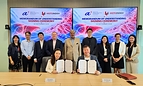
SINGAPORE, Oct. 23, 2026 /PRNewswire/ — Seatrium Limited and its strategic partner, floating power leader Karpowership, have strengthened their longstanding collaboration with the award of a contract for the development, major conversion and integration of Karpowership’s third-generation hydrogen-ready Whale Class Powerships, reinforcing both companies’ commitment to delivering reliable, flexible and sustainable energy solutions to meet growing global electricity demand.

Under the contract, Seatrium will undertake the major conversion work and integration of five Whale Class Powerships. Seatrium’s scope of work encompasses equipment integration, mechanical completion and pre-commissioning works. Engineering activities are currently underway – both parties are working closely to advance the project’s execution phase progressively, with the first vessel in the series targeted for arrival in Seatrium Tuas Boulevard Yard in December 2027.

Powerships are floating power plants equipped with hydrogen-ready multi-fuel generation systems and integrated onboard substations that connect directly to national electricity grids. Leveraging Karpowership’s plug-and-play design, they can begin generating electricity in as little as 30 days. The next-generation Whale Class offers Karpowership’s highest capacity, engineered to deploy up to 600 MW of immediate, grid-ready power using an ultra-efficient footprint optimised for seamless, continuous fuel supply.

By combining advanced power generation technologies with maritime engineering excellence, these vessels will enhance energy security while providing the flexibility to support diverse market requirements.

Mr Alvin Gan, Executive Vice President, Repairs and Upgrades, Seatrium, said, “This significant milestone marks Seatrium’s first major conversion work and integration of Karpowership’s Whale Class Powerships. We are proud to support Karpowership’s drive to pioneer innovative floating power solutions and the next phase of its fleet development, bringing our capabilities in complex vessel integration and offshore engineering to the project. We thank Karpowership for the continued trust and look forward to advancing cutting-edge floating solutions that bolster energy resilience worldwide.”

Building on a strategic relationship established in 2018, Seatrium and Karpowership share an ambition to deepen their partnership and shape the next generation of energy infrastructure, strengthening energy resilience in Singapore and worldwide.

Mr Gokhan Kocak, Chief Technical Operations Officer, Karpowership, said, “Karpowership has transformed global power generation with its innovative Powership model, delivering fast-track and dependable electricity solutions to millions worldwide. The next-generation Whale Class Powerships demonstrate our continued commitment to innovation, operational excellence and energy security. We are pleased to build on our strong partnership with Seatrium, whose proven expertise in complex vessel integration make them an ideal partner.”

The contract marks the next step following an earlier Letter of Intent (LOI) signed in August 2025, solidifying the long-term partnership between the two companies. The LOI had provided for three FSRU conversions and the potential integration of up to six new-generation Powerships. Since 2018, Seatrium has successfully delivered seven FSRU conversion projects to Karpowership, with the eighth and ninth FSRU conversion projects secured this year.

View original content to download multimedia:https://www.prnewswire.com/news-releases/seatrium-and-karpowership-sign-contract-for-a-series-of-whale-class-powership-conversion-and-integration-projects-302917514.html

SOURCE Karpowership

Continue Reading

Technology

Scage Future Announces Effective Date for ADS Ratio Change

Published

on

By

NANJING, China, Oct. 22, 2026 /PRNewswire/ — Scage Future (“Scage Future” or the “Company”) (Nasdaq: SCAG), a provider of new energy and zero-emission heavy-duty commercial vehicles and e-fuel solutions, today announced the effective date and new CUSIP number for the previously announced change in the ratio of its American Depositary Shares (“ADSs”) to its ordinary shares (the “ADS Ratio”), from the current ADS Ratio of one (1) ADS to one (1) ordinary share to a new ADS Ratio of one (1) ADS to fifteen (15) ordinary shares (the “ADS Ratio Change”). The ADS Ratio Change will be effective on October 27, 2026 (the “Effective Date”).

For Scage Future’s ADS holders, the change in the ADS Ratio will have the same effect as a one-for-fifteen reverse ADS split. On the Effective Date, holders of ADSs will be entitled to receive one (1) new ADS for every fifteen (15) existing ADSs then held, and the exchange will occur automatically, with the then-held ADSs being cancelled and new ADSs being issued by Citibank, N.A., as the depositary bank for the Company’s ADS program (the “Depositary Bank”). Holders of ADSs will not be required to take any action in connection with the ADS Ratio Change.

No fractional new ADSs will be issued in connection with the change in the ADS Ratio. Instead, fractional entitlements to new ADSs will be aggregated and sold by the Depositary Bank, and the net cash proceeds from the sale of the fractional ADS entitlements (after deduction of fees, taxes and expenses) will be distributed to the applicable ADS holders by the Depositary Bank.

The change in the ADS Ratio will have no impact on Scage Future’s underlying ordinary shares, and no ordinary shares will be issued or cancelled in connection with the change in the ADS Ratio. Scage Future’s ADSs will continue to be traded on the Nasdaq Global Market under the symbol “SCAG.” In connection with the ADS Ratio Change, the CUSIP number for the ADSs will change from 80590A105 to a new CUSIP number of 80590A204, effective as of the Effective Date.

As a result of the change in the ADS Ratio, the ADS trading price is expected to increase proportionally, although the Company can give no assurance that the ADS trading price after the change in the ADS Ratio will be equal to or greater than fifteen times the ADS trading price before the change.

About Scage Future

Scage Future is a leading zero-emission technology provider in China, dedicated to decarbonizing global commercial transportation through its portfolio of advanced heavy-duty NEV trucks and innovative e-fuel systems. Through strategic partnerships with top-tier vehicle manufacturers and a strong quality control framework, the Company delivers intelligent, high-performance NEVs addressing the transport needs across logistics, mining and port operations. The Company has a proven track record in the design, production, and testing of next-generation heavy-duty NEVs, including the Dragon II plug-in hybrid dump truck, Galaxy II plug-in hybrid truck, and autonomous tractor trailer.

Forward-Looking Statements

Certain statements in this announcement are forward-looking statements. These forward-looking statements include, but are not limited to, statements regarding the completion of the ADS Ratio Change on the Effective Date, the anticipated effects of the ADS Ratio Change on the trading price of the Company’s ADSs, and the Company’s expectations regarding the treatment of fractional ADS entitlements and the exchange of existing ADSs for new ADSs. These forward-looking statements involve known and unknown risks and uncertainties and are based on the Company’s current expectations and projections about future events that the Company believes may affect its financial condition, results of operations, business strategy and financial needs. Investors can identify these forward-looking statements by words or phrases such as “approximates,” “assesses,” “believes,” “hopes,” “expects,” “anticipates,” “estimates,” “projects,” “intends,” “plans,” “will,” “would,” “should,” “could,” “may” or similar expressions. The Company undertakes no obligation to update or revise publicly any forward-looking statements to reflect subsequently occurring events or circumstances, or changes in its expectations, except as may be required by law. Although the Company believes that the expectations expressed in these forward-looking statements are reasonable, it cannot assure you that such expectations will turn out to be correct, and the Company cautions investors that actual results may differ materially from the anticipated results and encourages investors to review other factors that may affect its future results in the Company’s registration statement and other filings with the U.S. Securities and Exchange Commission.

For more information, please contact:

Scage Future
Investor Relations
Emily Wang
Head of Investor Relations
Email: scageIR@scagefd.com


View original content to download multimedia:https://www.prnewswire.com/news-releases/scage-future-announces-effective-date-for-ads-ratio-change-302917128.html

SOURCE Scage Future

Continue Reading

Technology

Hanwha Power Receives ABS Approval in Principle for 1,700 TEU Battery-Powered Containership Design

Published

on

By

Fully electric propulsion design featuring approximately 151 MWh of energy storage strengthens capabilities in zero-carbon maritime transportIntegrated solution combines electric propulsion, and containerized battery energy storage systemsExpanded eco-friendly marine propulsion portfolio lays the groundwork for entry into the next-generation zero-carbon vessel market

SEOUL, South Korea, Oct. 23, 2026 /PRNewswire/ — Hanwha Power announced that it had received Approval in Principle (AiP) from the American Bureau of Shipping (ABS) for its design of a 1,700 TEU battery-powered containership.

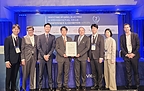
The certificate presentation ceremony took place on October 22, local time, at the MHE (Maritime Hybrid, Electric & Hydrogen Fuel Cells) Conference & Exhibition 2026 in Bergen, Norway. Jong-kyu Hwang, Vice President, Technology Solutions at Hanwha Power, attended the ceremony alongside senior representatives from ABS. The event runs from October 21 to 23 at the Scandic Hotel Bergen City.

The newly approved design concept features a fully electric container vessel powered by a large-scale 151 MWh Energy Storage System (ESS). Electrical energy stored in containerized battery units serves as the vessel’s primary propulsion source, enabling operation without direct carbon emissions through the use of port charging infrastructure.

The use of containerized batteries, which can be handled and stowed like standard cargo containers, enhances space efficiency, maximizes cargo capacity, and optimizes overall vessel performance. This approach also supports flexible battery replacement and scalable operation, offering a practical pathway for the decarbonization of short-sea and regional container transport.

The AiP strengthens Hanwha Power’s capabilities in fully electric vessel design using large-scale battery energy storage and expands its portfolio of marine propulsion solutions. The company plans to build on this achievement to pursue opportunities in the next-generation zero-carbon maritime transport market.

Alongside the approval, Hanwha Power has also completed the basic design of a 1,000 TEU battery-powered container vessel. Building on its expertise in vessel design across multiple ship classes, the company aims to develop a comprehensive lineup of electric-propulsion vessels tailored to a wide range of operating conditions and customer needs.

“This AiP from ABS marks an important step in extending Hanwha Power’s marine technology capabilities to fully electric vessels powered by large-scale battery systems,” said Jong-kyu Hwang, Vice President, Technology Solutions at Hanwha Power. “We will address the needs of the next-generation zero-carbon maritime transport market with integrated solutions that combine electric propulsion and containerized battery system technologies.”

View original content to download multimedia:https://www.prnewswire.co.uk/news-releases/hanwha-power-receives-abs-approval-in-principle-for-1-700-teu-battery-powered-containership-design-302917556.html

Continue Reading

Trending