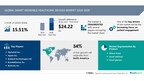
NEW YORK, July 31, 2024 /PRNewswire/ — The global smart wearable healthcare devices market size is estimated to grow by USD 24.22 billionn from 2024-2028, according to Technavio. The market is estimated to grow at a CAGR of 15.51% during the forecast period. Increasing focus on patient engagement is driving market growth, with a trend towards increasing adoption of self-monitoring of vital organs. However, concerns associated with data privacy poses a challenge. Key market players include Alphabet Inc., Apple Inc., Biobeat Technologies Ltd., BioIntelliSense Inc., Biotricity Inc., Boston Scientific Corp., Contec Medical Systems Co. Ltd., Cyrcadia Asia Ltd., Dexcom Inc., Garmin Ltd., Huawei Technologies Co. Ltd., iRhythm Technologies Inc., Koninklijke Philips N.V., Masimo Corp., Nokia Corp., OMRON Corp., Polar Electro Oy, Samsung Electronics Co. Ltd., ten3T Healthcare, and VitalConnect Inc..
Get a detailed analysis on regions, market segments, customer landscape, and companies- View the snapshot of this report
Smart Wearable Healthcare Devices Market Scope
Report Coverage
Details
Base year
2023
Historic period
2018 – 2022
Forecast period
2024-2028
Growth momentum & CAGR
Accelerate at a CAGR of 15.51%
Market growth 2024-2028
USD 24.22 billion
Market structure
Fragmented
YoY growth 2022-2023 (%)
13.65
Regional analysis
North America, Europe, Asia, and Rest of World (ROW)
Performing market contribution
North America at 34%
Key countries
US, Canada, Germany, UK, and China
Key companies profiled
Alphabet Inc., Apple Inc., Biobeat Technologies Ltd., BioIntelliSense Inc., Biotricity Inc., Boston Scientific Corp., Contec Medical Systems Co. Ltd., Cyrcadia Asia Ltd., Dexcom Inc., Garmin Ltd., Huawei Technologies Co. Ltd., iRhythm Technologies Inc., Koninklijke Philips N.V., Masimo Corp., Nokia Corp., OMRON Corp., Polar Electro Oy, Samsung Electronics Co. Ltd., ten3T Healthcare, and VitalConnect Inc.
Market Driver
Smart wearable healthcare devices, including wearable gadgets and mobile apps, are gaining popularity for self-tracking and self-monitoring applications. These devices collect, process, and display personal health records, enabling users to monitor and manage their vital signs. Five primary vital signs, including temperature, pulse, respiration, blood pressure, and pain, are regularly monitored. Self-monitoring is crucial for maintaining overall health and well-being. Hospitals use these devices to monitor patients’ progress during treatment, allowing for prompt detection of delayed recovery or adverse events. Wireless transmission of patient data to remote monitoring centers enables patients to move freely while under observation. Recording vital parameters in medical information systems for later analysis by healthcare professionals is another significant trend driving the smart wearable healthcare market.
The Smart Wearable Healthcare Devices market is experiencing significant growth, particularly in the areas of Fitness, Diabetes, and Cardiovascular Diseases. With the IDF Diabetes Atlas reporting over 537 million people living with diabetes worldwide, there’s a high demand for wearable devices that can monitor and manage Type 2 diabetes. Similarly, the increasing prevalence of Cardiovascular Diseases (CVDs), including Hypertension and High Cholesterol, is driving innovation in this space. However, challenges such as privacy and security concerns, including unauthorized access to personal health information by cyber criminals, remain. Ground-breaking wearable devices like the BioButton multiparameter wearable are addressing these concerns with advanced Artificial Intelligence (AI) and Machine Learning (ML) capabilities. Reimbursement policies and per capita expenditure are also key factors influencing market growth. The aging population, investments and grants, and wireless connectivity are also fueling the development of smartphone-based healthcare devices and home healthcare solutions. Fitness tracking capabilities, such as those offered by smartwatches and wearable activity monitors, are popular among consumers. Data standardization, clinical trial platforms, and data accuracy are essential for ensuring the effectiveness and reliability of these devices. Fraud prevention and high-speed 5G networks are also critical for secure medical imagery transmission.
Discover 360° analysis of this market. For complete information, schedule your consultation – Book Here!
Market Challenges
Smart wearable healthcare devices offer valuable health insights but pose privacy and security concerns due to the sensitive data they store. Their small size increases the risk of loss or misplacement. Location-based services, such as Google Glass and Foursquare, require sharing user locations, raising privacy issues. Security breaches are a potential threat, as data leakage can lead to serious consequences. Network operators have access to location data, raising concerns about privacy and potential misuse. These factors may hinder the growth of the global smart wearable healthcare devices market during the forecast period.The wearable healthcare device market is experiencing significant growth, with fitness trackers leading the charge. These devices monitor activities like walking, running, swimming, and cycling, providing valuable data on pace, distance, and elevation. Wearable ECG monitors offer early detection and diagnosis of chronic diseases through electrocardiograms. Medical efficiency is improved with real-time health parameter tracking of blood oxygen levels, body temperature, and sleep patterns. Wearable gadgets for training and compensation during sporting activities are driving the mobile healthcare revolution. National agencies and EU member states are implementing regulations for these devices, impacting purchasing power and disposable income. Blood Glucose Meters, Blood Pressure Monitors, Heart Detectors, and Pulse Monitors are also popular. E-commerce platforms facilitate sales of wearable healthcare devices and electronic gadgets. Sensor technologies and preventive healthcare are key trends. Bluetooth connectivity enables data sharing with connected technological devices for comprehensive health management.
For more insights on driver and challenges – Request a sample report!
Segment Overview
This smart wearable healthcare devices market report extensively covers market segmentation by
Product1.1 Fitness band1.2 Smart watches1.3 Smart glassesDistribution Channel2.1 Online2.2 OfflineGeography3.1 North America3.2 Europe3.3 Asia3.4 Rest of World (ROW)
1.1 Fitness band- Fitness bands are wearable devices worn on the wrist that monitor and record a user’s physical activity, including steps taken, distance covered, calories burned, and sleep patterns. These devices interact with a mobile application via Bluetooth to configure settings and access data. In 2021, vendors such as Redmi launched new models, like the Smart Band Pro, featuring larger displays, longer battery life, and enhanced water resistance. These advancements contribute to the growth of the global smart wearable healthcare devices market by enabling users to better track their health and fitness goals. Fitness bands provide valuable insights, encouraging healthier habits through self-monitoring, increased exercise, and improved sleep quality. With continuous innovation, the market for these devices is expected to expand significantly during the forecast period.
For more information on market segmentation with geographical analysis including forecast (2024-2028) and historic data (2017-2021) – Download a Sample Report
Research Analysis
The Smart Wearable Healthcare Devices market is experiencing rapid growth due to the increasing adoption of electronic gadgets for health management. These devices, including smartphone-based healthcare tools, offer wireless connectivity for real-time health parameter monitoring and lifestyle management. Home healthcare is a significant sector benefiting from wearable devices, enabling holistic evaluation of health parameters for preventive healthcare. Fitness monitoring is a popular application, with wearables helping individuals manage their fitness levels and track progress towards health goals. Diseases such as diabetes and cardiovascular disease can also be managed effectively using these devices. E-commerce and distribution channels have simplified access to these devices, making them an affordable and convenient option for consumers seeking to improve their health and wellbeing. Sensor technologies continue to advance, enhancing the capabilities of wearable healthcare devices and driving market growth.
Market Research Overview
Smart wearable healthcare devices refer to technology-enabled accessories that monitor and manage various health-related issues, including fitness tracking, body temperature, heart rate, blood pressure, sleep statistics, and remote patient monitoring. These devices leverage wireless connectivity to transmit real-time data to healthcare providers, insurers, and consumers. Lifestyle management is a significant application of wearable healthcare devices, with features like fitness tracking capabilities, smartwatches, wearable activity monitors, and smartphone apps. Home healthcare applications are also gaining popularity, with devices such as patches, trackers, and smart clothing. High-speed 5G networks enable advanced applications like medical imagery, augmented reality (AR), and virtual reality (VR) in wearable healthcare devices. Data standardization, consumer privacy, cybersecurity attacks, data accuracy, fraud prevention, and battery life are crucial considerations in this market. Wearable healthcare devices include smartphones, implants, accessories, clothing, and body trackers and monitors. They cater to patients, doctors, nurses, clinical personnel, hospitals, and home healthcare settings, offering a holistic evaluation of health-related issues. Wearable technology companies like Fitbit, wearable monitors, and wristbands with sensors are transforming the healthcare industry by enabling physical activity tracking, step progress, notifications, short messages, phone calls, and exercise-related features for walking, running, swimming, and bicycling.
Table of Contents:
1 Executive Summary
2 Market Landscape
3 Market Sizing
4 Historic Market Size
5 Five Forces Analysis
6 Market Segmentation
ProductFitness BandSmart WatchesSmart GlassesDistribution ChannelOnlineOfflineGeographyNorth AmericaEuropeAsiaRest Of World (ROW)
7 Customer Landscape
8 Geographic Landscape
9 Drivers, Challenges, and Trends
10 Company Landscape
11 Company Analysis
12 Appendix
About Technavio
Technavio is a leading global technology research and advisory company. Their research and analysis focuses on emerging market trends and provides actionable insights to help businesses identify market opportunities and develop effective strategies to optimize their market positions.
With over 500 specialized analysts, Technavio’s report library consists of more than 17,000 reports and counting, covering 800 technologies, spanning across 50 countries. Their client base consists of enterprises of all sizes, including more than 100 Fortune 500 companies. This growing client base relies on Technavio’s comprehensive coverage, extensive research, and actionable market insights to identify opportunities in existing and potential markets and assess their competitive positions within changing market scenarios.
Contacts
Technavio Research
Jesse Maida
Media & Marketing Executive
US: +1 844 364 1100
UK: +44 203 893 3200
Email: media@technavio.com
Website: www.technavio.com/
View original content to download multimedia:https://www.prnewswire.com/news-releases/smart-wearable-healthcare-devices-market-size-is-set-to-grow-by-usd-24-22-billion-from-2024-2028–increasing-focus-on-patient-engagement-boost-the-market-technavio-302209925.html
SOURCE Technavio









 Technology5 days ago
 Technology5 days ago
 Technology5 days ago
 Technology5 days ago

 Technology5 days ago
 Technology5 days ago