Connect with us

Technology

Advanced Info Service Selects Oracle Alloy to Build Thailand’s First Locally Owned and Operated Hyperscale Cloud

Published

on

Advanced Info Service (AIS) Cloud will offer more than 100 Oracle Cloud Infrastructure services and help organizations address relevant regulatory and data sovereignty requirements

AUSTIN, Texas and BANGKOK, Aug. 1, 2024 /PRNewswire/ — Advanced Info Service (AIS), one of Thailand’s largest mobile network operators, today announced plans to deploy Oracle Alloy and launch AIS Cloud, the country’s first locally owned and operated hyperscale cloud. Oracle Alloy will provide AIS’ customers and all enterprises in Thailand, including the public sector, access to more than 100 Oracle Cloud Infrastructure (OCI) services, including the latest artificial intelligence (AI) capabilities. Oracle is the only hyperscaler capable of delivering AI and a full suite of 100+ cloud services across dedicated, public, and hybrid cloud environments, anywhere in the world.

AIS has established a proven track record of providing mobile network services to more than 45 million subscribers across Thailand. To build on this success and capitalize on the business opportunities, scale, and performance of the cloud, while innovating at the speed of hyperscale cloud providers, AIS selected Oracle Alloy. AIS Cloud will help AIS’ customers address data residency and sovereignty requirements such as Thailand’s Personal Data Protection (PDPA) Act and the Cybersecurity Act. AIS Cloud will be the only hyperscale cloud in Thailand, providing business resilience with in-country disaster recovery capabilities.

“For over 34 years, AIS has continuously developed digital technology infrastructure to provide customers in Thailand with a superior digital experience,” said Somchai Lertsutiwong, chief executive officer, AIS. “This is coupled with leveraging our network’s potential by collaborating with various partners to connect and support public and private sector organizations in achieving effective digital transformation. This enhances the capability and elevates the ability to create business growth, leading to sustainable competitive advantages for the country.”

“Cloud technology plays a pivotal role in supporting the IT infrastructure modernization and innovation for organizations in Thailand, and Oracle Alloy has made it possible for AIS to become a locally owned and operated hyperscale cloud provider in the country,” Somchai Lertsutiwong added. “This strategic collaboration between Oracle and AIS will not only accelerate AIS’ transformation from a ‘Telco to a Techco’ but also unlock the immense potential for digital transformation and AI innovation for all organizations. AIS Cloud, powered by Oracle Cloud Infrastructure, will be key to transforming the core operations of businesses to capitalize on the market opportunities and create differentiation to take on the competition. This will significantly contribute to increasing the competitive advantage of Thai organizations, attracting investments, and supporting Thailand’s economic engine for sustainable growth.”

AIS Cloud will be deployed in two AIS data centres located in Thailand and will be operated by AIS who will deliver cloud services to its customers including local support, providing them with a local cloud solution to meet regulatory requirements. Customer information will also be housed within Thailand to help customers address data sovereignty and regulatory requirements across industries. With Oracle Alloy, AIS will be able to extend 100+ OCI services to public and private sector organizations, as well as its managed service partners. This will allow customers to repatriate their existing cloud environments from overseas back to Thailand or move and modernize from on-premises to AIS Cloud deployed in AIS data centres in Thailand.

“Providing our partners and customers with more choice has always been our priority,” said Garrett Ilg, executive vice president and general manager, Japan & Asia Pacific, Oracle. “Thailand is a strategic market for Oracle and the Oracle Alloy collaboration with AIS will serve as an industry gamechanger for the country. It empowers AIS to become a hyperscale cloud provider, enabling them to build new services faster while delivering sovereign cloud and AI capabilities for its Thai customers. With its local expertise and deep market knowledge, AIS is strongly positioned to deliver tailored customer experiences by addressing specific customer needs related to where the workloads reside and how their cloud is operated.”

“IDC forecasts spending on sovereign cloud to increase at 31.5 percent compound annual growth rate (CAGR) in APEJ,” said Daphne Chung, Research Director, Cloud Services and Software Research, IDC Asia/Pacific. “The APEJ Cloud Survey 2023 showed that 19 percent of APEJ organizations expect to increase their spending on sovereign cloud in the near future as a component of organizations’ hybrid cloud strategy driven by compliance and regulations as well as the need for greater operational resiliency.”

Oracle’s Distributed Cloud Delivers the Benefits of Cloud with Greater Control and Flexibility

Oracle’s distributed cloud lineup supports:

Public cloud: Hyperscale public cloud regions serve any size of organization, including those requiring strict EU sovereignty controls. See the full list of regions here.Dedicated cloud: Customers can run all OCI cloud services in their own data centers with OCI Dedicated Region, while partners can resell OCI cloud services and customize the experience using Oracle Alloy. Oracle also operates separate U.S., UK, and Australian Government Clouds, and Isolated Cloud Regions for U.S. national security purposes. Each of these products provide a full cloud and AI stack that customers can deploy as a Sovereign Cloud.Hybrid cloud: OCI delivers key cloud services on-premises via Oracle Exadata Cloud@Customer and Compute Cloud@Customer and is already managing deployments in over 60 countries.Multicloud: Options including Oracle Database@Azure, HeatWave MySQL on AWS and Microsoft Azure, Oracle Interconnect for Microsoft Azure, and Oracle Interconnect for Google Cloud allow customers to combine key capabilities from across clouds.

About AIS
Advanced Info Service Public Company Limited (AIS), is a digital infrastructure service provider driving Thailand’s digital transformation through four business groups, serving a customer base of over 49.8 million. These include mobile phone services on the 5G network with the highest frequency band of 1460 MHz, catering to over 45 million users; Broadband internet services under the AIS 3BB FIBRE3 with over 4.8 million users; corporate customer services; and digital service businesses. All of these are in line with the vision of becoming a leading telecommunications and smart technology organization – Cognitive Tech-Co, supporting the strength of the digital economy and elevating the quality of life for Thai people. Meet us at www.ais.th (as of March 2024).

About Oracle
Oracle offers integrated suites of applications plus secure, autonomous infrastructure in the Oracle Cloud. For more information about Oracle (NYSE: ORCL), please visit us at www.oracle.com.

Trademarks
Oracle, Java, MySQL and NetSuite are registered trademarks of Oracle Corporation. NetSuite was the first cloud company—ushering in the new era of cloud computing.


View original content to download multimedia:https://www.prnewswire.com/news-releases/advanced-info-service-selects-oracle-alloy-to-build-thailands-first-locally-owned-and-operated-hyperscale-cloud-302211855.html

SOURCE Oracle

Continue Reading

Technology

Baidu Announces Inclusion of Its Class A Ordinary Shares in the Shenzhen-Hong Kong Stock Connect and Shanghai-Hong Kong Stock Connect Programs

Published

on

By

BEIJING, Sept. 6, 2026 /PRNewswire/ — Baidu, Inc. (“Baidu” or the “Company”) (Nasdaq: BIDU; HKEX: 9888 (HKD Counter) and 89888 (RMB Counter)), a leading AI company with strong Internet foundation, today announced that the Company’s Class A ordinary shares traded on The Stock Exchange of Hong Kong Limited (the “Hong Kong Stock Exchange”) have been included in the Shenzhen-Hong Kong Stock Connect program, effective today, September 7, 2026 (Beijing time). The previously announced inclusion of the Company’s Class A ordinary shares in the Shanghai-Hong Kong Stock Connect program also became effective today. Eligible investors in the Chinese Mainland now have direct access to the trading of Baidu’s Class A ordinary shares through both programs.

The inclusion of Baidu’s Class A ordinary shares in the Shenzhen-Hong Kong Stock Connect program is pursuant to the Announcement on Adjustment of the List of the Eligible Stocks in Hong Kong Stock Connect under the Shenzhen-Hong Kong Stock Connect issued by the Shenzhen Stock Exchange on September 7, 2026.

Taken together, the inclusion in the Shanghai-Hong Kong Stock Connect and the Shenzhen-Hong Kong Stock Connect marks an important step toward expanding the Company’s reach among Chinese Mainland investors and is expected to further diversify its investor base and enhance the liquidity of its shares.

Baidu appreciates the continued support of its shareholders and investors and remains committed to driving sustainable growth and creating long-term value for shareholders.

About the Shenzhen-Hong Kong Stock Connect

The Shenzhen-Hong Kong Stock Connect is a mutual stock market access mechanism between the Chinese Mainland and Hong Kong under which the Shenzhen Stock Exchange and the Hong Kong Stock Exchange have established technical connectivity to enable investors in the Chinese Mainland and Hong Kong to trade eligible shares listed on the other’s market through their local securities companies or brokers.

About the Shanghai-Hong Kong Stock Connect

The Shanghai-Hong Kong Stock Connect established a two-way trading link between the Shanghai Stock Exchange and the Hong Kong Stock Exchange. The stock connect allows qualified Chinese Mainland investors to access eligible Hong Kong shares (Southbound) as well as Hong Kong and overseas investors to trade eligible A-shares (Northbound), subject to a certain amount of daily quota.

About Baidu

Founded in 2000, Baidu’s mission is to make the complicated world simpler through technology. Baidu is a leading AI company with strong Internet foundation, trading on Nasdaq under “BIDU” and HKEX under “9888”. One Baidu ADS represents eight Class A ordinary shares.

Safe Harbor Statement

This announcement contains forward-looking statements. These statements are made under the “safe harbor” provisions of the U.S. Private Securities Litigation Reform Act of 1995. These forward-looking statements can be identified by terminology such as “will,” “expects,” “anticipates,” “future,” “intends,” “plans,” “believes,” “estimates,” “confident” and similar statements. Among other things, Baidu’s and other parties’ strategic and operational plans, contain forward-looking statements. Baidu may also make written or oral forward-looking statements in its periodic reports to the U.S. Securities and Exchange Commission, in announcements made on the website of the Hong Kong Stock Exchange, in its annual report to shareholders, in press releases and other written materials and in oral statements made by its officers, directors or employees to third parties. Statements that are not historical facts, including but not limited to statements about Baidu’s beliefs and expectations, are forward-looking statements. Forward-looking statements involve inherent risks and uncertainties. A number of factors could cause actual results to differ materially from those contained in any forward-looking statement, including but not limited to the following: Baidu’s growth strategies; its future business development, including development of new products and services; its ability to attract and retain users and customers; competition in the Chinese Internet search and newsfeed market; competition for online marketing customers; changes in the Company’s revenues and certain cost or expense items as a percentage of its revenues; the outcome of ongoing, or any future, litigation or arbitration, including those relating to intellectual property rights; the expected growth of the Chinese-language Internet search and newsfeed market and the number of Internet and broadband users in China; Chinese governmental policies relating to the Internet and Internet search providers, and general economic conditions in China and elsewhere. Further information regarding these and other risks is included in the Company’s annual report on Form 20-F and other documents filed with the Securities and Exchange Commission, and announcements on the website of the Hong Kong Stock Exchange. Baidu does not undertake any obligation to update any forward-looking statement, except as required under applicable law. All information provided in this press release and in the attachments is as of the date of the press release, and Baidu undertakes no duty to update such information, except as required under applicable law.

View original content:https://www.prnewswire.com/news-releases/baidu-announces-inclusion-of-its-class-a-ordinary-shares-in-the-shenzhen-hong-kong-stock-connect-and-shanghai-hong-kong-stock-connect-programs-302870913.html

SOURCE Baidu, Inc.

Continue Reading

Technology

People See One Brand. The Internet May Show Them Hundreds More.

Published

on

By

The gap between what organisations control and what people trust may be larger than many realise.

SINGAPORE, Sept. 7, 2026 /PRNewswire/ — Every day, consumers decide whether to trust a website, email, link or digital service. What they rarely see is where an organisation’s official digital presence ends and similar-looking identities begin.

For most people, trust is not determined by ownership records or technical boundaries. It is shaped by what appears familiar, legitimate and connected to the organisation they believe they are engaging with. As digital interactions continue to grow, the gap between what organisations control and what people trust may become increasingly important.

The inaugural ONESECURE’s The State of Digital Trust in Singapore 2026 found that each reference organisation domain was associated with a median of 151 similar-looking domains across the public internet. The study analysed 120,702 distinct lookalike domains associated with 448 reference organisation domains and found that 82% had observable internet or email infrastructure, or both. While this does not indicate malicious activity, it demonstrates how external identities can possess the technical characteristics needed to establish an online presence that people may encounter and interact with.

While organisations typically have visibility over the websites, systems and accounts they own, customers, employees and members of the public make trust decisions based on what they encounter online. Similar-looking identities can exist beyond those organisational boundaries, creating a broader challenge around how trust is recognised, monitored and governed.

“People don’t experience organisations through asset inventories or security diagrams. They experience them through names, emails, websites and links,” said Edmund How, Managing Director of ONESECURE Asia. “The findings suggest organisations may need to think differently about trust. The challenge is no longer just securing what belongs to you. It’s understanding what exists around you, recognising when an external identity becomes relevant, and having a consistent way to determine when action is needed.”

The report found external identity exposure across multiple sectors, including financial services, healthcare, education, public services, transportation and information services, suggesting the issue is not confined to any single industry.

While the findings are drawn from a Singapore-focused dataset, the underlying question is relevant wherever people rely on digital identities to access services, conduct transactions and engage with organisations online regardless of geography.

Understanding and monitoring that broader identity landscape may become an important part of how organisations safeguard trust, protect reputation and fulfil their responsibilities to the people they serve.

If Singapore’s benchmark is 151 distinct lookalike domains per organisation, what could yours be? The question is not simply what your organisation owns, but whether you understand the wider identity landscape that exists around it.

Download the full ONESECURE’s The State of Digital Trust in Singapore 2026 report.

About ONESECURE Asia

ONESECURE Asia, headquartered in Singapore, is a managed security services provider helping organisations strengthen security and resilience as digital risks evolve. Its capabilities span managed security operations and Webyith, a digital trust platform designed to protect the integrity and authenticity of digital environments. Bringing together technology, intelligence and human expertise, we serve as a trusted and accountable partner in addressing critical security gaps across Asia.

Visit www.onesecureasia.com

About This Report

The State of Digital Trust in Singapore 2026 examines observable external digital identity exposure across 448 Singapore-focused reference organisation domains as of August 2026.

The analysis covers 144,134 observed domain records, representing 120,702 distinct lookalike domains after exact self-domain records were excluded. It assesses domain registration, DNS resolution, mail-routing configuration and supporting infrastructure patterns.

The research distinguishes exposure from investigative or operational relevance. A lookalike domain is not automatically malicious, and observable infrastructure or registration characteristics do not by themselves indicate phishing, abuse or malicious intent. They provide context for understanding which external identities may warrant closer examination.

The findings represent a Singapore-focused, point-in-time baseline, not a population-wide survey or measure of confirmed malicious activity. Lookalike volumes may be influenced by reference-domain characteristics and study methodology; comparisons should not be interpreted as rankings of malicious activity or security performance.

The study provides a basis for organisations to better understand, prioritise and govern external digital identity exposure beyond environments they directly control.

View original content to download multimedia:https://www.prnewswire.com/apac/news-releases/people-see-one-brand-the-internet-may-show-them-hundreds-more-302870890.html

SOURCE ONESECURE Asia

Continue Reading

Technology

Asia Fintech Forum 2026 to Convene Regulators, Bankers and Fintech Leaders in Kuala Lumpur on 2 October

Published

on

By

Inaugural forum from Singapore’s Responsible Fintech Institute, title-sponsored by Remi Technology, puts AI, stablecoins and financial inclusion on a single agenda

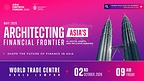
KUALA LUMPUR, Malaysia and SINGAPORE, Sept. 7, 2026 /PRNewswire/ — The Responsible Fintech Institute (RFI) today opened registration for the inaugural Asia Fintech Forum 2026, a one-day summit on Friday, 2 October at the World Trade Centre Kuala Lumpur.

The forum will bring together 40 speakers from regulators, banks and fintech firms across Asia, and is expected to draw 1,000 delegates. Remi Technology, the Singapore-headquartered cross-border settlement provider, joins as title sponsor.

Convening under the theme “Architecting Asia’s Financial Frontier: AI, Digital Assets, and Inclusive Banking,” the forum is RFI’s first flagship event outside Singapore. The choice of Kuala Lumpur is deliberate: Malaysia is licensing a new generation of digital banks while ASEAN member states negotiate the Digital Economy Framework Agreement (DEFA), and the forum’s regulatory track is built around that gap between national rulemaking and regional interoperability.

Confirmed speakers include Mohammad Ridzuan Abdul Aziz, Chief Executive Officer of Aeon Bank; Aaron Tang, General Manager of Luno Malaysia; Kenneth Chan, Chief Executive Officer of Webull Malaysia; Victoria Wymark of PwC South East Asia; and Affendi Rashdi, Director-General, and Ja’afar Rihan, Head of Islamic Business Development at Labuan Financial Services Authority. The full roster of the speakers is published at https://asiafintech.org/#speakers.

“Asia is writing the rules for digital finance faster than any other region, and it is writing them in several places at once — a stablecoin framework in Hong Kong, digital banking licences in Malaysia, payment corridors out of Singapore,” said Chia Hock Lai, Chairman of RFI. “The risk is not that innovation outpaces regulation. The risk is that a dozen regulators solve the same problem a dozen different ways, and the cost of that lands on consumers and on any firm trying to operate across borders. We chose Kuala Lumpur for our first forum because that conversation has to happen where the market is growing, not only where the rules are already written.”

Main-stage sessions, hands-on workshops, and closed-door roundtables span:

ASEAN fintech and the Digital Economy Framework Agreement (DEFA)Agentic AI in financial servicesStablecoin clearing, settlement and cross-border paymentsIslamic fintech and digital bankingReal-world asset (RWA) tokenisation and its legal frameworksPost-Quantum Cryptography (PQC) migration and defense strategies for banksStrategic fintech branding, positioning, and market communicationGovernance standards and institutional frameworks for permissionless blockchains in APAC (Project Pigeon)Digital banks and financial inclusion

“Banks do not need another payment rail that routes around them. They need settlement infrastructure that runs inside their own compliance perimeter,” said Sam Su, Chief Executive Officer and Co-Founder of Remi Technology. “That argument only gets properly tested in a room that has regulators and bank treasurers in it, not just builders. That is why we are title sponsor: this is one of the few forums in the region that puts all three on the same agenda on the same day.”

“Malaysia has long flown under the radar in regional fintech, and hosting this forum in Kuala Lumpur—with the backing of regional regulators and industry leaders—signals its coming of age,” said Farah Jaafar, Co-Chair of the organising committee, Independent Non-Executive Director of Webull Securities (Malaysia), and Co-Chair of the Women in Fintech group within the Asia Fintech Alliance. “We built this agenda for practitioners, not the conference circuit. Malaysia brings critical pillars the regional dialogue needs: a mature Islamic finance ecosystem and proactive regulators willing to give digital models room to scale.”

“Real-world asset tokenisation and next-generation capital markets cannot scale in silos; they require shared liquidity, robust custody, and cross-border regulatory clarity,” said Calvin Ng, Chairman of NexStox. “As both strategic partner and venue sponsor, NexStox is proud to anchor this dialogue at the World Trade Centre Kuala Lumpur. The Asia Fintech Forum provides the institutional bridge APAC needs to transition tokenised assets and digital market infrastructure from pilot concepts into live capital deployment.”

NexStox, RegTank, Sumsub and VerifyVASP join as sponsors.

Supporting partners include the Labuan Financial Services Authority (LFSA), International Digital Economics Association (IDEA), the Digital Assets Association (DAA), Thailand Fintech Association (TFA), Fintech Philippines Association (FPA), Hong Kong Fintech Industry Association (HKFTA), Unified Fintech Forum (India), ACCESS Malaysia, Fintech Association of Malaysia (FAOM) and Taiwan Fintech Space.

Registration is now open at https://asiafintech.org/. Exhibition packages and speaker nomination forms are available on the same site.

Media accreditation: Journalists may request onsite access, interview slots with RFI and sponsor spokespeople, and the full press kit (logos, speaker headshots, agenda) from the contact below.

About Responsible Fintech Institute

The Responsible Fintech Institute (RFI) is a global nonprofit organisation based in Singapore. Its goal is to create a safe, trustworthy and reliable future for digital finance by building the digital utilities that support responsible innovation. RFI brings together public and private sector stakeholders to help build the rules and technology needed for new digital financial tools, and to make the digital asset sector sustainable and inclusive. Learn more at responsiblefintech.org.

About Remi Technology

Remi Technology is a Singapore-based fintech company that delivers stablecoin clearing and settlement infrastructures for banks and financial institutions worldwide. Find us at www.remitech.ai or www.linkedin.com/company/remi-tech.

View original content to download multimedia:https://www.prnewswire.com/apac/news-releases/asia-fintech-forum-2026-to-convene-regulators-bankers-and-fintech-leaders-in-kuala-lumpur-on-2-october-302870789.html

SOURCE Responsible Fintech Institute (RFI)

Continue Reading

Trending