Connect with us

Technology

Data localization requirements may hinder Pakistan’s opportunities to grow its digital economy

Published

on

New research paper reinforces the need to consider the economic impact of data localization in Pakistan, estimating a potential loss of 3.2 million jobs with the enforcement of data localization practices.

ISLAMABAD, Aug. 1, 2024 /PRNewswire/ — A new research paper, Data Localization in Pakistan: Challenges and Opportunities, examines the operational and economic impact of data localization in Pakistan. The paper outlines the regulatory environment in Pakistan and the differentiated consequences of data localization practices in four sectors: healthcare, IT and ITeS (software), e-commerce, and freelancers. Commissioned by the Asia Internet Coalition and developed by LIRNEasia, the paper also provides recommendations on how the government can approach and enforce data localization efforts without impacting the potential of the digital economy.

Data localization can contribute to slower economic growth, lower productivity, and reduced employment. The report estimated that if the Personal Data Protection Bill based on its May 2023 draft is enacted in 2024, it could result in a decline in labour productivity by 4.7%. Such a reduction, when applied to Pakistan’s GDP in 2021, directly impacts GDP and number of jobs, translating to a loss of US$ 16.5 billion for the following year and a potential loss of 3.2 million jobs.

While representatives of local businesses welcomed the government’s efforts to improve data protection in Pakistan, they also shared three key areas in which data localization requirements were seen unfavorably. Firstly, fully localized data can result in higher compliance costs, with a Pakistani IT company estimating a 70% increase in hosting costs. There are also human resource constraints, with businesses requiring more employees to run operations. Skill gaps in the local market can also hinder businesses’ smooth transition to localized data, not being able to capitalize on larger talent pools in other countries. In addition, centralized data storage can heighten the risk of data breaches, as businesses would have to compromise the security benefits of a decentralized architecture. Concerns around data recovery and data mirroring can also arise under such data localization requirements.

“The fourth industrial revolution is driven by the digital transformation of our economies and societies, resulting in global integration of value chains, economic growth, and job creation. Open data flows are crucial to Pakistan’s digital growth, and there are ways in which Pakistan can reconcile its digital security and privacy needs with the need for open data flows. An important next step for Pakistan is to review its data protection governance framework across sectors and services with a specific focus on economic growth, job creation, and its vision for digital transformation. Handicapping Pakistan-based firms by imposing additional costs can impede them from competing in the global market and for investment. Other countries with friendlier policies will have an advantage over Pakistani firms. Amid Pakistan’s goals to become a US$ 3 trillion economy by 2047, this can impact the country’s economic growth on the global stage,” said Rohan Samarajiva, Chair, LIRNEasia and one of the paper’s authors.

In Pakistan’s current policy and regulatory landscape, some data localization is required. However, regulating digital platforms and businesses in Pakistan, particularly the use and storage of data would need to be reevaluated to avoid more serious repercussions for businesses and the economy. A lighter touch approach to enforcement can yield a milder impact on Pakistan’s digital economy. With Pakistan’s regional peers also moving away from such measures, the merits of data localization do not seem to outweigh the potential economic risks it brings. Continuous engagement with industry stakeholders can help the government refine and adapt the regulatory framework as the digital landscape evolves.

For more information, the report can be found here.

This paper is authored by LIRNEasia with the support of the Asia Internet Coalition (AIC). 

About the Asia Internet Coalition

The Asia Internet Coalition (AIC) is an industry association comprising leading Internet and technology companies. The AIC seeks to promote the understanding and resolution of Internet policy issues in the Asia Pacific region. Visit www.aicasia.org for more information.

View original content:https://www.prnewswire.com/apac/news-releases/data-localization-requirements-may-hinder-pakistans-opportunities-to-grow-its-digital-economy-302212146.html

SOURCE Asia Internet Coalition

Continue Reading

Technology

CoolFly to Showcase Personal Flight Portfolio and NA80 Flight-Control Technology at IFA Berlin 2026
Published

on

By

Dream ST will be on display as CoolFly highlights flagship Urban, high-performance Dream Pro and its expanding global dealer network

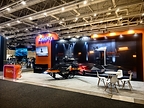
BERLIN, Sept. 6, 2026 /PRNewswire/ — CoolFly, a developer of personal electric aircraft and eVTOL technologies, is showcasing its Dream ST personal aircraft at IFA Berlin 2026, taking place September 4–8 at Messe Berlin.

Dream ST is on display at CityCube Hall B, Booth CCBB-143, in IFA’s Mobility area. While Dream ST is the aircraft physically presented at the show, CoolFly is also introducing its broader product portfolio, including high-performance Dream Pro and flagship Urban.

Dream ST is a lightweight, single-seat electric aircraft designed for personal and recreational flight, featuring a seated configuration and quick-fold design for easier transportation and storage.

Dream Pro extends the platform with greater payload, endurance and performance. It supports a maximum payload of 120 kg, reaches a maximum speed of 100 km/h, and can achieve up to 40 minutes of flight time with a 70 kg pilot onboard, depending on operating and environmental conditions.

Urban, CoolFly’s flagship personal aircraft, features a standing-position configuration and enclosed-propeller architecture, reflecting the company’s effort to create a more intuitive and distinctive personal flight experience.

All three aircraft share CoolFly’s self-developed NA80 flight control system. NA80 uses a dual-redundant architecture with two independent flight-control units, each integrating three aviation-grade inertial measurement units (IMUs). The system continuously monitors aircraft attitude and motion, supports millisecond-level fault detection and failover, and serves as a common technology foundation across CoolFly’s product portfolio.

Dream ST, Dream Pro and Urban have all obtained CE and FCC certifications for applicable product compliance requirements, supporting CoolFly’s continued international expansion.

CoolFly is also actively recruiting dealers, distributors and commercial partners worldwide, with a current focus on Europe, North America, Australia, the Middle East and other key markets.

Prospective partners and media are invited to visit CoolFly at IFA Berlin 2026, CityCube Hall B, Booth CCBB-143.

About CoolFly
CoolFly develops personal electric aircraft and eVTOL technologies, integrating aircraft design, propulsion and self-developed flight-control systems to make personal flight more accessible.

Media: press@coolflyaircraft.com
Business: support@coolflyaircraft.com

View original content to download multimedia:https://www.prnewswire.co.uk/news-releases/coolfly-to-showcase-personal-flight-portfolio-and-na80-flight-control-technology-at-ifa-berlin-2026-302870767.html

Continue Reading

Technology

Experience AI Companion in Everyday Life at Hisense IFA 2026

Published

on

By

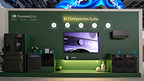
BERLIN, Sept. 6, 2026 /PRNewswire/ — Hisense, a leading brand in global consumer electronics and home appliances, is inviting visitors at IFA 2026 to experience how AI can make everyday home routines simpler and more intuitive. Under the theme “Innovating a Brighter Life,” the Hisense AI Companion Suite, powered by ConnectLife, brings connected intelligence to the kitchen, laundry and living spaces.

Step into the kitchen and a simple question— “What should I make?”—can set the experience in motion. The AI Companion Refrigerator recognizes stored ingredients and suggests meal ideas based on personal preferences. Once a recipe is selected, it can sync with the AI Companion Oven to support automatic cooking, while the AI Companion Wine Cabinet recommends pairings and maintains suitable storage conditions. After the meal, the AI Companion Dishwasher recognizes dish conditions and adjusts cleaning, demonstrating how AI can support the journey from planning dinner to cleaning up.

In the laundry area, visitors can see how the AI Companion Laundry Suite turns a routine load into a simpler, more automated experience. By recognizing clothing characteristics, it selects suitable wash and dry cycles and adjusts the process automatically, creating a load-and-go experience.

The experience continues in the living space. The AI Companion Air Conditioner senses indoor conditions and user presence, adapting airflow as people move through the room. Meanwhile, the AI Companion Energy System considers weather and time-of-use electricity pricing to help optimize household energy use.

Building on ConnectLife’s support, Hisense is collaborating with Alexa+ to be among the first home appliance brands bringing smart home devices to Amazon’s Alexa+ AI assistant using Amazon’s new Smart Home AI Toolkit. Available in the coming months, Alexa+ customers will be able to control select Hisense air conditioners by simply saying what they need. Alexa+ will then map the request, navigate the settings, and complete the action for them.

Hisense’s approach to innovation has also earned recognition at IFA, with several of its products receiving awards. The Multi Function II Series, an all-in-one energy-saving HVAC solution, received a Winner Award, while the X-zone Master was named an Honoree. The U8 Air Master Air Conditioner, W60 3D Kitchen-fit Series and 60cm Integrated Wine Cabinet were also recognized that underscores Hisense’s focus on combining intelligent technology, thoughtful design and everyday usability.

Across these IFA scenarios, Hisense brings its Smart Home Companion capabilities to life through V AIOS, giving devices the ability to Sense what is happening, Think through what to do, Communicate naturally with users and across devices, and Execute tasks by orchestrating devices and services autonomously. Together, these capabilities help AI Companion Suites understand context, make decisions and take action, helping the home do more while asking less of its users.

About Hisense

Hisense, founded in 1969, is a globally recognized leader in home appliances and consumer electronics with operations in over 180 countries, specializing in delivering high-quality multimedia products, home appliances, and intelligent IT solutions. According to Omdia, Hisense ranks No. 1 globally in the 100-inch and over TV segment (2023-2026H1). As The Origin of RGB MiniLED, Hisense continues to lead the next-generation RGB MiniLED innovation. As the official sponsor of the FIFA World Cup 2026TM, Hisense is committed to global sports partnerships as a way to connect with audiences worldwide.

View original content to download multimedia:https://www.prnewswire.co.uk/news-releases/experience-ai-companion-in-everyday-life-at-hisense-ifa-2026-302870765.html

Continue Reading

Technology

Roborock Reports 27.6% Revenue Growth in H1 2026, Reinforcing Global Market Leadership

Published

on

By

BERLIN, Sept. 6, 2026 /PRNewswire/ — Roborock, a global leader in home robotics engineered to simplify daily life, reported revenue of RMB 10.084 billion in the first half of 2026, up 27.6% year on year, while net profit attributable to shareholders rose 45.6% to RMB 986 million. The company also reached a new global milestone, with Roborock recognized as the world’s No.1 robotic vacuum cleaner brand by both IDC and Euromonitor International.

Global Expansion Continues to Strengthen Growth

Roborock’s international business continued to deliver strong growth in H1 2026 across both mature and high-potential markets. During Amazon Prime Day 2026, Roborock ranked No.1 in the robotic vacuum category in Germany, the United Kingdom, Spain, the Netherlands, Belgium, the United States and Canada. In Europe, Roborock reached a 45% share of the robotic vacuum market, with unit sales up 24% year on year, while wet-dry vacuum unit sales grew 112%. In North America, Roborock reached a 33% share of the robotic vacuum market, with unit sales increasing 30% year on year.

Momentum was also strong across key Asia-Pacific markets. Roborock ranked No.1 in both unit shipments and sales value in Australia, Korea, Taiwan region and Türkiye from Q1 2023 to Q1 2026. In Korea, the brand maintained more than 70% share of the premium robotic vacuum segment, while the S10 MaxV Ultra generated approximately KRW 28 billion in sales within ten days of its February 2026 launch. In Japan, Roborock continued to deepen its premium retail presence through cooperation with Yamada Denki, including dedicated brand displays and nationwide availability of flagship products. Across Asia-Pacific, the company continued to combine its global technology platform with localized channel, marketing and service strategies.

Roborock’s global leadership has also been independently recognized by IDC and Euromonitor International. According to IDC, Roborock ranked No.1 globally by both unit shipments and sales value among robotic vacuum brands in H1 2026, while Euromonitor International ranked the brand No.1 globally by retail sales value in 2025. Together, the two rankings reinforce Roborock’s global market leadership and reflect sustained consumer demand worldwide.

Sustained R&D Investment Supports Long-Term Competitiveness

Roborock continued to invest heavily in technology in the first half of 2026, with R&D spending reaching RMB 720 million, up 5.11% year on year and accounting for 7.14% of revenue. The company continues to build capabilities in intelligent navigation, AI-powered environmental perception, cleaning systems and robotic mobility, while increasingly bringing these technologies together at the system level rather than improving individual specifications in isolation. This integrated approach allows technologies proven in flagship products to be brought into a wider range of models and price segments, helping Roborock strengthen its portfolio while making advanced features available to more consumers.

IFA 2026 Highlights the Next Phase of Innovation

At IFA 2026, Roborock is showcasing its latest advances across indoor and outdoor cleaning. Its new robot vacuums and wet-dry vacuums bring advances in steam-powered care, adaptive cleaning and whole-home versatility, while the Roborock Saros Rover introduces a two-wheel-leg architecture designed to expand robotic mobility beyond flat floors. Roborock is also broadening its intelligent cleaning ecosystem with the debut of the RockAqua P1, its first intelligent pool cleaner, alongside the RockNeo Q2 LiDAR robotic mower, extending its autonomous cleaning capabilities across floors, pools and gardens.

View original content:https://www.prnewswire.co.uk/news-releases/roborock-reports-27-6-revenue-growth-in-h1-2026–reinforcing-global-market-leadership-302868216.html

Continue Reading

Trending