Connect with us

Technology

Barcode Label Printer Market size is set to grow by USD 1.59 billion from 2024-2028, Increasing adoption of two-dimensional (2D) barcodes boost the market, Technavio

Published

on

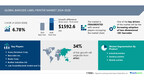
NEW YORK, Aug. 14, 2024 /PRNewswire/ — The global barcode label printer market size is estimated to grow by USD 1.59 billion from 2024-2028, according to Technavio. The market is estimated to grow at a CAGR of almost 6.78%  during the forecast period. Increasing adoption of two-dimensional (2D) barcodes is driving market growth, with a trend towards recent developments in barcode label printer. However, increased adoption of RFID printers poses a challenge. Key market players include Avery Dennison Corp., Barcodes Inc., Brady Corp., Brother Industries Ltd., cab Produkttechnik GmbH and Co. KG, Citizen Watch Co. Ltd., Datalogic SpA, Fujitsu Ltd., GAINSCHA TECHNOLOGY GROUP Co., Honeywell International Inc., Newell Brands Inc., Panth Enterprise, Postek Technologies Inc., SATO Holdings Corp., Seiko Epson Corp., Shandong New Beiyang Information Technology Co. Ltd., Toshiba Corp., TSC Auto ID Technology Co. Ltd., WINCODE Technology Co. Ltd., and Zebra Technologies Corp.

Get a detailed analysis on regions, market segments, customer landscape, and companies- View the snapshot of this report

Barcode Label Printer Market Scope

Report Coverage

Details

Base year

2023

Historic period

2018 – 2022

Forecast period

2024-2028

Growth momentum & CAGR

Accelerate at a CAGR of 6.78%

Market growth 2024-2028

USD 1592.6 million

Market structure

Fragmented

YoY growth 2022-2023 (%)

6.23

Regional analysis

APAC, North America, Europe, South America, and Middle East and Africa

Performing market contribution

APAC at 34%

Key countries

US, China, Japan, Germany, and India

Key companies profiled

Avery Dennison Corp., Barcodes Inc., Brady Corp., Brother Industries Ltd., cab Produkttechnik GmbH and Co. KG, Citizen Watch Co. Ltd., Datalogic SpA, Fujitsu Ltd., GAINSCHA TECHNOLOGY GROUP Co., Honeywell International Inc., Newell Brands Inc., Panth Enterprise, Postek Technologies Inc., SATO Holdings Corp., Seiko Epson Corp., Shandong New Beiyang Information Technology Co. Ltd., Toshiba Corp., TSC Auto ID Technology Co. Ltd., WINCODE Technology Co. Ltd., and Zebra Technologies Corp.

Market Driver

The global barcode label printer market is experiencing a significant increase in new product launches, which is motivating consumers to explore and purchase a diverse range of barcode label printers based on their specific needs. This trend is intensifying competition in the market, leading manufacturers to innovate and differentiate their offerings. In January 2023, Citizen Systems America introduced the CL-H300SV, the latest addition to its desktop barcode printer lineup. TSC Auto ID Technology launched the Alpha-30R 3-Inch Performance Mobile Barcode Label Printer in June 2022, offering two models with varying features and media support. SATO Group unveiled the PV4 mobile barcode label printer in January 2021, catering to high-volume e-commerce operations with its best-in-class media capacity and versatile interface options. These product launches are expected to fuel the expansion of the global barcode label printer market in the coming years. 

The Barcode Label Printer market is witnessing significant trends, with mobile printers gaining popularity in various industry verticals. Packaged goods companies are automating production lines to streamline processes and reduce wastage. Output efficiency is key, with advancements in barcode technology, including Matrix, 2D codes like QR, and QR barcode readers on camera phones. Barcode printers come in various forms, from industrial to specialty models, printing on labels, receipts, and even directly onto physical objects. EANs and UPCs remain standard, while Radio Frequency Identification (RFID) and robotics are modern technologies driving innovation. Key sectors include packaged food, assembly lines, and production, aiming for quick response times. Technologies like Direct Thermal, Thermal Transfer, Ink Jet, Laser Printing, and Dot Matrix cater to different needs. A well-developed infrastructure supports this industry, with a strong development base in the Ecommerce industry. Metal ribbon capacity and printer types, including industrial, desktop, and portable models, further diversify the market. 

Discover 360° analysis of this market. For complete information, schedule your consultation – Book Here!

Market Challenges

RFID label printers produce labels with a unique ID or electronic product code, featuring both a barcode and human-readable text. These printers integrate a reader and printer into one machine, catering to mass printing and encoding applications. While barcodes can store limited data, RFID tags, incorporated into these printers, offer non-volatile memory and can store up to 8 kb of information. With growing RFID technology adoption, manufacturers design RFID smart printers for handling common RFID inlays and large data storage. Their ease of service, integration with network technology, and enhanced capabilities contribute to their increasing popularity, potentially hindering the barcode label printer market growth.The Barcode Label Printer market faces several challenges in catering to diverse industry verticals. Specialty printers for barcode tags, receipts, and labels on physical objects require advanced technologies like EANs and UPCs for efficient tracking. Radio frequency identification (RFID) and robotics integration are becoming essential for modern industries, including the International Federation of Packaging Industries. Industrial printers for large-scale production, desktop printers for small businesses, and portable printers for on-the-go use each have unique requirements. Technology choices include direct thermal, thermal transfer, ink jet, laser printing, and dot matrix. A well-developed infrastructure is crucial, with features like Dual WiFi and Bluetooth options, PLC integration, and high-resolution barcode labels (600 dpi, 14 ips) becoming industry standards. Product types, such as packaged food, demand barcode labels with specifications like IMPACT series, Four-inch desktop printers, and printing speeds. Adapting to modern technologies while catering to various industries and product types requires innovative solutions. Metal barcode tags, ribbon capacity, and Ecommerce industry integration are additional considerations.

For more insights on driver and challenges – Request a sample report!

Segment Overview 

This barcode label printer market report extensively covers market segmentation by  

Product 1.1 Industrial printers1.2 Desktop printers1.3 Mobile printersApplication 2.1 Manufacturing2.2 Transportation and logistics2.3 Retail2.4 Healthcare2.5 OthersGeography 3.1 APAC3.2 North America3.3 Europe3.4 South America3.5 Middle East and Africa

1.1 Industrial printers-  Industrial printers play a crucial role in various industries for high-volume labeling applications, including order labeling and warehouse management. Zebra Technologies and Honeywell International are major vendors offering robust industrial printers, such as ZT600 Series and PXie Series, respectively. These printers cater to manufacturing, transportation and logistics, and retail sectors. Key applications of industrial printers include asset management, compliance labeling, cross-docking, lab sample tracking, receiving and shipping, reverse logistics, work-in-process tracking, inventory management, information labels, order labeling, and quality control. The advantages of industrial printers, like error-proof labeling, easy programmability, and advanced networking connectivity and security, fuel their demand, making the market for these printers grow significantly during the forecast period.

For more information on market segmentation with geographical analysis including forecast (2024-2028) and historic data (2017-2021) – Download a Sample Report

Research Analysis

The Barcode Label Printer market is experiencing significant growth due to the increasing demand for automation and streamlining in various industry verticals, particularly in packaged goods production. Mobile printers are gaining popularity for their flexibility and quick response, allowing for on-demand labeling in assembly lines and production areas. Barcodes, including Matrix barcodes, 2D codes, EANs, and UPCs, are essential for efficient tracking and reducing wastage. Modern technologies like radio frequency identification (RFID) and robotics are also being integrated into barcode label printers to enhance output efficiency and productivity. The International Federation for Automation and the use of industrial robots further contribute to the advancement of this market. Innovative solutions cater to diverse industry needs, from industrial printers for large-scale production to desktop and portable printers for small businesses. The market continues to evolve, offering solutions for various product types, such as packaged food, to meet the demands of the modern production landscape.

Market Research Overview

The Barcode Label Printer market is witnessing significant growth due to the increasing automation and streamlining of processes in various industry verticals. Mobile printers are gaining popularity in packaged goods sectors for quick response and on-demand labeling. Modern technologies like Matrix barcodes, 2D codes, and QR barcode readers are enhancing output efficiency and reducing wastage. Barcode printers come in various types, including industrial, desktop, and portable models, using technologies like direct thermal, thermal transfer, ink jet, laser printing, and dot matrix. The market is driven by the need for efficient production time and the increasing use of barcodes on physical objects, such as EANs and UPCs. Innovative solutions are also being developed for industries like packaged food, using advanced technologies like radio frequency identification, robotics, and PLC integration. With a well-developed infrastructure and a wide development base, the market is expected to continue growing, with new offerings like Dual WiFi and Bluetooth options, high-resolution printing, and specialty printers for specific applications.

Table of Contents:

1 Executive Summary
2 Market Landscape
3 Market Sizing
4 Historic Market Size
5 Five Forces Analysis
6 Market Segmentation

ProductIndustrial PrintersDesktop PrintersMobile PrintersApplicationManufacturingTransportation And LogisticsRetailHealthcareOthersGeographyAPACNorth AmericaEuropeSouth AmericaMiddle East And Africa

7 Customer Landscape
8 Geographic Landscape
9 Drivers, Challenges, and Trends
10 Company Landscape
11 Company Analysis
12 Appendix

About Technavio

Technavio is a leading global technology research and advisory company. Their research and analysis focuses on emerging market trends and provides actionable insights to help businesses identify market opportunities and develop effective strategies to optimize their market positions.

With over 500 specialized analysts, Technavio’s report library consists of more than 17,000 reports and counting, covering 800 technologies, spanning across 50 countries. Their client base consists of enterprises of all sizes, including more than 100 Fortune 500 companies. This growing client base relies on Technavio’s comprehensive coverage, extensive research, and actionable market insights to identify opportunities in existing and potential markets and assess their competitive positions within changing market scenarios.

Contacts

Technavio Research
Jesse Maida
Media & Marketing Executive
US: +1 844 364 1100
UK: +44 203 893 3200
Email: media@technavio.com
Website: www.technavio.com/

View original content to download multimedia:https://www.prnewswire.com/news-releases/barcode-label-printer-market-size-is-set-to-grow-by-usd-1-59-billion-from-2024-2028–increasing-adoption-of-two-dimensional-2d-barcodes-boost-the-market-technavio-302221969.html

SOURCE Technavio

Continue Reading

Technology

IDEMIA Public Security Partners with the Connecticut Department of Motor Vehicles to Launch the Next-Generation of Mobile ID

Published

on

By

Connecticut residents can now securely verify their identity quickly and easily from their mobile phone. 

RESTON, Va., Nov. 24, 2026 /PRNewswire/ — IDEMIA Public Security, a leading provider of secure and trusted biometric-based solutions, in partnership with the Connecticut Department of Motor Vehicles (DMV), has launched the next-generation of mobile ID in Connecticut, providing residents with a convenient and secure way to digitally present their state-issued driver’s license or ID.

The Connecticut mobile ID app offers residents a modern, trusted identity solution that complements a physical driver’s license or state ID card. Designed with privacy, security, and convenience at its core, the credential enables residents to present trusted identity information while maintaining greater control over their personal data.

Built on IDEMIA’s proven digital identity technology, the Connecticut mobile ID app supports verification across a variety of in-person and digital use cases. Developed with interoperability, privacy, and user experience in mind, the solution provides a trusted digital credential that residents and relying parties can use with confidence.

“This is an exciting milestone for the State of Connecticut and the Department of Motor Vehicles,” said DMV Commissioner Tony Guerrera. “The Connecticut Mobile ID surpassed 10,000 downloads within just days of its launch, demonstrating tremendous early interest. We are proud to offer this option to our residents and extend our sincere appreciation to everyone who helped bring this initiative across the finish line.”

“We are proud to collaborate with the Connecticut Department of Motor Vehicles to provide residents with a secure digital credential that brings greater convenience and control to the identity experience,” said Rob Gardner, CEO, IDEMIA Civil Identity. “This launch reinforces our commitment to advancing digital identity solutions that prioritize privacy, security, and ease of use while supporting Connecticut’s efforts to deliver innovative services to its residents. Together, we are empowering citizens with a trusted digital credential designed for today’s increasingly mobile world.”

Connecticut joins New York, Iowa, Arkansas, Kentucky and West Virginia implementing IDEMIA’s Mobile ID technology.

To learn more about Connecticut’s mobile ID, click here.

About IDEMIA Group
IDEMIA Group is a global technology leader with more than 10,700 employees worldwide. Its two market-leading divisions deliver mission-critical solutions that simplify and secure interactions in the physical and digital realms:

IDEMIA Public Security (IPS) is a trusted provider of government-grade and secure biometric-based solutions for 600 government, state and federal agencies, as well as organizations requiring identity and access solutions across physical and digital environments. With decades of experience in biometric technologies, IPS enables safer, frictionless and fairer ways to secure travel, access, and citizen protection. Separately, two other government-related activities are conducted by the IDEMIA Group: civilian identity issuance in North America and road safety.IDEMIA Secure Transactions (IST) is the leading technology provider making it safer and easier to pay and connect. With unmatched expertise in cryptography and credential issuance, IST is trusted by over 2000 financial institutions, mobile operators, automotive manufacturers, and IoT providers worldwide. Every day, IST secures billions of essential transactions, ensuring the highest levels of data protection and convenience. 

For more information, please visit www.idemia.com. 

Media contact:
Genevieve de Vera
IDEMIA Public Security 
(978) 808-7047
genevieve.devera@ps-idemia.com

View original content to download multimedia:https://www.prnewswire.com/news-releases/idemia-public-security-partners-with-the-connecticut-department-of-motor-vehicles-to-launch-the-next-generation-of-mobile-id-302948564.html

SOURCE IDEMIA Identity & Security USA LLC

Continue Reading

Technology

Euler Foundation appoints Euler Technologies to lead next phase of growth and adoption

Published

on

By

GRAND CAYMAN, Cayman Islands, Nov. 18, 2026 /PRNewswire/ — The Euler Foundation today announced that Euler Technologies, a newly formed independent service provider, joined by Christopher Cameron as Head of Strategy, succeeds Euler Labs as the primary service provider responsible for maintaining and growing the Euler Protocol. The mutually agreed transition will take effect on 18 November 2026, with Euler Technologies and Euler Labs working together on the handover.

The appointment marks the completion of Euler Labs’ founding mission. Euler Labs has developed the most flexible and robust lending and borrowing product on the market: a modular protocol on which anyone can deploy a customised credit market for any asset without compromising risk isolation. With that infrastructure built and battle-tested, the Protocol’s next step is commercial.

With growth and protocol evolution as top priorities, Euler Technologies assumes responsibility for protocol development and maintenance, as well as the operation of the Euler app, documentation, and communications. Its mandate focuses on partnerships and integrations that bring more users to Euler, support for curators developing credit markets, and work with institutions and tokenised-asset issuers seeking access to onchain lending. The Euler Foundation will compensate Euler Technologies in EUL, Euler’s governance token, aligning the company’s economic incentives with the protocol’s long-term success.

Euler Foundation said: “Euler Labs has made an extraordinary contribution to Euler. The team has built the most adaptable and resilient credit infrastructure in DeFi, and we thank them for the technology and ecosystem they have created. Euler Technologies brings the engineering capability to carry that work forward, and the commercial and governance experience to put it in front of more users and integrators. This transition positions Euler for its next phase of growth.”

Continuity for users and partners

Euler Labs and Euler Technologies will coordinate the transition over November 2026. We do not anticipate any near-term material changes to the protocol, its markets or its interfaces. The Euler Foundation will continue to steward the Euler ecosystem and oversee its service provider relationships, working with Euler Technologies to support the products’ development, maintenance and long-term growth.

Security and control

Under the direction of the Euler Foundation, Euler Labs will transfer the administrative permissions associated with its service-provider role to Euler Technologies before the end of November 2026. Both teams will coordinate and verify each step, and the community will be updated once the transfer is complete.

Euler Technologies will hold the same limited administrative permissions that Euler Labs held, under the same safeguards. Changes to the protocol remain subject to the same controls and governance oversight as today, and Euler Foundation will continue to oversee how those permissions are held and used. Euler Technologies cannot exercise these permissions alone. Protocol upgrades require approval from a distributed multisig whose signers include the Euler Foundation.

Euler Labs will rotate the protocol’s multisig signers to a distributed set that includes the Euler Foundation, Euler Technologies, leading crypto security firms, and investors in Euler Technologies.

“I’m incredibly proud of everything Euler Labs has achieved, from the v2 rebuild to the upgrades we’ve just shipped. We set out to build the most versatile credit infrastructure in DeFi, and that work is done,” said Jonathan Han, CEO of Euler Labs. “What Euler needs now is a team focused on commercializing it. Euler Technologies has the business development capabilities and the market knowledge to expand its reach. We believe this is the best next step for Euler.”

Driving the next phase of growth

Cameron, known across the industry as PaperImperium, is one of the most experienced governance practitioners in decentralised finance, specialising in onchain credit and stablecoin markets. He was among the first elected delegates of MakerDAO (now Sky) and at one point its largest, representing more than 3% of the protocol’s voting power. He organised one of the first public meetings between a DAO and a sitting member of the U.S. Congress. From 2021 to 2026, he served as governance liaison at GFX Labs, representing the firm in the governance of Arbitrum, Optimism, Uniswap, Morpho and other protocols.

“I have spent years inside the governance of DeFi‘s largest credit protocols, and I have watched Euler Labs build the most flexible and robust lending infrastructure on the market,” said Cameron, Head of Strategy, Euler. “The infrastructure is proven. Euler’s major need is distribution: the partnerships, integrations and institutional relationships that bring more markets and more borrowers onto it. Euler Technologies’ job is to keep that infrastructure secure and well maintained while shepherding the next wave of curators and tokenized assets onto the platform.”

“It’s great news that someone with Chris’ wealth of experience will be helping shape Euler through its next chapter,” said Michael Bentley, co-founder and former CEO of Euler Labs. “I’ve long admired his contributions to MakerDAO and other credit protocols. He has a deep understanding of credit markets and knows what users, curators and institutions need from lending infrastructure. I look forward to seeing Euler continue to grow with his help.”

EUL compensation and token transparency

Under its agreement with Euler Foundation, Euler Technologies will receive 4,077,420 EUL over two years, representing 15% of the total EUL supply as of November 17, 2026. Payments will follow a payment schedule of an initial distribution of 3% of supply, followed by monthly disbursements of 0.5% of supply for 24 months. The allocation will come from Euler Foundation’s existing holdings.

The Foundation has published a Tokenomics 2.0 page, providing an updated account of EUL distribution as of 17th November 2026 and showing how it will change under the Euler Technologies agreement.

The vesting schedules associated with EUL’s original token allocations have already concluded or will shortly conclude. In addition, the new page identifies Foundation and treasury balances, documented team and other holdings, and tokens in public circulation. It also details Euler Technologies’ allocation and release schedule, the treatment of any remaining contributor grants, and relevant wallet addresses.

For more information on this transition and Tokenomics 2.0 disclosures, visit Dune.

About Euler Foundation

Euler is a modular DeFi lending protocol that lets anyone permissionlessly deploy a customised credit market for any asset, without compromising risk isolation. Euler Foundation operates as a non-profit entity dedicated to furthering the development of the Euler Protocol by supporting community governance and providing strategic oversight.

About Euler Technologies

Euler Technologies is an independent service provider engaged by the Euler Foundation to operate, maintain, and secure the Euler protocol. Its remit covers protocol development on every network where Euler is deployed, smart contract security and key management, hosting of the Euler app, docs and forum, developer tooling and user support, alongside administrative and communications support for the Foundation. Euler Technologies is the trading name of Web3 Development Ventures Corp., incorporated in the Republic of Panama.

View original content:https://www.prnewswire.com/news-releases/euler-foundation-appoints-euler-technologies-to-lead-next-phase-of-growth-and-adoption-302943727.html

SOURCE Euler Foundation

Continue Reading

Technology

Wonderloom Media and Audioboom Launch Dr. Insanity Podcast Amid Rising Demand for True Crime

Published

on

By

One of YouTube’s largest true crime channels, with more than 6.3 million subscribers, expands its documentary-style storytelling with a new podcast

LOS ANGELES, Nov. 24, 2026 /PRNewswire/ — Wonderloom Media, the creator economy studio formed by Content Partners and media entrepreneur Ed Simpson, today announced that Dr. Insanity, one of YouTube’s largest true crime channels, has partnered with Audioboom to launch the Dr. Insanity Podcast, marking the channel’s expansion into podcasting and the latest step in Wonderloom’s push to bring Dr. Insanity to fans beyond YouTube.

The Dr. Insanity Podcast features in-depth, documentary-style episodes exploring real-life crime cases, and is available now on Apple Podcasts, Spotify and wherever you get your podcasts.

“Dr. Insanity is becoming the home of true crime, and that means meeting fans wherever they listen and watch,” said Ed Simpson, CEO of Wonderloom Media. “Our audience has always gone deep with us, and so many of them already live with true crime in their ears. Audioboom shares our commitment to great storytelling, and we’re excited to bring Dr. Insanity to a whole new community of listeners together.”

Since Wonderloom acquired Dr. Insanity in June 2026, the channel has continued to grow its audience and reach. Known for meticulously researched, documentary-style storytelling on real-life cases, Dr. Insanity has built one of the most engaged audiences in true crime, with more than 6.3 million YouTube subscribers and over 3 billion views. The partnership with Audioboom adds podcasting to the channel’s growing distribution, which also includes Tubi.

“Dr. Insanity has built an incredible audience on YouTube by delivering compelling, high-quality true crime storytelling,” said Brendan Regan, Chief Content Officer at Audioboom. “We see a tremendous opportunity to bring that same experience to podcast listeners and introduce the brand to new audiences. We’re excited to partner with the Wonderloom team to expand Dr. Insanity’s reach and build on its success across platforms.”

Listeners can follow the Dr. Insanity Podcast and learn more at drinsanity.com 

About Wonderloom Media
Wonderloom Media is a creator-first media platform that acquires, operates and scales YouTube-native content businesses. Formed by Content Partners and media entrepreneur Ed Simpson, Wonderloom brings institutional operating experience, expanded distribution and 360° monetization to digital-native properties with loyal audiences and long-term growth potential. Its portfolio includes Dr. Insanity, one of YouTube’s largest true crime channels, with more than 6.3 million subscribers and over 3 billion views.

About Audioboom
Audioboom is a global leader in podcasting – ranked as the fifth largest podcast publisher in the US by Edison Research – reaching more than 58 million unique listeners around the world each month.

Audioboom’s ad-tech and monetisation platform underpins a scalable content business that provides commercial, distribution, marketing and production services for a premium network of top tier podcasts. Key partners include the official Formula 1 podcasts ‘F1: Beyond the Grid’ and ‘F1 Nation’, ‘True Crime Obsessed’ (US), ‘The Tim Dillon Show’ (US), ‘No Such Thing As A Fish’ (UK) and ‘The Cycling Podcast’ (UK).

For more information, visit audioboom.com.

About Dr. Insanity
Dr. Insanity is one of YouTube’s largest true crime channels, with more than 6.3 million subscribers and over 3 billion views. Known for its in-depth, documentary-style storytelling on real-life cases, the channel has built a loyal audience in true crime. Dr. Insanity is part of the Wonderloom Media portfolio and is available on YouTube, Tubi and major podcast platforms.

Media Contact:
Michal Mitchell
Wonderloom@relativity.ventures

View original content to download multimedia:https://www.prnewswire.com/news-releases/wonderloom-media-and-audioboom-launch-dr-insanity-podcast-amid-rising-demand-for-true-crime-302948704.html

SOURCE Wonderloom Media

Continue Reading

Trending