Connect with us

Technology

Social Commerce Market size is set to grow by USD 8.88 trillion from 2024-2028, Personalized shopping experience and diverse product portfolios on social commerce platforms to boost the market growth, Technavio

Published

on

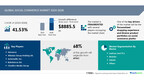
NEW YORK, Aug. 15, 2024 /PRNewswire/ — The global social commerce market  size is estimated to grow by USD 8.88 trillion from 2024-2028, according to Technavio. The market is estimated to grow at a CAGR of almost 41.53%  during the forecast period.  Personalized shopping experience and diverse product portfolios on social commerce platforms is driving market growth, with a trend towards technological advances in social media. However, efforts required for customer engagement and retention  poses a challenge. Key market players include Advance, Alibaba Group Holding Ltd., Automattic Inc., ByteDance Ltd., Charlton Media Group, Etsy Inc., Eventbrite Inc., Fashnear Technologies Pvt. Ltd., iQIYI Inc., Meta Platforms Inc., Microsoft Corp., One97 Communications Ltd., PayPal Holdings Inc., PDD Holdings, Renren Inc., Shopify Inc., SINA Corp., Tencent Holdings Ltd., Twitter Inc., and Verizon Communications Inc..

Get a detailed analysis on regions, market segments, customer landscape, and companies – Click for the snapshot of this report

Forecast period

2024-2028

Base Year

2023

Historic Data

2018 – 2022

Segment Covered

Device (Laptops and PCs, Mobiles, Tablets, and Others), Business Segment (Business to consumer, Business to business, and Consumer to consumer), and Geography (APAC, North America, Europe, South America, and Middle East and Africa)

Region Covered

APAC, North America, Europe, South America, and Middle East and Africa

Key companies profiled

Advance, Alibaba Group Holding Ltd., Automattic Inc., ByteDance Ltd., Charlton Media Group, Etsy Inc., Eventbrite Inc., Fashnear Technologies Pvt. Ltd., iQIYI Inc., Meta Platforms Inc., Microsoft Corp., One97 Communications Ltd., PayPal Holdings Inc., PDD Holdings, Renren Inc., Shopify Inc., SINA Corp., Tencent Holdings Ltd., Twitter Inc., and Verizon Communications Inc.

Key Market Trends Fueling Growth

Social media platforms have evolved from simple interaction tools to dynamic marketplaces, with innovations like chatbots driving the global social commerce market. Snapchat, for instance, is a user-friendly social media platform that facilitates shopping and information sharing. Chatbots, which use artificial intelligence for conversational interactions, engage audiences in self-initiated tasks, making marketing more effective and efficient. These technological advancements will continue to shape the social commerce landscape during the forecast period. 

Social Commerce is a trending business strategy that combines social media and e-commerce. It’s all about making the shopping process more engaging and convenient for customers. One key trend is the importance of secure payment methods and user data protection. Changing consumer preferences prioritize user experience, and user-generated content and product recommendations are becoming essential. Social influence also plays a significant role, with brands and sellers leveraging social media platforms for brand awareness and customer engagement. Multichannel retailing is another trend, with businesses using the latest technology like artificial intelligence and augmented reality to enhance product discovery and checkout. Consumer behavior and preferences continue to shape this market, with millennials leading the way in content shopping, sharing, and messaging features. Small businesses are also jumping on board to increase conversion rates and reach new customers in virtual environments. 

Discover 360° analysis of this market. For complete information, schedule your consultation- Book Here!

Market Challenges

In the social commerce market, customer engagement is a significant challenge for vendors. Unlike traditional retail stores where sales associates assist customers in making purchases and influence buying decisions, social commerce platforms give consumers full control over their purchases. If a vendor’s webpage or mobile application fails to captivate and engage customers, they may explore other shopping sites or visit physical stores, limiting growth opportunities for the vendor during the forecast period. Therefore, creating an appealing and interactive online shopping experience is crucial for retaining customers and driving sales in the social commerce industry.Social Commerce Market: A New Frontier for Businesses The Social Commerce market is revolutionizing the way businesses connect with customers. In this virtual environment, shopping is no longer a solitary activity. Instead, it’s a social experience. Customers discover products through content shopping on social media platforms. Interested buyers engage with brands and sellers, share their finds, and make purchases directly. Messaging features facilitate immediate communication, providing excellent customer service. Millennials and younger generations are driving this trend. Brands and small businesses, as well as individuals, are leveraging social media to increase brand awareness. Consumer preference for personalized shopping experiences is met through mobile technology and modern technologies like Video Commerce and livestream shopping. However, challenges persist. Security concerns, regulatory compliance, privacy issues, and cyberattacks are major concerns. Brands must collect data responsibly and ensure information exchange is secure. Marketing tools like influencer collaborations, shoppable posts, and personalized customer interactions are essential to stand out in this competitive landscape. In the Social Commerce market, the internet-savvy population is the new consumer base. Large players and smaller niche providers must adapt to this modern shopping experience to stay relevant.

For more insights on driver and challenges – Download a Sample Report

Segment Overview 

This social commerce market report extensively covers market segmentation by

Device 1.1 Laptops and PCs1.2 Mobiles1.3 Tablets1.4 OthersBusiness Segment2.1 Business to consumer2.2 Business to business2.3 Consumer to consumerGeography 3.1 APAC3.2 North America3.3 Europe3.4 South America3.5 Middle East and Africa

1.1 Laptops and PCs-  The social commerce market is a significant business sector where companies sell products directly to consumers through social media platforms. Brands engage with customers by sharing product information, promotions, and user-generated content. This approach offers convenience, personalization, and real-time interaction, leading to increased sales and customer loyalty. Social media’s vast user base allows businesses to reach a broader audience and target specific demographics effectively. By leveraging social media’s unique features, companies can build strong online communities and foster long-term relationships with their customers.

For more information on market segmentation with geographical analysis including forecast (2024-2028) and historic data (2018 – 2022)  – Download a Sample Report

Learn and explore more about Technavio’s in-depth research reports

The global e-commerce market continues its robust growth, driven by technological advancements and increasing consumer preference for online shopping. Southeast Asia’s e-commerce logistics market is also on an upward trajectory, fueled by rising internet penetration and digital payments. These trends underscore the growing significance of digital retail and logistics across key regions.

Research Analysis

The Social Commerce Market is revolutionizing the shopping experience by merging virtual environments with the customers’ favorite social media platforms. In this innovative shopping process, product discovery happens through content shopping and interested buyers can engage directly with brands and sellers. Social media platforms have transformed into marketplaces, allowing users to make purchases without leaving the app. Messaging features facilitate seamless communication between buyers and sellers. Millennials, small businesses, individuals, and even large players are leveraging modern technologies to reach an internet-savvy population. Brands and sellers increase brand awareness through influencer collaborations and shoppable posts. Consumer purchase behavior is influenced by personalized shopping recommendations and changing preferences. Electronics, home decor, and various niche products can be discovered and purchased in these virtual marketplaces. However, privacy concerns and regulatory compliance are crucial considerations for both buyers and sellers. Secure payment methods and user data protection are essential to ensure a safe shopping experience. User-generated content and product recommendations contribute to the overall user experience. The market caters to both large players and smaller niche providers, offering a diverse range of products and services. As the market continues to evolve, it’s essential to adapt to the latest consumer preferences and technologies to stay competitive.

Market Research Overview

The Social Commerce Market is revolutionizing the shopping experience by merging virtual environments and social media platforms. Customers can discover products through content shopping and sharing, leading to interested buyers engaging with brands and sellers. The shopping process is streamlined with checkout features, messaging, and secure payments. Millennials and younger generations are driving this trend, seeking immediate communication and personalized customer experiences. Modern technologies like Video Commerce, livestream shopping, and shoppable posts are transforming consumer purchase behavior in sectors like personal and beauty, electronics, home decor, and more. Brands and small businesses benefit from increased brand awareness and consumer preference. However, concerns around cyberattacks, data collection, privacy, and regulatory compliance persist. Businesses must adopt secure payment methods, user data protection, and changing consumer preferences to ensure a positive buyer experience. Marketing tools like personalized shopping, social influence, and user-generated content are essential for engagement and conversion rates. The future of retail lies in multichannel retailing, leveraging the latest technology, artificial intelligence, and augmented reality to enhance consumer experiences.

Table of Contents:

1 Executive Summary
2 Market Landscape
3 Market Sizing
4 Historic Market Size
5 Five Forces Analysis
6 Market Segmentation

DeviceLaptops And PCsMobilesTabletsOthersBusiness SegmentBusiness To ConsumerBusiness To BusinessConsumer To ConsumerGeographyAPACNorth AmericaEuropeSouth AmericaMiddle East And Africa

7 Customer Landscape
8 Geographic Landscape
9 Drivers, Challenges, and Trends
10 Company Landscape
11 Company Analysis
12 Appendix

About Technavio

Technavio is a leading global technology research and advisory company. Their research and analysis focuses on emerging market trends and provides actionable insights to help businesses identify market opportunities and develop effective strategies to optimize their market positions.

With over 500 specialized analysts, Technavio’s report library consists of more than 17,000 reports and counting, covering 800 technologies, spanning across 50 countries. Their client base consists of enterprises of all sizes, including more than 100 Fortune 500 companies. This growing client base relies on Technavio’s comprehensive coverage, extensive research, and actionable market insights to identify opportunities in existing and potential markets and assess their competitive positions within changing market scenarios.

Contacts

Technavio Research
Jesse Maida
Media & Marketing Executive
US: +1 844 364 1100
UK: +44 203 893 3200
Email: media@technavio.com
Website: www.technavio.com/

View original content to download multimedia:https://www.prnewswire.com/news-releases/social-commerce-market-size-is-set-to-grow-by-usd-8-88-trillion-from-2024-2028–personalized-shopping-experience-and-diverse-product-portfolios-on-social-commerce-platforms-to-boost-the-market-growth-technavio-302222284.html

SOURCE Technavio

Continue Reading

Technology

Most Robots Still Aren’t Insured. YAS and Robolist Are Changing That.

Published

on

By

YAS and Robolist.ai partner to bring a free Risk Score and a path to insurance to robotics companies, giving firms, investors, and buyers a safer, more transparent foundation for an industry entering mass production

HONG KONG, Nov. 4, 2026 /PRNewswire/ — Artificial intelligence’s next phase is getting a body. Humanoid robot shipments are up sharply in 2026, with global shipments reaching roughly 30,000 units in the first half of the year alone, nearly 300% higher than a year earlier. But humanoids are only the headline category. Robolist.ai (“Robolist”), an independent market intelligence layer for robotics used by investors worldwide, tracks more than 4,200 robots from over 1,300 manufacturers across categories including industrial arms, warehouse AMRs, cobots, commercial cleaning, delivery, hospitality, and home robots, and growth is accelerating across nearly all of them.

Across every one of those categories, most of what is shipping today carries no insurance. YAS, a data risk intelligence platform that helps insurers underwrite EV, robotaxi, and now robotics risk, today announced a strategic partnership with Robolist to close that gap — starting with a free Risk Score for the companies Robolist already ranks, and a path to coverage for those who want one.

Putting safety first, for an industry still finding its footing

Robotics is moving from pilots to mass production, and that shift changes who is exposed and what’s at stake. YAS and Robolist both see the same underlying problem: an industry growing faster than the risk infrastructure built to support it. Pairing YAS’s risk intelligence with Robolist’s independent market data gives the industry one more layer of transparency, a shared, safety-first foundation that the companies believe is necessary for robotics to grow into a trusted, durable category rather than a fast-moving one with uneven guardrails.

What it means for robotics firms

Every manufacturer listed on Robolist is already independently ranked. Starting with this partnership, any of them can also request a free Risk Score, built with YAS, covering their systems across whichever category they operate in, not just humanoid. A strong, transparent risk profile is becoming a competitive advantage in its own right, a signal to enterprise buyers and partners that a company takes safety seriously. There is no cost to check it and no obligation attached.

What it means for investors

Robolist’s independent data has always given investors a clear picture of what a company has actually raised and shipped. Adding YAS’s Risk Score introduces a second, forward-looking signal: a working estimate of operational risk exposure, sitting alongside funding and deployment evidence. Together, the two offer a more complete basis for diligence, and support the kind of informed, patient capital that helps the category grow in a healthy, sustainable way rather than on hype alone.

What it means for buyers

Enterprises deciding whether to deploy a robot fleet have historically had almost no independent way to compare risk across vendors. The Risk Score gives buyers a transparent reference point alongside Robolist’s existing rankings, and a direct route to insurance for the deployments they choose to move forward with, so adoption decisions can be made with more confidence and less guesswork.

Status

The partnership is in its exploratory phase under a signed Memorandum of Understanding, beginning with Hong Kong, with other markets under consideration as it develops. The Risk Score is an indicative analytical tool, not a safety certification or a guarantee of coverage; insurance, where available, is issued by licensed carriers.

Quotes

“Robotics is scaling faster than the risk infrastructure around it. You can’t insure what you can’t measure — so we start by measuring. A free Risk Score, built on live operating data, gives every robotics company a transparent read on their exposure and, when they want it, a path to coverage. That’s how a fast-moving category becomes a durable one.”— Andy Ann, Founder, YAS

“We built Robolist as an independent market intelligence layer for robotics. Partnering with YAS deepens that layer. There’s a lot of natural overlap between what we do. Robotics insurance is a long-term project that benefits everyone in the industry, and it matters more now that the category is moving into mass production. Part of that is simply caring about what happens to the people and businesses actually using these machines.” — Matthew Cheung, Co-founder, Robolist.ai

About YAS

YAS is a Hong Kong-based risk intelligence platform for the machine economy, turning live operating data from vehicles, fleets, and robots into real-time risk scores used by licensed insurers to underwrite fairer, faster coverage. YAS works with insurance carrier partners across robotics and humanoids, EV and commercial fleets, with autonomous vehicles next.

About Robolist.ai

Robolist.ai is an independent market intelligence layer for robotics, used by investors to track what manufacturers actually raise, ship, and deploy. Robolist tracks more than 4,200 robots from over 1,300 manufacturers across categories from humanoids and industrial arms to cleaning, delivery, and home robots.

Learn more

Manufacturers can claim their profile and request a free Risk Score, and investors and buyers can explore the data, at robolist.ai. To learn more about YAS’s risk intelligence platform, visit yas.io.

View original content to download multimedia:https://www.prnewswire.com/apac/news-releases/most-robots-still-arent-insured-yas-and-robolist-are-changing-that-302928742.html

SOURCE YAS

Continue Reading

Technology

UN Global Compact Convenes Latin American Leaders in Montevideo and Launches CEO-led Coalition

Published

on

By

MONTEVIDEO, Uruguay, Nov. 4, 2026 /PRNewswire/ — The United Nations Global Compact today convened its second Latin America and the Caribbean Leaders Forum in Montevideo, Uruguay, bringing together more than 300 leaders from business, government, finance, the UN and academia to accelerate collective action on sustainable development and showcase how Latin America and the Caribbean is delivering innovative, scalable solutions to global challenges.

Held today under the theme “From Ambition to Action: Latin America and the Caribbean Leading Global Sustainable Solutions,” the Forum builds on the inaugural regional gathering held in Paraguay in 2024. The United Nations Global Compact — together with its eleven Country Networks in the region: Argentina, Brazil, Bolivia, Chile, Colombia, Caribbean, Guatemala, Mexico, Paraguay, Peru and Uruguay and the team in Ecuador — convened the forum to provide a platform for regional dialogue, cross-border collaboration and practical solutions to some of the most pressing challenges facing businesses and societies across Latin America and the Caribbean.

Discussions at the Forum addressed the region’s evolving role in a rapidly changing global landscape, shaped by geopolitical shifts, technological transformation, climate risks and changing global value chains. Through high-level dialogues, leaders explored how Latin America and the Caribbean can leverage its natural resources, innovation and business leadership to strengthen competitiveness and resilience while advancing sustainable development. Key topics included responsible artificial intelligence, sustainable finance and investment, supply chain resilience, climate action, business integrity and inclusive economic growth, with a focus on translating sustainability commitments into tangible business, social and environmental outcomes.

The gathering also marks an important moment for the UN Global Compact’s growing regional engagement. Latin America and the Caribbean is its second-largest region by participation, with more than 4,300 participating companies, nearly 60 per cent of them small and medium-sized enterprises.

UN Assistant Secretary-General and Executive Director of the UN Global Compact, Sanda Ojiambo, joined regional business leaders and senior representatives at the Forum, underscoring the importance of private sector leadership and cross-border cooperation in addressing shared challenges and advancing sustainable development.

As a key milestone of the Forum, the UN Global Compact announced the launch of the Latin America Business Leaders Coalition (LBLC), a new CEO-led regional platform bringing together a select group of leading business executives to address shared challenges, advance regional competitiveness and prosperity, and amplify Latin America’s private sector voice on the global stage. At a pivotal moment for the region, the Coalition aims to strengthen Latin America’s influence in shaping global priorities, while positioning the region’s business community as a strategic partner in multilateral dialogue.

“Responsible business is resilient business. Latin America and the Caribbean has the resources, talent and entrepreneurial energy the world economy needs. Together we are harnessing these attributes to build a robust platform for business leaders to act together across borders,” said Sanda Ojiambo, UN Assistant Secretary-General and Executive Director of the UN Global Compact. “This Coalition changes that. It brings CEOs together to tackle shared challenges and give Latin American business a stronger voice on the global stage.”

Designed to move beyond dialogue, LBLC will enable CEOs to define shared priorities, mobilize their organizations, and translate collective commitments into coordinated action and measurable results. The Coalition is convened by the UN Global Compact, with support from Boston Consulting Group, and builds on the experience of the Africa Business Leaders Coalition, which brings together 75 leading companies operating across 52 African countries and has advanced collective action on climate, gender and intra-African trade.

Founding companies include Grupo AJE (Peru), Motiva (Brazil), Natura (Brazil), Softtek (Mexico), LATAM Airlines (Chile), UNACEM (Peru), Grupo Sancor Seguros (Argentina) and Grupo Mariposa (Guatemala).

The Forum also marked the publication of From Commitment to Action: Business Cases from Latin America and the Caribbean, a collection of practical examples showcasing how companies across the region are translating sustainability commitments into measurable business, social and environmental outcomes, released in Spanish, Portuguese and English to ensure broad accessibility. The publication demonstrates how integrating sustainability into business strategies and operations can reduce costs, manage risks, improve working conditions and unlock new commercial opportunities. These examples highlight the business value of sustainability and offer practical insights to inspire further action across Latin America and the Caribbean.

Notes to Editors

About the Latin America Business Leaders Coalition
The Latin America Business Leaders Coalition (LBLC) is a CEO-led initiative convened by the United Nations Global Compact, with support from Boston Consulting Group. Launched in Montevideo on 3 November 2026, it brings together business leaders from across Latin America to advance shared priorities, strengthen regional cooperation and amplify the region’s business voice globally.

About the United Nations Global Compact
As a special initiative of the United Nations Secretary-General, the UN Global Compact is a call to companies worldwide to align their operations and strategies with Ten Principles in the areas of human rights, labour, environment and anti-corruption. Our vision is clear: to mobilize business to transform sustainability ambition into action at the scale the world demands. With more than 25,000 participants and a presence in over 100 countries through 5 Regional Hubs and more than 70 Country Networks and expansion territories, the UN Global Compact is the world’s largest corporate sustainability initiative. For more information, follow @globalcompact on social media and visit the UN Global Compact website.

SOURCE United Nations Global Compact

Continue Reading

Technology

Fractal delivers its first ever $100 million revenue quarter, reports EBITDA growth of 71% YoY

Published

on

By

Fractal Q2 Net Income Jumps 139% on revenue growth of 20%

NEW YORK, Nov. 4, 2026 /PRNewswire/ — Fractal Analytics Ltd (BSE: 544700) (NSE: FRACTAL), an enterprise AI company that builds its own AI models, platforms and products for Fortune 500® organizations, announced its consolidated financial results for Q2 FY27, ending September 30, 2026.

In Q2 FY27, the Company reported consolidated operating revenue of INR 9,565 m, a growth of 20% year on year (YoY) and 10% in constant currency terms YoY. Revenue growth was led by the company’s Healthcare and Life Sciences (HLS) industry, which clocked 79% growth YoY. Banking, Financial Services and Insurance (BFSI) also performed very well, growing 30% YoY in Q2 and the company has delivered strong sustained growth in HLS and BFSI over the last several quarters. Fractal’s largest industry vertical, Consumer Packaged Goods and Retail (CPGR), grew 11% YoY. TMT saw strong sequential recovery with 6% QoQ growth. Fractal’s products, including the Cogentiq agentic AI platform, reached an annual revenue run-rate of over INR 1,500 m, up 39% YoY.

Fractal’s focus on deepening customer relationships continues to yield good outcomes. Its clients collectively increased their spending with the company, as reflected in the Net Revenue Retention1 of 115% in Q2. Further, its Net Promoter Score (NPS) during the period stood at 76.

The company reported improved profit margins at all levels. Adjusted EBITDA Margin expanded by 123 bps2 YoY to 16%. Net Income grew 139% YoY to INR 792 m.

Commenting on the performance, Srikanth Velamakanni, Co-founder and Group CEO of Fractal said:
“AI models are getting more capable every week and cheaper every quarter. Within the next few quarters, we will cross a threshold where it becomes irresponsible and downright risky for companies to leave their most important decisions unchanged. We are building Fractal for that moment, and this quarter shows it: revenue crossed $100 million and net income more than doubled.”

About Fractal 

Fractal Analytics Ltd (BSE: 544700) (NSE: FRACTAL) is an enterprise AI company with a vision to power every human decision in the enterprise. Fractal builds AI models, platforms and products, and engineers them into the critical decisions of Fortune 500® organizations. Fractal’s strategy is focused on three pillars: AIT, which rebuilds business workflows and decisions with AI; AIF, which builds the trusted, governed data and knowledge layer that enterprise AI reasons with; and AIW, which helps organizations redesign work, develop AI-ready talent, and build the capabilities needed for the AI-native enterprise. All three pillars are powered by Cogentiq, Fractal’s flagship agentic AI platform.

With over 6,000 professionals across North America, EMEA, and Asia-Pacific, Fractal partners with business leaders to drive competitive differentiation for their organizations by embedding AI into critical decisions across business functions and industry verticals.

Fractal invests more than 6% of its revenue in AI R&D, and its research team builds its own models, including the Fathom reasoning models. Fractal was selected under the IndiaAI Mission to build a large reasoning model for India. Its models and products include Vaidya.ai, whose Vaidya 2.0 model was the first to score above 50 on OpenAI’s HealthBench (hard), and PiEvolve. Fractal also incubated and spun out Qure.ai, a global healthcare AI leader focused on the rapid identification and management of tuberculosis, lung cancer, and stroke. Fractal’s businesses also include Asper.ai (a Revenue Growth Management product for CPG companies) and Analytics Vidhya (an Ed-tech platform).

For more information, go to www.fractal.ai.

1 Net Revenue Retention in our Fractal.ai segment measures how effectively we retain and expand revenue from our existing clients over a defined period and is calculated by comparing the current period’s revenue from the clients who existed at the start of the period, with their revenue in the previous period – including the effects of upsells, cross-sells and contractions

2 Basis points = 1/100th of 1%


View original content to download multimedia:https://www.prnewswire.co.uk/news-releases/fractal-delivers-its-first-ever-100-million-revenue-quarter-reports-ebitda-growth-of-71-yoy-302928760.html

Continue Reading

Trending