Connect with us

Technology

Bit Digital, Inc. Announces Second Quarter of Fiscal Year 2024 Financial Results

Published

on

NEW YORK, Aug. 19, 2024 /PRNewswire/ — Bit Digital, Inc. (Nasdaq: BTBT) (the “Company”), a sustainable platform for digital assets and artificial intelligence (“AI”) infrastructure headquartered in New York City, today announced its unaudited financial results for the Second Quarter ended June 30, 2024.

Financial Highlights for the Second Quarter of 2024

Total revenue was $29.0 million for the Second Quarter of 2024, a 220% increase compared to the Second Quarter of 2023. The increase was primarily driven by the commencement of our high performance computing services (“HPC”) business and by a higher realized bitcoin price.Revenue from bitcoin mining was $16.1 million for the Second Quarter of 2024, an 80% increase compared to the prior year’s quarter. The Company’s HPC recognized $12.5 million of revenue during the quarter compared to nil the prior year.The Company had cash, cash equivalents and restricted cash of $61.4 million, and total liquidity (defined as cash, cash equivalents and restricted cash, USDC, and the fair market value of digital assets) of approximately $191.9 million[1], as of June 30, 2024.Total assets were $315.5 million and Shareholders’ Equity amounted to $295.3 million as of June 30, 2024.Adjusted EBITDA[2] was $(3.8) million for the Second Quarter of 2024 compared to $1.9 million for the Second Quarter of 2023. Adjusted EBITDA includes an $11.5 million unrealized loss on digital assets.GAAP loss per share was $0.09 on a fully diluted basis for the Second Quarter of 2024 compared to a loss per share of $0.03 for the Second Quarter of 2023.

Operational Highlights for the Second Quarter of 2024

The Company earned 244.2 bitcoins during the Second Quarter of 2024, a 23% decrease from the prior year. The decline was primarily driven by a reduction in block rewards following the halving event in April 2024 and by an increase in network difficulty.The Company paid approximately $0.047 per kilowatt hour to its hosting partners for electricity consumed during the Second Quarter of 2024.The average fleet efficiency for the active fleet was approximately 27.9 J/TH as of June 30, 2024.The Company earned 109.4 ETH from native staking in the Second Quarter of 2024.Treasury holdings of BTC and ETH were 585.6 and 27,226.21, respectively, with a fair market value of approximately $36.7 million and $93.5 million on June 30, 2024, respectively.The BTC equivalent[3] of our digital asset holdings as of June 30, 2024 (defined as if all ETH and USDC holdings were converted into BTC as of that date) was approximately 2,082.1 BTC1, or approximately $130.5 million.As of June 30, 2024, we had 50,044 miners owned or operating (in Iceland) for bitcoin mining with a total maximum hash rate of 4.3 EH/s.The Company’s active hash rate of its bitcoin mining fleet was approximately 2.6 EH/s as of June 30, 2024.The Company purchased approximately 1,146 bitcoin mining units during the Second Quarter of 2024.Approximately 86% of our fleet’s run-rate electricity consumption was generated from carbon-free energy sources as of June 30, 2024. These figures are based on data provided by our hosts, publicly available sources, and internal estimates, demonstrating our commitment to sustainable practices in the digital asset mining industry.The Company had approximately 17,184 ETH actively staked in native staking protocols as of June 30, 2024.In the second quarter of 2024, the Company finalized an agreement to supply its existing customer with an additional 2,048 GPUs over a three-year period. To help finance this operation, the Company entered into a sale-leaseback agreement with a third party, agreeing to sell 128 AI servers (equivalent to 1,024 GPUs) and lease them back for three years. In late July, at behest of the customer, the Company and the customer mutually agreed to temporarily delay the purchase order so that the customer could evaluate potentially upgrading the purchase order to include newer generation Nvidia GPUs. Accordingly, the Company and manufacturer mutually agreed to delay the Company’s purchase pending the contractual outcome with the Company’s customer. The Company expects to provide additional details about the revised deployment timeline in the coming weeks. The Company’s contract with the customer remains fully in effect, but may have to be amended to provide for newer generation GPUs. In early August, the Company received $30.0 million as a non-refundable prepayment from its customer, half of which will be distributed to the Company’s leasing partner.

Subsequent Events

On August 19, 2024, Bit Digital announced that it had signed a binding term sheet with Boosteroid Inc. (“Boosteroid”), the world’s third-largest cloud gaming provider. Upon signing a master service agreement (“MSA”), Boosteroid will place an initial purchase for a starting quantity of GPU servers with a five-year service duration. Bit Digital will provide Boosteroid with options to draw down additional servers in multiples of 100, up to a total of 50,000 GPU servers within five years after signing the MSA, depending on their deployment plans and subject to market conditions. The entire 50,000 GPU deployment represents an aggregate revenue opportunity to Bit Digital in excess of $700 million over the five-year term. The initial purchase includes GPU-servers based on AMD EPYC 4th Gen CPUs and RX7900XT GPUs, customized by ASUSTeK Computer Inc. (“ASUS”) and AMD for Boosteroid. Deployment is planned across a network of more than 10 data centers in the U.S. and Europe. The initial deployment is scheduled to begin over the next two to three months and is expected to generate approximately $13 million in revenue to Bit Digital over the five-year term, or approximately $2.6 million per year. Bit Digital’s entry into a MSA is conditioned upon further diligence of Boosteroid, customary legal and business reviews, internal approvals, and execution of an acceptable MSA.

Management Commentary

“The second quarter of 2024 was an important step in the evolution of Bit Digital. Despite the reduction in block rewards from the April ‘halving event’, our total revenue more than doubled from the prior year, principally aided by the first full quarter of revenue from our HPC services business. Our balance sheet remains a key strength that will enable us to withstand recent market volatility and deploy growth capital into high-return opportunities.

Mining economics remain challenging, and in the absence of a material improvement in expected payback periods for mining equipment, it is unlikely that we will reach our active hash rate target of 6.0 EH/s by year-end 2024. From the onset of the year, we have been cautious in terms of exahash growth, preferring to wait for the post-halving mining environment before enacting material growth. In the interim, we will focus on high grading our existing fleet while reserving the right to make opportunistic growth purchases should the returns profile justify the expenditure.

We continue to view the HPC business as the most attractive use of incremental growth capex in the current environment. Our pipeline remains strong and the main bottleneck to date has been a lack of personnel and man hours to bring contracts to the finish line. We have started to solve this issue, making our first key hire for this business earlier this month with a plan to further expand our personnel and improve our tech stack. Our growth pipeline remains strong, and we continue to believe we will be able to reach our $100 million annualized revenue target by year-end 2024 even if the 2,000 GPU expansion deployment with our existing customer is pushed into 2025.”

About Bit Digital

Bit Digital, Inc. is a sustainable platform for digital assets and artificial intelligence (“AI”) infrastructure headquartered in New York City. Our bitcoin mining operations are located in the US, Canada, and Iceland. For additional information, please contact ir@bit-digital.com or visit our website at www.bit-digital.com.

Investor Notice

Investing in our securities involves a high degree of risk. Before making an investment decision, you should carefully consider the risks, uncertainties and forward-looking statements described under “Risk Factors” in Item 3.D of our Annual Report on Form 20-F for the fiscal year ended December 31, 2023. If any material risk was to occur, our business, financial condition or results of operations would likely suffer. In that event, the value of our securities could decline and you could lose part or all of your investment. The risks and uncertainties we describe are not the only ones facing us. Additional risks not presently known to us or that we currently deem immaterial may also impair our business operations. In addition, our past financial performance may not be a reliable indicator of future performance, and historical trends should not be used to anticipate results in the future. Future changes in the network-wide mining difficulty rate or bitcoin hash rate may also materially affect the future performance of Bit Digital’s production of bitcoin. Actual operating results will vary depending on many factors including network difficulty rate, total hash rate of the network, the operations of our facilities, the status of our miners, and other factors. See “Safe Harbor Statement” below.

Safe Harbor Statement

This press release may contain certain “forward-looking statements” relating to the business of Bit Digital, Inc., and its subsidiary companies. All statements, other than statements of historical fact included herein are “forward-looking statements.” These forward-looking statements are often identified by the use of forward-looking terminology such as “believes,” “expects,” or similar expressions, involving known and unknown risks and uncertainties. Although the Company believes that the expectations reflected in these forward-looking statements are reasonable, they do involve assumptions, risks and uncertainties, and these expectations may prove to be incorrect. Investors should not place undue reliance on these forward-looking statements, which speak only as of the date of this press release. The Company’s actual results could differ materially from those anticipated in these forward-looking statements as a result of a variety of factors, including those discussed in the Company’s periodic reports that are filed with the Securities and Exchange Commission and available on its website at http://www.sec.gov. All forward-looking statements attributable to the Company or persons acting on its behalf are expressly qualified in their entirety by these factors. Other than as required under the securities laws, the Company does not assume a duty to update these forward-looking statements.


[1] This figure excludes approximately 2,701 ETH that were transferred to an internally managed fund.

[2] Adjusted EBITDA refers to earnings before interest expense, income tax expense and depreciation and amortization expense (“EBITDA”) adjusted to eliminate the effects of certain non-cash and / or non-recurring items. See disclosure about Non-GAAP Financial Measures on page 24 below.

[3] “BTC equivalent” is a hypothetical illustration of the value of our digital asset portfolio in bitcoin terms. BTC equivalent is defined as if all non-BTC digital assets, comprised of ETH and USDC, were converted into BTC as of June 30, 2024, and added to our existing BTC balance. Conversion values are found using the closing price on coinmarketcap.com. 


View original content to download multimedia:https://www.prnewswire.com/news-releases/bit-digital-inc-announces-second-quarter-of-fiscal-year-2024-financial-results-302225374.html

SOURCE Bit Digital, Inc.

Continue Reading

Technology

Ping Identity Recognized as a Leader in 2026 Gartner® Magic Quadrant™ for Customer Identity and Access Management

Published

on

By

Ping positioned highest in Ability to Execute

DENVER, Oct. 30, 2026 /PRNewswire/ — Ping Identity, a leader in securing digital identities for the world’s largest enterprises, announced that it was recognized as a Leader in the 2026 Gartner Magic Quadrant for Customer Identity and Access Management (CIAM), positioned highest on Ability to Execute.

Download the 2026 Gartner Magic Quadrant for Customer Identity and Access Management Report

“Being named a Leader in the Gartner Magic Quadrant for CIAM is a defining moment for Ping, and something we’ve been working towards for many years. CIAM is no longer just the front door to digital services; it is the trust layer for every interaction among customers, businesses, and AI agents,” said Andre Durand, CEO and founder of Ping Identity. “Keeping customer accounts safe from fraud and enabling the agentic channel as AI acts on behalf of people at scale will require we understand who is acting, and what each agent is authorized to do. Ping’s CIAM solutions help protect billions of accounts and are designed to secure every interaction without adding friction.”

Ping helps enterprises build customer trust and accelerate growth by making digital interactions secure and seamless. Its CIAM capabilities bring together identity verification, authentication, authorization, fraud prevention and journey orchestration to protect customers and deliver frictionless digital experiences.

Building on this foundation, Ping has extended its capabilities for the agentic era. By combining orchestration, runtime authorization and adaptive risk controls, Ping helps enterprises verify AI agents acting on customers’ behalf, govern access and detect activity while preserving customer control and trust.

For the past nine years, Ping Identity has been recognized as a Leader in The Gartner Magic Quadrant for Access Management. The 2026 report introduces a dedicated Customer Identity and Access Management evaluation, distinct from the broader Access Management scope assessed in 2025. For Ping, the next phase of customer identity extends beyond login to controlling what customers and AI agents acting on their behalf can access and do. This year, Ping Identity continues to be recognized as a Leader, this time for Customer Identity and Access Management.

Gartner Disclaimer
Gartner does not endorse any company, vendor, product or service depicted in its publications, and does not advise technology users to select only those vendors with the highest ratings or other designation. Gartner publications consist of the opinions of Gartner’s business and technology insights organization and should not be construed as statements of fact. Gartner disclaims all warranties, expressed or implied, with respect to this publication, including any warranties of merchantability or fitness for a particular purpose.

GARTNER is a registered trademark and service mark of Gartner, Inc. and/or its affiliates in the U.S. and internationally, and MAGIC QUADRANT is a registered trademark of Gartner, Inc. and/or its affiliates and are used herein with permission. All rights reserved. Gartner, Magic Quadrant for Customer Identity & Access Management (CIAM), Brian Guthrie, Nathan Harris, Steve Wessels, Yemi Davies, 28 October 2026.

About Ping Identity
At Ping Identity, we help organizations secure and manage digital identities across customers, employees, partners, and non-human entities. Whether securing millions of users, fighting fraud, simplifying third-party access, or enabling passwordless experiences, establishing trust in every digital moment shouldn’t slow you down. Our enterprise identity platform is designed for scale, flexibility, and integration across cloud, hybrid, and on-prem environments. With our Runtime Identity capabilities, Ping enables organizations to adopt AI and automation by continuously verifying identity, context, and intent at every interaction, helping secure and govern AI agents in real time. Learn more at pingidentity.com.

Media Contact
press@pingidentity.com

View original content to download multimedia:https://www.prnewswire.com/news-releases/ping-identity-recognized-as-a-leader-in-2026-gartner-magic-quadrant-for-customer-identity-and-access-management-302925146.html

SOURCE Ping Identity

Continue Reading

Technology

Los Angeles Oral and Maxillofacial Surgeon Dr. David Salehani Uses Live 3D Navigation to Plan and Place Full-Arch All-on-X Dental Implants

Published

on

By

Board-certified oral and maxillofacial surgeon David Salehani, DDS, MD, combines CBCT-based digital planning with X-Guide live navigation for patients replacing a full arch of missing or failing teeth with All-on-X dental implants at Sunset Oral and Facial Surgery. The approach offers patients who wear dentures, or who have been told they lack the bone for implants, a fixed full-arch option planned around their own anatomy.

WEST HOLLYWOOD, Calif., Oct. 30, 2026 /PRNewswire/ — Sunset Oral and Facial Surgery, the practice of board-certified oral and maxillofacial surgeon David Salehani, DDS, MD, is using live 3D navigation to guide All-on-X full-arch dental implant treatment for patients throughout Los Angeles, including West Hollywood and Beverly Hills. By pairing a detailed cone beam CT (CBCT) scan and digital treatment planning with the X-Guide dynamic navigation system during surgery, Dr. Salehani maps out the position, angle and depth of each implant before the procedure and tracks the drill against that plan in real time as the implants are placed.

All-on-X is a general term for full-arch restorations that replace an entire upper or lower row of teeth with a fixed bridge anchored to a small number of implants, typically four to six per arch. The best-known version, the All-on-4® treatment concept, uses two implants placed upright in the front of the jaw and two placed at an angle toward the back. Angling the rear implants allows them to engage the denser bone toward the front of the jaw, which lets many patients with reduced bone volume proceed without a separate bone grafting procedure. In most cases, a temporary fixed set of teeth is attached on the day of surgery, and the permanent prosthesis is placed several months later once the implants have integrated with the bone.

Those angled implants are where planning and precision matter most. The back of the upper jaw sits beneath the maxillary sinus, and the lower jaw carries the inferior alveolar nerve, which provides sensation to the lip and chin. Each implant also has to sit in the correct relationship to the others so the final full-arch bridge fits and functions as intended. With live navigation implant surgery, the CBCT-based plan is displayed during the procedure alongside a live view of the drill’s position, much like a GPS route, allowing Dr. Salehani to follow the planned trajectory and make adjustments as he works.

Full-arch treatment is designed for adults who have lost most or all of their teeth in one or both arches, whose remaining teeth are failing, or who are frustrated with removable dentures that slip, rub or require adhesive. It is also an option to explore for patients who have been told elsewhere that they do not have enough bone for implants. Candidacy is determined at consultation, where Dr. Salehani reviews the CBCT scan, bone volume, sinus anatomy, bite and overall medical health. Some patients are better served by individual implants, by bone grafting before implant placement or by a different number of implants per arch, and those options are discussed as part of the evaluation.

Dr. Salehani’s training spans both dentistry and medicine. As an oral and maxillofacial surgeon who holds dental and medical degrees and completed a general surgery internship, he performs full-arch implant surgery under IV sedation or general anesthesia and reviews each patient’s medical history as part of surgical planning. His practice also includes bone grafting, sinus lift procedures, corrective jaw surgery and facial reconstruction, which allows him to consider the jaw as a whole when planning a full-arch case.

“Most of my full-arch patients have spent years dealing with failing teeth or dentures they don’t trust, and many of them have been told they don’t have enough bone for implants,” said Dr. Salehani. “The plan starts with the CBCT scan, because that shows exactly how much bone we have to work with and where the sinus and the nerve are. Navigation lets me carry that plan into surgery and confirm where each implant is going as I place it. Not every patient is a candidate for All-on-X, and part of every consultation is an honest conversation about whether this is the right approach or whether something else will serve them better.”

Individual results vary by patient. Anyone considering full-arch dental implants is encouraged to consult with a qualified oral and maxillofacial surgeon to discuss whether the treatment is appropriate for them.

More About Sunset Oral and Facial Surgery

Sunset Oral and Facial Surgery is an oral and maxillofacial surgery practice in West Hollywood, California, led by David Salehani, DDS, MD, a board-certified oral and maxillofacial surgeon. Dr. Salehani earned his undergraduate degree in biochemistry with honors and his dental degree with honors from the State University of New York at Stony Brook. He completed his oral and maxillofacial surgery training at Long Island Jewish Medical Center, earned his medical degree from Stony Brook School of Medicine, and completed an internship in general surgery at Stony Brook University Hospital.

Dr. Salehani practices the full scope of oral and maxillofacial surgery, including dental implants, All-on-X full-arch implants, live navigation implant surgery, bone grafting, wisdom teeth removal, orthognathic (corrective jaw) surgery, facial trauma and reconstruction, cleft lip and palate, TMJ surgery and oral pathology, along with facial cosmetic procedures such as facial implants, genioplasty, FaceTite, AccuTite, Morpheus8 and injectables. He participates as a faculty member in resident and student education at UCLA Medical Center and holds hospital privileges at UCLA Medical Center and Long Beach Memorial Medical Center and Children’s Hospital (courtesy staff). He serves as a peer review oral surgeon consultant for the Los Angeles Dental Society and is a past president of the Beverly Hills Academy of Dentistry. He is a member of the American Association of Oral and Maxillofacial Surgeons, the California Association of Oral and Maxillofacial Surgeons, the American Dental Association, the California Dental Association, the New York State Society of Oral and Maxillofacial Surgeons and the Omicron Kappa Upsilon Dental Honor Society.

Sunset Oral and Facial Surgery is located at 9201 W. Sunset Blvd., Suite 502, West Hollywood, CA 90069. For more information or to schedule a consultation, please call (310) 275-3635 or visit www.sunsetoralsurgery.com.

Media Contact
Dr. David Salehani
Sunset Oral and Facial Surgery
9201 W. Sunset Blvd., Suite 502, West Hollywood, CA 90069
(310) 275-3635
https://www.sunsetoralsurgery.com

View original content to download multimedia:https://www.prnewswire.com/news-releases/los-angeles-oral-and-maxillofacial-surgeon-dr-david-salehani-uses-live-3d-navigation-to-plan-and-place-full-arch-all-on-x-dental-implants-302925060.html

SOURCE Sunset Oral and Facial Surgery

Continue Reading

Technology

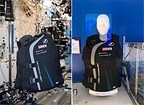
AstroRad Vest Worn by Astronauts Aboard International Space Station to Go on Display at Smithsonian National Air and Space Museum

Published

on

By

The historic exhibition follows landmark radiation protection findings from NASA’s Artemis I mission, whose AstroRad vest is separately displayed at Kennedy Space Center.

TAMPA, Fla., Oct. 30, 2026 /PRNewswire/ — StemRad, a developer of advanced radiation protection technology, shared that one of its AstroRad radiation protection vests, flown aboard the International Space Station (ISS) and worn by five space travelers, will go on display in the At Home in Space gallery at the Smithsonian’s National Air and Space Museum in Washington, D.C.

The vest was worn by four female American astronauts and an Israeli private astronaut during everyday activities aboard the ISS, including work and sleep. These in-orbit evaluations provided valuable experience with the practicality and comfort of wearable radiation protection during extended space missions.

The Smithsonian exhibition follows the recent publication of landmark scientific findings in Science Advances from NASA’s Artemis I mission. The research demonstrated AstroRad’s ability to dramatically reduce radiation exposure during potentially cancer-inducing solar radiation storms: for the August 1972 storm, which occurred between Apollo 16 and 17, a 60% reduction in dose was demonstrated (roughly 1,200 chest X-rays). This provided important evidence for protecting astronauts on future missions to the Moon and Mars.

The AstroRad vest that traveled around the Moon aboard Artemis I is separately on display at NASA’s Kennedy Space Center Visitor Complex in Florida. Together, the two exhibits trace AstroRad’s journey from operational evaluations aboard the ISS to radiation protection research beyond Earth’s magnetic field.

“Having AstroRad displayed at the Smithsonian is a tremendous honor and a proud milestone for our team,” said Dr. Oren Milstein, CEO and Co-Founder of StemRad. “Knowing that a technology we developed to help protect astronauts is now being recognized as part of the history of space exploration is incredibly rewarding. With AstroRad also on display at Kennedy Space Center following the groundbreaking Artemis I mission, we hope these exhibits will inspire future generations to tackle the challenges of human space exploration.”

“The AstroRad vest helps tell two stories in the new At Home in Space exhibit,” said Dr. Jennifer Levasseur, Museum Curator, and the lead curator for the gallery. “Importantly, the vest represents efforts to protect astronauts from the significant concern of increased radiation exposure on long duration spaceflights. It’s also an example of how technology demonstrations on the ISS will inform future human deep space exploration.” AstroRad was developed by StemRad in collaboration with Lockheed Martin to address one of the principal challenges of human space exploration: exposure to harmful ionizing radiation. The ISS operational evaluations, the Artemis I scientific results, and the Smithsonian and Kennedy Space Center exhibitions collectively highlight the growing role of wearable radiation protection in the future of human spaceflight.

About StemRad

StemRad is an American-Israeli company specializing in personal radiation protection technologies. Its solutions are designed to protect critical organs and tissues from harmful ionizing radiation while preserving mobility and operational effectiveness. StemRad develops radiation protection solutions for space exploration, emergency response, and defense applications.

Media Contact
StemRad
Tamar Cohen
+1-813-291-2303
425954@email4pr.com
www.stemrad.com

View original content to download multimedia:https://www.prnewswire.com/news-releases/astrorad-vest-worn-by-astronauts-aboard-international-space-station-to-go-on-display-at-smithsonian-national-air-and-space-museum-302925068.html

SOURCE StemRad

Continue Reading

Trending