Connect with us

Technology

Global Times: Exploring how coastal village achieves ‘zero-net carbon’ goal, sets example for building ‘Beautiful China’

Published

on

BEIJING, Aug. 19, 2024 /PRNewswire/ — Upon entering the island village of Xinjian in Zhoushan, an archipelago city in East China’s Zhejiang Province, the Global Times was welcomed by a picturesque rural scene of verdant mountains, babbling brooks, fluttering butterflies, and chirping birds, alongside impressive modern features such as photovoltaic panels adorning rooftops, electric sightseeing vehicles, and a state-of-the-art sewage recycling system.

Twenty years ago, this small village was unnoticed, impoverished, and isolated. The only link to the outside world was a rough, bumpy road. On rainy days, the road became so muddy that villagers hesitated to wear their new shoes. On sunny days, groups of villagers would trek up the mountain to chop down trees and haul them through the village via this road to sell to brick kiln operators to eke out a living. Due to poverty, most young adults left the village to find work elsewhere, leaving only a few senior citizens to tend to their old homes and the stream in front of their doors.

Was there a way out? What kind of life did the villagers want to live?

An innovative initiative dubbed the “Thousand Villages Demonstration and Ten Thousand Villages Renovation” project provided an answer. 

In June 2003, under the guidance of Xi Jinping, who once served as the provincial Party chief, Zhejiang launched the Green Rural Revival Program, which selects 10,000 administrative villages in the province for comprehensive improvement, and plans to turn 1,000 of them into demonstration villages of moderate prosperity in all respects. 

This project has created a large number of beautiful villages in Zhejiang, benefiting countless farmers and jumpstarting a new era of building a “Beautiful China.” 

Xinjian village is one such example.
A decade later, on May 25, 2015, Xi, general secretary of the Communist Party of China (CPC) Central Committee, visited Xinjian village for inspection, believing it to be a typical representative of a “beautiful economy” and a confirmation that “lucid waters and lush mountains are invaluable assets.” Xi emphasized, “It is scientific and sustainable development that we should strive toward.” 

Net-zero carbon, also known as carbon neutrality, refers to offsetting greenhouse gases such as carbon dioxide generated by human activities through energy conservation and emission reduction, industrial adjustment, afforestation, and other forms of environmental conservation, ultimately achieving the goal of “net-zero emissions.” 

During a recent field visit, the Global Times delved into the secrets behind the village’s success in its “net-zero carbon” goal and gained a deeper insight into how this island village is effectively implementing Xi’s concept that “A ‘Beautiful China’ is built upon beautiful villages. It is imperative that we steadfastly adhere to this path, ensuring that lucid waters and lush mountains yield continuous ecological, social, and economic benefits.”

Power station in the sky

Under the guidance of Lu Haifeng, deputy secretary of the Xinjian village Party branch, the Global Times visited the Nandong Homestay Area in the village and heard an interesting story. At the beginning of construction, the branches of a plum tree reach toward the windows on the second floor of building No.9. Due to lighting issues, this tree was supposed to be removed. However, it was already a century old, so local villagers decided not to remove it. The designers then changed their approach and doubled the size of the windows on the side of the room, preserving the existing tree while ensuring adequate lighting.

During the construction process, local materials were utilized with idle old wood mostly being used to reduce material transportation. The entire homestay building is fitted with double-layer insulated glass, with the summer air conditioning demand being 63 percent less than that of buildings fitted with single-layer glass. The homestay building also has an exhaust heat recovery unit, which can recover energy from the air being exhausted outside, minimizing the loss of cold or heat sources indoors in summer or winter.

It is estimated that compared with Shanghai, the homestay building in the village can save up to 15.7 percent more energy than the hotel with the lowest energy consumption in Shanghai, according to data provided by Ge Linlu, a staff member at the publicity office of Ganlan township, Dinghai district. 

After leaving the Nandong Homestay Area, Lu took the Global Times reporter to see the wind power energy storage project. Walking to the parking lot, Lu pointed to the gray solar panel on a farmhouse rooftop, saying that this is a special “power station in the sky” that provides shade while being environmentally friendly. 

“This is the wind power energy storage project that we have started building since the development of clean energy,” Lu told the Global Times. “The solar and wind energy resources in Dinghai district (which administers Xinjian village) are abundant, and by combining wind power equipment on mountain tops with installing photovoltaic equipment on the roofs of farmhouses, we can provide clean energy for the village’s landscape facilities, electric vehicles, and more.”

The photovoltaic rooftop panels also utilize roof space without taking up land resources, Lu added. 

Among the completed projects, the average annual power generation of photovoltaic modules can reach 21,000 kW per hour, and annual carbon emissions can be reduced by about 12.14 tons. 

At present, the village is working with an expert team from Tongji University in Shanghai to plan the construction of new energy projects in the Nandong reservoir, train station square, and other points, and realize the functions of heat insulation, lighting, and power generation through the introduction of green technology such as photovoltaic tiles, she said.

Disappeared foul-smelling ditch

Passing through the Nandong Daxi pit in the village, a bay of clear water flows gently. 

“In order to prevent sewage from affecting the environment and promote water recycling, we dispose of domestic sewage and septic tank water centrally every day. After more than 10 treatment processes, the sewage is then used for irrigation,” Lu said. “In this way, the once foul-smelling sewage ditch has disappeared, and a lot of water has been saved.” 

Not far away, the Global Times noticed that the water in the pit comes from the upstream reservoir. The water flows down in a step-like manner along the terrain, passing through ecological swimming pools, ponds, pits, and households, and is finally purified through the sewage treatment plant before being used for irrigation. 

“Our sewage treatment plant can process 10 tons of sewage per hour, and operates 24 hours a day during peak season,” said Lu. Along with  Lu’s introduction, the Global Times saw the water that had undergone multiple treatment processes flowing clearly from the outlet.

With the rolling out of the “Thousand Villages Demonstration and Ten Thousand Villages Renovation” project, villagers and tourists have gradually developed green living habits, and enhanced their environmental awareness. 

Local villagers told the Global Times that they spontaneously participate in cleaning up garbage, dismantling pig farms, relocating outdoor manure pits, among other environmental improvements and infrastructure construction. “It’s like participating in an ‘ecological revolution’ to protect the environment and change the appearance of the village.”

“This is a natural oxygen bar, a ‘beautiful economy,’ confirming that ‘lucid waters and lush mountains are invaluable assets.’ We always keep Xi’s words in mind,” said Lu. 

This is not an empty phrase.
On the embankment of the Nandong Reservoir, the Chinese characters “lucid waters and lush mountains are invaluable assets” shine brightly in the sunlight, and on the walls of villagers’ houses, Xi’s quotes left during his inspection of the village can be seen everywhere.

Compared with the mainland area, the islands are relatively short of fresh water, energy, food, and other resources, and the economic and social development mainly depends on supplies from the mainland, so they are more vulnerable to the impact of climate change on water supply security, food security, tourism, local economies, and human health. 

In 2019, Xinjian village was selected as the UN-Habitat “Net-Zero Carbon” rural planning case in China. At the forefront of addressing climate change, the exploration and practice of Xinjian village in achieving its net-zero carbon goal provide valuable experience for rural low-carbon development in other small islands and coastal areas.

View original content:https://www.prnewswire.com/news-releases/global-times-exploring-how-coastal-village-achieves-zero-net-carbon-goal-sets-example-for-building-beautiful-china-302225119.html

SOURCE Global Times

Continue Reading
Click to comment

Leave a Reply

Your email address will not be published. Required fields are marked *

Technology

As ADA Anniversary Approaches, University of Phoenix Survey Highlights AI’s Potential to Advance Accessibility in Work and Learning

Published

on

By

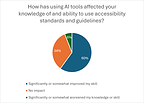
Survey conducted by The Harris Poll on behalf of University of Phoenix finds among those already using AI in the workplace, 60% say AI has improved their knowledge of and ability to use accessibility standards and guidelines.

PHOENIX, July 24, 2026 /PRNewswire/ — As artificial intelligence becomes part of how people work, learn and solve problems, a new University of Phoenix survey conducted by The Harris Poll finds that recent working learners see meaningful opportunities for AI to support accessibility. The survey was designed to understand the impact of AI in the workplace and learning environments on accessibility, defined as ensuring digital content, tools and resources, including AI tools and output, are usable by people with different abilities through inclusive design, use of assistive technology or conformance with accessibility standards, such as the Web Content Accessibility Guidelines (WCAG). The findings are being released ahead of the 36th anniversary of the Americans with Disabilities Act (ADA) on July 26.

The survey, conducted among 1,019 U.S. employed adults who completed a professionally presented training or school course in the past 12 months (“recent working learners”), found that, among workers already using AI in the workplace, 3 in 5 (60%) say AI has improved their knowledge of and ability to use accessibility standards and guidelines, including nearly 1 in 5 (19%) who report significant improvement. 

While the findings point to optimism about AI’s accessibility potential, they also reveal an opportunity for clearer organizational guidance: 45% of respondents say accessibility is absent from, unclear in, or they are uncertain whether it is covered by their workplace AI policies.

“The reality is that accessibility benefits everyone,” shares Kelly Hermann, Vice President of Accessibility and Student Affairs at University of Phoenix. “If accessibility is built in from the beginning, organizations are more likely to create AI-enabled environments that are universally usable. Clearer content, better summaries, accurate captions, and multiple formats can help workers and learners with disabilities, but they also help busy adults, multilingual learners, mobile users, and anyone trying to absorb information quickly.”

Key findings from the survey include:

Workers see AI’s accessibility potential: 89% of recent working learners identify workflows that could benefit from AI and accessibility tools, especially creating accessible documents, presentations, websites or learning materials (38%), presenting information in different formats such as plain language, audio, summaries or translations (33%), and training employees or learners on accessibility practices (30%).AI may help build accessibility awareness: Among those already using AI in the workplace, 60% say AI has improved their knowledge of and ability to use accessibility standards and guidelines.Accessibility is not always clear in workplace AI policies: 45% of recent working learners say accessibility is absent from, unclear in, or they are uncertain whether it is covered by their workplace AI policies.AI tools may not yet fully support different access needs: Among those who use workplace AI tools, only about a quarter of survey respondents (27%) say AI tools available through their workplace or professional learning environment support people with disabilities very well.Human oversight remains important: 36% of recent working learners say human review for important decisions or high-impact work should be part of responsible AI use at work or school.Workers also recognize how AI and accessibility can have an impact on their own career journey: 90% of recent working learners identify AI and accessibility skills that would be valuable in their current or desired career field, including 45% who see value in understanding when AI-generated content needs human review.

Why accessibility is essential to responsible AI adoption

As AI tools are used to draft documents, summarize information, generate captions and transcripts, create image descriptions, support learning and assist with workplace tasks, accessibility becomes central to responsible use. Poorly implemented AI can also create or amplify barriers, including inaccessible content, inaccurate summaries, biased outputs and tools that do not work effectively with assistive technologies.

“Responsible AI is not only about productivity,” Hermann said. “It is about whether the technology works for the people who need to use it. AI can help create more accessible materials and more flexible ways to engage with information, but it still requires clear policies, practical training and human judgment to make sure the outputs are accurate, applicable and usable.”

What the findings mean for employers and educators

The survey suggests that organizations have an opportunity to align AI adoption with supportive design, accessibility practices and workforce training. Employers and educators can take immediate steps by:

Naming accessibility directly in AI policies and guidance.Choosing AI tools with accessibility and assistive technology compatibility in mind.Training workers and learners to create, check and improve accessible AI-generated content.Making support pathways clear for people who experience barriers using AI tools.Keeping human review in place for important decisions, high-impact work and accessibility-sensitive outputs.

The survey also found workers want practical AI training. The most helpful resources identified by recent working learners include real-world examples from their field or industry (36%), hands-on practice using realistic workplace scenarios (34%) and step-by-step demonstrations of common tasks (33%).

Accessibility insights from University of Phoenix

Hermann shared the survey findings ahead of the ADA anniversary in recent media interviews. Hermann oversees the University’s accessibility initiative, including evaluation and remediation of curricular resources, the Center for Access, Resources, Engagement and Support Services (CARES), and the Office of Collaborative Learning and Educational Engagement. Her work focuses on fostering accessible and welcoming educational environments for students, faculty and staff.

Hermann’s office at University of Phoenix also convenes accessibility conversations through initiatives such as Access Amplified™, a free, annual virtual event focused on advancing digital accessibility in web development. The event brings together engineers, developers, designers, content authors and digital strategists for practical strategies and human-centered conversations that address the gap between coding practices and how users with assistive technology experience the web.

About the survey

The survey was conducted online within the United States by The Harris Poll on behalf of University of Phoenix from June 22–29, 2026, among 1,019 employed adults ages 18 and older who have taken a professionally presented training or a school course in the past 12 months, referred to as “recent working learners.” Data were weighted where necessary by age, gender, race/ethnicity, region, education, employment, marital status, household size, household income and smoking status to bring them in line with their actual proportions in the population.

Respondents for this survey were selected from among those who have agreed to participate in surveys. The sampling precision of Harris online polls is measured by using a Bayesian credible interval. For this study, the sample data is accurate to within +/- 3.8 percentage points using a 95% confidence level. This credible interval will be wider among subsets of the surveyed population of interest.

Review the complete survey at phoenix.edu/aiaccessibility.

About University of Phoenix

University of Phoenix is Built for Real Life. 50 Years Strong. The University innovates to help working adults enhance their careers and develop skills in a rapidly changing world through flexible online learning, relevant courses, academic AI pillars, and skills-mapped curriculum for associate, bachelor’s and master’s degree programs. Active students and alumni have access to Career Services for Life® resources including career guidance and tools. For more information, visit phoenix.edu. 

View original content to download multimedia:https://www.prnewswire.com/news-releases/as-ada-anniversary-approaches-university-of-phoenix-survey-highlights-ais-potential-to-advance-accessibility-in-work-and-learning-302834448.html

SOURCE University of Phoenix

Continue Reading

Technology

Mastech Digital to Announce Second Quarter 2026 Financial Results; Participate in Upcoming Investor Conference

Published

on

By

PITTSBURGH, July 24, 2026 /PRNewswire/ — Mastech Digital, Inc. (NYSE American: MHH) (“Mastech Digital”), a leading provider of Digital Transformation IT Services, today announced the date for the release of its financial results for the second quarter ended June 30, 2026, and its participation in an upcoming investor conference.

Second Quarter 2026 Earnings:

Mastech Digital will report its financial results for the second quarter 2026 before the market opens on Thursday, August 6, 2026. Management will host a live conference call and webcast at 9:00 a.m. Eastern Time on that day to discuss the Company’s financial performance and operating results.  The conference call will be hosted by Nirav Patel, President and CEO, and Kannan Sugantharaman, Chief Financial and Operations Officer.

Those wishing to participate via webcast should access the call through Mastech Digital’s Investor Relations website at https://investors.mastechdigital.com. Those wishing to participate via telephone may dial in at 1-800-715-9871 (USA) or 1-646-307-1963 (International) with the passcode 7506988. The replay will be available via webcast through Mastech Digital’s Investor Relations website.

Upcoming Investor Conference:

Mr. Sugantharaman will host a fireside chat at the Sidoti Micro-Cap Investor Conference on Wednesday, August 19, 2026, at 9:15 a.m. Eastern Time.

Mastech Digital management is scheduled to host virtual one-on-one and small group meetings with investors during the conference on August 19-20, 2026. Investors interested in arranging a meeting should contact their Sidoti representative or reach out to the Mastech Digital investor relations team at investors@mastechdigital.com.

About Mastech Digital, Inc.

Mastech Digital (NYSE American: MHH) is a leading provider of Digital Transformation IT Services. The Company offers Data Management, Analytics & AI Solutions, and IT Staffing Services with a digital-first approach. A minority-owned enterprise, Mastech Digital is headquartered in Pittsburgh, PA, with offices across the U.S., Canada, Europe, and India. Visit us at www.mastechdigital.com.

Investor Relations Contact:
investors@mastechdigital.com 


View original content to download multimedia:https://www.prnewswire.com/news-releases/mastech-digital-to-announce-second-quarter-2026-financial-results-participate-in-upcoming-investor-conference-302834421.html

SOURCE Mastech Digital, Inc.

Continue Reading

Technology

SOLAI Limited Announces Extraordinary General Meeting

Published

on

By

AKRON, Ohio, July 24, 2026 /PRNewswire/ — SOLAI Limited (NYSE: SLAI) (“SOLAI” or the “Company”) (previously known as “BIT Mining Limited”), a technology-driven personal AI and digital infrastructure provider, today announced that it will hold its extraordinary general meeting of shareholders at 428 South Seiberling Street, Akron, Ohio, US on August 14, 2026 at 10:00 a.m., New York time.

Holders of record of ordinary shares and preference shares of the Company at the close of business on July 20, 2026, New York time (the “Record Date”) are entitled to receive notice of, and to attend and vote at, the extraordinary general meeting or any adjournment thereof. Holders of the Company’s American Depositary Shares (“ADSs”) who wish to exercise their voting rights for the underlying ordinary shares must act through the depositary of the Company’s ADS program, Deutsche Bank Trust Company Americas.

The notice of the extraordinary general meeting, which sets forth the resolutions to be submitted to shareholder approval at the extraordinary general meeting is available on the Investor Relations section of the Company’s website at https://ir.solai.com

About SOLAI Limited

SOLAI Limited (previously known as “BIT Mining Limited”) (NYSE: SLAI) (previously traded under “BTCM”) is a technology-driven personal AI and digital infrastructure provider. Building upon its historical legacy in digital asset mining and blockchain network operations, the Company is leveraging extensive experience in large-scale hardware deployment, data center operations, and high-performance computing to build the foundational infrastructure for personal AI computing and digital asset ecosystems globally.

For more information:

SOLAI Limited
ir@solai.com
ir.solai.com
www.solai.com 

Christensen Advisory
Jason Ng
Tel: +852-2117-0861
Email: solai@christensencomms.com 


View original content:https://www.prnewswire.com/news-releases/solai-limited-announces-extraordinary-general-meeting-302834034.html

SOURCE SOLAI Limited

Continue Reading

Trending