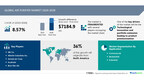
NEW YORK, Aug. 27, 2024 /PRNewswire/ — Report on how AI is redefining market landscape- The global air purifier market size is estimated to grow by USD 7.18 billion from 2024-2028, according to Technavio. The market is estimated to grow at a CAGR of 8.57% during the forecast period. Technological innovation and portfolio extension leading to product premiumization is driving market growth, with a trend towards introduction of smart, connected air purifiers. However, presence of counterfeit products poses a challenge. Key market players include 3M Co., AllerAir Industries Inc., Americair Corp., AustinAir, Blue Star Ltd., Breville Group Ltd., Camfil AB, Daikin Industries Ltd., Dyson Group Co., Eureka Forbes Ltd., Hamilton Beach Brands Holding Co., Havells India Ltd., Honeywell International Inc., IQAir AG, Koninklijke Philips N.V., LG Electronics Inc., MIDEA Group Co. Ltd., Panasonic Holdings Corp., Samsung Electronics Co. Ltd., and Whirlpool Corp..
Get a detailed analysis on regions, market segments, customer landscape, and companies- View the snapshot of this report
Air Purifier Market Scope
Report Coverage
Details
Base year
2023
Historic period
2018 – 2022
Forecast period
2024-2028
Growth momentum & CAGR
Accelerate at a CAGR of 8.57%
Market growth 2024-2028
USD 7184.9 million
Market structure
Fragmented
YoY growth 2022-2023 (%)
7.32
Regional analysis
APAC, North America, Europe, South America, and Middle East and Africa
Performing market contribution
North America at 36%
Key countries
US, China, Japan, Germany, and Canada
Key companies profiled
3M Co., AllerAir Industries Inc., Americair Corp., AustinAir, Blue Star Ltd., Breville Group Ltd., Camfil AB, Daikin Industries Ltd., Dyson Group Co., Eureka Forbes Ltd., Hamilton Beach Brands Holding Co., Havells India Ltd., Honeywell International Inc., IQAir AG, Koninklijke Philips N.V., LG Electronics Inc., MIDEA Group Co. Ltd., Panasonic Holdings Corp., Samsung Electronics Co. Ltd., and Whirlpool Corp.
Market Driver
The air purifier market is witnessing significant growth due to increasing demand for advanced and innovative air purifying solutions. Vendors are capitalizing on this trend by introducing smart air purifiers, which offer user-friendly features, energy savings, and enhanced safety. These appliances come with Energy Star certification for energy efficiency, hassle-free maintenance, alert systems, and remote control functionality. Smart air purifiers, such as Honeywell’s Air Touch X3 Office Air Purifier, are Wi-Fi enabled and allow users to control the device and monitor air quality remotely. With features like adjustable backlight and easy-to-use controls, these appliances offer a convenient and effective solution for maintaining clean and healthy indoor air. The market for smart air purifiers is expected to grow steadily during the forecast period, as more consumers seek out these advanced and convenient solutions for improving indoor air quality.
The air purifier market is experiencing significant growth due to increasing health awareness and rising pollution levels in metropolises. Pleated filters, effective against harmful pollutants and airborne germs including viruses and bacteria, are trending. Healthcare facilities and life sciences applications prioritize air filtration protection. Nirvana, Levoit, and Blueair lead the residential market with their robust designs and noise-efficient models. Commercial use sees Blueair’s Blue Pure Max as a top choice. Nylon core filters offer high virus removal capacity. Noise, product safety, and smart home technologies are key considerations. Airborne diseases, pollution levels, and the Clean Air Act drive demand. Workplaces seek substitutes for traditional air filters with HEPA filters using submicron glass fibers capturing particles as small as 0.3 microns. Outdoor air pollution and developing regions are new markets.
Explore a 360° Analysis of the Market: Unveil the Impact of AI. For complete insights- Request Sample!
Market Challenges
The air purifier market is experiencing significant growth and increasing demand, attracting both legitimate and counterfeit product manufacturers. Counterfeit air purifiers, made with low-quality materials and less durability, pose a challenge to market vendors. E-commerce platforms facilitate the distribution and sales of these counterfeit products, making it difficult for customers to distinguish them from genuine ones. Counterfeit products’ relatively low price is a major factor contributing to their demand, negatively impacting vendors’ sales and pricing strategies. To retain customers and protect brand reputation, vendors invest in advertising and promotional campaigns, which can be costly and reduce profit margins. The availability of counterfeit products also affects volume sales, potentially leading to inventory backlogs for international vendors. Counterfeit manufacturers save on production and transportation costs by operating in regional or local markets, making their products less expensive than genuine ones. Established global vendors aim to penetrate developing markets, such as India and China, where counterfeit products are prevalent. The presence of counterfeit products is expected to limit the growth of the global air purifier market during the forecast period. Vendors must focus on educating consumers about the risks and consequences of purchasing counterfeit products while maintaining competitive pricing and product quality.The Air Purifier Market faces challenges in ensuring performance efficacy against various pollutants like smoke, dust, bio-contaminants, pollen, and urban pollutants. Environmental impact is a concern due to the use of activated carbon and charcoal filters, which may release gases and odors. Ionic filters, UV LED, and ionizers raise questions regarding their ability to effectively address all types of pollutants, including airborne viruses. Industrial activities, air pollution, and vehicular emissions contribute significantly to urban air pollution, necessitating air purification solutions. Asthma, allergies, and airborne infections are common health concerns linked to indoor air quality. Differentiating air purifiers based on unique features such as smart technology, coverage area, and air quality sensors is crucial. Misconceptions surrounding air purifiers as luxury items hinder market growth. Mechanical air filters, extended-surface filters, and filters for specific pollutants like mold spores, animal dander, dust mite, and cockroach allergens are essential offerings.
For more insights on driver and challenges – Request a sample report!
Segment Overview
This air purifier market report extensively covers market segmentation by
Application 1.1 Commercial1.2 Residential1.3 IndustrialTechnology 2.1 HEPA2.2 Electrostatic precipitators2.3 Ionizers and ozone generators2.4 OthersGeography 3.1 APAC3.2 North America3.3 Europe3.4 South America3.5 Middle East and Africa
1.1 Commercial- The commercial segment dominates the global air purifier market, accounting for the largest share in 2023. Air purifiers are extensively used in various commercial spaces, including schools, malls, offices, hospitals, hotels, theaters, and other establishments. These purifiers, particularly those with activated carbon and HEPA filters, effectively eliminate harmful particles, smoke, and odors, enhancing indoor air quality. In healthcare facilities, air purifiers play a crucial role by eradicating odor-carrying pathogens and allergens, ensuring a clean and healthy environment for staff and patients. The increasing urbanization in developing countries, such as India, fuels the demand for air purifiers. The benefits of air purifiers, such as improved air quality and healthier indoor environments, are driving their adoption in commercial spaces, thereby propelling the growth of the global air purifier market.
For more information on market segmentation with geographical analysis including forecast (2024-2028) and historic data (2017-2021) – Download a Sample Report
Research Analysis
The Air Purifier market has witnessed significant growth due to rising concerns over airborne diseases, increasing pollution levels, and growing health awareness. With the standard of living improving in developing regions, the demand for air purification solutions has surged. Outdoor air pollution, caused by industrial activities, vehicular emissions, and urban air pollution, poses a major health risk. Air purifiers have become essential in mitigating the effects of air pollution, especially in areas with high levels of particles, such as submicron glass fibers, mold spores, animal dander, dust mite, cockroach allergens, and respirable particles. Mechanical air filters, including HEPA filters and pleated filters, effectively trap these pollutants, providing relief from asthma, allergies, airborne infections, and other health issues caused by viruses and bacteria.
Market Research Overview
The air purifier market is witnessing significant growth due to rising concerns over airborne diseases, increasing pollution levels, and growing health awareness. With the standard of living improving in developing regions, there is a heightened focus on indoor air quality. HEPA filters, submicron glass fibers, and other advanced technologies are being used to remove particles, smoke, dust, bio-contaminants, pollen, and gases from the air. Outdoor air pollution, industrial activities, vehicular emissions, and urban air pollution are major contributors to poor air quality. Air filters, including mechanical filters, activated carbon, charcoal, ionizers, UV LED, and HEPA filters, are popular air purification solutions. Smart home technologies, such as air quality sensors and smart air purifiers, are gaining popularity for their performance efficacy and product safety. However, there are misconceptions about the environmental impact of air purifiers and the availability of product substitutes. It is essential to consider the unique features of each air purifier, such as coverage area, noise level, and performance efficacy, when making a purchase. Airborne diseases, including asthma, allergies, and airborne infections, are a significant concern, especially in healthcare facilities and life sciences applications. Air purifiers offer air filtration protection against harmful pollutants, airborne germs, and other urban pollutants. Air purifiers are no longer considered luxury items but are becoming essential for both residential and commercial use. Companies are differentiating themselves by offering unique features, such as extended-surface filters, pleated filters, and virus removal capacity. Brands like Nirvana, Levoit, and Blueair are leading the market with their robust designs and innovative technologies. The Clean Air Act and pollution campaigns have led to stricter regulations on emissions, making it crucial for air purifier manufacturers to prioritize product safety and environmental impact. With the increasing focus on indoor air quality, the air purifier market is expected to continue its growth trajectory.
Table of Contents:
1 Executive Summary
2 Market Landscape
3 Market Sizing
4 Historic Market Size
5 Five Forces Analysis
6 Market Segmentation
ApplicationCommercialResidentialIndustrialTechnologyHEPAElectrostatic PrecipitatorsIonizers And Ozone GeneratorsOthersGeographyAPACNorth AmericaEuropeSouth AmericaMiddle East And Africa
7 Customer Landscape
8 Geographic Landscape
9 Drivers, Challenges, and Trends
10 Company Landscape
11 Company Analysis
12 Appendix
About Technavio
Technavio is a leading global technology research and advisory company. Their research and analysis focuses on emerging market trends and provides actionable insights to help businesses identify market opportunities and develop effective strategies to optimize their market positions.
With over 500 specialized analysts, Technavio’s report library consists of more than 17,000 reports and counting, covering 800 technologies, spanning across 50 countries. Their client base consists of enterprises of all sizes, including more than 100 Fortune 500 companies. This growing client base relies on Technavio’s comprehensive coverage, extensive research, and actionable market insights to identify opportunities in existing and potential markets and assess their competitive positions within changing market scenarios.
Contacts
Technavio Research
Jesse Maida
Media & Marketing Executive
US: +1 844 364 1100
UK: +44 203 893 3200
Email: media@technavio.com
Website: www.technavio.com/
View original content to download multimedia:https://www.prnewswire.com/news-releases/the-air-purifier-market-is-projected-to-grow-by-usd-7-18-billion-from-2024-2028–driven-by-technological-innovation-and-portfolio-expansion-leading-to-product-premiumization-including-ai-impacttechnavio-report-302231723.html
SOURCE Technavio









 Technology5 days ago
 Technology5 days ago
 Technology5 days ago
 Coin Market4 days ago

 Technology5 days ago
 Technology5 days ago
 Technology5 days ago