Technology
Digital Asset Management Market to Grow by USD 20.85 Billion from 2024-2028, SaaS Shift Fuels Growth, Report Highlights AI-Driven Market Transformation – Technavio
Published
2 years agoon
By
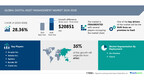
NEW YORK, Aug. 28, 2024 /PRNewswire/ — Report with the AI impact on market trends- The global digital asset management market size is estimated to grow by USD 20.85 billion from 2024-2028, according to Technavio. The market is estimated to grow at a CAGR of about 28.36% during the forecast period. Shift from on premises to saas is driving market growth, with a trend towards increased adoption of analytics to manage digital assets. However, data privacy and security concerns poses a challenge. Key market players include Acquia Inc., Adobe Inc., Aprimo, Bynder BV, Canto Inc., CELUM GmbH, Cloudinary Ltd., Cognizant Technology Solutions Corp., Danaher Corp., Frontify AG, Image Relay Inc., International Business Machines Corp., MediaValet Inc., OpenText Corp., Oracle Corp., PhotoShelter Inc., QBNK Co. AB, Smartsheet Inc., TIBCO Software Inc., and WoodWing Software B.V..
Get a detailed analysis on regions, market segments, customer landscape, and companies- View the snapshot of this report
Digital Asset Management Market Scope
Report Coverage
Details
Base year
2023
Historic period
2018 – 2022
Forecast period
2024-2028
Growth momentum & CAGR
Accelerate at a CAGR of 28.36%
Market growth 2024-2028
USD 20851 million
Market structure
Fragmented
YoY growth 2022-2023 (%)
22.16
Regional analysis
North America, Europe, APAC, South America, and Middle East and Africa
Performing market contribution
APAC at 35%
Key countries
US, UK, Germany, China, and Japan
Key companies profiled
Acquia Inc., Adobe Inc., Aprimo, Bynder BV, Canto Inc., CELUM GmbH, Cloudinary Ltd., Cognizant Technology Solutions Corp., Danaher Corp., Frontify AG, Image Relay Inc., International Business Machines Corp., MediaValet Inc., OpenText Corp., Oracle Corp., PhotoShelter Inc., QBNK Co. AB, Smartsheet Inc., TIBCO Software Inc., and WoodWing Software B.V.
Market Driver
Digital Asset Management (DAM) solutions employ analytical tools to help businesses manage their digital content effectively. These tools analyze data from various sources, including mobile applications and smart devices, to provide insights for key decision-making processes. Content analytics is a crucial aspect of these solutions, transforming unstructured data into structured formats for efficient management. Adobe Experience Manager, a DAM product by Adobe Systems, offers analytics capabilities to gain insights from digital assets and create better marketing campaigns. The integration of predictive analytical solutions into DAM systems is a recent development, expected to drive market growth.
Digital Asset Management (DAM) market is witnessing exciting trends with the emergence of advanced technologies. Capabilities of DAM software are evolving, enabling better organization and management of multimedia assets for businesses. Consumers’ behavior shift towards digital consumption is driving the demand for DAM solutions in various industries, including healthcare, ecommerce and retail, travel and hospitality, and more. Enterprise-level teams require scalable storage and improved collaboration features. Emerging technologies like AI and machine learning offer smart search and discovery capabilities. Deployment models cater to small and mid-sized businesses with lower upfront costs, while large enterprises opt for high pricing and lifetime licenses. DAM software streamlines document presentations and content location in a centralized hub, managing the content lifecycle effectively. User-friendly DAM solutions facilitate initial implementation for departments undergoing digitalization. With the rise of smartphones, DAM becomes essential for businesses to manage their digital assets efficiently.
Explore a 360° Analysis of the Market: Unveil the Impact of AI. For complete insights- Request Sample!
Market Challenges
Cloud-based Digital Asset Management (DAM) market growth may be hindered by security concerns, particularly in the adoption of public cloud services. Cloud infrastructure’s open architecture and shared resources make it vulnerable to cyber-attacks. Data privacy is a significant issue due to the risk of unauthorized access and potential data breaches. Cloud systems, built on numerous open-source codes, can introduce flaws and increase the likelihood of security vulnerabilities. Public clouds, which host multiple applications, are more susceptible to security breaches due to their multi-tenant nature. Vendors must prioritize data encryption and multi-factor authentication to secure client data and authorize users. Compliance with regulatory guidelines is also essential for cloud security management. These factors pose challenges to the growth of the Digital Asset Management market during the forecast period.Digital Asset Management (DAM) market is witnessing significant growth as businesses seek to manage, organize, retrieve, and distribute their media assets and documents more efficiently. Companies like Temasek Holdings and Komainu Holdings are investing in DAM solutions to streamline their media production and optimize rich media consumption. Centralized DAM systems offer functionality to manage various media files, animations, graphics, and marketing materials in a unified manner. AI-embedded DAM solutions use machine learning, natural language processing, and computer vision to intelligently tag and cross-reference assets, making it easier to find and use them. With work-from-home policies becoming the norm, cloud-based DAM solutions are increasingly popular. DAM systems help businesses optimize their digital marketing, social media campaigns, advertising, and brand management by providing real-time analysis and making helpful recommendations. AI-powered DAM solutions offer a competitive advantage by forecasting content needs and making intelligent recommendations. Chatbots further enhance user experience by providing quick access to assets and automating routine tasks. Online video streaming, audio consumption, and social media are driving the demand for DAM solutions in various industries.
For more insights on driver and challenges – Request a sample report!
This digital asset management market report extensively covers market segmentation by
Deployment 1.1 On-Premise1.2 CloudEnd-user 2.1 Large enterprise2.2 Small and medium enterpriseGeography 3.1 North America3.2 Europe3.3 APAC3.4 South America3.5 Middle East and Africa
1.1 On-Premise- In an on-premises Digital Asset Management (DAM) deployment model, businesses purchase and install the software on their servers, managed by their IT teams. The high cost of implementation and limited scalability options make this solution suitable for large, complex marketing functions. Key features include workflow streamlining, budgeting, DAM, and reporting. This robust software aligns marketing objectives and execution across multiple business units, functions, or product lines. The primary advantage is the control businesses have over their critical data. These factors contribute to the growth of the global DAM market during the forecast period.
For more information on market segmentation with geographical analysis including forecast (2024-2028) and historic data (2017-2021) – Download a Sample Report
Research Analysis
The Digital Asset Management (DAM) market is a dynamic and growing industry that helps businesses manage their digital content more effectively. A DAM system functions as a centralized content hub, allowing organizations to locate, manage, and distribute digital assets throughout their business operations. This includes product images, videos, marketing campaigns, and print materials, among others. As businesses continue to digitalize, the need for efficient DAM solutions becomes increasingly important for medium and small businesses, retailers, and departments alike. With the rise of smart phones and online orders, the fulfilment process and stock replenishment have become critical areas where DAM software can help reduce inventory shrinkage and margin compression. A well-organized digital library also enhances the instore experience by ensuring that product information is accurate and up-to-date. Moreover, DAM software can help eliminate redundant content and streamline the content lifecycle, making it an essential tool for businesses looking to optimize their operations and boost profit margins. By providing a single source of truth for all digital assets, DAM software enables businesses to effectively manage their product library and marketing campaigns, ultimately improving overall business performance.
Market Research Overview
Digital Asset Management (DAM) refers to the practice of centralizing, organizing, sharing, and collaborating on digital content within businesses. This includes images, videos, audio files, and other digital assets. DAM software enables user-friendly management of these assets throughout their lifecycle, from initial implementation to retirement. Small and medium businesses, as well as departments within larger enterprises, are increasingly adopting DAM solutions to streamline digitalization. Smart phones and digitalization have made it essential for businesses to manage their digital content effectively. DAM solutions offer advanced features such as AI algorithms for asset discovery, custom fields, and metadata management. These tools help businesses efficiently locate and access their digital assets, reducing redundancy and improving profit margins. DAM systems cater to various industries, including retail, where they help manage product images, videos, and marketing campaigns. Retailers can benefit from DAM by reducing inventory shrinkage and margin compression, improving the instore experience, and facilitating online orders and stock replenishment. DAM also supports the fulfillment process by providing a digital asset library for product images, videos, and other marketing materials. Enterprise-level DAM solutions offer advanced features for managing large volumes of digital content, including project folders, project stakeholders, and support services. These systems can integrate with other enterprise software, such as Adobe Experience Manager, and offer advanced filters, embedded fields, and digital rights management. DAM solutions can be non-hosted, allowing businesses to manage their content on their own servers, or hosted by the software provider. Some popular DAM solutions include Day Dream, Tezign, and Harvard’s DAM system. These solutions cater to various industries and business sizes, offering customizable features to meet specific requirements. In conclusion, DAM software is an essential tool for businesses looking to manage their digital content effectively. It enables efficient organization, sharing, and collaboration, while reducing redundancy and improving profit margins. With advanced features and integrations, DAM solutions cater to various industries and business sizes, making digital transformation a reality.
Table of Contents:
1 Executive Summary
2 Market Landscape
3 Market Sizing
4 Historic Market Size
5 Five Forces Analysis
6 Market Segmentation
DeploymentOn-PremiseCloudEnd-userLarge EnterpriseSmall And Medium EnterpriseGeographyNorth AmericaEuropeAPACSouth AmericaMiddle East And Africa
7 Customer Landscape
8 Geographic Landscape
9 Drivers, Challenges, and Trends
10 Company Landscape
11 Company Analysis
12 Appendix
About Technavio
Technavio is a leading global technology research and advisory company. Their research and analysis focuses on emerging market trends and provides actionable insights to help businesses identify market opportunities and develop effective strategies to optimize their market positions.
With over 500 specialized analysts, Technavio’s report library consists of more than 17,000 reports and counting, covering 800 technologies, spanning across 50 countries. Their client base consists of enterprises of all sizes, including more than 100 Fortune 500 companies. This growing client base relies on Technavio’s comprehensive coverage, extensive research, and actionable market insights to identify opportunities in existing and potential markets and assess their competitive positions within changing market scenarios.
Contacts
Technavio Research
Jesse Maida
Media & Marketing Executive
US: +1 844 364 1100
UK: +44 203 893 3200
Email: media@technavio.com
Website: www.technavio.com/
View original content to download multimedia:https://www.prnewswire.com/news-releases/digital-asset-management-market-to-grow-by-usd-20-85-billion-from-2024-2028–saas-shift-fuels-growth-report-highlights-ai-driven-market-transformation—technavio-302232696.html
SOURCE Technavio
You may like
Technology
Harlem Children’s Zone Acquires FinTech Platform, Goalsetter, to Accelerate Universal Economic Mobility
Published
41 minutes agoon
October 22, 2026By
Acquisition combines HCZ’s proven model with Goalsetter’s innovative financial education technology to expand access and impact at scale
NEW YORK, Oct. 22, 2026 /PRNewswire/ — Today, Harlem Children’s Zone (HCZ), one of the nation’s leading anti-poverty organizations, announced the acquisition of Goalsetter, a financial technology platform that delivers best-in-class, engaging, technology-enabled learning experiences for people seeking to enhance their financial know-how, capabilities, and confidence.
The acquisition marks a significant step in HCZ’s Wealth Builds–Universal Economic Mobility (WB-UEM) strategy, a national framework designed to help children and families build long-term economic security through cradle-to-career supports, financial education and experiences, and direct access to capital via a Child Capital Stack of asset boosts.
“We know that economic mobility is a two-generation challenge,” says Harlem Children’s Zone CEO Kwame Owusu-Kesse. “With this acquisition, we are solving for a critical component of Universal Economic Mobility by melding a proven financial education platform and HCZ’s decades of experience providing people with the knowledge and tools to build strong futures for themselves and their families. This is more than an investment in financial education. It is an investment in critical national infrastructure for economic mobility.”
Harlem Children’s Zone has decades of experience driving outcomes at scale, beginning as a one-block pilot, expanding to over 100 blocks in Central Harlem, and now working with over 70 communities across the United States. HCZ seeks to use its learnings, decades of experience driving outcomes at scale, and renowned best practices to provide pathways to economic mobility for all of America’s children and families.
“Goalsetter was built on the belief that everyone should have access to the financial knowledge and tools that can shape their future and livelihood,” said Tanya Van Court, Chief FinTech Officer at Harlem Children’s Zone and Founder of Goalsetter. “Joining Harlem Children’s Zone gives us an extraordinary opportunity to build on that work. Together, we can continue enhancing the platform, expand access for learners of all ages and walks of life, and demonstrate what is possible when mission, innovation, and technology come together to serve the most people.”
Goalsetter creates opportunities to deliver high-quality, developmentally appropriate and culturally relevant financial education with extensive reach, including to low-income and rural communities that have historically had limited access to these resources. Its current offerings include Goalsetter Classroom, which provides standards-aligned financial education curriculum for middle and high school students, and MoneyLingo, a mobile-first financial education experience for college-aged students and adults in the workforce, covering practical topics such as saving, investing, credit, debt, and financial decision-making.
“This acquisition sends an important signal to the field,” said Owusu-Kesse. “Social impact organizations should not have to choose between mission and scale. By bringing a proven technology platform into HCZ, we’re demonstrating how non-profit organizations can be centers of business excellence, using vehicles of innovation, AI, and technology to create efficient and effective pathways to scale and impact. This acquisition strengthens our in-house capacity to build, innovate, and continuously improve outcomes.”
The organization plans to build upon Goalsetter’s existing offerings by exploring financial education products for younger learners and creating opportunities to establish a continuous financial learning journey from early childhood through adulthood.
“This is ultimately about extending opportunity to all,” added Owusu-Kesse. “By connecting financial education, technology, family engagement, and access to assets, we can help create more accessible pathways to economic mobility.”
Services to current Goalsetter clients will be unaffected by this acquisition.
View original content:https://www.prnewswire.com/news-releases/harlem-childrens-zone-acquires-fintech-platform-goalsetter-to-accelerate-universal-economic-mobility-302917320.html
SOURCE Harlem Children’s Zone
Technology
Common Ground in the Battlegrounds? Surveys Reveal Widespread Bipartisan Agreement in 11 Competitive States and 28 Congressional Districts, as Well as Nationally
Published
41 minutes agoon
October 22, 2026By
Bipartisan Majorities Say If Congress Were to Listen to the People More, They Would More Likely Find Common Ground
COLLEGE PARK, Md., Oct. 22, 2026 /PRNewswire/ — The Program for Public Consultation (PPC) conducted extensive surveys in competitive states and congressional districts, as well as nationally, revealing a remarkable level of bipartisan common ground.
Majorities of both Democrats and Republicans agreed on:
106 policies nationally 82 policies in all states and districts surveyed101 policies in at least two-thirds of all the states and districts surveyed
Over 40,000 Americans were surveyed in two waves with representative samples of 600-2,016 in each of the 11 competitive states surveyed, and 400-592 in each of the 28 competitive congressional districts surveyed, and 1,200-2,509 nationwide.
Nearly all policy questions were based on congressional legislation or executive branch proposals.
Fourteen policy topics were covered: Artificial Intelligence, Housing, Healthcare, Low-Income Assistance, Families and Children, Social Security, Immigration, Abortion and Birth Control, Energy and Environment, Federal Taxes, Campaign Finance, Government Reform, Criminal Justice and America’s Role in the World. For every topic, most policies had bipartisan agreement across every battleground surveyed.
The policy questions used in these national and battleground surveys were chosen because they elicited bipartisan support in previous in-depth national surveys conducted by PPC, in which respondents received briefings on the topic and evaluated pro and con arguments for the proposed policy.
Steven Kull, director of PPC, comments, “What is striking here is that these surveys revealed widespread bipartisan agreement on over a dozen key issues that Congress has failed to resolve, from costs of healthcare, to risks of artificial intelligence, to Social Security’s impending insolvency, and many more. Clearly, there is far more common ground among the American people than there is in Congress.”
Americans Think Public Opinion Should Have More Influence
Respondents were also asked about the role of public opinion in policymaking. Across the battlegrounds, on average, respondents estimated that federally elected officials make the same decisions that the majority of Americans would make just 35% of the time.
Large majorities believe polarization in government comes not from the American people but from elected officials, and that more influence for the people would help break the logjam in Congress (Democrats 62 to 88%, Republicans 66 to 89%).
Perhaps most germane, overwhelming majorities of Democrats and Republicans in the battlegrounds believe that if members of Congress were more influenced by the people, they would be more likely to find common ground (Democrats 82 to 97%, Republicans 80 to 95%), and better serve the common good (Democrats 77 to 94%, Republicans 79 to 94%).
Steven Kull adds, “On the basis of this study, it does appear that the public is correct that if the people had more influence, Congress would be more likely to find common ground, and thus function better.”
Americans also say that public opinion should play a substantial role in news reporting about policy. Over two-thirds say news reports on policy matters should include public opinion data most of the time or always when reliable information is available (Democrats 71 to 88%, Republicans 67 to 89%). Similarly, when Congress is about to vote on a law, large numbers say it is very or extremely important for news outlets to report whether a majority of Americans favor or oppose it (Democrats 65 to 84%, Republicans 60 to 85%).
MORE INFORMATION
Battlegrounds Common Ground SheetIndividual State and District Results, Questionnaires and MethodologiesNational Questionnaire with Toplines, Crosstabs and Methodology
About the Surveys
The state and district surveys used for this analysis were fielded July 21 – August 17, 2026, to a total of 19,949 adults, and May 27 – July 1, 2026, to 19,564 adults. They included 600-2016 in each of the 11 states, and 400-592 in each of the 28 congressional districts. Response rates ranged from 7.1 to 9.0%. Confidence intervals range from +/- 2.9 to 8.1%, and maximum weights range from 1.9 to 10.0.
The national surveys were fielded February 11-26, 2026, with 2,509 adults, and March 11-19, 2026, with 1,200 adults. The response rates were 7.6% and 8.3%, respectively. The confidence interval is +/- 2.9% for both surveys, and the maximum weights are 2.5 and 1.9.
The sample was obtained from multiple online opt-in panels, including Cint, Dynata and Prodege. Sample collection and quality control were managed by QuantifyAI under the direction of the Program for Public Consultation. The surveys were offered in both English and Spanish.
The samples were pre-stratified and weighted by age, race, ethnicity, gender, education, household income, marital status, and home ownership to match the general adult population. The national sample was further weighted by Census region. The distribution of partisan affiliation was within expectations, based on voter registration data for non-leaners and/or Cook’s Partisan Voting Index for leaners, or weighted to reflect those benchmarks.
About the Common Ground in the Battlegrounds? Survey Series
This effort aims to identify bipartisan common ground in competitive states and districts across the nation. The project seeks to educate the public, policymakers and candidates about the findings; and provide journalists with independent, nonpartisan research that brings the public into the conversation about public policy.
In addition to PPC, project partners include the Civic Innovation Center at the University of Maryland (CivIC) and Voice of the People (VOP), a national nonpartisan organization seeking to give the public a greater voice in government. None of these entities advocate for policy positions or endorse candidates.
States surveyed: Alaska; Georgia; Iowa; Maine; Michigan; Minnesota; Montana; Nebraska; New Hampshire; North Carolina; Ohio; and Texas.
Congressional Districts surveyed: Arizona’s 1st and 6th; Colorado’s 8th; Iowa’s 1st, 2nd, 3rd and 4th; Maine’s 2nd; Michigan’s 4th, 7th, 8th and 10th; Montana’s 1st; Nebraska’s 2nd; Nevada’s 3rd; New Jersey’s 7th and 9th; New Mexico’s 2nd; New York’s 3rd, 4th, 17th and 19th; Oregon’s 5th; Pennsylvania’s 1st, 7th, 8th and 10th; and Washington’s 3rd.
The survey series excluded several competitive districts because they were in states that had recently been redistricted and thus had no Census data yet to use for demographic benchmarks.
Program for Public Consultation
The Program for Public Consultation (PPC), affiliated with the University of Maryland’s School of Public Policy, seeks to improve democratic governance by consulting the public and bringing the people’s views into the public discourse. It conducts surveys with representative samples on policies proposed by elected officials and shares its findings with government officials, the media, other academics, and the general public.
Civic Innovation Center
The Civic Innovation Center (CivIC) at the University of Maryland’s School of Public Policy works to strengthen the foundations of civic health. It contributes to important debates about civic education, civic engagement, and needed democratic reforms in the state of Maryland and nationwide, in partnership with other BIG 10 universities. It works to build the connective tissue that brings together students, scholars and practitioners to help elevate the UMD community’s contribution to our wider democracy.
Voice of the People
Voice of the People (VOP) is a nonpartisan organization working to re-anchor our democracy in its founding principles by giving ‘We the People’ a greater and more effective voice in government. It champions innovative methods and technology that enable the American people to play a role in the policymaking process and provide policymakers with a more accurate understanding of the views of their constituents.
Contact: Jonathan Casaverde, jonathan.casaverde@wardcirclestrategies.com,(786) 469-9422
View original content to download multimedia:https://www.prnewswire.com/news-releases/common-ground-in-the-battlegrounds-surveys-reveal-widespread-bipartisan-agreement-in-11-competitive-states-and-28-congressional-districts-as-well-as-nationally-302915872.html
SOURCE Program for Public Consultation
Technology
FDA grants 510(k) clearance for BoneEnhance, the first machine learning layer on RIVANNA’s Accuro XV platform
Published
41 minutes agoon
October 22, 2026By
Anatomy segmentation and three-dimensional skeletal visualization arrive with this clearance; an injury detection module for clinical decision support is in development on the platform roadmap
CHARLOTTESVILLE, Va., Oct. 22, 2026 /PRNewswire/ — RIVANNA®, developer of AI-enabled clinical decision-support solutions, today announced that the U.S. Food and Drug Administration (FDA) has granted 510(k) clearance for BoneEnhance®, a machine learning software module for the Accuro® XV diagnostic ultrasound system. The module segments bone and surrounding tissues and supports visualization of skeletal anatomy in three dimensions during image review.
The clearance moves the platform from acquisition toward interpretation. Accuro XV was cleared in April 2026 for B-mode imaging in musculoskeletal conventional and superficial applications. Its conformable three-dimensional probe automates large field-of-view image acquisition after initial patient positioning. BoneEnhance is the first machine learning software module cleared for the platform.
BoneEnhance identifies bone and surrounding tissues
Each automated acquisition creates a volumetric dataset for review. BoneEnhance identifies bone and surrounding tissues within that volume, then highlights them with color-coded overlays on the two-dimensional B-mode image. The original anatomical data remain unaltered and visible beneath the overlays. A three-dimensional indicator beside the image shows the scan orientation and the location of the displayed slice within the volume.
A platform milestone
The sequence is deliberate: decision support begins at acquisition. Accuro XV acquires the image; BoneEnhance identifies and labels the anatomy within it. Behind the integrated workflow stands a worldwide intellectual-property portfolio of more than 100 issued and pending patents across more than 20 patent families.
“We founded RIVANNA to solve a problem that cuts across care settings: decision-critical information sits outside the point-of-care workflow,” said Will Mauldin, PhD, Co-founder and CEO of RIVANNA. “BoneEnhance is where the stack begins to close that gap for musculoskeletal care: automated volumetric acquisition, now paired with cleared software-assisted review. This clearance is the foundation: the first machine learning layer, anchoring the decision-support capabilities now in development.”
Independently validated within a nationwide eight-site study
BoneEnhance was trained and validated within RIVANNA’s nationwide eight-site clinical study. Three sites contributed the training data; the other five provided the independent test set of 233 volumetric datasets, comprising 69,900 images from 173 subjects. None of the test data were used for training or tuning. Three board-certified radiologists established the reference labels, and per-volume label prediction accuracy, a measure of anatomical labeling, ranged from 95.1% to 100.0%.
Separate from the validation supporting this clearance, the platform’s automated acquisition carries peer-reviewed evidence: in a published study of 205 patients in the Journal of Emergency Medicine (DOI: 10.1016/j.jemermed.2025.11.011), operators with one hour of hands-on training acquired wrist and ankle images rated adequate for diagnostic interpretation in more than 90% of scans, with image quality comparable to physician-acquired scans.
“This clearance reflects the strength of the team RIVANNA has built across AI development, clinical affairs, and regulatory execution, and the commitment of the clinical sites that partnered with us to generate the evidence,” said Delphine Le Roux, PhD, PMP, Senior Director, Market Access and Strategic Partnerships at RIVANNA. “None of it happens without BARDA’s sustained support, which allowed us to do this the right way: rigorous, multi-site, and independent. The infrastructure, partnerships, and regulatory playbook we established for BoneEnhance are designed to carry forward. That execution engine is what positions us to pursue the next clearance with confidence.”
The next layer in development
The platform’s progression continues with an investigational musculoskeletal injury detection module. Where BoneEnhance labels the anatomy, the new module is being developed to assist clinicians in evaluating potential extremity fractures within acquired ultrasound images. The nationwide clinical study that trained and validated BoneEnhance, now expanded from eight to ten sites, is building the datasets used to train the module. Because the sites and data infrastructure were established once and are reused for each new module, every subsequent module builds on the program’s federal investment.
Federal funding acknowledgment
This project has been supported in whole or in part with federal funds from the U.S. Department of Health and Human Services; the Administration for Strategic Preparedness and Response (ASPR); Biomedical Advanced Research and Development Authority (BARDA), under contract number 75A50121C00035.
About Accuro XV
Accuro XV is a portable, small-footprint point-of-care volumetric ultrasound imaging system for musculoskeletal imaging. Its conformable three-dimensional probe automates large field-of-view B-mode image acquisition without ionizing radiation. BoneEnhance is a cleared machine learning software module available during review of Accuro XV volumetric image acquisitions. It segments bone and surrounding tissues and supports visualization of skeletal anatomy in three dimensions.
An investigational computer-aided musculoskeletal injury detection module is in development for Accuro XV. It is designed to assist clinicians in detecting extremity fractures from volumetric ultrasound and annotating soft-tissue signs associated with injury, and to support triage decisions, including referral for additional radiographic imaging.
Accuro XV is designed to provide a fracture-care layer at the point of triage, helping to streamline emergency department workflows, expedite evaluation of low-severity extremity injuries, and reduce reliance on X-ray referrals. The platform is designed to support just-in-time training to promote consistent use across clinical experience levels, advancing a shared mission to transform musculoskeletal injury care while supporting broader emergency preparedness objectives.
About RIVANNA
RIVANNA is a medical technology company developing clinical decision-support solutions powered by proprietary clinical datasets, AI models, and purpose-built imaging hardware. The company’s platform is designed to automate complex anatomical analysis at the point of care, support faster and more confident clinical decisions, reduce variability, and expand access to advanced capabilities. Its initial applications address interventional guidance and trauma triage, beginning with neuraxial procedures and musculoskeletal injury assessment. RIVANNA has established an FDA-cleared product portfolio and maintains a worldwide intellectual-property portfolio of more than 100 issued and pending patents. RIVANNA is headquartered in Charlottesville, Virginia, and operates an FDA-registered, ISO 13485:2016-certified manufacturing facility.
RIVANNA, Accuro, BoneEnhance, and the Rivanna Medical family of marks are registered and unregistered trademarks of Rivanna Medical, Inc. in the United States and other jurisdictions.
View original content to download multimedia:https://www.prnewswire.com/news-releases/fda-grants-510k-clearance-for-boneenhance-the-first-machine-learning-layer-on-rivannas-accuro-xv-platform-302917179.html
SOURCE RIVANNA
Harlem Children’s Zone Acquires FinTech Platform, Goalsetter, to Accelerate Universal Economic Mobility
Common Ground in the Battlegrounds? Surveys Reveal Widespread Bipartisan Agreement in 11 Competitive States and 28 Congressional Districts, as Well as Nationally
FDA grants 510(k) clearance for BoneEnhance, the first machine learning layer on RIVANNA’s Accuro XV platform
Send Rakhi to UK swiftly with UK Gifts Portal
Whiteboard Series with NEAR | Ep: 45 Joel Thorstensson from ceramic.network
Nullmax and Renesas Forge Strategic Partnership to Deliver Competitive ADAS Solutions for the Global Market
Why You Should Build on #NEAR – Co-founder Illia Polosukhin at CV Labs
Whiteboard Series with NEAR | Ep: 45 Joel Thorstensson from ceramic.network
NEAR End of Year Town Hall 2021: The Open Web World, MetaBUILD 2 Hackathon and 2021 recap
Trending
-
Technology5 days agoBioethanol from human hair – Indian start-up’s solution to rising prices of grains and sugar
-
Technology4 days agoGMIF2026: AI Inference Powers the “Token Factory” and Drives System-Level Rethinking of Memory & Storage
-
Coin Market3 days agoWorld Liberty’s USD1 stablecoin sheds $400M in market cap in two weeks
-
Technology3 days agoInstaMall Launches Same-Day Fashion Delivery Experience, Bringing 80+ Brands to Shoppers’ Doors in Miami
-
Technology4 days agoTruecaller announces preliminary numbers for the third quarter 2026
-
Technology4 days agoSALMON SECURES $140 MILLION (PHP 8.8 BILLION) TO DOUBLE DOWN ON THE GROWTH OPPORTUNITY IN THE PHILIPPINES
-
Technology4 days agoLinktel Technologies Highlights Breakthrough 1.6T LPO Performance & Strong Market Pull at OCP 2026
-
Technology4 days agoTrend Micro Announces Up to ¥10 Billion toward Cyber Resilience Initiative to Strengthen Security for Japanese Organizations in the AI Era