Technology
Wearable Technology Market to Grow by USD 87.3 Billion from 2024-2028, Driven by Payment Wearables and AI Impacting Market Trends – Technavio Report
Published
2 years agoon
By
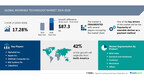
NEW YORK, Sept. 9, 2024 /PRNewswire/ — Report on how AI is redefining market landscape- The global wearable technology market size is estimated to grow by USD 87.3 billion from 2024-2028, according to Technavio. The market is estimated to grow at a CAGR of over 17.28% during the forecast period. Popularity of wearable devices as a payment method is driving market growth, with a trend towards development of low-power electronics. However, rising penetration of counterfeit products poses a challenge. Key market players include Alphabet Inc., Apple Inc., ASUSTeK Computer Inc., BAE Systems Plc, CINOPTICS, Citizen Watch Co. Ltd., Elbit Systems Ltd., Fossil Group Inc., Garmin Ltd., Huawei Technologies Co. Ltd., Kopin Corp., Lenovo Group Ltd., LG Electronics Inc., Magic Leap Inc., Polar Electro Oy, Samsung Electronics Co. Ltd., Sony Group Corp., Tex Ray Industrial Co. Ltd., Vuzix Corp., and Xiaomi Communications Co. Ltd..
Key insights into market evolution with AI-powered analysis. Explore trends, segmentation, and growth drivers- View the snapshot of this report
Wearable Technology Market Scope
Report Coverage
Details
Base year
2023
Historic period
2018 – 2022
Forecast period
2024-2028
Growth momentum & CAGR
Accelerate at a CAGR of 17.28%
Market growth 2024-2028
USD 87.3 billion
Market structure
Fragmented
YoY growth 2022-2023 (%)
14.39
Regional analysis
North America, APAC, Europe, South America, and Middle East and Africa
Performing market contribution
North America at 42%
Key countries
US, China, Japan, Canada, and Germany
Key companies profiled
Alphabet Inc., Apple Inc., ASUSTeK Computer Inc., BAE Systems Plc, CINOPTICS, Citizen Watch Co. Ltd., Elbit Systems Ltd., Fossil Group Inc., Garmin Ltd., Huawei Technologies Co. Ltd., Kopin Corp., Lenovo Group Ltd., LG Electronics Inc., Magic Leap Inc., Polar Electro Oy, Samsung Electronics Co. Ltd., Sony Group Corp., Tex Ray Industrial Co. Ltd., Vuzix Corp., and Xiaomi Communications Co. Ltd.
Market Driver
The global wearable technology market is experiencing significant growth due to the increasing demand for advanced wearable devices, such as smartwatches, smart bands, smart rings, and Head-Mounted Displays (HMDs). To meet the requirements of these devices, there is a growing focus on developing high-performance and low-power-consumption electronic components. Chip manufacturers are responding to this trend by creating new processor architectures with large, small, and tiny cores, optimizing battery life and enhancing device reliability. The adoption of these low-power components, including sensors, processors, and batteries, is enabling vendors to introduce innovative features and improve the performance of their wearable electronics. As a result, the market for wearable technology is expected to expand during the forecast period.
The wearable technology market is experiencing significant growth, driven by trends in mobile applications, digital health technology, and technological innovatness. Fitness-tracking wearables, such as wristbands, smartwatches, and ear-wearables, are popular among consumers seeking health self-efficacy and autonomy. MEMS sensors, GPS, and IMU are key components, enabling features like fall detection and gesture controls. Older populations benefit from wearables, especially those with fall detection and medical professionals use head-mounted displays for digital projections. Data security is a concern, but advancements in this area are ongoing. Wearable healthcare devices include swimmers, cyclists, runners, gym-goers, smart clothing, and IoT-based apparel. Gaming console producers and tablet manufacturers are entering the market, expanding the range of applications. Counterfeit products are a challenge, but efforts are being made to ensure authenticity. Overall, the market is diverse, catering to various user groups, including athletes and professionals.
Request Sample of our comprehensive report now to stay ahead in the AI-driven market evolution!
The global wearable technology market faces a significant challenge from the proliferation of counterfeit devices. Counterfeits of popular products from major vendors, including Apple, Samsung, and Xiaomi, are prevalent in the market, particularly in APAC. Smartwatches and smart bands are the most frequently counterfeited items due to their appeal to local consumers. Consumers, knowingly or unknowingly, purchase these cheaper alternatives, impacting original device sales and market revenue. The distribution of counterfeit products extends to various channels, including retail stores, online platforms, and social media. These devices, priced significantly lower than originals, pose a threat to consumer privacy and security, as they may not adhere to the same security standards. The growth of the counterfeit market erodes the sales, reliability, and brand value of original products, potentially hindering the expansion of the global wearable technology market.Wearable technology market is witnessing significant growth, driven by the demand from adventure lovers and sports enthusiasts for Virtual Reality and Augmented Reality devices. The multimedia industry is also embracing smart hats and Spree Wearables for great experiences. In the consumer electronics segment, fitness bands and AR/VR headsets lead the way, with Pharma and Telehealth solutions exploring wearables for disease management and real-time health monitoring. IoT-enabled garments and electronic devices with small sensors and electronic displays are revolutionizing healthcare, benefiting patients and healthcare providers. The younger population’s purchasing power and technological literacy fuel the market’s expansion. Chronic diseases like cardiovascular disease and obesity present significant opportunities. Fitness enthusiasts and consumers seek benefits beyond health monitoring, including connectivity with mobile phones and payment services. The challenges include ensuring technological literacy, integrating clinical and non-clinical data, and addressing privacy concerns.
Discover how AI is revolutionizing market trends- Get your access now!
This wearable technology market report extensively covers market segmentation by
Product 1.1 Wrist-wear1.2 Eyewear and headwear1.3 Footwear1.4 Neckwear1.5 OthersApplication 2.1 Consumer electronics2.2 Healthcare2.3 Enterprise and industrial2.4 Entertainment2.5 OthersGeography 3.1 North America3.2 APAC3.3 Europe3.4 South America3.5 Middle East and Africa
1.1 Wrist-wear- Wrist-wear, including smartwatches and smart bands, offer various functionalities for consumers. Smartwatches, such as Apple Watch, Samsung Galaxy Watch, and Fitbit Versa, provide features like making calls, messaging, health monitoring, and quick access to smartphone apps. OEMs like Xiaomi’s Poco have entered the market with less complex operating systems and competitive prices, targeting millions of potential customers. Partnerships and collaborations enable vendors to upgrade products with innovative features and expand market presence. For instance, the Poco Watch offers heart rate and SpO2 monitoring, a 225mAh battery, and a 5 ATM water resistance rating. Smart bands, like Fitbit Charge 4 and Garmin Vivosmart 4, monitor fitness, heart rate, sleep statistics, and calorie control. The growing awareness of health and fitness drives the demand for these devices, making it easier for consumers to lead active lifestyles. The market for wearable technology is expected to grow significantly due to the increasing applications of smartwatches and smart bands.
Download a Sample of our comprehensive report today to discover how AI-driven innovations are reshaping competitive dynamics
Wearable technology is revolutionizing the way we monitor and improve our health and fitness. From smartwatches and fitness trackers for runners, cyclists, and gym-goers, to swimmers’ devices and IoT-based apparel for healthcare professionals and patients, these electronic devices are transforming consumer behavior. Health monitoring solutions, including MEMS sensors, GPS, IMU, and heart rate monitors, are becoming increasingly popular among consumers seeking to enhance their health self-efficacy. Wristwear, such as fitness bands and smartwatches, with electronic displays and connectivity to mobile phones, enable real-time data tracking and analysis. However, the market also faces challenges, including counterfeit products and concerns around data privacy and security. The future of wearable technology lies in the integration of healthcare data and IoT-enabled garments, offering personalized and comprehensive health and fitness solutions.
Wearable technology is revolutionizing the way we monitor and manage our health, with various types of devices catering to different consumer groups. Smartwatches, fitness bands, and IoT-based apparel are popular among athletes, adventure lovers, and fitness enthusiasts, providing real-time health monitoring, connectivity to mobile phones, and fitness tracking. Wristwear, eyewear, and headwear, including smart hats and AR/VR headsets, offer multimedia experiences and virtual reality. Healthcare providers and patients benefit from wearable healthcare devices, such as medical monitoring solutions and telehealth services, which enable remote patient monitoring and disease management. The consumer electronics segment is driving the growth of wearable technologies, with benefits extending to older populations, fall detection, and gesture controls. However, concerns around data security and counterfeit products pose challenges to the industry’s growth. The younger population, with increasing purchasing power and technological literacy, is expected to fuel the demand for wearable technologies in the future. Small sensors, MEMS sensors, GPS, IMU, and digital health technology are key components of these devices, transforming the way we approach healthcare and fitness.
1 Executive Summary
2 Market Landscape
3 Market Sizing
4 Historic Market Size
5 Five Forces Analysis
6 Market Segmentation
ProductWrist-wearEyewear And HeadwearFootwearNeckwearOthersApplicationConsumer ElectronicsHealthcareEnterprise And IndustrialEntertainmentOthersGeographyNorth AmericaAPACEuropeSouth AmericaMiddle East And Africa
7 Customer Landscape
8 Geographic Landscape
9 Drivers, Challenges, and Trends
10 Company Landscape
11 Company Analysis
12 Appendix
About Technavio
Technavio is a leading global technology research and advisory company. Their research and analysis focuses on emerging market trends and provides actionable insights to help businesses identify market opportunities and develop effective strategies to optimize their market positions.
With over 500 specialized analysts, Technavio’s report library consists of more than 17,000 reports and counting, covering 800 technologies, spanning across 50 countries. Their client base consists of enterprises of all sizes, including more than 100 Fortune 500 companies. This growing client base relies on Technavio’s comprehensive coverage, extensive research, and actionable market insights to identify opportunities in existing and potential markets and assess their competitive positions within changing market scenarios.
Technavio Research
Jesse Maida
Media & Marketing Executive
US: +1 844 364 1100
UK: +44 203 893 3200
Email: media@technavio.com
Website: www.technavio.com/
View original content to download multimedia:https://www.prnewswire.com/news-releases/wearable-technology-market-to-grow-by-usd-87-3-billion-from-2024-2028–driven-by-payment-wearables-and-ai-impacting-market-trends–technavio-report-302241856.html
SOURCE Technavio
You may like
Technology
LG INSTAVIEW™ REFRIGERATOR SURPASSES 5.3 MILLION IN GLOBAL SALES
Published
28 minutes agoon
July 24, 2026By
Chosen by Customers Worldwide, LG’s Instaview Refrigerator Innovation Continues to Redefine the Kitchen Experience a Decade After Its Debut
News Summary
LG Electronics’ InstaView™ refrigerator celebrates the 10th anniversary of its 2016 launch by exceeding 5.3 million units in cumulative global sales.LG’s iconic “Knock Twice, See Inside” feature broke convention, offering a blend of user convenience, energy efficiency, and aesthetic value that set a new industry standard.LG InstaView refrigerators continue to gain traction worldwide, leading the refrigerator category in North America while seeing significant growth across Europe, Asia and Latin America.Over the past decade, LG InstaView refrigerator has won numerous prestigious design and innovation awards, including Red Dot, iF, IDEA and CES.
SEOUL, South Korea, July 24, 2026 /PRNewswire/ — LG Electronics’ (LG) InstaView™ refrigerator, which allows users to see inside without opening the door, has reached a major milestone on its 10th anniversary, surpassing 5.3 million units in cumulative global sales since its 2016 launch.
Trusted by Consumers Around the World
Since launching the LG InstaView refrigerator in 2016, LG has sold a remarkable 5.3 million units – equivalent to selling roughly one unit every minute.
LG InstaView refrigerator has seen strong customer demand globally, with North America representing its strongest market and accounting for about 30 percent of cumulative sales to date. In Europe, InstaView refrigerator has also been well received by consumers who place high value on energy efficiency, sustainability and food preservation performance. Sales are also steadily rising in Asia and Latin America, driven by growing demand for premium appliances.
An Innovation That Redefined the Refrigerator
InstaView redefined how consumers interact with their refrigerators by allowing them to see inside without opening the door. This feature allows users to check the fridge’s contents without opening the door and helps reduce unnecessary cold-air loss associated with frequent door opening. Over the past decade, its innovation has been recognized by international media and honored with numerous accolades from major global design and innovation awards, including the Red Dot Design Award, iF Design Award, IDEA, and the CES Innovation Award.
From Functional Benefit to Lifestyle Value
LG’s analysis of global customer reviews shows that consumer appreciation for the InstaView refrigerator and its eponymous feature has evolved over time, shifting from an initial focus on the functional benefits to the overall sense of satisfaction that it provides. While early feedback centered on the convenience of knocking twice to see inside and the reduction of cold air loss, more recent reviews increasingly highlight InstaView’s refined design and the enjoyment it brings to everyday kitchen use.
“For a decade now, LG InstaView refrigerator has stood as a testament to our leadership in the home appliance market and to our deep understanding of customers’ lifestyles,” said Baek Seung-tae, president of the LG Home Appliance Solution Company. “This milestone reflects our success in creating not just an innovative feature, but a more convenient and enjoyable kitchen experience. Building on our advanced AI, refrigeration and food preservation technologies, we will continue to lead the evolution of the kitchen experience with customer-centric innovations.”
About LG Electronics Home Appliance Solution Company
The LG Home Appliance Solution Company (HS) is a global leader in home appliances and AI home solutions. By leveraging industry-leading core technologies, the HS Company is committed to enhancing consumers’ quality of life and promoting sustainability. The company develops thoughtfully designed kitchen and living appliance solutions and has recently integrated LG’s Robot Business Division to incorporate advanced robot technologies into its home solutions. Together, these products offer enhanced convenience, exceptional performance, efficient operation and sustainable lifestyle solutions. For more news on LG, visit www.LG.com/global/newsroom/.
View original content to download multimedia:https://www.prnewswire.com/apac/news-releases/lg-instaview-refrigerator-surpasses-5-3-million-in-global-sales-302833865.html
SOURCE LG Electronics
Technology
Alpha Ladder Hosts Globalization Forum, Debuts Proprietary AI Platform AgentX
Published
29 minutes agoon
July 24, 2026By
HONG KONG, July 24, 2026 /PRNewswire/ — On 9 July, Alpha Ladder hosted a tech globalization forum at LEAP East 2026 in Hong Kong under the theme “Connecting Industrial Innovation, Unlocking New Global Growth Opportunities” — and used the occasion to officially unveil AgentX, its proprietary AI‑powered solution.
The session brought together more than a dozen distinguished speakers from sectors spanning artificial intelligence, embodied intelligence, biotechnology, fintech, enterprise services, and legal — all of whom shared first‑hand observations and practical experience navigating global expansion.
Paul Pang, Head of AI at Alpha Ladder, unveiled the Group’s new financial AI agent, AgentX, during the product launch. He observed that the rapid proliferation of AI agents has rendered traditional cross‑border financial delivery models ill‑suited to the evolving AI industry landscape. Conventional local plugin integrations carry significant risks, including code tampering, data leakage, and compromised asset security.
He also noted that expanding enterprises frequently face a persistent disconnect between their business tools and financial pipelines. Core operational systems — covering expense reimbursement, payroll, and account reconciliation — often operate in silos, isolated from cross‑border payment and treasury management frameworks. The resulting reliance on manual workflows leads to chronic inefficiency and inflated operating costs.
To tackle these industry pain points head‑on, Alpha Ladder introduced AgentX — a purpose‑built platform grounded in its proprietary AI‑native architecture. Powered by the Core Finance skill suite and the standardised MCP protocol, AgentX is compatible with all major large language models and enables AI agents to directly access Alpha Ladder’s full spectrum of cross‑border financial services.
The platform is further equipped with VisionX, an intelligent risk control engine that performs cross‑verification across multiple data sources to significantly sharpen the detection of on‑chain risks. A built‑in regulatory sandbox ensures full segregation of transactions and data within compliance boundaries, effectively closing critical security gaps that have long plagued the industry.
Beyond its core risk and compliance capabilities, AgentX offers extensive ecosystem adaptability, enabling rapid integration with vertical use cases such as travel reimbursement, global payroll, and asset management — creating a unified, closed‑loop framework that bridges business operations and finance. Through its open ecosystem model, AgentX empowers small and mid‑sized enterprises expanding globally by tearing down the silos between operational workflows and cross‑border financial services. In doing so, it delivers one‑stop, intelligent cross‑border financial services and drives comprehensive AI‑driven transformation across globalising industries.
Yao Yuan, Vice President of AgiBot for MENA, Turkey, and Asia Pacific, remarked that 2026 marks the year AgiBot transitions from R&D to commercial deployment. Having spent the previous three years honing its products and technology while consolidating its position in the domestic market, the company is now scaling up commercial operations and accelerating its global expansion.
He articulated three core pillars underpinning AgiBot’s global strategy. First, the company is moving to seize the critical window for mass industrial adoption as the embodied intelligence sector enters a new growth cycle. Second, humanoid robots are emerging as a key enabler of industrial upgrading and national digital transformation strategies across economies. Third, overseas deployment, data accumulation, and localized delivery are creating a valuable feedback loop — one that feeds back into domestic R&D and forms a closed loop connecting global technology development with commercial execution.
Luo Yi, General Manager of 51Aes South China (a subsidiary of 51World), shared that the company was officially listed on the Hong Kong Stock Exchange on 30 December 2025 under the ticker 6651.HK. Guided by its vision to digitally replicate the Earth’s 510 million square kilometres, 51World is committed to building a seamless bridge between the digital and physical worlds.
As the industry enters a new era of Physical AI, physically accurate digital simulation environments have become a fundamental prerequisite for large‑scale training of embodied intelligent systems. Leveraging three core pillars — global spatial foundation models, simulation training platforms, and synthetic data pipelines — the company has built a complete, closed-loop technology system. Its commercial portfolio comprises three flagship offerings: the 51Aes digital twin platform, the 51Sim synthetic data and simulation platform, and the 51Earth digital earth platform.
As the core engine powering Physical AI, 51Sim delivers high‑fidelity simulation training environments and robust synthetic data generation capabilities for embodied intelligence sectors including autonomous driving, smart equipment, and robotics. It enables efficient training and validation of AI systems within virtual environments and currently serves over 100 enterprise clients across autonomous mobility and embodied intelligence verticals. Looking ahead, the company will continue to deepen the integration of AI with the real economy, unlocking greater technological value and industrial impact across broader global markets.
Xu Leyang, Co‑founder of Seekee, observed that vast segments of the global population have yet to gain meaningful access to AI. With “everyday users” at the heart of its mission, Seekee is building accessible, consumer‑facing AI products tailored for the world’s two billion ordinary people.
The team has strategically focused on Latin America — an underserved blue‑ocean market largely overlooked by major tech players. Few leading global large language models have dedicated meaningful R&D or localisation efforts to Spanish and Portuguese, the region’s dominant languages. By capitalising on the region’s distinctive linguistic landscape, local user behaviour patterns, and a proprietary repository of region‑specific language data amassed over time, Seekee has built a competitive moat that is difficult to replicate.
According to Sensor Tower, a mobile analytics platform, Seekee ranked eighth globally in the 2025 generative AI app download charts. Within Latin America, its brand recognition is on par with ChatGPT. Launched just over a year ago, the platform has already amassed tens of millions of monthly active users and demonstrated strong user retention.
Wu Xin, Partner and Global Head of AI Applications at BorderX Lab, delivered a presentation themed “Power of Agent Plus.” Drawing on real‑world deployments within the fashion and luxury sectors, he explained that AI agents are fundamentally reshaping traditional cross‑border industries and unlocking significant efficiency gains across the entire value chain.
E‑commerce, he noted, is undergoing a paradigm shift. Competition has moved beyond capturing user attention to precisely identifying consumer intent, with AI agents emerging as a critical instrument for surfacing latent global consumption demand. Powered by proprietary technology and data infrastructure, BorderX Lab has built a global consumer network that is helping redefine how Chinese cross‑border consumer tech reaches the world.
He further observed that agent‑enabled payments will form the bedrock of agent‑driven e‑commerce, and expressed optimism about jointly exploring blue‑ocean opportunities with Alpha Ladder.
Yang Mingyuan, Senior Investment & Financing Manager at QCraft, observed that among the broader Physical AI landscape, autonomous driving stands out as the first segment to achieve mass production at scale, sustainable commercial profitability, and rapid real‑world deployment.
The company’s core competitive advantage lies in its unified, self‑developed technical foundation — one that underpins both its L2+ advanced driver assistance systems and its multi‑scenario L4 autonomous driving capabilities. This homologous architecture also serves as a strategic springboard for QCraft’s broader push into general Physical AI. Its fully in‑house toolchain and data platform form a formidable competitive moat, while the company’s “Autonomous Driving Super Factory” system standardises the entire model training and simulation testing lifecycle — covering the full data pipeline to enable continuous, high‑velocity iteration and optimisation of its algorithm models.
He Liang, Chief Financial Officer of Yidianyun, shared that the company — a leading domestic provider of office IT infrastructure — is now pivoting to become an office AI infrastructure enabler. Its mission is to lower the barrier to AI compute access for enterprises through remanufacturing technology and subscription‑based models.
Yidianyun has built a four‑tier business framework that underpins its cost and service advantages, with a strategic focus on edge‑side AI hardware across AI PCs, AI workstations, and AI servers. He noted that direct procurement of AI hardware entails substantial one‑off capital expenditure for small and medium‑sized enterprises. Subscription models, by contrast, significantly ease funding pressure and hedge against upfront investment risk — a key factor driving the rapid growth of its proprietary AI workstation business.
For overseas expansion, Yidianyun plans to launch pilot cross‑border operations from Hong Kong as its initial hub, with the potential to extend its reach to additional international markets in due course.
Liu Chenxin, Assistant to the Director of the National Institute of Biological Sciences, Beijing (NIBS), shared insights at the forum. With a strong track record in research commercialisation, NIBS has incubated a number of benchmark biopharma companies including Huahui Anjian, Vitaraylon, and Denovo Biotech. Drawing on years of translational experience, the institute has comprehensively upgraded its established commercialisation framework and officially launched BISON — a new innovation incubation hub designed to tackle the persistent high‑risk challenges inherent in biopharmaceutical investment through a unique translational model and commercial logic.
Unlike conventional technology‑driven incubation models, BISON places market demand at the core of its approach. It partners with leading tertiary hospitals to identify clinical pain points at the front end, while aligning with pharmaceutical companies at the back end to reverse‑engineer original drug pipelines based on industry needs. Looking ahead, BISON will continue to leverage its deep foundation in original research to incubate high‑value biopharmaceutical innovations, helping domestically developed first‑in‑class drugs reach global markets and supporting the international expansion of China’s biotech industry.
Lei Zhicheng, Deputy General Manager of Mango Finance Limited, observed that the institutional advantages of Hong Kong’s capital market, combined with deepening economic and trade ties with the Middle East, have opened up new channels for Chinese tech innovators to access global capital. Closely aligned with policy directions and enterprises’ internationalisation ambitions, Mango Finance is focused on listing incubation and cross‑border expansion services, fostering service synergies through close collaboration with a diverse network of professional partners.
As an established securities firm, the company is steadily expanding its digital finance footprint in step with regulatory developments. Lei expressed keen interest in establishing system‑level connectivity with Alpha Ladder, and leveraging AI and cutting‑edge digital technologies to accelerate the digital transformation and upgrade of traditional securities operations.
Kevin Chen, CEO of Boost Bank and Founder of Aicapay, observed that as the Belt and Road Initiative continues to gain momentum, emerging markets across Africa, the Middle East, and Latin America are undergoing rapid economic and industrial transformation. Combined with surging outbound investment and cross‑border trade from China, the cross‑border finance sector in these markets presents enormous growth potential.
Boost Bank specialises in building localised compliance frameworks. Backed by multi‑jurisdictional licences, on‑the‑ground risk control teams, and deep‑rooted local financial resources, the company has established a fully integrated, end‑to‑end cross‑border capital loop — delivering tailored, client‑specific solutions for enterprises expanding globally. Chen underscored the strong strategic complementarity between the two firms and signalled Boost Bank’s intent to join forces with Alpha Ladder in building a fintech service ecosystem that empowers Chinese companies to seize opportunities in emerging markets worldwide.
Yin Li, Partner at Shanghai Landi Law Firm, shared that the firm established its first overseas offices a decade ago, making it one of China’s early legal practices to focus on cross‑border corporate services. It provides Chinese enterprises with full‑spectrum legal support spanning overseas investment filing, intellectual property protection, and cross‑border capital repatriation.
Against a backdrop where overseas expansion has evolved from conventional trade to high‑value industrial globalisation — marked by the coordinated export of technology, production capacity, and capital — and given the strong alignment between Middle Eastern development agendas and the Belt and Road Initiative, Chinese enterprises pursuing comprehensive deployment in the region have generated robust demand for localised legal services. This, he noted, is the key driver behind the firm’s intensified focus on the Middle East market.
Yin emphasised that proactive compliance is the core moat for enterprises going global. Businesses must conduct thorough assessments of local regulatory and legal frameworks before entering overseas markets. Leveraging its “on‑the‑ground global presence” model — with coordinated teams across China and multiple international jurisdictions — the firm conducts advance due diligence to identify and mitigate legal risks inherent in cross‑border operations.
About Alpha Ladder:
Alpha Ladder is a Singapore-regulated fintech group focused on developing a world-leading, one-stop, fully compliant financial infrastructure — delivering secure, efficient cross-border financial solutions for enterprises going global. The Group holds core licences issued by the Monetary Authority of Singapore (MAS), covering securities, futures, fund management, custody, RWA asset exchange, and Major Payment Institution (MPI). We also maintain regulatory approvals in Canada, and are actively expanding our footprint across key global financial hubs including Switzerland, Dubai, and Hong Kong, building a globally compliant regulatory network. By leveraging AI to reshape compliance, risk management, and treasury operations, Alpha Ladder empowers enterprises to reduce costs, enhance efficiency, and achieve sustainable global growth.
For more information, please visit our official website: www.alphaladder.hk
View original content:https://www.prnewswire.com/apac/news-releases/alpha-ladder-hosts-globalization-forum-debuts-proprietary-ai-platform-agentx-302833044.html
SOURCE Alpha Ladder
Technology
UOB Asset Management Highlights Global Resilience Despite Heightened Uncertainty
Published
29 minutes agoon
July 24, 2026By
SINGAPORE, July 24, 2026 /PRNewswire/ — UOB Asset Management (UOBAM) has released its 3Q 2026 Quarterly Investment Strategy, highlighting the global economy’s resilience in the face of persistent headwinds, including inflation, tariffs, geopolitical tensions and energy market volatility.
Despite repeated challenges over the past 18 months, economic activity has remained robust. Corporate earnings have held up across major regions, labour markets have remained resilient, and continued investment in artificial intelligence (AI) infrastructure is providing a powerful tailwind for growth.
While uncertainty remains elevated, the global economy’s resilience has reinforced confidence that the current expansion remains durable, even as risks continue to evolve.
On interest rates, UOBAM’s base case is that the US Federal Reserve is more likely to remain on an extended pause than embark on a new rate-hiking cycle. Although inflation remains sticky and recent geopolitical developments have raised upside risks, the firm continues to see evidence of moderating underlying inflation pressures, particularly in housing and wages.
Within equities, UOBAM remains positive on Asia and has upgraded Onshore China to overweight from underweight. Despite strong market gains, Asia continues to trade at a valuation discount to global equities, even as earnings growth has accelerated. UOBAM believes this combination of strong earnings momentum and attractive valuations presents a compelling opportunity for investors. In China, improving industrial profits and continued growth in higher-value sectors have strengthened the investment case for selected areas of the market, particularly those linked to AI, semiconductors, energy infrastructure and advanced manufacturing.
Anthony Raza, Head of UOBAM Multi-Asset Strategy, said, “The key story for investors is that the global economy has repeatedly withstood shocks without derailing growth. Despite a more uncertain backdrop, we continue to see attractive opportunities in Asia, where strong earnings growth is supported by compelling valuations, and we maintain gold as a preferred allocation as investors navigate an increasingly complex environment.”
In its asset allocation strategy, UOBAM remains overweight equities, diversified across fixed income and underweight cash. The firm continues to favour the United States and Asia within equities, while retaining a positive outlook on gold. Supported by strong central bank demand and its role as a safe-haven asset during periods of uncertainty, gold remains an important source of portfolio diversification.
For deeper insights across equities, fixed income, currencies and commodities, read the full 3Q 2026 Investment Strategy: https://uobam.com.sg/qis3q26
About UOB Asset Management
UOB Asset Management Ltd (UOBAM) is a wholly-owned subsidiary of United Overseas Bank Limited. Established in 1986, UOBAM has 40 years of experience in managing collective investment schemes and discretionary funds in Singapore, making us among the largest unit trust managers by assets under management. As of 30 June 2026, we manage 63 unit trusts in Singapore and together with our subsidiaries, oversee S$44.3 billion in clients’ assets.
Headquartered in Singapore, UOBAM has a strong presence across Asia, with business and investment offices in Brunei, Indonesia, Japan, Malaysia, Thailand and Vietnam. Our network includes UOB Islamic Asset Management Sdn Bhd in Malaysia, a joint venture with Ping An Fund Management Company Limited (China) and strategic alliances with partners such as Wellington Management Singapore.
UOBAM is one of the region’s most awarded asset managers, with over 380 awards won. In 2025, we were recognised as the Best Regional Asset Management Company by the Asia Asset Management and previously named Best Asset Management House in Asia – 20 Years in 2023. Our digital innovation has also earned top honours, including Best Digital Wealth Management in Asia[1] and Best Robo Advisory Initiative[2] for four consecutive years as of 2025.
As a leader in sustainable investing, UOBAM was awarded Best application of ESG in ASEAN[3] (2023) and has received multiple sustainability accolades in Indonesia and Thailand. Our artificial intelligence capabilities were also recognised with the Most Innovative Application of Artificial Intelligence (ASEAN) for three consecutive years[4].
Connect with us: LinkedIn | Facebook
[1] Awarded by Asia Asset Management
[2] Awarded by The Digital Banker for the Global Retail Banking Innovations Award
[3] Awarded by Asia Asset Management
[4] As of 2026, by Asia Asset Management
View original content to download multimedia:https://www.prnewswire.com/apac/news-releases/uob-asset-management-highlights-global-resilience-despite-heightened-uncertainty-302833086.html
SOURCE UOB Asset Management
LG INSTAVIEW™ REFRIGERATOR SURPASSES 5.3 MILLION IN GLOBAL SALES
Alpha Ladder Hosts Globalization Forum, Debuts Proprietary AI Platform AgentX
UOB Asset Management Highlights Global Resilience Despite Heightened Uncertainty
Send Rakhi to UK swiftly with UK Gifts Portal
Whiteboard Series with NEAR | Ep: 45 Joel Thorstensson from ceramic.network
New Gooseneck Omni Antennas Offer Enhanced Signals in a Durable Package
Why You Should Build on #NEAR – Co-founder Illia Polosukhin at CV Labs
Whiteboard Series with NEAR | Ep: 45 Joel Thorstensson from ceramic.network
NEAR End of Year Town Hall 2021: The Open Web World, MetaBUILD 2 Hackathon and 2021 recap
Trending
-
Technology5 days agoPenetron Strengthens Global Research Collaboration at ICSHM 2026
-
Technology4 days ago“Every Day CO₂ Challenge”: More Than a Game, A New Way of Learning
-
Coin Market4 days agoSaylor turns up heat with ‘110 reasons’ why BIP-110 is a bad idea
-
Coin Market4 days agoWill the US get CLARITY this week? Bitcoin’s new $80K target: Hodler’s Digest, July 19
-
Technology4 days ago
China-Europe Youth Exchange Campaign: When Fashion Meets Football — A Green Pitch Appointment for Cross-Cultural Dialogue
-
Technology4 days agoPowering ASEAN’s Manufacturing Transformation: IME 2026 Connects Technology, Industry and Opportunity
-
Technology4 days agoDBS named Asia’s Best Digital Bank by Euromoney, recognised for its AI leadership and responsible innovation
-
Technology4 days agoBOC Group Releases ADONIS 19.0 LTS to Bring Smarter Support into Everyday BPM Work