Connect with us

Technology

BNY to Launch Alts Bridge Platform Broadening Investor Access to Alternative Products

Published

on

Through Alts Bridge, BNY will deliver to wealth intermediaries, advisors, and investors a complete and integrated set of solutions across the alternative investment lifecycle

NEW YORK, Sept. 16, 2024 /PRNewswire/ — The Bank of New York Mellon Corporation (“BNY”) (NYSE: BK), a global financial services company, has today announced Alts BridgeSM (“Alts Bridge”), a comprehensive data, software, and services solution built to meet the growing demand from wealth intermediaries looking to access alternative and private market investment products, through a simplified end-to-end investment experience.

Designed to deeply integrate into intermediaries’ existing desktops, beginning with BNY Pershing X’s Wove advisory platform and NetX360+, with cutting-edge AI and analytics tools that are designed to reduce manual processing and error rates, Alts Bridge creates a powerful solution for investors, advisors, and the home office. The platform will provide access to a curated, comprehensive suite of leading alternative and private market asset managers from around the world, a selection including 26 North, AB CarVal, Alternatives by Franklin Templeton, Apollo, Atalaya, Aviva Investors, Blue Owl Capital, Carlyle, CIFC, Coller Capital, Crescent Capital, Eisler Capital, Generali, GoldenTree, Goldman Sachs, Hunter Point Capital, Invesco, KKR, Lexington Partners a Franklin Templeton Company, Lunate, Marathon Asset Management, Partners Group, Polen Capital, RCP Advisors, and Stormfield Capital.

“Powered by BNY’s data and technology, Alts Bridge will connect clients across the wealth ecosystem and alternative markets in a unique and more seamless way. As a firm that supports more than $2.6 trillion of wealth assets[1] and has relationships with more than 500 leading alternative managers, we believe we are uniquely positioned to unlock this market,” said Akash Shah, Chief Growth Officer and Head of Growth Ventures at BNY. “We’re combining the breadth and depth of BNY’s distribution team with our expertise across investment management, advisory, securities services, wealth technology, and wealth custody and clearing, enabling Alts Bridge to provide a comprehensive solution to find, access, and custody alternative and private market assets.”

The platform will offer features across the pre-, at- and post-trade processes, including an advisor education and fund discovery center, home office and asset manager tools, product overviews, automated document preparation, simplified order entry, and integrated reporting and investment management capabilities. 

“We consistently hear from advisors that they want to allocate more to alternatives and private markets but are limited by operational complexity and significant additional resource requirements. We’re incredibly proud to deliver the alternative investment experience that advisors and their clients expect and deserve,” said David Moss, Head of Alts Bridge at BNY. “We’re addressing challenges that have persisted for decades and delivering cutting edge tools. For advisors, we are making alternatives easier. And for asset managers, Alts Bridge delivers scalable, efficient access to the growing wealth channel.”

While 90% of advisors are targeting a 10-15% average portfolio weighting to alternative and private market investments, actual allocations remain in the low single digits. Global alternative assets under management are expected to reach $24.5trn in 2028, representing a forecast annualized growth rate of 8.4% from 2022 to 2028.[2]

“Having been at the forefront of developing private markets products for the wealth space, we welcome this initiative to simplify access for investors while ensuring they have the resources, they need to make informed, long-term investment decisions,” said Robert Collins, Global Co-Head of Private Wealth at Partners Group.

“The shifting investable landscape between public and private securities is a secular trend for our industry.  Invesco is excited to work with Alts Bridge to help investors navigate this landscape with an industry-leading client experience, educational resources, and investment capabilities,” said Clint Harris, Head of Wealth Management Platforms and Institutional Consultant Relations at Invesco.

The platform is expected to be available to U.S. Registered Investment Advisors (RIAs) and Independent Broker-Dealers (IBDs) in fall 2024. The initial platform will be available to clients of BNY Pershing. To learn more, please visit: https://www.bnymellon.com/us/en/solutions/wealth-technology/alts-bridge-alternative-investment-software.html

1

BNY Pershing AUC/A as of June 30, 2024

2

Preqin (2023) Future of Alternatives 2028 – Source

Media
Anneliese Diedrichs
anneliese.diedrichs@bny.com

Courtney Woolston
courtney.woolston@bny.com

About BNY

BNY is a global financial services company that helps make money work for the world – managing it, moving it and keeping it safe. For 240 years BNY has partnered alongside clients, putting its expertise and platforms to work to help them achieve their ambitions. Today BNY helps over 90% of Fortune 100 companies and nearly all the top 100 banks globally to access the money they need. BNY supports governments in funding local projects and works with over 90% of the top 100 pension plans to safeguard investments for millions of individuals, and so much more. As of June 30, 2024, BNY oversees $49.5 trillion in assets under custody and/or administration and $2.0 trillion in assets under management.

BNY is the corporate brand of The Bank of New York Mellon Corporation (NYSE: BK). Headquartered in New York City, BNY employs over 50,000 people globally and has been named among Fortune’s World’s Most Admired Companies and Fast Company’s Best Workplaces for Innovators. Additional information is available on www.bny.com. Follow on LinkedIn or visit the BNY Newsroom for the latest company news.  

This Press Release is issued by BNY to members of the press and media and the information contained herein should not be construed as investment advice or a recommendation of any investment strategy or product. It does not constitute an offer or solicitation of securities or investment services or an endorsement thereof in any jurisdiction or in any circumstance in which such offer or solicitation is unlawful or not authorized.


View original content:https://www.prnewswire.com/news-releases/bny-to-launch-alts-bridge-platform-broadening-investor-access-to-alternative-products-302248801.html

SOURCE BNY Mellon

Continue Reading

Technology

Gigawatt AI acquires Data Fusion Solutions to accelerate its Power module and expand utility outage intelligence

Published

on

By

The acquisition of Data Fusion Solutions adds 11 years of U.S. outage history, nationwide outage tracking, and geospatial capabilities to advance utility outage visibility and communications.

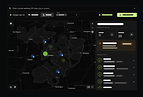
CHICAGO, Nov. 3, 2026 /PRNewswire-PRWeb/ — Gigawatt AI, the AI-native software suite purpose-built for regulated utilities, today announced its acquisition of Data Fusion Solutions (DFS), a provider of outage tracking, geospatial mapping, and data services. The acquisition accelerates Gigawatt’s Power module for utility outage management, strengthening its foundation for outage visibility, customer communications, and predictive intelligence.

Customers need clear power status, restoration estimates, and updates they can trust, and that requires outage, meter, and customer information to work together.

Data Fusion Solutions brings an 11-year U.S. outage archive containing 26 million distinct incident points, with coverage spanning 1,200 utility operating companies and representing 96% of electric consumers in the United States. Its products include outage dashboards, alerts, geospatial map services, and custom data feeds. DFS’s professional outage dashboard collects outage information every 15 minutes.

For utility operations and customer service leaders, Gigawatt’s Power module is designed to reduce routine outage inquiries, improve notification accuracy, and give customers and agents clearer visibility into power status. Through the Utility Data Fabric, it connects outage, meter, and customer information across public maps, utility websites, and agent views. Configurable rules govern outage communications alongside existing outage management and billing systems.

“Customers need clear power status, restoration estimates, and updates they can trust,” said Joe Berti, Chief Executive Officer of Gigawatt. “That requires outage, meter, and customer information to work together. DFS brings the historical depth and geographic coverage to accelerate that connected experience through Power.”

The acquisition advances three areas of Power’s development:

Historical outage context: DFS’s archive adds historical context for outage analysis, complementing premise and customer data from connected utility systems.Nationwide outage coverage: DFS’s national data footprint supports broader outage visibility, complemented by premise-level intelligence from connected utility systems.Predictive intelligence: Historical incident data provides a foundation for developing and validating models for restoration timing.

“DFS brings established outage data, mapping products, and domain expertise that directly accelerate Power,” said Reid Snyder, Senior Vice President of Corporate Development and Strategy at Gigawatt. “The acquisition strengthens our foundation for connecting outage intelligence with utility workflows.”

“Understanding an outage requires both current information and the geographic and historical context behind it,” said Patrick Willging, Chief Technology Officer of Data Fusion Solutions. “Joining Gigawatt creates an opportunity to connect that context with customer communications and agent workflows, helping utilities provide clearer information from the first report through restoration.”

To learn more about Gigawatt Power for utility outage management, visit gigawatt.ai/power.

About Gigawatt

Gigawatt AI provides an AI-native software suite purpose-built for regulated utilities. Its Customer, Revenue, Service, Procurement, Power, and Market modules support essential utility functions through an AI-native Utility Data Fabric. Utilities can deploy modules incrementally alongside existing customer information, enterprise resource planning, and operational systems, improving defined workflows without first replacing core technology. Founded by utility and AI transformation leaders and developed with direct input from top-tier utilities in the United States, Gigawatt supports secure, governed, and scalable AI adoption across regulated utility operations. Gigawatt has locations in Chicago, Nashville, and Austin. For more information, visit gigawatt.ai.

Media Contact

Thiers Ferreira, Gigawatt AI, 55 31995174259, thiers@gigawatt.ai, https://gigawatt.ai/

View original content to download multimedia:https://www.prweb.com/releases/gigawatt-ai-acquires-data-fusion-solutions-to-accelerate-its-power-module-and-expand-utility-outage-intelligence-302928050.html

SOURCE Gigawatt AI

Continue Reading

Technology

How the NIH Common Fund Data Ecosystem Could Accelerate Scientific Discovery

Published

on

By

CU Anschutz researchers play a major role in evaluating research data from 18 programs to help scientists uncover relationships across studies and make better use of existing research.

AURORA, Colo., Nov. 3, 2026 /PRNewswire/ — Scientists generate vast amounts of research data, but connecting information across studies can be difficult. The NIH Common Fund Data Ecosystem is working to change that by making research datasets from 18 NIH programs easier to find, connect and analyze.

The initiative brings together research resources spanning human genetics, the microbiome and emerging technologies, helping scientists explore relationships that might otherwise remain hidden across separate studies.

A new paper published in Patterns describes the ecosystem’s development, infrastructure and tools, as well as efforts to evaluate its impact.

“The challenge is no longer just generating more scientific data. It’s making the data we already have work together in ways that help researchers answer questions they couldn’t tackle before,” said Casey Greene, PhD, professor of biomedical informatics at CU Anschutz and study senior author. “When information is connected across research programs, scientists have more opportunities to identify patterns, explore new relationships and build on discoveries made by others.”

The goal is to make complex datasets easier to find, interpret and analyze, including for researchers without advanced programming or bioinformatics expertise.

How Can Connecting Research Data Help Scientists Make New Discoveries?

Understanding a disease or identifying a promising drug target may require scientists to connect genetic information with molecular measurements, tissue data and results from drug-screening experiments. A drug target is a molecule or biological process that researchers investigate as a potential point of action for a treatment.

When these resources can be explored together, researchers may be better equipped to understand biological mechanisms, identify meaningful patterns and investigate promising directions for further study.

“Scientific discovery rarely happens in isolation. A finding in one dataset may become much more meaningful when it can be examined alongside evidence from another study or another area of biology,” said Julie A. Jurgens, PhD, associate director of scientific delivery for the Knowledge Portal Network at the Broad Institute of MIT and Harvard and study corresponding author. “Building the connections between these resources can help researchers spend less time navigating fragmented systems and more time asking important scientific questions.”

By making existing research easier to access and combine, the ecosystem aims to help scientists build on findings from multiple programs rather than examining each dataset in isolation.

Evaluating Effectiveness

Researchers at CU Anschutz contribute to the initiative’s coordination and evaluation efforts, helping assess how effectively the shared research infrastructure supports scientists and delivers value across research programs.

The work examines whether connecting datasets across programs helps researchers find and use information in ways that separate public repositories cannot.

The team is also evaluating indicators of research engagement and impact, including how often scientists use the ecosystem’s online resources and cite related publications. Preliminary findings suggest that related research publications may receive more citations than comparable papers, although additional analysis is needed to understand the significance of those differences.

These evaluation efforts are intended to help determine how the ecosystem can remain useful, accessible and valuable to researchers over time.

How Could Connected Research Data Support Artificial Intelligence?

As artificial intelligence becomes more prominent in scientific research, well-organized and connected datasets could also help computational tools analyze scientific information more effectively.

The ecosystem offers an opportunity to explore how infrastructure designed to help people navigate scientific evidence might also support emerging AI-driven approaches to research.

“The long-term opportunity is to create a research environment where valuable data don’t sit in separate repositories waiting for someone to make the right connection,” said Sean Davis, MD, PhD, professor of bioinformatics at CU Anschutz. “By making those connections easier to discover and explore, we can help scientists get more value from existing research and create new opportunities for future discoveries.”

By making existing evidence easier to find, interpret and combine, the NIH Common Fund Data Ecosystem aims to help researchers uncover meaningful connections, explore new scientific questions and make more effective use of the research investment already made.

The Common Fund Data Ecosystem and corresponding publication are the product of a multi-institutional, multidisciplinary collaboration across 5 centers, 18 programs, and multiple partnerships.

Key Points:

Connecting research across programs: The NIH Common Fund Data Ecosystem is working to connect research resources from 18 NIH programs, making information easier to find, analyze and combine.Supporting scientific discovery: Researchers could use connected genetic, molecular, tissue and drug-screening data to investigate biological mechanisms and identify new research directions.Evaluating research impact: CU Anschutz researchers are helping assess the ecosystem’s use, value and long-term effectiveness.Exploring future AI applications: More accessible and connected scientific data could support emerging AI approaches to biomedical research.

About the University of Colorado Anschutz
The University of Colorado Anschutz is a world-class academic medical campus leading transformative advances in science, medicine, education and patient care. The campus includes the University of Colorado’s health professional schools, more than 60 centers and institutes, and two nationally ranked independent hospitals – UCHealth University of Colorado Hospital and Children’s Hospital Colorado – which see nearly three million adult and pediatric patient visits each year. Innovative, interconnected and highly collaborative, CU Anschutz delivers life-changing treatments, exceptional patient care and top-tier professional training. The campus conducts world-renowned research supported by $890 million in funding, including $762 million in sponsored awards and $128 million in philanthropic gifts for research.

Find the latest CU Anschutz news here.

Contact: Kelsea Pieters, CU Anschutz
                Kelsea.pieters@cuanschutz.edu, Phone: (804) 314-1360

View original content to download multimedia:https://www.prnewswire.com/news-releases/how-the-nih-common-fund-data-ecosystem-could-accelerate-scientific-discovery-302928243.html

SOURCE University of Colorado Anschutz

Continue Reading

Technology

Gradient Opens Its Doors to Tulsa for Global Entrepreneurship Week

Published

on

By

Five days of free programming, November 16 to 20, celebrating the spirit of entrepreneurship in Tulsa

TULSA, Okla., Nov. 3, 2026 /PRNewswire/ — Gradient, recently named the world’s top Global Entrepreneur Support Organization by the International Business Innovation Association (INBIA), will open its doors November 16 to 20 for Tulsa’s Global Entrepreneurship Week. More than 20 sessions are free and open to the public, bringing together founders, students, creatives, investors, and anyone with an idea. Registration is open now at joingradient.com/gew.

“Every big idea starts somewhere, and you don’t have to figure it out alone. Bring your questions, pick a session, and jump in. Global Entrepreneurship Week at Gradient is your invitation to connect, explore ideas, and discover what’s possible, wherever you are on your journey,” said Devon Laney, President and CEO of Gradient.

Sponsored by Microsoft, the week is expected to draw more than 1,000 attendees to Gradient, 12 North Cheyenne Avenue. Programming spans every side of entrepreneurship. Highlights include:

Monday, Nov. 16: Opening breakfast at 8:30 a.m. with a proclamation from Tulsa Mayor Monroe Nichols; STARTedUP Foundation founder Don Wettrick and Tulsa Public Schools on entrepreneurship in the classroom; business finance; Campus to Company, 1 Million Cups Tulsa’s university pitch competition; raising smaller checks; and CO.STARTERS Intro to Entrepreneurship.Tuesday, Nov. 17: An Open House across the whole building; design and Canva classes; AI and automation tools; small business banking with Bank of Oklahoma; and Meet the Incubator.Wednesday, Nov. 18: Morning yoga; Substack writer Hunter Harris, former NPR leader Doug Mitchell and Tulsa Local News Initiative CEO Ziva Branstetter on the future of media; producers from the FX series The Lowdown on building a film industry in Tulsa; intellectual property with the U.S. Patent and Trademark Office; and the Tulsa Entrepreneurship Town Hall, where State Representative Ronald Stewart and City Councilor Laura Bellis take audience questions.Friday, Nov. 20: The week closes in the evening with a 10-year celebration on the Garden Deck.

“Great entrepreneurial communities are built by the people who show up, share ideas, and take action. Global Entrepreneurship Week is our chance to bring Gradient’s global recognition home and invite all of Tulsa to be part of the momentum,” Laney said.

Tulsa’s program is part of Global Entrepreneurship Week, held November 16 to 22 in about 200 countries under the theme Entrepreneurs Thrive Here. It also falls in Gradient’s 10th anniversary year.

Registration and full schedule: joingradient.com/gew

About Gradient

Gradient is Tulsa’s hub for innovation and the sixth-largest tech and innovation hub in the country, with roughly 4,500 members spanning founders, investors, operators, and partners. In 2026, Gradient was named both Technology Entrepreneur Support Organization of the Year and Global Entrepreneur Support Organization of the Year, INBIA’s highest honor. Now in its 10th year, Gradient reports $1.76 billion in regional economic impact since 2021. Learn more at joingradient.com.

About Global Entrepreneurship Week

Global Entrepreneurship Week is a campaign to celebrate and empower entrepreneurs in every country and community around the world, especially those who face structural barriers or may have never considered launching a startup. Each November, 10 million people in 200 countries take part in tens of thousands of activities, competitions and events. Now in its 19th year, GEW is led by the Global Entrepreneurship Network and powered by the Ewing Marion Kauffman Foundation. Learn more at genglobal.org/gew.

View original content to download multimedia:https://www.prnewswire.com/news-releases/gradient-opens-its-doors-to-tulsa-for-global-entrepreneurship-week-302928245.html

SOURCE Gradient

Continue Reading

Trending