Connect with us

Technology

Logistics Automation Market to Reach $55 Billion by 2030, Driven by E-Commerce and Supply Chain Transformation – LogisticsIQ

Published

on

NEW DELHI, Sept. 19, 2024 /PRNewswire/ — According to LogisticsIQ‘s latest report (5th edition), Logistics Automation Market is expected to grow to $55 Billion by 2030, at a CAGR of 15% between 2024 and 2030. The drivers of growth are the growth in the e-commerce industry, multichannel distribution channels, digital services, increasing e-grocery penetration and dark stores, globalization of supply chain networks, emergence of autonomous mobile robots (AMRs) and increasing demand for same day / same hour delivery.

Market Trends and Key Drivers

E-Commerce Boom and Its Impact on Logistics
The exponential growth of the e-commerce industry has significantly transformed the $5 trillion global logistics industry. Online retail requires more complex logistical processes, including individual picking, packing, and shipping, which contrasts with the bulk transportation model of brick-and-mortar retail. This surge in online retail, coupled with the increasing need for faster delivery times, is putting immense pressure on logistics providers to automate.Challenges and Market Conditions (2021-2025)
In 2021, logistics automation companies had a huge order intake, however, revenue growth was constrained by supply chain disruptions. Thus, the industry entered in 2022 with a backlog of orders, which was eventually reduced by 2023 due to macroeconomic uncertainties. In 2024, order volumes began to rise again, but cautious capital expenditure from retailers slowed down investments due to inflation, low consumer spending, and geopolitical tensions. We expect order volumes expected to rebound in 2025 as retailers aim to meet increasing consumer demand.Emerging Technologies and Market Players
The past few years have seen the emergence of cutting-edge technologies like automated picking systems, mobile manipulators, and automated cold storage solutions. Significant investments in companies like Symbotic, Geek+, Fabric, and Exotec Solutions reflect this growth. At the same time, established players such as Dematic, Honeywell Intelligrated, SSI Schafer, and Toyota Advanced Logistics continue to innovate. Additionally, major retailers including Walmart, Kroger, Amazon, Ocado, and Carrefour are actively adopting these technologies to enhance their supply chain capabilities.Apart this, piece picking players such as Righthand Robotics, Nimble, Fizyr, Kindred, Covariant, OSARO, Plus One Robotics, Berkshire Grey, and AWL have established a new attractive capability for order picking in ecommerce fulfillment as picking is least automated process in existing warehouses.

Download a Free Sample of our report on the Logistics Automation Market

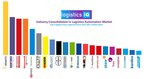
Industry Consolidation in Logistics Automation Market

Over the last decade, the logistics automation market has experienced significant consolidation. Traditional industry players are acquiring innovative technology leaders to stay competitive and address evolving market demands. Notable examples include:

Rockwell Automation’s acquisition of Clearpath Robotics and OTTO MotorsZebra’s acquisition of Fetch RoboticsToyota’s acquisition of Vanderlande, Bastian Solutions and ViaStoreHoneywell’s acquisition of Intelligrated and TransnormJungheinrich acquired Magazino and ArculusSSI Schafer acquired DS AutomotionABB acquired ASTI Mobile Robotics and SevensenseKPI Solutions acquired Kuecker Logistics Group, Pulse Integration, QC SoftwareKörber acquired Cohesio Group, Siemens Logistics, HighJumpTeradyne acquired MiR, Energid, AutoGuide Mobile Robots

These mergers and acquisitions reflect the ongoing shift towards automation and the integration of cutting-edge technologies across the supply chain.

Read full report on the Logistics Automation Market Size, Growth, Share, Trends, and Forecast

Key Markets and Growth Opportunities

Top Markets: The United States, China, and Germany account for more than 50% of the demand for logistics automation, with strong market penetration in Europe, particularly in Germany, Italy, France, and the Netherlands. Western Europe represents around 30% of the global market. Emerging markets in APAC, particularly in India and Southeast Asia, are also showing strong growth potential, as are regions like the Middle East and Latin America.Emerging opportunities: Latin America is still under-penetrated with regards to automation; however, things are set to change and market is set to observe a high growth in Brazil and Mexico. Within Europe, Central and Eastern Europe is a fast-growing region, with Poland and Czech Republic emerging as logistics hub and showing good growth prospects.Grocery Industry: The grocery sector is a key area for logistics automation, driven by the need for high-frequency deliveries and the growing demand for online grocery services. Grocery distributors ship high cubic volumes of merchandise to retail stores with frequent deliveries to ensure product freshness.  Grocery distribution center operations are amongst the most labour intensive of any industry. Grocery automation market is expected to reach over $7 billion by 2030.AGV and AMR Market Growth: The market for Automated Guided Vehicles (AGVs) and Autonomous Mobile Robots (AMRs) is projected to experience rapid growth, with a CAGR of over 20% by 2030. AMRs, which can operate without external guidance systems like optical tape or sensors, are becoming increasingly popular due to their ease of deployment in existing warehouse infrastructures.We expect AGVs/AMRs to have more than 20% market share by 2030 in this market led by players such as Seegrid, Balyo, Hai Robotics, Geek+, GreyOrange, HikRobot, Quicktron, Locus Robotics, Fetch Robotics (Zebra), 6 River Systems (Ocado), Teradyne (MiR, AutoGuide Mobile Robots), Rocla, JBT, ek-robotics, Omron, Rockwell Automation (Clearpath Robotics, OTTO Motors). We further see more consolidation and M&A in the mobile robots space as larger System integrators look to complete their product portfolios.

Order Picking and Automation Trends

Manual vs. Automated Picking: The order picking process remains one of the most labor-intensive tasks in the warehouse, especially in e-commerce fulfillment. While manual picking is still preferred for operations with a large variety of SKUs, automated picking systems and robotic solutions are gaining traction. Technologies such as RFID, pick-to-light, and pick-to-voice systems help improve efficiency even in semi-automated environments.Piece Picking Robots: Companies such as Righthand Robotics, Berkshire Grey, Osaro, and Covariant are leading the charge in developing piece picking robots that are ideal for e-commerce fulfillment. These robots significantly reduce labor costs and increase throughput, offering a high return on investment for businesses.

Purchase the full report on the Logistics Automation Market By Technology (AGV/AMR, ASRS, Conveyors, Sortation, Order Picking, Automatic Identification and Data Capture, Palletizing & Depalletizing, Overhead Systems, MRO Services and WMS/WES/WCS), By Industry (E-commerce, General Merchandise, Grocery, Apparel, Food & Beverage, Pharma, 3PL), By Geography – Global Forecast to 2030

What will you get in this report?

500+ Pages, 290+ Exhibits and 350+ Market tables for7 major Industry Verticals (eCommerce, Grocery, General Merchandise, Apparel, Food & Beverage, 3PL, Wholesale)10 Technologies (Mobile Robots, AS/RS, Conveyors, Sortation, Order Picking, Automatic Identification and Data Capture (AIDC), Palletizing and Depalletizing Robots, Overhead systems, Software (Warehouse Management, Warehouse Execution, and Warehouse Control), and MRO services.6 regions and 28 countries (United States, Canada, United Kingdom, Germany, France, Italy, Spain, Netherlands, Nordics, China, Japan, India, Australia, Thailand, Vietnam, Singapore, Indonesia, South Korea, Malaysia, Philippines, Taiwan, Saudi Arabia, UAE, Turkey, South Africa, Argentina, Brazil, Mexico)Pivot-friendly Excel file with 350+ market tables including forecast till 2030In-depth analysis of 700 companies in the ecosystem with more than 140+ company profilesFocus Group Discussion with 100+ key industry stakeholders across the value chain to collect the first-hand information to validate our analysis2 Analyst Sessions to brainstorm furtherInvestment details with 150+ M&A and 750+ funding dealsLogisticsIQ™ Exclusive Market Map (~700 Players across 15+ categories)

About LogisticsIQ

LogisticsIQ is a dedicated market research and advisory firm in Logistics & Supply Chain sector, empowering decision makers from top fortune 1000 companies, financial and research institutions, private equity and high potential start-ups with market insights to make better decisions. We enable this by analysing the right mix of the best data, the best research methodologies, and the best industry panel to deliver value to our clients.

Media Contact
Name: Sunny M.
Email: sunny@thelogisticsiq.com
Phone: +91-952-918-4938

Photo: https://mma.prnewswire.com/media/2509503/Logistics_Automation_Market.jpg
Logo: https://mma.prnewswire.com/media/2320412/LogisticsIQ_Logo.jpg


View original content:https://www.prnewswire.co.uk/news-releases/logistics-automation-market-to-reach-55-billion-by-2030-driven-by-e-commerce-and-supply-chain-transformation—logisticsiq-302252917.html

Continue Reading

Technology

Bridge Alliance API Exchange (BAEx) Accelerates Regional Network API Adoption with Early Enterprise Customers and Market Expansion

Published

on

By

SINGAPORE, Nov. 3, 2026 /PRNewswire/ — Bridge Alliance, the leading mobile alliance for operators globally, today announced the commercial realisation of regional network APIs through early enterprise customers via the Bridge Alliance API Exchange (BAEx). Companies from the cloud services, mobile gaming and fintech sectors are leveraging network APIs through BAEx to power diverse digital services, demonstrating the growing commercial potential of operator network capabilities across the region.

Number Verify is one of the first APIs adopted by the companies. Number Verify confirms that the phone number a user provides is the same one they are using to access an online service or app. With digital fraud and scams a growing concern in Asia-Pacific, silent network authentication APIs such as Number Verify could authenticate users and enable service providers to build greater consumer trust. These initial deployments are intended as a foundation: as the commercial pilots progress, several of the enterprise customers will evaluate additional BAEx APIs, built on GSMA Open Gateway and CAMARA standards, and telco signals for identity verification and fraud detection.

Mr Loo Boon Chee, CEO of Bridge Alliance, said, “We warmly welcome our new BAEx customers and partners!  There has been a lot of pent-up demand and clear use cases for APIs among enterprises. We’ve worked hard to bring API capabilities together in a single platform that enables them consistent access, backed by our commercial model packaged and priced to market needs. BAEx has thus turned network API potential into a commercial reality, closing the network API demand and supply gap. We look forward to having more enterprise customers on board as we continue to add to the APIs available on BAEx.”

Mr Max Wang, Head of Cloud Communication International Business Operations, Alibaba Cloud, said, “In the era of AI, secure identity is paramount. Just as Alibaba Cloud championed Number Verify in China, Bridge Alliance now leads its adoption across APAC. As one of the original signatories with GSMA to champion this technology, we firmly believe it will eliminate mobile authentication friction and combat artificially inflated SMS traffic. By advancing Number Verify and the broader CAMARA framework, we empower enterprises to deliver seamless, trusted, and efficient digital services.”

New channel partners on board

Meanwhile, Bridge Alliance has inked strategic partnership agreements with new BAEx partners MX Labs, SBTS and TMT ID. These channel partners will connect more enterprise customers to BAEx in the coming months. MX Labs, a Singapore-based messaging infrastructure provider, brings an established enterprise base ready to move beyond SMS-based verification. SBTS, a SoftBank subsidiary, brings extensive identity and fraud detection capabilities. TMT ID, a specialist in network intelligence, uses network APIs to support identity verification and frictionless onboarding.

Mr Xinkai Chua, Managing Director of MX Labs, said, “BAEx gives us a single integration into Bridge Alliance’s member operators, so we can bring network-based number verification to our customers across Asia without building market by market. Silent verification over the mobile network cuts sign-up friction and fraud, and reduces reliance on SMS one-time passwords. We look forward to growing with BAEx as more markets and APIs come live.”

Mr John Tolton, Senior Vice President, Strategic Business Development, SBTS, said, “At SBTS, our ambition is to bring the value of the network closer to the enterprise, turning network intelligence into solutions that address real challenges in identity, trust and fraud prevention. BAEx brings us closer to that goal, creating a path to scale these solutions and make network intelligence an integral part of the digital customer journey.”

Mr Fergal Parkinson, CMO and Co-Founder of TMT ID, said: “We are delighted to collaborate with Bridge Alliance, which provides us the regional infrastructure to scale, ensuring our clients can verify genuine users and block high-risk interactions in milliseconds. By joining forces, we are expanding our operational footprint across Asia, enabling us to deliver secure, frictionless identity verification to enterprises, developers, and leading social media platforms in the region.”

BAEx Partner Programme welcomes Proximus Global

Bridge Alliance also welcomes Proximus Global, a subsidiary of Proximus, to the BAEx Partner Programme. Drawing on its distinct international experience, Proximus Global will share valuable lessons and expertise with fellow participants in technical workstreams. The Programme’s continued expansion and valuable insights from a wide spectrum of members and markets supports greater API innovation, development and standardisation, and market readiness across the region.

New markets, new APIs, new possibilities

BAEx is now expanding its presence to India and the Philippines, in addition to Indonesia, Malaysia, Taiwan and Thailand which Bridge Alliance lighted up in November 2025. API availability in these two new markets will enable proofs of concept and the development of new digital services in the coming months. Singapore and Vietnam will follow in the first quarter of 2027, extending BAEx coverage across most of Southeast Asia.

Meanwhile, Bridge Alliance’s collaboration with Aduna Global is also accelerating  global access to APIs. The combined coverage of BAEx and Aduna enables both organisations’ partners across North America, Europe and Asia to consume network APIs with ease.  Bridge Alliance and Aduna are jointly organising the inaugural Global API Forum in Singapore on 3 November 2026. The event brings together over 300 operators, developers, solution providers, and enterprise customers to discuss the challenges, opportunities, and real-world applications of API adoption.

BAEx already offers silent network authentication APIs such as Number Verify and SIM Swap, which enable secure and seamless verification. By 4Q2026, BAEx will add Know-Your-Customer (KYC) APIs to its portfolio, including KYC Match, KYC Age, KYC Tenure and Number Recycling, which verify user details against operator records. These APIs will add trust and security to digital transactions, helping enterprises prevent mule accounts and seamlessly verify delivery and marketing data.

Enterprises interested to learn more about BAEx can contact Bridge Alliance here: https://www.bridgealliance.com/how_we_help/baex-enterprises/

About Bridge Alliance

Bridge Alliance is the global collective of premier mobile operators, representing nearly 2 billion customers across the world’s most dynamic markets. Founded in 2004, we drive deep strategic collaboration between leading operators and technology partners to unlock enterprise growth. By leveraging group economies and shared innovation, we empower our ecosystem to lead, scale, and thrive in the digital and AI era. 

Visit www.bridgealliance.com for more information. 

View original content:https://www.prnewswire.com/apac/news-releases/bridge-alliance-api-exchange-baex-accelerates-regional-network-api-adoption-with-early-enterprise-customers-and-market-expansion-302927357.html

SOURCE Bridge Alliance

Continue Reading

Technology

XTransfer and Bank of China (Hong Kong) Announce Partnership at Hong Kong FinTech Week

Published

on

By

Empowering Global Collections and Payments for Foreign Trade Enterprises

HONG KONG, Nov. 3, 2026 /PRNewswire/ — XTransfer, the world’s leading B2B cross-border trade payment platform, and Bank of China (Hong Kong) (“BOCHK”) are pleased to announce the signing of a cooperation agreement. The two parties will work together to expand their international business, providing one-stop cross-border financial services, including global collections, payments, and foreign exchange, for enterprises engaged in international trade in Hong Kong and around the world.

Coinciding with Hong Kong FinTech Week 2026, Mr Martin Liu, Vice President of XTransfer and Ms Winnie Fan, Deputy General Manager of the Global Corporate Banking Department of BOCHK, officially signed the cooperation agreement at the XTransfer booth, witnessed by Mr Bill Deng, Founder and CEO of XTransfer and Mr Liu Chao, General Manager of the Global Corporate Banking Department of BOCHK, marking a new stage in the partnership between the two parties.

Under this cooperation, XTransfer and BOCHK will collaborate in depth across business areas including global collections, payments, and foreign exchange. Leveraging BOCHK’s professional capabilities in cross-border settlement and foreign exchange trading, as well as its unique position as the RMB clearing bank in Hong Kong, combined with XTransfer’s self-built globally unified B2B cross-border settlement network and risk management system, the two parties will jointly create an efficient, lower-cost, and compliant fund collection, payment, and currency exchange experience for foreign trade enterprises. Under this cooperation model, XTransfer is the first corporate partner of BOCHK.

As the cooperation progresses, foreign trade enterprises in Hong Kong and around the world will be able to access global cross-border collection, payment, and foreign exchange services more conveniently, meeting their multi-currency transaction and settlement needs across different markets. Both parties expect that by reducing the handover points in cross-border transaction processes, they can enhance the service experience and capital turnover efficiency, helping enterprises seize global trade opportunities more flexibly.

This cooperation also reflects XTransfer’s continuously deepening Financial Institution Partnership Model. Financial institution partners can act as “Co-builders”, providing cross-border collection, payment, and foreign exchange capabilities; at the same time, through XTransfer’s network covering over one million business customers, they can reach more enterprise customer segments with cross-border financial service needs, achieving complementary capabilities and shared strengths.

Mr Bill Deng, Founder and CEO of XTransfer, said, “We are very honored to sign the cooperation agreement with BOCHK during Hong Kong FinTech Week. BOCHK is one of Hong Kong’s most representative banks, with deep expertise in cross-border settlement and foreign exchange services. This cooperation combines the strengths of both parties, enabling SMEs to enjoy cross-border financial services of the same standard as large multinational corporations. Going forward, we will continue to refine our compliance and risk control capabilities and work with more financial institution partners to build trustworthy cross-border financial infrastructure.

View original content to download multimedia:https://www.prnewswire.com/apac/news-releases/xtransfer-and-bank-of-china-hong-kong-announce-partnership-at-hong-kong-fintech-week-302927362.html

SOURCE XTransfer

Continue Reading

Technology

PATEO Advances In-Vehicle AI with NVIDIA Nemotron and ByteDance Doubao on its AI Box built on NVIDIA DRIVE AGX Thor

Published

on

By

SHANGHAI, Nov. 3, 2026 /PRNewswire/ — PATEO is advancing in-vehicle AI by deploying NVIDIA Nemotron and the 35-billion-parameter ByteDance Doubao language model in its AI Box, built on NVIDIA DRIVE AGX Thor. The solution combines local AI inference with PATEO’s AI Agent platform to support multilingual interaction, understand cabin context and coordinate vehicle functions.

At Auto China 2026 in Beijing, PATEO announced joint development of the solution with ByteDance and a leading new energy vehicle automaker. PATEO has also secured a project nomination for a new-generation vehicle from a leading new energy vehicle automaker, with mass production for that program expected in the second quarter of 2027.

In-vehicle local inference with Nemotron and Doubao

PATEO has integrated NVIDIA Nemotron 3.5 ASR for speech recognition into its in-vehicle model suite. In collaboration with ByteDance, PATEO has also integrated Doubao, a 35-billion-parameter mixture-of-experts language model. The suite includes text-to-speech synthesis and a 2-billion-parameter language model for semantic classification and request rejection.

The integrated suite can run inference locally without a cloud connection, supporting multilingual voice interaction and real-time streaming speech recognition. This enables core AI functions to remain available when connectivity is limited, while connected services and cloud updates extend the system’s capabilities.

The PATEO AI Agent platform combines voice, visual and sensor inputs to interpret user requests and cabin conditions. Within vehicle safety permissions, it can invoke cabin controls and online services, coordinate concurrent tasks and manage longer-running requests. With user authorization, it can remember preferences and habits to personalize future interactions.

AI Box Brings Proactive Intelligence to the Cockpit

PATEO’s AI Box supports practical scenarios throughout the driving experience. Sentinel AI can identify and issue alerts for risks such as parking violations, flooding and fire. On hot commutes, occupants can independently adjust driver and passenger climate settings through voice commands or gestures. During extended highway driving, the AI agent can detect driver fatigue and ask whether the driver would like to open a window or activate seat massage. In areas with poor air quality, it can suggest closing windows and switching to recirculation based on location and learned driving habits.

Built on NVIDIA DRIVE AGX Thor, the AI Box connects perception, reasoning, execution and learning. Sustaining these experiences requires memory bandwidth alongside peak compute measured in TOPS. As context accumulates across conversation turns and agent actions during a trip, the model’s key-value (KV) cache grows, increasing demands on memory capacity and bandwidth. Thor’s accelerated compute and high memory bandwidth help support responsive local inference. Within automotive safety permissions, the AI Box coordinates cockpit controls, connected services and concurrent or longer-running tasks. With user authorization, it remembers preferences and habits, while cloud updates help refine its capabilities.

The AI Box’s modular software architecture and integration with in-vehicle systems and NVIDIA’s edge and cloud AI ecosystem support model deployment, tuning and customization across vehicle programs. By adding dedicated AI computing capacity without replacing the original main control chip, it also offers an upgrade path for existing vehicles whose processors cannot support larger models, concurrent multimodal interactions and proactive agents through software updates alone.

Expanding Beyond Hardware with Tokenomics and Physical AI

PATEO is building on the AI Box to expand from one-time hardware delivery into ongoing AI services and operations. Its in-vehicle Tokenomics strategy aims to create recurring revenue around the deployment and use of AI capabilities, extending the business opportunity beyond the initial hardware sale.

In June 2026, PATEO formed partnerships with Mininglamp Technology, Xunce Technology and Saimo Technology to jointly develop a token-based physical AI world model and TokenOS. The collaboration brings together on-device hardware, simulation testing, data infrastructure, creating a foundation for delivering and operating AI services.

Built on NVIDIA DRIVE AGX Thor, the AI Box provides a reusable platform that PATEO can adapt to different automakers and vehicle programs. The company is also extending its expertise in intelligent interaction and hardware engineering into robotics. PATEO reports a project nomination from a leading domestic robotics computing provider, opening an opportunity to apply its platform capabilities to physical AI applications beyond vehicles.

As on-device models and AI agents move toward broader automotive deployment, PATEO is combining NVIDIA accelerated computing with its cockpit software and hardware expertise to support that transition. Its focus on reusable technology, deployment across vehicle programs and ongoing AI services supports its evolution from a smart cockpit supplier into an AI platform company, with opportunities for growth across automotive and broader physical AI markets.


View original content to download multimedia:https://www.prnewswire.com/apac/news-releases/pateo-advances-in-vehicle-ai-with-nvidia-nemotron-and-bytedance-doubao-on-its-ai-box-built-on-nvidia-drive-agx-thor-302927306.html

SOURCE PATEO

Continue Reading

Trending