Connect with us

Technology

Autonomous Mobile Robots (AMR) Market to cross $10 Billion TAM with around 500K AMRs shipment by 2030 – LogisticsIQ

Published

on

NEW DELHI, Sept. 20, 2024 /PRNewswire/ — The global Autonomous Mobile Robots (AMRs) market is poised for significant growth, driven by increasing demand for automation across various sectors, including logistics, manufacturing, and healthcare. According to the latest market research by LogisticsIQ (5th Edition), Autonomous Mobile Robots (AMR) Market to cross $10 Billion TAM by 2030 with a CAGR of ~30% between 2024 and 2030. We expect the installed base of AMRs to reach 2 million units in 2030.

Download a Free Sample of our report on Autonomous Mobile Robots Market

Key Market Drivers

Increased Efficiency: Businesses are rapidly adopting AMRs to enhance operational efficiency, reduce labour costs, and streamline workflows.Labor Shortages: The ongoing labour shortages in various industries have accelerated the need for automated solutions, making AMRs a crucial investment for companies.Technological Advancements: Innovations in artificial intelligence (AI), machine learning, and sensor technology are making AMRs more capable and reliable.Growing E-Commerce: The rise of e-commerce has created a demand for efficient warehouse management solutions, further boosting the AMR market.

Regional Insights

North America leads the AMR market, accounting for the largest share due to the early adoption of automation technologies. Meanwhile, the Asia-Pacific region, especially China is expected to witness the fastest growth, fuelled by rapid industrialization and increasing investments in smart factories. US and China are going to contribute ~40% of this market by 2030.

Industry Applications

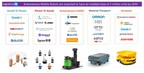
Autonomous mobile robots are being utilized in various applications, including:

Warehouse Automation: AMRs enhance inventory management and order fulfillment processes. This industry is expected to lead with more than 75% share by 2030.Manufacturing: Robots facilitate material handling and assembly line operations. Traditionally, it has been dominated by AGVs but are getting replaced by AMRs due to more flexibility and scalability features.Healthcare: AMRs assist in transporting medical supplies, improving patient care and operational efficiency. It is a niche market but high growing area to focus further.

Purchase the full report on the Autonomous Mobile Robots Market – Growth, Trends, and Forecast

Top Factors & Challenges in the Autonomous Mobile Robots Market

Top Factors Driving Growth

Increased Demand for Automation: Businesses across industries are increasingly seeking automation to enhance efficiency and reduce operational costs.Technological Advancements: Innovations in AI, machine learning, and sensor technologies improve the capabilities and reliability of AMRs, making them more attractive to businesses.Labor Shortages: Ongoing labour shortages, especially in sectors like logistics and manufacturing, are pushing companies to adopt AMRs to maintain productivity.Growth of E-Commerce: The surge in online shopping requires efficient warehouse and logistics solutions, driving the adoption of AMRs for inventory management and order fulfillment.Improved Safety Standards: AMRs can reduce workplace accidents by taking over hazardous tasks, leading to safer working environments.Customization and Scalability: Many AMR solutions offer customizable features that allow businesses to scale operations according to their specific needs.

Top Challenges

High Initial Costs: The upfront investment for AMRs can be substantial, which may deter smaller businesses from adoption.Integration with Existing Systems: Integrating AMRs into current operational workflows and legacy systems can be complex and resource-intensive.Regulatory Compliance: Navigating regulatory requirements and safety standards can pose challenges, especially in highly regulated industries.Limited Awareness and Understanding: Some businesses may lack knowledge about AMR technology and its potential benefits, hindering adoption.Technical Limitations: While technology is advancing, AMRs may still struggle with navigating complex environments or handling unexpected obstacles.Cybersecurity Concerns: As AMRs become more connected, they may be vulnerable to cybersecurity threats, requiring robust security measures.

Know more about Autonomous Mobile Robots Market – Top Players, Cost Analysis, Competition, and Customer Expectation

What will you get in this report?

500 Pages and 160+ Exhibits Market ReportRevenue and Shipment data segmented:By form factor (Deck-load, Tugger/Pull, Forklift)By Navigation (Tape/Wire/Magnet, Reflector, QR Codes, LiDAR, Camera, Sensor, Fusion)By Function (Goods to person (G2P), Person to Goods (P2G), Conveying, Piece picking, Towing, Pallet Handling)By Application (Manufacturing, Logistics and Warehousing, Shipping, Delivery, Cleaning, Security, Hospital, Retail)Detailed excel file with 150+ market tables (Revenue and Shipment) including forecast till 2030A bottom-up analysis of Autonomous Mobile Robots Market for 19 countries (United States, Canada, Germany, UK, France, Italy, Spain, Nordics, China, Japan, South Korea, Australia, India, Taiwan, Thailand, Malaysia, Singapore, Indonesia, Phillippines) in 5 regionsIn-depth analysis of 700 companies in the ecosystem with more than 160 company profiles.Focus Group Discussion with 100+ key industry stakeholders across the value chain to collect the first-hand information to validate our analysis. Stakeholders include components and technology providers, system integrators, robot manufacturers (OEM/ODM), robotic software & service providers, and end-user industry verticals. Apart this, study also focuses on different components and integral parts of Autonomous Mobile Robots like Motion Control, Batteries & Chargers, Cameras / Vision Sensor, LiDAR, Sensor Fusion, QR Code and Wireless Communication.2 Analyst Sessions to brainstorm furtherInvestment details excel file with 175+ M&A and ~1000 funding dealsLogisticsIQ™ Exclusive Market Map (700+ Players across more than 15 categories)

About LogisticsIQ

LogisticsIQ is a dedicated market research and advisory firm in Logistics & Supply Chain sector, empowering decision makers from top fortune 1000 companies, financial and research institutions, private equity and high potential start-ups with market insights to make better decisions. We enable this by analysing the right mix of the best data, the best research methodologies, and the best industry panel to deliver value to our clients.

Media Contact

Name: Sunny M.
Email: sunny@thelogisticsiq.com
Phone: +91-952-918-4938 

Photo: https://mma.prnewswire.com/media/2510643/Autonomous_Mobile_Robots_Market.jpg
Logo: https://mma.prnewswire.com/media/2320412/LogisticsIQ_Logo.jpg

View original content:https://www.prnewswire.co.uk/news-releases/autonomous-mobile-robots-amr-market-to-cross-10-billion-tam-with-around-500k-amrs-shipment-by-2030—logisticsiq-302253915.html

Continue Reading

Technology

In HelloNation, Real Estate Expert Lee Malcom Explains Why Local Knowledge Matters When Buying Older Homes

Published

on

By

The article outlines key inspection priorities and explains how local expertise helps buyers evaluate older properties.

MONROE, Ga., Oct. 26, 2026 /PRNewswire/ — What should buyers look for when purchasing an older home?

HelloNation published an article that answers this question, drawing on insights from Lee Malcom, real estate expert at Malcom & Malcom Realty Professionals LLC in Monroe, Georgia.

The article examines the unique opportunities and responsibilities of buying older homes. While many buyers are drawn to historic details, mature landscaping, and established neighborhoods, the article explains that age can also bring maintenance concerns that deserve careful evaluation before a purchase.

According to a HelloNation article, one of the most important areas to assess during an older-home inspection is the roof. Roofing systems naturally deteriorate over time, and replacement costs can be substantial. The article notes that understanding the roof’s age, condition, and maintenance history can help buyers anticipate future expenses and avoid unexpected repairs. Professional evaluations can also reveal leaks, damaged materials, and ventilation issues that may not show up during a casual walkthrough.

The article also highlights the importance of reviewing plumbing systems. Many older homes contain materials and components installed decades ago that may no longer meet modern standards. Corrosion, leaks, and reduced water pressure can create challenges for homeowners. The article explains that evaluating plumbing systems before purchase allows buyers to better understand potential upgrade or repair needs.

Electrical systems represent another key area of focus. The article explains that older wiring, electrical panels, and outlets may have been designed for households with much lower power demands than today. Modern families often rely on many electronic devices and appliances, so it’s important to determine whether existing electrical systems can safely support current usage.

The article also discusses foundation concerns as part of a comprehensive evaluation process. The article explains that while minor cracks may be common in some homes, larger issues can signal structural problems. Uneven floors, sticking doors, and visible foundation movement may warrant additional professional assessment before buyers decide to purchase.

The HelloNation article emphasizes that a detailed inspection of an older home can uncover concerns early and provide valuable information about future maintenance responsibilities. Understanding the condition of major systems allows buyers to make more informed decisions and prepare for potential ownership costs.

Beyond physical inspections, the article explains why local real estate knowledge matters when buying an older property. Experienced professionals often understand neighborhood histories, regional building practices, and long-term housing trends that may not appear in standard property disclosures. This knowledge helps buyers better evaluate the risks and opportunities associated with older homes.

For those exploring Walton County real estate, local expertise can provide important context regarding construction methods, neighborhood development patterns, and common maintenance issues found throughout the area. The article notes that this understanding helps buyers approach purchasing decisions with greater confidence and a clearer understanding of long-term ownership expectations.

The article also discusses the value of working with professionals who maintain strong local networks. Access to trusted inspectors, roofing specialists, contractors, and foundation experts can help buyers obtain reliable assessments and accurate information before finalizing a transaction.

Why Local Knowledge Matters When Buying Older Homes features insights from Lee Malcom, real estate expert in Monroe, Georgia, in HelloNation.

About HelloNation

HelloNation is America’s Good News Network, a premier media platform built on the idea that good news travels faster when real people tell real stories. Through its community-focused publications and innovative “edvertising” approach, HelloNation delivers content that informs, inspires, and spotlights the leaders making a meaningful impact in their communities.

www.hellonation.com

View original content to download multimedia:https://www.prnewswire.com/news-releases/in-hellonation-real-estate-expert-lee-malcom-explains-why-local-knowledge-matters-when-buying-older-homes-302910870.html

SOURCE HelloNation

Continue Reading

Technology

EZRA, the coaching arm of the Adecco Group, launches Loop – the first connected human and AI coaching experience

Published

on

By

The first connected coaching experience pairs a dedicated ICF-accredited coach and Cai, an AI development partner that remembers conversations, priorities and organizational context to enable manager performance enhancement

ZURICH, Oct. 26, 2026 /PRNewswire/ — EZRA, the enterprise coaching arm of the Adecco Group (SIX: ADEN), today launched EZRA Loop, a first-of-its-kind fully connected coaching experience that combines human expertise with AI to help managers build the skills needed to lead in the age of AI.

As AI becomes part of everyday work, hybrid workforce orchestration is about redesigning work so people and AI agents each contribute where they create the most value and impact.

In this new environment, managers are under increasing pressure to lead change, navigate complexity and develop their teams. Yet coaching remains out of reach for most employees. EZRA Loop democratizes coaching: businesses can now provide managers with an always-on AI development partner that knows exactly when to loop in a dedicated, accredited human coach.

Denis Machuel, CEO of the Adecco Group: “As AI changes how work gets done, organizations need to bring their people along with them. Loop shows how human expertise and AI support can work together to make coaching more accessible, in the flow of work. This is an excellent example of how to leverage technology, while retaining a human touch, judgement and trust that only people can provide. In the hybrid – human-AI – workplace, it is essential to intentionally design how people and technology interact.”

Research shows that teams led by coached managers resolved customer problems 18% faster. Drawing on insights from more than a million coaching sessions with 200,000 people across its customers including companies like Microsoft, Spotify, Mastercard, HSBC, Eli Lilly and KPMG, EZRA found that AI and human coaching each excel in different areas. It noticed that AI support outperformed human coaches on task skills such as prioritization and goal setting, while human coaching outperformed on interpersonal skills like emotional intelligence and executive presence. Together, humans and AI, outperform either alone, driving a 37% increased chance of behavioral changes. 

This combination reflects a broader shift across organizations where the greatest value is increasingly created not by humans or AI working independently, but by orchestrating the interaction between people and technology.

To access the full text of the press release, click here: https://www.adeccogroup.com/our-group/media/press-releases/ezra-launch-loop-human-ai-coahing

About The Adecco Group

The Adecco Group is the world’s leading talent and technology expertise company. Our purpose is making the future work for everyone. Through our three global business units – Adecco, Akkodis and LHH – across 60 countries, we enable sustainable and lifelong employability for individuals, deliver digital engineering consulting to innovate and accelerate business transformation and empower organizations to optimize their workforces. The Adecco Group leads by example and is committed to fostering sustainable employability and supporting resilient economies and communities. The Adecco Group AG is headquartered in Zurich, Switzerland (ISIN: CH0012138605) and listed on the SIX Swiss Exchange (ADEN). https://www.adeccogroup.com/

About EZRA

EZRA is the connected coaching company that gives every manager a coach. Founded in 2019 as part of The Adecco Group, EZRA has delivered more than a million coaching sessions to over 200,000 people in 120 countries and 75 languages. EZRA combines behavioral science with 4,500 ICF-accredited human coaches and Cai, its AI development partner, to deliver coaching that drives behavior changes, leadership development and better performance. Companies like Microsoft, Spotify, Mastercard, HSBC, Eli Lilly, KPMG and ServiceNow rely on EZRA coaching. 

For further information please contact:

The Adecco Group Corporate Press Office
media@adeccogroup.com
Rodrigo Sánchez Flórez – Tel: +34 658 06 54 02 / Jürg Schneider – Tel: +41 79 876 09 21
r.sanchezflores@adecco.com / Juerg.Schneider@adeccogroup.com

View original content to download multimedia:https://www.prnewswire.co.uk/news-releases/ezra-the-coaching-arm-of-the-adecco-group-launches-loop–the-first-connected-human-and-ai-coaching-experience-302919320.html

Continue Reading

Technology

EaseUS Software Releases Disk Health Insights Report 2026 H1 from 440K Disk Samples, Finding HDDs Show a 20x Higher Share of Caution/Bad Ratings Than SSDs

Published

on

By

NEW YORK, Oct. 26, 2026 /PRNewswire/ — EaseUS Software released the Disk Health Insights Report 2026 H1 from 444,282 disk samples, highlighting differences in HDD and SSD health ratings, key warning indicators, and storage characteristics that may warrant closer monitoring.

According to this report, HDD samples were substantially more likely than SSD samples to receive a Caution or Bad health rating: 24.83% of sampled HDDs received one of these ratings, compared with 1.22% of sampled SSDs – a difference of approximately 20 times in the share of health warnings.

The findings highlight the importance of regular disk health checks and proactive data protection, particularly for users who continue to rely on hard disk drives.

How Did EaseUS Lab Conduct This Disk Health Report?

EaseUS Lab, in collaboration with the EaseUS Partition Master R&D and technical support teams, conducted this study and analyzed 444,828 HDD and SSD samples collected from February 1 through July 31, 2026.

The EaseUS Lab examined disk health ratings and S.M.A.R.T. diagnostic indicators, as well as drive capacity, power-on hours (POH), partition styles, and Windows system drive configurations. Rather than measuring actual failure rates or predicting the remaining lifespan of individual drives, the report identifies patterns in observed health ratings and characteristics associated with a higher share of warnings in the dataset.

Alongside the differences between HDDs and SSDs, the findings revealed several noteworthy patterns, including:

HDDs with capacities below 500 GB showed a 35.89% share of Caution/Bad ratings, while those with more than 5,000 power-on hours recorded a 28.10% share.MBR HDDs also showed a higher share of Caution/Bad ratings than GPT HDDs, at 34.14% versus 19.29%.The share of HDDs receiving Caution/Bad ratings was nearly identical when C: drive utilization reached 90% or higher.

These findings help Windows users identify key disk health warning signs, protect important data, and prepare for migration or replacement when needed.

The following key findings offer a more thorough look at the report’s most notable disk health patterns and the factors that may warrant closer attention.

Core Findings: Five Key Insights Into Windows Disk Health

According to the report, EaseUS Lab identified five key findings to help users better understand disk health and prioritize maintenance.

1. HDDs Show a Higher Share of Caution and Bad Health Ratings

Among sampled HDDs, 74.73% were rated Good, 23.04% Caution, and 1.78% Bad. By comparison, 98.26% of sampled SSDs were rated Good, while 0.21% were rated Caution and 1.01% Bad.

Overall, 24.83% of HDDs were rated Caution or Bad, compared with 1.22% of SSDs.

Although SSDs show a much lower risk of getting Caution/Bad ratings, it still matters to run regular SSD health checks and take timely action when significant warnings remain.

2. Reallocated Sectors and Read Errors Stand Out Among HDD Warning Indicators

The report identifies S.M.A.R.T. attribute 05, Reallocated Sectors Count, and attribute 01, Read Error Rate, as notable HDD warning indicators.

Reallocated Sectors Count was reported in 5.06% of HDD samples, while Read Error Rate was reported in 1.62%. Among the warning indicators recorded in HDDs rated Bad, these attributes accounted for 70.00% and 22.47%, respectively.

These findings highlight the importance of combining overall health rating with significant diagnostic indicators. When significant warnings appear, users should prioritize protecting important data and determine whether disk cloning, migration, or replacement is appropriate.

3. Smaller-Capacity, Longer-Running, and MBR HDDs Show Higher Shares of Health Warnings

The report found higher Caution/Bad shares in several HDD groups:

35.89% of HDDs with capacities below 500 GB were rated Caution or Bad.28.10% of HDDs with more than 5,000 power-on hours (POH) were rated Caution or Bad.34.14% of MBR HDDs were rated Caution or Bad, compared with 19.29% of GPT HDDs.

These patterns identify scenarios that may warrant closer monitoring. However, the findings do not indicate that smaller capacity, longer operating hours, or MBR partitioning style may directly cause disk health to decline. Users should consider these characteristics alongside diagnostic results, device configuration, and usage history when planning maintenance or migration.

4. Low C: Drive Space Does Not Necessarily Indicate Poor HDD Health

This study also examined the relationship between C: drive utilization and disk health, using 90% utilization as the threshold for high storage pressure.

Among HDDs, 29.04% of samples with C: drive utilization at or above 90% were rated Caution or Bad, compared with 29.32% of those below 90%. The similar result doesn’t show a direct relationship between C: drive utilization and poorer HDD health in this dataset.Among SSDs, the Caution/Bad share was 1.83% in the high-utilization group and 0.89% in the lower-utilization group. Although the high-utilization group showed a higher share of Caution/Bad ratings, the data do not show a causal relationship.

For Windows users, low disk space and disk health issues are distinct concerns and should be evaluated separately, even when both issues affect the same device.

5. HDDs Continue to Power a Meaningful Share of Windows Systems

Despite the growing adoption of SSDs, HDDs accounted for 17.79% of sampled Windows system drives. GPT accounted for 75.46% of system drives, while MBR remained in use on 24.54%.

These findings show effective disk health management requires more than mere disk diagnostics. Windows users with HDDs should also consider storage capacity, data protection, partition compatibility, and SSD migration operations.

Industry Implications: Disk Health Detection Is Shifting to Proactive Management

According to this report, disk health diagnostics are taking a broader role in Windows storage management.

A single health rating can indicate whether a further investigation is needed, but it can’t provide a complete picture of storage readiness or determine the remaining lifespan of a disk drive.

This report highlights three practical priorities for disk management providers, PC support teams, and individual users:

Don’t ignore and check for early warning signs. Review overall health status along with S.M.A.R.T. indicators, power-on hours, and other drive details rather than relying on a single indicator.Back up data in advance. When a drive receives a Caution or Bad rating, confirm the reported issue and back up important files before making further decisions.Prepare for disk drive upgrade. If a drive is aging or running out of space, check the new drive’s capacity, partition style, and BIOS/UEFI compatibility before migrating or replacing a system drive.

This approach helps users understand disk health warnings and take appropriate action without assuming every warning signals an immediate drive failure.

Actionable Suggestions to Protect HDD and SSD Health in Windows

Based on the report’s findings, EaseUS Lab recommends a practical approach to disk health management tailored to the condition of each drive.

Drives in Good Status: Continue normal use, back up data regularly, and check disk health periodically.Drives in Caution Status: Review warning indicators, back up important files, and monitor disk health.Drives in Bad Status: Back up data first and consider drive replacement or data recovery if needed.Using small or aging HDDs: Monitor disk health and consider upgrading to an SSD if appropriate.Disk with low C: drive space issue: Free up space or expand the partition; low space alone does not indicate disk failure.HDD-to-SSD migration: Check disk health, target capacity, and boot compatibility before migrating.

The report emphasizes a complete process to take as long as a user is using a disk drive on their devices: Check Disk Health → Protect Data → Prepare New Disk → Migrate or Replace Disk. The goal is not simply to label a drive as healthy or unhealthy, but to help users respond appropriately to the available evidence.

The full report, including detailed findings and practical recommendations, is available at: https://www.easeus.com/whitepapers/disk-health-insights-report-2026-h1.html

About EaseUS Software

Founded in 2004, EaseUS is a software provider specializing in data recovery, disk management, data backup, and multimedia solutions. Trusted by users in more than 160 countries and regions, EaseUS develops accessible software to help individuals and businesses manage, protect, and make the most of their digital data. For more information, visit https://www.easeus.com.

View original content to download multimedia:https://www.prnewswire.com/news-releases/easeus-software-releases-disk-health-insights-report-2026-h1-from-440k-disk-samples-finding-hdds-show-a-20x-higher-share-of-cautionbad-ratings-than-ssds-302919108.html

SOURCE EaseUS Software

Continue Reading

Trending