Connect with us

Technology

The Automotive Rear Seat Infotainment Market is projected to grow by USD 8.79 Billion from 2024-2028, with AI driving transformation and rising consumer demand for in-car entertainment boosting growth – Technavio

Published

on

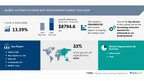
NEW YORK, Sept. 25, 2024 /PRNewswire/ — The Global Automotive Rear Seat Infotainment Market size is estimated to grow by USD 8.79 billion from 2024-2028, according to Technavio. The market is estimated to grow at a CAGR of almost 13.39%  during the forecast period. Increasing consumer demand for enhanced in-car entertainment is driving market growth, with a trend towards AI-powered rear seat infotainment systems  However, high initial costs of advanced infotainment systems  poses a challenge – Key market players include AISIN CORP., Alps Alpine Co. Ltd., Aptiv Plc, Continental AG, DENSO Corp., Faurecia SA, Garmin Ltd., Hyundai Motor Co., JVCKENWOOD Corp., LG Corp., Mitsubishi Electric Corp., NSV LLC, Panasonic Holdings Corp., Pioneer Corp., Robert Bosch GmbH, Samsung Electronics Co. Ltd., Sony Group Corp., TomTom NV, Valeo SA, and Visteon Corp..

Key insights into market evolution with AI-powered analysis. Explore trends, segmentation, and growth drivers- View the snapshot of this report

Automotive Rear Seat Infotainment Market Scope

Report Coverage

Details

Base year

2023

Historic period

2018 – 2022

Forecast period

2024-2028

Growth momentum & CAGR

Accelerate at a CAGR of 13.39%

Market growth 2024-2028

USD 8794.6 million

Market structure

Fragmented

YoY growth 2022-2023 (%)

11.55

Regional analysis

Europe, APAC, North America, South America, and Middle East and Africa

Performing market contribution

APAC at 33%

Key countries

US, Germany, China, Japan, and India

Key companies profiled

AISIN CORP., Alps Alpine Co. Ltd., Aptiv Plc, Continental AG, DENSO Corp., Faurecia SA, Garmin Ltd., Hyundai Motor Co., JVCKENWOOD Corp., LG Corp., Mitsubishi Electric Corp., NSV LLC, Panasonic Holdings Corp., Pioneer Corp., Robert Bosch GmbH, Samsung Electronics Co. Ltd., Sony Group Corp., TomTom NV, Valeo SA, and Visteon Corp.

Market Driver

The global automotive rear seat infotainment market is experiencing a significant trend with the integration of artificial intelligence (AI) systems. These advanced entertainment systems analyze passenger preferences and behaviors to deliver customized content recommendations. For instance, a passenger who enjoys jazz music may receive personalized playlists, while another who prefers action films will get movie suggestions based on their viewing history. Such AI-driven systems enhance the overall passenger experience by catering to individual tastes, making lengthy trips more enjoyable. Automakers are increasingly adopting this technology to differentiate their vehicles and cater to customers seeking personalized in-car entertainment. This trend is anticipated to fuel market growth throughout the forecast period. 

The Automotive Rear Seat Infotainment market is witnessing significant growth due to increasing consumer interest in advanced infotainment systems. Smartphone connectivity through Bluetooth and Wi-Fi hotspot is a major trend, allowing users to mirror their multimedia devices onto high-resolution touchscreens. Japanese carmaker’s luxury crossover SUVs are incorporating these features in their third-row seating. High-resolution displays offer improved audio fidelity and user interface for navigation systems. OEMs are also offering cloud-enabling syncing, predictive navigations, parking recommendations, and pre-trip planning. Smart devices like mobile phones and tablets can connect via HDMI or wireless connectivity for entertainment on long journeys. Luxury vehicles are also offering dual-eSIM connectivity and LTE modems for internet access. Video game enthusiasts can even connect their devices for in-vehicle gaming. In-vehicle infotainment systems are becoming more than just a necessity, they are becoming an essential part of the consumer experience. 

Request Sample of our comprehensive report now to stay ahead in the AI-driven market evolution!

 Market Challenges

The automotive rear seat infotainment market faces a significant challenge due to the high cost of advanced infotainment systems. These systems, featuring high-resolution screens, touchscreens, and various networking options, significantly increase vehicle price. In price-sensitive markets, consumers prioritize affordability over added functionality. This may result in slower adoption in emerging economies in Asia and Africa, as well as in cost-conscious consumers in developed economies. Instead, they may opt for less expensive options or smartphone integration solutions. The high cost of these systems is expected to limit their market growth during the forecast period.The Automotive Rear Seat Infotainment market is witnessing significant growth as Japanese carmakers prioritize enhancing the passenger experience in their vehicles. Third-row seating passengers now demand high-resolution displays for audio-visual entertainment. Automotive OEMs are responding with touchscreen displays, smartphone mirroring, and multimedia devices. Folding displays cater to the needs of various vehicle types, from light to heavy. User interface and smart devices are crucial for seamless connectivity via HDMI, wireless connectivity, and dual-eSIM connectivity with LTE modems. Consumer interest in internet access, mobile phones, and tablets is driving this trend. Luxury vehicles cater to video game enthusiasts with advanced systems offering audio, video, multimedia players, TV, DVD, digital radio, and more. The operating system is essential for seamless integration and a superior passenger experience.

Discover how AI is revolutionizing market trends- Get your access now!

Segment Overview 

This automotive rear seat infotainment market report extensively covers market segmentation by  

End-user 1.1 Aftermarket1.2 OEMTechnology 2.1 Multimedia player2.2 Navigation systemsGeography 3.1 Europe3.2 APAC3.3 North America3.4 South America3.5 Middle East and Africa

1.1 Aftermarket-  The Automotive Rear Seat Infotainment market refers to the supply of in-car entertainment systems for back seats. These systems provide passengers with access to features like music, navigation, and climate control. Major players in this market include Panasonic, Alpine, and Kenwood. Growth is driven by consumer demand for enhanced in-car experiences and increasing competition among automakers to offer advanced features. Market size is expected to reach USDXX billion by 2026.

Download a Sample of our comprehensive report today to discover how AI-driven innovations are reshaping competitive dynamics

Research Analysis

The Automotive Rear Seat Infotainment (RSI) market is witnessing significant growth due to the increasing consumer interest in advanced in-vehicle technologies. RSI systems are equipped with high-resolution touch screens, smartphone connectivity, Bluetooth, Wi-Fi hotspot, and HDMI ports to support mobile devices. These features enable passengers to access various infotainment applications, navigate using predictive systems, and enjoy internet access for streaming music, movies, and games. RSI systems also offer parking recommendations, pre-trip planning, cloud-enabling syncing, and wireless connectivity for a seamless and enjoyable ride. Luxury crossover SUVs and high-end vehicles are major adopters of these advanced infotainment systems, catering to the needs of video game enthusiasts and tech-savvy consumers. OEMs are continuously innovating to provide superior RSI experiences, integrating advanced features such as dual-eSIM connectivity to ensure uninterrupted connectivity on the go.

Market Research Overview

The Automotive Rear Seat Infotainment market is witnessing significant growth due to the increasing consumer interest in advanced in-vehicle technologies. High-resolution touch screens with smartphone connectivity are becoming standard features in modern vehicles, allowing passengers to access multimedia devices, navigation systems, and internet access. Infotainment technology now offers parking recommendations, pre-trip planning, and predictive navigations to enhance the passenger’s experience. OEMs in the luxury segment are focusing on providing advanced infotainment systems with touchscreen displays, Bluetooth connectivity, Wi-Fi hotspots, and even dual-eSIM connectivity for uninterrupted internet access. High-resolution displays offer improved audio fidelity and support for HDMI, making the experience more enjoyable for video game enthusiasts and multimedia players. The user interface of these systems is designed to be intuitive and compatible with smart devices, enabling seamless integration with mobile phones and tablets. Automotive OEMs are also exploring cloud-enabling syncing and LTE modems to provide real-time traffic updates and personalized content. The market for rear seat infotainment systems is expanding to include light and heavy vehicles, catering to the diverse needs of consumers.

Table of Contents:

1 Executive Summary
2 Market Landscape
3 Market Sizing
4 Historic Market Size
5 Five Forces Analysis
6 Market Segmentation

End-userAftermarketOEMTechnologyMultimedia PlayerNavigation SystemsGeographyEuropeAPACNorth AmericaSouth AmericaMiddle East And Africa

7 Customer Landscape
8 Geographic Landscape
9 Drivers, Challenges, and Trends
10 Company Landscape
11 Company Analysis
12 Appendix

About Technavio

Technavio is a leading global technology research and advisory company. Their research and analysis focuses on emerging market trends and provides actionable insights to help businesses identify market opportunities and develop effective strategies to optimize their market positions.

With over 500 specialized analysts, Technavio’s report library consists of more than 17,000 reports and counting, covering 800 technologies, spanning across 50 countries. Their client base consists of enterprises of all sizes, including more than 100 Fortune 500 companies. This growing client base relies on Technavio’s comprehensive coverage, extensive research, and actionable market insights to identify opportunities in existing and potential markets and assess their competitive positions within changing market scenarios.

Contacts

Technavio Research
Jesse Maida
Media & Marketing Executive
US: +1 844 364 1100
UK: +44 203 893 3200
Email: media@technavio.com
Website: www.technavio.com/

View original content to download multimedia:https://www.prnewswire.com/news-releases/the-automotive-rear-seat-infotainment-market-is-projected-to-grow-by-usd-8-79-billion-from-2024-2028–with-ai-driving-transformation-and-rising-consumer-demand-for-in-car-entertainment-boosting-growth—technavio-302258129.html

SOURCE Technavio

Continue Reading

Technology

Volvo Cars Q3 2026: taking decisive action to navigate a very tough environment

Published

on

By

GOTHENBURG, Sweden, Oct. 23, 2026 /PRNewswire/ — Volvo Cars today reports an operating income, excluding joint ventures & associates and items affecting comparability, of SEK -3.7 billion and a corresponding EBIT margin of -5.6 per cent for the third quarter of 2026. The result reflects a further deteriorating external environment, led by market developments in China and the US.

Q3 revenue was SEK 66.9 bn (SEK 86.4 bn in Q3 2025)Q3 operating income was SEK -5.6 bn (SEK 6.4 bn in Q3 2025)Q3 EBIT (excl. share of income in JVs & associates and IAC) was SEK -3.7 bn (SEK 5.8 bn in Q3 2025)Q3 EBIT margin was -8.4 per cent (7.4 per cent in Q3 2025)Q3 EBIT margin (excl. share of income in JVs & associates and IAC) of -5.6 per cent (6.7 per cent in Q3 2025)Q3 basic earnings per share were SEK -1.63 (SEK 1.75 in Q3 2025)Q3 fully electric car sales share at 32 per cent (22 per cent in Q3 2025)Q3 electrified car sales share at 53 per cent (46 per cent in Q3 2025)Q3 free cash flow of SEK -8.9 billion (SEK -4.3 billion in Q3 2025)

Volvo Cars today reports an operating income, excluding joint ventures & associates and items affecting comparability, of SEK -3.7 billion and a corresponding EBIT margin of -5.6 per cent for the third quarter of 2026. The result reflects a further deteriorating external environment, led by market developments in China and the US.

Volvo Cars remains a leader in the premium fully electric (BEV) segment, underpinned by a resilient performance in Europe where it had a BEV sales share of 45 per cent in Q3. But the situation in China and the US was considerably tougher, which also negatively affected free cash flow.

In China, Volvo Cars and other legacy premium brands faced hypercompetition from new Chinese alternatives, as well as severe pricing pressure. As a result, Volvo Cars’ revenues in China fell by almost 50 per cent year-on-year. In the US, Volvo Cars saw continued negative effects from tariffs and the removal of consumer incentives for electrified cars, which pressured margins.

The company’s Q3 result was also affected by other external developments: a negative revaluation of SEK 1.1 billion in CAFE credits due to legislation changes in the US, negative raw material developments, and SEK -0.9 billion due to the recognition of Polestar’s losses in Q2 2026.

In response to the result, Volvo Cars aims to reduce an additional SEK 5 billion in indirect spend and variable costs, on top of earlier cost programmes it successfully completed. These actions will lead to a structural reduction of approximately 2,500 jobs globally, of which 2,000 are based in Sweden, by ending consultant contracts, through natural attrition and by targeted exit packages to employees.

Full financial effects of these measures will be realised by the end of 2027, by which time the company’s overall indirect spend will be almost 25 per cent lower versus FY 2024.

The company is also working at speed on its recently announced, largest-ever product push. This consists of 13 new cars between now and the end of 2030, with a tailored portfolio of new cars for Europe, the US and China and more localised production. Already in 2027, Volvo Cars will reveal three of these new cars: one new car for Europe and two China-specific models.

More details about Volvo Cars’ performance can be found in the Q3 2026 financial report. 

“We continue to operate in a very tough environment with strong external challenges: de-globalisation, hypercompetition and climate change. We are convinced that we have the right long-term strategy addressing these challenges,” says Håkan Samuelsson, president and CEO. “However, in the short term, with severely challenged volumes, we need to reinforce our turnaround plan with additional decisive actions, lowering our break-even point and improving cash flows to make us more resilient.”

A reinforced turnaround plan with the right regional products

Reflecting its strong BEV position in Europe, the EX60 has been a big success with over 50,000 European orders and it will be one of Volvo Cars’ most profitable models. Due to new industrial technology such as cell-to-body it is taking longer than planned to ramp up production, but Volvo Cars is steadily improving built volumes.

In 2027 Volvo Cars will introduce its next global BEV car, which targets a large, lower priced market segment in Europe, with the first customer deliveries starting after summer. This will further strengthen its BEV leadership and improve margins.

In the US, Volvo Cars has divided the market in four regions to enable faster decision-making and improve sales. It is fast-tracking the production start of the long-range plug-in hybrid versions of the XC90 and XC60, with European deliveries starting this year and the US shortly after. In Q1 2027, it will localise XC60 production in Charleston. By the end of the decade, it will localise a second, all-new car with multiple powertrain options.

In China, the next two years will remain tough, so Volvo Cars is taking further cost-efficiency actions to weather the storm. For example, it will combine its two offices in Shanghai by moving the sales office to the local HQ in Jiading.

Mid-next year Volvo Cars will reveal and start production of the first two of six new China-tailored cars, through closer cooperation with Geely. These cars will be developed with a Chinese tech stack and the latest ADAS technologies to make them fully competitive in China. 

Additional cost and cash actions

Volvo Cars will achieve the additional savings of SEK 5 billion by driving structural change, lowering corporate overheads and empowering its regions. It is adapting its blue-collar workforce to current volumes by leveraging existing flexibility and will continue to reduce R&D costs, as it has already established its tech foundation with SPA3 and HuginCore.

Volvo Cars will also develop a more efficient production structure by concentrating on five dedicated Volvo plants globally. For its Chengdu and Ghent plants the company is exploring the option of multi-brand assembly together with Geely.

In addition, the company will further lower its variable costs, for example by increasing its common supplier base with Geely Group and adopting more common hardware parts in its cars.

Finally, Volvo Cars will continue to prioritise cash. The company has passed its investment peak and has now returned to normal and affordable investment levels, corresponding to an approximately 30 per cent reduction compared to 2024. 

Note to editors

Volvo Cars will host a livestream on its Q3 2026 results for media, investors and analysts at 08:00 CET today. The presentation will be held in English and followed by a Q&A session.

Link for livestream

It will be possible to ask questions during the Q&A session following the main presentation. To participate, you can either use the chat function online to type your question, or you can call in. To call in, participants need to register via the link below and will then receive the dial-in details and individual PIN.

Link to register

This disclosure contains information that Volvo Car AB (publ) is obliged to make public pursuant to the EU Market Abuse Regulation (EU nr 596/2014). The information was submitted for publication, through the agency of the contact person, on 23-10-2026 07:00 CET.

For further information please contact:
Volvo Cars Media Relations
+46 31-59 65 25
media@volvocars.com

Volvo Cars Investor Relations
+46 31-793 94 00
investors@volvocars.com

This information was brought to you by Cision http://news.cision.com

https://news.cision.com/volvo-car-ab–publ-/r/volvo-cars-q3-2026–taking-decisive-action-to-navigate-a-very-tough-environment,c4414242

The following files are available for download:


View original content:https://www.prnewswire.com/news-releases/volvo-cars-q3-2026-taking-decisive-action-to-navigate-a-very-tough-environment-302917802.html

SOURCE Volvo Car AB (publ)

Continue Reading

Technology

Artery AT32 AI Studio Empowers Edge Intelligence, Accelerating AI Application Deployment

Published

on

By

TAIPEI, Oct. 23, 2026 /PRNewswire/ — As artificial intelligence (AI) technology continues to advance rapidly, AI is expanding from cloud computing to edge devices, with applications such as intelligent sensing, voice interaction, and visual recognition increasingly being integrated into a wide range of end devices. 

Focusing on the development of edge intelligence, Artery continues to strengthen its AT32 ecosystem with AT32 AI Studio, a one-stop edge AI development platform designed to help developers efficiently build and deploy edge AI applications on AT32 MCUs, lower the barriers to AI development, and accelerate the transition from AI models to real-world products.

An Integrated Toolchain Streamlining the Entire Edge AI Development Process

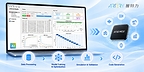
AT32 AI Studio integrates key capabilities throughout the edge AI development process, including data processing, model training and optimization, simulation and validation, and code generation, into a unified development environment. This integration helps developers reduce tool switching and repetitive configuration, enabling more efficient integration of AI models into AT32 MCU applications.

With its graphical development workflow and automated code generation capabilities, developers can build AI applications more intuitively and quickly convert optimized models into embedded code compatible with the AT32 platform, further shortening the development cycle from algorithm validation to product implementation.

Optimized for Edge Computing, Enabling Lightweight AI Model Deployment

For resource-constrained embedded devices, model size, memory usage, computational requirements, and power consumption often directly determine whether AI applications can be successfully deployed.

AT32 AI Studio provides model optimization capabilities tailored to edge deployment requirements. Through techniques such as quantization and compression, the platform reduces model storage and computational resource requirements while maintaining accuracy and improving execution efficiency on AT32 MCUs. In addition, the platform includes lightweight neural network models designed for embedded applications, providing developers with an AI development foundation better suited to the resource constraints of MCUs. These capabilities enable AI algorithms to move beyond basic execution toward practical deployment and real-world applications.

Unlocking the Potential of AT32 Edge AI Across Diverse Applications

AT32 AI Studio has been successfully applied to various scenarios, including voice keyword recognition, Time-of-Flight (ToF)-based gesture recognition, and industrial anomaly detection, demonstrating its versatility. By leveraging AT32 AI Studio, developers can combine AI algorithms with the hardware capabilities of AT32 MCUs to enhance sensing and decision-making capabilities in end devices, expanding the potential of MCU-based applications in smart homes, industrial control, smart wearables, and human-machine interaction.

Focused on Practical Deployment, Bringing AI Development Closer to Real-World Products

For embedded AI applications, successful execution of a model on a PC does not necessarily guarantee stable operation on actual hardware. Model accuracy, resource utilization, and real-world performance must still be validated in the target hardware environment.

AT32 AI Studio incorporates simulation, evaluation, and practical deployment as essential stages of the development process, establishing a complete development–validation–deployment workflow. This approach helps developers thoroughly evaluate model performance on the AT32 platform during development, while automated code generation further facilitates integration with embedded software development.

Empowering the Ecosystem with Development Tools and Accelerating the Transition to Edge Intelligence

As applications evolve from traditional control to intelligent sensing, MCUs are becoming an important platform for extending AI capabilities to end devices. Artery Technology continues to enhance its software ecosystem and development toolchain centered on AT32 MCUs, reducing development complexity, improving model deployment efficiency, and providing developers with more comprehensive and efficient AI development support.

AT32 AI Studio represents an important part of Artery’s AI ecosystem development, bridging Physical AI and edge computing. Through an end-to-end development workflow, MCU-oriented model optimization, and automated deployment capabilities, Artery Technology will further unlock the potential of edge AI applications on the AT32 platform, helping developers integrate AI capabilities into end products more efficiently and bringing more intelligent applications from algorithms to reality.

Artery Technology specializes in the research, development, and innovation of 32-bit microcontrollers, providing high-performance, highly reliable products and solutions for a wide range of applications, including industrial control, consumer electronics, IoT, and smart applications. The company is committed to advancing intelligent technologies through continuous innovation.

View original content to download multimedia:https://www.prnewswire.com/apac/news-releases/artery-at32-ai-studio-empowers-edge-intelligence-accelerating-ai-application-deployment-302917813.html

SOURCE Artery Technology

Continue Reading

Technology

Electrolux Group Interim report Q3 2026

Published

on

By

STOCKHOLM, Oct. 23, 2026 /PRNewswire/ — 

Highlights of the third quarter of 2026

Net sales increased to SEK 33,919m (32,318) with organic sales growth of 3.5% (4.6). All regions contributed to the growth, driven mainly by increased sales volumes in Europe, Middle East & Africa, Asia Pacific (EMEA APAC), and Latin America, as well as positive price development in North America.Operating income excluding non-recurring items (NRIs) was SEK 912m (890), corresponding to a margin of 2.7% (2.8). Cost efficiency contributed SEK 1.4bn to operating income, offsetting the significant negative impact from external factors, primarily from increased raw material and logistics cost as a consequence of the Middle East conflict, and U.S. tariff costs.Operating income of SEK 607m (890), corresponding to an operating margin of 1.8% (2.8), included negative NRIs of SEK -305m referring to previously announced restructuring costs related to the strategic partnership with Midea Group in North America, and global organization and footprint optimization costs. In the quarter, the factory in Rosario, Argentina, was closed.Income for the period was SEK -340m (192) and earnings per share were SEK -0.46 (0.39).Operating cash flow after investments was SEK 3,608m (624), mainly driven by improved working capital, and U.S. tariff refunds. Investments continued to be at a low level.Net debt/EBITDA improved to 2.2x (3.5).Manufacturing joint venture in Anderson, U.S., for Fabric Care, with Midea Group in North America, became operational on September 1.

Events after the close of the period:

Sales joint venture, U.S., and manufacturing joint venture in Juarez, Mexico, with Midea Group in North America related to Food Preservation products became operational on October 1.

President and CEO Yannick Fierling’s comment

Strong strategic execution and resilient performance

The third quarter marked strong progress in the transformation of Electrolux Group. We continued to execute the strategic priorities and delivered resilient performance in a challenging market environment. Competitive pressure remained high, alongside significant cost headwinds from external factors, including raw material, logistic costs and U.S. tariffs.

In North America, we reached an important milestone as our strategic partnership with Midea Group became operational. All three joint ventures have been established, including the sales joint venture for Food Preservation and the manufacturing joint ventures in Juarez, Mexico, and Anderson, U.S. The closure of the Anderson factory contributed positively to earnings in the quarter. The repurposing of the site for laundry production is progressing according to plan. The sale of the Juarez assets to Midea Group was completed on October 1.

Across the Group, we continued to progress on the global organization and manufacturing footprint optimization. We are creating a leaner organization, with fewer employees and a greater share of resources closer to consumers and markets. In the third quarter, we closed the factory in Rosario, Argentina. In Italy, discussions with trade unions and institutions regarding the optimization plan are progressing according to plan.

Navigating diverse regional challenges

In North America, inflation concerns continued to weigh on consumer confidence. Demand shifted towards lower price points as consumers are impacted by inflation and prioritize affordability. Higher tariffs added significant cost pressure, forcing the industry to further increase prices in the quarter. In Europe, consumer confidence deteriorated as geopolitical uncertainty increased and inflation weighed on purchasing power and demand. In Brazil, market demand remained positive, although growth slowed significantly as elevated interest rates continued to affect consumers’ financing and household spending.

Organic sales growth and strong cash generation

Organic sales grew in the quarter, with resilient performance across all regions. Strong commercial execution enabled us to increase our value market share for both the Electrolux and the AEG brands in Europe. In Latin America, growth was driven by higher volumes. In North America, organic sales growth mainly reflected the price increases implemented to mitigate higher tariff costs.

Operating income excluding non-recurring items was positively impacted by cost efficiency. This was offset by significant external headwinds, with the Middle East conflict impacting with full effect, leading to substantially higher raw material and logistics costs. U.S. tariff costs also had a negative impact in the quarter. We expect the pressure from external factors to remain in the coming quarters. Operating income benefited from a positive effect related to a recovery claim for overpaid tax, included in cost efficiency. This more than offset the negative effect from a customer-related provision in Brazil.

Operating cash flow after investment improved to SEK 3.6bn, supported by improved operating working capital and U.S. tariff refunds. The leverage ratio improved to 2.2x.

Full-year 2026 business and market outlook

We now expect volume, price and mix combined to have a neutral operating income contribution, compared with previously positive, reflecting the challenging market environment across regions. The expected contribution from cost efficiency is changed to about SEK 4.0bn, reflecting the strong traction in our cost efficiency initiatives. The business outlook for investments in consumer experience innovation and marketing, external factors and capital expenditure remains unchanged, as does our regional market outlook.

Building long-term competitiveness

We remain focused on what we can control to win in the marketplace: resetting North America operations, optimizing our organization and manufacturing footprint, and capturing growth opportunities.

We are reshaping Electrolux Group into a more agile, competitive and consumer-centric company. I am proud of the performance in the third quarter and the commitment and drive across Electrolux Group as we continue our transformation.

Webcast and telephone conference 09.00 CEST

A video webcast and simultaneous telephone conference is held at 09.00 CEST today, October 23. Yannick Fierling, President and CEO, and Therese Friberg, CFO, will comment on the report.

If you wish to participate via webcast, please use the link below. Via the webcast you are able to ask written questions.

https://edge.media-server.com/mmc/p/pb2vmwpk/

If you wish to participate via telephone conference, please register on the link below. After registration, you will be provided phone numbers and a conference ID to access the conference. You can ask questions verbally via the telephone conference.

https://register-conf.media-server.com/register/BI00fde9a3778945cbb8a8c2c1c778f2cb

The press release and presentation material is available for download on the Investor Relations section on electroluxgroup.com.

This is information that AB Electrolux is obliged to make public pursuant to the EU Market Abuse Regulation. The information was submitted for publication, through the agency of the contact person set out below, on 23-10-2026 07:00 CET.

For more information:

Ann-Sofi Jönsson, Head of Investor Relations & Sustainability Reporting, ann-sofi.jonsson@electrolux.com,  +46 73 025 1005 

Maria Åkerhielm, Investor Relations Manager, maria.akerhielm@electrolux.com, +46 70 796 3856

Henry Sjölin, Investor Relations Manager, henry.sjolin@electrolux.com, +46 76 863 51 85

Electrolux Press Hotline, +46 8 657 65 07. 

This information was brought to you by Cision http://news.cision.com

https://news.cision.com/electrolux-group/r/electrolux-group-interim-report-q3-2026,c4414138

The following files are available for download:

https://mb.cision.com/Main/1853/4414138/4335007.pdf

Interim report – ENG – Q3 2026


View original content:https://www.prnewswire.com/news-releases/electrolux-group-interim-report-q3-2026-302917815.html

SOURCE Electrolux Group

Continue Reading

Trending