Technology
The FM broadcast transmitter market is projected to grow by USD 9 Million from 2024-2028, with AI reshaping the landscape and GaN power ICs boosting revenue – Technavio
Published
2 years agoon
By
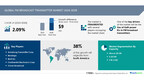
NEW YORK, Sept. 25, 2024 /PRNewswire/ — Report with market evolution powered by AI – The Global FM Broadcast Transmitter Market size is estimated to grow by USD 9 million from 2024-2028, according to Technavio. The market is estimated to grow at a CAGR of 2.09% during the forecast period. Use of gan power ICS in FM broadcast transmitters is driving market growth, with a trend towards growing demand for solid-state transmitters, However, high growth of online radio services poses a challenge – Key market players include Armstrong Transmitter Corp., Benzinga, Bext Inc., Continental Electronics Corp., Crown Broadcast, DB Elettronica Telecomunicazioni Spa, Eddystone Broadcast Ltd., Electrolink Srl, EuroCaster, Feeding Trends, GSMArena, HOPE Microelectronics Co. Ltd., Nautel Ltd., OMB Sistemas Electronicos SA, PCS Elektronik d.o.o., Plisch GmbH, Rohde and Schwarz GmbH and Co. KG, RVR Elettronica Srl, TEKO Broadcast Srl, and Thomson Broadcast.
AI-Powered Market Evolution Insights. Our comprehensive market report ready with the latest trends, growth opportunities, and strategic analysis- View your snapshot now
Forecast period
2024-2028
Base Year
2023
Historic Data
2018 – 2022
Segment Covered
Capacity (Above 20 kW, 5-20 kW, and 5 W-5 kW), Technology (Analog and Digital), and Geography (North America, South America, APAC, Europe, and Middle East and Africa)
Region Covered
North America, South America, APAC, Europe, and Middle East and Africa
Key companies profiled
Armstrong Transmitter Corp., Benzinga, Bext Inc., Continental Electronics Corp., Crown Broadcast, DB Elettronica Telecomunicazioni Spa, Eddystone Broadcast Ltd., Electrolink Srl, EuroCaster, Feeding Trends, GSMArena, HOPE Microelectronics Co. Ltd., Nautel Ltd., OMB Sistemas Electronicos SA, PCS Elektronik d.o.o., Plisch GmbH, Rohde and Schwarz GmbH and Co. KG, RVR Elettronica Srl, TEKO Broadcast Srl, and Thomson Broadcast
Key Market Trends Fueling Growth
Modern FM broadcast transmitters are shifting towards solid-state technology, with solid-state transmitters becoming a cost-effective and efficient solution for transmitter designs up to several hundred watts. These transmitters utilize transistors or integrated circuits, which can operate at various frequencies and power levels. However, high-power transmitters require multiple transistors in parallel due to the limited output of individual devices. In contrast, the cost of valve transmitter devices and their combining networks can be substantial. With the increasing availability and decreasing prices of solid-state transmitters, they are poised to replace valve amplifiers in the FM broadcast market, driving market growth during the forecast period.
The FM Transmitter Market is thriving with the increasing demand for personal audio devices and in-car entertainment. FM transmitters, wireless communication systems that convert audio from various sources into FM radio signals, are gaining popularity as an alternative to standard FM radio. New models offer simplicity and high-quality sound through features like near radio technology, USB ports, and Bluetooth connectivity. Transmitter networks enable new stations to broadcast qualitative information to wider audiences. HD Radio technology enhances audio quality and reduces interference. The automotive sector is a significant market for FM transmitters, providing emergency communication and entertainment solutions. Smart technologies like app control and remote monitoring are also trending. The Telecommunication and Broadcasting industries continue to innovate with cutting-edge solutions, including signal processing and wireless audio transmission. FM transmitters are essential components of electromagnetic communication systems, including radio broadcasting, television, radar, and antennas. The market’s growth is driven by the need for reliable and high-performance wireless communication systems in various industries.
Insights on how AI is driving innovation, efficiency, and market growth- Request Sample!
Market Challenges
The rise of digital audio platforms, such as streaming services and apps, has significantly changed the way people consume audio content. With over half of the US population owning smartphones and the ability to easily access Internet radio through these devices, traditional FM broadcasting faces challenges. Digital radio offers superior sound quality and a more personalized listening experience through data analytics. New cars are equipped with connectivity options for smartphones, enabling the playback of stored audio files or live digital streams. These advantages may eventually impact the demand for FM broadcast transmitters, potentially hindering market growth during the forecast period.The FM broadcast transmitter market faces challenges from various sectors. Personal audio devices and in-car entertainment have reduced the need for traditional radio broadcasting. In the automotive sector, USB ports and Bluetooth have become popular for wireless audio transmission. Signal processing and wireless audio transmission require cutting-edge solutions and smart technologies for interference reduction and HD Radio technology. Emergency communication, community radio, and event broadcasting demand robust and reliable transmitters. Remote monitoring, app control, and USB connections with Bluetooth connectivity are essential features. Challenges include interference, audio quality, bandwidth restriction, and lack of awareness in developing regions. The telecommunication and broadcasting industries, mobile electronics, military sector, aerospace market, and television industry are significant markets for broadcast transmitters. Technological developments in modulation range and digitization continue to shape the market.
Insights into how AI is reshaping industries and driving growth- Download a Sample Report
Segment Overview
This fm broadcast transmitter market report extensively covers market segmentation by
Capacity 1.1 Above 20 kW1.2 5-20 kW1.3 5 W-5 kWTechnology 2.1 Analog2.2 DigitalGeography 3.1 North America3.2 South America3.3 APAC3.4 Europe3.5 Middle East and Africa
1.1 Above 20 kW- Above 20 kW FM broadcast transmitters, also known as high-power transmitters, are a crucial component in radio broadcasting. These transmitters are of high quality, cost-efficient, reliable, and have a long life. Vendors like DB Elettronica Telecomunicazioni offer high-power tube transmitters, which cover a distance of up to 200 km and have a compact design for increased efficiency. Key features of these transmitters include a digital stereo encoder, built-in multiband audio processor, dual system control, switchable settings, RF power control, VSWR and overheat protection. The growth of the 20kW segment will be driven by these features, making it a significant market focus during the forecast period. Despite the increasing popularity of on-demand music streaming services, FM radio remains widely used, and high-power transmitters continue to play a vital role in broadcasting radio signals to listeners either directly or via repeater stations.
Download complimentary Sample Report to gain insights into AI’s impact on market dynamics, emerging trends, and future opportunities- including forecast (2024-2028) and historic data (2018 – 2022)
Research Analysis
The FM broadcast transmitter market encompasses innovative audio devices that facilitate radio broadcasting through standard FM radio waves. These transmitters are integral to wireless communication systems, providing in-car entertainment and personal audio experiences. Transmitters enable new stations to reach listeners, delivering high-quality audio with simplicity and ease. FM transmitters are essential components of wireless audio transmission, offering a cost-effective solution for broadcasting qualitative information to a wide audience. Near radio technology and Bluetooth connectivity enhance user experience, allowing seamless integration with various devices, including headphone jacks, USB ports, and other personal audio devices. Signal processing is a crucial aspect of FM transmitters, ensuring clear and consistent audio transmission. Transmitter networks play a vital role in expanding radio broadcasting reach and ensuring reliable, uninterrupted transmission. FM transmitters cater to diverse industries, including the automotive sector, offering cutting-edge solutions for radio broadcasting and wireless communication.
Market Research Overview
The FM Transmitter Market refers to the business sector focused on producing and supplying FM transmitters, which are devices used for wireless audio transmission. FM transmitters are essential components of radio broadcasting, in-car entertainment systems, and personal audio devices. They convert electrical signals into electromagnetic waves that can be received by standard FM radios and near radio devices. FM transmitters are available in various forms, including transmitter networks, USB ports, Bluetooth, and app control. These devices prioritize high-quality audio transmission, simplicity, and interference reduction. New stations and community radio broadcasters often rely on FM transmitters for qualitative information dissemination. The FM Transmitter Market caters to various industries, including the automotive sector, telecommunication industry, and broadcasting industry. Technological developments, such as HD Radio technology, smart technologies, and emergency communication systems, are driving market growth. However, bandwidth restriction and a lack of awareness in developing regions may pose challenges. FM transmitters are used in various applications, including television, radar, antenna systems, mobile electronics, beacons, walkie talkies, smartphones, and military and aerospace markets. The market is expected to witness significant growth due to digitization, the entertainment industry, and the modulation range of FM transmitters.
Table of Contents:
1 Executive Summary
2 Market Landscape
3 Market Sizing
4 Historic Market Size
5 Five Forces Analysis
6 Market Segmentation
CapacityAbove 20 KW5-20 KW5 W-5 KWTechnologyAnalogDigitalGeographyNorth AmericaSouth AmericaAPACEuropeMiddle East And Africa
7 Customer Landscape
8 Geographic Landscape
9 Drivers, Challenges, and Trends
10 Company Landscape
11 Company Analysis
12 Appendix
About Technavio
Technavio is a leading global technology research and advisory company. Their research and analysis focuses on emerging market trends and provides actionable insights to help businesses identify market opportunities and develop effective strategies to optimize their market positions.
With over 500 specialized analysts, Technavio’s report library consists of more than 17,000 reports and counting, covering 800 technologies, spanning across 50 countries. Their client base consists of enterprises of all sizes, including more than 100 Fortune 500 companies. This growing client base relies on Technavio’s comprehensive coverage, extensive research, and actionable market insights to identify opportunities in existing and potential markets and assess their competitive positions within changing market scenarios.
Contacts
Technavio Research
Jesse Maida
Media & Marketing Executive
US: +1 844 364 1100
UK: +44 203 893 3200
Email: media@technavio.com
Website: www.technavio.com/
View original content to download multimedia:https://www.prnewswire.com/news-releases/the-fm-broadcast-transmitter-market-is-projected-to-grow-by-usd-9-million-from-2024-2028-with-ai-reshaping-the-landscape-and-gan-power-ics-boosting-revenue—technavio-302258127.html
SOURCE Technavio
You may like
Technology
Electra to Usher in the Next Era of Aviation with Advanced Production Facility in Springfield, Ohio
Published
26 minutes agoon
July 21, 2026By
$850 million investment in Springfield and Clark County will move Direct Aviation from concept to reality, creating nearly 2,000 jobs and supporting production of up to 800 EL9 Ultra Short aircraft per year
SPRINGFIELD, Ohio, July 21, 2026 /PRNewswire/ — Electra today announced plans to establish its first production facility for the EL9 Ultra Short in the City of Springfield, within Clark County, a major milestone that will bring its nine-passenger hybrid-electric aircraft from development into scaled commercial production.
The $850 million investment will create 1,975 new jobs, anchor production of the EL9 Ultra Short, and help meet demand for Direct Aviation, a new category of accessible, point-to-point air mobility. The EL9 Ultra Short is a nine-passenger fixed-wing aircraft that uses hybrid-electric propulsion and blown-lift technology to take off and land in as little as 150 feet. The new facility will be located at AirPark Ohio, adjacent to Springfield-Beckley Municipal Airport.
“Electra is opening a new era of aviation, one where flight is direct, accessible, and closer to the communities it serves,” said Marc Allen, CEO of Electra. “This agreement is the moment that our vision moves from demonstration into reality. In Springfield and Clark County, we found the rare combination this next era requires: a ready site, a skilled workforce, a deep aerospace and defense ecosystem, and state and local leaders with the commitment and vision to build it with us. We are grateful to the City of Springfield, Clark County, and the State of Ohio for welcoming Electra into this community as we prepare to bring the EL9 Ultra Short into production, through certification, and ultimately into service.”
The production facility will ensure Electra remains at the forefront of American global leadership in hybrid-electric aviation, with the EL9 Ultra Short unlocking new markets for commercial advanced air mobility, military logistics, and humanitarian applications. The decision to build in Springfield is a bet on reindustrializing America’s capacity to manufacture next-generation aircraft at scale in the Birthplace of Aviation.
“Ohio is where flight began, and the Dayton-Springfield area has become the national epicenter for advanced air mobility – the place where the next generation of aircraft is being designed, tested, and now built at scale,” said Ohio Governor Mike DeWine. “Electra’s decision to bring nearly 2,000 new jobs to Springfield will be transformative for Clark County, demonstrating Ohio’s unique ability to lead America into aviation’s next era.”
Electra selected the site following a year-long competitive national site-selection process that evaluated more than 140 potential locations. Criteria included workforce availability, infrastructure readiness, long-term expansion capacity, state and local partnership, incentives, and proximity to the aerospace, defense, and advanced manufacturing talent needed to support EL9 Ultra Short production.
The new 96-acre facility will house production of the EL9 Ultra Short. The initial phase of development will start immediately with design, while construction of the facility will begin next year. The initial phase will support capacity for up to 400 aircraft per year. A second phase of development will expand capacity to up to 800 aircraft per year.
The company chose the Dayton-Springfield region because it offers advanced air mobility (AAM) companies a combination of assets found nowhere else in the country. Springfield-Beckley Municipal Airport is home to the National Advanced Air Mobility Center of Excellence (NAAMCE) and SkyVision, the FAA-approved ground-based detect-and-avoid system that enables beyond visual line of sight (BVLOS) flight testing in unrestricted airspace, which allows companies to move from concept to flight test faster than anywhere else in the nation. That infrastructure is complemented by growing AAM production near Dayton International Airport and the region’s proximity to Wright-Patterson Air Force Base and the Air Force Research Laboratory (AFRL), which together form one of the deepest concentrations of aerospace R&D talent in the world.
“JobsOhio and our partners at the Dayton Development Coalition are proud to welcome Electra’s first point-to-point hybrid-electric aircraft production facility to Ohio,” said JobsOhio President and CEO J.P. Nauseef. “This investment builds on years of collaboration to establish Springfield-Beckley Municipal Airport as a national hub for advanced air mobility. Here, Electra will have direct access to the nation’s premier AAM testing infrastructure, a proven aerospace workforce, a deep manufacturing supply chain and the unmatched research capabilities of Wright-Patterson Air Force Base—an ideal environment to innovate, scale and grow for decades to come.”
Electra’s investment will be supported by state and local incentives tied to job creation, workforce development, infrastructure readiness, and long-term manufacturing growth. An incentive package is being designed to support hundreds of new Ohio jobs over the coming years as Electra scales production in the region. The project will pursue a Job Creation Tax Credit from the Ohio Department of Development at a future Tax Credit Authority meeting. JobsOhio also plans to provide assistance with the project, which will be made public after a final agreement is executed.
The EL9 Ultra Short is designed to unlock Direct Aviation, a new category of air travel that connects people and places directly through point-to-point mobility using novel access points such as parking lots, barges, and sports fields. The aircraft is designed around Electra’s Rule of Six: access, quiet operations, payload, range, safety, and affordability. In 2025, the company secured $115 million in Series B funding to support pre-production and certification of the EL9 Ultra Short, led by Prysm Capital.
“This is a landmark moment for Electra and for aviation,” said Jay Park, Co-Founder and Managing Partner at Prysm Capital. “Building a new category of aircraft takes conviction at every step, and the Electra team has delivered on each one. We’re proud to be their partner as the EL9 goes from proving what’s possible to producing it.”
In May, Electra released the Direct Aviation Market Outlook, a nationwide analysis of U.S.-based travel. At the heart of this market are trips between 50 and 250 flying miles, where demand is both concentrated and largely unserved by existing aviation. Electra’s analysis found that meeting this demand will require between 12,000 and 16,000 aircraft between 2030 and 2040.
This announcement follows Electra and Safran Helicopter Engines’ life-of-program agreement to develop and produce the TG600 turbogenerator that will power the EL9 Ultra Short. The agreement includes an initial order for 250 units and establishes Safran’s TG600 as the core of the EL9’s hybrid-electric propulsion system.
Earlier this year, Electra and Bristow Group Inc. announced a Pre-Delivery Payment agreement with non-refundable deposits and binding terms and conditions aligned to commercial aviation industry standards, subject to aircraft certification, securing the first delivery slot for the EL9 Ultra Short hybrid-electric aircraft with the TG600.
Electra has also submitted the EL9 Ultra Short aircraft to the Federal Aviation Administration (FAA) for Part 23 type certification and anticipates a first flight scheduled for late 2027 or early 2028. The FAA recently closed the G-1 Issue Paper, formally establishing the certification basis for Electra’s EL9 Ultra Short aircraft and advancing the company toward the next phase of type certification.
“The first era of aviation began right here in the greater Dayton region,” Allen said. “It is fitting that aviation’s next era will be built here too — in Springfield and Clark County — where Electra will produce groundbreaking aircraft designed to transform the way people travel.”
Electra will also continue to operate parts of its business from its Manassas, Virginia facilities. Together, the two campuses will give Electra the structure, talent, and operating model needed to fuel its next chapter of growth. To learn more, visit electra.aero/ohiojobs.
About Electra
Electra.aero, Inc. (Electra) is an advanced air mobility (AAM) company building hybrid-electric Ultra Short airplanes that deliver unprecedented performance advantages to fly people and cargo seamlessly without airports, emissions, or noise. With the EL9 Ultra Short, Electra is pioneering Direct Aviation, the next level of connectivity that brings air travel closer to where we live, work, and play. Electra’s Ultra Short technology delivers 2.5x the payload and 10x longer range with 70% lower operating costs than helicopters and eVTOLs with significantly greater safety and far less certification risk.
Electra’s team includes some of the most respected and successful entrepreneurs and engineers in novel aircraft design, with over 40 prior aircraft successfully developed and/or certified. Lockheed Martin Ventures, Honeywell, and Safran are among Electra’s strategic investors along with Prysm Capital, the Virginia Innovation Partnership Corporation (VIPC), and other private investors. Electra’s contracted customers include the U.S. Air Force, the U.S. Army, the U.S. Navy, and NASA along with over 2,200 letters of intent from 60+ commercial customers, including both airlines and helicopter operators.
About JobsOhio
JobsOhio, Ohio’s private nonprofit economic development corporation, enhances company growth and personnel development through business attraction, retention, and expansion across 10 competitive industry sectors. With a team of seasoned professionals, JobsOhio utilizes a comprehensive network to foster talent production in targeted industries and attract talent through Find Your Ohio. Collaborating with seven regional partners, including Dayton Development Coalition, Lake to River Economic Development, Ohio Southeast Economic Development, One Columbus, REDI Cincinnati, Regional Growth Partnership, and Team NEO. JobsOhio delivers world-class customer service to provide companies with a competitive advantage. In 2026 Ohio was named CNBC’s Top State for Business. Learn more at www.jobsohio.com. Follow us on LinkedIn, X , Instagram, and Facebook.
Media Contacts:
Matthew Bowen
Vrge Strategies
matthew@vrge.us
Matt Englehart
Englehart@jobsOhio.com
614-300-1152
View original content to download multimedia:https://www.prnewswire.com/news-releases/electra-to-usher-in-the-next-era-of-aviation-with-advanced-production-facility-in-springfield-ohio-302830956.html
SOURCE Electra.aero
Technology
Introducing Harness Agent DLC: New Capabilities for the AI Agent Development Lifecycle
Published
26 minutes agoon
July 21, 2026By
Enterprises can now ship AI agents with the same governance, testing, and security they already trust for application code
SAN FRANCISCO, July 21, 2026 /PRNewswire/ — Harness, the AI Software Delivery Platform™ company, today announced it is extending its platform to cover the full AI Agent Development Lifecycle (DLC), giving enterprises a single set of pipelines and controls to build, test, deploy, and run agents the same way they already ship everything else.
Every enterprise is building AI agents, but most can’t get them past internal pilots or proofs of concept. According to Gartner®, “Only 8% of organizations have agentic AI in production.” The software delivery lifecycle enterprises trust for shipping application code hasn’t extended to agents yet, trapping the ROI of internal AI investments. Real innovation arrives once a company can run an agent live with the same trust and confidence it has in the rest of its software.
“When we started Harness, the vision was a safety harness for code,” said Jyoti Bansal, co-founder and CEO of Harness. “Until recently, that meant application code. Today it also means agentic code, written across engineering, product, sales, and support teams alike, each building agents for their own workflows. Everything you’ve done for software delivery over the last decade — governance, orchestration, security, testing — you can now do for agents in the same platform.”
Why AI agents break the traditional software delivery lifecycle
Traditional software works because it’s predictable. Application code is deterministic. Run the same test against the same code twice, and it produces the same result both times.
Agents don’t work that way: an agent’s underlying language model decides how to complete a task, and the same agent, given the same input, can choose a different tool or take a different action from one run to the next. A test that passes once offers no guarantee it will pass the next time. Incidents stop being reproducible on demand, which means the standard playbook for catching and fixing bugs doesn’t transfer either.
The stakes rise with the size of the business. A rogue agent can expose customer data, violate a compliance policy, or take an action nobody approved. Enterprises need a way to answer for what their agents are doing, and the traditional software delivery lifecycle was never built to give them one.
New Harness Agent DLC products and capabilities
Agent DLC closes the gap between building an agent and delivering it safely to production. Today’s launch includes five new products and capabilities spanning testing, deployment, operations, and governance:
Harness AI Evals make agent quality measurable, letting teams define eval datasets, wire up scoring functions, and set quality gates that automatically catch regressions whenever an agent or model changes.Agent Deployments extend the canary releases, approvals, and OPA guardrails that Harness already applies to Kubernetes deployments to managed agent runtimes like Amazon Bedrock AgentCore and Google’s Agent Runtime. Agents now ship through existing pipelines instead of a separate cloud-specific workflow.AI Configs support the release and management of prompts and model changes at runtime, backed by the same feature flagging infrastructure that already manages code releases. Teams can test what performs best and roll back instantly, without redeploying.AI Asset Catalog automatically discovers every agent, skill, and plugin built across an organization’s repositories and links each to an owner, so nothing ships or runs unaccounted for.Harness AgentTrace records what happens during a single agent run and across a full multi-step session, showing which path an agent took, where it slowed down, and how different models or prompts affect the outcome. Harness is also open-sourcing the foundational components behind AgentTrace, including harness-sdk and harness-evals, so developers can bring the same tracing primitives into their own AI applications.
In addition, existing Harness products already extend to agents without requiring any changes: Continuous Integration builds them like any other service, Artifact Registry tracks their versions and dependencies, AI Test Automation validates their responses in plain English criteria, and AI Cost Management extends spend visibility to every agent and model.
Securing the Agent DLC
Agents choose their own approach and path to get there, so their behavior is hard to predict and just as hard to secure. They expand their own attack surface by connecting to tools and APIs, spawning sub-agents, and inheriting trust from every model they touch. Static scans were never designed for this kind of risk. Harness is launching new security capabilities to close that gap.
Shift-left: constrain what agents can do before they ship.
Primitive Scanning flags misconfigurations in agent skills, prompts, and models.AIBOM captures every model, tool, and dependency an agent was built with.AI Testing runs agents against adversarial inputs and the OWASP Top 10 for LLMs.
Shield-right: enforce policy and maintain visibility once they’re live.
Agent Discovery and Posture Management continuously surfaces agents as they’re invoked, maps how they connect and orchestrate work, and assesses their posture across the organization.AI Firewall enforces policy in real time against prompt injection, tool misuse, and data exfiltration.
Together, these capabilities give Agent DLC a single audit trail from development to production.
Built on the Harness platform
Harness built context and intelligence directly into the platform with the Software Delivery Knowledge Graph, which captures and connects data from every stage of the delivery lifecycle, now spanning both applications and agents. Organizations relying on siloed tools don’t have that same connected view.
In June 2026, Harness introduced Autonomous Worker Agents, a platform for building and safely running AI agents inside software delivery pipelines. Worker Agents run as governed steps within those pipelines, covered by the same controls Harness already applies to every deployment.
Agent DLC extends that same context and governance across the full agent lifecycle. The pipelines, policies, approvals, and evidence that already apply to an organization’s code now apply to its agents too, so eval gates, deployment approvals, and security checks run as stages within a single pipeline, from the moment an agent is created through everything it does afterward.
Availability
Harness Agent DLC capabilities are rolling out now to Harness customers. For a full breakdown of what’s included at each stage of the lifecycle, visit https://www.harness.io/blog/introducing-harness-agent-dlc.
Gartner, Emerging Market Quadrant for AI Agent Development Platforms — Established Vendors, 8 June 2026. GARTNER is a trademark of Gartner, Inc. and/or its affiliates
About Harness
Harness is the AI Software Delivery Platform™ company, enabling engineering teams to build, test, and deliver software faster and more securely. Powered by Harness AI and the Software Delivery Knowledge Graph, the platform brings intelligent automation to every stage of the software delivery lifecycle after code — removing toil and freeing developers from manual, repetitive work. Companies like United Airlines, Morningstar, and Choice Hotels use Harness to accelerate releases by up to 75%, cut cloud costs by 60%, and achieve 10x efficiency across DevOps. Based in San Francisco, Harness is backed by Goldman Sachs, Menlo Ventures, IVP, Unusual Ventures, and Citi Ventures.
View original content to download multimedia:https://www.prnewswire.com/news-releases/introducing-harness-agent-dlc-new-capabilities-for-the-ai-agent-development-lifecycle-302830967.html
SOURCE Harness
Technology
VIVIFY Technology Hosts Governor Candidate Byron Donalds at South Florida Headquarters
Published
26 minutes agoon
July 21, 2026By
Delray Beach company demonstrates hydrogen energy platforms built to address Florida’s hurricane recovery, infrastructure growth, and data center demand
DELRAY BEACH, Fla., July 21, 2026 /PRNewswire/ — VIVIFY Technology today welcomed Florida Governor Candidate Byron Donalds to the company’s South Florida headquarters for a firsthand demonstration of its deployed hydrogen energy platforms: the HOG™ (Hydrogen Oxygen Generator), the CAT™ (Clean Air Technology) emissions control system, and the Flying Pig™, VIVIFY’s 1MW containerized hydrogen power unit.
The visit focused on the direct applications of VIVIFY’s technology to Florida’s most pressing infrastructure challenges: disaster recovery and hurricane resilience, power capacity for the state’s rapidly growing communities, and dedicated behind-the-meter energy for the data center build-out accelerating across the state.
The Flying Pig™ — a self-contained, 1MW hydrogen power system engineered for rapid deployment — is designed to be transported and operational within hours of arriving on site. In a post-storm environment, that means restoring critical power to Florida communities without waiting on grid repair timelines that can stretch for days or weeks.
“We didn’t build VIVIFY in Florida by accident,” said Jason Herring, Founder and CEO of VIVIFY Technology. “Hurricane season, the data center boom, communities being built faster than the grid can reach them: these are Florida realities. We built the answer here because the problem is here.”
Florida’s population growth has created compounding pressure on transmission infrastructure. New master-planned communities, industrial corridors, and data center campuses across the state are running into the same constraint: available grid capacity cannot keep pace with announced development. VIVIFY’s on-site hydrogen energy systems are engineered to close that gap, delivering dedicated power on the developer’s schedule rather than the utility’s.
“Every new community, every new data center, every growth corridor in this state runs into the same wall,” Herring said. “The grid can’t keep up. We built the technology that lets Florida build without waiting.”
Candidate Donalds toured the facility and engaged directly with VIVIFY’s engineering team and deployed systems.
“Hurricane recovery, new community development, the data center wave: these are the issues that define Florida’s future,” Candidate Donalds said. “The technology I saw today addresses every one of them.”
About VIVIFY Technology
VIVIFY Technology is a hydrogen energy company headquartered in South Florida. The company designs and develops hydrogen-based energy platforms — including its flagship Hydrogen Oxygen Generator™ (HOG™), the Clean Air Technology™ (CAT™) emissions control system, and the Flying Pig™ containerized power unit — engineered to deliver dependable, dedicated power for the most demanding infrastructure environments in operation today. Learn more at vivify-technology.com.
Forward-Looking Statements: This release contains forward-looking statements regarding VIVIFY Technology’s products, platforms, and intended performance. Forward-looking statements are subject to inherent uncertainty and reflect the company’s current expectations. Actual results may differ materially. The company undertakes no obligation to update any forward-looking statement except as required by law.
Media Contact
Ashley Stevenson, Chief Marketing Officer
ashley@vivify-technology.com
View original content to download multimedia:https://www.prnewswire.com/news-releases/vivify-technology-hosts-governor-candidate-byron-donalds-at-south-florida-headquarters-302830872.html
SOURCE VIVIFY
Electra to Usher in the Next Era of Aviation with Advanced Production Facility in Springfield, Ohio
Introducing Harness Agent DLC: New Capabilities for the AI Agent Development Lifecycle
VIVIFY Technology Hosts Governor Candidate Byron Donalds at South Florida Headquarters
Send Rakhi to UK swiftly with UK Gifts Portal
Whiteboard Series with NEAR | Ep: 45 Joel Thorstensson from ceramic.network
New Gooseneck Omni Antennas Offer Enhanced Signals in a Durable Package
Why You Should Build on #NEAR – Co-founder Illia Polosukhin at CV Labs
Whiteboard Series with NEAR | Ep: 45 Joel Thorstensson from ceramic.network
NEAR End of Year Town Hall 2021: The Open Web World, MetaBUILD 2 Hackathon and 2021 recap
Trending
-
Coin Market5 days agoBitcoin outlook improves amid 6% weekly gain: Can BTC bulls push higher?
-
Technology5 days agoTimed with the Canton Fair, Connexion ShenZhen 2026 Unveils Major Fourth-Edition Upgrades as a Greater Bay Area Mega Sourcing Event
-
Technology4 days agoGlobal Times: China sends fresh signal on global AI cooperation at WAIC
-
Coin Market4 days agoThe British Virgin Islands are a top crypto hub no one ever talks about: Here’s why
-
Technology5 days agoArchy Launches Archy Revenue to Help Dental Practices Save Time and Get Paid Faster
-
Technology5 days agoSky Systemz and Fractal Unveils the Next Generation of Construction Technology at Inaugural Construction Technology Summit
-
Technology5 days agoGrand Bargain Project Announces Procedural Change that Will Turn Congress into a Problem-Solving Institution Within Days
-
Coin Market5 days agoBitcoin price dips on US stocks sell-off as Micron losses pass 30%