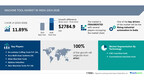
NEW YORK, Oct. 4, 2024 /PRNewswire/ — Report on how AI is driving market transformation – The Global Machine Tool Market in India size is estimated to grow by USD 2.78 billion from 2024-2028, according to Technavio. The market is estimated to grow at a CAGR of almost 11.89% during the forecast period. Rising industrial automation in India is driving market growth, with a trend towards adoption of 3D printing technology. However, fluctuations in raw material prices used in machine tools production poses a challenge – Key market players include Accusharp Cutting Tools Pvt. Ltd., Ace Multi Axes Systems Ltd., Ahire Machine Tools, Ajinkya Industries, Alex Machine Tools Pvt. Ltd., Bharat Fritz Werner Ltd., Bhavya Machine Tools, Birla Precision Technologies Ltd., DMG MORI Co. Ltd., Gamut Machine Tools, Geeta Machine Tools Pvt. Ltd., General Machine Tools, HMT Ltd., ITL Industries Ltd, Jyoti CNC Automation Ltd., Lakshmi Machine Works Ltd., Lokesh Machines Ltd., Makino Milling Machine Co. Ltd., Okuma Corp., and Om International Machine Tools.
AI-Powered Market Evolution Insights. Our comprehensive market report ready with the latest trends, growth opportunities, and strategic analysis- View your snapshot now
Forecast period
2024-2028
Base Year
2023
Historic Data
2018 – 2022
Segment Covered
Technology (CNC machine tools and Conventional machine tools), Type (Metal cutting machines and Metal forming machines), and Geography (APAC)
Region Covered
India
Key companies profiled
Accusharp Cutting Tools Pvt. Ltd., Ace Multi Axes Systems Ltd., Ahire Machine Tools, Ajinkya Industries, Alex Machine Tools Pvt. Ltd., Bharat Fritz Werner Ltd., Bhavya Machine Tools, Birla Precision Technologies Ltd., DMG MORI Co. Ltd., Gamut Machine Tools, Geeta Machine Tools Pvt. Ltd., General Machine Tools, HMT Ltd., ITL Industries Ltd, Jyoti CNC Automation Ltd., Lakshmi Machine Works Ltd., Lokesh Machines Ltd., Makino Milling Machine Co. Ltd., Okuma Corp., and Om International Machine Tools
Key Market Trends Fueling Growth
The machine tool market in India is witnessing a notable trend towards the adoption of additive manufacturing, or 3D printing, technology. This technology offers several advantages, including lower manufacturing costs, faster production, ease of upgrades, low energy consumption, and reduced waste. International machine tool manufacturers are increasingly incorporating 3D printing technology into their offerings. In June 2023, IIT engineers introduced a metal 3D printer using Directed Energy Deposition (DED) technology. The ability to meet customer specification requirements is another significant factor driving the adoption of 3D printing in machine tools. Technavio predicts that prominent market vendors will focus on developing this technology further during the forecast period. The advancements in 3D printing are expected to significantly contribute to the growth of the machine tool market in India.
The Indian machine tool market is witnessing significant growth, driven by trends in turning machines, electrical discharge machining, grinding machines, drilling machines, and eco-friendly coolants. Automation, advanced manufacturing processes, multi-axis arms, and robotics are also gaining popularity. Downtime reduction is a key focus, with electric vehicles and automotive components leading the way. Eco-friendly practices, artificial intelligence, and the Internet of Things are transforming manufacturing. Aerospace, precision manufacturing, 3D printing, CAD, and CAM are also thriving. Foreign direct investment in advanced machining techniques, high precision manufacturing processes, and integrated systems is increasing. Sustainable manufacturing, electrification, and high-quality components are essential for the future. Metal cutting and forming, 5-axis CNC milling, mechanical engineering, and metalworking continue to be core sectors. The market is poised for growth in sectors like aerospace, aircraft manufacturing, and semiconductor manufacturing.
Insights on how AI is driving innovation, efficiency, and market growth- Request Sample!
Market Challenges
The machine tool market in India is significantly influenced by the price fluctuations of its major raw material, steel. The Russian-Ukrainian crisis and subsequent increase in steel prices have impacted the industry, with Russia being the second-highest exporter of semi-finished steel to India. The price volatility of base iron ore, a primary component of steel, also affects the market. In 2020, the pandemic led to a negative impact on raw material prices due to disrupted supply chains and lockdowns. However, in 2021, the resumption of supply chain operations and large-scale vaccination drives led to a decrease in raw material prices. Despite these fluctuations, the increasing competition among raw material suppliers due to the expansion of production facilities in various end-user industries compels them to pass on price increases to downstream industries, including machine tool manufacturers. These uncertainties in raw material procurement plans may hamper the growth of the machine tool market in India during the forecast period.The Indian machine tool market is witnessing significant growth due to increasing demand for precision manufacturing in sectors like aerospace, automotive, and electronics. Challenges include adopting advanced machining techniques such as 3D printing, Computer-Aided Design (CAD), and Computer-Aided Manufacturing (CAM). Digital transformation through Computerized Numerical Control (CNC) and smart manufacturing is crucial. Aircraft manufacturing and metal & mining require high-quality components, driving investment in advanced machine tools. Precision engineering, customization, and real-time monitoring are essential for sustainable manufacturing. Foreign direct investment in India’s manufacturing sector is expected to boost the market, with trends like electrification, adaptive control, and integrated systems shaping the future. CNC lathes, routers, and milling machines are popular choices for mechanical engineering and metalworking industries. Standardization through MTConnect and smart factories ensure efficient production and customization. Semiconductor manufacturing and manufactured goods also benefit from high-precision components and digital technologies.
Insights into how AI is reshaping industries and driving growth- Download a Sample Report
Segment Overview
This machine tool market in India report extensively covers market segmentation by
Technology 1.1 CNC machine tools1.2 Conventional machine toolsType 2.1 Metal cutting machines2.2 Metal forming machinesGeography 3.1 APAC
1.1 CNC machine tools- In India’s manufacturing sector, the demand for machine tools is on the rise, with a particular focus on Computer Numerical Control (CNC) machines. Manufacturers are prioritizing productivity and reliability, leading to the integration of industrial automation. CNC machines offer additional flexibility and computational capabilities compared to conventional tools. These advanced metalworking machines are used in various applications, including lathes, mills, lasers, abrasives, punches, presses, and more. CNC milling tools are commonly used in the automotive industry for manufacturing components such as transmissions, gearbox cases, engine cylinder heads, flywheels, wheels, pistons, and fuel injectors. Traditional lathe solutions, like vertical turning lathes, are also utilized for heavy-duty cutting in brake disc applications. The increasing production requirements and competition among manufacturers are driving the adoption of CNC machines in India. Key vendors in the market, like Lakshmi Machine Works Ltd., are introducing new products, such as the Smart Minimaster, an ultra-compact CNC lathe, to expand their market share. Automated machine tools, such as CNC machines, increase throughput and lower cycle times, ensuring product quality and consistency. Manufacturers are adopting various CNC machines, including grinding machines and vertical or horizontal machining centers, to manufacture components at higher production rates. This trend is expected to fuel the growth of the CNC machine tools segment of the machine tool market in India during the forecast period.
Download complimentary Sample Report to gain insights into AI’s impact on market dynamics, emerging trends, and future opportunities- including forecast (2024-2028) and historic data (2018 – 2022)
Research Analysis
The Machine Tool Market in India is witnessing significant growth due to the increasing demand for manufactured goods and the production of advanced machine tools. Precision is a key factor in the Indian machine tool industry, with a focus on customization and the production of high-precision components. Multi-axis arms, robotics, and computerized numerical control (CNC) machines are popular technologies used in the industry. Downtime is a critical concern for machine tool manufacturers, leading to the adoption of smart manufacturing, integrated systems, and artificial intelligence. The Indian machine tool industry is also leveraging the Internet of Things (IoT) and electrification to improve efficiency and productivity. The market for machine tools in India is diverse, catering to various industries such as automotive components, electric vehicles, aerospace, precision manufacturing, metal & mining, and high-quality components. The adoption of sustainable manufacturing practices is also gaining momentum in the industry, making it an exciting space to watch.
Market Research Overview
The Machine Tool Market in India is witnessing significant growth due to the increasing demand for manufactured goods that require high-precision components. Advanced machine tools, such as CNC lathes, milling machines, turning machines, drilling machines, grinding machines, and electrical discharge machining, are in high demand for producing components with utmost precision. Digital technologies like Computer Numerical Control (CNC), real-time monitoring, adaptive control, and MTConnect are transforming traditional machine tools into smart manufacturing systems. The market is also witnessing the adoption of digital technologies like artificial intelligence, Internet of Things, and automation, leading to the development of smart factories. The market caters to various industries, including automotive, aerospace, metal & mining, and electronics, among others. Eco-friendly coolants and sustainable manufacturing practices are gaining popularity to reduce the carbon footprint. The market is expected to witness significant growth due to foreign direct investment, advanced manufacturing processes, and the increasing demand for high-quality components in various sectors.
Table of Contents:
1 Executive Summary
2 Market Landscape
3 Market Sizing
4 Historic Market Size
5 Five Forces Analysis
6 Market Segmentation
TechnologyCNC Machine ToolsConventional Machine ToolsTypeMetal Cutting MachinesMetal Forming MachinesGeographyAPAC
7 Customer Landscape
8 Geographic Landscape
9 Drivers, Challenges, and Trends
10 Company Landscape
11 Company Analysis
12 Appendix
About Technavio
Technavio is a leading global technology research and advisory company. Their research and analysis focuses on emerging market trends and provides actionable insights to help businesses identify market opportunities and develop effective strategies to optimize their market positions.
With over 500 specialized analysts, Technavio’s report library consists of more than 17,000 reports and counting, covering 800 technologies, spanning across 50 countries. Their client base consists of enterprises of all sizes, including more than 100 Fortune 500 companies. This growing client base relies on Technavio’s comprehensive coverage, extensive research, and actionable market insights to identify opportunities in existing and potential markets and assess their competitive positions within changing market scenarios.
Contacts
Technavio Research
Jesse Maida
Media & Marketing Executive
US: +1 844 364 1100
UK: +44 203 893 3200
Email: media@technavio.com
Website: www.technavio.com/
View original content to download multimedia:https://www.prnewswire.com/news-releases/indias-machine-tool-market-to-grow-by-usd-2-78-billion-2024-2028-with-ai-driven-insights-on-rising-industrial-automation-boosting-revenue—technavio-302267145.html
SOURCE Technavio










 Technology5 days ago
 Technology5 days ago
 Technology5 days ago
 Technology2 days ago
 Technology5 days ago
 Coin Market5 days ago

 Coin Market5 days ago