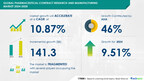
NEW YORK, Oct. 7, 2024 /PRNewswire/ — Report on how AI is driving market transformation – The Global Pharmaceutical Contract Research and Manufacturing Market size is estimated to grow by USD 141.3 billion from 2024-2028, according to Technavio. The market is estimated to grow at a CAGR of 10.87% during the forecast period. Availability of cost-efficient resources in emerging markets is driving market growth, with a trend towards increasing number of US FDA approved manufacturing facilities. However, stereotypical nature of CMOS poses a challenge – Key market players include Almac Group Ltd., Boehringer Ingelheim International GmbH, Cadila Pharmaceuticals Ltd., Catalent Inc., Charles River Laboratories International Inc., Cmic Holdings Co. Ltd, Dr Reddys Laboratories Ltd., ICON plc, IQVIA Holdings Inc., Laboratory Corp. Of America Holdings, Lonza Group Ltd., Lupin Ltd., Novotech Health Holdings, OPTIMAPHARM d.o.o., Parexel International Corp., PCI Pharma Services, Recipharm AB, Samsung Electronics Co. Ltd., Syneos Health Inc., and Thermo Fisher Scientific Inc..
Key insights into market evolution with AI-powered analysis. Explore trends, segmentation, and growth drivers- View the snapshot of this report
Pharmaceutical Contract Research And Manufacturing Market Scope
Report Coverage
Details
Base year
2023
Historic period
2018 – 2022
Forecast period
2024-2028
Growth momentum & CAGR
Accelerate at a CAGR of 10.87%
Market growth 2024-2028
USD 141.3 billion
Market structure
Fragmented
YoY growth 2022-2023 (%)
9.51
Regional analysis
North America, Asia, Europe, and Rest of World (ROW)
Performing market contribution
Asia at 46%
Key countries
US, China, India, Germany, and UK
Key companies profiled
Almac Group Ltd., Boehringer Ingelheim International GmbH, Cadila Pharmaceuticals Ltd., Catalent Inc., Charles River Laboratories International Inc., Cmic Holdings Co. Ltd, Dr Reddys Laboratories Ltd., ICON plc, IQVIA Holdings Inc., Laboratory Corp. Of America Holdings, Lonza Group Ltd., Lupin Ltd., Novotech Health Holdings, OPTIMAPHARM d.o.o., Parexel International Corp., PCI Pharma Services, Recipharm AB, Samsung Electronics Co. Ltd., Syneos Health Inc., and Thermo Fisher Scientific Inc.
Market Driver
The Pharmaceutical Contract Research and Manufacturing (CRAM) market is experiencing significant growth due to the increasing number of US FDA-approved manufacturing facilities in emerging economies, particularly China and India. India, with around 400 such facilities, is a top destination for pharmaceutical manufacturing services outsourcing. This includes approximately 230 API and 150 FDF facilities, the highest in any country. China, previously limited to CROs due to stringent regulations on CMOS, has seen a shift with the State Council allowing MAHs to use third-party licensed manufacturers. This change has led to an increase in US FDA-approved facilities and foreign pharmaceutical companies outsourcing drug manufacturing to China. This trend is expected to continue, driving the growth of the global pharmaceutical CRAM market.
The Pharmaceutical Contract Research and Manufacturing (CRM) market is witnessing significant trends in various areas. Generic Drugs are gaining popularity due to their affordability, driving demand for Generic APIs and Formulation Services. Artificial Intelligence is revolutionizing Drug Discovery and Development, enabling faster identification of Drug Candidates. Route Scouting Services and Bioprocess Outsourcing are key areas of focus for Biologics Manufacturing. Regulatory Compliance remains a top priority, with Serialization and Counterfeiting mitigation measures essential. Clinical Trials are outsourced to CROs for cost-effective manufacturing and efficient Clinical Operations. Big Pharmaceutical Companies and Academic Institutes collaborate for innovative Drug Development Services. Advanced manufacturing technologies like Continuous Manufacturing and Digitalization are transforming the Pharmaceutical Ecosystem. Targeted Medication Therapies, Biosimilars, and Personalized Medicines are driving the need for Specialized Services and Cost-effective Manufacturing. Drug Delivery Systems and Clinical Trial Support are crucial for bringing Small Molecule Drugs and Active Pharmaceutical Ingredients to market. Regulatory bodies and industry associations play a vital role in ensuring Quality Control and ensuring the integrity of the Pharmaceutical Supply Chain.
Request Sample of our comprehensive report now to stay ahead in the AI-driven market evolution!
Market Challenges
The pharmaceutical Contract Research and Manufacturing Organizations (CMOs) market in the Asia Pacific region holds the largest share but faces a significant challenge due to limited access to advanced technologies for manufacturing complex drugs, such as biological drugs and vaccines. These CMOs primarily focus on producing small molecule-based generic drugs due to high manufacturing costs and lack of funding. This restricts growth opportunities for small and medium-sized CMOs. Major players like Boehringer Ingelheim, Catalent, and Lonza dominate the market for large-scale production of biological drugs. The absence of advanced technologies and high manufacturing costs in countries like Mexico, South Korea, and Brazil also hinder the growth of CMOs in these regions. Consequently, the global pharmaceutical CRAM market growth may be impeded substantially during the forecast period.The Pharmaceutical Contract Research and Manufacturing (CRM) market faces several challenges in the production of biologics and small molecule drugs. Big Pharma companies and academic institutes rely on CROs for cost-effective manufacturing of targeted medication therapies, including biologics and biosimilars. Manufacturing services for active pharmaceutical ingredients (APIs) and drug formulation require advanced technologies like continuous manufacturing and specialized services for drug delivery systems. Quality control is crucial for producing consistent, high-quality products. CROs must support clinical trial operations and commercial operations, ensuring compliance with quality standards and patient needs. Digitalization and personalized medicines also require specialized expertise. The drug development process involves complex production workflows, from the creation of drug candidates to the manufacturing of oral solids, liquids, emulsions, and more. Meeting the demands of Big Pharma and academic institutes while maintaining cost-effectiveness and quality is a significant challenge for the CRM industry.
Discover how AI is revolutionizing market trends- Get your access now!
Segment Overview
This pharmaceutical contract research and manufacturing market report extensively covers market segmentation by
Service 1.1 CMO1.2 CROEnd-user 2.1 Big pharmaceuticals2.2 Small and medium-sized pharmaceuticals2.3 Generic pharmaceuticalsGeography 3.1 North America3.2 Asia3.3 Europe3.4 Rest of World (ROW)
1.1 CMO- The Contract Research and Manufacturing Organizations (CMOs) segment is the largest in the global pharmaceutical CRAM market, accounting for a significant market share. CMOs are entities that manufacture drugs and healthcare products on a contract basis for pharmaceutical companies and biotech firms. Advancements in medical sciences and the growing popularity of specialty medicines, as well as technological developments like nanotechnology and stem cell research, are driving the demand for complex manufacturing processes. These processes require extended resource deployments, leading pharmaceutical giants like Pfizer, Johnson & Johnson, and GlaxoSmithKline to outsource their manufacturing activities to optimize in-house resources. The outsourcing trend is particularly prevalent among pharmaceutical vendors worldwide, resulting in the substantial growth of the CMO segment. Emerging markets, including India, Brazil, China, and Mexico, are major contributors due to their low labor and land costs, making them attractive locations for setting up manufacturing facilities. Generic drug manufacturers in these countries outsource approximately 80% of their production to CMOs. The increasing focus on core competencies and cost reduction, along with the regulatory compliance and research advancement benefits, are fueling the expansion of the CMO segment in the global pharmaceutical CRAM market.
Download a Sample of our comprehensive report today to discover how AI-driven innovations are reshaping competitive dynamics
Research Analysis
The Pharmaceutical Contract Research and Manufacturing (CRM) market encompasses a range of services that support the development and production of small molecule drugs, biologics, biosimilars, and active pharmaceutical ingredients (APIs). Services include drug discovery, route scouting, regulatory compliance, clinical trials, outsourcing, drug formulation, quality control, and advanced manufacturing technologies such as continuous manufacturing and specialized services. Artificial Intelligence (AI) is increasingly being utilized in drug discovery to identify new drug candidates and optimize their properties. Cost-effective manufacturing is a key driver for outsourcing, particularly for generic drugs and APIs. Bioprocess outsourcing is essential for the production of complex biologics and biosimilars. Continuous manufacturing offers advantages in terms of cost savings, improved quality, and increased efficiency. Specialized services include the production of low potent APIs and the manufacturing of originator and generic APIs. The market caters to both small molecule drugs and biologics, with a focus on ensuring regulatory compliance and maintaining the highest standards of quality control.
Market Research Overview
The Pharmaceutical Contract Research and Manufacturing (CRM) market encompasses a range of services that support the entire drug development process, from discovery to commercialization. This market includes various services such as drug discovery, clinical trials, regulatory compliance, route scouting, bioprocess outsourcing, and manufacturing services. Generic Drugs: CRM companies offer manufacturing services for generic drugs, producing affordable alternatives to branded medicines. Artificial Intelligence: AI is increasingly used in drug development to identify new targets, optimize drug design, and analyze clinical trial data. Drug Development: CRM companies provide comprehensive drug development services, from discovery to commercialization, ensuring regulatory compliance and cost-effective manufacturing. Clinical Trials: CRM companies offer clinical trial support, managing trial design, execution, and data analysis to ensure efficient and effective trials. Outsourcing: Pharmaceutical companies outsource various aspects of drug development and manufacturing to CRM companies for cost savings and expertise. Bioprocess Outsourcing: CRM companies specialize in bioprocessing, producing biologics, biosimilars, and vaccines using advanced manufacturing technologies. Serialization and Counterfeiting: CRM companies provide serialization services to ensure product authenticity and combat counterfeiting, enhancing patient safety. Pharmaceutical Ecosystem: CRM companies operate within the complex pharmaceutical ecosystem, collaborating with academic institutes, CROs, and big pharma to bring new drugs to market. Drug Development Services: CRM companies offer a range of drug development services, from drug discovery and formulation to manufacturing and commercialization. Manufacturing Services: CRM companies provide manufacturing services for small molecule drugs, APIs, and drug delivery systems, ensuring quality control and cost savings. Cost-effective manufacturing: CRM companies offer cost-effective manufacturing solutions, utilizing economies of scale and advanced technologies to reduce production costs. Quality control: CRM companies prioritize quality control, implementing rigorous standards and advanced technologies to ensure product safety and efficacy. Advanced manufacturing technologies: CRM companies employ advanced manufacturing technologies, such as continuous manufacturing and specialized services, to improve efficiency and reduce costs. Personalized medicines: CRM companies support the development and manufacturing of personalized medicines, tailoring treatments to individual patient needs. Drug development processes: CRM companies optimize drug development processes, from production workflows to digitalization, to bring new drugs to market faster and more efficiently.
Table of Contents:
1 Executive Summary
2 Market Landscape
3 Market Sizing
4 Historic Market Size
5 Five Forces Analysis
6 Market Segmentation
ServiceCMOCROEnd-userBig PharmaceuticalsSmall And Medium-sized PharmaceuticalsGeneric PharmaceuticalsGeographyNorth AmericaAsiaEuropeRest Of World (ROW)
7 Customer Landscape
8 Geographic Landscape
9 Drivers, Challenges, and Trends
10 Company Landscape
11 Company Analysis
12 Appendix
About Technavio
Technavio is a leading global technology research and advisory company. Their research and analysis focuses on emerging market trends and provides actionable insights to help businesses identify market opportunities and develop effective strategies to optimize their market positions.
With over 500 specialized analysts, Technavio’s report library consists of more than 17,000 reports and counting, covering 800 technologies, spanning across 50 countries. Their client base consists of enterprises of all sizes, including more than 100 Fortune 500 companies. This growing client base relies on Technavio’s comprehensive coverage, extensive research, and actionable market insights to identify opportunities in existing and potential markets and assess their competitive positions within changing market scenarios.
Contacts
Technavio Research
Jesse Maida
Media & Marketing Executive
US: +1 844 364 1100
UK: +44 203 893 3200
Email: media@technavio.com
Website: www.technavio.com/
View original content to download multimedia:https://www.prnewswire.com/news-releases/pharmaceutical-contract-research-and-manufacturing-market-to-grow-by-usd-141-3billion-from-2024-2028–driven-by-cost-efficient-resources-in-emerging-markets-ai-powered-report—technavio-302267668.html
SOURCE Technavio








 Coin Market5 days ago

 Coin Market5 days ago


 Technology5 days ago

 Technology5 days ago


 Technology4 days ago

 Technology4 days ago