Technology
Visible Light Communication Market expected to grow by USD 316.02 billion from 2024 to 2028, driven by industrial process automation powered by AI
Published
2 years agoon
By
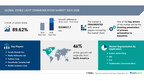
NEW YORK, Oct. 7, 2024 /PRNewswire/ — Report on how AI is driving market transformation- The global visible light communication market size is estimated to grow by USD 316.02 billion from 2024-2028, according to Technavio. The market is estimated to grow at a CAGR of almost 89.62% during the forecast period. Growing penetration of process automation in industries is driving market growth, with a trend towards vlc-based 5g network. However, the dominance of competing technologies poses a challenge. Key market players include Acuity Brands Inc., Firefly Networks Ltd., Fortive Corp., Fraunhofer Gesellschaft, fSONA Systems Corp., General Electric Co., Koninklijke Philips N.V., Latecoere, LightBee SL, Lucibel SA, nextLiFi, Oledcomm, Panasonic Holdings Corp., pureLiFi Ltd., Qualcomm Inc., Renesas Electronics Corp., Signify NV, To Be Srl, Viavi Solutions Inc., and VLNComm Inc..
AI-Powered Market Evolution Insights. Our comprehensive market report ready with the latest trends, growth opportunities, and strategic analysis- View your snapshot now
Forecast period
2024-2028
Base Year
2023
Historic Data
2018 – 2022
Segment Covered
Application (Indoor networking, LBS, ICE, and Underwater communication), End-user (Retail, Consumer electronics, Automotive and transportation, Healthcare, and Others), and Geography (North America, APAC, Europe, South America, and Middle East and Africa)
Region Covered
North America, APAC, Europe, South America, and Middle East and Africa
Key companies profiled
Acuity Brands Inc., Firefly Networks Ltd., Fortive Corp., Fraunhofer Gesellschaft, fSONA Systems Corp., General Electric Co., Koninklijke Philips N.V., Latecoere, LightBee SL, Lucibel SA, nextLiFi, Oledcomm, Panasonic Holdings Corp., pureLiFi Ltd., Qualcomm Inc., Renesas Electronics Corp., Signify NV, To Be Srl, Viavi Solutions Inc., and VLNComm Inc.
Key Market Trends Fueling Growth
Visible Light Communication (VLC) is a significant component of 5G technology, utilizing LED bulbs to transmit data at high speeds. This innovation offers dependable, super-fast connectivity, reaching up to 10 Gbps – 250 times faster than existing high-speed broadband. VLC’s major advantage lies in its ability to provide reliable connectivity in areas where Wi-Fi fails, such as airplanes, submarines, hospitals, and nuclear power stations. China is planning to operate a fully functional VLC-based 5G network for the Winter Olympics in 2022. The increasing adoption of LED bulbs and the growing potential for smart city applications will fuel the market’s growth. Opportunities include downloading traffic information from traffic lights or program guides from TVs. The affordability, reliability, and security of VLC make it an attractive alternative to Wi-Fi infrastructure. Consequently, the market for visible light communication-based 5G networks is expected to expand during the forecast period.
The Visible Light Communication (VLC) industry is experiencing significant growth, driven by trends in various sectors. Small Local Area Networks (LAN) and smart lighting systems are integrating VLC technology for energy-efficient data transmission. In retail, smart stores use VLC for contactless payments and inventory management. Smartphones and VR headsets are adopting VLC for high-speed data transfer, eliminating the need for Wi-Fi, WiMAX, 3G systems, and 5G. VLC is also being used in underwater communication, traffic lights, streetlights, and trees for efficient data transfer. Unidirectional VLC is being used in industries like aerospace, automotive, and autonomous vehicles for bidirectional transmission. VLC sources like white LEDs and blue LEDs are powering this technology. The future holds promise with the adoption of Li-Fi, bidirectional VLC technology, battery-free duplex communication, voice-only traffic, and big data analytics. VLC receivers and sources are being used in various industries, including backhaul carrier technologies, making VLC a game-changer in wireless networks.
Insights on how AI is driving innovation, efficiency, and market growth- Request Sample!
Market Challenges
The market for Visible Light Communication (VLC) technology is currently experiencing modest growth due to the dominance of Wi-Fi and WiMAX technologies in various sectors. These traditional technologies have provided reliable and efficient network connectivity for decades, enabling the implementation of smart systems in homes, transportation, manufacturing, and energy management. Smart systems, such as smart homes, connected cars, and smart grids, have gained significant traction with the advent of high-speed internet services from leading providers like AT&T, Comcast, Sprint, and Verizon. However, the widespread adoption of these systems relies heavily on wireless connectivity, including Wi-Fi. Advanced low-power communication technologies, like ZigBee and Z-Wave, have also emerged to support the efficient operation of smart systems. While VLC technology offers unique advantages, such as energy efficiency and privacy, its market growth is somewhat restrained due to the established presence of Wi-Fi and WiMAX technologies. Consequently, the global VLC market expansion is anticipated to be influenced by the ongoing dominance of these competing technologies during the forecast period.The Visible Light Communication (VLC) market is experiencing significant growth due to its potential as a cost-effective technique for high-speed data services in various major verticals like consumer electronics and IoT. However, challenges exist. One major challenge is the initial expenses for hardware installation, especially in comparison to RF communication. Another challenge is reliability issues caused by environmental interferences such as fog, scattering, and scintillation. Cyber security is also a concern due to the use of electromagnetic radiations. Energy consumption is a key consideration, making energy-efficient systems essential. The highest demand comes from sectors like hospitals and indoor navigation systems. VLC’s largest share is currently held by Li-Fi (Light Fidelity) using LED lights, but microlaser diodes and fiber-based Ethernet are also contenders. Frequency bandwidth is a limitation, with 4G outperforming VLC in terms of data rates. Mobile operators and network service providers are exploring VLC as an alternative to fiber-optic lines and Ethernet-based network solutions. Despite these challenges, the VLC market is expected to grow, driven by the demand for energy-efficient, high-speed data services.
Insights into how AI is reshaping industries and driving growth- Download a Sample Report
Segment Overview
This visible light communication market report extensively covers market segmentation by
Application 1.1 Indoor networking1.2 LBS1.3 ICE1.4 Underwater communicationEnd-user 2.1 Retail2.2 Consumer electronics2.3 Automotive and transportation2.4 Healthcare2.5 OthersGeography 3.1 North America3.2 APAC3.3 Europe3.4 South America3.5 Middle East and Africa
1.1 Indoor networking- The indoor networking segment of the Visible Light Communication (VLC) market is experiencing significant growth due to the adoption of VLC technology by retail and hospitality industries. VLC offers advantages over traditional wireless technologies like Wi-Fi, such as higher data transfer rates and immunity to electromagnetic interference, making it ideal for crowded and sensitive environments. With the increasing use of Internet of Things (IoT) devices and smart building systems, the need for efficient and reliable communication networks is growing. VLC’s ability to provide seamless connectivity between IoT devices, sensors, and control systems using existing LED lighting infrastructure is driving its adoption. In smart office environments, VLC enables data transmission between sensors for occupancy monitoring, environmental control systems, and lighting management, optimizing energy usage and enhancing workplace productivity. Indoor positioning systems can accurately track and locate assets, individuals, and devices within a building using VLC-enabled LED luminaires, improving operational efficiency and enhancing user experience. In retail environments, VLC-based indoor positioning systems can enable personalized shopping experiences, location-based promotions, and wayfinding assistance for customers. The convergence of these factors will fuel the growth of the indoor networking segment in the global VLC market during the forecast period. Major lighting manufacturers like GE and Philips have shown interest in this technology, further boosting its adoption.
Download complimentary Sample Report to gain insights into AI’s impact on market dynamics, emerging trends, and future opportunities- including forecast (2024-2028) and historic data (2018 – 2022)
Research Analysis
The Visible Light Communication (VLC) market is an emerging technology that utilizes Li-Fi (Light Fidelity) to transmit data using visible light instead of radio waves like Wi-Fi. VLC is gaining popularity due to its ability to provide high-speed, energy-efficient, and secure communication. Indoor navigation systems and battery-free duplex communication are some of the key applications. VLC receivers can be integrated into consumer electronics like smartphones, making them an attractive alternative to RF technology. VLC sources include LEDs, which are widely used in smart lighting systems. The digitization of various industries and the increasing adoption of IoT and 5G are driving the growth of the VLC market. However, challenges such as cyber security concerns and the need for specialized VLC receivers remain. FSO (Free Space Optics) is another competing technology, but VLC offers the advantage of using existing light sources and is less susceptible to electromagnetic radiations.
Market Research Overview
The Visible Light Communication (VLC) market is experiencing significant growth due to the adoption of Li-Fi (Light Fidelity), a wireless communication technology that utilizes visible light instead of radio frequencies. VLC uses LED lights as sources and can provide high-speed data services, making it an attractive alternative to traditional RF-based networks. The technology is finding applications in major verticals such as aerospace, automotive, consumer electronics, hospitals, and IoT. VLC offers several advantages, including energy efficiency, cost-effectiveness, and reliability, making it a promising solution for various industries. However, initial expenses for installation and potential reliability issues due to environmental interferences such as fog, trees, and scattering are challenges that need to be addressed. The VLC market is expected to see the highest demand from consumer electronic devices, smartphones, smart lighting systems, and autonomous vehicles. VLC technology can also be used for underwater communication and in industries where RF communication is not feasible or desirable. The market is expected to grow significantly in the coming years due to the digitization of various industries and the need for high-bandwidth, energy-efficient systems. VLC technology can also be used in conjunction with other backhaul carrier technologies to provide bidirectional transmission and data rates that rival or surpass those of 3G and 5G systems. The use of bidirectional VLC technology and battery-free duplex communication can further enhance the capabilities of VLC systems. The VLC industry is also exploring the use of AI and Big Data analytics to optimize network performance and improve cyber security. The market is expected to see significant growth in the coming years due to its potential to provide high-speed, energy-efficient, and cost-effective communication solutions for various industries.
Table of Contents:
1 Executive Summary
2 Market Landscape
3 Market Sizing
4 Historic Market Size
5 Five Forces Analysis
6 Market Segmentation
ApplicationIndoor NetworkingLBSICEUnderwater CommunicationEnd-userRetailConsumer ElectronicsAutomotive And TransportationHealthcareOthersGeographyNorth AmericaAPACEuropeSouth AmericaMiddle East And Africa
7 Customer Landscape
8 Geographic Landscape
9 Drivers, Challenges, and Trends
10 Company Landscape
11 Company Analysis
12 Appendix
About Technavio
Technavio is a leading global technology research and advisory company. Their research and analysis focuses on emerging market trends and provides actionable insights to help businesses identify market opportunities and develop effective strategies to optimize their market positions.
With over 500 specialized analysts, Technavio’s report library consists of more than 17,000 reports and counting, covering 800 technologies, spanning across 50 countries. Their client base consists of enterprises of all sizes, including more than 100 Fortune 500 companies. This growing client base relies on Technavio’s comprehensive coverage, extensive research, and actionable market insights to identify opportunities in existing and potential markets and assess their competitive positions within changing market scenarios.
Contacts
Technavio Research
Jesse Maida
Media & Marketing Executive
US: +1 844 364 1100
UK: +44 203 893 3200
Email: media@technavio.com
Website: www.technavio.com/
View original content to download multimedia:https://www.prnewswire.com/news-releases/visible-light-communication-market-expected-to-grow-by-usd-316-02-billion-from-2024-to-2028–driven-by-industrial-process-automation-powered-by-ai-302267727.html
SOURCE Technavio
You may like
Technology
OASE+ and Elsevier Agree Next-Phase Read and Publish Agreement to Expand Open Access Publishing in Japan
Published
43 minutes agoon
October 26, 2026By
A new three-year term removes the annual cap on open access publishing under the Read and Publish agreement and extends eligibility beyond universities
TOKYO, Oct. 26, 2026 /PRNewswire/ — OASE+ (Open Access for Scholarly Empowerment +), the collective negotiating body established with Japanese government support to advance the country’s national open access policy, and Elsevier, a global leader in advanced information and decision support, have agreed a read-and-publish agreement covering 2027 to 2029.
The agreement further develops the framework established by Elsevier in partnership with the Japan Alliance of University Library Consortia for E-Resources (JUSTICE) for 2024 to 2026. Under this framework Japanese research institutions are able to expand open access publishing at a pace suited to their individual circumstances while maintaining access to scholarly journals.
From 2027, researchers at participating institutions will be able to publish open access in eligible Core Hybrid journals, subject to the terms of the agreement and without an annual cap on the number of open access articles. The decision to publish open access will rest with the researcher and the research itself, giving researchers greater flexibility in choosing open access publishing and greater certainty in meeting their funders’ and institutions’ open access requirements.
A separate agreement applies the same approach to Cell Press. For institutions that subscribe to Cell Press Hybrid titles, reading access and open access publishing will cover the subscribed titles. The agreement will also have no annual cap on the number of open access articles and run from 2027 to 2029.
The agreement also extends eligibility for the first time beyond universities to national research and development agencies, opening participation to a substantial part of Japan’s publicly funded research base.
Japan is one of the world’s largest producers of scientific research. Wider open access publishing increases the international visibility of that research, supports collaboration across borders, and helps ensure Japanese findings inform science, practice and policy well beyond Japan. It also advances the objectives of the Japanese government’s National Policy on Promoting Open Access to Publicly Funded Scholarly Publications and Scientific Data.
The agreement follows extended discussions between OASE+ and Elsevier and reflects the findings of a survey of the needs of institutes that expressed interest in the Read and Publish agreement, as well as experience gained through the current framework.
Professor Yasuteru Shigeta of the University of Tsukuba, Chair of OASE+, said: “In 2024, OASE was established under the Japanese government’s ‘National Policy on Promoting Open Access to Publicly Funded Scholarly Publications and Scientific Data’. Through collaboration with JUSTICE, OASE has since strengthened its framework as OASE+. This enhanced structure enabled constructive negotiations with Elsevier, building upon the achievements and experience gained through the pilot proposal implemented for JUSTICE through 2026. As a result, we are pleased that researchers will be able to publish open access in Core Hybrid journals without any cap on the number of articles, and that Cell Press Hybrid journals are now also available under a Read and Publish agreement. While there should be multiple valid approaches to advancing open access, we hope that this agreement will serve as one of those pathways and help enhance the visibility of research from Japan to create positive impact.”
Gemma Hersh, Senior Vice President, Sales and Commercial Director, Primary Research, Elsevier, said: “We are delighted that this new agreement with OASE+ will enable us to further develop our long-standing partnership with the Japanese research community. We are grateful to OASE+ and the institutions that expressed interest in the agreement for the collaboration and pragmatism they brought to our discussions, and for helping to establish a framework with broader reach across Japan’s research base. Japan’s research is of global importance, and this agreement will help ensure more of it is openly available to researchers around the world.”
Further information is available from OASE+ and on Elsevier’s open access agreements page.
Notes to editors
A Read and Publish agreement combines, in a single contract, the subscription fees research institutions paid publishers for access to scholarly articles with the fees for publishing articles open access (article publishing charges, or APCs).
Core Hybrid journals are subscription-based journals that also give authors the option to publish individual articles open access. Under the 2027 to 2029 agreement, open access publishing in eligible Core Hybrid journals is available without an annual open access publishing limit.
Cell Press Hybrid journals are subscription-based Cell Press journals that also give authors the option to publish individual articles open access. A companion agreement covering 2027 to 2029 applies to Cell Press Hybrid journals, under which reading access and open access publishing are aligned to the Cell Press Hybrid journals an institution subscribes to, without an annual open access publishing limit.
Institutions that have expressed interest will not necessarily enter into the agreement immediately. Each institution reviews the terms and decides independently whether to participate, and contract commencement dates will vary. Institutions wishing to participate must submit an expression of interest through OASE+. As of October 21, 167 institutions have expressed interest in the agreement with Elsevier.
About OASE+
OASE+ (Open Access for Scholarly Empowerment +) is a team supported by the Japanese government working to establish a collective bargaining framework, led by universities and other research institutions, for negotiations with academic publishers. Through discussions with global academic publishers, OASE+ aims to contribute to the realization of the Japanese government’s National Policy on Promoting Open Access to Publicly Funded Scholarly Publications and Scientific Data.
OASE+ succeeds the activities of OASE, which was established in 2024, and operates as a joint initiative involving the Japan Alliance of University Library Consortia for E-Resources (JUSTICE) and OASE to promote open access to scholarly publications. For more information, visit the OASE+ website.
About Elsevier
Elsevier is a global leader in advanced information and decision support. For over a century, we have been helping advance science and healthcare to advance human progress. We support academic and corporate research communities, doctors, nurses, future healthcare professionals, and educators across 170 countries in their vital work. We help impact makers achieve better outcomes with research and clinical-grade solutions built on the world’s leading evidence-based scientific and medical content, precision AI, and expert human assessment. We champion inclusion and sustainability, working with the communities that we serve. The Elsevier Foundation supports research and health partnerships around the world.
Elsevier is part of RELX, a global provider of information-based analytics and decision tools for professional and business customers. For more information, visit www.elsevier.com and follow us on social media @elsevierconnect.
View original content to download multimedia:https://www.prnewswire.co.uk/news-releases/oase-and-elsevier-agree-next-phase-read-and-publish-agreement-to-expand-open-access-publishing-in-japan-302918039.html
Technology
uSMART and PIVOT Fintech Introduce GlobalSave Portfolios Balanced Strategy on FollowSmart
Published
43 minutes agoon
October 26, 2026By
SINGAPORE, Oct. 26, 2026 /PRNewswire/ — uSMART Securities (Singapore) Pte. Ltd. (“uSMART”) has announced the addition of the PIVOT- GlobalSave Portfolios Balanced Strategy to its FollowSmart platform. Managed by PIVOT Fintech Pte. Ltd. (“PIVOT”), the strategy is being made available through uSMART’s digital platform as part of the companies’ collaboration to provide investors with access to professionally managed investment strategies. Investors can find information about available strategies via the uSMART App at uSMART Securities.
Streamlining Operations for Fund Management Companies
Offering professionally managed investment strategies to a wider investor base can involve significant technology, operational and client servicing requirements. FollowSmart provides a digital workflow supporting account onboarding, trade implementation, position monitoring, valuation and client reporting. The platform is designed to help investment managers handle these operational processes while focusing on portfolio management.
Empowering Investors with a Digital Marketplace
For individual investors, FollowSmart provides a digital platform for exploring professionally managed investment strategies. Available strategies span different asset classes, global markets and risk profiles. Users can review information such as investment philosophy, historical performance and the credentials of the management team, and monitor their portfolios over time. These features may help investors assess which available strategies are relevant to their own objectives and circumstances.
The PIVOT- GlobalSave Portfolios Balanced Strategy
uSMART is acting as an authorized distributor of the PIVOT- GlobalSave Portfolios Balanced Strategy, which is managed by MAS-regulated PIVOT Fintech. The investment team is led by Victor Lye. The strategy uses a quantitative investment approach informed by Modern Portfolio Theory (MPT). It invests in U.S.-listed ETFs across equities, fixed income, commodities and real estate to build globally diversified portfolios. Asset allocation weights are adjusted in response to macroeconomic trends, with the objective of balancing expected returns and risk for medium- to long-term investors.
Expanding the FollowSmart Ecosystem
The addition of PIVOT Fintech is part of uSMART’s ongoing development of the FollowSmart platform and its network of investment managers. Other strategies recently added to the platform include the Global Quantitative Core Growth Strategy by Sunova Capital Management and the JMC Absolute Return Strategy by JMC Capital Asset Management. Together, these offerings provide investors with access to a range of professionally managed investment approaches.
About uSMART Securities (Singapore) Pte Ltd – uSMART Securities (Singapore) Pte Ltd, established on March 22, 2021, is the Singapore entity under uSMART Group (uSmart Holding Ltd.). The company holds a Capital Markets Services (CMS) Licence (Licence No. CMS101161) regulated by the Monetary Authority of Singapore (MAS). Based in Singapore, it provides financial services through the uSMART platform. Its products include US, Hong Kong, Singapore, Japan and UK stocks, options, futures, ETFs, funds, Contracts for Difference (CFDs) and forex products. Its services include trading tools, client account services, risk management arrangements and segregated client fund accounts.
About PIVOT Fintech – PIVOT Fintech Pte. Ltd. (UEN 201716150D) holds a Capital Markets Services Licence (CMS100806) regulated by the Monetary Authority of Singapore and serves as the Investment Manager of the Strategy. PIVOT’s investment team is led by its founder, Victor Lye, who has over 35 years of senior leadership experience across wealth management, insurance, fintech, and artificial intelligence. He holds a First-Class Honours Degree in Economics and Accounting from the University of Adelaide and is a Chartered Financial Analyst (CFA) and Certified Financial Planner (CFP).
Risk Disclaimer – Investment involves risks. Past performance is not indicative of future performance. Investors should carefully consider their investment objectives, financial situation and risk tolerance before making any investment decision. This material is provided for information and reference purposes only and does not constitute an offer, solicitation, recommendation or investment advice. This advertisement has not been reviewed by the Monetary Authority of Singapore.
View original content to download multimedia:https://www.prnewswire.com/apac/news-releases/usmart-and-pivot-fintech-introduce-globalsave-portfolios-balanced-strategy-on-followsmart-302918647.html
SOURCE uSMART Securities (Singapore) Pte Ltd
Technology
FFR to Hold Listing Ceremony and Investor Day on October 26; FFAI Announces Rescheduling of YT Jia’s Investor Weekly Report to October 26
Published
43 minutes agoon
October 26, 2026By
Faraday Future announced that this week’s Investor Weekly Report from FF Founder and Global CEO YT Jia has been rescheduled to October 26.FF EAI Robotics Ecosystem Inc. (NASDAQ: FFR) will hold its Listing Ceremony and Investor Day on October 26.FFR management will outline the company’s future strategic direction and business plans and engage with investors in attendance.The full event video will be available at 5:00 p.m. ET on October 26 at: https://www.ff.com/us/
LOS ANGELES, Oct. 25, 2026 /PRNewswire/ — FF EAI Robotics Ecosystem Inc. (NASDAQ: FFR) (“FFR” or the “Company”), a U.S.-listed Embodied AI (“EAI“) robotics ecosystem company, today highlighted an update from Faraday Future Intelligent Electric Inc. (NASDAQ: FFAI) (“Faraday Future” or “FF“) that this week’s Investor Weekly Report from FF Founder and Global CEO YT Jia has been rescheduled to October 26.
FF EAI Robotics Ecosystem Inc. (NASDAQ: FFR) will hold its Listing Ceremony and Investor Day on October 26, 2026. During the event, FFR management will outline the company’s future strategic direction and business plans and engage with investors in attendance.
The full event video will be available at 5:00 p.m. ET on October 26 at: https://www.ff.com/us/
About FF EAI Robotics Ecosystem Inc.
FF EAI Robotics Ecosystem Inc. (NASDAQ: FFR) (renamed from AIxCrypto Holdings, Inc. and AIXC, effective September 30, 2026) is a U.S.-based Embodied AI (EAI) robotics company that is in the process of acquiring the FF EAI Robotics business. Upon completion of the acquisition, the Company will focus on the research and development, manufacturing, commercialization, and deployment of intelligent robotic technologies, products, and industry solutions.
The Company is committed to building a “Four-Core Full-Stack” AI ecosystem covering the full lifecycle of robotics, consisting of EAI Brain & Developer Platform, EAI Devices, Industry Productivity Solutions, and EAI Data Factory. Guided by the technology and product philosophy of “One Brain, Multi-forms, Multi-capabilities,” the Company aims to empower humanoid, biomimetic, and other robotic form factors through a unified EAI Brain, while continuously expanding their multi-task and multi-scenario capabilities. The ecosystem is designed to support the full robotics lifecycle, including R&D, deployment, data collection and training, operations, and commercial applications.
The FF EAI Robotics business has already achieved commercial deliveries of humanoid and biomimetic robotic products. Through its multi-form-factor robotic products, EAI technology platform, closed-loop data capabilities, and industry solutions, the business continues to advance the scaled adoption of robotics across real-world applications. The Company also operates RoboShare, a robot-sharing and services platform designed to connect robotic assets, service capabilities, customer demand, and ecosystem partners, further strengthening its robotics commercialization and service ecosystem.
For more information, visit www.ff.com.
ABOUT FARADAY FUTURE
Founded in 2014, Faraday Future (FF) is a U.S.-based Physical AI ecosystem company dedicated to reshaping the future of robotics and mobility solutions through AI innovation and technologies. FF focuses on two major product strategies within the Embodied AI (EAI) robotics business: EAI humanoid and bionic robots, and EAI automotive-focused robots. By building a “Four-Core Full-Stack AI” ecosystem of EAI Brain and Developer Platform, EAI Devices, Industry Productivity Solutions and EAI Data Factory, FF aims to create an evolutionary flywheel: scaled device delivery, data collection and training, continuous evolution of the EAI Brain, stronger product capability, and even larger-scale delivery and deployment. Through this flywheel, FF seeks to maximize its commercial value and lead to the advancement of Physical AI. For more information, please visit Faraday Future’s official website: https://www.ff.com/
FFR Forward-Looking Statements
This communication, including any presentation, press release, investor materials or other document of which it forms a part (this “Communication”), contains “forward-looking statements” within the meaning of the “safe harbor” provisions of the Private Securities Litigation Reform Act of 1995, as amended, and other securities laws, regarding FF EAI Robotics Ecosystem Inc. (“FFR,” the “Company,” “us,” “our,” or “we”) and our industry. All statements, whether written or oral, other than statements of historical fact, including any financial projections and any statements regarding future events, our strategy, our transition to robotics operations, our plans for RoboShare, our digital asset disposition plans, the proposed acquisition of the FF EAI Robotics business, the projections referenced in this communication, our name and ticker change, any related financing, and the anticipated benefits and timing of the foregoing, our objectives, expectations, or anticipated actions or results, are forward-looking statements. You can often identify forward-looking statements by words such as “may,” “might,” “will,” “shall,” “should,” “expects,” “plans,” “anticipates,” “could,” “intends,” “targets,” “projects,” “contemplates,” “believes,” “estimates,” “predicts,” “potential,” “goal,” “objective,” “seeks,” “likely,” or “continue,” or the negative of these terms or other similar expressions; the absence of these words does not mean a statement is not forward-looking. These statements reflect our current expectations and projections about future events as of the date of this Communication and are necessarily based on estimates and assumptions that, while considered reasonable by management, are inherently uncertain. FFR can give no assurance that such forward-looking statements or financial projections will prove to be correct.
Actual results may differ materially from those expressed or implied by these forward-looking statements as a result of numerous risks and uncertainties, both general and specific, including, but not limited to:
The proposed acquisition transaction and PIPE. The definitive agreements may be terminated in accordance with their terms, and the proposed transactions may not be completed on the terms described or at all; the conditions to closing, including the completion of FFAI’s internal restructuring of the robotics business, the execution of key employee agreements and other customary conditions, and the parties’ ability to satisfy them; the risk that the stockholder approval required under Nasdaq listing rules for the conversion of the preferred stock issued as consideration is not obtained or is delayed, and the effect of the conversion restrictions and the information statement process on the timing of conversion; the timing of the transaction and the costs of pursuing it; the issuance of a substantial number of shares as consideration and the resulting dilution to existing stockholders; the fact that the counterparty is our controlling stockholder, that it will hold a substantial majority of our outstanding shares following closing, that certain members of management serve both companies, and the conflicts of interest inherent in the transaction; the risk that the agreed valuations do not reflect the market value of our shares or of the acquired business; our dependence on the counterparty for transition, supply and support following any closing; the scope and enforceability of the non-competition and governance arrangements; the consequences of the transaction under Nasdaq listing rules, including the possibility that Nasdaq determines that the transaction requires us to satisfy initial listing requirements in connection with a business combination, change of control or change in the nature of our business; the risk that the PIPE financing, on which the transaction is not conditioned, is not completed on the anticipated terms or at all; the risk of litigation relating to the transaction; our ability to integrate and operate the acquired business; and the risk that the acquired business performs differently than anticipated.
Projections. The projections referenced in this communication were prepared by FFAI management for the FF EAI Robotics business on a standalone basis and do not reflect our existing business, transaction-related expenses or the combined company. We have not independently verified them or adopted them as guidance. They were not prepared with a view toward public disclosure or toward compliance with the published guidelines of the Securities and Exchange Commission or the American Institute of Certified Public Accountants regarding prospective financial information, and no independent registered public accounting firm has examined, compiled or performed any procedures with respect to them, and none expresses an opinion or any other form of assurance with respect to them. The projections reflect estimates and assumptions that are inherently uncertain and subject to change, including through due diligence and the review of our special committee and its financial advisor. Actual results are likely to differ, and may differ materially.
Liquidity, capital and going concern. Our limited cash and liquidity position and our history of operating losses and negative operating cash flow; substantial doubt regarding our ability to continue as a going concern, as described in our periodic reports; our need to obtain additional financing on acceptable terms or at all, and the substantial dilution to existing stockholders that additional financing may cause, including any financing completed in connection with the proposed transaction, which may not be completed or may be on less favorable terms than anticipated; our ability to fund operations pending and following the disposition of our digital asset positions; and our ability to satisfy the continued listing requirements of The Nasdaq Stock Market, including stockholders’ equity, minimum bid price and other applicable standards.
Our strategic transition and the disposition of digital assets. Risks associated with a fundamental shift in our business strategy and the redeployment of resources from a digital asset treasury strategy to robotics operations; our ability to execute the disposition of our digital asset positions in an orderly manner and on acceptable terms; the risk that amounts realized on disposition are materially less than carrying value as a result of price volatility, market depth, execution timing, custody or transfer constraints, or other limitations; tax, accounting and regulatory consequences of the dispositions; the continued volatility and regulatory uncertainty associated with digital assets and cryptocurrencies during the wind-down period; the concentration of a substantial portion of our assets in a single equity investment, including an investment in a related party, and the illiquidity, valuation uncertainty, holding-period and transfer restrictions associated with that investment; and risks arising from our relationships and agreements with related parties and significant stockholders.
Our robotics operations business. Our limited operating history in robotics operations and commercialization and the absence of a meaningful revenue history; the early stage of RoboShare and the risk that customer demand, repeat demand, pricing, utilization or unit economics do not develop as anticipated; our dependence on a small number of customers, on a single initial geographic market, and on individual events or engagements, and the risk that the loss of, or a change in the terms of, any such relationship has a disproportionate effect; our dependence on third-party robot owners, operators, suppliers, original equipment manufacturers and local partners, and on their willingness to make robots available on our platform; risks relating to the availability, cost, quality, maintenance, transport, insurance and technological obsolescence of robots and related equipment, and to supply chains, tariffs and trade measures affecting them; and our ability to expand into additional markets and to attract and retain participants on both sides of our marketplace.
Operations, safety and liability. Risks of property damage, personal injury or death arising from the operation of humanoid robots, quadrupeds and other autonomous or semi-autonomous machines in proximity to performers, employees, guests and the public, including at live events and in uncontrolled environments; product liability, premises liability, negligence and related claims and the adequacy, scope, availability and cost of our insurance coverage and of contractual indemnities from customers, owners and suppliers; the allocation of responsibility among us, robot owners, venues, event producers and customers; permitting, licensing, occupational safety and event-specific regulatory requirements; and the reputational consequences of any safety incident.
Technology, data and intellectual property. Systems, network, telecommunications or service disruptions, failures, defects or cyber-attacks; the performance, reliability and autonomy limitations of robotic systems and of the software, models and networks that support them; our collection, use, storage, transmission and protection of personal information, including images and any biometric or biometric-adjacent data captured in the course of robot deployments, and evolving privacy, biometric and artificial intelligence laws and regulations across the jurisdictions in which we operate or intend to operate; our ability to obtain, maintain, protect and enforce our intellectual property rights and to defend against third-party claims of infringement or misappropriation; and our reliance on third-party technology, platforms and licenses.
Legal, regulatory and general. The regulated industries and jurisdictions in which we operate; current or future laws or regulations and new interpretations of existing laws or regulations, including those applicable to digital assets, robotics, autonomous systems, consumer protection, advertising and endorsements; the risk that our marketplace arrangements, or the manner in which they are described, are characterized differently than we intend by regulators or courts; the failure of counterparties to perform their contractual obligations; litigation, regulatory inquiries, investigations and enforcement actions, and their costs and outcomes; business, economic, market and capital-market conditions; competition in our industry; changes in market demand for, and the pricing of, our products and services; our ability to define, design and release new products and services in a timely manner that meet customer needs; our ability to attract, retain and motivate qualified personnel, including key management; our ability to manage our growth and our transition; and our ability to maintain effective internal control over financial reporting and disclosure controls and procedures.
This list of factors is not exhaustive. Additional risks and uncertainties are described more fully in our filings with the U.S. Securities and Exchange Commission (the “SEC”), including our Annual Report on Form 10-K for the year ended December 31, 2025, our Quarterly Reports on Form 10-Q, and our subsequent filings, which are available on the SEC’s website at www.sec.gov. Investors are urged to review the liquidity, capital resources and going concern disclosures contained in those reports.
The forward-looking statements in this Communication speak only as of the date hereof. Except as required by law, neither FFR nor any other person undertakes any obligation to update or revise any forward-looking statement or financial projection set out herein, whether as a result of new information, future events or otherwise. This Communication is provided for informational purposes only, does not constitute an offer to sell or the solicitation of an offer to buy any security, and does not constitute investment, tax or legal advice or any investment recommendation, and does not take into account the investment objectives or financial situation of any person. FFR reserves the right to amend or replace the information contained herein, in whole or in part, at any time, and undertakes no obligation to notify any recipient thereof. Readers are cautioned not to place undue reliance on these forward-looking statements. This caution is made under, and these forward-looking statements are intended to be covered by, the safe-harbor provisions of the Private Securities Litigation Reform Act of 1995.
FFAI FORWARD LOOKING STATEMENTS
Important factors that may affect actual results or outcomes include, among others: the Company’s ability to continue as a going concern and improve its liquidity and financial position; the Company’s ability to pay its outstanding obligations, which it currently lacks; the availability of sufficient share capital to meet its current obligations and execute on its strategy; the willingness of convertible debt investors to fund the Company; demand for the Company’s robotics products; competition in the robotics industry, which includes companies with far superior experience, funding and name recognition; the ability of the Company to build an EAI education ecosystem that serves both the B2C consumer market and the B2B institutional education market; the acceptance by teachers and students of the Company’s robotics products in the education market; the ability of the Company to expand into additional markets for its robotics products; the Company’s reliance on a single OEM for most of its robotics products; the Company’s reliance on Chinese OEMs for all of its robotics products; the possibility of the federal government banning imports of Chinese robotics products; the Company’s ability to get the planned robotics products to comply with all applicable U.S. rules and regulations; the ability of the robotics OEM to timely supply robotics to the Company; tariff uncertainty for imported products, particularly from China; the ability of the Company to close its transaction with FF EAI Robotics Ecosystem Inc. (FFR) for the sale of its robotics business; demand from automobile dealers for robotics products; the Company’s ability to homologate FX vehicles for sale; the Company’s ability to secure the necessary funding to execute on the FX strategy, which is substantial; the Company’s ability to secure an occupancy certificate covering all of its Hanford facility; the Company’s ability to remediate its material weaknesses in internal control over financial reporting and the risks related to the restatement of previously issued consolidated financial statements; the Company’s limited operating history and the significant barriers to growth it faces; the Company’s history of substantial losses and expectation of continued losses; the success of the Company’s payroll expense reduction plan; the Company’s ability to execute on its plans to develop and market its vehicles and the timing of these development programs; the Company’s ability to execute on its plans to enter the robotaxi and cybercab industries; the Company’s estimates of the size of the markets for its vehicles and cost to bring those vehicles to market; the rate and degree of market acceptance of the Company’s vehicles; the Company’s ability to cover future warranty claims; the success of other competing manufacturers; the performance and security of the Company’s vehicles; current and potential litigation involving the Company; the Company’s ability to receive funds from, satisfy the conditions precedent of and close on the various financings described elsewhere by the Company; the result of future financing efforts, the failure of any of which could result in the Company seeking protection under the Bankruptcy Code; the Company’s indebtedness; the Company’s ability to use its “at-the-market” program; insurance coverage; general economic and market conditions impacting demand for the Company’s products; potential negative impacts of a reverse stock split; potential cost, headcount and salary reduction actions may not be sufficient or may not achieve their expected results; circumstances outside of the Company’s control, such as natural disasters, climate change, health epidemics and pandemics, terrorist attacks, and civil unrest; risks related to the Company’s operations in China; the success of the Company’s remedial measures taken in response to the Special Committee findings; the Company’s dependence on its suppliers and contract manufacturer; the Company’s ability to develop and protect its technologies; the Company’s ability to protect against cybersecurity risks; and the ability of the Company to attract and retain employees, any adverse developments in existing legal proceedings or the initiation of new legal proceedings; the volatility of the Company’s stock price; the ability of the Company to maintain its stock price above $1.00; and the ability of the Company to maintain compliance with Nasdaq regulations for continued listing. You should carefully consider the foregoing factors and the other risks and uncertainties described in the “Risk Factors” section of the Company’s Form 10-Q for the quarter ended June 30, 2026, filed with the SEC on August 13, 2026; the quarter ended March 31, 2026, filed with the SEC on May 14, 2026; and Form 10-K filed with the SEC on March 31, 2026, and other documents filed by the Company from time to time with the SEC.
View original content to download multimedia:https://www.prnewswire.com/news-releases/ffr-to-hold-listing-ceremony-and-investor-day-on-october-26-ffai-announces-rescheduling-of-yt-jias-investor-weekly-report-to-october-26-302918891.html
SOURCE FF EAI Robotics Ecosystem Inc.
OASE+ and Elsevier Agree Next-Phase Read and Publish Agreement to Expand Open Access Publishing in Japan
uSMART and PIVOT Fintech Introduce GlobalSave Portfolios Balanced Strategy on FollowSmart
FFR to Hold Listing Ceremony and Investor Day on October 26; FFAI Announces Rescheduling of YT Jia’s Investor Weekly Report to October 26
Send Rakhi to UK swiftly with UK Gifts Portal
Whiteboard Series with NEAR | Ep: 45 Joel Thorstensson from ceramic.network
Nullmax and Renesas Forge Strategic Partnership to Deliver Competitive ADAS Solutions for the Global Market
Why You Should Build on #NEAR – Co-founder Illia Polosukhin at CV Labs
Whiteboard Series with NEAR | Ep: 45 Joel Thorstensson from ceramic.network
NEAR End of Year Town Hall 2021: The Open Web World, MetaBUILD 2 Hackathon and 2021 recap
Trending
-
Technology2 days agoMiami Startup BOB Raises $5.5M To Build An AI-Powered Banking Platform
-
Technology5 days agoWorkato Launches Self-Serve Platform in Singapore, Opening Enterprise AI to a Broader Community of Builders
-
Technology4 days agoVoqalize Says Voice Is Becoming the Default Way People Use Software
-
Technology5 days agoToku launches Makimoto Flows, a visual builder for speech AI pipelines, taking its open-source initiative beyond transcription
-
Technology4 days agoSnapmaker Introduces New Filament Bundle, Expanding Its Full Spectrum Printing Ecosystem
-
Technology5 days agoBlackpanda and CyberCube Collaborate to Bring Cyber Risk Analytics to Brokers Across Asia
-
Coin Market4 days agoBitcoin ETFs bag another $528M, taking 3-day haul past $1B
-
Technology5 days agoAsymbl Opens Austin Headquarters as AI Takes On More Work