Connect with us

Technology

High tech specs and adapted World Cup pitch sensors awarded share of £1.5m as finalists in Longitude Prize on Dementia

Published

on

AI glasses that help people living with dementia navigate their environment and a smartwatch that learns daily routines to assist in everyday tasks are among five groundbreaking technologies announced as finalists in The Longitude Prize on DementiaThe Longitude Prize on Dementia is a £4.4m prize funded by Alzheimer’s Society and Innovate UK and delivered by Challenge WorksThe prize is driving the creation of AI-based assistive technologies that can help people living with dementia maintain their independence for longerThe five finalists will share £1.5m to develop their solutions in pursuit of the £1m first prize to be awarded in 2026

LONDON, Oct. 8, 2024 /PRNewswire/ — State of the art AI glasses to help people with dementia navigate their environment and a smartwatch that learns daily routines are among five groundbreaking technologies awarded £300,000 as a finalist in the £4.4m Longitude Prize on Dementia.

It is rewarding the creation of new assistive technologies that use AI to transform how people live with dementia after a diagnosis so that they can maintain their independence for as long as possible.

The global challenge prize is funded by Alzheimer’s Society and Innovate UK and delivered by Challenge Works (part of Nesta).

One in three people born in the UK today will develop dementia in their lifetime, with around a million people in the UK living with a form of dementia now. This is projected to rise to 1.4 million people by 2040.

The five finalists, who were announced today in the UK on BBC One’s The One Show, will each receive £300,000 to develop their technologies in the next 15 months. The finalists are:

High-tech glasses that help users recognise objects and people – the technology helps people living with dementia to recognise objects and people and remember what to say or do to improve memory recall. This will help them to carry out daily activities independently, such as making a cup of tea or greeting a loved one. The glasses, which also work with existing prescriptions, aim to delay the progression of memory loss and use synaesthesia – associating senses such as sights and sounds (CrossSense, Animorph, UK).Football pitch sensor technology applied to predict and prevent falls – existing ‘fall’ technology can only inform caregivers once an accident has happened, this groundbreaking update will use the technology that maps how a football moves on a pitch (Ultra Wideband) to establish when falls are likely to happen and ultimately prevent them. This tech, worn in the form of a smartwatch designed for older people, could anticipate slips at certain points in a daily routine (e.g. before bed) or in certain locations (e.g. the bathroom). By detecting and calculating fall risk, the tech could limit risk of hospital admission which can speed dementia symptom progression (Theora 360, Clairvoyant Networks, Inc, USA).A smartwatch-based app to provide guidance on daily routines – this AI software processes data from a smartwatch and sensors around the home to learn about its users’ activities and gently guide them on their routines, reminding them of actions they may have forgotten through personalised cues such as illustrations (eg an open fridge or running tap), text, audio and vibrations. If they are not responsive, it will alert a carer. The software will become more intensive as a person’s dementia progresses, helping them to stay in their own home and community for longer (AUTONOMOUS, Associação Fraunhofer Portugal Research, Portugal).At-home monitoring-box that protects privacy – when a loved one is in the early stages of dementia and is still able to live independently, family members can sometimes worry about their wellbeing. This ‘sensor’ box and automated messaging system scans rooms to help remotely inform family members of the loved one’s wellbeing via WhatsApp or text message (e.g. your mum is up and about and the heating came on at the usual time this morning). This provides reassurance for both family member and user, but unlike existing monitoring technology, doesn’t use cameras or wearables, connecting caregivers without infringing on privacy (Supersense Technologies, UK).Home assistance device resembling a traditional telephone – this familiar-looking device offers a screen for video calls which can also display personalised reminders of daily activities. The phone connects users to a reassuring voice-recording of their choice that shares prompts on daily activities and displays images of items in that person’s house. It also makes video-calling loved ones as easy as picking up the phone, to empower people living with dementia to do things they love that bring meaning (MemoryAid, The MARCS Institute, Western Sydney University, Australia).

Dr James Brown, CEO of Supersense Technologies said: “A few years ago, I was volunteering with a charity supporting people who had just received a dementia diagnosis. At almost every house we visited there would be a drawer full of unused gadgets – fall-detection watches or pendants, AI speakers – great tech but clearly not being used by the people it was designed for.

“As an engineer and researcher with a decade of experience in developing sensor technology, I knew that there was far better, unintrusive technology that could help people with dementia or mild cognitive impairment to live safely in their own homes for longer, and to help families know that their loved one is safe and well. Our system is specifically designed to maintain a person’s privacy and autonomy, while identifying new behavioural patterns as soon as they develop, so that loved ones or carers can provide support at the right time, all with the aim of helping people to stay independent in their homes for longer.”

Kate Lee, CEO of Alzheimer’s Society said: “Currently, around one million people in the UK live with dementia, a figure projected to rise to 1.4 million by 2040. AI presents exciting opportunities to help those with dementia stay active and independent, enabling them to remain in their own homes for as long as possible. By harnessing the power of technology, we can support memory recall and assist individuals in maintaining their daily routines. The five finalists of the Longitude Prize on Dementia are tackling these challenges in innovative and diverse ways. I look forward to seeing how their technologies evolve over the next year.”

Dr Jennifer Bute was diagnosed with young-onset Alzheimer’s disease in 2009 at the age of 63, leading to her retiring early from her career as a GP. She adds: “Research suggests that remaining independent, whether in your own home or a place where extra help is available, is one of the best contributors to slowing the progression of Alzheimer’s disease. As a daily user of technology to help manage my finances, medications – even my home lighting – it’s really encouraging to see the breadth of new tools and services being developed to support independent living.”

Tris Dyson, Managing Director at Challenge Works said: “The Longitude Prize on Dementia was launched to help meet the urgent need for intuitive, AI technologies that could support independent living for people with dementia. Last year we saw some incredible ideas come through the 24 semi-finalist entries and it was a challenge for the judges to select the five finalists announced today. This announcement proves the critical role innovation, and challenge prizes, have to play in helping to solve some of the biggest challenges of our time.”

Stella Peace, interim Executive Chair, Innovate UK said: “Dementia’s impact is devastating for those who develop the condition and for their loved ones. There is much we can do to ensure that those with dementia continue to live fulfilling lives. Technology has a great role to play and the projects for which we have announced funding today have the potential to truly change lives for the better.”

In addition to the financial reward, non-financial support has been funded to provide innovators with crucial insight and expertise until the end of 2025. The support includes access to potential product users, mentorship, and expert advice on technical and business aspects of the innovation to ensure products are scalable. It will also facilitate knowledge sharing between participants. All teams will be working with people with lived experience to ensure solutions are fully co-created.

In early 2026, one winner will receive a prize pot of £1 million, following a judging process with the international Judging Panel and Lived Experience Advisory Panel. For more information on the finalists and prize, please visit dementia.longitudeprize.org.


Photo: https://mma.prnewswire.com/media/2524517/Longitude_Prize_on_Dementia.jpg

View original content to download multimedia:https://www.prnewswire.co.uk/news-releases/high-tech-specs-and-adapted-world-cup-pitch-sensors-awarded-share-of-1-5m-as-finalists-in-longitude-prize-on-dementia-302270011.html

Continue Reading
Click to comment

Leave a Reply

Your email address will not be published. Required fields are marked *

Technology

Huawei Unveils Xinghe AI CloudCampus SaaS Service Platform in South Africa to Build a Solid Foundation for the Digital Economy

Published

on

By

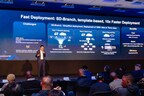
JOHANNESBURG, July 27, 2026 /PRNewswire/ — At the Huawei Network Summit 2026 (HNS 2026) in Johannesburg, Huawei unveiled its all-new Xinghe AI CloudCampus SaaS Service Platform for South Africa. Through this platform, South Africa—the economic engine and digital hub of the African continent—will significantly lower the barrier to AI adoption, helping local enterprises bridge the digital divide and driving forward regional intelligent transformation.

Four Key Platform Capabilities Driving Cloud-Managed Network Upgrades for South African Government Agencies and Enterprises

The newly launched Xinghe AI CloudCampus SaaS Service Platform focuses on four core capabilities: flexibility, agility, intelligence, and scalability. Together, these capabilities deliver a centralized, secure, and reliable cloud-managed network infrastructure for South African government agencies and enterprises.

Key highlights of this platform include:

Flexible business models: The platform offers a pure SaaS subscription model, enabling customers to use it with zero CAPEX and pay-as-you-grow flexibility, dramatically lowering upfront investment. Backed by Huawei’s local service team, the platform guarantees data privacy and regulatory compliance while supporting automated periodic updates, ensuring enterprises always stay at the forefront of technology.Agile deployment: Powered by SD-Branch technology, the platform supports bulk branch network configuration and plug-and-play device deployment. Whether opening new stores, branch offices, or temporary sites, enterprises can rapidly roll out networks, boosting business responsiveness by over 80%.AI-powered O&M: Through an embedded AI-assisted O&M copilot, the platform automatically identifies and resolves 80% of common network issues, freeing O&M personnel from tedious routine inspections. This slashes the Mean Time to Repair (MTTR) by 70% and cuts O&M costs by 50%.Future-ready scalability: The platform deeply converges Wi-Fi, LAN, WAN, and security capabilities across all scenarios, supporting elastic expansion to accommodate enterprise growth from single sites to global footprints. It also delivers end-to-end industry solutions tailored to sectors like retail and education. These include foot-traffic analytics and smart marketing networks for retail stores, alongside highly reliable online teaching networks for educational institutions, truly bringing to life the vision of “One Platform, All Scenarios, Intelligent Future.”

Looking Ahead: Making AI-Powered Networks Ubiquitous

“In the past, intelligent O&M was a luxury exclusive to large enterprises. Now, we have deeply integrated AI into the cloud management service platform, enabling SMEs to easily access these capabilities as a cloud service. This is more than tech inclusion; it is about making AI network services genuinely accessible, affordable, and actionable,” said Shi Lei, Vice President of the NCE Data Communication Domain, Huawei’s Data Communication Product Line. “Looking ahead, we will continue investing in local operations and working hand-in-hand with South African customers and partners to make intelligent networks the solid foundation of South Africa’s digital economy. Together, we will drive a more inclusive and sustainable digital future.”

Photo – https://mma.prnewswire.com/media/3007741/image1.jpg

View original content:https://www.prnewswire.co.uk/news-releases/huawei-unveils-xinghe-ai-cloudcampus-saas-service-platform-in-south-africa-to-build-a-solid-foundation-for-the-digital-economy-302834827.html

Continue Reading

Technology

Aolani and Rafay Collaborate on One of the Industry’s First NVIDIA DSX OS Deployments on NVIDIA GB200 NVL72 Infrastructure

Published

on

By

The collaboration demonstrates how next-generation AI infrastructure can be transformed into production-ready AI platforms for enterprise and cloud providers.

SUNNYVALE, Calif. and SINGAPORE, July 26, 2026 /PRNewswire/ — Rafay Systems, a leading platform provider for modern infrastructure and AI workloads and a member of NVIDIA Inception, today announced a strategic collaboration with Aolani to deliver one of the industry’s first deployments of NVIDIA DSX OS running on NVIDIA GB200 NVL72 infrastructure, helping demonstrate how next-generation AI infrastructure can move from installation to production-ready AI services.

As organizations continue investing in accelerated computing, the competitive advantage is shifting beyond acquiring GPUs. Success increasingly depends on how quickly providers can operationalize infrastructure, onboard customers, govern multi-tenant environments, and deliver AI services that developers and enterprises can consume immediately.

The collaboration between Aolani and Rafay addresses that challenge by combining Aolani’s next-generation AI infrastructure with Rafay Platform’s orchestration, automation, multi-tenancy, and lifecycle management capabilities to create a production-ready AI platform built on NVIDIA AI infrastructure.

Rather than delivering raw GPU infrastructure alone, the solution enables organizations to provision Kubernetes clusters, virtual machines, AI workspaces, and inference environments through a secure self-service experience while maintaining centralized governance, policy enforcement, and operational visibility.

“Aolani has always been committed to delivering faster time-to-value for our customers,” said Nicholas Chia, CEO of Aolani. “Our customers are at the bleeding edge of AI development, and they need to provision, govern, and scale from day one in an industry that moves at lightning speed. Building the next generation of AI cloud means solving for more than just compute capacity, but also production-grade platforms that enable operational readiness from the get go. That’s why we are so excited about this partnership with Rafay.”

The announcement reflects a broader transition taking place across the AI infrastructure industry. As cloud providers, enterprises, and sovereign AI operators deploy increasingly powerful GPU infrastructure, attention is moving toward the software layer that enables those investments to become secure, scalable, and commercially viable AI platforms.

“AI infrastructure has entered a new phase,” said Haseeb Budhani, CEO and co-founder of Rafay Systems. “The question is no longer how quickly organizations can deploy GPUs. It’s how quickly they can transform that infrastructure into a governed, self-service platform that developers can use and operators can manage at scale. We’re excited to collaborate with Aolani to help demonstrate what’s possible with NVIDIA AI infrastructure and accelerate the path from hardware deployment to production AI services.”

The deployment combines Aolani’s AI cloud infrastructure with the Rafay Platform to simplify infrastructure bring-up, automate lifecycle management, enforce enterprise governance, and provide developers with immediate access to production-ready AI environments. The result is a platform designed to support model development, training, inference, and future AI service delivery without requiring organizations to assemble the operational software stack themselves.

As next-generation AI infrastructure continues to scale globally, Aolani and Rafay are demonstrating how infrastructure providers can move beyond deploying GPU capacity to operating modern AI platforms that accelerate customer adoption, improve infrastructure utilization, and shorten time to value.

About Aolani

Where AI gets built in Asia. Founded in 2023, Aolani’s AI factories enable enterprises, AI natives, and sovereigns to build with confidence, scale ambitiously, and move at hyper-speed in the world’s fastest-growing AI market. Founded in Singapore and backed by compliant and purpose-built neocloud infrastructure, Aolani delivers the performance capabilities for next-generation AI. For more information, visit www.aolanicloud.com and follow @AolaniCloud on LinkedIn.

About Rafay Systems

Rafay Systems is a leading software provider powering the operators building the AI cloud, including neoclouds, telecommunications providers, enterprises, and sovereign AI operators. The Rafay Platform lets these organizations operationalize GPU and compute infrastructure with self-service automation, governance, and multi-tenancy, spanning bare metal provisioning, infrastructure lifecycle management, virtual machines, Kubernetes, GPU PaaS, AI development environments, and Token Factory  for publishing AI models as token-metered inference services. By simplifying orchestration and operations across this stack, Rafay helps operators increase GPU utilization and turn raw infrastructure into monetizable, production-ready AI services, all while maintaining security, consistency, and control. For more information, visit rafay.co.

Media Contact
H/Advisors on behalf of Aolani Cloud
klareco-aolani@h-advisors.global

Angela Shugarts
Rafay Systems
angela@rafay.co 

View original content to download multimedia:https://www.prnewswire.com/news-releases/aolani-and-rafay-collaborate-on-one-of-the-industrys-first-nvidia-dsx-os-deployments-on-nvidia-gb200-nvl72-infrastructure-302834434.html

SOURCE Rafay Systems

Continue Reading

Technology

Lianlian DigiTech and UnionPay International Partner to Deploy AI-Agent Payments for Global Procurement

Published

on

By

HANGZHOU, China, July 27, 2026 /PRNewswire/ — Lianlian DigiTech and UnionPay International signed a strategic cooperation agreement on July 18 to develop AI-agent payment applications for cross-border commerce. Sun Dali, Co-President of Lianlian DigiTech, attended and signed on behalf of the company.

The partnership combines Lianlian DigiTech’s AI-agent platform with UnionPay International’s global payment network. Initial focus areas include global procurement and AI Token replenishment, with AI-assisted procurement workflows connecting directly to cross-border payment infrastructure. The broader collaboration will also encompass overseas merchant acceptance expansion and joint AI technology R&D.

Launching Deployment Global Procurement

Building on the existing B2B payment business cooperation between Lianlian DigiTech and Union Pay International, the partnership will be further extended into AI-Agent payment Scenarios. The inaugural application introduces a Human-in-the-Loop AI-agent payment solution for global procurement, which will effectively address enterprises’ pain points in cross-border B2B payments.

Cross-border purchasing has long suffered from structural inefficiencies—protracted settlement cycles, exchange-rate volatility, layered compliance demands, and manual reconciliation.

The partners will integrate AI-agent capabilities throughout the procurement workflow—from supplier matching and product selection to payment execution. Under the Human-in-the-Loop model, the AI agent executes procurement tasks autonomously while users retain final approval authority, marrying AI-driven efficiency with human judgment.

The partners will use global procurement as the initial deployment, refining the experience and architecture based on real-world feedback, with a longer-term ambition to drive industry-wide standardization and broader adoption of AI-agent payment solutions across additional business verticals.

Long-Term Technology Collaboration

Beyond expanding AI-agent payment applications internationally, the two companies will collaborate on AI technologies for financial services through ongoing technical exchanges and joint development, advancing innovation and broader industry adoption.

Lianlian DigiTech said the partnership reflects its long-term commitment to integrating AI with cross-border payments. As an AI-native company building global financial infrastructure, it views this collaboration as an important step in bringing AI-agent payment technologies into commercial use, and will continue working with industry partners to provide businesses with more intelligent global payment services.

UnionPay International noted that as AI reshapes financial services, intelligent and digital transformation have become essential to sustainable industry growth. Drawing on its global payment network and seamless B2B digital payment solutions, including Virtual Commercial Card Program, it will work with Lianlian DigiTech to promote standardization and scaled adoption of AI-agent payments, ensuring AI-driven financial innovation supports the real economy.

View original content:https://www.prnewswire.com/apac/news-releases/lianlian-digitech-and-unionpay-international-partner-to-deploy-ai-agent-payments-for-global-procurement-302834571.html

SOURCE Lianlian DigiTech

Continue Reading

Trending