Connect with us

Technology

The Augmented Reality and Virtual Reality Market is projected to grow by USD 442.99 Billion (2024-2028), driven by demand for AR and VR tech and AI-powered market evolution – Technavio

Published

on

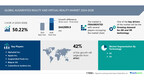
NEW YORK, Oct. 8, 2024 /PRNewswire/ — Report on how AI is driving market transformation – The Global Augmented Reality and Virtual Reality Market  size is estimated to grow by USD 442.99 billion from 2024-2028, according to Technavio. The market is estimated to grow at a CAGR of  50.22%  during the forecast period. Growing demand for AR and VR technology is driving market growth, with a trend towards growing funding in startup AR and VR companies from investors. However, high development costs associated with AR and VR apps  poses a challenge – Key market players include Alphabet Inc., Apple Inc., Augmented Pixels Inc., Blippar Ltd., CyberGlove Systems Inc., Eon Reality Inc., HP Inc., HTC Corp., Innovega Inc., Lenovo Group Ltd., Magic Leap Inc., Maxst Co. Ltd., Microsoft Corp., PTC Inc., Samsung Electronics Co. Ltd., Seiko Epson Corp., Toshiba Corp., Vuzix Corp., Wikitude GmbH, and Zugara Inc..

AI-Powered Market Evolution Insights. Our comprehensive market report ready with the latest trends, growth opportunities, and strategic analysis- View your snapshot now

Forecast period

2024-2028

Base Year

2023

Historic Data

2017 – 2021

Segment Covered

Technology (AR and VR), Application (Consumer and Enterprise), and Geography (North America, APAC, Europe, Middle East and Africa, and South America)

Region Covered

North America, APAC, Europe, Middle East and Africa, and South America

Key companies profiled

Alphabet Inc., Apple Inc., Augmented Pixels Inc., Blippar Ltd., CyberGlove Systems Inc., Eon Reality Inc., HP Inc., HTC Corp., Innovega Inc., Lenovo Group Ltd., Magic Leap Inc., Maxst Co. Ltd., Microsoft Corp., PTC Inc., Samsung Electronics Co. Ltd., Seiko Epson Corp., Toshiba Corp., Vuzix Corp., Wikitude GmbH, and Zugara Inc.

Key Market Trends Fueling Growth

The global Augmented Reality (AR) and Virtual Reality (VR) market is witnessing significant growth due to increasing collaborations and partnerships among vendors. These strategic alliances enable companies to enhance their product offerings and explore new application areas. In March 2020, Valve, Microsoft Corp., and HP Inc. Collaborated to build a next-generation SteamVR headset, HP Reverb G2, focusing on innovative product development. Similarly, in February 2020, NexTech AR Solutions partnered with Poplar, a UK-based AR collaborative platform provider, to utilize each other’s advanced technologies for AR campaign creation and product integration. I2 Industrial Innovation Srl, an industrial AR technology pioneer in Europe, partnered with Upskill in July 2018, delivering its suite of AR products on Upskill’s Skylight AR software platform to support European enterprises’ Industry 4.0 initiatives. These collaborations and partnerships are expected to drive the growth of the global AR and VR market by enabling companies to stay competitive with innovative products and applications. 

The Augmented Reality (AR) and Virtual Reality (VR) market is experiencing rapid growth, with trends such as security compliance and self-monitoring devices driving innovation. Semiconductor components and SoC integration are crucial for delivering high-quality AR and VR experiences. In the consumer space, shopping, simulations, and smartphones are key areas of focus. Technical expertise in AR and VR technology, including 3D environments and models, is in high demand. Virtual Reality is revolutionizing industries like tourism and travel & tourism, offering experiences. VR technology is also making strides in aerospace & defense, architecture, and virtual reality gaming. AR applications are gaining traction in commercial industries, particularly in consumer electronics and AI. 5G networks are set to revolutionize AR and VR experiences, enabling real-time data transfer and low latency. Smart glasses are becoming increasingly popular for AR applications, while cloud-based AR applications offer greater accessibility. Virtual Reality exposure therapy is a promising area for mental health applications. In conclusion, the AR and VR market is buzzing with innovation, driven by trends in security, self-monitoring, semiconductors, consumer engagement, and more. Technical expertise and advanced components are essential for delivering high-quality experiences. The future looks bright for AR and VR, with applications in various industries and use cases. 

Insights on how AI is driving innovation, efficiency, and market growth- Request Sample!

Market Challenges

•         The development of Augmented Reality (AR) and Virtual Reality (VR) projects involves various components, each with its associated costs. VR content creation entails expenses for 360-degree cameras, computer graphics, and high-end photorealistic cameras. The cost of creating panoramic videos is generally lower than computer-generated graphics. The value of VR games relies on interactive content. Developing VR software for various platforms, including web, mobile, and individual systems, also adds to the project cost. The development cost of VR applications varies based on the type of app and the company size. For instance, a non-gaming mobile VR application may cost between USD35,000 and USD75,000, while a mobile VR game may range between USD45,000 and USD100,000. Software development costs also impact the overall project cost. Moreover, the high cost of AR and VR gadgets, such as smart glasses and headsets, acts as a significant barrier to market growth. For instance, the cost of an AR headset ranges from USD500 to USD4,000, while an AR smart glass costs between USD500 and USD1,000. Microsoft Corp.’s HoloLens 2, launched in November 2019, costs around USD3,500. These high development and hardware costs challenge the growth of the global AR and VR market.

•         Augmented Reality (AR) and Virtual Reality (VR) markets are experiencing significant growth due to increasing demand from commercial industries. AR technology enables 3D models to overlay real-world environments, revolutionizing industries like architecture, engineering, and manufacturing. Challenges include developing 3D environments for AR applications, integrating AI for enhanced user experience, and the need for 5G networks for seamless connectivity. HMDs (Head-mounted displays) and gesture-tracking devices are key hardware components. AR has applications in consumer electronics, e-commerce, entertainment, and healthcare. Investment activity is high in IT & telecommunication, media & entertainment, and aerospace & defense sectors. AR technology is transforming industrial automation, consumer goods, and real-estate firms through cloud-based applications, heads-up displays, and infotainment industry integration. Network infrastructure and position trackers are crucial for AR’s success.

Insights into how AI is reshaping industries and driving growth- Download a Sample Report

Segment Overview 

This augmented reality and virtual reality market report extensively covers market segmentation by

Technology 1.1 AR1.2 VRApplication 2.1 Consumer2.2 EnterpriseGeography 3.1 North America3.2 APAC3.3 Europe3.4 Middle East and Africa3.5 South America

1.1 AR-  The Augmented Reality (AR) and Virtual Reality (VR) market is experiencing significant growth. Companies are integrating AR and VR technologies into their business strategies to enhance customer experiences and streamline operations. AR allows digital information to be overlaid onto the real world, while VR creates entirely new environments. These technologies are being used in industries such as retail, healthcare, and manufacturing to improve training, product visualization, and remote collaboration. The market is expected to continue growing as more businesses recognize the benefits of these innovative technologies.

Download complimentary Sample Report to gain insights into AI’s impact on market dynamics, emerging trends, and future opportunities- including forecast (2024-2028) and historic data (2017 – 2021) 

Research Analysis

Augmented Reality (AR) and Virtual Reality (VR) are revolutionary technologies that have been gaining significant traction in various industries. AR overlays digital 3D models onto the real world, enhancing user experience in areas like gaming, simulations, infotainment, shopping, and self-monitoring devices. AR can be accessed through smartphones, smart glasses, and heads-up displays. Virtual Reality, on the other hand, immerses users in a completely digital 3D environment. Head-mounted displays (HMDs) are the most common device for accessing VR. The technology is popular in gaming, simulations, VR exposure therapy, and industrial automation industries. VR technology and AR technology have been seeing increased investment activity due to their potential to transform industries and provide new experiences. Engineers and professionals in manufacturing industries are using these technologies for SoC integration and information search. VR technology is also being used for training and education purposes. The infotainment industry is leveraging AR and VR for creating experiences for consumers. VR gaming and AR gaming are becoming increasingly popular, offering unique experiences that cannot be replicated in the real world.

Market Research Overview

Augmented Reality (AR) and Virtual Reality (VR) are revolutionary technologies that transform the way we interact with our environment. AR overlays digital 3D models onto the real world, enhancing consumer engagement in various industries. 5G networks enable seamless AR experiences, from consumer electronics to commercial industries like aerospace & defense, architecture, and engineering. AR applications extend to e-commerce, gaming, and education, while VR offers experiences in entertainment, healthcare, and training simulations. HMDs (Head-mounted displays) and gesture-tracking devices bring AR and VR to life, with hardware advancements including SoC integration and semiconductor components. The IT & telecommunication sector invests heavily in AR/VR technology, while the manufacturing industries leverage AR for industrial automation and self-monitoring devices. Network infrastructure, position trackers, and cloud-based AR applications further expand the possibilities, with real-estate firms and tourism businesses exploring new opportunities. AR and VR technology also address specific needs, such as mental illnesses, security compliance, and technical expertise. Overall, AR and VR are transforming industries and offering innovative solutions for consumer goods, infotainment, and more.

Table of Contents:

1 Executive Summary
2 Market Landscape
3 Market Sizing
4 Historic Market Size
5 Five Forces Analysis
6 Market Segmentation

TechnologyARVRApplicationConsumerEnterpriseGeographyNorth AmericaAPACEuropeMiddle East And AfricaSouth America

7 Customer Landscape
8 Geographic Landscape
9 Drivers, Challenges, and Trends
10 Company Landscape
11 Company Analysis
12 Appendix

About Technavio

Technavio is a leading global technology research and advisory company. Their research and analysis focuses on emerging market trends and provides actionable insights to help businesses identify market opportunities and develop effective strategies to optimize their market positions.

With over 500 specialized analysts, Technavio’s report library consists of more than 17,000 reports and counting, covering 800 technologies, spanning across 50 countries. Their client base consists of enterprises of all sizes, including more than 100 Fortune 500 companies. This growing client base relies on Technavio’s comprehensive coverage, extensive research, and actionable market insights to identify opportunities in existing and potential markets and assess their competitive positions within changing market scenarios.

Contacts

Technavio Research
Jesse Maida
Media & Marketing Executive
US: +1 844 364 1100
UK: +44 203 893 3200
Email: media@technavio.com
Website: www.technavio.com/

View original content to download multimedia:https://www.prnewswire.com/news-releases/the-augmented-reality-and-virtual-reality-market-is-projected-to-grow-by-usd-442-99-billion-2024-2028-driven-by-demand-for-ar-and-vr-tech-and-ai-powered-market-evolution–technavio-302269666.html

SOURCE Technavio

Continue Reading

Technology

Ascendion Expands AI Advisory Community with Four Global Business and Technology Leaders

Published

on

By

Former Global CTO of Banco Santander, former Group CIO of Currys, former CEO of IBPAP, and former Microsoft CVP and CTO of AI join the advisory community

Advisors will provide guidance on AAVA platform innovation, AI strategy, C-suite alignment, and enterprise adoption across Asia-Pacific, Europe, North America, and the UK

The growing community of advisors will bring practitioner perspective closer to Ascendion as enterprises move AI from experimentation to governed, production-scale outcomes

BASKING RIDGE, N.J., Oct. 27, 2026 /PRNewswire/ — Ascendion, an AI-native software engineering company, today announced the appointment of four global business and technology leaders to its AI Advisory Community: Andy Gamble, Jack Madrid, Julieta Ross, Ph.D., and Joseph Sirosh, Ph.D. 

The advisors bring perspectives rarely found in one group: executives who answered to Boards, regulators, and C-suites for what technology actually delivered; a builder of AI and data platforms at global scale; and a leader who shaped one of the world’s largest technology-services and talent ecosystems. Their experience spans banking, high-tech, media, and retail. Each will work directly with Ascendion’s regional and engineering leaders, so their counsel reaches the decisions it is meant to shape. 

“We are changing how software gets built. Enterprise leaders have moved past experiments. They want AI that delivers outcomes boards can measure and risk they can manage. Andy, Jack, Julieta, and Joseph have the experience and know where transformation succeeds. They will challenge our thinking, raise our ambition, and help us navigate a period of intense — and exciting — change,” said Karthik Krishnamurthy, CEO, Ascendion. 

Each advisor will map to a different part of the business, strengthening Ascendion’s alignment with leadership communities across the globe. 

Julieta Ross, Ph.D., former Global CTO of Banco Santander, brings two decades of leading technology inside global banks, along with public-company board experience. She will work with Ascendion’s leadership on executive relationships, go-to-market strategy, and growth, and will help the company meet the governance, regulatory, and risk expectations that banking and financial services leaders place on AI. Andy Gamble, former Group CIO of Currys plc, has spent nearly three decades as a technology buyer and transformation leader across consumer electronics, industrial, and retail businesses. He will advise Ascendion’s work across Europe and the UK, with a focus on consumer goods, manufacturing, and retail, and will share what executive teams and Boards expect from a technology partner. Joseph Sirosh, Ph.D., former Microsoft CVP and CTO of AI, has spent his career building and scaling machine learning platforms in the high-tech industry. He will advise Ascendion’s engineering leadership on the evolution of AAVA and its broader platform strategy as AAVA becomes an orchestration and harness layer for enterprise AI. Jack Madrid, former President and CEO of IBPAP, spent five years leading the industry association behind one of the world’s largest technology and business-services ecosystems, centered in the Philippines. He brings robust experience working across industries, including banking, high-tech, and media, and will advise Ascendion on Asia-Pacific markets and on how AI is reshaping global delivery, skills, and workforce models. 

Together, the advisors give Ascendion an outside perspective on the full spectrum of enterprise AI, from agentic platform strategy and product engineering to industry alignment and delivery. They will add capacity to Ascendion’s ongoing work on AI governance, helping ensure trusted impact from AI-native software engineering, and their practice-based insight will inform how Ascendion applies its Engineering to the Power of AI™ approach to commercial models, platform design, service execution, and workforce development. 

About Ascendion

Ascendion is a global AI-native software engineering company delivering trusted business outcomes – capital unlock, innovation velocity, lower risk – to 250+ enterprise clients. The company delivers business outcomes at scale by combining expert engineers, AI agents, and AAVA, Ascendion’s agentic AI platform. Together, they design, engineer, and operate production-ready software that improves everyday work and life. Learn more at www.ascendion.com.

Engineering to the Power of AI™, Engineering to Elevate Life™, and AAVA™ are trademarks or service marks of Ascendion. AAVA™ is pending registration. Unauthorized use is strictly prohibited.

View original content to download multimedia:https://www.prnewswire.co.uk/news-releases/ascendion-expands-ai-advisory-community-with-four-global-business-and-technology-leaders-302921368.html

Continue Reading

Technology

AvePoint Set to Join S&P SmallCap 600

Published

on

By

NEW YORK, Oct. 27, 2026 /PRNewswire/ — AvePoint Inc. (NASD: AVPT) will replace LXP Industrial Trust (NYSE: LXP) in the S&P SmallCap 600 effective prior to the opening of trading on Monday, November 2. Brookfield Asset Management Ltd. and Canada Pension Plan Investment Board are acquiring LXP Industrial Trust in a deal expected to close soon, pending final closing conditions.

Following is a summary of the changes that will take place prior to the open of trading on the effective date:

Effective Date

Index Name

Action

Company Name

Ticker

GICS Sector

Nov 2, 2026

S&P SmallCap 600

Addition

AvePoint

AVPT

Information Technology

Nov 2, 2026

S&P SmallCap 600

Deletion

LXP Industrial Trust

LXP

Real Estate

ABOUT S&P DOW JONES INDICES

S&P Dow Jones Indices is the largest global resource for essential index-based concepts, data and research, and home to iconic financial market indicators, such as the S&P 500® and the Dow Jones Industrial Average®. More assets are invested in products based on our indices than products based on indices from any other provider in the world. Since Charles Dow invented the first index in 1884, S&P DJI has been innovating and developing indices across the spectrum of asset classes helping to define the way investors measure and trade the markets.

S&P Dow Jones Indices is a division of S&P Global (NYSE: SPGI), which provides essential intelligence for individuals, companies, and governments to make decisions with confidence. For more information, visit www.spglobal.com/spdji/en/. 

FOR MORE INFORMATION:

S&P Dow Jones Indices
index_services@spglobal.com

Media Inquiries
spdji.comms@spglobal.com

View original content:https://www.prnewswire.com/news-releases/avepoint-set-to-join-sp-smallcap-600-302921327.html

SOURCE S&P Dow Jones Indices

Continue Reading

Technology

Archera Surpasses $5.6 Billion in Cloud and AI Spend Under Management, Closes Series C Led by Pivot Investment Partners, and Expands Insurance-Backed Cloud Commitments

Published

on

By

The round will help Archera expand its guaranteed cloud commitments, bringing insurance-backed financial protection to companies navigating unpredictable AI and cloud spending. The company has delivered more than $700 million in customer savings and now manages approximately $5.6 billion in annual cloud and AI spend.

BELLEVUE, Wash., Oct. 27, 2026 /PRNewswire/ — As artificial intelligence makes cloud spending harder to predict, companies face an increasingly expensive choice: commit to long-term cloud and AI contracts to unlock significant discounts or preserve flexibility and leave savings on the table. Archera has raised a $15 million Series C to expand its Guaranteed Commitments and change that equation.

The cloud economics company today announced it closed its Series C funding round, led by Pivot Investment Partners, with participation from existing investors including HighSage Ventures. The financing brings Archera’s total funding to $38.3 million. It will support the expansion of Archera’s Guaranteed Commitments and its suite of free cloud cost tools, including its FinOps Agent and MCP.

Insurance-backed financial protection is central to Archera’s next phase of growth. Archera purchased a policy on a surplus lines basis from Crum & Forster Specialty Insurance Company to back its guarantee. This model helps businesses pursue cloud commitment savings while managing the financial risk of usage changes.

The company has delivered more than $700 million in savings to over 2,200 organizations, including PubNub, Art.com, and Astronomer. The thesis behind Archera is simple: companies shouldn’t have to predict AI’s future to commit and save money on today’s infrastructure.

Why Cloud and AI Commitments Need to Change

Cloud providers reward customers who commit to spending over one- to three-year periods with substantial discounts and access to capacity. Historically, those commitments have helped businesses reduce infrastructure costs. But AI is changing the risk and economics of that decision.

A new model launch can multiply GPU spending in months. A more efficient model, a shift in architecture, or a move to a different service can reduce it just as quickly. Long-term commitments that once looked financially sound can become expensive liabilities.

Companies are left choosing between overcommitting and risking unused spend, or undercommitting and missing out on available discounts. Many choose the latter, sacrificing potential savings to preserve flexibility.

Archera believes that the trade-off is unnecessary. Its Guaranteed Commitments provide resource-level cloud and AI discounts with terms as short as 30 days. If usage declines and a covered commitment goes unused, Archera covers the cost under the terms of its guarantee.

The result is a different way to approach cloud purchasing. Businesses can pursue deeper discounts and unlock capacity otherwise gated behind a commitment, without bearing the entire financial consequence when actual usage diverges from forecasts.

Turning Cloud Optimization Into a Financial Product

Traditional cloud cost management tools provide visibility, recommendations, automation, and forecasting, but they can’t eliminate the financial risk of unused commitments. Archera combines its free FinOps platform and Agent with a financial guarantee that addresses inaccurate forecasts.

“Every tool in this market is trying to forecast your cloud usage a little better. We think that’s the wrong bet,” said Aran Khanna, co-founder and CEO of Archera. “Nobody can forecast AI demand, not the customer, not the cloud provider. So instead of predicting it, we guarantee it, and we have purchased an insurance policy to back that guarantee. If covered usage drops, we address the unused commitment cost under the terms of our guarantee. That’s a new way to purchase cloud, not another dashboard, and it’s why we’ve been able to return $700 million to our customers.”

The approach positions cloud commitments as a financial risk decision, helping finance and engineering leaders manage budgets while adapting to changing technology.

Built for CFOs, CTOs, and the Teams Managing AI Costs

The approach addresses a growing challenge across finance and engineering: how to control infrastructure costs without constraining the business.

For CFOs: Capture commitment-level discounts while reducing exposure to eligible unused spend under the guarantee.For CTOs and engineering leaders: Preserve flexibility to adopt new AI models, change architectures, and scale workloads without letting past commitments dictate future decisions.For FinOps teams: Increase commitment coverage with a financial backstop when usage changes, without more back-and-forth with engineering teams to get perfect forecasts.For cloud partners and resellers: Give customers a differentiated way to pursue cloud savings that can be reinvested in new cloud services while managing commitment risk.

Archera’s platform connects to AWS, Microsoft Azure, or Google Cloud billing data in read-only mode and analyzes actual usage. It then recommends and automates the purchasing of both native commitments and Archera Guaranteed Commitments.

Customers can evaluate their potential savings before making any purchasing decision. Commitments remain in the customer’s own cloud account, preserving end-to-end control over cloud purchasing strategy.

Archera earns when customers save through its guaranteed commitments, aligning its commercial model with the outcomes customers seek.

Customers Are Rethinking the Commitment Model

For organizations accustomed to treating cloud commitments as a single, high-stakes decision, Archera offers a more flexible approach.

“Working with Archera meant rethinking commitments as a spectrum rather than a single, high-stakes decision,” said James Hamilton, VP of Operations and Controller at PubNub. “This was a big mind shift for us. We needed to think about how our commitments could be broken up into a spectrum of purchases versus a single one-time buy.”

That flexibility is particularly valuable as companies adopt AI workloads, where technology choices and resource requirements can shift faster than traditional budgeting cycles.

Instead of making one large bet on future usage, businesses can take a more measured approach while still securing meaningful discounts.

A Series C to Expand Insurance-Backed Cloud Purchasing

Archera has been operating profitably at scale. It raised a Series C to support larger guarantees, expand its reach, serve more customers, and upgrade the insurance policies backing its guarantee to serve larger global clients.

The company plans to use the capital in three ways:

Accelerate go-to-market efforts.Expand its global partner network across North America, Europe, the Middle East, Japan, and Latin America.Serve more teams focused on AI-driven workloads.

“Archera has built a capital-efficient and differentiated business at the intersection of cloud infrastructure and risk management,” said Dinkar Jetley, co-founder and managing partner at Pivot Investment Partners. “The team pairs a deep understanding of the cloud ecosystem with a rigorous approach to underwriting, and the result is a compelling value proposition that a fast-growing roster of customers relies on as their cloud spend scales. We are privileged to have led this Series C round and look forward to working closely with Aran and the management team in the years ahead.”

Built by People Who Understand Cloud Infrastructure

Aran and Nikhil Khanna founded Archera in 2019. Aran previously planned capacity for Azure’s core compute and database services at Microsoft and was a founding member of AWS’s deep learning team leading launches, including SageMaker, DeepLens, and the Neuron SDK, behind Amazon’s Trainium and Inferentia AI chips.

His research on deep learning model efficiency has been cited more than 1,900 times, and he serves on the FinOps Foundation governing board.

As AI transforms infrastructure economics, Archera aims to make cloud savings more accessible without forcing businesses to assume unnecessary financial risk.

To explore potential savings, request a free assessment at Archera.ai.

Free savings assessment: https://app.archera.ai/savings-estimate?utm_source=forbes&utm_medium=referral&utm_campaign=series-c-2026

Name: Sarah
Email Address: shiara@archera.ai
Phone Number: +13018255007

View original content to download multimedia:https://www.prnewswire.com/news-releases/archera-surpasses-5-6-billion-in-cloud-and-ai-spend-under-management-closes-series-c-led-by-pivot-investment-partners-and-expands-insurance-backed-cloud-commitments-302921341.html

SOURCE Archera

Continue Reading

Trending