Connect with us

Technology

Game-Changing Approach to Software Delivery Now Widely Available to Department of Defense

Published

on

WASHINGTON, Oct. 9, 2024 /PRNewswire/ — Today, veteran-founded Defense Unicorns has released its revolutionary new system to the Department of Defense – UDS – a game-changing shift for the future of software delivery. UDS arms mission operators for modern warfare and brings software solutions to national security environments deployed worldwide.

UDS (Unicorn Delivery Service) publicly launches after successful operations in multiple classified and unclassified environments. This first-of-its-kind defense tech platform, will continue to advance its core capabilities by repeatedly deploying and operating in the most challenging and complex missions inside the Department of Defense.

Defense Unicorns Co-founder and CTO, Jeff McCoy shares, “I spent two decades in the Air Force watching technologies struggle to keep up and modernize well enough to deliver updates in air-gapped environments. I wanted to build UDS to help Defense avoid the struggle, complexity, and bureaucracy that make delivering software for national security so difficult.”

What truly makes this announcement game-changing is the defense-first approach to software delivery. UDS provides for national security missions a solution that is:

Secure—UDS is committed to a 0 CVE posture with continuous monitoring, logging, and alerting across a defense-in-depth approach to cybersecurity. It ensures secure runtime by closely managing and monitoring software interactions within DoD environments, verifying software components, and mitigating vulnerabilities in real-time to maintain a trusted and resilient operational state.

Compliant – UDS satisfies up to 90% of the NIST 800-53 technical controls that program offices are responsible for in IL-4, 5, and 6 environments.

Airgap Native – UDS is designed for airgap systems. As a Defense-first solution, UDS was designed from the beginning to support disconnected, semi-disconnected, and highly secure environments.

Highly Distributable – UDS is designed to deploy where the Mission requires: cloud, on-prem, and tactical edge alike. With UDS, the same software baseline goes everywhere the mission requires, across contractor environments, government systems, unclassified, classified, or even SAP environments.

Portable—UDS’ portability enables mission capability providers to rapidly develop, test, deploy, and operate regardless of infrastructure, supporting cloud, bare-metal, and tactical edge with uniformity.

Decentralized—UDS reduces mission dependency on single centralized solutions and is instead deployed to many environments, giving your mission the assurance it requires in real wartime scenarios. 

Easy to Operate – UDS makes complex software delivery easy. Most mission systems are managed by active duty, civilians, or a small number of contracting experts. Mission system operators shouldn’t have to be technology experts to execute their work. With UDS, the heroes that operate these programs and weapon systems no longer have to experience these challenges.

“Our vision as a company is to advance freedom and independence globally,” says Robert Slaughter, Air Force Veteran and Defense Unicorns CEO.

“The biggest threat to that vision is an ineffective US military, plagued by insecure and outdated legacy software. Here at Defense Unicorns, it is our life purpose to solve this problem once and for all. UDS is that game changing. Most of the time, defense tech is considered a late add-on for most technologies. We took the opposite approach and instead we have purpose-built UDS as a software delivery platform for the DoD.”

Since its inception but prior to today’s public release, UDS has been successfully deployed within critical systems operated by partners in the Navy, Air Force, and Space Force. Over a six-month development and testing period, UDS proved its ability to accelerate the Authority to Operate (ATO) process while maintaining the entire software development lifecycle from initial development to sustained operations across dozens of deployments throughout multiple classified levels within the complex defense industrial support base.

“The technical solution shouldn’t hold your Mission hostage,” says Andrew Greene, Defense Unicorns Co-Founder and Engineer.

“The warfighter deserves nothing less than secure capabilities, immediately available in their mission environments. I believe we’re solving a really hard problem, more holistically and better than it’s ever been done before.”

Defense Unicorns is transforming how the Department of Defense apparatus buys, builds, delivers, and sustains mission capabilities. At the core of this disruptive approach is the leveraging of UDS, which is quickly becoming the leading purpose-built defense tech-first software delivery platform.

Defense Unicorns has multiple workshops and discovery and framing sessions for government programs and defense contractors to explore how UDS can help make software delivery easy for national security systems. This is the fastest way for anyone interested in potentially acquiring this solution.

For more information or to book a demonstration, contact Defense Unicorns at media@defenseunicorns.com

About Defense Unicorns: Defense Unicorns is a defense tech startup founded in 2021 with the vision of advancing freedom and independence globally. Defense Unicorns focuses on airgap native software and platform solutions that solve national security issues. Defense Unicorns builds cutting-edge technology to solve the biggest challenges mission systems face when developing and deploying software and AI solutions in some of the most extreme environments on the planet.

For more, visit www.defenseunicorns.com.

View original content to download multimedia:https://www.prnewswire.com/news-releases/game-changing-approach-to-software-delivery-now-widely-available-to-department-of-defense-302271912.html

SOURCE Defense Unicorns

Continue Reading

Technology

Ping Identity Recognized as a Leader in 2026 Gartner® Magic Quadrant™ for Customer Identity and Access Management

Published

on

By

Ping positioned highest in Ability to Execute

DENVER, Oct. 30, 2026 /PRNewswire/ — Ping Identity, a leader in securing digital identities for the world’s largest enterprises, announced that it was recognized as a Leader in the 2026 Gartner Magic Quadrant for Customer Identity and Access Management (CIAM), positioned highest on Ability to Execute.

Download the 2026 Gartner Magic Quadrant for Customer Identity and Access Management Report

“Being named a Leader in the Gartner Magic Quadrant for CIAM is a defining moment for Ping, and something we’ve been working towards for many years. CIAM is no longer just the front door to digital services; it is the trust layer for every interaction among customers, businesses, and AI agents,” said Andre Durand, CEO and founder of Ping Identity. “Keeping customer accounts safe from fraud and enabling the agentic channel as AI acts on behalf of people at scale will require we understand who is acting, and what each agent is authorized to do. Ping’s CIAM solutions help protect billions of accounts and are designed to secure every interaction without adding friction.”

Ping helps enterprises build customer trust and accelerate growth by making digital interactions secure and seamless. Its CIAM capabilities bring together identity verification, authentication, authorization, fraud prevention and journey orchestration to protect customers and deliver frictionless digital experiences.

Building on this foundation, Ping has extended its capabilities for the agentic era. By combining orchestration, runtime authorization and adaptive risk controls, Ping helps enterprises verify AI agents acting on customers’ behalf, govern access and detect activity while preserving customer control and trust.

For the past nine years, Ping Identity has been recognized as a Leader in The Gartner Magic Quadrant for Access Management. The 2026 report introduces a dedicated Customer Identity and Access Management evaluation, distinct from the broader Access Management scope assessed in 2025. For Ping, the next phase of customer identity extends beyond login to controlling what customers and AI agents acting on their behalf can access and do. This year, Ping Identity continues to be recognized as a Leader, this time for Customer Identity and Access Management.

Gartner Disclaimer
Gartner does not endorse any company, vendor, product or service depicted in its publications, and does not advise technology users to select only those vendors with the highest ratings or other designation. Gartner publications consist of the opinions of Gartner’s business and technology insights organization and should not be construed as statements of fact. Gartner disclaims all warranties, expressed or implied, with respect to this publication, including any warranties of merchantability or fitness for a particular purpose.

GARTNER is a registered trademark and service mark of Gartner, Inc. and/or its affiliates in the U.S. and internationally, and MAGIC QUADRANT is a registered trademark of Gartner, Inc. and/or its affiliates and are used herein with permission. All rights reserved. Gartner, Magic Quadrant for Customer Identity & Access Management (CIAM), Brian Guthrie, Nathan Harris, Steve Wessels, Yemi Davies, 28 October 2026.

About Ping Identity
At Ping Identity, we help organizations secure and manage digital identities across customers, employees, partners, and non-human entities. Whether securing millions of users, fighting fraud, simplifying third-party access, or enabling passwordless experiences, establishing trust in every digital moment shouldn’t slow you down. Our enterprise identity platform is designed for scale, flexibility, and integration across cloud, hybrid, and on-prem environments. With our Runtime Identity capabilities, Ping enables organizations to adopt AI and automation by continuously verifying identity, context, and intent at every interaction, helping secure and govern AI agents in real time. Learn more at pingidentity.com.

Media Contact
press@pingidentity.com

View original content to download multimedia:https://www.prnewswire.com/news-releases/ping-identity-recognized-as-a-leader-in-2026-gartner-magic-quadrant-for-customer-identity-and-access-management-302925146.html

SOURCE Ping Identity

Continue Reading

Technology

Los Angeles Oral and Maxillofacial Surgeon Dr. David Salehani Uses Live 3D Navigation to Plan and Place Full-Arch All-on-X Dental Implants

Published

on

By

Board-certified oral and maxillofacial surgeon David Salehani, DDS, MD, combines CBCT-based digital planning with X-Guide live navigation for patients replacing a full arch of missing or failing teeth with All-on-X dental implants at Sunset Oral and Facial Surgery. The approach offers patients who wear dentures, or who have been told they lack the bone for implants, a fixed full-arch option planned around their own anatomy.

WEST HOLLYWOOD, Calif., Oct. 30, 2026 /PRNewswire/ — Sunset Oral and Facial Surgery, the practice of board-certified oral and maxillofacial surgeon David Salehani, DDS, MD, is using live 3D navigation to guide All-on-X full-arch dental implant treatment for patients throughout Los Angeles, including West Hollywood and Beverly Hills. By pairing a detailed cone beam CT (CBCT) scan and digital treatment planning with the X-Guide dynamic navigation system during surgery, Dr. Salehani maps out the position, angle and depth of each implant before the procedure and tracks the drill against that plan in real time as the implants are placed.

All-on-X is a general term for full-arch restorations that replace an entire upper or lower row of teeth with a fixed bridge anchored to a small number of implants, typically four to six per arch. The best-known version, the All-on-4® treatment concept, uses two implants placed upright in the front of the jaw and two placed at an angle toward the back. Angling the rear implants allows them to engage the denser bone toward the front of the jaw, which lets many patients with reduced bone volume proceed without a separate bone grafting procedure. In most cases, a temporary fixed set of teeth is attached on the day of surgery, and the permanent prosthesis is placed several months later once the implants have integrated with the bone.

Those angled implants are where planning and precision matter most. The back of the upper jaw sits beneath the maxillary sinus, and the lower jaw carries the inferior alveolar nerve, which provides sensation to the lip and chin. Each implant also has to sit in the correct relationship to the others so the final full-arch bridge fits and functions as intended. With live navigation implant surgery, the CBCT-based plan is displayed during the procedure alongside a live view of the drill’s position, much like a GPS route, allowing Dr. Salehani to follow the planned trajectory and make adjustments as he works.

Full-arch treatment is designed for adults who have lost most or all of their teeth in one or both arches, whose remaining teeth are failing, or who are frustrated with removable dentures that slip, rub or require adhesive. It is also an option to explore for patients who have been told elsewhere that they do not have enough bone for implants. Candidacy is determined at consultation, where Dr. Salehani reviews the CBCT scan, bone volume, sinus anatomy, bite and overall medical health. Some patients are better served by individual implants, by bone grafting before implant placement or by a different number of implants per arch, and those options are discussed as part of the evaluation.

Dr. Salehani’s training spans both dentistry and medicine. As an oral and maxillofacial surgeon who holds dental and medical degrees and completed a general surgery internship, he performs full-arch implant surgery under IV sedation or general anesthesia and reviews each patient’s medical history as part of surgical planning. His practice also includes bone grafting, sinus lift procedures, corrective jaw surgery and facial reconstruction, which allows him to consider the jaw as a whole when planning a full-arch case.

“Most of my full-arch patients have spent years dealing with failing teeth or dentures they don’t trust, and many of them have been told they don’t have enough bone for implants,” said Dr. Salehani. “The plan starts with the CBCT scan, because that shows exactly how much bone we have to work with and where the sinus and the nerve are. Navigation lets me carry that plan into surgery and confirm where each implant is going as I place it. Not every patient is a candidate for All-on-X, and part of every consultation is an honest conversation about whether this is the right approach or whether something else will serve them better.”

Individual results vary by patient. Anyone considering full-arch dental implants is encouraged to consult with a qualified oral and maxillofacial surgeon to discuss whether the treatment is appropriate for them.

More About Sunset Oral and Facial Surgery

Sunset Oral and Facial Surgery is an oral and maxillofacial surgery practice in West Hollywood, California, led by David Salehani, DDS, MD, a board-certified oral and maxillofacial surgeon. Dr. Salehani earned his undergraduate degree in biochemistry with honors and his dental degree with honors from the State University of New York at Stony Brook. He completed his oral and maxillofacial surgery training at Long Island Jewish Medical Center, earned his medical degree from Stony Brook School of Medicine, and completed an internship in general surgery at Stony Brook University Hospital.

Dr. Salehani practices the full scope of oral and maxillofacial surgery, including dental implants, All-on-X full-arch implants, live navigation implant surgery, bone grafting, wisdom teeth removal, orthognathic (corrective jaw) surgery, facial trauma and reconstruction, cleft lip and palate, TMJ surgery and oral pathology, along with facial cosmetic procedures such as facial implants, genioplasty, FaceTite, AccuTite, Morpheus8 and injectables. He participates as a faculty member in resident and student education at UCLA Medical Center and holds hospital privileges at UCLA Medical Center and Long Beach Memorial Medical Center and Children’s Hospital (courtesy staff). He serves as a peer review oral surgeon consultant for the Los Angeles Dental Society and is a past president of the Beverly Hills Academy of Dentistry. He is a member of the American Association of Oral and Maxillofacial Surgeons, the California Association of Oral and Maxillofacial Surgeons, the American Dental Association, the California Dental Association, the New York State Society of Oral and Maxillofacial Surgeons and the Omicron Kappa Upsilon Dental Honor Society.

Sunset Oral and Facial Surgery is located at 9201 W. Sunset Blvd., Suite 502, West Hollywood, CA 90069. For more information or to schedule a consultation, please call (310) 275-3635 or visit www.sunsetoralsurgery.com.

Media Contact
Dr. David Salehani
Sunset Oral and Facial Surgery
9201 W. Sunset Blvd., Suite 502, West Hollywood, CA 90069
(310) 275-3635
https://www.sunsetoralsurgery.com

View original content to download multimedia:https://www.prnewswire.com/news-releases/los-angeles-oral-and-maxillofacial-surgeon-dr-david-salehani-uses-live-3d-navigation-to-plan-and-place-full-arch-all-on-x-dental-implants-302925060.html

SOURCE Sunset Oral and Facial Surgery

Continue Reading

Technology

AstroRad Vest Worn by Astronauts Aboard International Space Station to Go on Display at Smithsonian National Air and Space Museum

Published

on

By

The historic exhibition follows landmark radiation protection findings from NASA’s Artemis I mission, whose AstroRad vest is separately displayed at Kennedy Space Center.

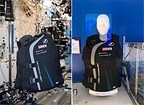
TAMPA, Fla., Oct. 30, 2026 /PRNewswire/ — StemRad, a developer of advanced radiation protection technology, shared that one of its AstroRad radiation protection vests, flown aboard the International Space Station (ISS) and worn by five space travelers, will go on display in the At Home in Space gallery at the Smithsonian’s National Air and Space Museum in Washington, D.C.

The vest was worn by four female American astronauts and an Israeli private astronaut during everyday activities aboard the ISS, including work and sleep. These in-orbit evaluations provided valuable experience with the practicality and comfort of wearable radiation protection during extended space missions.

The Smithsonian exhibition follows the recent publication of landmark scientific findings in Science Advances from NASA’s Artemis I mission. The research demonstrated AstroRad’s ability to dramatically reduce radiation exposure during potentially cancer-inducing solar radiation storms: for the August 1972 storm, which occurred between Apollo 16 and 17, a 60% reduction in dose was demonstrated (roughly 1,200 chest X-rays). This provided important evidence for protecting astronauts on future missions to the Moon and Mars.

The AstroRad vest that traveled around the Moon aboard Artemis I is separately on display at NASA’s Kennedy Space Center Visitor Complex in Florida. Together, the two exhibits trace AstroRad’s journey from operational evaluations aboard the ISS to radiation protection research beyond Earth’s magnetic field.

“Having AstroRad displayed at the Smithsonian is a tremendous honor and a proud milestone for our team,” said Dr. Oren Milstein, CEO and Co-Founder of StemRad. “Knowing that a technology we developed to help protect astronauts is now being recognized as part of the history of space exploration is incredibly rewarding. With AstroRad also on display at Kennedy Space Center following the groundbreaking Artemis I mission, we hope these exhibits will inspire future generations to tackle the challenges of human space exploration.”

“The AstroRad vest helps tell two stories in the new At Home in Space exhibit,” said Dr. Jennifer Levasseur, Museum Curator, and the lead curator for the gallery. “Importantly, the vest represents efforts to protect astronauts from the significant concern of increased radiation exposure on long duration spaceflights. It’s also an example of how technology demonstrations on the ISS will inform future human deep space exploration.” AstroRad was developed by StemRad in collaboration with Lockheed Martin to address one of the principal challenges of human space exploration: exposure to harmful ionizing radiation. The ISS operational evaluations, the Artemis I scientific results, and the Smithsonian and Kennedy Space Center exhibitions collectively highlight the growing role of wearable radiation protection in the future of human spaceflight.

About StemRad

StemRad is an American-Israeli company specializing in personal radiation protection technologies. Its solutions are designed to protect critical organs and tissues from harmful ionizing radiation while preserving mobility and operational effectiveness. StemRad develops radiation protection solutions for space exploration, emergency response, and defense applications.

Media Contact
StemRad
Tamar Cohen
+1-813-291-2303
425954@email4pr.com
www.stemrad.com

View original content to download multimedia:https://www.prnewswire.com/news-releases/astrorad-vest-worn-by-astronauts-aboard-international-space-station-to-go-on-display-at-smithsonian-national-air-and-space-museum-302925068.html

SOURCE StemRad

Continue Reading

Trending