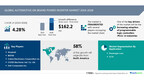
NEW YORK, Oct. 10, 2024 /PRNewswire/ — Report on how AI is driving market transformation – The Global Automotive On-Board Power Inverter Market size is estimated to grow by USD 162.2 million from 2024-2028, according to Technavio. The market is estimated to grow at a CAGR of over 4.28% during the forecast period. Increasing adoption of programmable logic controllers (PLCs) in industries is driving market growth, with a trend towards emergence of digitalization and industry 4.0 . However, cybersecurity concerns related to industrial relays poses a challenge – Key market players include Ampeak, BESTEK, Cobra Electronics Corporation and Escort Inc., COTEK Electronic Ind. Co. Ltd., DAS Companies Inc., ERAYAK, Hitachi Ltd., Koninklijke Philips N.V., Lear Corp., Marelli Holdings Co. Ltd., ON Semiconductor Corp., Robert Bosch GmbH, Samlex America Inc., Schumacher Electric Corp., Sensata Technologies Inc., Stanley Black and Decker Inc., STMicroelectronics International N.V., Sungrow Power Supply Co. Ltd., Toyota Industries Corp., and VisIC Technologies Inc..
AI-Powered Market Evolution Insights. Our comprehensive market report ready with the latest trends, growth opportunities, and strategic analysis- View your snapshot now
Forecast period
2024-2028
Base Year
2023
Historic Data
2018 – 2022
Segment Covered
Application (Passenger cars and LCVs), Type (Up to 150W and More than 150W), and Geography (North America, APAC, Europe, South America, and Middle East and Africa)
Region Covered
North America, APAC, Europe, South America, and Middle East and Africa
Key companies profiled
Ampeak, BESTEK, Cobra Electronics Corporation and Escort Inc., COTEK Electronic Ind. Co. Ltd., DAS Companies Inc., ERAYAK, Hitachi Ltd., Koninklijke Philips N.V., Lear Corp., Marelli Holdings Co. Ltd., ON Semiconductor Corp., Robert Bosch GmbH, Samlex America Inc., Schumacher Electric Corp., Sensata Technologies Inc., Stanley Black and Decker Inc., STMicroelectronics International N.V., Sungrow Power Supply Co. Ltd., Toyota Industries Corp., and VisIC Technologies Inc.
Key Market Trends Fueling Growth
The automotive on-board power inverter market is driven by the increasing use of electronic devices in vehicles. Most automotive Original Equipment Manufacturers (OEMs) offer modified sinewave inverters due to cost considerations and user preference. These inverters can power personal devices like smartphones, tablets, and laptops. However, they are not suitable for complex medical equipment or devices that require a pure sine wave input. Pure sinewave inverters, though more expensive, produce less noise and can power a wider range of devices. As the demand for more advanced in-vehicle electronics grows, particularly in Light Commercial Vehicles (LCVs) and some SUVs, the market for pure sinewave inverters is expected to expand. This shift towards pure sinewave inverters will contribute to the growth of the global automotive on-board power inverter market during the forecast period.
The Automotive On-Board Power Inverter market is witnessing significant trends in the transportation sector, particularly in mass transportation, sustainable mobility, and solar technologies. Materials innovation is key, with a focus on improving the efficiency of solar electric automobiles and battery electric vehicles (BEVs) and hybrid vehicles through the adoption of advanced semiconductors like wide-bandgap materials such as silicon carbide and gallium nitride. Efficiency improvements are also being made through power output electronics and charging infrastructure. Solar panels on vehicles are becoming more common, offering self-sufficiency and longer driving ranges. The market is also seeing the adoption of electrical devices in vehicles, from mobile phone chargers and laptops to air conditioning and heating systems. Government regulations are driving the market, with a focus on reducing emissions and increasing sustainability. Common configurations include 120V AC power, which can be supplied through a standard paint job with integrated solar panels or through a charging infrastructure. The inverter device converts DC power from the battery into AC power for use in the vehicle. Heat removal systems, such as air-cooled and forced ventilation systems, are important considerations for the market. Automotive Inverter Materials like silicon are used in the production of these systems. The market is expected to continue growing as the trend towards electrification and sustainable mobility continues.
Insights on how AI is driving innovation, efficiency, and market growth- Request Sample!
Market Challenges
• The installation and usage of automotive on-board power inverters are crucial aspects that require careful consideration. Improper installation or use of inappropriate devices can negatively impact a vehicle’s electrical system. Moreover, power vary among different inverters, and using unsuitable devices based on the on-board power rating may lead to system malfunctions. This can result in user dissatisfaction and hinder the growth of the global automotive on-board power inverter market. To mitigate these challenges, automotive OEMs must educate users about the recommended devices and provide training on system functionalities at the dealer level. By ensuring customer confidence in the reliability and safety of these systems, the market can overcome resistance and thrive during the forecast period.
• The Automotive On-Board Power Inverter Market is witnessing significant growth due to the increasing adoption of electrical devices in vehicles. Devices like mobile phone chargers and laptops require DC power, which can be converted from AC power using inverters. Common configurations include cigarette lighter sockets, fuse panels, and 12V accessory sockets. However, challenges such as space constraints and regulations related to fuel efficiency requirement and greenhouse gas emission are hindering market growth. OEMs in the automobile sector are focusing on the demand for electric vehicles (EVs) and connected-vehicle services. High power output and high efficiency are crucial for EVs, making inverters an essential component. The market is expected to reach Terawatt capacity, driven by the adoption of renewable energy sources like solar capacity and lithium-ion batteries. Tesla, a key player, offers Powerwall and Powerpack solutions with high power output and AC frequency. The market’s future lies in the zero carbon approach, with a focus on motor torque, speed, and power density.
Insights into how AI is reshaping industries and driving growth- Download a Sample Report
Segment Overview
This automotive on-board power inverter market report extensively covers market segmentation by
Application 1.1 Passenger cars1.2 LCVsType 2.1 Up to 150W2.2 More than 150WGeography 3.1 North America3.2 APAC3.3 Europe3.4 South America3.5 Middle East and Africa
1.1 Passenger cars- The Automotive On-Board Power Inverter market is experiencing significant growth due to increasing demand for electrical systems in vehicles. These inverters convert DC battery power into AC power, enabling the use of various electrical appliances in cars. Major automakers are investing in this technology to offer more comfort and convenience to consumers. The market is expected to expand at a steady pace, driven by rising sales of electric and hybrid vehicles.
Download complimentary Sample Report to gain insights into AI’s impact on market dynamics, emerging trends, and future opportunities- including forecast (2024-2028) and historic data (2018 – 2022)
Research Analysis
The Automotive On-Board Power Inverter Market refers to the use of inverters in vehicles to convert DC power from the battery into AC power for various applications. Inverters are essential devices for powering electrical appliances such as mobile phone chargers, laptops, and even 120V AC power outlets in contemporary automobiles. Common configurations include those integrated with the fuse panel or cigarette lighter. Inverters work by converting DC power from the battery into AC power with a desired frequency and power output. High output density is crucial due to space constraints in vehicles. Regulations and fuel efficiency requirements, as well as the need to reduce greenhouse gas emissions, are driving the demand for more efficient inverters. Inverters are also used in electric vehicles to control the motor’s speed and torque. Solar capacity is another growing application area for automotive on-board power inverters.
Market Research Overview
The Automotive On-Board Power Inverter Market refers to the use of inverters in vehicles to convert DC power from batteries to AC power for various applications such as mobile phone chargers, laptops, and connected-vehicle services. Inverters are essential devices in contemporary automobiles, enabling the use of AC power in vehicles with DC power supplies. Common configurations include those found in fuse panels, 120V AC power outlets, and 12V accessory sockets. The adoption of electrical systems in vehicles, including the use of handheld devices and connected-vehicle services, is driving the demand for on-board power inverters. The demand is particularly high in electric and hybrid vehicles, which require inverters to convert DC power from batteries to AC power for motor control and other applications. Environmental concerns, including the reduction of CO2 emissions and greenhouse gas emissions, are also driving the growth of the automotive inverter market. Renewable energy sources, such as solar capacity, are being integrated into vehicles to increase self-sufficiency and reduce reliance on fossil fuels. Materials innovation, including the use of wide-bandgap semiconductors such as silicon carbide and gallium nitride, is leading to efficiency improvements and higher power output electronics. Charging infrastructure and government regulations are also key factors influencing the market. Automotive inverters are used in various applications, including motor control, torque conversion, and speed control. They come in different power output levels, with high output density inverters being used in electric vehicles and solar electric automobiles. Heat removal systems, such as air-cooled and forced ventilation systems, are essential for the efficient operation of on-board power inverters.
Table of Contents:
1 Executive Summary
2 Market Landscape
3 Market Sizing
4 Historic Market Size
5 Five Forces Analysis
6 Market Segmentation
ApplicationPassenger CarsLCVsTypeUp To 150WMore Than 150WGeographyNorth AmericaAPACEuropeSouth AmericaMiddle East And Africa
7 Customer Landscape
8 Geographic Landscape
9 Drivers, Challenges, and Trends
10 Company Landscape
11 Company Analysis
12 Appendix
About Technavio
Technavio is a leading global technology research and advisory company. Their research and analysis focuses on emerging market trends and provides actionable insights to help businesses identify market opportunities and develop effective strategies to optimize their market positions.
With over 500 specialized analysts, Technavio’s report library consists of more than 17,000 reports and counting, covering 800 technologies, spanning across 50 countries. Their client base consists of enterprises of all sizes, including more than 100 Fortune 500 companies. This growing client base relies on Technavio’s comprehensive coverage, extensive research, and actionable market insights to identify opportunities in existing and potential markets and assess their competitive positions within changing market scenarios.
Contacts
Technavio Research
Jesse Maida
Media & Marketing Executive
US: +1 844 364 1100
UK: +44 203 893 3200
Email: media@technavio.com
Website: www.technavio.com/
View original content to download multimedia:https://www.prnewswire.com/news-releases/automotive-on-board-power-inverter-market-to-grow-by-usd-162-2-million-from-2024-2028–driven-by-rising-adoption-of-plcs-in-industries-market-evolution-powered-by-ai—technavio-302272479.html
SOURCE Technavio










 Technology4 days ago
 Near Videos5 days ago
 Technology4 days ago
 Technology5 days ago
 Technology5 days ago

 Technology5 days ago
 Technology5 days ago