Connect with us

Technology

CZI, State and City Leaders Launch Chan Zuckerberg Biohub New York

Published

on

CZ Biohub New York is catalyzing collaboration among scientists in the New York area from Columbia University, The Rockefeller University, and Yale University.

NEW YORK, Oct. 9, 2024 /PRNewswire/ — Today, leadership from Chan Zuckerberg Biohub New York, the Chan Zuckerberg Initiative (CZI), and representatives from Columbia University, The Rockefeller University, and Yale University gathered to celebrate progress in their mission to bioengineer immune cells for the early detection and treatment of diseases.

The official launch event welcomed speakers including Hope Knight, President CEO and Commissioner of Empire State Development; Andrew Kimball, President & CEO of New York City Economic Development Corporation; Stephen Quake, CZI Head of Science; and Andrea Califano, President of the CZ Biohub New York. CZ Biohub New York also announced the opening of their second request for proposals to foster collaboration among scientists from Columbia, Rockefeller, and Yale.

In its inaugural year, CZ Biohub New York began construction of the institute’s permanent, state-of-the-art lab space located in the Studebaker Building on Columbia University’s Manhattanville Campus. CBRE’s John Isaacs and Joseph DeRosa represented CZ Biohub New York in the lease negotiations with Columbia University at the Studebaker building. While the facility is under construction, the team is already working in a temporary location at the Columbia University Irving Medical Center. CZ Biohub New York also welcomed 10 new hires, including a lead for AI/Machine Learning, Evan Paull. The first cohort of Investigators funded by CZ Biohub NY includes leading scientists from Columbia, Rockefeller, and Yale: Sohail Tavazoie, Gordana Vunjak-Novakovic, Harris Wang, Noah Palm, Donna Farber, John Tsang, and Peter Sims. In an additional set of collaborations, Daniel Mucida and Ruslan Medzhitov were named CZI-Affiliated Investigators and aim to contribute their expertise toward the scientific goals of CZ Biohub NY and provide connections with CZI’s Cell Science program.

The CZ Biohub New York is a new research hub aimed at catalyzing collaboration among scientists in the New York area. Researchers will build new tools that can characterize the behavior of our immune cells—the only cells in our bodies that interact with virtually all organs. These engineered cells can then be adapted to detect signals that are predictive of several diseases, from several lethal cancers to Alzheimer’s and Parkinson’s, at their earliest stages, long before they could be detected by conventional diagnosis methods. A deeper understanding of immune cell function creates enormous potential to imbue these cells with new abilities, paving the way for groundbreaking therapeutic advancements and treatments.

CZ Biohub New York is the fourth research institute in the Chan Zuckerberg Biohub Network, a groundbreaking collaborative model for scientific research created and supported by CZI. The first CZ Biohub, in San Francisco, was founded in 2016 to pursue scientific challenges in cell biology and infectious disease. The second CZ Biohub, in Chicago, is focused on creating new technologies to understand inflammation and the immune system. The Chan Zuckerberg Institute for Advanced Biological Imaging in Redwood City, California, develops technology to understand complex biological systems. Together, CZI and the CZ Biohub Network partner to develop science and technologies that help us understand how cells and tissues function and increase our understanding of human health and disease.

Governor Kathy Hochul said: “New York is proud to welcome the Chan Zuckerberg Biohub, a cutting-edge research institute that will accelerate biomedical innovation and position our state at the forefront of scientific discovery. This collaboration between world-class institutions will not only advance our understanding of human health but also drive economic growth and create high-skilled jobs, reinforcing New York’s status as a global leader in the life sciences.”

First Deputy Mayor Maria Torres-Springer said: “I am thrilled by the progress of the Chan Zuckerberg Biohub New York, a consortia of three of the world’s great academic institutions and a tremendous recent addition to New York City’s Life Sciences ecosystem, a network of scientists, innovators, venture capitalists and entrepreneurs that is the greatest in the world. I look forward to the scientific advancements that will be generated and its impact on New Yorkers and people across the globe.”

President CEO and Commissioner of Empire State Development Hope Knight said: “The launch of the Chan Zuckerberg Biohub New York marks a pivotal moment in our state’s commitment to fostering groundbreaking research and development. By bringing together top talent from renowned institutions, this initiative will catalyze scientific breakthroughs, attract further investment, and strengthen New York’s innovation ecosystem. We are excited to support this visionary project that promises to transform both healthcare and our economy.”

President and CEO of New York City Economic Development Corporation Andrew Kimball said: “The New York City Economic Development Corporation is thrilled to be supporting the Chan Zuckerberg Biohub New York that will transform the future of biomedical research and innovation. A collaboration of the Chan Zuckerberg Initiative, Columbia University, The Rockefeller University and Yale University, the Biohub will also become an important driver in New York City’s biotech ecosystem.”

CZI Head of Science Stephen Quake said: “When we launched the Biohub competition, we wanted to find universities to work on challenging problems together on a 10-year time scale that they wouldn’t otherwise take on. The nine universities we partner with through our three Biohubs in San Francisco, Chicago and now New York are great reservoirs of scientific creativity and knowledge. I can’t wait to see what comes out of the NY Biohub’s work.”

CZ Biohub New York President Andrea Califano said: “The challenge that awaits us is complex. Our job at the New York Biohub will be to decipher the molecular language that allows immune cells to talk to each other, and to leverage their remarkable insights to detect and fight diseases. And ultimately we hope to make immune cells even better at winning the battle against cancers, neurodegeneration, fibrosis and many other diseases.”

About the Chan Zuckerberg Initiative

The Chan Zuckerberg Initiative was founded in 2015 to help solve some of society’s toughest challenges — from eradicating disease and improving education, to addressing the needs of our communities. Through collaboration, providing resources and building technology, our mission is to help build a more inclusive, just and healthy future for everyone. For more information, please visit chanzuckerberg.com.

View original content to download multimedia:https://www.prnewswire.com/news-releases/czi-state-and-city-leaders-launch-chan-zuckerberg-biohub-new-york-302272289.html

SOURCE Chan Zuckerberg Initiative

Continue Reading

Technology

Karma Automotive Announces Eximius, the Bespoke Vehicle Program for Elite Clients Seeking Singular Expressions of Extreme Performance and Bold Craftsmanship

Published

on

By

The First Eximius Creation, “Eximius 1,” is a Menacing Four-Seater Built for the Track which Makes its World Premiere at the 2026 Concours at Wynn Las Vegas

LAS VEGAS, Oct. 31, 2026 /PRNewswire/ — Karma Automotive builds vehicles in the hundreds rather than the thousands, attracting a highly individualistic clientele seeking a unique statement. For those who wish to go further still, and explore new possibilities beyond the extensive options for personalization available through the Studio program, Karma has created the Eximius bespoke vehicle program. Eximius clients may modify the vehicle’s body, performance and powertrain, collaborating with Karma’s design and engineering teams to build a One-of-One statement which will never be repeated.

Karma Eximius clients may modify the vehicle’s body, performance and powertrain to build a One-of-One statement

The first vehicle from Karma Eximius debuts today at the 2026 Concours at Wynn Las Vegas. A menacing four-seater purpose-built for the track, “Eximius 1” is in ongoing development with its commissioning client, who is not revealed at this time. Upon delivery in 2027, “Eximius 1” will be fitted with an extreme-performance Plug-in Series Hybrid utilizing a 6.2 Liter V8 producing nearly 1200hp (550hp ICE, 645hp battery), delivering acceleration from 0-60mph in 2.7 seconds and a top speed in excess of 200mph (estimated). As these parameters would demand, “Eximius 1” will be equipped with carbon-ceramic brakes and two-piece slotted brake rotors, and Ohlins semi-active suspension.

“‘Eximius 1’ began as a conversation with an elite client who loves their Karma Revero, but wanted something more extreme and unexpected, which was music to our ears,” says Marques McCammon, President and Chief Executive, Karma Automotive. “The Eximius program effectively deletes the word ‘no’ from conversations about what’s possible,” he continues, “and as a four-seat track weapon packing what’ll be the most powerful Plug-in Series Hybrid powertrain and vehicle ever developed, ‘Eximius 1’ shatters expectations and further establishes Karma as a manufacturer of exotic, uniquely American vehicles.” 

Exterior Design
“Eximius 1” is an imposing vehicle to behold, exhibiting the muscularity and eyepopping strength of a superhero. Every panel – excluding the body surface outer – is constructed of pre-impregnated carbon fiber, and the vehicle is 50mm wider due to its wheel arch extensions. The front doors and hood have a unique technical fade from glossy, exposed regular carbon fiber to signature Borealis Blue paint.

The front carbon splitter sets an aggressive tone and is flanked by massive side air intakes incorporating Karma’s Target Acquisition Lighting, rotated 45º to create a distinctive ‘><‘ DRL graphic identity. On the hood, the dramatic arc of the Comet Line – which is inspired by Halley’s Comet is it streaks across the evening sky – widens from its apex towards the base of the windshield; vents above the front fenders release air pressure from the wheel housings and add further visual intrigue. Moving to the side of the vehicle, the front fenders aft of the wheels feature Karma’s signature “Backslash” bearing the number “5,” which is of particular significance to the commissioning client. 21″ Magnesium wheels with center-locks reduce rotating and unsprung mass, and are finished in satin black. Aft of the driver’s side front wheel, twin exhaust tips announce the fearsome new powertrain.

The full-width rear GT wing maximizes stability and downforce at high speeds, and continues the distinctive ‘><‘ DRL graphic identity established at the front of “Eximius 1.” The rear fascia also boasts large side air intakes which are connected by a dominant diffuser to manage underbody airflow.

Interior Design
An aura of intensity continues to the interior of “Eximius 1.” In concert with the exterior, blue-tinted carbon-fiber adorns the seats, flat-bottom steering wheel and doors; for aesthetics and weight-savings, all four doors are manufactured in exposed carbon fiber with one purposeful arm pad on each door. The seats, which are Recaro carbon fiber buckets up front, are trimmed with blue Alcantara and blue Italian leather with Moondust Alcantara upper sections, creating an articulated, form-fitted feel. To support high-speed driving and intense braking force, the accelerator, brake pedal and dead pedal are billet machined aluminum.

The instrument panel is reimagined in glossy carbon fiber and incorporates anodized billet aluminum HVAC vents. The carbon fiber center console is simplified to include the essentials only: the PRND gear selector, window switches, key fob holder, and Emergency kill switch. This console extends through to the rear compartment, to which the client’s custom-fitted carbon fiber racing helmet is held in place by a center-latched strap matching the blue seat belts.

About Karma Automotive
Karma Automotive is America’s only full-line ultra-luxury vehicle manufacturer, and a pioneer of Plug-in Series Hybrid vehicles which it manufactures at its Karma Innovation and Customization Center (KICC) in Moreno Valley, CA. Its Executive, Product Development, and Design headquarters are located in nearby Irvine, CA. The Karma portfolio embodies California’s spirit of innovation and entrepreneurial boldness, reflected by the signature Comet Line which is the central hallmark of Karma’s new design language. The Gyesera Grand Coupe, a Plug-in Series Hybrid four-seater, arrives at dealerships in December 2026; and the Amaris GT 2-Door Plug-in Series Hybrid arrives in Q4 2027. The Karma Kaveya Super Coupe, with over 1,000HP and butterfly-doors, will arrive in Q1 2028, to be followed by the Karma Ivara GT-UV: both EVs will incorporate SDVA (Software-Defined Vehicle Architecture) developed with leading technology partners. For more information, visit www.karmaautomotive.com) 

Media Contact:

Joe Richardson, (917) 716-6617
Joe@BeautifulNoisePR.com 

View original content to download multimedia:https://www.prnewswire.com/news-releases/karma-automotive-announces-eximius-the-bespoke-vehicle-program-for-elite-clients-seeking-singular-expressions-of-extreme-performance-and-bold-craftsmanship-302925523.html

SOURCE Karma Automotive

Continue Reading

Technology

ModelBest and OpenBMB Open-Source MiniCPM-OCR Series, Delivering High-Performance Document Parsing and AI-Powered Quality Control

Published

on

By

BEIJING, Oct. 31, 2026 /PRNewswire/ — ModelBest and OpenBMB jointly announced the release and open-source availability of the MiniCPM-OCR series, a family of models for efficient document parsing and parsing-quality assessment. The launch includes two models: MiniCPM-OCR 1.0 (1.3B) and MiniCPM-OCR Jev (2B).

As the first OCR-focused model in the MiniCPM family, MiniCPM-OCR 1.0 brings top-tier parsing accuracy to a compact 1.3-billion-parameter architecture optimized for edge deployment, pushing forward the balance between efficiency and performance for open-source OCR models. Built for real-world conditions, it accurately parses scanned, photographed, curved, tilted and screen-captured documents without cumbersome image pre-correction, lowering the barrier to large-scale document digitization.

The model handles dense bilingual Chinese-English content, complex mathematical formulas, and multi-level or borderless tables, consistently performing at a leading level across a broad range of mainstream industry evaluations. Beyond full-page reconstruction, it supports key information extraction (KIE), pulling specified fields from invoices, IDs and financial statements according to business instructions.

Powered by DSpark decoding acceleration, MiniCPM-OCR 1.0 significantly increases end-to-end throughput while lowering per-page latency. For enterprises processing millions of pages—such as financial contract archives, academic libraries and government records—this means processing far more documents with the same hardware and time budget, at a substantially lower computing cost.

To address the long-standing need for page-by-page manual review, ModelBest and OpenBMB also introduced MiniCPM-OCR Jev, the first OCR result decision model that acts as an “AI quality inspector.” Rather than performing OCR itself, Jev compares the source image with OCR output and rapidly assigns confidence scores to text, LaTeX formulas and tables, detecting missing characters, errors and formatting misalignments. Despite its compact 2B-parameter size, Jev delivers judgment accuracy typically associated with far larger models.

Jev supports cross-model deployment and can be integrated into existing OCR workflows without replacing the underlying OCR engine. It can automatically identify reliable results for direct processing, flag potentially inaccurate outputs for human review and select the best result from multiple OCR systems. This enables enterprises to move from full manual inspection toward risk-based, automated quality control.

The MiniCPM-OCR series is available on GitHub, Hugging Face and ModelScope, and supports vLLM, SGLang, llama.cpp and Ollama, along with SDKs, APIs, Agent Skill plugins and open-source fine-tuning code. Day-0 hardware adaptation covers AMD, Arm, Houmo AI, Intel and NVIDIA. Through the FlagOS software stack, it also has Day-0 support for AI and edge chips from CIX Technology, Huawei Ascend, Hygon, Iluvatar CoreX, Kunlunxin, MetaX, Moore Threads, Sunrise, T-Head, TsingMicro, NVIDIA and Apple Mac (Arm).

View original content:https://www.prnewswire.com/news-releases/modelbest-and-openbmb-open-source-minicpm-ocr-series-delivering-high-performance-document-parsing-and-ai-powered-quality-control-302925594.html

SOURCE ModelBest

Continue Reading

Technology

Wulcea Elevates Consumer Trust in Heated Apparel Through Multi-National Safety Certifications and Rigorous Technical Testing

Published

on

By

NEW YORK, Oct. 31, 2026 /PRNewswire/ — As smart heated clothing gains broader adoption, consumers are paying closer attention to the safety and reliability of the technology behind these products. Wulcea, a brand specializing in graphene-powered heated apparel, combines its flexible GrapheneNano™ heating technology with documented safety compliance and durability testing for its heating components and battery systems.

“Trust in smart heated apparel goes beyond warmth—it comes down to confidence in battery safety and heating element reliability,” said John C, Founder of Wulcea. “Our goal is to give users peace of mind through certified technical standards.”

Advanced Graphene Heating Elements Supported by Global Standards

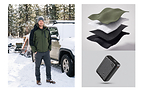
At the core of Wulcea’s thermal architecture is its GrapheneNano™ heating technology. Engineered to eliminate garment stiffness, Wulcea integrates flexible graphene elements that deliver balanced warmth across key upper-body zones while preserving natural garment drape and full freedom of movement.

Wulcea supports its heating components with applicable compliance documentation for major markets. These include CE and FCC compliance documentation addressing relevant electrical and electromagnetic compatibility requirements, as well as PSE compliance for applicable products in Japan. RoHS compliance further addresses restrictions on specified hazardous substances in applicable electrical and electronic components.

Multi-Certified Battery System for Dependable Power

To power its heating elements, Wulcea pairs its heated apparel with rechargeable battery systems designed for convenient everyday use. Featuring a compact design and housed in dedicated interior pockets, the batteries provide portable power while maintaining a streamlined garment profile and comfortable fit.

Wulcea backs its battery options with comprehensive third-party accreditations. UL certification demonstrates that the battery system has been evaluated against recognized power bank safety requirements, covering key areas such as overcharge protection, short-circuit protection, and thermal safety. The battery systems are also supported by applicable CE and FCC compliance documentation, addressing relevant regulatory requirements for electrical and electromagnetic compatibility.

For daily handling and travel, RoHS compliance validates that the battery system meets stringent global standards for material safety. The battery models have also undergone applicable UN 38.3 testing, supporting compliance with international requirements for lithium battery transportation.

Real-World Durability and Practical Usability

Component compliance forms Wulcea’s foundation, but reliability is defined by real-world performance. Built for high-flex endurance, Wulcea’s flexible graphene heating elements are tested through 10,000 active flexing cycles to maintain steady thermal output through repeated bending and everyday body movement.

Everyday convenience is equally essential. Built for hassle-free care, Wulcea’s heating elements withstand 100 machine-wash cycles under standard care guidelines, maintaining internal conductivity and structural stability under repeated laundering.

Integrated NTC temperature sensors provide thermal monitoring and are designed to stop heating if temperatures exceed 131°F (55°C). Combined with runtime of up to 10 hours on the low setting and a discreet interior control button, these features support practical everyday use in cold-weather conditions.

Aligning Technical Standards with Everyday Warmth

By combining graphene-based heating technology with documented battery safety compliance and durability testing, Wulcea continues to focus on the technical foundations of dependable heated apparel. This approach reflects the brand’s emphasis on bringing together safety considerations, practical functionality, and everyday comfort for cold-weather use.

View original content to download multimedia:https://www.prnewswire.com/news-releases/wulcea-elevates-consumer-trust-in-heated-apparel-through-multi-national-safety-certifications-and-rigorous-technical-testing-302925554.html

SOURCE Wulcea

Continue Reading

Trending