Connect with us

Technology

E-Learning Market in Europe expected to expand by USD 79.4 billion from 2024-2028, driven by AI’s impact on proficiency assessments and certifications – Technavio

Published

on

NEW YORK, Oct. 14, 2024 /PRNewswire/ — Report on how AI is redefining market landscape – The E-Learning Market in Europe size is estimated to grow by USD 79.4 billion from 2024-2028, according to Technavio. The market is estimated to grow at a CAGR of over 19.96%  during the forecast period. Availability of subject proficiency assessments and certifications is driving market growth, with a trend towards rising adoption of content gamification in digital education. However, high development costs associated with e-learning courses  poses a challenge – Key market players include Adobe Inc., Articulate Inc., Cegos Group, Cengage Learning Inc., Cisco Systems Inc., City and Guilds Group, D2L Inc., Docebo Inc., Hive Learning Ltd., Hubken Group Ltd., Instructure Holdings Inc., John Wiley and Sons Inc., Learning Technologies Group Plc, Mind Gym Plc, MPS Ltd., NIIT Ltd., Pearson Plc, Sanako, Simplilearn, and Skillsoft Corp..

Key insights into market evolution with AI-powered analysis. Explore trends, segmentation, and growth drivers- View the snapshot of this report

E-Learning Market In Europe Scope

Report Coverage

Details

Base year

2023

Historic period

2018 – 2022

Forecast period

2024-2028

Growth momentum & CAGR

Accelerate at a CAGR of 19.96%

Market growth 2024-2028

USD 79.4 billion

Market structure

Fragmented

YoY growth 2022-2023 (%)

16.45

Regional analysis

Europe

Performing market contribution

Europe at 100%

Key countries

UK, Germany, and Rest of Europe

Key companies profiled

Adobe Inc., Articulate Global Inc., Cegos Group, Cengage Learning Inc., Cisco Systems Inc., City and Guilds Group, D2L Inc., Docebo Inc., Hive Learning Ltd., Hubken Group Ltd., Instructure Holdings Inc., John Wiley and Sons Inc., Learning Technologies Group Plc, Mind Gym Plc, MPS Ltd., NIIT Ltd., Pearson Plc, Sanako, Simplilearn, and Skillsoft Corp.

Market Driver

The European E-learning market is witnessing significant growth due to the increasing trend of personalized learning and the proliferation of mobile devices. With the adoption of Bring Your Own Device (BYOD) initiatives in educational institutions, students are increasingly engaging in mobile-based learning. Mobile learning apps have gained popularity due to their convenience, affordability, and interactive nature. Vendors like MPS Ltd., based in India, offer mobile app-based E-learning solutions for various disciplines and test preparations. The adoption of mobile learning apps has encouraged other vendors to optimize their products for mobile accessibility. Gamification of content, which involves using multimedia tools and interactive quizzes and games, is a popular trend in mobile learning. This approach enhances learner engagement, promotes collaborative learning, and provides instant feedback. The cost-effectiveness of mobile apps compared to full-scale learning platforms makes them an attractive option for academic institutions. Overall, the gamification of content and the growing popularity of mobile learning apps are key drivers of the European E-learning market. 

The European E-Learning market is experiencing significant growth, with a focus on network-enabled transfer of skills and knowledge through electronic resources. Learning systems, including Online E-Learning, Virtual Classroom, and Mobile E-Learning, are trending. LMS and Rapid E-Learning are popular for academic and corporate sectors, providing customized solutions for English language learners, students with disabilities, and the corporate sector for talent retention. Service and content providers offer interactive content for childhood education, K-12 education, and smart education initiatives. Digitalization drives the demand for digital transformation in education and training. M-learning, IoT devices, and Micro-credentials are key trends. However, challenges include infrastructure restraints, quality concerns, and technical issues. LinkedIn Corporation and other online learning platforms are addressing these challenges, offering personalized learning solutions and job placement skills. 

Request Sample of our comprehensive report now to stay ahead in the AI-driven market evolution!

Market Challenges

The cost of developing E-learning courses in Europe varies based on the instructional design model and target learner group. For instance, courses for children include basic words and video graphics, while those for higher education levels feature more lectures and tutor conversations. The development process involves SMEs, instructional design team, project management team, and technical staff specialists, each contributing significantly to the costs. The consultation stage with SMEs costs over USD3,000, designing lecture and visual content costs around USD7,000, and practical assessments development costs approximately USD1,000, totaling approximately USD11,000. The production of online course content for an hour costs around USD18,000, and regular updates increase investments over time. These high development costs may delay the break-even point for new entrants in the European E-learning market, potentially slowing its growth during the forecast period.The European e-learning market is experiencing significant growth, driven by the need for flexible learning solutions for English language learnners and students with disabilities. M-learning and corporate sector training are key areas of focus, with talent retention and skill enhancement campaigns top priorities. School closures due to the pandemic have accelerated digitalization, leading to increased use of online learning platforms in education and training. Customized learning solutions, interactive content, and personalized learning are in demand. However, challenges include the digital divide, infrastructure restraints, quality concerns, technical issues, and regulatory issues. Innovations like micro-credentials, artificial intelligence, blended learning, and gamification are addressing these challenges. Companies like LinkedIn Corporation are leading the way in corporate training. Education institutions are embracing digital transformation, using cloud computing, IoT devices, and Learning Management Systems to enhance job placement skills. Flexible learning formats and accessibility are essential for all ages, from childhood education to K-12 and smart education initiatives. Despite resistance to change, the future of education and training is clearly digital.

Discover how AI is revolutionizing market trends- Get your access now!

Segment Overview 

This e-learning market in Europe report extensively covers market segmentation by

Product 1.1 Packaged content1.2 SolutionsApplication 2.1 Higher education2.2 Corporate2.3 K-12Geography 3.1 Europe

1.1 Packaged content-  The European E-Learning market has seen a significant increase in the adoption of packaged digital educational content, including e-books, videos, and simulations. Institutions and corporations are shifting towards technology-aided learning to meet industry demands. EU policies and programs promoting digital learning have fueled this trend. Packaged content offers cost benefits and wider access to learning materials. Vendors like Pearson, Adobe, and Cengage provide customized content and solutions. However, the rise of in-house E-learning content poses a challenge, as some institutions develop and distribute their own materials. This has led to an increase in personalized learning and distance education initiatives. Renowned institutions like the University of Oxford offer packaged content in the form of e-textbooks and audio-visual presentations. The packaged content segment is projected to grow more slowly than the solutions segment during the forecast period.

Download a Sample of our comprehensive report today to discover how AI-driven innovations are reshaping competitive dynamics

Research Analysis

The European E-Learning market is experiencing significant growth as education and training institutions, as well as businesses, embrace digital transformation. Electronic resources and network-enabled transfer of skills and knowledge have become essential for delivering education and training in various sectors. Online E-Learning platforms have become a popular choice for education delivery, with Mobile E-Learning and Rapid E-Learning providing added flexibility. Virtual Classroom technology enables real-time interaction between students and instructors. Service Providers and Content Providers offer customized solutions to meet the unique needs of Academic, Corporate, and K-12 institutions. Interactive content, IoT devices, and Smart Education initiatives are driving innovation in the sector. The Digital Divide remains a challenge, but initiatives are underway to bridge the gap and ensure equal access to digital learning opportunities.

Market Research Overview

The European E-Learning market is experiencing significant growth as learning systems shift from traditional methods to network-enabled transfer of skills and knowledge. Electronic resources are becoming the norm for education delivery, with online E-Learning, Mobile E-Learning, Rapid E-Learning, and Virtual Classroom leading the charge. Service Providers and Content Providers cater to various sectors, including Academic and Corporate, to bridge the digital divide and provide access to technology for English language learners and students with disabilities. The Corporate sector is leveraging E-Learning for talent retention, while digitalization and skill enhancement campaigns drive demand in the Education and Training sector. Digital transformation is revolutionizing the way we learn, with Online learning platforms, Smart education initiatives, and IoT devices offering interactive content and personalized learning solutions. However, challenges such as accessibility, resistance to change, regulatory issues, content standardization, and technical issues persist. Innovations like Artificial Intelligence, Blended learning, Cloud computing, Micro-credentials, and Gamification are addressing these challenges and offering flexible learning formats and continuous learning opportunities.

Table of Contents:

1 Executive Summary
2 Market Landscape
3 Market Sizing
4 Historic Market Size
5 Five Forces Analysis
6 Market Segmentation

ProductPackaged ContentSolutionsApplicationHigher EducationCorporateK-12GeographyEurope

7 Customer Landscape
8 Geographic Landscape
9 Drivers, Challenges, and Trends
10 Company Landscape
11 Company Analysis
12 Appendix

About Technavio

Technavio is a leading global technology research and advisory company. Their research and analysis focuses on emerging market trends and provides actionable insights to help businesses identify market opportunities and develop effective strategies to optimize their market positions.

With over 500 specialized analysts, Technavio’s report library consists of more than 17,000 reports and counting, covering 800 technologies, spanning across 50 countries. Their client base consists of enterprises of all sizes, including more than 100 Fortune 500 companies. This growing client base relies on Technavio’s comprehensive coverage, extensive research, and actionable market insights to identify opportunities in existing and potential markets and assess their competitive positions within changing market scenarios.

Contacts

Technavio Research
Jesse Maida
Media & Marketing Executive
US: +1 844 364 1100
UK: +44 203 893 3200
Email: media@technavio.com
Website: www.technavio.com/

View original content to download multimedia:https://www.prnewswire.com/news-releases/e-learning-market-in-europe-expected-to-expand-by-usd-79-4-billion-from-2024-2028–driven-by-ais-impact-on-proficiency-assessments-and-certifications—technavio-302274052.html

SOURCE Technavio

Continue Reading

Technology

DataBeyond Showcases AI Sorting Solutions for Circular Supply Chains at COP31

Published

on

By

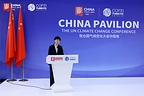
ANTALYA, Türkiye, Nov. 20, 2026 /PRNewswire/ — Hangzhou DataBeyond Technology Co., Ltd. (DataBeyond), a provider of intelligent waste-sorting equipment and solutions, presented applications of artificial intelligence (AI) and robotics in resource recovery at a China Pavilion side event during COP31 on Nov. 19. The company also joined an international initiative to promote green and low-carbon supply chains.

At the “Jointly Building a Green and Low-Carbon Supply Chain” event, DataBeyond Chairwoman Zhuoya Mo outlined the company’s approach to municipal solid waste (MSW) management. The approach prioritizes sorting recoverable materials, directing them to suitable recycling processes and sending residual waste for appropriate treatment.

The United Nations Environment Programme’s Global Waste Management Outlook 2024 projects that annual global MSW generation will reach 3.8 billion metric tons by 2050. Mixed collection and complex waste composition make effective sorting an important step in recovering materials for further use.

DataBeyond combines AI hyperspectral optical sorting with robotic picking to recover recyclable materials from mixed waste. Optical sorters process high-volume material streams, while robots identify and pick individual recyclable items from complex mixtures. The combination helps operators expand material recovery and reduce reliance on manual sorting in demanding environments.

In MSW applications, the company’s systems recover target plastics, including polypropylene (PP) and polyethylene (PE) films, while separating materials that are incompatible with the intended recycling process. Suitable recovered fractions can then be washed and processed into feedstock for manufacturing, helping reduce the amount of waste sent for final disposal.

For plastics recycling, DataBeyond offers AI hyperspectral optical sorters that distinguish materials by composition, including plastics with similar appearances. Applications cover mixed rigid plastics, PET bottles and PET flakes. By separating incompatible polymers and improving material consistency, the systems help recyclers prepare feedstock for downstream manufacturing.

In textile recycling, the FASTSORT-TEXTILE-AI-SPEC system from DataBeyond sorts used garments by fiber composition, including cotton and polyester content. Further sorting of shredded textiles can remove fragments containing buttons, zippers and other unwanted components. These processes help prepare textile feedstock for suitable textile-to-textile recycling routes. The Fastsort-Textile optical fabric sorter received a Special Mention in TIME’s Best Inventions of 2025.

DataBeyond serves customers in more than 40 countries and regions and has supported over 3,000 projects. Its applications span municipal waste, plastics, textiles, construction and demolition waste, and other waste streams.

Building on this experience, the company plans to expand technology sharing, local partnerships and the traceability of recovered materials, including their types, weights and downstream destinations. It also supports local operators through system integration, technical training and maintenance services, adapting sorting solutions to local waste composition, infrastructure and recycling markets.

Through these efforts, DataBeyond aims to connect recovery businesses with manufacturers seeking recycled feedstock, helping more recovered materials meet production requirements and return to supply chains.

About DataBeyond

Founded in 2018, Hangzhou DataBeyond Technology Co., Ltd. develops intelligent waste-sorting equipment and integrated solutions using AI, optical sensing and robotics. The company serves recycling and waste-management customers worldwide through equipment supply, system integration and technical services.

For more information, visit www.databeyond.com.

Media Contact

Felix
marketing@databeyond.com

View original content to download multimedia:https://www.prnewswire.com/news-releases/databeyond-showcases-ai-sorting-solutions-for-circular-supply-chains-at-cop31-302947646.html

SOURCE DataBeyond

Continue Reading

Technology

Ajman Government Media Office hosts Foreign Affairs Undersecretary at THE SIGNAL with a clear message: ‘The UAE does not seek the signal – it creates it’

Published

on

By

AJMAN, UAE, Nov. 22, 2026 /PRNewswire/ — H.E. Omar Obaid Alhesan Alshamsi, Undersecretary of the Ministry of Foreign Affairs, affirmed that diplomacy and media share a fundamental mission rooted in dialogue, understanding, and building bridges between nations and peoples. Both, he noted, rely on the power of words, trust, and the ability to connect with others.

Speaking during a keynote session titled ‘The UAE’s voice to the world’ on the second day of the Ajman Media Forum 2026, ‘THE SIGNAL’, His Excellency described the forum’s central question, ‘Who owns the signal?’, as one of the most profound questions of our time. He noted that it extends beyond media to the very heart of diplomacy, adding that those who own the signal shape the future, tell their story with authenticity, and earn the world’s trust and respect. “The UAE does not seek the signal—it creates it,” he said.

His Excellency explained that the global media landscape is changing at an unprecedented pace, with digital platforms shaping public awareness and attitudes. He added that owning media platforms is no longer sufficient, and reach alone is no measure of influence. Those who own the signal today, he said, are those who understand change, know their audiences, and present a comprehensive national narrative with a clear vision and message.

H.E. Alshamsi emphasized the importance of communication tools in modern diplomacy, explaining that building trust now extends beyond dialogue forums and bilateral meetings to encompass media engagement. Audiences, he noted, look beyond official statements to images, stories, and positions.

His Excellency affirmed that, under the leadership of His Highness Sheikh Mohamed bin Zayed Al Nahyan, President of the UAE, the country recognized this shift early and adopted a forward-looking vision. It has made media an essential partner in Emirati diplomacy, conveying its message of dialogue, tolerance, coexistence, and openness to the world. This partnership also highlights the UAE’s development and humanitarian initiatives with its partners to advance progress, prosperity, and stability for all peoples.

He added that the Ministry of Foreign Affairs, under the leadership of His Highness Sheikh Abdullah bin Zayed Al Nahyan, Deputy Prime Minister and Minister of Foreign Affairs, continues to develop its public diplomacy tools by strengthening cooperation with local and international media institutions, reaffirming the UAE’s steadfast positions, and highlighting its active role in regional and international affairs.

His Excellency also noted that the UAE was among the first countries to prepare for the era of advanced technologies and help shape it. Its efforts include launching a national artificial intelligence strategy, appointing the first Minister of State for Artificial Intelligence, and establishing a specialized university and leading research centers. The UAE also contributes to the development of global AI standards and governance frameworks through multilateral platforms.

He explained that the Ministry of Foreign Affairs has embraced this approach by deploying AI solutions to enhance its services and deliver them proactively, guided by the belief that modern technologies should serve people and help address shared challenges.

His Excellency added that these national efforts call for the continuous development of public diplomacy tools and stronger partnerships with the media sector. Today’s diplomats need the tools of media professionals, while media professionals need a diplomat’s understanding of contexts and positions.

In closing, His Excellency expressed his hope that the Ajman Media Forum would generate insights and practical initiatives that establish a new phase of closer cooperation between diplomacy and media. These efforts, he said, would strengthen the UAE’s international presence and influence, further consolidate its reputation and standing across global forums, and reinforce its position as a model for development and innovation and an active regional and international partner.

View original content to download multimedia:https://www.prnewswire.co.uk/news-releases/ajman-government-media-office-hosts-foreign-affairs-undersecretary-at-the-signal-with-a-clear-message-the-uae-does-not-seek-the-signal–it-creates-it-302947649.html

Continue Reading

Technology

Humaid bin Ammar attends day two of Ajman Media Forum 2026 and honours participants and partners

Published

on

By

AJMAN, UAE, Nov. 22, 2026 /PRNewswire/ — His Highness Sheikh Ammar bin Humaid Al Nuaimi, Crown Prince of Ajman and Chairman of the Executive Council, launched the “Ajman Memory” project, implemented by Ajman Government Media Office to preserve and document the emirate’s historical and cultural heritage. The project aims to collect, document and archive photographs, documents and video footage chronicling Ajman’s development through an integrated system that combines digital technologies with internationally recognised archiving and preservation standards.

The project was launched during the Ajman Media Forum 2026, “The Signal”, held on 18 and 19 November at the Emirates Hospitality Centre, under the patronage of His Highness Sheikh Humaid bin Rashid Al Nuaimi, Supreme Council Member and Ruler of Ajman.

His Highness Sheikh Ammar bin Humaid Al Nuaimi affirmed that Ajman’s collective memory is an integral part of its identity and a record of its people’s journey, as well as the efforts of successive generations that contributed to building and developing the emirate. He noted that preserving this heritage goes beyond safeguarding documents and photographs to protecting the stories, experiences and values they embody, which together form the community’s living memory.

His Highness said that Ajman’s history is not merely a record of past events, but a story of its people and place, reflecting the achievements of earlier generations and the values and experiences they have passed on. He stressed that every photograph, document and historical record represents an important part of this story and deserves to be preserved for future generations.

He added that documenting history and making it accessible through modern technologies strengthens younger generations’ connection to their roots, enabling them to explore the transformations the emirate has undergone and gain a deeper understanding of its development journey. He emphasised that leveraging technology to preserve historical heritage reinforces its role in serving people and advancing knowledge, noting that building the future begins with understanding the past and taking pride in its experiences and values.

His Highness further stressed that the value of societies’ historical memory is measured not only by the volume of documents they preserve, but also by their ability to communicate their significance to future generations and maintain their connection to their history and identity amid a rapidly changing world.

Under the theme “Preserving the Past… Building the Future”, the Ajman Memory project establishes an integrated framework for preserving and documenting the emirate’s cultural and historical heritage. It will collect and archive photographs, documents and video footage in line with international archiving standards, safeguarding records that chronicle Ajman’s journey through the different stages of its history.

The project comprises three interconnected components. The digital component includes a dedicated website for presenting and archiving historical materials, an integrated content management and digital archiving system, and dedicated social media accounts.

The organisational component encompasses the policies, procedures and operational systems developed by the Office in accordance with approved archiving legislation and requirements, establishing an institutional framework for managing and preserving documents and historical materials.

The archival component focuses on digitally preserving materials and documents on servers, alongside establishing a physical archive to safeguard original documents in appropriately equipped facilities. This approach combines the advantages of modern technologies with the preservation of original historical records.

The Ajman Memory project marks a significant step towards systematically documenting the emirate’s historical and cultural heritage, presenting it through contemporary platforms that strengthen its presence, preserve its legacy and ensure its continuity for future generations.

View original content to download multimedia:https://www.prnewswire.co.uk/news-releases/humaid-bin-ammar-attends-day-two-of-ajman-media-forum-2026-and-honours-participants-and-partners-302947639.html

Continue Reading

Trending