Connect with us

Technology

Southeast Asia Data Center Cooling Market to Grow by USD 563.7 Million (2024-2028) as Mini Data Centers Adoption Rises, with AI Powering Market Evolution- Technavio

Published

on

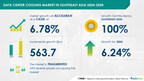
NEW YORK, Oct. 15, 2024 /PRNewswire/ — Report on how AI is driving market transformation – The Data Center Cooling Market in southeast asia size is estimated to grow by USD 563.7 million from 2024-2028, according to Technavio. The market is estimated to grow at a CAGR of over 6.78% during the forecast period. rising adoption of mini data centers is driving market growth, with a trend towards increasing adoption of DCIM solutions. However, rise in different operational regulations poses a challenge – Key market players include 3M Co., AIRSYS Refrigeration Engineering Technology Co. Ltd., Alfa Laval AB, Alphabet Inc., Amazon.com Inc., Cisco Systems Inc., Daikin Industries Ltd., Dell Technologies Inc., Emerson Electric Co., Hewlett Packard Enterprise Co., Hitachi Ltd., Huawei Technologies Co. Ltd., International Business Machines Corp., Lenovo Group Ltd., Mitsubishi Electric Corp., Modine Manufacturing Co., NEC Corp., Nortek, Oracle Corp., Quanta Computer Inc., Schneider Electric SE, Vertiv Holdings Co., and Wiwynn Corp..

Key insights into market evolution with AI-powered analysis. Explore trends, segmentation, and growth drivers- View the snapshot of this report

Data Center Cooling Market In Southeast Asia Scope

Report Coverage

Details

Base year

2023

Historic period

2018 – 2022

Forecast period

2024-2028

Growth momentum & CAGR

Accelerate at a CAGR of 6.78%

Market growth 2024-2028

USD 563.7 million

Market structure

Fragmented

YoY growth 2022-2023 (%)

6.24

Regional analysis

Southeast Asia

Performing market contribution

Southeast Asia at 100%

Key countries

Singapore, Malaysia, Indonesia, Thailand, and Rest of Southeast Asia

Key companies profiled

3M Co., AIRSYS Refrigeration Engineering Technology Co. Ltd., Alfa Laval AB, Alphabet Inc., Amazon.com Inc., Cisco Systems Inc., Daikin Industries Ltd., Dell Technologies Inc., Emerson Electric Co., Hewlett Packard Enterprise Co., Hitachi Ltd., Huawei Technologies Co. Ltd., International Business Machines Corp., Lenovo Group Ltd., Mitsubishi Electric Corp., Modine Manufacturing Co., NEC Corp., Nortek, Oracle Corp., Quanta Computer Inc., Schneider Electric SE, Vertiv Holdings Co., and Wiwynn Corp.

Market Driver

Data Center Infrastructure Management (DCIM) plays a crucial role in optimizing cooling systems in data centers through remote software. Vendors are prioritizing DCIM solutions due to their ability to monitor and manage temperatures efficiently. DCIM adoption offers significant benefits, such as reducing power consumption by over 20% and increasing cooling efficiency by approximately 40%. The return on investment (ROI) is typically achieved within 12-24 months, as DCIM eliminates human errors. Schneider Electric, a leading vendor, provides StruxureWare DCIM and EcoStruxure IT, offering complete visibility into cooling systems and server statuses. The growing demand for efficient systems and DCIM solutions will fuel the expansion of the data center cooling market in Southeast Asia. 

The Data Center Cooling Market in Southeast Asia is witnessing significant growth due to increasing data center operations and the data generation from OTT platforms, streaming services, and cloud services. High energy consumption and heat generation are major challenges in data centers, leading to the adoption of innovative cooling solutions like pre-engineered cooling modules with precision cooling capabilities. These modules offer scalability for high-density computing and energy efficiency, reducing both operational costs and carbon emissions. Amidst the pandemic, there is a growing focus on environmental sustainability and safety measures in data center infrastructure. Manufacturers are investing in specialized infrastructure and technology to address cooling issues and ensure flexibility, security, and regional opportunities. The market is segmented into components, solutions, and services. High investment costs and the need for energy-efficient data centers are driving the demand for energy-saving components and solutions. The latest trends include the use of carbon-neutral cooling systems and the integration of AI and IoT for predictive maintenance and optimization. 

Request Sample of our comprehensive report now to stay ahead in the AI-driven market evolution!

Market Challenges

In Southeast Asia’s data center cooling market, meeting construction schedules and contractual requirements is a significant challenge. Delays often exceed projected costs, and factors such as governmental inaction, public opposition, financing difficulties, weather conditions, unavailable materials, changing project scopes, labor disruptions, industrial accidents, and environmental hazards can further complicate matters. Obtaining clearances and adhering to regulatory requirements also pose challenges, leading to delays and damage to vendors’ reputations. These issues can result in lost deals and contracts for cooling systems, servers, and network equipment, thereby hindering market growth in Southeast Asia during the forecast period.The Data Center Cooling Market in Southeast Asia faces challenges due to the increasing demand for energy-efficient data centers, driven by data generation from OTT platforms, streaming services, and IT infrastructure. Power consumption and heat generation are major concerns, requiring advanced cooling equipment. The pandemic has accelerated digital transformation, leading to higher data volumes and the need for specialized infrastructure. High investment costs and cooling issues are barriers, but opportunities exist in sectors like healthcare, manufacturing, and cloud services. Carbon emissions and safety measures are key concerns, making technology advancements essential. Latest trends include scalability, security, flexibility, and regional opportunities. The market includes components like air conditioners, precision air conditioners, and services like installation & deployment, maintenance, and various cooling methods such as non-raised floor, raised floor, containment, IT & telecom, energy, and rack-based, row-based, and room-based cooling for data-intensive applications and cloud computing.

Discover how AI is revolutionizing market trends- Get your access now!

Segment Overview 

This data center cooling market in southeast asia report extensively covers market segmentation by

Type 1.1 Room cooling1.2 Rack and row coolingTechnology 2.1 Liquid-based cooling2.2 Air-based coolingComponent 3.1 Air conditioners3.2 Economizers3.3 Cooling towers3.4 Chillers3.5 OthersGeography 4.1 Southeast Asia

1.1 Room cooling- In the data center cooling market of Southeast Asia, room cooling solutions are gaining popularity due to their effectiveness in maintaining a consistent temperature within data centers. These solutions utilize CRAH units that work in tandem with sensors to monitor headload and distribute chilled air through ducts and vents. Vendors like Vertiv offer small room cooling systems, ideal for small-to-medium data centers, with cooling capacities ranging from 1.5-11 tons (5.3-40 kW). The growth of data centers in Southeast Asia’s arid climate environment fuels the demand for these systems. By providing efficient air distribution through raised floors, these solutions ensure a continuous supply of cool air, contributing to the moderate growth of the room cooling segment in the region’s data center cooling market.

Download a Sample of our comprehensive report today to discover how AI-driven innovations are reshaping competitive dynamics

Research Analysis

The Data Center Cooling Market in Southeast Asia is experiencing significant growth due to the increasing demand for energy-efficient data centers to support the data generation from OTT platforms, streaming services, and cloud services. With the proliferation of big data, connected devices, and IT infrastructure, specialized infrastructure is becoming essential to manage the heat generated by these systems. However, high investment costs and cooling issues are major challenges. The market is witnessing the adoption of the latest trends, such as technology advancements in cooling equipment and carbon emissions reduction through renewable energy sources. Safety measures are also a priority, with manufacturers focusing on developing solutions that minimize the risk of fires and other safety hazards. The market is segmented into component and solution segments, with the solution segment expected to dominate due to the growing demand for integrated cooling solutions. The services segment is also gaining traction as companies seek expert assistance in designing and implementing cooling systems.

Market Research Overview

The Data Center Cooling Market in Southeast Asia is witnessing significant growth due to the data generation from OTT platforms, streaming services, and the increasing adoption of cloud services, big data, and connected devices. Energy-efficient data centers are becoming a priority to reduce power consumption and heat generation. Cooling equipment is a crucial component of IT infrastructure, with air conditioners, precision air conditioners, and specialized infrastructure solutions being popular choices. The pandemic has accelerated digital transformation, leading to high investment costs and cooling issues. Carbon emissions and safety measures are also key concerns. Technology advancements include pre-engineered cooling modules, precision cooling capabilities, and scalable designs for high-density computing. The market includes solution segments like installation & deployment, maintenance services, and various cooling techniques such as non-raised floor, raised floor, containment, IT & telecom, energy, rack-based cooling, row-based cooling, and room-based cooling. Data-intensive applications like cloud computing, digital services, and environmental sustainability are driving opportunities in the region. Innovative solutions like pre-engineered cooling modules and flexible designs offer scalability and security. The latest trends include energy consumption reduction, high-density computing, and the integration of renewable energy sources.

Table of Contents:

1 Executive Summary
2 Market Landscape
3 Market Sizing
4 Historic Market Size
5 Five Forces Analysis
6 Market Segmentation

TypeRoom CoolingRack And Row CoolingTechnologyLiquid-based CoolingAir-based CoolingComponentAir ConditionersEconomizersCooling TowersChillersOthersGeographySoutheast Asia

7 Customer Landscape
8 Geographic Landscape
9 Drivers, Challenges, and Trends
10 Company Landscape
11 Company Analysis
12 Appendix

About Technavio

Technavio is a leading global technology research and advisory company. Their research and analysis focuses on emerging market trends and provides actionable insights to help businesses identify market opportunities and develop effective strategies to optimize their market positions.

With over 500 specialized analysts, Technavio’s report library consists of more than 17,000 reports and counting, covering 800 technologies, spanning across 50 countries. Their client base consists of enterprises of all sizes, including more than 100 Fortune 500 companies. This growing client base relies on Technavio’s comprehensive coverage, extensive research, and actionable market insights to identify opportunities in existing and potential markets and assess their competitive positions within changing market scenarios.

Contacts

Technavio Research
Jesse Maida
Media & Marketing Executive
US: +1 844 364 1100
UK: +44 203 893 3200
Email: media@technavio.com
Website: www.technavio.com/

View original content to download multimedia:https://www.prnewswire.com/news-releases/southeast-asia-data-center-cooling-market-to-grow-by-usd-563-7-million-2024-2028-as-mini-data-centers-adoption-rises-with-ai-powering-market-evolution–technavio-302275327.html

SOURCE Technavio

Continue Reading

Technology

State Grid Changzhou Power Supply Company Completes Integrated Automation Renovation of the Main Transformer at the 110 kV Wulian Substation

Published

on

By

CHANGZHOU, China, Nov. 23, 2026 /PRNewswire/ — Recently, the No. 1 main transformer at the 110 kV Wulian Substation of State Grid Changzhou Power Supply Company successfully completed startup and energization after its integrated automation renovation (hereinafter referred to as the “IA renovation”), marking the completion of a key milestone in the Wulian Substation IA renovation project.

It is reported that the 110 kV Wulian Substation is an important power hub in the Jintan area of Changzhou. Its original monitoring and control system has been in operation for a long time, with aging equipment, a relatively high failure rate, difficult maintenance, and insufficient reliability of secondary equipment, which has affected the normal operation of the substation to some extent. The IA renovation aims to improve the performance and operational reliability of the substation’s monitoring and control system, protection devices, and integrated power supply system, improve the substation’s health level, enhance its degree of automation, and strengthen operational safety.

During the implementation of the IA renovation project, State Grid Changzhou Power Supply Company advanced various tasks in the order of “equipment replacement—function verification—signal checking—ledger improvement—closed-loop problem resolution.” On site, protection and measurement-control devices and secondary panels were replaced. On this basis, functional acceptance was carried out for the newly installed protection and measurement-control devices, the device status and “three remote” functions were checked, background computer screen information was checked item by item, and the five-prevention interlocking logic of primary equipment after renovation, as well as the functions of handles, pressure plates, and air switches, were verified. At the same time, detailed problems found during acceptance were promptly resolved item by item with professional personnel and equipment manufacturers; closed-loop rectification of historically inherited defects was urged to ensure that the equipment met commissioning conditions.

At present, the Wulian Substation IA renovation has entered the latter half. In the follow-up, in conjunction with outage plans, the company will continue to cooperate with the construction unit in carrying out renovation of the remaining bays, solidly perform equipment acceptance and pre-commissioning verification, strictly guard the project quality gate, and ensure that all renovation links are connected in an orderly manner and advanced steadily.

After the project is put into operation, it will help solve problems such as aging equipment failing to meet operational requirements and the need to improve major technical parameter levels due to the development of smart grids. It will reduce equipment maintenance and operating costs, improve the operating conditions of secondary equipment, enhance the safety, reliability, and economy of the power grid, and lay a solid foundation for the optimization, upgrading, and safe and stable operation of the local power grid system.

View original content:https://www.prnewswire.com/apac/news-releases/state-grid-changzhou-power-supply-company-completes-integrated-automation-renovation-of-the-main-transformer-at-the-110-kv-wulian-substation-302948027.html

SOURCE State Grid Changzhou Power Supply Company

Continue Reading

Technology

New Survey Uncovers an “Aloneware” Crisis: Isolated AI Development Threatens Enterprise Stability and Adds Maintenance Costs

Published

on

By

More than half of UK AI decision-makers and IT leaders say standalone coding assistants lead to “aloneware”: software that’s difficult to support, understand, and maintain

LONDON, Nov. 23, 2026 /PRNewswire/ — Appian (Nasdaq: APPN), an AI automation leader, today released new research asking UK AI decision-makers and IT leaders about AI-assisted development. They found that enterprise investments in fast-tracked AI software development are creating an unexpected drain on corporate innovation capital, with 79% of UK enterprise leaders allocating at least 10% of their current technology innovation funds to test, deploy, maintain, update, integrate and/or repair isolated AI software builds.

In the survey of 200 UK respondents at large enterprises, Appian defines a new term: “aloneware.” These are applications built or modified with AI-assisted development tools outside an approved enterprise platform environment. While these tools accelerate initial code creation, organisations face mounting friction to understand AI-generated applications and keep them functional, secure, and integrated over time.

Upfront speed creates downstream work

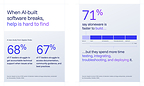
Initial build speed is failing to deliver long-term efficiency. Almost two-thirds (64%) of enterprise leaders surveyed report that while standalone AI tools accelerate development, they are spending more time across testing, system integration, troubleshooting, scaling, and/or deployment.

According to Matt Calkins, CEO of Appian, “Some people get so excited about ‘free’ software that they forget the risks. Enterprises can now create tech debt faster than ever before.”

Aloneware diverts strategic innovation budgets

The operational burden of maintaining software built outside a platform is directly diverting capital away from strategic growth. Almost eight in 10 (79%) enterprise leaders surveyed report allocating at least 10% of their current technology innovation budgets to testing, deploying, maintaining, updating, integrating and/or repairing software built outside a platform environment. And 43% of those surveyed currently allocate at least 20% of the budget—a figure that 55% expect to allocate within the next two years, indicating that the financial drain is accelerating quickly.

Compounding these budget demands, 60% of UK enterprise leaders report unexpected post-launch costs or resources tied directly to security, governance, and compliance remediation.

The support void and the need for platforms

When isolated AI applications break, organisations face a critical support void. 60% of leaders find it challenging to access accountable technical support when problems arise with applications built outside a platform, while 61% report difficulties keeping code, architecture, dependencies, and system integrations up to date.

Against this backdrop, 59% of respondents state that a shared architectural foundation would improve their ability to control total cost of ownership and 60% say it would help them maintain software over time.

“The most important applications in enterprises need support,” Calkins adds. “If you vibe-code them, there will be nobody to turn to when problems occur. Using AI to build applications on a commercial platform combines the speed of AI with the reliability of supported technology.”

To access the complete research findings and executive report, visit appian.com/aloneware.

About the research

The research was conducted by Censuswide among 200 senior decision-makers who primarily work in AI/Engineering or IT, work at large enterprises (5,000 employees or more, or annual revenue exceeding $1 billion), and who work on at least three software systems annually. Respondents were based in the UK. Data was collected between 21 and 30 October 2026.

Censuswide is a member of the Market Research Society (MRS) and the British Polling Council (BPC), and a signatory of the Global Data Quality Pledge. The research adheres to the MRS Code of Conduct and ESOMAR principles.

About Appian

Appian provides AI automation for the most important business processes at the world’s largest organisations.  

On the Appian Platform, customers build AI-powered processes that accelerate work, reduce cost, and manage risk. Our platform is known for its unique power, reliability, and scale. We’ve been automating processes for more than 25 years and have proven expertise in enterprise operations. For more information, visit appian.com. [Nasdaq: APPN]

Follow Appian: LinkedIn, YouTube, Instagram, Facebook, and X.


View original content to download multimedia:https://www.prnewswire.com/news-releases/new-survey-uncovers-an-aloneware-crisis-isolated-ai-development-threatens-enterprise-stability-and-adds-maintenance-costs-302948028.html

SOURCE Appian

Continue Reading

Technology

Share buybacks in Ericsson during the period November 16 – November 20, 2026

Published

on

By

STOCKHOLM, Nov. 23, 2026 /PRNewswire/ — During the period November 16 – November 20, 2026, Telefonaktiebolaget LM Ericsson (publ) (“Ericsson”) (LEI code 549300W9JLPW15XIFM52) repurchased own Class B shares (ISIN: SE0000108656) as follows:

Date

Aggregated daily volume (number of shares)

Weighted average share price per day (SEK)

Total daily transaction value (SEK)

16/11/2026

100,000

106.5100

10,651,000.00

17/11/2026

100,000

105.1818

10,518,180.00

18/11/2026

100,000

105.0654

10,506,540.00

19/11/2026

100,000

104.6379

10,463,790.00

20/11/2026

100,000

102.4982

10,249,820.00

Total

500,000

104.7787

52,389,330.00

The share repurchases are a part of the share buyback program of up to SEK 15,000,000,000 which Ericsson announced on April 16, 2026, and which runs between April 23, 2026, and March 31, 2027, at the latest. The Board of Directors intends to propose to the 2027 Annual General Meeting that the repurchased shares, other than those used to fulfil Ericsson’s obligations under its share-related incentive programs, are cancelled.

The share buyback program is executed in accordance with the Regulation (EU) No 596/2014 of the European Parliament and of the Council on market abuse (MAR) and the Commission Delegated Regulation (EU) 2016/1052 of 8 March 2016 supplementing MAR (the Safe Harbour Regulation).

All acquisitions have been carried out on Nasdaq Stockholm by Goldman Sachs Bank Europe SE on behalf of Ericsson. A full breakdown of the transactions is attached to this announcement.

Following the repurchases above, Ericsson’s holding of treasury stock amounts to 132,415,894 Class B shares. There are in total 3,371,351,735 shares in Ericsson, 261,755,983 shares of Class A and 3,109,595,752 shares of Class B.

NOTES TO EDITORS:

FOLLOW US:

Subscribe to Ericsson press releases
Subscribe to Ericsson blog posts
https://x.com/ericsson
https://www.facebook.com/ericsson
https://www.linkedin.com/company/ericsson

MORE INFORMATION AT:
Ericsson Newsroom
media.relations@ericsson.com  (+46 10 719 69 92)
investor.relations@ericsson.com  (+46 10 719 00 00)

Investors
Daniel Morris, Vice President, Head of Investor Relations
Phone: +44 7386 657217
E-mail: investor.relations@ericsson.com

Lena Häggblom, Director, Investor Relations
Phone: +46 72 593 27 78
E-mail: lena.haggblom@ericsson.com

Media
Ralf Bagner, Head of Media Relations
Phone: +46761284789
E-mail: ralf.bagner@ericsson.com

ABOUT ERICSSON:
Ericsson’s high-performing, programmable networks provide connectivity for billions of people every day. For 150 years, we’ve been pioneers in creating technology for communication. We offer mobile communication and connectivity solutions for service providers and enterprises. Together with our customers and partners, we make the digital world of tomorrow a reality. www.ericsson.com

This information was brought to you by Cision http://news.cision.com

https://news.cision.com/ericsson/r/share-buybacks-in-ericsson-during-the-period-november-16—november-20–2026,c4427608

The following files are available for download:

https://mb.cision.com/Main/15448/4427608/4383821.pdf 

Share buybacks in Ericsson during the period November 16-November 20 2026

https://mb.cision.com/Public/15448/4427608/923f499b6f383962.xlsx 

Daily Ericsson Share Buyback Report

View original content:https://www.prnewswire.com/news-releases/share-buybacks-in-ericsson-during-the-period-november-16–november-20-2026-302948030.html

SOURCE Ericsson

Continue Reading

Trending