Connect with us

Technology

BCD Power IC Market to Grow by USD 10.4 Billion (2024-2028) as Smart Home and Grid Technologies Expand, with AI Driving Market Transformation- Technavio

Published

on

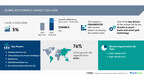
NEW YORK, Oct. 16, 2024 /PRNewswire/ — Report with the AI impact on market trends – The Global BCD Power IC Market size is estimated to grow by USD 10.4 billion from 2024-2028, according to Technavio. The market is estimated to grow at a CAGR of about 5% during the forecast period. Growth in smart home and smart grid technology is driving market growth, with a trend towards miniaturization. However, power performance challenge in mobile computing  poses a challenge – Key market players include Analog Devices Inc., China Resources Power Holdings Co Ltd, Diodes Inc., Foundaries Inc., Hua Hong Semiconductor Ltd., Infineon Technologies AG, Inomize Ltd., MagnaChip Semiconductor Corp., NXP Semiconductors NV, ROHM Co. Ltd., STMicroelectronics International N.V., Taiwan Semiconductor Manufacturing Co. Ltd., Texas Instruments Inc., Tower Semiconductor Ltd., United Microelectronics Corp., and Vishay Intertechnology Inc..

AI-Powered Market Evolution Insights. Our comprehensive market report ready with the latest trends, growth opportunities, and strategic analysis- View your snapshot now

Forecast period

2024-2028

Base Year

2023

Historic Data

2018 – 2022

Segment Covered

Type (High-voltage BCD and High-density BCD), End-user (ICT, Consumer electronics, Automotive, Manufacturing, and Others), and Geography (APAC, Europe, North America, South America, and Middle East and Africa)

Region Covered

APAC, Europe, North America, South America, and Middle East and Africa

Key companies profiled

Analog Devices Inc., China Resources Power Holdings Co Ltd, Diodes Inc., GlobalFoundaries Inc., Hua Hong Semiconductor Ltd., Infineon Technologies AG, Inomize Ltd., MagnaChip Semiconductor Corp., NXP Semiconductors NV, ROHM Co. Ltd., STMicroelectronics International N.V., Taiwan Semiconductor Manufacturing Co. Ltd., Texas Instruments Inc., Tower Semiconductor Ltd., United Microelectronics Corp., and Vishay Intertechnology Inc.

Key Market Trends Fueling Growth

The BCD power IC market is experiencing significant growth due to the increasing trend of miniaturization in semiconductor technology. Manufacturers are focusing on producing smaller semiconductors for personal electronics that consume less power and offer efficient performance. This trend is driven by the advancements in technology that enable the development of flexible and compact electronic devices. BCD power ICs play a vital role in this scenario, as they provide the necessary power management functionality for these miniaturized devices. As a result, the market for BCD power ICs is expected to expand steadily during the forecast period. 

The BCD Power IC market is experiencing significant growth, particularly in the Automotive sector with the integration of Advanced Driver-assistance Systems (ADAS). Key automakers are seeking high power efficiency and energy-efficient devices to meet stringent energy regulations and reduce carbon emissions. In the Consumer Electronics industry, portable electronics and ICT applications require small, high-performance BCD Power ICs. Large, well-established companies and smaller specialized manufacturers are investing in 300mm wafer production and advanced technologies like HighVoltage BCD and HighDensity BCD. Dmos transistors, such as Bipolar-CMOS-DMOS, are in high demand for professional-grade and heavy-duty applications in industries like Industrial Control Systems. Additionally, BCD Power ICs are used in various consumer markets, including Camping, Hunting, Overland, Off-road, Beach, and Mountain snow activities, for powering portable devices and tools like collapsible metal shovels and truck recovery tools. The market is expected to continue growing due to increasing demand for energy-efficient devices and stringent energy regulations. 

Insights on how AI is driving innovation, efficiency, and market growth- Request Sample!

Market Challenges

The demand for advanced features in mobile devices, such as 3G, 4G LTE, Wi-Fi, Bluetooth, and NFC, has led to an increased focus on optimizing power performance. Power management technologies, previously integrated into application processors, face technical challenges due to the complexity and material compatibility required for lithography scaling. BCD power technology offers benefits such as building smaller, more innovative products, but comes with a higher manufacturing cost. Emerging technologies like DC-DC power converters and Transformative Integrated Power Solutions (TIPS) provide alternatives with high power density and efficiency at a similar price. These factors may limit the growth of the BCD power IC market during the forecast period.The BCD (Bipolar-Complementary Metal-Oxide-Semiconductor-Double Diffused) Power IC market is growing rapidly due to the increasing demand for energy-efficient and high-performance power management solutions in various industries. One of the main challenges in this market is the use of DMOS transistors in BCD technology. Foundries face difficulties in producing 300mm wafers with professional-grade BCD Power ICs that can handle heavy-duty applications, such as truck recovery tools, collapsible metal shovels, and power tools for van life, hunting, camping, overland, off-road, beach, and mountain snow environments. BCD Power ICs must be rugged and capable of operating in remote environments. They require high integration for analog circuits and digital content, power devices, embedded NVMS, and power IC designs. These ICs must have a 100V working voltage and be suitable for use in EVs and power management circuits. They should also offer reduced electromagnetic interference, miniaturization, and high-performance for DC-DC converters, LED drivers, battery management, motor drivers, connectivity solutions, microcontrollers, wearables, and smart home appliances. In summary, the BCD Power IC market faces challenges in producing power management solutions that are energy-efficient, high-performance, and capable of handling heavy-duty applications in various industries. Bipolar-CMOS-DMOS technology is essential for meeting these demands, and foundries must invest in advanced production techniques to meet the growing market needs.

Insights into how AI is reshaping industries and driving growth- Download a Sample Report

Segment Overview 

This bcd power ic market report extensively covers market segmentation by

Type 1.1 High-voltage BCD1.2 High-density BCDEnd-user 2.1 ICT2.2 Consumer electronics2.3 Automotive2.4 Manufacturing2.5 OthersGeography 3.1 APAC3.2 Europe3.3 North America3.4 South America3.5 Middle East and Africa

1.1 High-voltage BCD-  The BCD power IC market is driven by the growing demand for high-voltage integrated circuits in various industries. In particular, high-voltage BCD ICs, which allow the integration of low-voltage control circuits and high-voltage DMOS stages on the same chip, held the largest market share in 2023. This trend is attributed to the increasing adoption of smart home and smart grid technologies, as well as the rising demand for electronic devices such as cell phones, personal computers, hard disk drives, and gaming devices. The high-voltage BCD IC market is expected to continue its dominance during the forecast period due to these factors. Notably, the use of silicon on insulator (SOI) substrates in high-voltage BCD ICs targets specialized high-value applications in fields like electromedicine, automobile safety, and audio devices.

Download complimentary Sample Report to gain insights into AI’s impact on market dynamics, emerging trends, and future opportunities- including forecast (2024-2028) and historic data (2018 – 2022) 

Research Analysis

The BCD (Bipolar-CMOS-DMOS) power IC market encompasses a wide range of high-performance semiconductor solutions designed for power management applications. These ICs combine the advantages of bipolar and CMOS technologies, resulting in devices that offer both high-power handling capabilities and low-power consumption. BCD power ICs are used extensively in various industries, including consumer electronics, industrial control systems, and electric vehicles. They find applications in power management circuits, DC-DC converters, LED drivers, battery management systems, and more. The semiconductor sector continues to invest heavily in BCD-based PMIC technology, with a focus on miniaturization, reduced electromagnetic interference, and high-density production on 300mm wafers. BCD power ICs are essential for heavy-duty applications, such as truck recovery tools and collapsible metal shovels, as well as in consumer electronics, such as van life systems and hunting equipment. The growing demand for high-voltage and high-density BCD power ICs is driving innovation in the industry, with new solutions emerging to meet the needs of the evolving market. From powering professional-grade equipment to enabling the next generation of consumer electronics and electric vehicles, BCD power ICs are at the heart of the power management revolution.

Market Research Overview

The BCD (Bipolar-CMOS-DMOS) power IC market encompasses a wide range of high-performance power devices designed for various applications in rugged and remote environments. These applications include collapsible metal shovels, truck recovery tools, van life, hunting, camping, overland, off-road, beach, and mountain snow. BCD technology offers energy efficiency and high integration, making it suitable for power management circuits in EVs and other power-intensive devices. BCD technology also finds extensive use in professional-grade equipment, such as power IC designs for DC-DC converters, LED drivers, battery management, motor drivers, connectivity solutions, microcontrollers, and wearables. The market caters to industries like automotive, where BCD-based PMIC technology is used for power management solutions in advanced driver-assistance systems and graphics processing units. Fossil fuels and carbon emissions are major concerns, driving the demand for energy-efficient devices and stringent energy regulations. The market includes both large well-established companies and smaller specialized manufacturers, with CMOS technologies, low-power ICs, and high-performance ICs being key focus areas. Power density, miniaturization, and reduced electromagnetic interference are essential considerations in the development of BCD-based power ICs. The market also serves the consumer electronics and industrial control system sectors, with applications in high voltage and high-density BCD.

Table of Contents:

1 Executive Summary
2 Market Landscape
3 Market Sizing
4 Historic Market Size
5 Five Forces Analysis
6 Market Segmentation

TypeHigh-voltage BCDHigh-density BCDEnd-userICTConsumer ElectronicsAutomotiveManufacturingOthersGeographyAPACEuropeNorth AmericaSouth AmericaMiddle East And Africa

7 Customer Landscape
8 Geographic Landscape
9 Drivers, Challenges, and Trends
10 Company Landscape
11 Company Analysis
12 Appendix

About Technavio

Technavio is a leading global technology research and advisory company. Their research and analysis focuses on emerging market trends and provides actionable insights to help businesses identify market opportunities and develop effective strategies to optimize their market positions.

With over 500 specialized analysts, Technavio’s report library consists of more than 17,000 reports and counting, covering 800 technologies, spanning across 50 countries. Their client base consists of enterprises of all sizes, including more than 100 Fortune 500 companies. This growing client base relies on Technavio’s comprehensive coverage, extensive research, and actionable market insights to identify opportunities in existing and potential markets and assess their competitive positions within changing market scenarios.

Contacts

Technavio Research
Jesse Maida
Media & Marketing Executive
US: +1 844 364 1100
UK: +44 203 893 3200
Email: media@technavio.com
Website: www.technavio.com/

View original content to download multimedia:https://www.prnewswire.com/news-releases/bcd-power-ic-market-to-grow-by-usd-10-4-billion-2024-2028-as-smart-home-and-grid-technologies-expand-with-ai-driving-market-transformation–technavio-302277499.html

SOURCE Technavio

Continue Reading

Technology

Parliamentary Secretary Pauline Rochefort highlights Canada’s first-ever federal forest sector strategy in Ontario

Published

on

By

MATTAWA, ON, Nov. 27, 2026 /CNW/ — In Canada, the forest sector supports nearly 200,000 jobs, 300 communities and contributed nearly $30 billion to our GDP in 2025 alone. Home to about 20 percent of Canada’s forest, Ontario is critical role to Canada’s forest sector. Last year, forestry and forest products contributed close to $5.1 billion to the province’s GDP and directly supported nearly 40,000 good-paying jobs. As the federal government advances its long-term vision for the forest sector, Ontario will play a key role in building a stronger future for workers, communities and businesses.

To support the sector’s long-term growth and prosperity, the federal government is taking bold action under Canada’s first-ever federal Forest Sector Strategy. Today, Pauline Rochefort, Parliamentary Secretary to the Secretary of State (Rural Development), highlighted that Ontario will play a key role in building a stronger future for forest sector workers, communities and businesses.

Supported by a proposed historic investment of $6.5 billion through Budget 2026 — which would mark the federal government’s largest-ever investment in the sector — the Forest Sector Strategy for Canada provides a 25-year roadmap to modernize our industry, diversify our forest product exports, create new demand for Canadian wood and forest products at home, and position the sector for long-term growth, resilience and sustainability. The Strategy is built around four pillars:

Pivot to transform the sector through investments, partnership and innovation in new and enhanced facilities and products;Secure competitive fibre supply that will catalyze new projects and create investment certainty for industry;Pursue new markets at home and abroad, including infrastructure and affordable housing initiatives in Canada; andSupporting communities and workers.

Parliamentary Secretary Rochefort also announced up to $6.8 million in funding for forest sector projects in Ontario that will support the production of higher-value wood products, Indigenous participation and new opportunities and uses for wood and forest resources. In support of the Strategy, these investments will strengthen competitiveness, support business growth and create new market opportunities across Ontario’s forest value chain.  

Turning the Strategy’s vision into action will require collaboration and coordination across federal, provincial and territorial governments, Indigenous partners and industry. In Ontario, the Strategy will strengthen one of the province’s most important resource sectors by supporting innovation, attracting investment and expanding domestic demand for Canadian wood products to create new opportunities for businesses and workers and support forest-dependent communities across the province. By working together, we can help ensure Ontario’s forest sector remains a source of good jobs, economic growth and prosperity for generations to come.

Quotes

“At this pivotal moment, business as usual is no longer an option for Ontario’s forest sector. For the first time, our Forest Sector Strategy sets a clear, comprehensive path forward to help the sector navigate today’s challenges while securing its future for generations to come. Through a historic investment and co-ordinated, strategic policy action, we are going to improve fibre supply certainty, accelerate innovation and modernization in the sector, advance Indigenous partnership, drive domestic demand for Canadian wood and continue diversifying markets. Because a strong forest sector means a strong Canada.”

The Honourable Tim Hodgson
Minister of Energy and Natural Resources

“Ontario’s forest sector is a source of opportunity and economic growth for communities across the province, particularly in rural, northern and Indigenous communities. Through the Forest Sector Strategy for Canada and backed by Budget 2026, our government is taking historic action to support innovation, attract investment, expand market opportunities and help ensure our forest sector continues to create good jobs and prosperity for generations to come.”

Pauline Rochefort
Parliamentary Secretary to the Secretary of State (Rural Development)

“Protecting good-paying forestry jobs and the communities that depend on this industry requires collaboration across all levels of government. We look forward to working with our federal partners to build on the work already underway in Ontario to strengthen the competitiveness of our forest sector, attract investment and support long-term growth.”

The Honourable Kevin Holland
Ontario Associate Minister of Forestry and Forest Products

“Canada’s forestry workers and their communities have been hit hard by the ongoing U.S. trade war, on top of years of mounting challenges that have pushed the forest sector into crisis. Canada’s first-ever federal Forest Sector Strategy comes at a critical time, offering a path to stabilize the sector today and drive its co-ordinated transformation for tomorrow. Our forestry workers and communities have the skills, expertise and commitment to lead this change. They are ready to work alongside governments at all levels, Indigenous Peoples, not-for-profit organizations and industry to build a sustainable forest sector that future generations can be proud of.”

Lana Payne
National President, Unifor

“The Ontario Forest Industries Association thanks Prime Minister Mark Carney, Minister Tim Hodgson and Parliamentary Secretary Pauline Rochefort for recognizing forestry as a priority sector and delivering a historic $6.5-billion commitment to our industry. By pairing federal procurement, targeted financial support and regulatory certainty with Ontario’s leading forest sector initiatives, our members will have the backing required to overcome unprecedented trade barriers, keep anchor mills open and meet growing global demand for Canadian wood products. We look forward to collaborating across all levels of government as it moves toward implementation.”

Ian Dunn
President and CEO, Ontario Forest Industries Association

Quick Facts

The Forest Sector Strategy for Canada builds on the work done by the Canadian Forest Sector Transformation Task Force, whose recommendations were published in June 2026.Budget 2026 proposes a historic investment of $6.5 billion to support implementation of the Forest Sector Strategy for Canada, including:$4 billion over six years through a new Forest Sector Accelerator to support large-scale transformational projects, including biorefineries, biofuel facilities and other facilities producing innovative and higher-value forest products;$2 billion over six years to help businesses modernize facilities and equipment, improve productivity, expand production of higher-value products and support research, development and demonstration; and$500 million over six years to strengthen fibre supply chains and support forest management and stewardship.

Related Products

Backgrounder: Forest Sector Strategy for Canada: Investments in Ontario News release: Minister Hodgson unveils first-ever federal strategy for Canada’s forest sectorBackgrounder: Minister Hodgson unveils first-ever federal strategy for Canada’s forest sector

Associated Links

A Forest Sector Strategy for CanadaBudget 2026: Masters of our destinySupport for Canada’s Forest Sector Employers and WorkersCanadian Forest Sector Transformation Task ForceCanada’s softwood lumber industry

Follow Natural Resources Canada on LinkedIn

SOURCE Natural Resources Canada

Continue Reading

Technology

Amazon workers head into peak season with a union contract for the first time

Published

on

By

TORONTO, Nov. 27, 2026 /CNW/ — As Amazon’s peak season gets underway on Black Friday, Unifor Local 114 members at the company’s fulfilment centre in Delta, B.C., are heading into the rush with something no other Amazon warehouse workers in North America have: a union contract.

“Peak season is when the pressure on Amazon workers is at its worst. The pace goes up, the hours get longer and more workers go home hurting,” said Unifor National President Lana Payne. “Workers in Delta now have rules in writing that Amazon can’t change overnight. Every Amazon worker deserves that protection, and Unifor will keep showing up until they have it.”

The peak holiday shopping season puts incredible demands on workers’ bodies. Workplace Safety and Insurance Board data for Amazon’s Ontario operations show lost-time injury claims, meaning injuries that kept a worker off the job, rose from 655 in 2024 to 1,002 in 2025. The lost-time injury rate climbed from 1.39 per 100 workers in 2019 to 3.55 in 2025. Most of those injuries are sprains and strains, and overexertion is the leading cause.

In the terms set out in the YVR2 contract, before Amazon makes a major change to productivity or rate expectations, it must give the union at least 14 days’ notice and explain the change, and any change must be safe. Amazon must follow B.C.’s workplace ergonomics rules, and the union can choose worker members of the joint health and safety committee. The agreement protects temporary and seasonal workers at the site too.

Unifor has resumed an open organizing campaign at more Amazon fulfilment centres in Metro Vancouver. In the Greater Toronto Area, Amazon workers launched their own organizing initiative with Unifor on November 4. Through peak season, Unifor organizers are at Amazon gates in both regions, talking with workers about what a union contract can mean.

“YVR2 proves a contract is possible and that a union can make concrete gains for Amazon workers. Signing a card is confidential and Amazon never sees it,” said Unifor Western Regional Director Gavin McGarrigle.

In Toronto, Amazon workers who want to talk with an organizer can visit warehouseworkersunite.ca/amazonchapter.

In Vancouver, Amazon workers can get in touch with Unifor at simon.lau@unifor.org.

Unifor is Canada’s largest union in the private sector, representing 320,000 workers in every major area of the economy. The union advocates for all working people and their rights, fights for equality and social justice in Canada and abroad, and strives to create progressive change for a better future.

SOURCE Unifor

Continue Reading

Technology

Trutankless®, Inc. Strengthens Balance Sheet, Converts Approximately $5 Million in Notes into Equity

Published

on

By

Conversion eliminates more than $400,000 in annual interest expense as nine-month net sales rise 146% to a record

SCOTTSDALE, Ariz., Nov. 27, 2026 /PRNewswire/ — Trutankless®, Inc. (OTC: TKLS), the Company known for its GEN3-series of smart electric tankless water heaters, today announced that its noteholders have converted approximately $5,000,000 in notes into equity. The conversion eliminates more than $400,000 in annual interest expense on the notes. Additional details are included in a Current Report on Form 8-K that the Company filed with the U.S. Securities and Exchange Commission on November 24, 2026.

The conversion builds on prior debt-to-equity conversions, including approximately $3 million in April 2024, and continues the Company’s plan to strengthen its capital structure while aligning investors with the growth of the brand. For plumbing technicians and wholesale partners, that means a manufacturer with more room to invest in inventory, training and support.

The conversion comes as demand accelerates. The Company reported that net sales for the nine months ended September 30, 2026, rose 146% to a record $1,841,929, compared to $748,491 for the same period in 2025. Third quarter net sales grew 62% year over year to $362,790.

Trutankless® continues to expand its wholesale distribution partner network and contractor relationships nationwide, with particularly strong momentum in Arizona, Texas and Florida. Its 14,000-square-foot North Phoenix facility, opened in October 2025, brings production, engineering, installer training and distribution under one roof. In April, it launched the GEN3 Commercial 208V unit, engineered for condominiums, multi-family housing, salons, restaurants, fitness studios and other light commercial settings.

GEN3+, the next generation of the Trutankless® smart electric tankless water heater, is now in production and shipping. The wireless connected unit works with the Trutankless® connected app for homeowners and the Trutankless® Pro app and Pro dashboard for plumbing professionals, all now in beta. The Company plans to share full GEN3+ details in December.

“This conversion strengthens our balance sheet and lets us put more of our resources behind growth,” said Guy Newman, CEO of Trutankless®. “Nine-month sales are up 146%, our distributor and contractor network keeps growing, and our Phoenix facility gives us room to scale. With GEN3+ now shipping and our Pro app and Pro dashboard in beta, we are giving plumbing professionals the tools to support every system they install.”

About Trutankless®

Trutankless® is the premier brand in electric tankless water heating. The award-winning brand’s GEN3 and GEN3+ lineup delivers endless, on-demand hot water in a sleek, space-saving design for homes, condos, multi-family and light commercial spaces.

The Trutankless® connected app is designed to put performance insights and preventative maintenance alerts in the hands of homeowners and plumbing pros, keeping every system running at peak performance, maximizing energy efficiency and extending its service life.

Trutankless® products are sold through plumbing wholesale distributors and dealers nationwide. Founded in 2008, Trutankless®, Inc. (OTC: TKLS) is headquartered in Scottsdale, Arizona. Learn more at www.trutankless.com.

Forward-Looking Statements: The statements in this press release regarding expected interest savings, sales growth, the features and availability of GEN3+, the availability of the Company’s connected apps, and any implied or perceived benefits from the conversion are forward-looking statements. Such statements involve risks and uncertainties, including the performance of the Company’s sales partners, product development and launch timing, legal and regulatory matters, competition, and general economic conditions, that could cause actual results to differ materially from those expressed or implied. The Company undertakes no obligation to update these statements. Past performance is not indicative of future results.

Investor Contact: investors@trutankless.com, 480-275-7572

View original content to download multimedia:https://www.prnewswire.com/news-releases/trutankless-inc-strengthens-balance-sheet-converts-approximately-5-million-in-notes-into-equity-302951871.html

SOURCE Trutankless

Continue Reading

Trending