Connect with us

Technology

Military Laser Systems Market to Grow by USD 1.69 Billion from 2024-2028, Driven by Advancements in Laser-Based Communication, AI-Powered Market Evolution – Technavio

Published

on

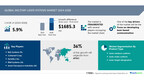
NEW YORK, Oct. 17, 2024 /PRNewswire/ — Report on how AI is driving market transformation – The Global Military Laser Systems market  size is estimated to grow by USD 1.69 billion from 2024-2028, according to Technavio. The market is estimated to grow at a CAGR of over 5.9%  during the forecast period. Focus on developing laser-based communication is driving market growth, with a trend towards emergence of directed-energy atmospheric lens concept. However, project terminations due to failure of prototypes  poses a challenge – Key market players include BAE Systems Plc, Coherent Corp., Dynetics Inc., Elbit Systems Ltd., Israel Aerospace Industries Ltd., Lockheed Martin Corp., MBDA, MKS Instruments Inc., Newport Corp., Northrop Grumman Corp., Rafael Advanced Defense Systems Ltd., Rheinmetall AG, RTX Corp., Saab AB, Safran SA, Thales Group, and The Boeing Co..

AI-Powered Market Evolution Insights. Our comprehensive market report ready with the latest trends, growth opportunities, and strategic analysis- View your snapshot now

Forecast period

2024-2028

Base Year

2023

Historic Data

2018 – 2022

Segment Covered

Product Type (Laser weapon systems, Laser radar systems, and Laser target designators) and Geography (North America, APAC, Europe, Middle East and Africa, and South America)

Region Covered

North America, APAC, Europe, Middle East and Africa, and South America

Key companies profiled

BAE Systems Plc, Coherent Corp., Dynetics Inc., Elbit Systems Ltd., Israel Aerospace Industries Ltd., Lockheed Martin Corp., MBDA, MKS Instruments Inc., Newport Corp., Northrop Grumman Corp., Rafael Advanced Defense Systems Ltd., Rheinmetall AG, RTX Corp., Saab AB, Safran SA, Thales Group, and The Boeing Co.

Key Market Trends Fueling Growth

In January 2017, BAE Systems unveiled the Laser Developed Atmospheric Lens (LDAL) concept at their military facility in Warton, Lancashire. The Rutherford Appleton Laboratory and optical sensors specialist LumOptica have evaluated this innovative technology. LDAL works by temporarily ionizing or heating a small region of the ionosphere, creating lens-like structures that magnify the path of electromagnetic waves. This system mimics natural phenomena, such as the reflective properties of the ionosphere and desert mirages. LDAL can enhance observation capabilities by enabling the detection of enemy activities over greater distances. Additionally, it can function as a protective shield against high-power laser weapon attacks. The global defense industry is focusing on the development of this technology to enhance surveillance and security. Therefore, the growing demand for advanced sensing and protection systems is expected to drive the growth of the military laser systems market during the forecast period. 

The Military Laser Systems market is experiencing significant growth due to increasing defense spending and military modernization. High-powered microwave and AI-enabled beam control are trending technologies in this sector. Military platforms are being integrated with advanced laser-based solutions for offensive and defensive operations. Next-gen laser weapons are being developed for target designation, guided munitions, and directed energy weapons. High-speed lasers, fiber lasers, and CO2 lasers are key technologies driving the market. Solid-state and chemical lasers are also gaining popularity. LIDAR, 3D scanning, and laser designator are essential for military applications, including combat systems, homeland security, and electronic warfare. Defensive countermeasures against terrorism activities are a major focus area. Military spending on laser weapon systems is expected to increase due to the need for precise weapons and communication networks. The market also includes laser altimeters and communication systems for military applications. Overall, the Military Laser Systems market is a dynamic and innovative sector that offers significant opportunities for growth. 

Insights on how AI is driving innovation, efficiency, and market growth- Request Sample!

Market Challenges

•         The military laser systems market is an emerging sector, with laser technology being a long-established yet continually evolving field. The development of laser weapons for military applications necessitates significant time and financial resources. Unfortunately, the failure of high-profile projects, such as the Boeing YAL-1 Airborne Laser, can significantly impact progress. This project, which aimed to create a megawatt-class laser weapons system using a chemical oxygen-iodine laser (COIL) inside a modified Boeing 747-400F for missile defense, ended in a USD5 billion investment after more than five years of research and testing. Such setbacks may hinder the growth of the military laser systems market during the forecast period.

•         The Military Laser Systems Market is experiencing significant growth due to the increasing demand for advanced technology in defense and national security. Two primary types of military laser systems are Chemical Lasers and CO2 Lasers, each with unique capabilities for Target Designation, Guided Munitions, and Directed Energy Weapons. Challenges include the development of Defensive Countermeasures against enemy lasers and Electronic Warfare. Military applications include Combat Systems, Homeland Security, and Communication Networks. High-Speed Lasers, Fiber Lasers, and High-Power Solid-State Lasers offer Precise Weapons and Operational Efficiency, while Laser Altimeter and Laser technology advancements enhance Military Spending in Defense. Cost-efficiency and Sustainability are crucial factors, with High-Intensity Laser Weapons and Unmanned Aerial Vehicles leading the way. Collaboration between Defense Suppliers and advancements in Directed Energy Weapons, Laser Precision, and High-Energy Lasers continue to shape this dynamic market.

Insights into how AI is reshaping industries and driving growth- Download a Sample Report

Segment Overview 

This military laser systems market report extensively covers market segmentation by

Product Type1.1 Laser weapon systems1.2 Laser radar systems1.3 Laser target designatorsGeography 2.1 North America2.2 APAC2.3 Europe2.4 Middle East and Africa2.5 South America

1.1 Laser weapon systems-  The military laser systems market is witnessing significant growth due to the prioritization of laser weapon systems by defense departments worldwide. Notable countries, including the US and Russia, have already developed and deployed laser weapon systems for live operations. In 2015, Lockheed Martin unveiled a 30-kW mobile laser weapon system capable of disabling a truck, while in 2017, they set a record with a 58 kW laser beam. These systems consist of fiber laser modules, which can be scaled up by adding more fiber bundles. China is developing a powerful laser weapon for space-based attacks on satellites, with a chemical laser weighing less than five tons planned for low-earth orbit. The Russian defense ministry is also reportedly developing laser, electromagnetic, and plasma weapons for their armed forces, capable of hypersonic speeds. These advancements underscore the potential growth of the laser weapon system segment during the forecast period.

Download complimentary Sample Report to gain insights into AI’s impact on market dynamics, emerging trends, and future opportunities- including forecast (2024-2028) and historic data (2018 – 2022) 

Research Analysis

The Military Laser Systems market is experiencing significant growth due to advancements in laser technology, which is revolutionizing national defense with high-intensity laser weapons. Unmanned aerial vehicles (UAVs) are increasingly integrating laser systems for enhanced capabilities. Defense suppliers are investing in directed energy weapons for operational efficiency and cost-efficiency. Solid-state lasers and high-power lasers are at the forefront of this technology, offering sustainability and infrastructure challenges. High-powered microwave and AI-enabled beam control are also gaining traction. Defense spending, military modernization, terrorism activities, and geopolitical conflicts are key drivers for the market. Advanced laser-based solutions are being explored for offensive and defensive operations, including LIDAR, 3D scanning, laser weapon systems, laser range finders, and solid-state lasers. Chemical lasers are also being considered for their unique capabilities. The market is expected to continue growing as laser technology continues to evolve and find new applications in military applications.

Market Research Overview

The Military Laser Systems market is experiencing significant growth due to advancements in laser technology and the increasing demand for high-intensity laser weapons in national defense. These systems offer numerous benefits, including precision, operational efficiency, and cost-efficiency. High-power solid-state lasers, high-energy lasers, high-powered radiofrequency, and high-powered microwave are some of the technologies driving this market. Military laser systems find applications in various sectors, including defense suppliers, unmanned aerial vehicles, directed energy weapons, and military platforms integration. The integration of artificial intelligence (AI) in beam control further enhances the capabilities of these systems. Military modernization, defense spending, and military applications in offensive and defensive operations are significant factors driving the market. Advanced laser-based solutions are being used for target designation, LIDAR, 3D scanning, and laser weapon systems. Moreover, the market is witnessing the development of next-gen laser weapons, such as fiber lasers, high-speed lasers, and chemical lasers, for combat systems, homeland security, electronic warfare, and communication networks. The market is also witnessing the integration of laser technology in precise weapons, laser altimeters, and guided munitions, among others. The increasing threat of terrorism activities and the need for defensive countermeasures are further boosting the demand for military laser systems. Overall, the market is expected to continue its growth trajectory due to the numerous advantages offered by laser technology in military applications.

Table of Contents:

1 Executive Summary
2 Market Landscape
3 Market Sizing
4 Historic Market Size
5 Five Forces Analysis
6 Market Segmentation

Product TypeLaser Weapon SystemsLaser Radar SystemsLaser Target DesignatorsGeographyNorth AmericaAPACEuropeMiddle East And AfricaSouth America

7 Customer Landscape
8 Geographic Landscape
9 Drivers, Challenges, and Trends
10 Company Landscape
11 Company Analysis
12 Appendix

About Technavio

Technavio is a leading global technology research and advisory company. Their research and analysis focuses on emerging market trends and provides actionable insights to help businesses identify market opportunities and develop effective strategies to optimize their market positions.

With over 500 specialized analysts, Technavio’s report library consists of more than 17,000 reports and counting, covering 800 technologies, spanning across 50 countries. Their client base consists of enterprises of all sizes, including more than 100 Fortune 500 companies. This growing client base relies on Technavio’s comprehensive coverage, extensive research, and actionable market insights to identify opportunities in existing and potential markets and assess their competitive positions within changing market scenarios.

Contacts

Technavio Research
Jesse Maida
Media & Marketing Executive
US: +1 844 364 1100
UK: +44 203 893 3200
Email: media@technavio.com
Website: www.technavio.com/

View original content to download multimedia:https://www.prnewswire.com/news-releases/military-laser-systems-market-to-grow-by-usd-1-69-billion-from-2024-2028–driven-by-advancements-in-laser-based-communication-ai-powered-market-evolution—technavio-302278813.html

SOURCE Technavio

Continue Reading

Technology

xTool’s Black Friday deals: get creative with exclusive savings

Published

on

By

LONDON, Nov. 26, 2026 /PRNewswire/ — With its biggest savings of the year, xTool is offering UK customers the chance to save up to £4,686 through the tiered discount programme during its Black Friday campaign, from 2 November to 4 December 2026. From personalised Christmas gifts and festive decorations to ambitious DIY projects, creative enthusiasts, makers and small businesses can bring their ideas to life for less. The campaign features exclusive discounts on laser engraving, laser cutting and digital manufacturing solutions, alongside weekly lightning deals, material flash sales and free gifts with qualifying purchases.

From Laser Engraving to Colour Printing: Black Friday Highlights

Whether creating intricate engravings, colourful printed designs or precise laser cuts, xTool machines offer a wide range of creative possibilities. While compact devices such as the xTool F2 are particularly well suited to personalised gifts and smaller DIY projects, more powerful models such as the xTool P3 and F2 Ultra offer versatile capabilities for more demanding projects and professional users.

The Right Machine for Every Creative Project

xTool M2 – Where Creativity Meets Colour

The xTool M2 Color Craft Laser combines colour printing, laser cutting and engraving in a single machine. It can be used to create personalised Christmas decorations, custom greeting cards and creative gift packaging. For DIY enthusiasts, the M2 offers numerous opportunities to bring their own ideas to life.  Discover more at: xTool M2 Color Craft Laser Cutter & Engraver

xTool F2 – Create Your Own Personalised Gifts

This compact laser engraver combines an infrared laser with a diode laser, enabling precise engraving on a variety of materials. From keyrings and jewellery to leather accessories, the F2 can transform everyday objects into unique, personalised creations. Discover more at: xTool F2: 5W IR & 15W Diode Portable Dual Laser Engrave

xTool O1 Omni Printer – For Versatile, Full-Colour Printing Projects

Combining UV, UV DTF, DTF and DTG printing technologies, the xTool O1 Omni Printer offers a versatile solution for creative and personalised projects. It can be used to produce vibrant designs on a wide range of materials, from custom apparel and accessories to decorative objects, stickers and premium personalised gifts. Discover more at: xTool O1 Omni Printer | The World’s First 4-in-1 Omni Printer

xTool F2 Ultra – For Advanced Engraving Projects

Combining a MOPA fibre laser with a diode laser, the xTool F2 Ultra is particularly well suited to intricate engraving and metalworking. It can be used to create jewellery, metal accessories and premium personalised products. Discover more at: xTool F2 Ultra UV: 5W UV Laser Engraver

xTool P3 – Bringing Big Ideas to Life with Precision

Equipped with a powerful 80W CO₂ laser, the xTool P3 is designed for ambitious makers and professional users. The machine enables precise cutting and engraving on materials such as wood and acrylic, making it ideal for elaborate decorations, larger DIY projects and the production of customised products. Discover more at: xTool P3 80W Flagship CO2 Laser Cutter

The more you buy, the more you save

Under the motto “Shop more, save more, create more”, xTool is introducing a tiered discount system this year. The principle is simple: the higher the order value, the greater the additional savings. Eligible discounts are automatically applied at checkout.

The different discount tiers are as follows:

Minimum Order Value

Additional Discount

£549

£70

£899

£120

£1,599

£210

£3,299

£480

£4,999

£820

£8,199

£1,400

£11,999

£2,400

The promotion is aimed at both newcomers taking their first steps into creative manufacturing and experienced makers and small businesses looking to expand their production capabilities.

From Black Friday to the Christmas Workshop

With the festive season just around the corner, xTool’s Black Friday promotion offers the perfect opportunity to explore new creative possibilities and bring personalised gift ideas and festive decorations to life.

Rather than opting for traditional gifts, xTool machines make it possible to create meaningful, personalised keepsakes. Engraved wooden ornaments, custom-printed decorations and personalised jewellery can add a truly personal touch to Christmas celebrations.

For small businesses and independent entrepreneurs, xTool’s Black Friday offers also present an opportunity to invest in new technologies and expand their product ranges with customised items.

Full details of the UK Black Friday offer, and participating products are available at:  xTool UK | Laser Cutter, Engraver, Welder & DTF Printer

About xTool
xTool is a brand founded in 2020 that specialises in smart digital fabrication machines. The company’s mission is to foster creativity by developing intelligent, user-friendly tools that leverage advanced technologies to significantly lower the barriers to creation. The brand primarily serves makers, DIY enthusiasts, and the education sector by combining powerful software with safe, easy-to-use hardware. xTool provides users with new opportunities to bring their creative ideas to life efficiently and professionally.

View original content to download multimedia:https://www.prnewswire.co.uk/news-releases/xtools-black-friday-deals-get-creative-with-exclusive-savings-302951338.html

Continue Reading

Technology

Media briefing on mobile device unlocking and prohibitions of fees

Published

on

By

GATINEAU, QC, Nov. 26, 2026 /CNW/ — Canadian Radio-television and Telecommunications Commission (CRTC) officials will hold a virtual briefing to present its decisions regarding device unlocking and prohibition of certain fees.

Location:

    Virtual

Date:

    November 27, 2026

Time:

    Media Briefing on Microsoft Teams: 9:30 EST

Notes

Media representatives who wish to attend must register with the CRTC by emailing media@crtc.gc.ca to obtain the link to the virtual l briefing. Media who join via teleconference will have an opportunity to ask questions on a for attribution basis and content can be recorded for broadcast.Once registration is confirmed, the Microsoft Teams link will be distributed by email before 8:30 a.m. EST on November 27, 2026. 

SOURCE Canadian Radio-television and Telecommunications Commission (CRTC)

Continue Reading

Technology

IoT Market worth $1,004.24 billion by 2032 – Report by MarketsandMarkets™

Published

on

By

DELRAY BEACH, Fla., Nov. 26, 2026 /PRNewswire/ — According to MarketsandMarkets™, the IoT Market is projected to grow from USD 606.29 billion in 2026 to USD 1,004.24 billion by 2032, at a compound annual growth rate (CAGR) of 8.8% during the same period.

Browse 300 market data Tables and 55 Figures spread through 350 Pages and in-depth TOC on ‘IoT Market – Global Forecast to 2032’

IoT Market Size & Forecast:

Market Size Available for Years: 2020–20322025 Market Size: USD 547.06 billion2026 Market Size: USD 606.29 billion2032 Projected Market Size: USD 1,004.24 billionCAGR (2026–2032): 8.8%

IoT Market Trends & Insights:

The Internet of Things (IoT) Market is witnessing significant growth, driven by the increasing adoption of connected devices, advancements in wireless communication technologies, and rising demand for real-time monitoring, automation, and data-driven decision-making.The connectivity segment is expected to register the highest CAGR of 10.1% from 2026 to 2032.The security hardware segment is expected to register the highest CAGR of 9.4% from 2026 to 2032.The satellite segment is expected to register the highest CAGR of 14.1% from 2026 to 2032.The managed Services segment is expected to register the highest CAGR of 10.1% from 2026 to 2032.Asia Pacific to be the fastest-growing region in the global IoT Market

Download PDF Brochure: https://www.marketsandmarkets.com/pdfdownloadNew.asp?id=573

Enterprises are increasingly adopting IoT solutions to enable predictive maintenance, improve supply chain visibility, and deliver personalized customer experiences. With IoT, businesses can collect and analyze vast amounts of operational data, leading to smarter decision-making and cost savings. Integrating IoT with AI and analytics platforms is also enabling advanced automation and proactive risk management, further driving enterprise-level adoption.

By software, the IoT platforms segment is expected to hold the largest market share of the global IoT Market during the forecast period.

IoT platforms enable seamless device management, data integration, and real-time analytics for enterprises across industries. Leading providers such as Microsoft Azure IoT, AWS IoT Core, and Huawei OceanConnect IoT Platform offer scalable, cloud-based solutions that support millions of connected devices. The growing use of IoT platforms in manufacturing and energy is driven by the need for centralized control, interoperability, and predictive insights. These platforms also integrate AI, ML, and edge capabilities, enabling automation and faster decision-making. As organizations increasingly adopt hybrid and multi-cloud models, IoT platforms are becoming the backbone of digital ecosystems, efficiently supporting both enterprise-scale and consumer IoT deployments.

Request for Proposal: https://www.marketsandmarkets.com/requestsampleNew.asp?id=573

By focus areas, the smart healthcare segment is expected to witness the highest growth rate during the forecast period.

The integration of IoT in healthcare is transforming patient care by enabling continuous health tracking, real-time diagnostics, and data-driven clinical decision-making. Wearable sensors and IoT-enabled devices help monitor vital signs, medication adherence, and chronic conditions, improving patient outcomes and reducing hospital visits. Hospitals are deploying IoT for asset management, staff coordination, and predictive maintenance of medical equipment. The COVID-19 pandemic further accelerated the adoption of telemedicine and connected health solutions. With advancements in 5G, edge computing, and AI analytics, IoT is enabling personalized and preventive healthcare models. As governments and healthcare providers invest in smart health infrastructure, the segment is set for rapid, sustained growth globally.

Asia Pacific is expected to register a higher growth rate during the forecast period.

The Asia Pacific IoT Market is evolving into a highly dynamic ecosystem characterized by strong collaboration between technology providers, telecom operators, and governments. Regional policies encouraging digital economies, such as Japan’s Society 5.0 and India’s Digital India program, are creating a favorable environment for IoT innovation. Startups and enterprises across verticals like healthcare, energy, and retail are leveraging IoT to deliver data-driven insights and improve service delivery. The growing availability of low-cost sensors and cloud-based IoT platforms is further expanding access for SMEs. Meanwhile, large enterprises are integrating IoT with AI and blockchain to improve transparency and traceability in supply chains. Despite infrastructure gaps in certain emerging economies, Asia Pacific continues to attract significant IoT investments, making it a strategic hub for technology experimentation and large-scale deployments over the next decade.

Request Pricing: https://www.marketsandmarkets.com/Enquiry_Before_BuyingNew.asp?id=573

Top Companies in IoT Market:

The Top Companies in IoT Market are Microsoft (US), Amazon Web Services, Inc. (US), Huawei (China), Cisco (US), Intel (US), Qualcomm (US), Texas Instruments (US), Siemens (Germany), ABB (Switzerland), IBM (US), SAP (Germany), Hitachi (Japan), PTC (US), STMicroelectronics (Switzerland), NXP Semiconductors (Netherlands), HP (US), TE Connectivity (Switzerland), Advantech (Taiwan), Bosch (Germany), TDK Corporation (Japan), Omron Corporation (Japan), Honeywell (US), Oracle (US), STC (Saudi Arabia), Samsung (South Korea), Ericsson (Sweden), Avnet (US), Alibaba Cloud (China), HQSoftware (Estonia), Blues (US), Telit Cinterion (US), Particle (US), ClearBlade (US), Ayla Networks (US), Losant (US), and emnify (Germany).

These players have adopted various growth strategies, such as partnerships, agreements, collaborations, product launches, enhancements, and acquisitions to expand their footprint in the IoT Market.

IoT Market – Investment & Funding Scenario

Investment and Funding Context

The Internet of Things (IoT) Market is attracting increasing investments as organizations prioritize industrial automation, intelligent connectivity, real-time asset monitoring, smart infrastructure, and digital transformation. Investment is increasingly directed toward IoT platforms, connected sensors, industrial gateways, edge computing, cellular connectivity, and cloud-based device management solutions. Major companies, including Microsoft, Amazon Web Services (AWS), Huawei, Cisco, Siemens, ABB, Intel, and Qualcomm, continue to strengthen their IoT capabilities through technology development, ecosystem partnerships, and strategic investments. For instance, Siemens completed its approximately USD 10 billion acquisition of Altair Engineering in March 2025, strengthening its industrial simulation, digital twin, and data analytics capabilities. Similarly, ABB acquired Sensorfact in February 2025, expanding its industrial energy management portfolio through connected monitoring and software-as-a-service solutions. Among specialized IoT companies, Particle, Blues, emnify, ClearBlade, and Losant address demand for connected-device infrastructure, embedded connectivity, remote monitoring, and scalable IoT applications. These developments highlight growing investment in intelligent connectivity, industrial digitalization, low-power devices, and integrated IoT solutions across manufacturing, healthcare, transportation, energy, and smart infrastructure.

Revenue Shift Context

The Internet of Things (IoT) Market is shifting from traditional hardware-centric business models to integrated, software-driven solutions that combine connected devices, cloud platforms, connectivity management, and advanced analytics. Organizations are increasingly adopting subscription-based services, usage-based pricing, managed connectivity, and recurring software licensing models to improve operational efficiency and support scalable deployments. This transition is creating recurring revenue opportunities through IoT device management, cloud subscriptions, remote monitoring, software applications, and connected services. For instance, AWS IoT Core follows a consumption-based pricing structure, while Microsoft Azure IoT Hub offers tiered cloud services for connected-device communication and management. Similarly, Cisco provides IoT connectivity management capabilities, while Oracle, SAP, and IBM support connected enterprise operations through cloud applications, analytics, and integration services. Specialized players such as emnify, Blues, ClearBlade, Ayla Networks, and Losant offer recurring-service models involving IoT connectivity, cloud-based device management, and application enablement. Particle’s approximately USD 20 million in annual recurring revenue at the time of its January 2026 acquisition further illustrates the commercial importance of subscription-based connected-device platforms. This shift is encouraging IoT vendors to move beyond standalone hardware sales toward integrated, recurring-revenue models that combine connectivity, software, analytics, continuous monitoring, and long-term enterprise services.

Mergers & Acquisitions

Mergers & acquisitions (M&A) in the Internet of Things (IoT) Market are increasingly focused on strengthening industrial connectivity, edge computing, intelligent automation, connected infrastructure, and software-driven solutions. Major companies such as Siemens, ABB, and PTC are reshaping their technology portfolios through strategic acquisitions and divestitures to enhance operational intelligence, industrial monitoring, and digital transformation capabilities. Recent transactions demonstrate increasing consolidation across industrial software, connected sensors, cloud platforms, and energy management systems. These developments are expanding IoT applications across manufacturing, transportation, smart buildings, energy, and connected infrastructure while supporting recurring revenue growth and integrated technology offerings.

IoT Market: Mergers & Acquisitions, January 2025–June 2026

Month & Year

Deal Type

Company 1

Company 2

Description

January 2026

Acquisition

Digi International (US)

Particle (US)

Digi International acquired Particle for approximately USD 50 million, strengthening its embedded IoT connectivity, edge-to-cloud infrastructure, and subscription-based device management solutions.

March 2025

Acquisition

Siemens (Germany)

Altair Engineering (US)

Siemens completed the approximately USD 10 billion acquisition of Altair Engineering, strengthening its industrial simulation, digital twin, and AI-enabled software capabilities.

Company Revenue Share Details

The IoT market is highly competitive, with established technology providers, industrial automation companies, semiconductor manufacturers, connectivity providers, and specialized IoT solution vendors addressing growing demand for intelligent connectivity, connected infrastructure, and digital transformation. Microsoft, AWS, Huawei, Cisco, IBM, Oracle, SAP, Alibaba Cloud, and Software AG compete through cloud infrastructure, enterprise integration, IoT platforms, connectivity management, and analytics solutions. Siemens, ABB, Hitachi, Bosch, Honeywell, and Omron focus on industrial automation, connected manufacturing, predictive maintenance, and smart infrastructure, while Intel, Qualcomm, Texas Instruments, STMicroelectronics, NXP Semiconductors, TE Connectivity, and TDK support IoT deployment through processors, embedded semiconductors, sensors, and connectivity components. HPE, Advantech, Samsung, Ericsson, STC, and Avnet contribute through edge computing, industrial gateways, connected devices, telecommunications infrastructure, and technology distribution. Specialized vendors, including Telit Cinterion, emnify, Particle, Blues, ClearBlade, Ayla Networks, Losant, HQSoftware, and PTC, address industrial connectivity, cellular IoT, application enablement, cloud-based device management, and integrated IoT solutions. These companies compete through technological innovation, connectivity coverage, software capabilities, industry expertise, and strategic partnerships. However, comparable IoT-specific revenue shares remain difficult to determine because companies frequently report IoT revenue within broader cloud, telecommunications, semiconductor, industrial automation, and enterprise software segments. Furthermore, PTC’s March 2026 divestiture of ThingWorx and Kepware affects its direct IoT platform exposure and should be considered when evaluating its revenue contribution.

Browse Adjacent Markets: Digitalization and Internet of Things (IoT) Market Research Reports & Consulting

Related Market Reports:

AIoT Market by Platform (IoT Device Management, IoT Application Enablement Platforms, IoT Connectivity Management, IoT Cloud, IoT Advanced Analytics), Technology (Machine Learning, NLP, Computer Vision, Context Aware AI) – Global Forecast to 2032

5G IoT Market by Component (Hardware, Platform, Connectivity, and Services), Network Type (5G Standalone and 5G Non-Standalone), Organization Size, Type (Short-range IoT Devices, Wide-range IoT Devices), End Users and Region – Global Forecast to 2028

About MarketsandMarkets™

MarketsandMarkets™ has been recognized as one of America’s Best Management Consulting Firms by Forbes, as per their recent report.

MarketsandMarkets™ is a blue ocean alternative in growth consulting and program management, leveraging a man-machine offering to drive supernormal growth for progressive organizations in the B2B space. With the widest lens on emerging technologies, we are proficient in co-creating supernormal growth for clients across the globe.

Today, 80% of Fortune 2000 companies rely on MarketsandMarkets, and 90 of the top 100 companies in each sector trust us to accelerate their revenue growth. With a global clientele of over 13,000 organizations, we help businesses thrive in a disruptive ecosystem.

The B2B economy is witnessing the emergence of $25 trillion in new revenue streams that are replacing existing ones within this decade. We work with clients on growth programs, helping them monetize this $25 trillion opportunity through our service lines – TAM Expansion, Go-to-Market (GTM) Strategy to Execution, Market Share Gain, Account Enablement, and Thought Leadership Marketing.

Built on the ‘GIVE Growth’ principle, we collaborate with several Forbes Global 2000 B2B companies to keep them future-ready. Our insights and strategies are powered by industry experts, cutting-edge AI, and our Market Intelligence Cloud, KnowledgeStore™, which integrates research and provides ecosystem-wide visibility into revenue shifts.

MarketsandMarkets™ SalesPlay is an AI-driven Revenue Intelligence Co-Pilot designed to help revenue teams prioritize the right accounts, identify critical changes early, and surface opportunities ahead of demand, so pipeline builds naturally and deals close with greater consistency.

To find out more, visit www.MarketsandMarkets™.com or follow us on Twitter, LinkedIn and Facebook.

Contact:
Mr. Rohan Salgarkar
MarketsandMarkets™ INC.
1615 South Congress Ave.
Suite 103, Delray Beach, FL 33445
USA: +1-888-600-6441
Email: sales@marketsandmarkets.com
Visit Our Website: https://www.marketsandmarkets.com/
Research Insight: https://www.marketsandmarkets.com/ResearchInsight/internet-of-things-market.asp
Content Source: https://www.marketsandmarkets.com/PressReleases/iot-m2m.asp


View original content to download multimedia:https://www.prnewswire.com/news-releases/iot-market-worth-1-004-24-billion-by-2032–report-by-marketsandmarkets-302951183.html

SOURCE MarketsandMarkets

Continue Reading

Trending