Technology
Indium Tin Oxide (ITO) Market to Grow by USD 239.8 Million from 2024-2028, Driven by Rising Renewable Energy Dependence and AI-Powered Market Evolution – Technavio
Published
2 years agoon
By
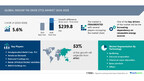
NEW YORK, Nov. 6, 2024 /PRNewswire/ — Report with the AI impact on market trends – The Global Indium Tin Oxide (ITO) market size is estimated to grow by USD 239.8 million from 2024-2028, according to Technavio. The market is estimated to grow at a CAGR of 5.6% during the forecast period. Increasing dependency on renewable energy sources is driving market growth, with a trend towards increased deposition of silver nanoparticles on it. However, shortage in indium production poses a challenge.Key market players include Amalgamated Metal Corp. PLC, American Elements, Diamond Coatings Inc., ENAM OPTOELECTRONIC MATERIAL CO. LTD., ENEOS Holdings Inc., Guangxi Crystal Union Photoelectric Materials Co. Ltd., Indium Corp., Knight Optical Ltd., Kurt J Lesker Co., Merck KGaA, MITSUI MINING and SMELTING CO. LTD., NANOGRAFI Co. Inc., Nanoshel LLC, Nitto Denko Corp., NYACOL Nano Technologies Inc., OPCO Laboratory Inc., Otto Chemie Pvt. Ltd., Tosoh Corp., Ulvac Inc., and Umicore SA.
Key insights into market evolution with AI-powered analysis. Explore trends, segmentation, and growth drivers- View Free Sample PDF
Indium Tin Oxide (ITO) Market Scope
Report Coverage
Details
Base year
2023
Historic period
2018 – 2022
Forecast period
2024-2028
Growth momentum & CAGR
Accelerate at a CAGR of 5.6%
Market growth 2024-2028
USD 239.8 million
Market structure
Fragmented
YoY growth 2022-2023 (%)
5.2
Regional analysis
APAC, North America, Europe, South America, and Middle East and Africa
Performing market contribution
APAC at 53%
Key countries
China, Japan, South Korea, US, and Canada
Key companies profiled
Amalgamated Metal Corp. PLC, American Elements, Diamond Coatings Inc., ENAM OPTOELECTRONIC MATERIAL CO. LTD., ENEOS Holdings Inc., Guangxi Crystal Union Photoelectric Materials Co. Ltd., Indium Corp., Knight Optical Ltd., Kurt J Lesker Co., Merck KGaA, MITSUI MINING and SMELTING CO. LTD., NANOGRAFI Co. Inc., Nanoshel LLC, Nitto Denko Corp., NYACOL Nano Technologies Inc., OPCO Laboratory Inc., Otto Chemie Pvt. Ltd., Tosoh Corp., Ulvac Inc., and Umicore SA
Market Driver
Indium Tin Oxide (ITO) is a transparent conducting oxide material widely used in various industries due to its superior optical and electrical properties. One method to enhance these properties is by depositing noble metal nanoparticles, such as silver, onto ITO surfaces. Silver nanoparticles, in particular, exhibit unique properties like large surface energies and quantum confinement effect, leading to strong responses in the visible light region. The plasma-assisted hot-filament evaporation (PAHFE) technique is used to produce high-density crystalline silver nanoparticles on ITO, controlling their size and distribution. This improvement in ITO’s properties opens up new applications, including touchscreens, solar cells, and sensors, driving the growth of the Indium Tin Oxide market during the forecast period.
Indium Tin Oxide, or ITO, is a transparent semiconductor made from Indium, Tin, and Oxygen. It’s produced using methods like electron beam evaporation and sputter deposition. ITO is known for its high transparency and conductivity, making it ideal for various applications. These include touch panels, sensors, flat panels, electroluminescent displays, photovoltaic cells, and heat reflective coatings. ITO’s physical properties make it excellent for electromagnetic induction shielding, ultraviolet resistance, and colorfastness. In electronics, ITO is used in touchscreens, shield glass, and advanced driver assistance systems in smart devices, screens (televisions, tablets, smartphones, cameras, computer monitors), and even in smart automobiles. Its uses extend to construction with applications in gas sensors and LCD displays. ITO is a versatile material, contributing significantly to the semiconductor industry.
Request Sample of our comprehensive report now to stay ahead in the AI-driven market evolution!
Market Challenges
Indium tin oxide (ITO) is a crucial material in the electronics industry, accounting for 90% of its composition. However, the availability of indium, the primary component of ITO, is uncertain due to trade restrictions and quotas imposed by major producers like China. These policies have resulted in indium supply shortages, potentially impacting the ITO market and downstream industries. Recycling and advanced refining technologies offer potential solutions to restore the supply-demand balance. Despite minor imbalances, the long-term indium supply is expected to pose challenges to the ITO market growth during the forecast period.Indium Tin Oxide (ITO) is a transparent conducting oxide widely used in various industries, including electronics, construction, and energy. In flat panels, ITO is essential for LCD displays, electroluminescent displays, and touchscreens. In the photovoltaic sector, it’s used in solar cells. ITO also finds applications in heat reflective coatings, shield glass, and RF interference shielding. However, challenges persist. Flat panels face intense competition from OLED and QLED technologies. In electroluminescent displays and photovoltaic cells, ITO’s high cost is a concern. ITO’s use in touchscreens and heat reflective coatings is threatened by alternatives like IZO and FTO. ITO’s physical properties, such as UV resistance and electronic conductivity, make it valuable in various sectors. In electronics, it’s used in semiconductors and smart devices like televisions, tablets, smartphones, cameras, computer monitors, and smart automobiles. In construction, ITO is used in energy-efficient windows. In the semiconductor industry, low-temperature vacuum deposition is a potential solution to reduce ITO’s production costs. Despite these challenges, the growing demand for mobile phones, flexible electronics, and energy-efficient technologies is expected to drive the ITO market forward.
Discover how AI is revolutionizing market trends- Get your access now!
Segment Overview
This indium tin oxide (ito) market report extensively covers market segmentation by
Technology 1.1 Sputtering1.2 Vacuum evaporation1.3 Chemical vapor deposition1.4 Spray pyrolysis1.5 OthersApplication 2.1 Electrochromic displays and LCDs2.2 Touch panels2.3 Photovoltaics2.4 Transparent electrodes2.5 OthersGeography 3.1 APAC3.2 North America3.3 Europe3.4 South America3.5 Middle East and Africa
1.1 Sputtering- ITO (Indium Tin Oxide) films are primarily produced using sputtering techniques due to their high-quality, homogeneous, and pure nature. Among these techniques, traditional sputtering offers adaptability in depositing ITO films on substrates. However, it has drawbacks such as substrate overheating and low deposition rates due to secondary electron bombardment from the target. In response, magnetron sputtering has emerged as a preferred method, delivering superior film quality, homogeneity, and adhesive strength. This trend is particularly prominent in APAC markets, including South Korea, Japan, and China, driven by the expanding touch panel manufacturing industry. The ITO market growth is primarily influenced by the sputtering segment’s increasing demand due to its crucial role in downstream industries.
Download a Sample of our comprehensive report today to discover how AI-driven innovations are reshaping competitive dynamics
Research Analysis
Indium Tin Oxide (ITO) is a transparent conducting oxide made from the elements Indium, Tin, and Oxygen. It is widely used in various industries due to its unique physical properties. ITO is produced through techniques such as electron beam evaporation and sputter deposition, resulting in a thin protective coating with high transparency and conductivity. ITO is known for its excellent electromagnetic induction shielding and ultraviolet resistance, making it ideal for use in electronic devices, construction materials, and touch panels. Its colorfastness and heat reflective properties also make it suitable for use in gas sensors and other applications. ITO is a semiconductor, with the chemical formula In2O3:Sn, and is made up of alternating layers of Indium Oxide and Tin Oxide. Its high transparency and conductivity make it a popular choice for applications requiring transparent semiconductors. ITO is used in various industries, including electronics, construction, and automotive, due to its ability to enhance the performance of various materials and devices.
Indium Tin Oxide (ITO) is a transparent semiconductor material made by combining Indium, Tin, and Oxygen. ITO is known for its high transparency and electrical conductivity, making it an essential component in various electronic devices. It is typically produced using techniques such as electron beam evaporation and sputter deposition. ITO functions as a thin protective coating in various applications, including touch panels, sensors, flat panels, electroluminescent displays, photovoltaic cells, and heat reflective coatings. ITO provides benefits such as colorfastness, electromagnetic induction shielding, and ultraviolet resistance. It is used extensively in the electronics industry for touchscreens, shield glass, and advanced driver assistance systems in smart devices like televisions, tablets, smartphones, cameras, computer monitors, and smart automobiles. ITO’s physical properties make it suitable for various applications, including energy-efficient windows, gas sensors, LCD displays, electrochromic displays, field emission displays, and electroluminescent displays. With the increasing demand for flexible electronics and energy-efficient devices, ITO is undergoing research for alternatives with lower-temperature vacuum deposition methods. ITO’s applications extend beyond electronics to construction, where it is used in various coatings for energy efficiency and radiation shielding.
Table of Contents:
1 Executive Summary
2 Market Landscape
3 Market Sizing
4 Historic Market Size
5 Five Forces Analysis
6 Market Segmentation
TechnologySputteringVacuum EvaporationChemical Vapor DepositionSpray PyrolysisOthersApplicationElectrochromic Displays And LCDsTouch PanelsPhotovoltaicsTransparent ElectrodesOthersGeographyAPACNorth AmericaEuropeSouth AmericaMiddle East And Africa
7 Customer Landscape
8 Geographic Landscape
9 Drivers, Challenges, and Trends
10 Company Landscape
11 Company Analysis
12 Appendix
About Technavio
Technavio is a leading global technology research and advisory company. Their research and analysis focuses on emerging market trends and provides actionable insights to help businesses identify market opportunities and develop effective strategies to optimize their market positions.
With over 500 specialized analysts, Technavio’s report library consists of more than 17,000 reports and counting, covering 800 technologies, spanning across 50 countries. Their client base consists of enterprises of all sizes, including more than 100 Fortune 500 companies. This growing client base relies on Technavio’s comprehensive coverage, extensive research, and actionable market insights to identify opportunities in existing and potential markets and assess their competitive positions within changing market scenarios.
Contacts
Technavio Research
Jesse Maida
Media & Marketing Executive
US: +1 844 364 1100
UK: +44 203 893 3200
Email: media@technavio.com
Website: www.technavio.com/
View original content to download multimedia:https://www.prnewswire.com/news-releases/indium-tin-oxide-ito-market-to-grow-by-usd-239-8-million-from-2024-2028–driven-by-rising-renewable-energy-dependence-and-ai-powered-market-evolution—technavio-302296434.html
SOURCE Technavio
You may like
Technology
Bitfire Group Reports Q3 Digital Assets Under Management of US$221 Million, Up 60.1%
Published
15 minutes agoon
October 26, 2026By
Crypto-asset trading volume rises 362.2% to US$342 million, while client base expands 31.4% to 1,058
HONG KONG, Oct. 26, 2026 /PRNewswire/ — Bitfire Group Holdings Limited (HKEX: 1611), formerly known as Sinohope Technology Holdings Limited (the “Company” or the “Group”), today announced its core business operating data for the quarter ended September 30, 2026.
The Group delivered strong growth across its core businesses during the third quarter. Digital assets under management, crypto-asset trading volume and the number of clients increased by 60.1%, 362.2% and 31.4%, respectively, compared with the previous quarter.
As of September 30, 2026, the Group’s digital assets under management reached approximately US$221 million, representing quarterly growth of 60.1%. Over the past year, the Group’s digital assets under management increased by approximately 700%, despite challenging conditions in the broader crypto-asset market. The Group’s monthly average growth rate reached approximately 17%.
For the three months ended September 30, 2026, the Group recorded crypto-asset trading volume of approximately US$342 million, representing an increase of 362.2% from the previous quarter. Trading volume in September alone reached approximately US$117 million.
The number of clients using the Group’s asset management and crypto-asset trading services reached 1,058, representing quarterly growth of approximately 31.4%. The Group serves global financial institutions, listed companies, family offices and ultra-high-net-worth individuals.
Meanwhile, BitTrade, the Group’s licensed digital asset exchange in Japan, recorded approximately US$113 million in combined assets under custody and client wealth management assets. Its registered user base reached 306,358 as of September 30, 2026.
During the third quarter of 2026, the broader digital asset market showed signs of recovery, with Bitcoin prices and capital flows into related investment products attracting renewed market attention. The evolving market environment has created new opportunities for digital asset management and trading services, while institutional demand for professional asset management, trade execution and compliance services has continued to grow.
Bitfire Group will continue to focus on the evolving needs of its clients, expand its digital asset management and trading businesses, and further develop related financial services.
About Bitfire Group
Bitfire Group Holdings Limited (01611.HK) is a leading digital asset financial services platform in Asia, committed to building the Asia-Pacific’s first private-banking-grade digital asset steward. Holding SFC Type 1, 4 and 9 Licences issued by the Securities and Futures Commission of Hong Kong, the Group delivers compliant, secure and efficient one-stop digital asset services for institutional clients and high-net-worth individuals
View original content:https://www.prnewswire.com/news-releases/bitfire-group-reports-q3-digital-assets-under-management-of-us221-million-up-60-1-302919072.html
SOURCE Bitfire Group
Technology
HKEX Launches Artificial Intelligence and Semiconductor Indices
Published
15 minutes agoon
October 26, 2026By
Launch of HKEX Artificial Intelligence Index and HKEX Semiconductor Index to provide benchmarks for two key technology themesHKEX continues to expand proprietary index suite and broaden coverage of emerging technology trendsLicense agreement with Southern Asset Management to issue ETFs based on the HKEX Artificial Intelligence Index in Chinese Mainland
HONG KONG, Oct. 26, 2026 /PRNewswire/ — Hong Kong Exchanges and Clearing Limited (HKEX) is pleased to announce the launch of the HKEX Artificial Intelligence Index and the HKEX Semiconductor Index. These new indices further expand HKEX’s proprietary index offering and provide investors with new benchmarks to capture opportunities arising from two of the most dynamic technology themes.
HKEX is also pleased to announce that it has entered into a licensing agreement with China Southern Asset Management Company Limited (Southern Asset Management) for the introduction of exchange traded funds (ETFs) based on the HKEX Artificial Intelligence Index in the Chinese Mainland. Details of the product launch will be shared in due course.
Richard Leung, HKEX Group Chief Information Officer, said: “We are delighted to be launching these new thematic indices. Artificial intelligence and semiconductors are transforming industries and becoming increasingly important drivers of growth and innovation globally. At HKEX, we are committed to continuously expanding our index suite to give investors more ways to capture these trends and participate in the growth of the region’s technology ecosystem.”
Mr Leung added: “We are pleased to be licensing the HKEX Artificial Intelligence Index to Southern Asset Management for ETF products in the Chinese Mainland and look forward to partnering with other market participants to develop more investment products based on our index suite, increasing investor choice and further elevating the depth and vibrancy of our markets.”
Yang Xiaosong, Southern Asset Management General Manager, said: “We are honoured to be licensed by HKEX to develop an ETF tracking the HKEX Artificial Intelligence Index in the Chinese Mainland market. This is an important example of Southern Asset Management putting its international strategy into practice and serving investors’ needs for diversified asset allocation. Through this collaboration, we will turn the opportunities across Hong Kong’s AI value chain into an index-based tool that mainland investors can access conveniently. Looking ahead, we will continue to enrich our product offering for cross-market connectivity, build an investment bridge between the mainland and Hong Kong capital markets, and support two-way empowerment and a virtuous cycle between the technology sector and capital markets in a high-standard opening-up environment.”
The HKEX Artificial Intelligence Index is designed to measure the performance of 40 Hong Kong-listed companies with high exposure to the artificial intelligence (AI) value chain. The index provides broad exposure to a five-layer AI stack across the AI ecosystem, spanning the areas including chip design, data centres, AI infrastructure, AI models, as well as software and physical applications. Constituents are selected and weighted using a fundamental-tilted approach, designed to identify companies with meaningful investment in AI research and development and capital expenditure. This offers investors with a representative benchmark for capturing the development of the Hong Kong-listed AI sector.
Meanwhile, the HKEX Semiconductor Index measures the performance of the 30 largest semiconductor-related companies listed in Hong Kong. The index captures exposure across multiple segments of the semiconductor industry, including semiconductor manufacturing, equipment, electronic components, computing hardware and storage, providing investors with a benchmark to track developments across the Hong Kong-listed semiconductor value chain.
The launch of the two indices further strengthens HKEX’s proprietary index offering and broadens its coverage of emerging technology themes, supporting the development of new index-linked investment products and providing investors with more ways to capture opportunities in Hong Kong’s markets.
More information on the HKEX Artificial Intelligence Index and the HKEX Semiconductor Index, including their index methodologies, is available on the HKEX website.
About HKEX
Hong Kong Exchanges and Clearing Limited (HKEX) is a publicly-traded company (HKEX Stock Code: 388) and one of the world’s leading global exchange groups, offering a range of equity, derivative, commodity, fixed income and other financial markets, products and services, including the London Metal Exchange.
As a superconnector and gateway between East and West, HKEX facilitates the two-way flow of capital, ideas and dialogue between China and the rest of the world, through its pioneering Connect schemes, increasingly diversified product ecosystem and its deep, liquid and international markets.
HKEX is a purpose-led organisation which, across its business and through the work of HKEX Foundation, seeks to connect, promote and progress its markets and the communities it supports for the prosperity of all.
View original content:https://www.prnewswire.com/apac/news-releases/hkex-launches-artificial-intelligence-and-semiconductor-indices-302919077.html
SOURCE Hong Kong Exchanges and Clearing Limited
Technology
Fabarta Unveils Major Upgrade to Its AI for Science Platform, Named Among Inaugural “Hong Kong Top Talent Ecosystem Partners” Ahead of Hong Kong FinTech Week
Published
15 minutes agoon
October 26, 2026By
Powered by the upgraded RSI engine, the platform unifies data, models, experiments and production to accelerate materials innovation
BEIJING, Oct. 26, 2026 /PRNewswire/ — Fabarta (Beijing Fengqing Technology Co., Ltd.), a leading provider of enterprise-grade AI agents and knowledge engines, today announced a major strategic upgrade to its AI for Science (AI4S) platform: the official launch of Fabarta Science Intelligent—the platform’s newly upgraded core engine, driven by RSI (Recursive Self-Improvement)—alongside the evolution of AI4S into AI4S&E (AI for Science & Engineering), which now covers the core chain of R&D and production. The upgrade marks a comprehensive enhancement of Fabarta’s AI4S platform, equipping it with frontier capabilities including multi-agent collaboration, multiscale model self-evolution and physics-informed AI hybrid modeling. The platform now connects the entire chain—from literature review and formulation design to dry- and wet-lab experimental validation, digital pilot-scale scale-up and industrial mass production—moving toward continuous self-iteration and accelerating the shift of materials R&D from traditional trial-and-error empiricism to a new paradigm driven by AI and knowledge.
Meanwhile, as an important milestone in advancing the company’s global expansion and capital market presence, Fabarta has been invited to join the first batch of “Hong Kong Top Talent Ecosystem Partners.” Founder and CEO Andy Gao and Co-founder and COO Michelle Ge will lead a delegation to attend Asia’s largest fintech event—Hong Kong FinTech Week × StartmeupHK 2026—on November 2, where they will receive official plaque at a dedicated session and showcase the breakthrough achievements of Fabarta’s AI4S platform and enterprise-grade AI Agents to over 45,000 global industry leaders.
From Single-Point Tools to Full-Chain Integration: The AI4S Platform Takes a Leap with RSI
As an AI leader deeply engaged in the fine chemicals and new materials sectors, Fabarta’s earlier AI for Science platform had already demonstrated notable results in scenarios such as intensive literature reading, data management and single-point algorithm-based prediction. Yet in the “deep-water zone” of the materials industry—moving from the laboratory to the production line—conventional AI4S tools often remain at the level of “single-point computing” or “assisting with paper publication.”
To address this bottleneck, Fabarta systematically iterated on its AI4S platform, deeply embedding its self-developed RSI intelligent architecture into the platform foundation. Through its “Four Modules” and “Three Loops,” the upgraded AI4S platform is now capable not only of literature Q&A and molecular generation, but also of adaptive model evolution, multiscale physical simulation and digital-twin calibration—accelerating the leap of Fabarta’s AI4S platform into an “industry-grade, integrated R&D-production platform with self-iteration capability.”
Breaking Two Long-Standing Bottlenecks in Materials R&D: Multi-Objective Balancing and Data Fragmentation
New materials R&D has long been constrained by two bottlenecks: balancing competing multi-objective performance targets—such as the trade-offs among heat resistance, impact toughness, processability and cost—and the severe fragmentation of R&D and production data. Heat-resistant ABS resin is a case in point: introducing heat-resistant monomers usually comes at the expense of impact strength, while increasing rubber content restores toughness but lowers heat resistance. Meanwhile, critical clues scattered through historical literature, patents and “anomalous” batches remain siloed across departments and systems, making it difficult to establish a continuously operating “question–verify–adjust” loop.
“Fabarta has always been committed to building the industrial infrastructure of AI4S. The core of this major upgrade to our AI4S platform is the introduction of the RSI intelligent engine, which deeply integrates large models with our proprietary knowledge engine. Integrating AI into industrial upgrading cannot rely on a single general-purpose large model alone—AI must be embedded in the physical mechanisms and knowledge chains of the industry. We hope to help research and industrial teams worldwide, through the upgraded AI4S platform, connect the intelligent full chain spanning dry- and wet-lab bench-scale experiments, base pilot-scale trials and enterprise mass production, so that AI can create measurable industrial value for materials innovation.” — Andy Gao, Founder and CEO of Fabarta
RSI’s Core Operating Architecture: Four Modules Powering a Three-Layer Iterative Loop
Within the RSI platform, every materials research project is carried by four tightly integrated modules—Project, Session, Experiment and Resource Center—and driven by three layers of deep iterative loops that carry R&D across the boundary between the digital and the physical world:
P0 Validation Loop (precise hypothesis validation, real-time model evolution): Within a single project session, the research agent draws on historical formulations and predictive models consolidated in the knowledge graph to rapidly generate testable hypotheses. Built on a modeling framework combining data-driven models with physical constraints, the system introduces neural operators in scenarios with sufficient data and computing power, progressively accumulating reusable and transferable domain models and operator components. Whenever new experimental data passes quality inspection and flows back to the knowledge graph, the system identifies model weaknesses through predictive deviation, physical consistency, and uncertainty evaluation, adaptively triggering incremental training, local model updates, or parameter calibration. Updated models are deployed after independent data validation, version management, and researcher review, forming the P0 self-evolving loop of “intelligent hypothesis → autonomous experiment → data feedback → operator evolution → intelligent re-exploration.”P1 Domain Loop (cross-disciplinary deep exploration, multiscale transfer): Once initial leads and base surrogate models pass validation, RSI’s cognitive agent schedules an “exploration-exploitation” coordination strategy, breaking down R&D goals into a cross-scale digital experimental chain spanning molecular design, performance prediction, and formulation optimization connected by specialized agents. Based on high-precision surrogate models, the system conducts multi-objective global optimization within physical and engineering constraint boundaries established by researchers, performing cascade pruning on candidate solutions according to confidence and robustness stability to significantly narrow the scope of high-cost wet experiments and complex simulations. Research dimensions extend step-by-step to heat-resistant monomer polar ratios, rubber phase micro-particle topological distribution, processing additive synergy windows, as well as extreme performance such as low-temperature impact toughness and long-term aging evolution. During cross-system and cross-scale transfer, the system precisely defines generalization boundaries through few-shot active learning and model residual calibration, seamlessly connecting data and knowledge reuse across formulation screening, performance validation, and process optimization.P2 Industrial Loop (from laboratory to production line, a digital-twin closed loop): Even after an excellent formulation is validated in the laboratory, performance deviations often emerge when it is scaled up in reactors and twin-screw extruders or moved into plant production, owing to factors such as shear forces and raw-material batch variability. RSI extends the second-level prediction capability of accumulated cross-scale domain models to the production environment, while real-time operational data (temperature, pressure, torque, shear history, product quality) generated by DCS/MES systems during production are continuously fed back into the R&D knowledge graph. Through industrial-data-driven operator retraining and model-deviation diagnosis, the platform achieves dynamic digital-twin calibration. By connecting real operating-condition feedback from the production side and channeling pilot- and production-scale data back to the R&D side for model correction, the P2 industrial loop bridges the “valley of death” between the laboratory and the plant floor.
Addressing LLM Hallucination: Deep Fusion of Physical AI and the Fabarta Context Graph
Unlike conventional tools that rely on the “probabilistic guessing” of general-purpose large models, the RSI platform is built on Fabarta’s core Context Graph (enterprise knowledge graph) and physics-informed neural operator (PINO) models, ensuring rigor and traceability in scientific decision-making:
Precise traceability and knowledge consolidation: RSI organizes raw monomers, formulation parameters, test results, phase-morphology images, patent literature and researchers’ reasoning hypotheses into a unified, structured knowledge network. Researchers can trace across projects (for example, “retrieve the historical rubber particle-size characteristics of formulations that introduced N-phenylmaleimide while maintaining toughness”), and every conclusion is backed by explicit source data—eliminating the “model hallucination” of general-purpose AI in rigorous scientific domains.Hybrid physics-mechanism and AI modeling: The platform integrates equation-of-state, reaction-kinetics and simulation capabilities, embedding physical laws—such as conservation laws and constitutive relations—into operator training through a combination of soft and hard constraints, so that models remain physically consistent in data-sparse regions and deliver credible extrapolation. Computation becomes conversational, reasoning steps are visualized, and intermediate results can be re-examined.Bidirectional reinforcement between knowledge and models: The knowledge graph provides PINO with structured priors and training corpora, while PINO’s predictions and discoveries are written back to the graph as “knowledge with confidence levels” and, once confirmed through experiments, consolidated into deterministic knowledge. The graph and the models feed each other and co-evolve, forming an enterprise-exclusive, non-replicable R&D intelligence asset.
Advancing the Closed-Loop Deployment of AI4S Across Industry, Academia, Research and Application
To date, Fabarta’s AI4S solutions have been successfully deployed at leading central state-owned enterprises, national-level chemical industrial parks and multiple listed new-materials companies. Through joint laboratories, integrated dry- and wet-lab experimentation, and pilot-scale bases operated by government or enterprises, the RSI platform is accelerating the commercialization of catalyst optimization, polymer design and fine-chemical process transformation.
“In real industrial scenarios, AI must answer two questions: explainability and the cost of deployment. Through ‘Graph Fine-tuning’ and ‘standardized components + scenario-specific configuration,’ the RSI platform not only lowers the trial-and-error cost for enterprises adopting AI, but also elevates AI from mere literature Q&A to an AI R&D and production team covering molecular design, digital pilot-scale trials and energy-saving, cost-reducing production.” — Andy Gao, Founder and CEO of Fabarta
Looking ahead, Fabarta will continue to center on research and production, further deepening multi-agent collaboration, physics-informed AI hybrid modeling and its matrix of vertical-domain large models, and remains committed to providing highly reliable, evolving enterprise-grade AI agent infrastructure for chemical-energy, new-materials, advanced-manufacturing and biopharmaceutical companies worldwide.
Deepening Greater Bay Area and Global Expansion: Invited as the First Batch of “Hong Kong Top Talent Ecosystem Partner” to Debut at Hong Kong FinTech Week
Leveraging its strong technological moat in enterprise-grade AI Agents and AI4S, as well as its outstanding achievements in embedding AI into industrial upgrading, Fabarta has been officially invited to become one of the first batch of “Hong Kong Top Talent Ecosystem Partners.”
From November 2 to 6, “Hong Kong FinTech Week × StartmeupHK 2026,” jointly organized by the Financial Services and the Treasury Bureau, the Commerce and Economic Development Bureau, and InvestHK of the Hong Kong SAR Government, will take place at the Hong Kong Convention and Exhibition Centre. Fabarta Founder and CEO Andy Gao and Co-founder and COO Michelle Ge will travel to Hong Kong to attend the summit, where they will accept the official certificate of appreciation for the “Hong Kong Top Talent Ecosystem Partner” at the “Top Talent Forum Special Session” on November 2.
At this flagship international event focusing on Financial AI, enterprise-grade AI Agents, and cross-border compliance, Fabarta will leverage its upgraded AI4S&E platform and Enterprise Knowledge Platform to engage in depth with representatives from government, industry, academia, research, international investment institutions, and industry leaders across more than 120 economies. Using Hong Kong as a vital strategic hub, the company will accelerate cross-border deployment and global market expansion, bridge with the Greater Bay Area and international capital markets, and drive the thriving development of the AI Agent ecosystem in global deep-tech sectors.
About Fabarta
Fabarta Co., Ltd. is an industry-leading provider of enterprise-grade AI agents and knowledge engines. Guided by its dual-engine strategy of “knowledge engine + large model,” the company leverages its proprietary Graph Fine-tuning and physics-informed AI hybrid modeling technologies to solve the hallucination and inexplicability problems of general-purpose large models in industrial domains. Fabarta is deeply engaged in trillion-yuan-scale industries including fine chemicals, new materials and advanced manufacturing, and has built a complete AI4S deployment loop spanning “laboratory bench-scale research, digital pilot-scale trials and industrial mass production.” The company is committed to helping manufacturing customers build smart factories based on four-dimensional ontology and RSI technology, closing the loop from research to production. As a strategic partner of leading value-chain anchor enterprises, Fabarta has achieved standardized, at-scale replication of more than one hundred mature agents at national-level chemical parks and among industry leaders, dedicated to embedding AI into the core value chain of the real economy and creating measurable industrial value.
SOURCE Fabarta Co., Ltd.
Bitfire Group Reports Q3 Digital Assets Under Management of US$221 Million, Up 60.1%
HKEX Launches Artificial Intelligence and Semiconductor Indices
Fabarta Unveils Major Upgrade to Its AI for Science Platform, Named Among Inaugural “Hong Kong Top Talent Ecosystem Partners” Ahead of Hong Kong FinTech Week
Send Rakhi to UK swiftly with UK Gifts Portal
Whiteboard Series with NEAR | Ep: 45 Joel Thorstensson from ceramic.network
Nullmax and Renesas Forge Strategic Partnership to Deliver Competitive ADAS Solutions for the Global Market
Why You Should Build on #NEAR – Co-founder Illia Polosukhin at CV Labs
Whiteboard Series with NEAR | Ep: 45 Joel Thorstensson from ceramic.network
NEAR End of Year Town Hall 2021: The Open Web World, MetaBUILD 2 Hackathon and 2021 recap
Trending
-
Technology3 days agoMiami Startup BOB Raises $5.5M To Build An AI-Powered Banking Platform
-
Technology4 days agoVoqalize Says Voice Is Becoming the Default Way People Use Software
-
Coin Market4 days agoBitcoin ETFs bag another $528M, taking 3-day haul past $1B
-
Technology4 days agoSnapmaker Introduces New Filament Bundle, Expanding Its Full Spectrum Printing Ecosystem
-
Technology4 days agoNew GASA Research: 71% of Adults Surveyed Across 13 Asian Markets Encountered Scams, with Estimated Losses of US$136.5 Billion
-
Technology4 days agoPRC-Saltillo Acquires Ner Chat, Bringing Minspeak® Symbols to Glint Visual Support Platform
-
Technology5 days agoAsymbl Opens Austin Headquarters as AI Takes On More Work
-
Coin Market3 days agoCysic dangles a 10% bounty, hacker pours loot into Tornado Cash