Connect with us

Technology

Point of Sale Software Market to Grow by USD 6.1 Billion from 2024-2028, Driven by Demand for Contactless Payments and AI-Driven Market Transformation – Technavio

Published

on

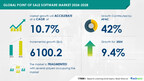
NEW YORK, Nov. 6, 2024 /PRNewswire/ — Report on how AI is driving market transformation – The global point of sale software market size is estimated to grow by USD 6.1 billion from 2024-2028, according to Technavio. The market is estimated to grow at a CAGR of  10.7% during the forecast period. Increasing demand for contactless payment options is driving market growth, with a trend towards rising penetration of e-commerce platforms. However, data security concerns related to point of sale software poses a challenge.Key market players include Agilysys Inc., Block Inc., Cavius International Ltd., COMBASE AG, Epos Now UK Ltd., Fiserv Inc., GOFRUGAL, H and L Australia Pty Ltd., Idealpos Solutions Pty Ltd., Intuit Inc., Lightspeed Management Co. LLC, MindSpark LLC., MSL Solutions Pty Ltd., NCR Voyix Corp., Oracle Corp., SHIFT4 PAYMENTS, INC., Tillpoint Enterprise Ltd., Toast Inc., Web Masters Technologies Pte. Ltd., and Worldline SA.

Key insights into market evolution with AI-powered analysis. Explore trends, segmentation, and growth drivers- View Free Sample PDF

Point Of Sale Software Market Scope

Report Coverage

Details

Base year

2023

Historic period

2018 – 2022

Forecast period

2024-2028

Growth momentum & CAGR

Accelerate at a CAGR of 10.7%

Market growth 2024-2028

USD 6100.2 million

Market structure

Fragmented

YoY growth 2022-2023 (%)

9.4

Regional analysis

APAC, North America, Europe, South America, and Middle East and Africa

Performing market contribution

APAC at 42%

Key countries

US, China, Japan, India, Canada, UK, Singapore, Germany, South Korea, and France

Key companies profiled

Agilysys Inc., Block Inc., Cavius International Ltd., COMBASE AG, Epos Now UK Ltd., Fiserv Inc., GOFRUGAL, H and L Australia Pty Ltd., Idealpos Solutions Pty Ltd., Intuit Inc., Lightspeed Management Co. LLC, MindSpark LLC., MSL Solutions Pty Ltd., NCR Voyix Corp., Oracle Corp., SHIFT4 PAYMENTS, INC., Tillpoint Enterprise Ltd., Toast Inc., Web Masters Technologies Pte. Ltd., and Worldline SA

Market Driver

The e-commerce industry’s growth and evolving fulfillment needs are driving the demand for point of sale (POS) software. With increasing competition and the need for expedited delivery times for online orders, retailers and businesses are adopting technological systems for efficient retail management. The global B2B e-commerce sector is projected to reach USD36 trillion by 2026, and the Indian e-commerce industry is expected to reach USD325 billion by 2030. Additionally, third-party logistics providers are forecasted to manage 17 billion shipments in the next seven years. These trends indicate significant growth in the e-commerce sector, leading to increased pressure on retailers to adopt advanced fulfillment techniques and solutions. As a result, the demand for retail e-commerce will continue to rise, fueling the demand for POS software during the forecast period. 

Point-of-Sale (POS) software is a vital business tool for merchants in various industries, including retail chains, restaurants, hotels, drug stores, and auto shops. The market is witnessing significant trends such as the rise of fixed POS systems, mobile POS, and cloud-based solutions. Cloud computing enables real-time access to sales data, inventory management, and business intelligence from anywhere. Mobile POS systems using Android OS and iOS are popular for their flexibility and enhanced functionality. Security concerns are addressed through advanced authentication measures and cybersecurity solutions. Technology evolution brings e-commerce, omnichannel retailing, mobile payments, digital payments, and mobile wallets. Inventory management, order fulfillment, and sales monitoring are essential features, along with employee management analytics and customer data management. Cloud-based solutions offer system integration, enabling seamless transactions and cashless economies. Security, financial inclusion, and cybersecurity are top priorities. Technology continues to evolve, with a focus on advanced analytics and business intelligence to drive sales strategy and growth. 

Request Sample of our comprehensive report now to stay ahead in the AI-driven market evolution!

Market Challenges

Point of sale (POS) software adoption in retail is hindered by security and privacy concerns. E-commerce’s vulnerabilities, such as unauthorized access and data leaks, increase the costs of implementation due to the need for cybersecurity measures. Retailers must ensure a reliable Internet connection and third-party services to mitigate inherent risks. Confidential customer data, including contact details, future orders, contracts, shipping information, and vendor details, are at risk in a breach, leading to financial losses, customer churn, and damage to brand reputation. These concerns may hinder the growth of the global POS software market. End-users must invest in effective cybersecurity processes and systems to make e-commerce safer and secure for POS software deployment.Point-of-Sale (POS) software is essential for businesses in various industries, including retail chains, restaurants, hotels, drug stores, and auto shops. Challenges include managing cashless transactions, sales tracking, inventory data, sales strategy, and employee management. Advanced features like inventory tracking, sales monitoring, customer data management, reporting, and POS systems are necessary. Cloud-based mPOS software and web-based POS solutions offer flexibility in operating systems and payment methods. Hardware compatibility is crucial, and POS systems support various payment processing options, including digital payments and mobile wallets. Advanced features like automated calculations, real-time updates, and online channels help meet multi-channel demand and e-commerce channels. POS terminal software and AI integration provide personalized shopping experiences, dynamic pricing optimization, fraud detection, and cloud-based PoS solutions. Generative AI enhances sales strategies and customer engagement. Customizable POS solutions cater to unique business needs. In conclusion, POS software addresses the challenges of inventory management, sales monitoring, and customer data management while providing advanced features and integrating with various hardware and payment methods.

Discover how AI is revolutionizing market trends- Get your access now!

Segment Overview 

This point of sale software market report extensively covers market segmentation by  

Deployment 1.1 On premise1.2 CloudEnd-user 2.1 Retail2.2 HospitalityGeography 3.1 APAC3.2 North America3.3 Europe3.4 South America3.5 Middle East and Africa

1.1 On premise-  The on-premise segment in the point of sale (POS) software market holds a substantial share, catering to businesses seeking control, security, and customization. On-premise POS systems are installed locally on a business’s servers and hardware, offering advantages such as enhanced security, reliability, and customization. The local data storage ensures businesses have direct oversight, reducing data breach risks, and providing uninterrupted operations even during network outages. Customization is a significant advantage, allowing businesses to tailor the software to their unique operational needs, often unattainable with cloud-based solutions. However, on-premise POS systems require substantial initial investment for hardware and infrastructure, and ongoing maintenance and updates are the business’s responsibility. Despite these challenges, their popularity remains strong among larger enterprises and businesses with specific operational requirements. The on-premise POS market segment is expected to persist as a vital choice for businesses prioritizing control, security, and customization throughout the forecast period.

Download a Sample of our comprehensive report today to discover how AI-driven innovations are reshaping competitive dynamics

Research Analysis

Point-of-Sale (POS) software is a vital tool for merchants in various industries, including retail chains, restaurants, hotels, drug stores, auto shops, and more. This technology enables cashless transactions, sales tracking, and inventory data management, allowing businesses to streamline their operations and gain valuable insights for sales strategy. Advanced features include employee management analytics, inventory tracking, digital payments, mobile wallets, automated calculations, real-time updates, online channels, and retail sales. Consumer goods businesses benefit from personalized shopping experiences, dynamic pricing optimization, and fraud detection. The evolution of POS technology includes cloud-based solutions, mobile payments, system integration, and enhanced functionality. With the integration of cloud computing, technology continues to advance, offering merchants increased security and convenience.

Market Research Overview

Point-of-Sale (POS) software is a vital tool for businesses in various industries, including retail chains, restaurants, hotels, drug stores, auto shops, and more. This technology enables cashless transactions, sales tracking, inventory data management, sales strategy formulation, and employee management analytics. Advanced features include real-time updates, online channels, and e-commerce integration. POS systems come in different forms, such as cloud-based mPOS software and web-based POS solutions, with compatibility across various operating systems and payment methods. Security is a top priority, with features like fraud detection, authentication measures, and integration with hardware like PoS terminals. The evolution of technology has led to advanced functionalities like dynamic pricing optimization, generative AI, and personalized shopping experiences. The flexibility of cloud deployment and on-premise solutions caters to merchants’ diverse needs, while e-commerce and omnichannel retailing enhance business intelligence and advanced analytics. The integration of digital payments, mobile wallets, and cybersecurity measures promotes financial inclusion and cashless economies.

Table of Contents:

1 Executive Summary
2 Market Landscape
3 Market Sizing
4 Historic Market Size
5 Five Forces Analysis
6 Market Segmentation

DeploymentOn PremiseCloudEnd-userRetailHospitalityGeographyAPACNorth AmericaEuropeSouth AmericaMiddle East And Africa

7 Customer Landscape
8 Geographic Landscape
9 Drivers, Challenges, and Trends
10 Company Landscape
11 Company Analysis
12 Appendix

About Technavio

Technavio is a leading global technology research and advisory company. Their research and analysis focuses on emerging market trends and provides actionable insights to help businesses identify market opportunities and develop effective strategies to optimize their market positions.

With over 500 specialized analysts, Technavio’s report library consists of more than 17,000 reports and counting, covering 800 technologies, spanning across 50 countries. Their client base consists of enterprises of all sizes, including more than 100 Fortune 500 companies. This growing client base relies on Technavio’s comprehensive coverage, extensive research, and actionable market insights to identify opportunities in existing and potential markets and assess their competitive positions within changing market scenarios.

Contacts

Technavio Research
Jesse Maida
Media & Marketing Executive
US: +1 844 364 1100
UK: +44 203 893 3200
Email: media@technavio.com
Website: www.technavio.com/

View original content to download multimedia:https://www.prnewswire.com/news-releases/point-of-sale-software-market-to-grow-by-usd-6-1-billion-from-2024-2028–driven-by-demand-for-contactless-payments-and-ai-driven-market-transformation—technavio-302296423.html

SOURCE Technavio

Continue Reading

Technology

COLUMBIA DISTRIBUTING COMPLETES ALASKA TRANSACTION WITH RNDC, ESTABLISHING A FOUR-STATE PACIFIC NORTHWEST TOTAL BEVERAGE PLATFORM

Published

on

By

WILSONVILLE, Ore., Oct. 26, 2026 /PRNewswire/ — Columbia Distributing today announced it has completed its transaction with Republic National Distributing Company (RNDC) to acquire certain beverage distribution assets in Alaska, marking Columbia’s official entry into the state and completing the final component of the letter of intent announced by the companies in April.

The closing represents a major milestone in a long-term strategy Columbia set out to build: a multi-category, multi-state total beverage platform across the Pacific Northwest. With direct operations now spanning Alaska, Oregon, and Washington, along with its recently completed strategic partnership with Hayden Beverage in Idaho, Columbia has brought that vision to life, creating a connected four-state route to market and a more complete one-stop solution for supplier and retail partners across the region.

“This is a huge moment for Columbia because it represents exactly what we set out to build,” said Chris Steffanci, President and CEO of Columbia Distributing. “Our long-term vision has been to create the strongest total beverage platform in the Pacific Northwest—a multi-category, multi-state strategy that gives our partners a more complete solution across the region. With Alaska, that vision is now coming to life. We can offer suppliers and retailers a connected, capable, and increasingly seamless route to market across Alaska, Idaho, Oregon, and Washington.”

The Alaska transaction expands Columbia’s direct service territory to more than 835,000 square miles and adds nearly 1,500 customer accounts. It also brings Columbia into a market with an experienced local team, strong customer relationships, and an established beverage distribution network.

Columbia sees significant untapped potential in the Alaska business and plans to bring renewed investment, leadership, resources, and market focus to the state. The company will pair the Alaska team’s local knowledge and relationships with the culture and ways of working that drive Columbia’s performance in its existing markets, empowering people, moving with urgency, holding one another accountable, and maintaining a relentless focus on customers, brands, and execution.

“What has impressed me most is the energy and ambition of the Alaska team,” Steffanci said. “They know the market, they believe in the brands, and they are hungry to grow, compete, and win. They do not need us to teach them Alaska. Our responsibility is to give them the leadership, investment, tools, and support to show what they can do.”

“At Columbia, we trust our people, empower the teams closest to the market, and expect everyone to take ownership of results,” Steffanci continued. “That culture and the way we work across our company will bring new energy and momentum to Alaska. We are not entering the market to maintain the status quo—we are here to build, grow, compete, and raise the standard. This team is ready to be unleashed, and I believe the market is going to feel the difference very quickly.”

The expansion is the latest step in the deliberate strategy Columbia has pursued to build a broader total beverage business across multiple categories and markets. On June 30, the company completed its acquisition of certain RNDC wine and spirits distribution rights in Oregon and Washington. In September, Columbia completed a strategic partnership with Hayden Beverage, creating long-term alignment with Idaho’s leading locally based beverage distributor. The Alaska transaction completes the geographic footprint Columbia envisioned across the four-state Pacific Northwest market.

Together, these transactions create a platform designed around what suppliers and retailers increasingly need: one partner capable of representing multiple beverage categories across multiple states while still maintaining the local knowledge, relationships, and market-level execution required to succeed in each community.

Columbia’s expanded platform spans beer, wine, spirits, cider, non-alcoholic beverages, and emerging beverage categories. For supplier partners, it provides greater regional scale, category expertise, operational capabilities, and a more cohesive route to market. For retailers, it provides access to a broader portfolio backed by strong sales, delivery, merchandising, revenue management, and account execution capabilities.

“This is what total beverage means to us,” Steffanci added. “It is not simply adding categories or adding geography. It is about building a one-stop solution that connects categories, capabilities, people, and markets in a way that creates more value for our partners. We now have the platform we envisioned across the Pacific Northwest, and our focus turns to executing against that opportunity.”

Columbia is working closely with the Alaska team, suppliers, customers, and business partners to support a smooth transition. Columbia will communicate additional information about the operational transition, portfolio, and go-live timing directly to affected stakeholders.

Columbia appreciates RNDC’s partnership and the work of teams across both organizations to complete the transaction. Financial terms were not disclosed.

About Columbia Distributing

Since 1935, Columbia Distributing has helped build some of the best-known brands in the beverage business. Today, Columbia is one of the nation’s leading total beverage distributors, with a portfolio spanning beer, wine, spirits, cider, non-alcoholic beverages, and emerging beverage categories.

Columbia’s more than 3,200 teammates serve approximately 24,000 retail customers and deliver more than 80 million cases annually. With direct operations across Alaska, Oregon, and Washington and a strategic partnership with Hayden Beverage in Idaho, Columbia offers supplier and retail partners a connected four-state, multi-category route to market across the Pacific Northwest.

Columbia’s success is built on its people, its brands, and a deep-rooted commitment to execution, service, and creating sustainable growth for its teammates, customers, suppliers, shareholders, and communities. For more information, visit www.coldist.com.

Contact: Steve Gibbs
Steve.Gibbs@coldist.com | 206-920-6799

View original content to download multimedia:https://www.prnewswire.com/news-releases/columbia-distributing-completes-alaska-transaction-with-rndc-establishing-a-four-state-pacific-northwest-total-beverage-platform-302919977.html

SOURCE Columbia Distributing

Continue Reading

Technology

Secretary of the State Thomas Highlights Record Protecting Connecticut Businesses as Scams Grow More Sophisticated

Published

on

By

As early voting enters its final week, Secretary of the State Stephanie Thomas highlights her first-term record protecting Connecticut businesses, from fighting human trafficking and business hijacking to lowering fees and moving filings online, and pledges to keep business owners prepared as AI makes scams more sophisticated.

HARTFORD, Conn., Oct. 26, 2026 /PRNewswire-PRWeb/ — As scams targeting Connecticut businesses grow more sophisticated, including recent emails impersonating state offices, Secretary of the State Stephanie Thomas is highlighting the protections her team has put in place for the more than half a million businesses registered in Connecticut. She is seeking a second term to build on that work as AI-powered fraud creates new risks for business owners.

“If someone tries to steal your business, you’re not on your own. AI is making scams more sophisticated by the month, and I’ll keep making sure business owners know what to watch for.”

“Before I was Secretary of the State, I ran a small business, so I know how scarce time and money can be,” said Secretary Thomas. “That’s why our team cut fees and red tape, and why I fought for new laws that let my office investigate when fraudsters hijack a Connecticut business. If someone tries to steal your business, you’re not on your own. But the threats keep evolving. AI is making scams more sophisticated by the month, and I’ll keep making sure business owners know what to watch for. I’m not done delivering for Connecticut businesses, and I hope you’ll support me on November 3.”

Protecting Connecticut Businesses

Fighting human trafficking. Through Be a Light, Secretary Thomas made Connecticut the 7th state in the country and the first in the Northeast to help businesses identify, report and prevent human trafficking. Trafficking can reach any business through its customers, employees or supply chains. PreventHumanTraffickingCT.com gives owners practical guidance on what to watch for and what to do.

Stopping business hijacking. Fraudsters have stolen login credentials, changed a business’s listed owner and opened lines of credit in its name. Owners used to have only one remedy: hire a lawyer and go to court. Secretary Thomas brought the problem to the legislature. New laws now give her office the authority to investigate and the funding to build stronger protections, including screening that flags suspicious filings for human review.

Early warnings for owners. Business owners can turn on Follow Business alerts at Business.CT.gov to be notified whenever someone files a document for their business.

Lower costs, less red tape. Apostille fees are lower, and the entire process for authenticating documents for use abroad, used for about 40,000 documents a year, is now online. That makes Connecticut one of the first states to offer it. A new statewide trademark directory lets owners check a name before investing in it.

Help getting started and growing. A free monthly business newsletter gathers grants, funding and training opportunities in one place. A new Business Welcome Packet walks owners through their first steps, from tax IDs to fraud protection.

Early Voting Ends Sunday, Nov. 1

Early voting is open daily from 10 a.m. to 6 p.m. through Sunday, Nov. 1, with extended hours from 8 a.m. to 8 p.m. on Tuesday, Oct. 27 and Thursday, Oct. 29. There is no early voting on Monday, Nov. 2.

Every town has at least one early voting location. Voters can find theirs at MyVote.CT.gov or by contacting their town’s registrar of voters. Eligible residents who are not yet registered can register and vote the same day during early voting or on Election Day, Tuesday, Nov. 3, when polls are open from 6 a.m. to 8 p.m.

About Stephanie Thomas

Stephanie Thomas is Connecticut’s 75th Secretary of the State and the first Black person elected to the office. Since taking office in 2023, she has secured $20 million to modernize Connecticut’s election equipment, led the rollout of early in-person voting, expanded civic education through initiatives such as the Power of Civics platform and launched Be a Light, making Connecticut the first state in the Northeast to help businesses identify, report and prevent human trafficking.

Thomas is running for reelection in 2026. She serves on the Executive Board of the National Association of Secretaries of State and testified before Congress in 2025 about balancing voter access with election security.

Before becoming secretary, Thomas represented Norwalk, Wilton and Westport in the state legislature. She also ran a small business and spent nearly 30 years advising nonprofit organizations on strategy and fundraising.

Media Contact

Natasha Lopoukhine, Savvy Marketing Communications, 1 2039560920, natasha@igotsavvy.com, www.igotsavvy.com

View original content to download multimedia:https://www.prweb.com/releases/secretary-of-the-state-thomas-highlights-record-protecting-connecticut-businesses-as-scams-grow-more-sophisticated-302919955.html

SOURCE Stephanie Thomas

Continue Reading

Technology

MNA: Berkshire VNA Nurses and Healthcare Professionals Deliver Petition Calling for a Fair Union Contract to Strengthen Patient Access to Home Care

Published

on

By

While there has been bargaining progress on early-career wages, clinicians are urging BVNA to invest in experienced staff to support safe patient care

PITTSFIELD, Mass., Oct. 26, 2026 /PRNewswire/ — Berkshire Visiting Nurse Association (BVNA) nurses and healthcare professionals, represented by the Massachusetts Nurses Association (MNA), delivered a petition to BVNA management at 4 p.m. Monday, October 26, calling for a fair contract that supports recruitment, retains experienced clinicians and protects the time needed to care for patients safely at home. The parties next meet for bargaining on October 28.

The petition comes as the bargaining unit has shrunk by approximately half over the past several years amid high turnover and challenges attracting new staff. BVNA clinicians are seeking to reverse that decline to strengthen access to home care, help patients recover in familiar surroundings, and support timely hospital discharges.

“We appreciate that management has made progress toward attracting new staff by moving on wages for nurses and healthcare professionals early in their careers,” said Tamaryn Clowdus, physical therapist, and Co-Chair of the MNA Bargaining Committee at Berkshire VNA. “We also need reasonable cost-of-living increases for the experienced clinicians who have stayed with the VNA through difficult years. Building a stable workforce and supporting our home care patients requires a focus on both recruitment and retention.”

BVNA nurses and healthcare professionals provide care that helps patients manage illness, recover after hospitalization and remain safely at home. Experienced clinicians bring clinical judgment, knowledge of their communities and familiarity with patients’ needs. These are important community assets that are difficult to replace when staff leave.

With Berkshire Medical Center experiencing high patient volume, sufficient levels of home care staffing matters more than just the patients receiving visits. Ready access to home care can help patients who are ready to leave the hospital return home with the support they need, making more hospital beds available for people requiring acute care.

“Berkshire Medical Center nurses stand with our BVNA colleagues in their efforts to secure a fair contract that strengthens home care in Berkshire County,” said Sarah Roberts, RN, MNA Co-Chair at Berkshire Medical Center. “We see every day how much our patients depend on having care available when they return home. Supporting the clinicians who provide that care helps patients leave the hospital safely and keeps beds available for others who need acute care.”

The BVNA petition also calls for reasonable and achievable productivity expectations developed with clinicians and grounded in the realities of home care. A visit involves more than time spent in a patient’s home. Clinicians must also document care, coordinate services, communicate with providers and families, and travel between patients.

MassNurses.org │ Facebook.com/MassNurses │ Twitter.com/MassNurses │ Instagram.com/MassNurses 

Founded in 1903, the Massachusetts Nurses Association is the largest union of registered nurses in the Commonwealth of Massachusetts. Its 26,000 members advance the nursing profession by fostering high standards of nursing practice, promoting the economic and general welfare of nurses in the workplace, projecting a positive and realistic view of nursing, and by lobbying the Legislature and regulatory agencies on health care issues affecting nurses and the public.

View original content to download multimedia:https://www.prnewswire.com/news-releases/mna-berkshire-vna-nurses-and-healthcare-professionals-deliver-petition-calling-for-a-fair-union-contract-to-strengthen-patient-access-to-home-care-302919989.html

SOURCE Massachusetts Nurses Association

Continue Reading

Trending