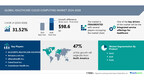
NEW YORK, Nov. 11, 2024 /PRNewswire/ — Report on how AI is driving market transformation – The global healthcare cloud computing market size is estimated to grow by USD 98.6 billion from 2024-2028, according to Technavio. The market is estimated to grow at a CAGR of 31.52% during the forecast period. Integrated service offerings for healthcare is driving market growth, with a trend towards introduction of edge computing. However, shortage of cloud professionals in healthcare industry poses a challenge.Key market players include ALLSCRIPTS HEALTHCARE SOLUTIONS INC., Amazon.com Inc., athenahealth Inc., CareCloud Inc., Carestream Health Inc., ClearDATA Networks Inc., Cognizant Technology Solutions Corp., Dell Technologies Inc., DXC Technology Co., General Electric Co., Intelerad Medical Systems Inc., International Business Machines Corp., Microsoft Corp., NextGen Healthcare Inc., NTT DATA Corp., Oracle Corp., Salesforce Inc., Siemens AG, and VMware Inc..
Key insights into market evolution with AI-powered analysis. Explore trends, segmentation, and growth drivers- View Free Sample PDF
Healthcare Cloud Computing Market Scope
Report Coverage
Details
Base year
2023
Historic period
2018 – 2022
Forecast period
2024-2028
Growth momentum & CAGR
Accelerate at a CAGR of 31.52%
Market growth 2024-2028
USD 98.6 billion
Market structure
Fragmented
YoY growth 2022-2023 (%)
25.3
Regional analysis
North America, Europe, APAC, South America, and Middle East and Africa
Performing market contribution
North America at 47%
Key countries
US, Canada, UK, France, and Germany
Key companies profiled
ALLSCRIPTS HEALTHCARE SOLUTIONS INC., Amazon.com Inc., athenahealth Inc., CareCloud Inc., Carestream Health Inc., ClearDATA Networks Inc., Cognizant Technology Solutions Corp., Dell Technologies Inc., DXC Technology Co., General Electric Co., Intelerad Medical Systems Inc., International Business Machines Corp., Microsoft Corp., NextGen Healthcare Inc., NTT DATA Corp., Oracle Corp., Salesforce Inc., Siemens AG, and VMware Inc.
Market Driver
The healthcare cloud computing market is experiencing significant growth with trends like Electronic Health Records (EHR), Telehealth, IoT, Big Data Analytics, and Wearable Devices leading the way. EHRs enable healthcare providers to access and manage patient information in real-time, while Telehealth and Telecloud facilitate remote consultations and wireless technology for remote monitoring. Big Data Analytics helps in diagnosing chronic diseases such as Cancer, CVD, and Diabetes, and in developing personalized medicines and clinical research. Cloud deployment offers Data Storage, Scalability, and Cost-effectiveness, making it a preferred choice for healthcare payers like Medicaid and Medicare. SaaS models like Cerner and Amazon Web Services provide managed services and professional services, enhancing productivity and privacy. Data security and privacy concerns are addressed through Data Interoperability, Portability Issues, and Blockchain Technology. Telehealth solutions include Teleconsultations, E-prescribing, and Remote Monitoring, enabling continuous monitoring of patient health status and treatment decisions. Wearable medical devices and mobile apps provide patient-reported outcomes and drug choices, enabling personalized treatments. Healthcare professionals benefit from managed services, professional services, and communication platforms for claims processing, settlement, and fraud detection. Cloud platforms facilitate data sharing among clinical data sources like Pharmacy Information Systems, Radiology Information Systems, Laboratory Information, and Health Information Systems, ensuring Data Migration and Regulatory Compliance. The Public Cloud Segment offers flexibility and cost-effectiveness, making it a popular choice for healthcare providers. Overall, the healthcare cloud computing market is transforming the industry with its innovative solutions and services.
Edge computing is a method that optimizes cloud computing systems by performing applications closer to the source of data, rather than relying on cloud or data centers. In the healthcare industry, edge computing is being utilized with Internet of Things (IoT) devices for health monitoring and other applications. Traditionally, IoT data is transmitted to a cloud or data center for processing and analysis, which can be time-consuming. Edge computing enables data collection and analysis to occur at the device level or on a nearby computing device, such as a server or laptop, significantly improving process speed. By implementing edge computing, healthcare organizations can enhance the efficiency of their IoT applications, ultimately leading to better patient care and outcomes.
Request Sample of our comprehensive report now to stay ahead in the AI-driven market evolution!
Market Challenges
The healthcare cloud computing market is experiencing significant growth as more healthcare providers adopt digital solutions for Electronic Health Records (EHR), Telehealth, IoT, and Big Data Analytics. Challenges include EHR component and service model implementation, data storage and scalability, payment models, and data security and privacy concerns. Chronic diseases like Cancer, CVD, and Diabetes are driving the need for telehealth consultations, remote monitoring, and personalized medicines. Cloud deployment in healthcare includes SaaS offerings from companies like Cerner and Amazon Web Services. Telecloud, wireless technology, and remote monitoring enable continuous patient monitoring and treatment decisions based on data sharing from various clinical information systems, including E-prescribing, Pharmacy, Radiology, and Laboratory information. Data interoperability and portability issues persist, along with regulatory compliance and data migration challenges. Healthcare payers, including Medicaid and Medicare, are also adopting cloud platforms for claims processing, settlement, and fraud detection. The private segment is investing in managed and professional services for productivity and cost-effectiveness. Big data applications in healthcare include personalized treatments, clinical research, and drug development, utilizing blockchain technology and telemedicine platforms for remote consulting and treatment options. Wearable medical devices, mobile apps, and connected devices enable continuous patient monitoring and personalized treatments. Healthcare professionals require secure, flexible, and scalable solutions to meet the demands of the evolving healthcare landscape.
The healthcare industry’s adoption of cloud computing is on the rise, yet a significant challenge persists: a shortage of skilled IT professionals. According to recent surveys, approximately 45.6% of respondents identified this issue as a barrier to faster cloud implementation in healthcare. This scarcity keeps cloud computing professionals in high demand, making recruitment and retention a major concern for organizations. In this competitive landscape, securing and maintaining a talented team of cloud experts is essential for healthcare providers seeking to leverage the benefits
of cloud technologies.
Discover how AI is revolutionizing market trends- Get your access now!
Segment Overview
This healthcare cloud computing market report extensively covers market segmentation by
Product 1.1 SaaS1.2 IaaS1.3 PaaSComponent 2.1 Hardware2.2 ServicesGeography 3.1 North America3.2 Europe3.3 APAC3.4 South America3.5 Middle East and Africa
1.1 SaaS- Healthcare organizations are increasingly turning to Software-as-a-Service (SaaS) solutions for their IT needs, as they offer several advantages over traditional on-premises software. SaaS refers to the delivery of applications over the internet on a subscription basis. By subscribing to SaaS applications, healthcare organizations avoid the need for implementing and maintaining on-premises software, significantly reducing licensing costs. SaaS solutions hold a significant market share in healthcare due to their ease of deployment, shorter lead times, and the service provider’s responsibility for maintenance and support. These solutions are used by healthcare organizations to streamline their customer relationship management (CRM), accounting, payroll, supply chain management (SCM), and healthcare information systems. The healthcare industry’s potential for cloud computing is vast, and numerous vendors are providing SaaS-based products to cater to this demand. For instance, EKlinik, based in Malaysia, offers iPatient-Portal for patient healthcare record management, iMedicID for emergency notification information, and U2Doc for telemedicine. Home healthcare is also adopting SaaS-based technologies, with vendors like HealthSaaS providing cloud services for home-health agencies by combining clinical software with monitoring devices for in-home chronic patient care. The migration of healthcare organizations towards cloud services and the popularity of SaaS solutions are driving the growth of the healthcare cloud computing market. With the increasing adoption of these technologies, the market is expected to expand during the forecast period.
Download a Sample of our comprehensive report today to discover how AI-driven innovations are reshaping competitive dynamics
Research Analysis
The Healthcare Cloud Computing Market is a rapidly growing segment in the healthcare industry, offering innovative solutions for Electronic Health Records (EHR), Telehealth, Internet of Things (IoT), and Big Data Analytics. Cloud deployment enables healthcare providers to store, manage, and access large volumes of data, ensuring data scalability and security. Telehealth and wearable devices generate vast amounts of data, requiring cloud storage and analytics for real-time patient monitoring and personalized medicines. Big data applications in healthcare include clinical research, drug development, and clinical information systems. Cloud-based payment models streamline financial transactions, while regulatory compliance and blockchain technology ensure data security. The private segment benefits from customized solutions, while patient portals offer easy access to non-clinical information. Overall, healthcare cloud computing revolutionizes the industry by improving efficiency, enhancing patient care, and driving innovation.
Market Research Overview
Healthcare cloud computing is revolutionizing the industry by enabling the storage, management, and analysis of large volumes of health data in a secure and scalable manner. Telehealth, EHR, IoT, and Big data analytics are key components of this market, allowing for remote consultations, electronic medical records, and real-time patient monitoring. Wearable devices and wireless technology facilitate continuous monitoring and data collection, while data interoperability ensures seamless sharing between healthcare providers. Cloud deployment offers data storage solutions with high scalability and cost-effectiveness, addressing the needs of healthcare providers, payers, and patients. Data security and privacy concerns are addressed through encryption, access control, and compliance with regulations such as HIPAA. Telecloud, telehealth consultations, and e-prescribing are transforming the delivery of healthcare services, enabling personalized treatments and remote consulting for chronic diseases like cancer, CVD, and diabetes. Big data applications, including personalized medicines, clinical research, and drug development, are driving innovation in the sector. Blockchain technology and data migration are also gaining traction, offering secure and transparent data sharing and regulatory compliance. The market includes various service models, including SaaS, managed services, and professional services, catering to the diverse needs of healthcare organizations and individual patients. The healthcare payers segment, including Medicaid and Medicare, is adopting cloud platforms for claims processing, settlement, and fraud detection. The private segment is also investing in healthcare IT solutions, including telemedicine platforms, patient portals, and clinical data sources, to improve productivity and patient care. The use of non-clinical information, such as patient-reported outcomes and the patient’s health status, is becoming increasingly important for treatment decisions and personalized treatments. The market is expected to grow significantly in the coming years, driven by the increasing adoption of cloud technologies and the need for efficient, cost-effective, and flexible healthcare solutions.
Table of Contents:
1 Executive Summary
2 Market Landscape
3 Market Sizing
4 Historic Market Size
5 Five Forces Analysis
6 Market Segmentation
ProductSaaSIaaSPaaSComponentHardwareServicesGeographyNorth AmericaEuropeAPACSouth AmericaMiddle East And Africa
7 Customer Landscape
8 Geographic Landscape
9 Drivers, Challenges, and Trends
10 Company Landscape
11 Company Analysis
12 Appendix
About Technavio
Technavio is a leading global technology research and advisory company. Their research and analysis focuses on emerging market trends and provides actionable insights to help businesses identify market opportunities and develop effective strategies to optimize their market positions.
With over 500 specialized analysts, Technavio’s report library consists of more than 17,000 reports and counting, covering 800 technologies, spanning across 50 countries. Their client base consists of enterprises of all sizes, including more than 100 Fortune 500 companies. This growing client base relies on Technavio’s comprehensive coverage, extensive research, and actionable market insights to identify opportunities in existing and potential markets and assess their competitive positions within changing market scenarios.
Contacts
Technavio Research
Jesse Maida
Media & Marketing Executive
US: +1 844 364 1100
UK: +44 203 893 3200
Email: media@technavio.com
Website: www.technavio.com/
View original content to download multimedia:https://www.prnewswire.com/news-releases/healthcare-cloud-computing-market-to-grow-by-usd-98-6-billion-from-2024-2028–as-integrated-services-drive-demand-with-ai-powered-market-evolution—technavio-302300785.html
SOURCE Technavio









 Technology5 days ago

 Technology4 days ago

 Coin Market4 days ago

 Technology5 days ago

 Technology5 days ago
 Technology5 days ago

 Technology5 days ago

 Coin Market4 days ago