Connect with us

Technology

Data Integration Market to Grow by USD 10.94 Billion (2024-2028), Driven by Growing Demand for Data Integration, AI-Powered Report Explores Market Evolution – Technavio

Published

on

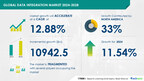
NEW YORK, Nov. 12, 2024 /PRNewswire/ — Report on how AI is driving market transformation – The global data integration market size is estimated to grow by USD 10.94 billion from 2024-2028, according to Technavio. The market is estimated to grow at a CAGR of 12.88% during the forecast period. High need for data integration is driving market growth, with a trend towards increased adoption of cloud-based integration solutions. However, lack of comprehensive integration strategies poses a challenge.Key market players include Adeptia Inc., Alphabet Inc., Cisco Systems Inc., Denodo Technologies Inc., HCL Technologies Ltd., Hevo Data Inc., Hitachi Ltd., Informatica Inc., International Business Machines Corp., Jitterbit Inc., Microsoft Corp., Oracle Corp., Precisely, QlikTech international AB, Salesforce Inc., SAP SE, SAS Institute Inc., Software AG, Talend Inc, and TIBCO Software Inc..

AI-Powered Market Evolution Insights. Our comprehensive market report ready with the latest trends, growth opportunities, and strategic analysis- View Free Sample Report PDF

Forecast period

2024-2028

Base Year

2023

Historic Data

2017 – 2021

Segment Covered

End-user (IT and telecom, Healthcare, BFSI, Government and defense, and Others), Component (Tools and Services), and Geography (North America, Europe, APAC, Middle East and Africa, and South America)

Region Covered

North America, Europe, APAC, Middle East and Africa, and South America

Key companies profiled

Adeptia Inc., Alphabet Inc., Cisco Systems Inc., Denodo Technologies Inc., HCL Technologies Ltd., Hevo Data Inc., Hitachi Ltd., Informatica Inc., International Business Machines Corp., Jitterbit Inc., Microsoft Corp., Oracle Corp., Precisely, QlikTech international AB, Salesforce Inc., SAP SE, SAS Institute Inc., Software AG, Talend Inc, and TIBCO Software Inc.

Key Market Trends Fueling Growth

Data integration is a crucial aspect of business operations, enabling the connection and transfer of data between various systems and applications. This market is witnessing significant trends, including data transformation, analytics solutions, and business intelligence. Data assets, such as data warehouses, are becoming more valuable as businesses seek to gain insights from their data. Automation, cloud-based software, and enterprise connectivity are key drivers in this space. Fraud detection, data enrichment, and data science are also important trends, helping businesses make informed decisions and improve customer experiences. Consulting, training, and technical support are essential services in the data integration market. Hybrid data integration, cloud platforms, and data exchange are also gaining popularity. The retail sector and large company sector are major consumers of data integration solutions, as they deal with vast amounts of data from various sources. Data mapping, transformation tools, data capture, data profiling, and data quality are essential components of data integration. Data governance, workforce training and certifications, and cloud computing technology are also crucial elements in this market. Remote sensors and consumer behavior are emerging data sources, offering new opportunities for businesses. Recruitment firms and the operations segment are also adopting data integration for business automation and corporate reporting. Big data and enterprise analytics are driving the need for advanced data integration platforms. Cloud computing technologies are enabling more efficient and cost-effective data integration. 

Organizations are transitioning their IT infrastructure to cloud computing solutions for cost savings and flexibility. One significant application of cloud computing is in supply chain management (SCM) systems. Cloud-based SCM systems enable seamless integration with other back-office systems, allowing for faster data exchange. Cloud-based integration services come in two forms: integration platform-as-a-service (iPaaS) and data platform-as-a-service (dPaaS). IPaaS offers cloud-based integration solutions without the need for physical IT infrastructure. These services enable enterprises to exchange data internally and externally for various commercial applications. The popularity of cloud-based integration services stems from their availability of faster connectivity features, making them an essential component of modern business operations. 

Insights on how AI is driving innovation, efficiency, and market growth- Request Sample!

Market Challenges

Data integration is essential for businesses to connect and combine data from various sources for better insights and decision-making. However, integrating data from diverse systems, transforming it into a usable format, and ensuring data quality can be challenging. Analytics solutions and business intelligence tools rely on accurate and timely data from multiple data assets, including data warehouses. Automation, cloud-based software, and data enrichment are key to overcoming integration challenges. Fraud detection and enterprise connectivity are also critical for safeguarding data assets. Data science and software tools aid in data mapping, consulting, training, and technical support. Hybrid data integration platforms and cloud platforms enable data exchange between on-premises and cloud data sources. Consumer behavior, recruitment firms, and the operations segment benefit from data integration in business automation. Data integration solutions are vital for large companies in the retail sector and other industries to manage their customer base, data sets, and data exchange effectively. Transformation tools, data capture, data profiling, and data governance are crucial for ensuring data quality and workforce training and certifications. Cloud computing technologies, including remote sensors, enable real-time data capture and analysis.In today’s complex IT landscape, organizations require a strategic approach to maintain smooth operations. A holistic view of the entire IT infrastructure is essential to identify integration touchpoints between various systems. Service-oriented architecture (SOA) assists in managing application and service delivery within an organization. Enterprises typically allocate over 8% of their revenue towards IT budgets, encompassing application integration, mobile data integration, and on-premises cloud application integration. Without a comprehensive integration strategy, CIOs may create customized solutions for each business challenge, resulting in a heterogeneous environment that is difficult to manage and costly to maintain.

Insights into how AI is reshaping industries and driving growth- Download a Sample Report

Segment Overview 

This data integration market report extensively covers market segmentation by

End-user 1.1 IT and telecom1.2 Healthcare1.3 BFSI1.4 Government and defense1.5 OthersComponent 2.1 Tools2.2 ServicesGeography 3.1 North America3.2 Europe3.3 APAC3.4 Middle East and Africa3.5 South America

1.1 IT and telecom- In the telecom sector, businesses rely on Operational Support Systems (OSS) and Business Support Systems (BSS) to manage communication networks and customer management activities. With the rise of IoT and smart devices, integrating multiple systems has become essential for seamless communication. Telecom companies compete on service quality and advanced technologies like 4G LTE and WiMax. They automate operations by integrating back-office and front-office systems for invoicing, accounting, and order management. Cloud-based solutions offer lower upfront investments, leading to their increasing adoption. Disruptive technologies like cloud and virtualization are transforming ICT infrastructure, driving the need for data integration in back-end systems. These factors are expected to fuel growth in the telecom segment of the global data integration market.

Download complimentary Sample Report to gain insights into AI’s impact on market dynamics, emerging trends, and future opportunities- including forecast (2024-2028) and historic data (2017 – 2021) 

Research Analysis

Data integration is the process of combining data from various sources into a unified and cohesive format, enabling seamless data flow between systems and applications. This process is essential for businesses to gain valuable insights through analytics solutions and business intelligence. Data assets, such as data sets and data warehouses, play a crucial role in data integration, providing a centralized repository for data transformation and enrichment. Automation, cloud-based software, and data mapping are key technologies driving the data integration market. Automation streamlines the data integration process, reducing manual effort and errors. Cloud-based software offers flexibility, scalability, and cost savings. Data mapping ensures accurate data translation between systems. Data integration platforms provide consulting, training, and technical support services to help businesses implement and optimize their data integration solutions. Hybrid data integration allows businesses to integrate data from both on-premises and cloud-based systems, providing a comprehensive solution for enterprise analytics and corporate reporting. Fraud detection and data science are also important applications of data integration, helping businesses identify anomalies and gain insights from their data. Software tools and data integration solutions enable businesses to automate their data warehouses, ensuring accurate and timely reporting and analysis.

Market Research Overview

Data integration refers to the process of combining data from various sources into a unified and cohesive format. This is essential for businesses to gain valuable insights through analytics solutions and business intelligence. Data assets from diverse data sets are transformed and loaded into data warehouses for analysis. Automation and cloud-based software play a significant role in streamlining data integration processes, enabling real-time fraud detection and data enrichment. Enterprise connectivity ensures seamless data exchange between different systems, while data mapping and consulting services help in managing complex data integration projects. Data integration platforms on cloud platforms facilitate hybrid data integration, catering to the needs of various sectors like retail and large companies. Data integration solutions also support data warehouses for corporate reporting and enterprise analytics. Big data and cloud computing technologies enable the integration of data from remote sensors and other sources, expanding the customer base and enhancing business automation. Transformation tools like data capture, data profiling, data quality, and data governance ensure the accuracy and reliability of integrated data. Workforce training and certifications in data integration and related technologies are crucial for effective implementation and management of data integration projects.

Table of Contents:

1 Executive Summary
2 Market Landscape
3 Market Sizing
4 Historic Market Size
5 Five Forces Analysis
6 Market Segmentation

End-userIT And TelecomHealthcareBFSIGovernment And DefenseOthersComponentToolsServicesGeographyNorth AmericaEuropeAPACMiddle East And AfricaSouth America

7 Customer Landscape
8 Geographic Landscape
9 Drivers, Challenges, and Trends
10 Company Landscape
11 Company Analysis
12 Appendix

About Technavio

Technavio is a leading global technology research and advisory company. Their research and analysis focuses on emerging market trends and provides actionable insights to help businesses identify market opportunities and develop effective strategies to optimize their market positions.

With over 500 specialized analysts, Technavio’s report library consists of more than 17,000 reports and counting, covering 800 technologies, spanning across 50 countries. Their client base consists of enterprises of all sizes, including more than 100 Fortune 500 companies. This growing client base relies on Technavio’s comprehensive coverage, extensive research, and actionable market insights to identify opportunities in existing and potential markets and assess their competitive positions within changing market scenarios.

Contacts

Technavio Research
Jesse Maida
Media & Marketing Executive
US: +1 844 364 1100
UK: +44 203 893 3200
Email: media@technavio.com
Website: www.technavio.com/

View original content to download multimedia:https://www.prnewswire.com/news-releases/data-integration-market-to-grow-by-usd-10-94-billion-2024-2028-driven-by-growing-demand-for-data-integration-ai-powered-report-explores-market-evolution—technavio-302302815.html

SOURCE Technavio

Continue Reading

Technology

WIRobotics and Ottobock Join Forces to Expand Access to Wearable Robots Across North America

Published

on

By

The Distribution agreement covers the United States and Canada, with sales through the partnership to begin in the U.S.WIM S is available to U.S. consumers online through Ottobock’s direct-to-consumer platform and WIRobotics USA’s online store.U.S. consumers will be able to try WIM S at select orthotic and prosthetic clinics.

SEOUL, South Korea, Nov. 16, 2026 /PRNewswire/ — WIRobotics, a global robotics company led by Co-CEOs Younbaek Lee and Yongjae Kim, announced that its U.S. subsidiary, WIRobotics USA Inc., signed a distribution and sales agreement with Otto Bock HealthCare LP on October 15. Under the agreement, WIRobotics USA will supply WIM S, the company’s wearable mobility robot, and Ottobock will serve as a distribution partner in the United States and Canada.

The partnership will begin in the United States, where consumers will be able to purchase WIM S online through Ottobock’s dedicated direct-to-consumer online platform and WIRobotics USA’s online store, and try the robot initially at select orthotic and prosthetic (O&P) clinics. Based on customer feedback, the companies will consider offering hands-on experiences at more U.S. locations and extending sales through the partnership to Canada. 

The partnership brings together WIRobotics’ wearable robotics technology and Ottobock’s more than 100 years of experience in human mobility. Founded in Germany in 1919, Ottobock has established distribution, clinical care and service networks in the United States and Canada. The companies plan to collaborate on market development, brand building, product training and after-sales service, with WIRobotics USA supporting training and service operations locally.

The agreement marks a major step in WIRobotics’ global expansion. Now in its third year of commercialization, WIM has surpassed 4,000 units in cumulative sales, and the company has expanded sales beyond South Korea to markets including Europe, China and Japan. WIRobotics has been accelerating its international business, with the United States and Canada as key strategic markets. To support this growth, the company established WIRobotics USA Inc. under General Manager Jacob Kim to build local operations in North America.

The companies also see significant opportunities to extend their collaboration to WIM Medi, which WIRobotics is developing for medical use. They view WIM Medi as a natural next step for the partnership, with entry into U.S. and Canadian medical and rehabilitation channels to follow applicable regulatory authorization and a separate agreement.

“Our goal is to make wearable mobility technology easier for people to experience and integrate into everyday life,” said Younbaek Lee, co-CEO of WIRobotics. “Working with Ottobock gives us an opportunity to introduce WIM S to more people across North America. We will expand our engagement with customers in the region and strengthen WIM’s global business foundation.”

“At Ottobock, we are committed to helping people maintain mobility and independence through innovative solutions that support an active lifestyle,” said Scott Schneider, Head of Government/Medical Affairs & Future Development at Ottobock. “WIRobotics is an exceptional company whose technology closely aligns with that vision. Through this partnership, we look forward to introducing WIM S to consumers across North America, beginning with a focused U.S. launch, while exploring new ways for people to experience wearable mobility technology firsthand.“

About WIRobotics
WIRobotics is a global robotics company that develops wearable mobility robots designed to help people move more freely in everyday life. Its WIM series is sold in South Korea and international markets.  Through the development of its ALLEX humanoid robot, the company is also expanding into humanoid robotics and Physical AI. In May 2026, the company raised KRW 95 billion (approximately USD 68 million) in Series B funding to accelerate its global expansion and the commercialization of its robotics technologies. Headquartered in South Korea, the company operates in North America through WIRobotics USA Inc. For more information, visit https://usa.wirobotics.com

About Ottobock
Ottobock, a listed global MedTech champion, combines over 100 years of tradition with outstanding innovative strength in the fields of prosthetics, neuro-orthotics and exoskeletons. Ottobock develops innovative fitting solutions for people with limited mobility and is driving the digitalization of the industry. Founded in Berlin in 1919, the company has business activities in 45 countries with nearly 9,300 employees (FTEs) worldwide and operates the largest international patient care network with more than 430 patient care clinics. Ottobock is shaping the future of human bionics with a strong R&D ratio in the products and components business and over 2,600 patents and patent applications. Ottobock’s mission of improving freedom of movement, quality of life and independence is deeply rooted in the company’s DNA, as is its social commitment: Ottobock has been a partner and supporter of the Paralympics since 1988.


View original content to download multimedia:https://www.prnewswire.com/news-releases/wirobotics-and-ottobock-join-forces-to-expand-access-to-wearable-robots-across-north-america-302939726.html

SOURCE WIRobotics

Continue Reading

Technology

Ekinops unveils PTM300 compact modular platform for ultra-high-capacity datacenter connectivity

Published

on

By

New 3RU* optical platform delivers up to 32 Tb/s capacity with ultra-low power consumption per bit,  open management and multi-vendor interoperability

PARIS, Nov. 16, 2026 /PRNewswire/ — Ekinops (Euronext Paris – FR0011466069 – EKI), a leading provider of optical networks, connectivity and SASE cybersecurity solutions for telecom service providers and enterprises, today announces the release of PTM300, a new compact modular optical platform designed for high-capacity datacenter interconnect (DCI) and scale-across optical networking applications.

Designed to bring carrier-class optical transport into a datacenter form factor, PTM300 delivers up to 32 Tb/s of client and line capacity in just 3RU, supporting up to 40 x 800 Gb/s coherent pluggable interfaces.

The platform combines ultra-high density and ultra-low 0.08W per Gbps (watts per gigabit per second) power consumption with redundant power and cooling, front-to-back airflow, and Open management interface based on Openconfig and Netconf/Yang for easy integration into open, standards-based environments. It is also compatible with Ekinops’ Celestis NMS for unified network management within an Ekinops optical network further simplifying integration.

With PTM300, Ekinops is extending its optical networking portfolio to address increasing interconnection bandwidth requirements between datacenters with compact modular platforms that seamlessly enable the transition from the telco environment.

High density without compromising openness and performance

PTM300 can be deployed over direct fiber, existing Ekinops optical line systems or third-party infrastructure using alien wavelengths. Beyond DCI, it is designed to address metro, regional and long-haul transport applications as well as service regeneration for router-hosted IPoWDM applications.

*RU = Rack Unit

“The rapid growth of cloud and AI is creating unprecedented bandwidth requirements between data centers, as well a greater demand for service providers to deliver wavelength services to these locations. With PTM300, we are bringing together ultra-high capacity, ultra-low power consumption, operational simplicity and openness in a compact platform designed to help operators scale their optical networks while protecting existing infrastructure investments,” said Philippe Moulin, Chief Operating Officer of Ekinops.

PTM300 will be generally available in December 2026 with first customer deployments expected in Q1 2027.

All press releases are published after Euronext Paris market close.

Ekinops contacts

Lionel Chmilewsky, CEO
contact@ekinops.com

Mathieu Omnes, Investor relation
Tel.: +33 (0)1 53 67 36 92
momnes@actus.fr

Amaury Dugast, Press relation
Tel.: +33 (0)1 53 67 36 74
adugast@actus.fr

For more information, visit https://www.ekinops.com/

View original content to download multimedia:https://www.prnewswire.com/news-releases/ekinops-unveils-ptm300-compact-modular-platform-for-ultra-high-capacity-datacenter-connectivity-302940614.html

SOURCE Ekinops

Continue Reading

Technology

Aviemore Launches Seal-Less Magnetic Coupling Pump Platform for Liquid-Cooled AI Data Centers

Published

on

By

Integrated pump, motor and drive built for 800 VDC power and megawatt-class AI racks

CHICAGO, Nov. 16, 2026 /PRNewswire/ — Aviemore Motion Technologies today introduced its seal-less magnetic coupling pumps for liquid-cooled AI and high performance computing at SC26 in Chicago, the international conference for high performance computing. The patent-pending design eliminates the shaft seal, the most common point of wear in a coolant pump. Aviemore delivers the pump, motor and drive as one complete system under a single part number.

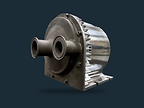
Seal-less magnetic coupling pumps with integrated drive, built in Virginia for 800 VDC AI and data center cooling.

AI racks draw 140 kW today. Racks of 240 kW are close behind and 600 kW to megawatt-class racks are in future planning. Power inside the rack is also moving from 54 VDC to 800 VDC, with the first commercial systems expected to ship in Q2 2027. Cooling units built for these racks need pumps that run nonstop, fit in tight spaces and connect directly to high-voltage DC power. Aviemore built its platform for that paradigm shift.

Nearly every watt an AI processor uses turns into heat. Removing that heat is one of the biggest jobs in a data center. Liquid cooling does it far better than air, and the pump is what keeps the coolant moving. Rack and row cooling loops are closed systems. The same coolant circulates over and over instead of being used up, which helps operators cut the water and energy spent on cooling. With no shaft seal, an Aviemore pump keeps that loop closed.

“Liquid cooling is now critical infrastructure and the pump is the one moving part every rack depends on,” said Moe Barani, CEO of Aviemore. “Most pumps on the market were designed for another era and adapted for the data center. We designed ours for where AI infrastructure is going. There is no seal to leak or wear out, the drive runs natively on 800 VDC and our team can turn a custom change in weeks instead of quarters.”

How it works

Aviemore pumps transmit torque through a magnetic coupling across a non-contact sealed barrier. Nothing passes through the wet end. There is no dynamic seal and no wear item in the fluid path. The pumps can run dry during commissioning or a loss of prime, two common causes of early pump failure. A slotless brushless DC motor and integrated drive complete the assembly. CDU builders source, qualify and service one component instead of three.

The platform covers 0.10 to 5.0 kW of output across a 12 to 800 V DC bus range.

Most pumps in data center cooling today come from legacy manufacturers that adapted designs built for other industries. They still rely on a shaft seal, a bolt-on motor and a third-party drive. Their development cycles are measured in years while AI rack designs change every year.

“The traditional pump industry is full of dinosaurs,” said Matt Carroll, VP of Engineering at Aviemore. “They are still selling the same seal, the same separate motor and the same slow change process. Data center operators are left to design around it. We started from a clean sheet. The seal is gone and the motor and drive are built in. When a customer needs a change, our engineering team turns it in weeks.”

Product lines

Rack CDU Pumps: 0.10 to 2.0 kW, 12 to 800 V DC, AC and DC drive, for in-rack and sidecar CDUsRow and Facility Pumps: 1.0 to 5.0 kW, 12 to 800 V DC, AC and DC drive, for row CDUs, coolant skids, and facility loopsOEM Custom Solutions: co-engineered and built to the customer’s architecture, with AC and DC drive options

Proven motor technology, built in Virginia

The Aviemore team has worked together for more than 25 years and has deep experience in data center thermal hardware. Its proprietary slotless motor design has shipped in more than 15,000 motors with zero motor defects. The team has been designing proprietary, patented pumps for the past 20 years and those products remain in service at hyperscale operators today.

Aviemore designs and builds its pumps in a 156,000 square foot facility in Radford, Virginia. Winding, machining, assembly and test all happen in house, which is how the company turns design changes in weeks. The quality system is built on ISO 9001 and products are UL and Intertek certifiable on request.

Data centers are often criticized for bringing few jobs to the towns that host them. Much of the hiring happens in the supply chain that builds the equipment inside. Every Aviemore pump is designed and built in Radford. That supports skilled engineering and manufacturing jobs in Southwest Virginia, and the team grows as AI demand grows.

Aviemore works with Intertek on testing and certification and with Virginia Tech on research. It also partners with the Virginia Economic Development Partnership and GO Virginia on regional industry growth.

Meet Aviemore at SC26

Supercomputing was one of the first fields to adopt direct liquid cooling. The rack densities HPC pioneered are now reaching AI data centers. The Aviemore team is at SC26 in Chicago this week to meet with HPC system builders, thermal engineers and CDU manufacturers. To schedule time or get a pump sized, contact info@aviemoretech.com.

About Aviemore

Aviemore Motion Technologies LLC designs and manufactures seal-less magnetic coupling pumps for liquid-cooled AI and data center infrastructure. Each pump combines the hydraulics, a slotless BLDC motor and an integrated drive in a single assembly. The range covers 0.10 to 5.0 kW and DC bus voltages up to 800 V. Aviemore is headquartered in Radford, Virginia. Learn more at aviemoretech.com.

Media Contact
Ben Khandan-Barani, COO
Aviemore Motion Technologies
info@aviemoretech.com | 540-922-9631
113 Corporate Drive, Radford, VA

View original content to download multimedia:https://www.prnewswire.com/news-releases/aviemore-launches-seal-less-magnetic-coupling-pump-platform-for-liquid-cooled-ai-data-centers-302939792.html

SOURCE Aviemore Motion Technologies

Continue Reading

Trending