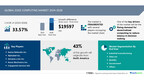
NEW YORK, Nov. 11, 2024 /PRNewswire/ — Report with market evolution powered by AI – The global edge computing market size is estimated to grow by USD 19.6 billion from 2024-2028, according to Technavio. The market is estimated to grow at a CAGR of over 33.57% during the forecast period. Rising demand for decentralized computing to reduce latency in decision making is driving market growth, with a trend towards deployment of industry 4.0 infrastructure. However, competition from low-cost centralized and general-purpose computing infrastructure poses a challenge.Key market players include Aarna Networks Inc., Alphabet Inc., Amazon.com Inc., Arrow Electronics Inc., Capgemini Service SAS, Cisco Systems Inc., ClearBlade Inc., Dell Technologies Inc., EdgeConneX Inc., General Electric Co., Hewlett Packard Enterprise Co., Huawei Investment and Holding Co. Ltd., Intel Corp., International Business Machines Corp., Microsoft Corp., Nokia Corp., NVIDIA Corp., Renesas Electronics Corp., Schneider Electric SE, and Telefonaktiebolaget LM Ericsson.
AI-Powered Market Evolution Insights. Our comprehensive market report ready with the latest trends, growth opportunities, and strategic analysis- View Free Sample Report PDF
Forecast period
2024-2028
Base Year
2023
Historic Data
2018 – 2022
Segment Covered
End-user (Industrial manufacturing, Telecom, Mobility, Government, and Others), Component (Hardware, Software, Services, and Edge-managed platforms), and Geography (North America, Europe, APAC, South America, and Middle East and Africa)
Region Covered
North America, Europe, APAC, South America, and Middle East and Africa
Key companies profiled
Aarna Networks Inc., Alphabet Inc., Amazon.com Inc., Arrow Electronics Inc., Capgemini Service SAS, Cisco Systems Inc., ClearBlade Inc., Dell Technologies Inc., EdgeConneX Inc., General Electric Co., Hewlett Packard Enterprise Co., Huawei Investment and Holding Co. Ltd., Intel Corp., International Business Machines Corp., Microsoft Corp., Nokia Corp., NVIDIA Corp., Renesas Electronics Corp., Schneider Electric SE, and Telefonaktiebolaget LM Ericsson
Key Market Trends Fueling Growth
Edge computing is a trending IT infrastructure solution that brings data processing closer to the source of data generation. This approach is revolutionizing networking and software development, enabling traffic distribution and service management in various sectors. In healthcare, edge computing powers online consultations and telemedicine, while CDNs and network functions enhance 5G virtualization for game streaming and connected devices. AI edge computing also boosts artificial intelligence applications in healthcare, telecom firms, and manufacturing. Security and compliance are crucial, with edge computing adhering to industry standards. Cloud computing and Industry 4.0 strategies merge with edge computing in smart factories and grids. Digital health strategies, IoT in healthcare, and life sciences applications benefit from edge computing’s low latency and data processing capabilities. Recession or digital developments, edge computing remains flexible and scalable for organizations of all sizes, from small businesses to large enterprises. Edge computing hardware investments offer Capex and Opex savings, making it a cost-effective solution for IoT applications, robotics & automation, smart cities, oil & gas, and IT & telecom industries.
The Industrial Revolution 4.0, also known as Industry 4.0, signifies the integration of connected automation systems and technologies in the industrial sector. This includes cyber-physical systems, Internet of Things (IoT) devices, cloud computing, and cognitive computing. The implementation of these technologies is predicted to influence the market for edge computing. Industry 4.0 adheres to several fundamental principles, such as machine interconnection, enabling machines and devices to communicate via IoT. Big data collection, gathering extensive data from sensors and instruments for valuable insights. Technical assistance, early problem identification and correction for increased machine uptime and efficiency. Lastly, decentralization, empowering systems to make autonomous decisions, reducing the need for human intervention.
Insights on how AI is driving innovation, efficiency, and market growth- Request Sample!
Market Challenges
Edge computing is a growing market that enables data processing and analysis at the source of data generation, closer to the end-user. This approach addresses challenges in IT infrastructures, networking, software development, and traffic distribution for various industries. Healthcare systems, telecom firms, and CDNs benefit from reduced latency for online consultations, network functions, and 5G virtualization. Edge computing also supports game streaming, connected devices, artificial intelligence, and 5G technology in sectors like healthcare, government and defense, manufacturing, and IoT applications. However, edge computing presents new challenges, including security, compliance standards, and infrastructure investments. Capex and Opex for edge computing hardware, infrastructure, and software are crucial considerations for organizations of all sizes, from small businesses to large enterprises. Scalability and flexibility are essential to accommodate digital developments, such as AR and VR tools, IoT devices, and Industry 4.0 initiatives. Multi-CDN designs and network function virtualization are key to addressing service management and traffic distribution. The recession and supply chain disruptions may impact edge computing adoption, but the potential benefits far outweigh the costs. Edge computing is poised to revolutionize industries, from smart factories and smart grids to digital health strategies, life sciences applications, robotics & automation, and smart cities. The Oil & gas industry and IT & telecom industry are also expected to embrace edge computing to optimize their operations.The centralized computing infrastructure, consisting of cloud data centers, supercomputing facilities, and traditional data centers, serves as the backbone for numerous organizations’ global operations. These facilities offer computing and storage capabilities as a service to anywhere in the world, thanks to their virtual accessibility. Notably, many cloud server operators provide cost-effective services on a pay-as-you-go basis, posing a challenge to the expansion of the global edge computing market. This competitive marketplace, populated by various cloud server and data center operators, offers diverse pricing and volume options to cater to the unique requirements of end-users. Despite edge computing and cloud computing serving different purposes, the availability of affordable cloud services may limit the growth of the edge computing market to some extent during the forecast period.
Insights into how AI is reshaping industries and driving growth- Download a Sample Report
Segment Overview
This edge computing market report extensively covers market segmentation by
End-user 1.1 Industrial manufacturing1.2 Telecom1.3 Mobility1.4 Government1.5 OthersComponent 2.1 Hardware2.2 Software2.3 Services2.4 Edge-managed platformsGeography 3.1 North America3.2 Europe3.3 APAC3.4 South America3.5 Middle East and Africa
1.1 Industrial manufacturing- Edge computing plays a crucial role in the automation of industrial manufacturing and process environments, particularly in the context of the Industrial Internet of Things (IIoT), automation hardware, and connected sensors and actuators. Large-scale industrial facilities generate vast amounts of data that require real-time analysis and storage to detect anomalies, prevent machine or equipment failure, monitor system performance, and ensure quality control. Edge computing infrastructure is essential for these applications due to its ability to process data at the local node, reducing latency and improving overall efficiency. The digitalization and automation of manufacturing and process industries, driven by Industry 4.0 infrastructure and practices, are expected to fuel the growth of edge computing. For instance, offshore oil and gas production rigs, which often lack high-bandwidth connections to on-shore cloud computers, can benefit from edge computing architecture to collect and analyze production data and monitor critical processes. Strategic partnerships between vendors and end-users, such as Ford and Google’s six-year agreement on cloud services and the Android operating system, can also influence market growth. Edge computing is the foundation of industrial machine learning and AI networks, enabling faster identification of irregularities and minimizing inefficiencies in automated manufacturing processes. Additionally, edge computing enables local integration between factory data and enterprise resource planning (ERP) systems, reducing the need for constant cloud connectivity and improving system uptime. The increasing focus on event-driven manufacturing operations is driving investments in edge computing solutions to reduce IT costs and improve security, latency, innovation capability, and system integration.
Download complimentary Sample Report to gain insights into AI’s impact on market dynamics, emerging trends, and future opportunities- including forecast (2024-2028) and historic data (2018 – 2022)
Research Analysis
Edge computing is a decentralized IT infrastructure solution that brings processing power and data storage closer to the source of data generation. This approach reduces latency and bandwidth requirements for transferring large amounts of data to the cloud. Networking plays a crucial role in edge computing by enabling efficient traffic distribution and service management. Software development for edge computing requires optimization for resource-constrained devices and low-latency processing. Video conferencing software, healthcare systems, telecom firms, and CDNs are among the industries leveraging edge computing for improved performance and user experience. Network functions like load balancing, firewalls, and VPNs are being virtualized at the edge to enhance security and compliance with industry standards. 5G virtualization and edge computing go hand in hand, enabling real-time processing of data from connected devices, such as those used in gaming, AR/VR tools, and smart factories. AI edge computing is also gaining traction in industries like healthcare, life sciences, and digital health strategies, where real-time analysis of data is essential. The recession and digital developments have accelerated the adoption of edge computing, as organizations seek to reduce reliance on cloud computing and improve their digital infrastructure. The convergence of 5G technology, AI, and IoT in edge computing is expected to drive significant growth in the coming years. However, security and compliance remain key challenges that need to be addressed to fully realize the potential of edge computing.
Market Research Overview
Edge computing is a decentralized IT infrastructure solution that brings computing power closer to the source of data generation. It leverages networking, software development, and traffic distribution to enable real-time data processing and service management. The healthcare system, telecom firms, CDNs, and various industries such as manufacturing, healthcare, life sciences, and smart cities are adopting edge computing to reduce latency, enhance security, and ensure compliance with industry standards. 5G virtualization, game streaming, connected devices, artificial intelligence, and 5G technology are driving the growth of edge computing. The recession and digital developments have accelerated the adoption of edge computing, particularly in small businesses and large enterprises, to optimize Capex and Opex. Edge computing hardware, including sensors and edge devices, is essential for scalability and flexibility. Multi-CDN designs, organization size, employee numbers, and industry-specific applications, such as IoT in healthcare, digital health strategies, and robotics & automation, influence the adoption of edge computing. The infrastructure investments required for edge computing vary depending on the industry and the specific use case. Security and compliance standards are critical considerations for edge computing, particularly in government and defense, oil & gas, and IT & telecom industries. The VOLTA data center, a leading edge computing provider, offers a comprehensive edge computing solution that addresses the unique requirements of various industries, ensuring optimal performance, security, and flexibility.
Table of Contents:
1 Executive Summary
2 Market Landscape
3 Market Sizing
4 Historic Market Size
5 Five Forces Analysis
6 Market Segmentation
End-userIndustrial ManufacturingTelecomMobilityGovernmentOthersComponentHardwareSoftwareServicesEdge-managed PlatformsGeographyNorth AmericaEuropeAPACSouth AmericaMiddle East And Africa
7 Customer Landscape
8 Geographic Landscape
9 Drivers, Challenges, and Trends
10 Company Landscape
11 Company Analysis
12 Appendix
About Technavio
Technavio is a leading global technology research and advisory company. Their research and analysis focuses on emerging market trends and provides actionable insights to help businesses identify market opportunities and develop effective strategies to optimize their market positions.
With over 500 specialized analysts, Technavio’s report library consists of more than 17,000 reports and counting, covering 800 technologies, spanning across 50 countries. Their client base consists of enterprises of all sizes, including more than 100 Fortune 500 companies. This growing client base relies on Technavio’s comprehensive coverage, extensive research, and actionable market insights to identify opportunities in existing and potential markets and assess their competitive positions within changing market scenarios.
Contacts
Technavio Research
Jesse Maida
Media & Marketing Executive
US: +1 844 364 1100
UK: +44 203 893 3200
Email: media@technavio.com
Website: www.technavio.com/
View original content to download multimedia:https://www.prnewswire.com/news-releases/edge-computing-market-to-grow-by-usd-19-6-billion-from-2024-2028–demand-for-decentralized-computing-drives-growth-report-on-how-ai-redefines-the-landscape—technavio-302300778.html
SOURCE Technavio










 Technology5 days ago
 Technology4 days ago
 Coin Market5 days ago
 Coin Market5 days ago
 Technology4 days ago

 Technology4 days ago