Connect with us

Technology

Sight Machine’s Factory Namespace Manager Converts Chaos of Manufacturing Data Names Into Corporate-Standard Naming Systems

Published

on

Fine-Tuned Version of Microsoft’s Phi-3.5 is One of the First Small Language Models (SLM) for Manufacturing

SAN FRANCISCO, Nov. 13, 2024 /PRNewswire/ — Sight Machine, provider of the leading platform for data-driven manufacturing and industrial AI, today introduced Factory Namespace Manager, one of the first AI small language models (SLM) for manufacturing. The AI model tackles a core data governance challenge: mapping the multitude of factory data naming schemas into enterprise-wide unified namespaces or corporate data dictionaries.

Factory Namespace Manager is one of the first partner-enabled adapted AI models for manufacturing offered within the Azure AI model catalog, which Microsoft announced today. Factory Namespace Manager uses AI to fill a crucial gap in the technology needed to create a unified namespace: mapping between the original data field names and the corporate standard, enabling manufacturers to integrate factory data with enterprise data systems for end-to-end optimization.

SLMs Are More Cost-Effective to Train and Use

Factory Namespace Manager, which Sight Machine will demonstrate at next week’s Microsoft Ignite conference in Chicago, is a customized, fine-tuned version of Microsoft’s Phi-3.5 small language model. Unlike large language models (LLMs) – general purpose software trained on vast amounts of data – SLMs are used to focus on specific types of work and require less computing resources, offering strong performance at low cost and low latency.

“Our solution addresses a widespread challenge in the manufacturing industry, converting decentralized naming systems into a single corporate standard,” said Kurt DeMaagd, Sight Machine Chief AI Officer and Co-Founder. “This has become an acute problem as more clients push factory plant floor data to the cloud, removing data from its original context, and making the management of that data increasingly difficult.”

Tackling Complex Factory Data Environments

Individual plants often have thousands of data sources from multiple generations of machinery that are frequently 10 or 20 years old, and typically the data streams aren’t labeled in a standardized format that makes clear where the data comes from and what it represents. In order to perform analytics across lines, processes and plants (and even between otherwise-identical machines with different data labeling), companies need a standardized way to identify similar data. Today, creating this translation layer requires a heavy investment of time by subject matter experts with extensive knowledge on the nuances of both the legacy and the target naming schemas, and is thus typically done manually for a small subset of data.

“I’ve spoken to dozens of industrial companies about their current and potential use of AI in factory operations and the overwhelming feedback I hear and see in IDC survey data is that most companies are struggling to leverage AI effectively at scale due to the condition of their data,” said Jonathan Lang, Research Director of Worldwide IT/OT Convergence Strategies at IDC. “They have this dilemma that contextually similar data is formatted in multiple ways and is difficult to source and normalize amidst a complete lack of historical governance and data architecture. What I’ve heard loud and clear is that technology that helps to solve this challenge and reduce the labor requirement to decipher data will be readily adopted.”

The bottling company Swire Coca-Cola USA plans to use Factory Namespace Manager to efficiently map its extensive PLC and plant floor data into its corporate data namespace.

“We are working with Factory Namespace Manager to recognize patterns in the data we’ve manually translated, and then applying the patterns to the rest of our factory data,” said Bharathi Rajan, VP of Data & Insights at Swire Coca-Cola USA. “This will make it much easier to get relevant data to frontline workers, to inform decision making, and to integrate production insights into other parts of the company such as supply chain. This is one of the most useful applications of AI we’ve seen in manufacturing, and we’re excited to put it to work.”

“The collaboration between Microsoft and Sight Machine will give manufacturing organizations the ability to build AI solutions through Azure AI Studio and Microsoft Copilot Studio that deliver real value and advance business transformation,” said Satish Thomas, Corporate Vice President, Business & Industry Solutions, Microsoft. “Factory Namespace Manager applies SLM AI technology to a high-impact use case with strong potential ROI for companies pursuing data-driven manufacturing.”

How Sight Machine’s Manufacturing Data Platform Employs AI Techniques

AI is interwoven into Sight Machine’s Manufacturing Data Platform, which uses machine learning and other AI techniques to identify and optimize how machine settings, raw materials and production practices interact to determine throughput, quality, sustainability and other key manufacturing metrics.

Sight Machine’s AI offerings include Factory CoPilot, which uses generative AI technology to offer an intuitive, “ask the expert” experience for all manufacturing stakeholders. Built using Microsoft Azure OpenAI Service, Factory CoPilot can automatically summarize all relevant data and information about production in real-time (e.g., for daily meetings) and generate user-friendly reports, emails, charts and other content (in any language) about the performance of any machine, line or plant across the manufacturing enterprise, based on contextualized data in the Sight Machine platform.

Sight Machine also offers Blueprint, AI-driven tag-to-asset mapping software for clients that have large volumes of poorly identified data sources. It uses AI to map each data source (tag) to a specific asset (machine). Sight Machine built Blueprint in partnership with Microsoft and NVIDIA.

Learn More

To learn more about Factory Namespace Manager, please go to https://sightmachine.com/product/factory-namespace-manager/.

About Sight Machine

Sight Machine provides the leading platform for data-driven manufacturing and industrial AI, helping global manufacturers increase profitability, productivity and sustainability. Sight Machine’s Manufacturing Data Platform creates a common data foundation by capturing and structuring data from the entire factory to deliver a systemwide view of the manufacturing process. With insights powered by artificial intelligence, manufacturers can now optimize across their production processes and factory networks, and extend the impact to their broader supply and value chains. Sight Machine has offices in San Francisco and Ann Arbor, Mich. (www.sightmachine.com).

Sight Machine Press Contact: Media@sightmachine.com


View original content to download multimedia:https://www.prnewswire.com/news-releases/sight-machines-factory-namespace-manager-converts-chaos-of-manufacturing-data-names-into-corporate-standard-naming-systems-302304012.html

SOURCE Sight Machine Inc.

Continue Reading

Technology

Humaid bin Ammar attends day two of Ajman Media Forum 2026 and honours participants and partners

Published

on

By

AJMAN, UAE, Nov. 22, 2026 /PRNewswire/ — His Highness Sheikh Ammar bin Humaid Al Nuaimi, Crown Prince of Ajman and Chairman of the Executive Council, launched the “Ajman Memory” project, implemented by Ajman Government Media Office to preserve and document the emirate’s historical and cultural heritage. The project aims to collect, document and archive photographs, documents and video footage chronicling Ajman’s development through an integrated system that combines digital technologies with internationally recognised archiving and preservation standards.

The project was launched during the Ajman Media Forum 2026, “The Signal”, held on 18 and 19 November at the Emirates Hospitality Centre, under the patronage of His Highness Sheikh Humaid bin Rashid Al Nuaimi, Supreme Council Member and Ruler of Ajman.

His Highness Sheikh Ammar bin Humaid Al Nuaimi affirmed that Ajman’s collective memory is an integral part of its identity and a record of its people’s journey, as well as the efforts of successive generations that contributed to building and developing the emirate. He noted that preserving this heritage goes beyond safeguarding documents and photographs to protecting the stories, experiences and values they embody, which together form the community’s living memory.

His Highness said that Ajman’s history is not merely a record of past events, but a story of its people and place, reflecting the achievements of earlier generations and the values and experiences they have passed on. He stressed that every photograph, document and historical record represents an important part of this story and deserves to be preserved for future generations.

He added that documenting history and making it accessible through modern technologies strengthens younger generations’ connection to their roots, enabling them to explore the transformations the emirate has undergone and gain a deeper understanding of its development journey. He emphasised that leveraging technology to preserve historical heritage reinforces its role in serving people and advancing knowledge, noting that building the future begins with understanding the past and taking pride in its experiences and values.

His Highness further stressed that the value of societies’ historical memory is measured not only by the volume of documents they preserve, but also by their ability to communicate their significance to future generations and maintain their connection to their history and identity amid a rapidly changing world.

Under the theme “Preserving the Past… Building the Future”, the Ajman Memory project establishes an integrated framework for preserving and documenting the emirate’s cultural and historical heritage. It will collect and archive photographs, documents and video footage in line with international archiving standards, safeguarding records that chronicle Ajman’s journey through the different stages of its history.

The project comprises three interconnected components. The digital component includes a dedicated website for presenting and archiving historical materials, an integrated content management and digital archiving system, and dedicated social media accounts.

The organisational component encompasses the policies, procedures and operational systems developed by the Office in accordance with approved archiving legislation and requirements, establishing an institutional framework for managing and preserving documents and historical materials.

The archival component focuses on digitally preserving materials and documents on servers, alongside establishing a physical archive to safeguard original documents in appropriately equipped facilities. This approach combines the advantages of modern technologies with the preservation of original historical records.

The Ajman Memory project marks a significant step towards systematically documenting the emirate’s historical and cultural heritage, presenting it through contemporary platforms that strengthen its presence, preserve its legacy and ensure its continuity for future generations.

View original content to download multimedia:https://www.prnewswire.co.uk/news-releases/humaid-bin-ammar-attends-day-two-of-ajman-media-forum-2026-and-honours-participants-and-partners-302947639.html

Continue Reading

Technology

Ajman Government Media Office’s THE SIGNAL forum features Saeed Al Eter on how public trust and a successful development model underpin UAE soft power in times of crisis

Published

on

By

AJMAN, UAE, Nov. 22, 2026 /PRNewswire/ — HE Saeed Al Eter, Chairman of the UAE Government Media Office, said the UAE’s soft power is rooted in a successful development model, leadership that enjoys public trust and institutions that have demonstrated their ability to respond effectively to challenges. He emphasised that a country’s reputation is built through achievements, policies and practices whose impact people experience in their daily lives, with effective communication amplifying the credibility those results create.

Al Eter said crises put public trust in institutions and their ability to deliver on their commitments to the test. He added that the UAE’s experience has demonstrated how sustained investment in people, quality of life and institutional efficiency creates a strong foundation for trust and reinforces the country’s international standing and reputation.

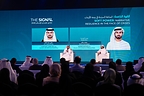
He made the remarks during the keynote session ‘Soft Power: Narrative Resilience in the Face of Crises’ at Ajman Media Forum 2026 – THE SIGNAL. Organised by the Ajman Government Media Office, the forum was held under the patronage of HH Sheikh Humaid bin Rashid Al Nuaimi, Supreme Council Member and Ruler of Ajman, and under the directives of HH Sheikh Ammar bin Humaid Al Nuaimi, Crown Prince of Ajman and Chairman of the Ajman Executive Council. Held under the theme ‘Who Owns the Signal?’, the forum brought together media leaders, decision-makers and experts from around the world. Mohammed Salem, Director of Al Arabiya and Al Khaleejiya Radio, moderated the session.

A UAE model that builds trust

Al Eter said the UAE’s global standing is the result of decades of development and achievement, underpinned by its leadership’s vision, the strength of its economy, the efficiency of its institutions, the quality of its services and a society built on tolerance, openness and respect for others. He said the legacy of the late Sheikh Zayed bin Sultan Al Nahyan continues to shape perceptions of the UAE around the world, while the country’s humanitarian approach and international relationships, founded on respect and cooperation, have further strengthened confidence in the nation and its global role.

He said the UAE’s experience in responding to crises has demonstrated the importance of building trust long before challenges arise. Referring to the country’s response during the COVID-19 pandemic, he highlighted measures that supported citizens and residents alike and reflected a government approach centred on people’s safety and quality of life.

Al Eter added that this trust is reflected in the confidence of residents, investors and international partners, as well as in their ability to continue their lives and business activities with confidence amid regional and global change.

He said the UAE Government Media Office monitored around 68,000 articles about the UAE during the first month of the regional crisis. He emphasised the importance of understanding how international media cover the country, identifying the questions emerging from that coverage and responding with facts and evidence that accurately reflect conditions in the UAE.

A resilient economy and institutions equipped to respond

Al Eter said the strength of the UAE’s development model is reflected in its capacity to maintain operations and sustain economic momentum across changing conditions. The continuity of economic activity and essential services, he explained, demonstrates the resilience of the national economy, the efficiency of its institutions and the confidence of investors and trading partners.

He cited the UAE’s non-oil foreign trade, which reached  AED 2.945  trillion during the first nine months of 2026, up 10.1% compared with the same period a year earlier. Non-oil exports reached AED 705.8 billion, up 21.6%.

He said these figures, alongside the continued operations of major national institutions and companies, illustrate the economy’s strength and capacity to respond to changing conditions, reinforcing international confidence in the UAE’s development model.

Media as a partner in building trust

Al Eter stressed the central role of media during periods of crisis, highlighting its responsibility to deliver information quickly and accurately, place events in context and help audiences understand both developments and their implications.

He said timely access to information meets the public’s need for clarity, while credible, objective communication strengthens understanding and limits the spread of rumours and misinformation.

He added that rapid changes across the media sector, together with the growing influence of digital platforms and content creators, require more effective communication tools and new approaches to audience engagement. He also highlighted the importance of investing in media professionals and content creators and equipping them with the skills required to produce credible, impactful content.

Al Eter outlined the UAE’s efforts to develop its digital media and content creation ecosystem through New Media Academy programmes, initiatives supporting content creators, measures to attract international media companies and the AED 150 million Content Creators Support Fund.

He also highlighted the role of the 1 Billion Followers Summit in strengthening the UAE’s position as a global hub for digital content creation. Its fourth edition attracted more than 30,000 attendees, including over 15,000 content creators and influencers, and featured more than 500 global speakers and experts.

Speaking to the world in language it understands

Al Eter stressed the importance of tailoring communication for international audiences according to their cultures, interests and social contexts. He said the UAE must ‘speak to the world in language it understands’.

He explained that an effective story begins with what matters to its audience and presents an authentic experience that people can understand and relate to. Audiences in India, for example, may have different interests than audiences in the United States or other markets, so communication should start with a clear understanding of each audience.

Al Eter said the UAE has a wealth of experiences and stories to share across economic development, government services, humanitarian work and quality of life. Communicating these experiences effectively, he said, helps audiences worldwide develop a clearer understanding of the country and its achievements.

He added that the first-hand experiences of residents and visitors represent one of the UAE’s strongest sources of soft power. Their perceptions of the country are shaped through everyday interactions with institutions and communities and through their experiences of safety, stability, respect and coexistence.

View original content to download multimedia:https://www.prnewswire.co.uk/news-releases/ajman-government-media-offices-the-signal-forum-features-saeed-al-eter-on-how-public-trust-and-a-successful-development-model-underpin-uae-soft-power-in-times-of-crisis-302947631.html

Continue Reading

Technology

Chongqing International Talent Exchange Conference Opens, Drawing Nobel Laureates and Global Innovators

Published

on

By

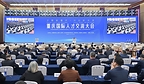
CHONGQING, China, Nov. 22, 2026 /PRNewswire/ — A news report from iChongqing – On Nov. 21, the Chongqing International Talent Exchange Conference (CQITEC) kicked off, bringing together Nobel laureates, top scientists, university presidents and industry leaders as this southwest Chinese metropolis steps up its drive to become a regional hub for science, technology and talent.

Yuan Jiajun, secretary of the CPC Chongqing Municipal Committee, declared the conference open, while Mayor Chen Xinwu delivered a keynote address. Ahead of the ceremony, local leaders met with distinguished guests and toured an exhibition on the integrated development of education, science, technology and talent.

The guest list underscored the event’s global reach: Nobel Prize in Chemistry laureate Omar M. Yaghi, Fields Medalist Efim Zelmanov, German National Academy of Science and Engineering member Klaus Drechsler, Chen Wei, vice president of the Chinese Academy of Engineering, and Han Bicheng, founder and CEO of brain-computer interface company BrainCo, were among those attending.

“Science and technology are the primary productive forces, talent is the primary resource, and innovation is the primary driver of development,” Yuan said, pledging that Chongqing will use the conference to expand cooperation in technological innovation, industrial investment and talent cultivation.

Yaghi and Drechsler praised the conference as an important platform for international talent development, saying it would strongly promote talent exchange and the translation of innovation into real-world results. Han said BrainCo has already partnered with Chongqing on assistive technology, healthcare and AI education, voicing hope that more scientists and young talent will come to the city “to turn technological achievements into products that change lives.”

The opening ceremony saw the release of landmark achievements in talent-driven development of Chongqing’s “33618” modern manufacturing cluster system, as well as a scenario list for integrated education-sci-tech-talent development. A national AI application pilot base for human resources services and an HR-focused AI innovation center were inaugurated, and winners of the “Chuangying” innovation competition series were honored.

Keynote speeches followed on themes including “Choosing Science: Humanity’s Next Frontier,” “The Mathematics Behind AI,” and talent cultivation amid the new technological revolution – a meeting of the world’s brightest minds that turned Chongqing into a crossroads where cutting-edge science meets the timeless question of how talent shapes humanity’s shared future.

View original content to download multimedia:https://www.prnewswire.com/apac/news-releases/chongqing-international-talent-exchange-conference-opens-drawing-nobel-laureates-and-global-innovators-302947632.html

SOURCE iChongqing

Continue Reading

Trending