Connect with us

Technology

LION ELECTRIC ANNOUNCES FURTHER AMENDMENTS TO CERTAIN SENIOR CREDIT INSTRUMENTS

Published

on

MONTREAL, Nov. 18, 2024 /CNW/ – The Lion Electric Company (NYSE: LEV) (TSX: LEV) (“Lion” or the “Company”), a leading manufacturer of all-electric medium and heavy-duty urban vehicles, announced today that it has entered into further amendments to certain of its senior credit instruments, namely (i) its senior revolving credit agreement entered into with a syndicate of lenders represented by National Bank of Canada, as administrative agent and collateral agent, and including Bank of Montreal and Federation des Caisses Desjardins du Québec (the “Revolving Credit Agreement”), and (ii) its loan agreement entered into with Finalta Capital Fund, L.P., as lender and administrative agent, and Caisse de dépôt et placement du Quebec (through one of its subsidiaries), as lender (the “Finalta CDPQ Loan Agreement”).

The amendments to the Revolving Credit Agreement provide for, among other things, the extension of the period applicable to the previously announced suspension of the financial covenants thereunder from November 15, 2024, to November 30, 2024 (the “covenant relief period”) and the removal of the minimum liquidity covenant under the Credit Agreement during the covenant relief period. The amendments to the Finalta CDPQ Loan Agreement provide for, among other things, the removal of the minimum liquidity covenant thereunder and the addition of restrictions on the Company’s use of receivables to be received by the Company during the period. The Company will also be required under each of the Revolving Credit Agreement and the Finalta CDPQ Loan Agreement during the covenant relief period to comply in all respects with cash flow projections and a contingency plan agreed to with the lenders.

In the event the Company cannot raise additional funds or negotiate amendments, concessions or waivers with its lenders, the Company expects that it will not be able to remain in compliance under the terms of the Revolving Credit Agreement and Finalta CDPQ Loan following expiry of the covenant relief period or repay the amounts owed under the Finalta CDPQ Loan upon maturity on November 30, 2024. Any breach under the Company’s debt instruments could result, either directly or as a result of the application of cross default or cross acceleration provisions, in the Company’s lenders exercising their rights thereunder, including to request immediate repayment of amounts borrowed by the Company.  As a result, the Company has been actively engaged in discussions with certain of its lenders regarding potential alternatives relating to a restructuring of its obligations. The Company also continues to fully consider all potential sources of financing and/or other alternatives, which alternatives may include a sale of the business or certain of its assets, strategic investments and/or any other similar opportunities or alternatives.

ABOUT LION ELECTRIC

Lion Electric is an innovative manufacturer of zero-emission vehicles. The Company creates, designs and manufactures all-electric class 5 to class 8 commercial urban trucks and all-electric school buses. Lion is a North American leader in electric transportation and designs, builds and assembles many of its vehicles’ components, including chassis, battery packs, truck cabins and bus bodies.

Always actively seeking new and reliable technologies, Lion vehicles have unique features that are specifically adapted to its users and their everyday needs. Lion believes that transitioning to all-electric vehicles will lead to major improvements in our society, environment and overall quality of life. Lion shares are traded on the New York Stock Exchange and the Toronto Stock Exchange under the symbol LEV.

CAUTION REGARDING FORWARD-LOOKING STATEMENTS

This press release contains “forward-looking information” and “forward-looking statements” within the meaning of applicable securities laws and within the meaning of the United States Private Securities Litigation Reform Act of 1995 (collectively, “forward-looking statements”), including statements regarding the amendments entered into by the Company, the Company’s ability to remain in compliance under its debt instruments, discussions regarding potential alternatives relating to a restructuring of the Company’s obligations, the Company’s evaluation of other opportunities or alternatives, statements about Lion’s beliefs and expectations and other statements that are not statements of historical facts. Forward-looking statements may be identified by the use of words such as “believe,” “may,” “will,” “continue,” “anticipate,” “intend,” “expect,” “should,” “would,” “could,” “plan,” “project,” “potential,” “seem,” “seek,” “future,” “target” or other similar expressions and any other statements that predict or indicate future events or trends or that are not statements of historical matters, although not all forward-looking statements may contain such identifying words. The forward-looking statements contained in this press release are based on a number of estimates and assumptions that Lion believes are reasonable when made. Such estimates and assumptions are made by Lion in light of the experience of management and their perception of historical trends, current conditions and expected future developments, as well as other factors believed to be appropriate and reasonable in the circumstances. However, there can be no assurance that such estimates and assumptions will prove to be correct. By their nature, forward-looking statements involve risks and uncertainties because they relate to events and depend on circumstances that may or may not occur in the future. For additional information on estimates, assumptions, risks and uncertainties underlying certain of the forward-looking statements made in this press release, please consult section 23.0 entitled “Risk Factors” of the Company’s annual management’s discussion and analysis of financial condition and results of operations (MD&A) for the fiscal year 2023 and in other documents filed with the applicable Canadian regulatory securities authorities and the Securities and Exchange Commission, including the Company’s interim MD&As. Many of these risks are beyond Lion’s management’s ability to control or predict. All forward-looking statements attributable to Lion or persons acting on its behalf are expressly qualified in their entirety by the cautionary statements contained and risk factors identified in the Company’s annual MD&A for the fiscal year 2023 and in other documents filed with the applicable Canadian regulatory securities authorities and the Securities and Exchange Commission. Because of these risks, uncertainties and assumptions, readers should not place undue reliance on these forward-looking statements. Furthermore, forward-looking statements speak only as of the date they are made. Except as required under applicable securities laws, Lion undertakes no obligation, and expressly disclaims any duty, to update, revise or review any forward-looking information, whether as a result of new information, future events or otherwise.

See section 2.0 of the Company’s interim MD&A for the three and nine months ended September 30, 2024 (the “Interim MD&A”), entitled “Basis of Presentation,” section 15.0 of the Company’s Interim MD&A entitled “Liquidity and Capital Resources,” and note 2 of the Company’s unaudited condensed interim consolidated financial statements for the three and nine months ended September 30, 2024 which indicate the existence of material uncertainty that may cast significant doubt on the Company’s ability to continue as a going concern.

View original content:https://www.prnewswire.com/news-releases/lion-electric-announces-further-amendments-to-certain-senior-credit-instruments-302308110.html

SOURCE The Lion Electric Co.

Continue Reading

Technology

LexisNexis Risk Solutions Extends Risk Intelligence to Agentic Activity

Published

on

By

AI agents are creating a new class of digital interaction, requiring organisations to distinguish legitimate agent activity from malicious automationKnow Your Agent intelligence helps organisations identify agent activity and fold it into broader risk intelligence used to assess digital interactionsBuilt on the unique scale and connectivity of the LexisNexis® Risk Intelligence Network, Know Your Agent intelligence helps organisations prepare for an agentic future.

UNITED KINGDOM, Nov. 6, 2026 /PRNewswire/ — LexisNexis® Risk Solutions has extended its powerful risk intelligence solutions to help organisations understand and assess a new class of digital actor: AI agents operating on behalf of people and businesses.

For decades, LexisNexis Risk Solutions has helped organisations make risk decisions by connecting identity, device, behavioural, network and transaction intelligence at global scale. As AI agents become another participant in digital interactions, the company is extending that same connected intelligence approach to agentic activity.

Know Your Agent (KYA) intelligence adds a new layer of agentic insights to LexisNexis Risk Solutions’ digital identity and fraud prevention platform. It helps organisations recognise when AI agents are interacting with their digital services and can bring those interactions directly into established risk assessment and decisioning workflows, rather than treating them as an isolated risk problem. Many LexisNexis Risk Solutions customers are already using KYA intelligence in their current risk management decision making.

Analysis of global digital transactions by LexisNexis Risk Solutions shows agentic traffic grew over 750% in the first half of 2026 alone. Rapid growth is expected to continue as more people and organisations adopt agents to undertake everyday tasks such as online shopping.

Because most personal agents today do not self-declare as agents, organisations face an immediate challenge: distinguishing agentic activity from other digital traffic. But this is only the first step. Agent detection alone cannot answer key questions organisations ultimately need to resolve: Who or what is the agent acting for? Has that activity been authorised? Is its behaviour consistent with that authority? And does the wider context of the interaction indicate that it is legitimate? 

That context may also change during a digital journey as control passes between a person and an AI agent, making continuous visibility into the interaction increasingly important. This is where the scale and connectivity of the Risk Intelligence Network becomes essential.

AI-agent activity does not need to be evaluated as an isolated interaction. It can be understood in the context of the identities, devices, networks, behavioural patterns and relationships surrounding digital activity, helping to provide richer context for risk decisions. This connected intelligence approach incorporates agent detection into risk decisions in real time, while aiding in creating a foundation for increasingly sophisticated agent identity and authorisation capabilities as agents, standards and use cases evolve.

Autonomous AI agents have the potential to increase the scale and sophistication of fraud, including authorised push payment fraud and account takeover attacks. Malicious agents can learn dynamically from successes and failures, enabling subsequent attacks to become more tailored and prolific.

For organisations, the decision is not whether an agent is universally trusted but whether a specific agent, acting in a specific context, should be permitted to perform a specific action. Legitimate agents will increasingly participate in digital customer journeys, but the appropriate response will depend on what the agent is attempting to do, the context of the interaction, and the organisation’s own risk policies. KYA intelligence helps organisations bring agentic activity into existing decisioning workflows so they can allow, authenticate, review or reject interactions as appropriate.

“Agentic commerce is moving quickly from experimentation into the mainstream,” said Grayson Clarke, chief commercial officer at LexisNexis Risk Solutions. “Agentic transactions globally more than doubled again in the last quarter, driven primarily by personal agents. Some businesses are enabling agents to transact on consumers’ behalf, while others are restricting their activities, and many are still determining the right approach. We have already seen firsthand how a global financial institution used our detection capabilities to help identify agentic activity and prevent it from executing sensitive transactions.”

LexisNexis Risk Solutions analysed more than 116 billion digital transactions globally in 2025 through its LexisNexis® Digital Identity Network®, giving it a uniquely broad view of how human, automated and increasingly agentic interactions are evolving. The network detected 4.9 billion automated bot attacks during the year, a 59% increase year over year. That scale reflects the role LexisNexis Risk Solutions already plays in helping many of the world’s largest financial institutions, merchants and digital businesses assess risk across digital interactions.

Mike Woodberry, senior vice president of product and analytics at LexisNexis Risk Solutions, added, “Managing risk in the agentic economy will require more than agent detection alone. The real challenge is establishing context: what is acting, who or what it represents, whether it is authorised and what it is attempting to do. Our vision for KYA is to extend established risk intelligence into the agentic economy, helping give organisations the flexibility to apply the appropriate response to each interaction rather than relying on a one-size-fits-all risk assessment.”

Woodberry continued, “Organisations should not have to build a new risk strategy every time digital interactions evolve. Adding a new layer of agentic insights to our established identity and fraud prevention platform helps customers build on the capabilities they already rely on while preparing for the next generation of digital interactions.”

Discover more about how organisations can distinguish between human and agentic traffic.

About LexisNexis Risk Solutions

LexisNexis® Risk Solutions provides customers with information-based analytics and decision tools that combine public and industry-specific content with advanced technology and algorithms to assist them in evaluating and predicting risk and enhancing operational efficiency. Headquartered in metro Atlanta, Georgia, the company has offices throughout the world, serves customers in more than 190 countries and territories and is part of RELX. For more information, please visit LexisNexis Risk Solutions.

Media Contact:

Mike Normansell
Senior Media Relations Manager
+44 7743899948

Disclaimer

LexisNexis® Risk Solutions products and services provide risk signals, analytics and insights designed to assist customers in making risk-based decisions. Results may vary depending on factors including implementation, data availability, transaction characteristics and customer use. No product or service can detect or prevent all fraudulent, malicious, unauthorized or agentic activity. References to detection, identification, risk assessment or prevention should not be interpreted as a guarantee of outcomes.

View original content to download multimedia:https://www.prnewswire.co.uk/news-releases/lexisnexis-risk-solutions-extends-risk-intelligence-to-agentic-activity-302931935.html

Continue Reading

Technology

EPG Modular Data Center Marks Topping-Out of Its US$120 Million Malaysia FIZ Factory

Published

on

By

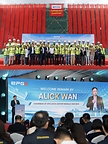
JOHOR BAHRU, Malaysia, Nov. 6, 2026 /PRNewswire/ — EPG Modular Data Center today marked the topping-out of its Malaysia FIZ (Free Industrial Zone) Factory in Senai Airport City (SAC), Johor. The milestone advances development of a manufacturing base closer to customers in Southeast Asia, expanding EPG’s production capabilities and strengthening its ability to respond to customer needs across the region and beyond.

The ceremony featured the raising of the final structural beam, followed by a tour of the facility. Guests included representatives from the Johor State Government, SAC and other government agencies, as well as business partners, customers, financial institutions and investment firms.

Representing an investment of approximately US$120 million, EPG’s FIZ Factory spans 107,450 square meters, including 70,000 square meters of production space. Scheduled for completion in the first quarter of 2027, the facility is projected to rank among the largest single-site data center module manufacturing bases in the modular data center (MDC) sector by production capacity. Once fully operational, it is expected to employ more than 800 people locally.

The factory’s master plan comprises five buildings for sheet metal production, power transfer unit (PTU) products, diesel generator manufacturing, final assembly, and R&D and office functions. The facility will produce MDC shelters and supporting equipment, including diesel generator sets and PTU power modules.

Designed for flexible, digitally enabled manufacturing, the FIZ Factory will integrate advanced automation equipment, intelligent control systems and automated welding technology. Its production lines are expected to achieve an automation rate of at least 80%, with processes including pretreatment, laser cutting, robotic welding and dust-free coating. Modular line design will accommodate multiple product types and specifications.

Digital platforms for supplier relationship management (SRM), product lifecycle management (PLM), manufacturing execution (MES), quality management (QMS) and warehouse management (WMS) will connect processes across the supply chain, R&D, production, quality and warehousing. Digital twin technology will support production visibility and traceability, while intelligent sensing and real-time alerts will help strengthen workplace and equipment safety.

By consolidating production of MDC shelters and critical power equipment in Malaysia, EPG is building capacity closer to regional customers. The factory is expected to help the company coordinate production and assembly, respond more effectively to project schedules and deliver with greater flexibility.

EPG is also committed to responsible operations at the facility. Its priorities include resource efficiency, waste reduction, environmental protection, employee safety, local talent development and cooperation with Malaysian suppliers and partners. The company will operate in accordance with Malaysian laws and regulations and its ESG management requirements, integrating environmental, social and governance (ESG) principles into its decision-making, compliance and risk management.

“The FIZ Factory marks an important step in bringing EPG’s manufacturing capabilities closer to customers and the markets we serve,” said Alick Wan, EPG’s founder and chairman. “By combining advanced manufacturing with strong local partnerships, we are building a responsive base in Malaysia and a model that can evolve with customer needs in other markets.”

Learn more about EPG Modular Data Center at www.epg-module.com.

Contact: communications@epg-module.com

About EPG

EPG is a prefabricated modular data center infrastructure provider, powered by R&D centers in Singapore, Malaysia, and Shanghai, as well as six advanced manufacturing hubs in Malaysia and China. With over 20 years of engineering expertise, it has a workforce of over 1,700 employees, including more than 300 researchers and experienced engineers in its R&D and technical team. Through continuous technological innovation and a scalable delivery system, EPG delivers integrated and efficient data center solutions for hyperscale, cloud, and enterprise deployments across APAC, EMEA, and other global markets.

View original content to download multimedia:https://www.prnewswire.com/news-releases/epg-modular-data-center-marks-topping-out-of-its-us120-million-malaysia-fiz-factory-302931943.html

SOURCE EPG Global Technology (Shanghai) Co., Ltd.

Continue Reading

Technology

TCL CSOT Begins Equipment Move-In at Its t8 Production Line

Published

on

By

GUANGZHOU, China, Nov. 6, 2026 /PRNewswire/ — TCL CSOT’s t8 8.6-generation Inkjet Printing OLED (IJP OLED) production line in Guangzhou had entered the equipment move-in phase on October 31. With core production equipment now moving into the facility, the world’s first 8.6-generation IJP OLED production line has entered the final phase before expected mass production in 2027. The announcement was made at a ceremony attended by TCL CSOT executives and suppliers.

“The move-in of the first piece of core production equipment marks the t8 project’s transition to the equipment installation and commissioning phase,” said Feng Zhang, Senior Vice President of TCL CSOT. “This is one of the most advanced facilities of its kind, and installing the state-of-the-art equipment will be a true test of our ability to work with our partners to expand current technical limits. We look forward to working closely with our partners to take on these challenges as we establish t8 as a new benchmark for safety, quality, and efficiency.”

Representing a major strategic investment in the next generation of display technology, the t8 project will play a key role in driving future display development through IJP OLED. With a total investment of approximately RMB 29.5 billion and a designed monthly processing capacity of approximately 22,500 glass substrates (8.6-generation, approximately 2,290 mm × 2,620 mm), the production line will primarily produce displays for tablets, laptops, and monitors, with scope to expand into flexible and foldable displays. Following the start of construction on September 16, 2025, the main factory structure was topped out in just 226 days. Equipment move-in at t8 marks the project’s entry into the final phase before mass production. The project will now proceed through production line installation, integrated commissioning of power systems, and process validation, with mass production expected in the fourth quarter of 2027.

IJP OLED uses an inkjet printing process to deposit organic light-emitting materials onto glass substrates with greater precision through a process known as on-demand deposition. Compared with traditional vacuum thermal evaporation (VTE), IJP achieves higher material utilization for greener, more efficient production, and is widely recognized as a key technological pathway for next-generation displays.

“From a single drop of ink and a small prototype to our G5.5 line (t12) in Wuhan becoming the world’s first IJP OLED mass production line, and now the move-in at our G8.6 production line in Guangzhou, TCL CSOT has spent the past 13 years bringing IJP OLED from the laboratory to the production line. Equipment move-in at t8 marks the start of the final stretch before mass production,” said Weiran Cao, General Manager of IJP-OLED Middle Platform of TCL CSOT.

As the t8 project progresses towards mass production, TCL CSOT will continue to drive wider adoption of the industry-leading IJP OLED technology and further expand the sizes and applications of its OLED portfolio, delivering advanced displays and improved experiences for customers and end users worldwide.

SOURCE TCL CSOT

Continue Reading

Trending